

Note: This article contains affiliate links. If you click on these links and make a purchase, I may earn a small commission at no extra cost to you. This helps support my research and content. Read my full affiliate disclosure here.
If your Civic is running hot, leaking coolant, or showing other circulation issues, replacing the radiator can restore reliable cooling and prevent engine damage. Choosing the right Honda Civic radiator matters because fitment, cooling capacity, and build quality affect long-term reliability and repair time.This guide profiles the top shortlisted options for Honda Civic radiator replacements and explains the criteria we used, including cooling performance and construction. Read on to understand which features matter and what to expect during installation.
Looking for other parts? See all Honda Civic parts & accessories.
Top Picks at a Glance
| Best overall The best all-around choice for most situations | DNA Motoring 2-Row Aluminum Radiator with Fan Shroud for 1992–2000 Honda Civic (Manual) |  |
| Best quality Built to a higher standard if you want something more solid | Skunk2 Racing Alpha Series Half-Size Radiator for 1988–1991 Honda Civic/CRX |  |
| Best Value The sweet spot between price and what you get | TYC 2354 Replacement Radiator for 2001–2005 Honda Civic |  |
| Best Budget The cheapest option that still gets the job done reliably | ANPART Aluminum Radiator for 2006–2011 Honda Civic / 2006–2011 Acura CSX |  |
| Highest Rated A top-rated pick with lots of positive feedback | Denso 221-3220 Radiator |  |
| Most popular A crowd favorite that many people choose with confidence | DWVO Complete Radiator for 2001–2005 Honda Civic L4 1.7L |  |
| Best Seller A high-volume bestseller chosen again and again | CoolingSnow 3-Row Full Aluminum Radiator with Shroud and 12" Fan for Honda Civic D15/D16 EK/EG 1992–2000 |  |
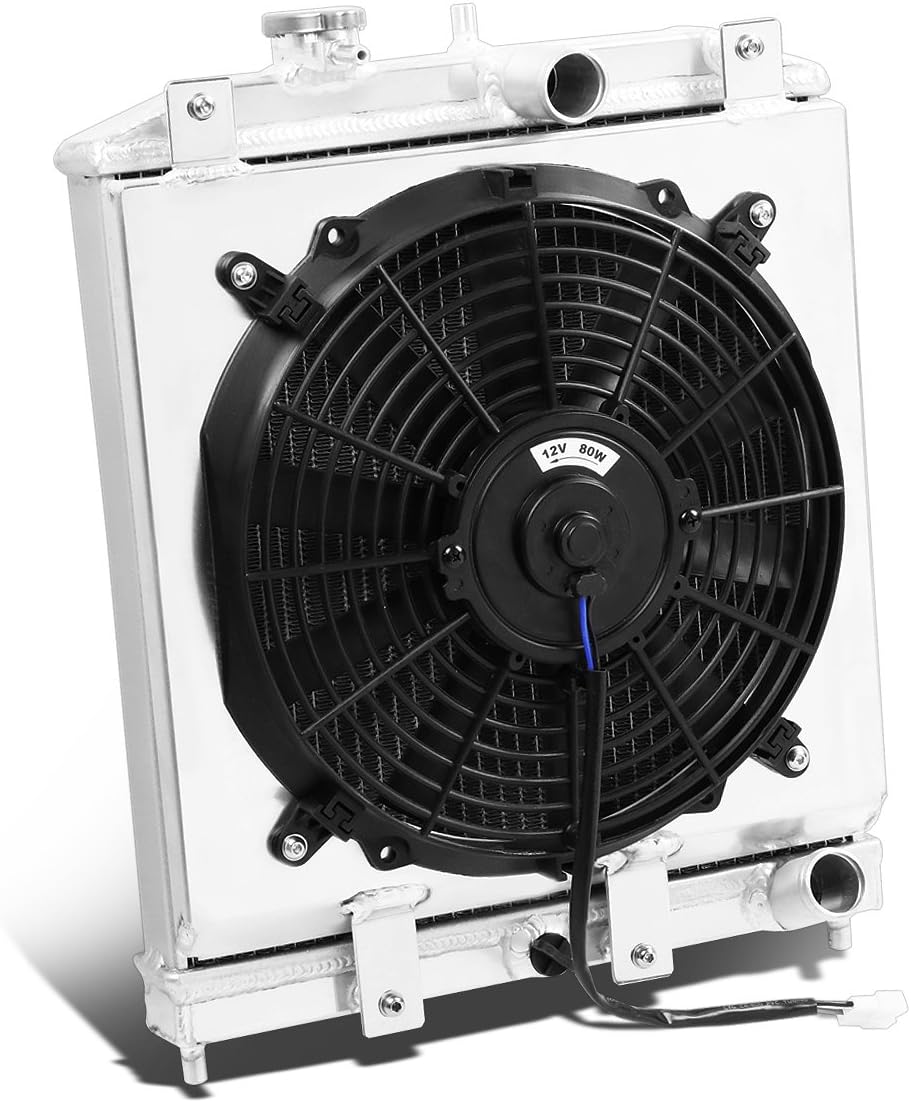
1. DNA Motoring 2-Row Aluminum Radiator with Fan Shroud for 1992–2000 Honda Civic (Manual)
| Voltage | 12 Volts |
|---|---|
| Wattage | 80 watts |
| Power Connector Type | 3-Pin |
| Cooling Method | fan-based |
| Material | Aluminum (radiator), Probable Plastic (fan shroud) |
This DNA Motoring radiator replaces the factory unit with a low-profile, 2-row aluminum core and a pre-assembled fan shroud and electric fan. It is intended as a direct bolt-on replacement for manual-transmission 1992–2000 Civic models and related Del Sol and Integra applications using D15, D16, B16 and B18 engines. The aluminum construction and racing-style core increase heat dissipation, which many users report lowers operating temperature substantially under load. The included 12V 80W fan simplifies installation compared with buying a separate fan, though some buyers needed to splice wiring to match their harness. Practical benefits are lighter weight than stock, better cooling for boosted or high-demand setups, and a finished appearance with welded tanks. Limitations to consider are variable quality control on the fan assembly and fan wiring, occasional bent fins or leak reports on early units, and the recommendation that installation be handled by a professional for proper fit and sealing. For a balanced buyer looking to upgrade cooling capacity on a Civic build, this is a strong value with some quality-variability risk.
Best for: Balanced all-round buyers who want an affordable, performance-oriented cooling upgrade for a 1992–2000 Honda Civic or similar project car and prioritize improved temperature control over perfect factory polish.
Less Ideal for: Do not choose this if you require a guaranteed factory-quality, plug-and-play fan assembly or need a radiator for automatic-transmission models or non-listed engines.
- Pre-assembled fan shroud and 12V 80W electric fan included for a more complete replacement
- T-6061 aluminum core improves heat dissipation compared with many stock radiators
- Direct bolt-on fitment for specified 1992–2000 Civic, Del Sol, and Integra manual-transmission applications
- Low-profile racing-style 2-row core reduces operating temperatures in high-load or boosted setups
- Some users report inconsistent fan reliability and occasional fan failures over time
- Quality control issues reported in a minority of units such as bent fins or leaks on arrival
- Fan wiring may require splicing to match the vehicle harness rather than being plug-and-play
Verdict: A cost-effective aluminum upgrade that lowers Civic engine temperatures and comes with a fan shroud, but expect some variability in fan quality and occasional minor fitment or finish issues.
2. Skunk2 Racing Alpha Series Half-Size Radiator for 1988–1991 Honda Civic/CRX

| Fitment | 1988–1991 Honda Civic (1.6L) and 1988–1991 Honda CR-X (1.6L) |
|---|---|
| Material | Aluminum |
| Inlet/Outlet | 1.25 inch |
| Design | Dual-core |
The Skunk2 Alpha Series half-size radiator is a purpose-built aluminum replacement for 1988–1991 Honda Civic and CRX owners who want better cooling for spirited street driving or engine swaps. It uses a dual-core design and high-efficiency fins to increase heat dissipation compared with a stock unit and includes a branded Skunk2 radiator cap and 1.25 inch inlet and outlet to support larger hoses. The radiator bolts in with provisions for most factory cooling fans and shrouds, making it usable in many installations without major modification. In practice this unit is popular for B-series swaps and high-output builds where extra cooling headroom matters, and its polished end tanks improve under-hood appearance. However the half-size layout and larger cap location can require hood clearance work, custom lower mounts, or different hoses in some chassis or swapped-engine setups, and it is not compatible with automatic transmission cooling systems. Expect strong cooling performance but plan for fitment checks on cars with nonstandard accessories or tight clearances.
Best for: Performance-oriented owners who prioritize better heat management for high-output street or track builds and are willing to plan for fitment when doing engine swaps or modifying cooling plumbing.
Less Ideal for: Buyers who want a guaranteed drop-in replacement with no modifications or those running an automatic transmission cooling setup should consider other options.
- All-aluminum dual-core construction for improved cooling efficiency.
- High-efficiency fins and larger 1.25 inch inlet/outlet to support higher flow and larger hoses.
- Includes Skunk2 radiator cap and polished end tanks for a finished appearance.
- Designed to accept most factory cooling fans and shrouds for relatively straightforward installation.
- May require hood modification or custom mounting in some Civic/CRX installations due to cap clearance and overall fitment.
- Not compatible with automatic transmission cooling systems.
Verdict: A high-performance aluminum radiator that significantly boosts cooling for 88–91 Civic/CRX builds but may need minor hood or mount modifications for proper fitment.
3. TYC 2354 Replacement Radiator for 2001–2005 Honda Civic

| Model | TYC 2354 Replacement Radiator |
|---|---|
| Manufacturer Part Number | 2354 |
| OEM Part Number | 19010-PMM-A52 |
| Position | Center |
This TYC 2354 radiator is a direct replacement for 2001–2005 Honda Civic models and restores the vehicle's cooling system with a drop-in fit. It uses aluminum tubes and folded louvered fins to reproduce factory coolant flow and heat dissipation, and units with transmission cooler fittings include molded high-density polymer tanks. TYC reports leak testing at the factory and adds reinforcement features like aluminum inlet rings, internal tank ribs, expansion grooves, and double header plates intended to reduce leaks and extend service life. Installation is straightforward for a competent DIYer or technician because it matches mounting points and layout of the factory unit. The practical benefit is lower cost compared with dealer replacements while offering comparable cooling performance. Limitations to consider are typical for value-oriented aftermarket radiators: some buyers report minor bent fins on arrival and long-term durability may not match higher-end OEM replacements, and this part does not include a radiator cap in some listings so you should verify parts included before installing.
Best for: Practical optimizers who want a reliable, low-cost replacement that matches factory cooling performance and keeps repair bills down while allowing for DIY installation.
Less Ideal for: Buyers seeking the longest possible service life or exact factory-sourced parts for high-mileage or performance-restored vehicles should consider higher-end or OEM options instead.
- Direct-fit replacement that matches factory mounting and coolant flow for 2001–2005 Honda Civic
- Aluminum tubes and precision folded louvered fins for effective heat dissipation
- Leak-tested at the factory with reinforced features to reduce common failure points
- Lower cost than dealer or premium aftermarket radiators, making DIY replacement economical
- Some units arrive with bent fins out of the box
- Durability may be inferior to higher-priced factory-quality replacements
- Radiator cap may not be included with every purchase
Verdict: A cost-effective, direct-fit radiator for 2001–2005 Honda Civic owners who want factory-like cooling performance without the premium price.
4. ANPART Aluminum Radiator for 2006–2011 Honda Civic / 2006–2011 Acura CSX

| Core Material | Aluminum |
|---|---|
| Position | Front |
| Compatible Vehicles | 2006-2011 Honda Civic; 2006-2011 Acura CSX |
| Item model number | 125090-5260-1842536101 |
This ANPART radiator is a direct-fit replacement intended for 2006–2011 Honda Civic and 2006–2011 Acura CSX applications and is built with a full aluminum core and premium plastic end tanks. It installs in the front position as a drop-in unit designed to match factory mounting and hose locations, so installation is straightforward for a DIYer or an independent shop. The high-density fins and multi-louvered design increase cooling surface area, which helps manage engine temperatures under everyday driving and light towing or hot-weather conditions. Buyers get a cost-effective option compared with dealer parts while still receiving a pressure-tested unit that reviewers report fits well with no leaks. Limitations include aftermarket plastic tanks instead of full-metal end tanks and a simpler construction than higher-end performance radiators, so it is not intended for heavy-duty racing or extreme-use cooling upgrades. Fit and finish appear good for the price but some users recommend replacing related hoses or clips during installation to avoid rework.
Best for: Budget-conscious owners seeking an affordable, reliable factory-replacement radiator for routine daily driving and seasonal reliability who prioritize value over premium performance upgrades.
Less Ideal for: Enthusiasts needing track-level cooling, heavy towing users, or owners seeking a full all-metal performance radiator should consider upgraded performance units instead.
- Full aluminum core for improved cooling efficiency versus many stock units
- Drop-in design intended to match factory mounting for easier installation
- High-density, multi-louvered fins increase heat dissipation in normal driving conditions
- Pressure-tested at manufacture and reported by buyers to fit correctly with no leaks
- Plastic end tanks rather than full-metal construction on all components
- Not designed for high-performance or heavy-duty racing applications
Verdict: A budget-friendly, full-aluminum drop-in radiator that restores reliable cooling for 2006–2011 Honda Civic and 2006–2011 Acura CSX owners.
5. Denso 221-3220 Radiator

| Fitment | Honda Civic 2001-2005 |
|---|---|
| Core material | Aluminum core |
| Tank material | Plastic tank |
| Includes | Transmission Oil Cooler |
This Denso 221-3220 radiator is a factory-quality replacement built for 2001–2005 Honda Civic engines. It pairs an aluminum core with plastic tanks and includes an integrated transmission oil cooler where applicable, so it replaces the original cooling assembly and restores the car’s cooling and transmission cooling functions. Typical use is a direct swap when the stock radiator is leaking, clogged, or damaged; installers report it fits like the original and accepts factory hoses and mounts without modification. Notable features are Denso’s precision core construction and included transmission oil cooler, which simplify installation and reduce parts matching. Practical benefits include reliable cooling performance for everyday driving and a close match to factory fit and function that minimizes rework. Limitations are that installation on these Civics can be time consuming for a novice and the plastic tanks, while standard for many replacements, are less durable than full-metal radiators in extreme heavy-duty or track use.
Best for: Reliability-focused buyers who prioritize a factory-quality, direct-fit replacement to restore dependable cooling on a 2001–2005 Honda Civic and prefer parts that match factory performance.
Less Ideal for: Drivers seeking a heavy-duty or track-oriented aluminum-only radiator or those who want an upgraded performance core beyond factory-equivalent cooling should consider specialized aftermarket options.
- Factory-quality aluminum core that matches Honda Civic original fitment
- Includes transmission oil cooler so you do not need a separate unit when applicable
- Precision manufacturing reduces the chance of leaks and eases installation alignment
- Plastic end tanks instead of all-metal construction may be less resistant to high-heat or impact damage
- Installation can be moderately difficult for inexperienced DIYers due to vehicle access and hose connections
Verdict: A close-to-factory Denso replacement that restores reliable cooling for 2001–2005 Honda Civics, with the convenience of an included transmission cooler but plastic tanks instead of full-metal construction.
6. DWVO Complete Radiator for 2001–2005 Honda Civic L4 1.7L

| Fitment | 2001–2005 Honda Civic L4 1.7L |
|---|---|
| Core material | Aluminum |
| Transmission cooler | Brass integrated cooler |
| Tanks | PA66 GF30 molded inlet/outlet |
This DWVO complete radiator is designed as a direct bolt-in replacement for 2001–2005 Honda Civic L4 1.7L models and installs in place of the factory unit on compatible automatic and certain manual transmissions. It uses a high-density multi-louvered aluminum core with TIG-welded joints and molded inlet/outlet tanks to provide efficient heat dissipation and a leak-resistant assembly. The radiator includes a brass transmission oil cooler allowing it to handle transmission cooling duties where applicable and arrives with protective foam in the corners to prevent shipping damage. Typical use is straightforward replacement after a leaking or clogged stock radiator; professional installation is recommended because the cap is not included. Reported benefits include solid cooling performance and a fit that matches OEM mounting points for most vehicles, plus a lower cost than dealer replacements. Some buyers have reported occasional fitment trimming or melted plastic issues, so quality can vary between units and careful inspection before installation is advised.
Best for: Convenience-driven buyers who want a lower-cost, ready-made replacement that minimizes downtime and matches factory fitment for routine radiator replacement.
Less Ideal for: Those seeking a guaranteed factory-quality OEM part or buyers who prefer professional-grade, warranty-backed cooling systems for heavy-duty or modified engines should consider alternatives.
- Direct bolt-on replacement for 2001–2005 Civic L4 1.7L models matching OEM mounting locations
- High-density multi-louvered aluminum core for improved cooling efficiency
- Includes brass transmission oil cooler for models that require transmission cooling
- TIG-welded construction and treated coating intended to reduce leaks and extend service life
- Radiator cap is not included so an existing cap must be reused or purchased separately
- Some buyers reported fitment adjustments or clearance issues in certain vehicles
- A number of reviews mention inconsistent quality between units, including plastic component failures
Verdict: A budget-friendly, mostly direct-fit replacement that restores cooling at a lower cost but may require inspection and occasional minor adjustments on installation.
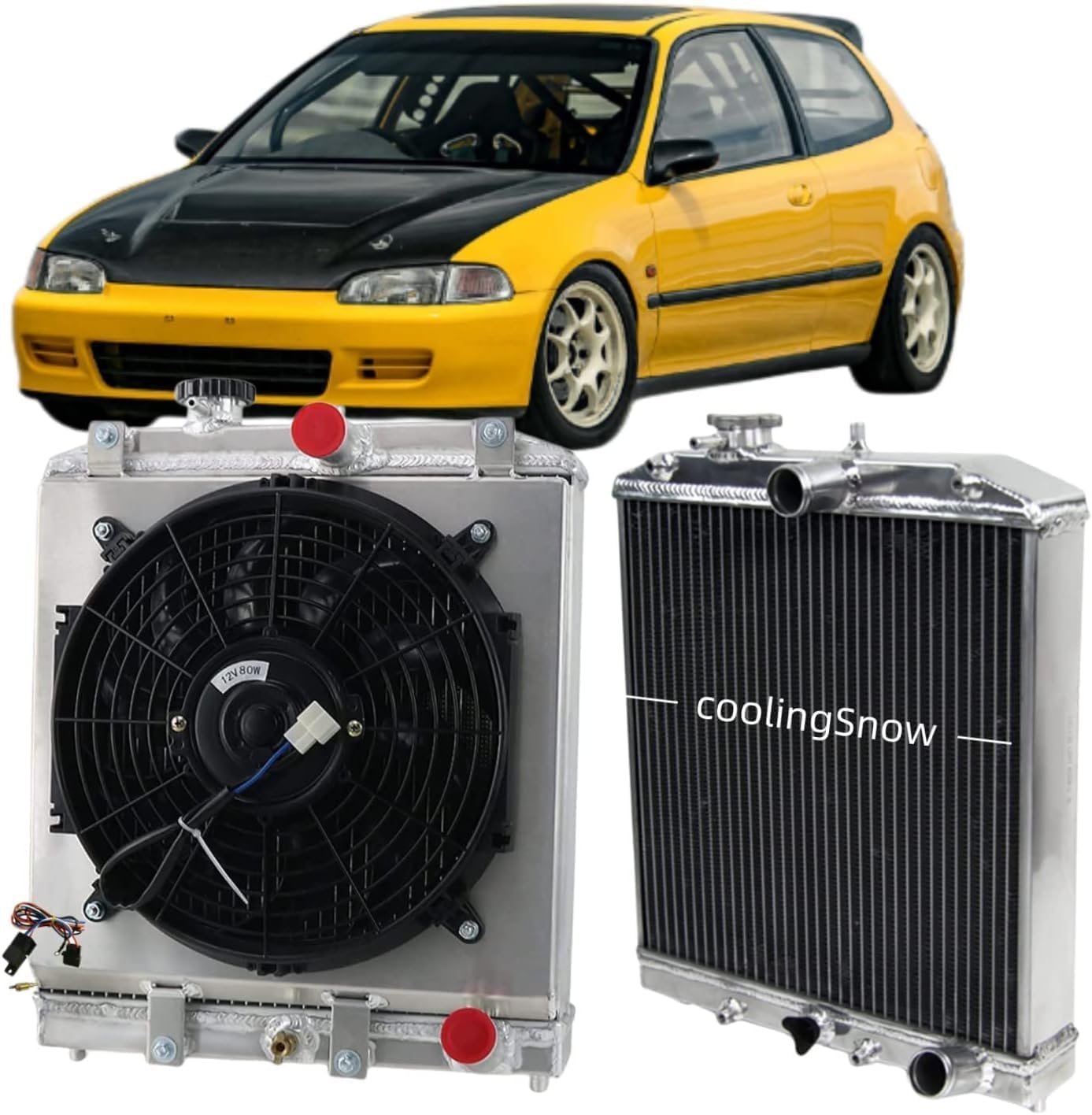
7. CoolingSnow 3-Row Full Aluminum Radiator with Shroud and 12" Fan for Honda Civic D15/D16 EK/EG 1992–2000
| Core Row | 3 Row |
|---|---|
| Core Material | Full Aluminum |
| Tank Material | Full Aluminum |
| Maximum Fan CFM | 2300±200 cfm |
| Amp Draw | 12.70 amps |
This CoolingSnow radiator replaces the factory unit with a full-aluminum 3-row core and integrated aluminum shroud plus a 12" electric fan, intended as a bolt-in cooling upgrade for 1992–2000 Honda Civic and Acura Integra D15/D16 and EK/EG models. In everyday use it performs like a higher-capacity replacement: the aircraft-grade AA5052 aluminum construction and three-row design increase cooling surface area compared with many stock radiators, which helps keep coolant temperatures lower under heavier loads or warmer climates. The included 12" fan runs at up to about 2,250 rpm and is rated near 2,300 cfm for active airflow at idle or low vehicle speed. Installation is straightforward for a DIYer comfortable with basic coolant and radiator work because it is a light direct bolt-on replacement and comes with a shroud and fan preassembled. Limitations to note are that the fan is a plastic-blade electric unit that draws roughly 12.7 amps and may require verifying electrical connectors or a relay on older cars, and fitment may need minor trimming or bracket adjustments on vehicles with aftermarket modifications.
Best for: Risk-averse, practical owners looking for a durable, factory-replacement-style radiator that improves cooling capacity while remaining a straightforward bolt-on upgrade.
Less Ideal for: Drivers seeking a no-modification performance intercooler-style setup or those who prefer an OEM-branded factory part may want to consider alternative options.
- Full-aluminum 3-row core and tanks for improved heat dissipation over typical single-row replacements
- Includes aluminum shroud and a 12" electric fan preinstalled for a more complete replacement
- Manufactured from AA5052 aircraft-grade aluminum for corrosion resistance and durability
- Higher reported airflow from the fan (around 2300 cfm) helps cooling at idle and low speeds
- Fan uses plastic blades and draws about 12.7 amps, so electrical upgrades or relays may be needed
- May require minor fitment tweaks on cars with aftermarket front-end parts or modifications
Verdict: A practical, higher-capacity full-aluminum replacement radiator for 1992–2000 Honda Civic/Integra owners who want improved cooling with mostly bolt-on installation.
Looking for the perfect fit?
Select your Honda Civic configuration to see the most relevant Radiators recommendations
Choosing the Right Honda Civic Radiator: Key Factors to Consider
Fitment And Mounting Compatibility
Proper fitment ensures the radiator lines up with factory mounting points, hose connections, and sensor ports. Mismatched fitment can necessitate brackets, hose adapters, or trimming, which increases installation time and risk of leaks.
Confirming exact year and submodel fit ensures the radiator mates with the transmission cooler lines if applicable and aligns with fan shroud and condenser locations. A radiator designed for direct bolt-in replacement reduces labor and helps preserve OEM driveability.
Cooling Capacity And Core Design
Core size, tube count, and fin density determine how effectively the radiator transfers heat from coolant to air. Larger cores or multi-row designs usually increase cooling capacity but can affect clearance and airflow.
Consider the typical driving conditions you face. Frequent stop-and-go traffic, towing, or high ambient temperatures demand higher heat rejection, while primarily highway use is less demanding. Balance cooling performance with physical fit constraints.
Material And Corrosion Resistance
Radiator materials—aluminum cores with plastic tanks versus all-aluminum or copper-brass constructions—impact longevity and corrosion behavior. Aluminum tends to be lightweight and resists many forms of corrosion, while copper-brass can be easier to repair but may corrode differently.
Look for corrosion-resistant coatings, proper brazing or welding at joints, and tank materials rated for coolant chemistry used in Hondas. Better corrosion resistance lowers the chance of future leaks and extends service life.
Build Quality And Tank Construction
Tank construction methods influence durability and leak resistance. Welded or brazed tanks typically offer stronger joints than crimped plastic tanks, particularly under thermal cycling and pressure changes.
Inspect whether the design minimizes stress points around inlet and outlet ports, and whether reinforcement is present where hoses attach. Higher build quality reduces the likelihood of premature failure and the need for repeat repairs.
Compatibility With Cooling System Accessories
Radiators must accommodate factory accessories such as fan assemblies, overflow reservoirs, sensors, and transmission fluid coolers when present. Missing or relocated ports can require additional parts or modifications.
Ensure the radiator provides the correct sensor ports and routing for coolant lines. Compatibility with the original fan shroud and condenser simplifies installation and preserves airflow characteristics.
Serviceability And Installation Ease
A radiator that supports common maintenance tasks, like easy access to drain plugs or standardized hose fittings, reduces workshop time. Direct-fit units that reuse OEM brackets and hoses usually lower labor complexity.
Consider whether replacement requires special tools, soldering, or modifications to the A/C condenser. If you plan to do the installation yourself, look for designs with clear instructions and minimal need for fabrication.
How We Chose the Best Honda Civic Radiator
We focused on radiators that specifically fit the Honda Civic and that meet common repair and maintenance needs for this vehicle. Selection criteria emphasized proper fitment and mounting points, coolant flow capacity and core design, material and corrosion resistance, build quality of tanks and fins, and compatibility with factory hose and sensor locations. Durability factors such as brazed versus crimped construction and the presence of reinforced end tanks were also considered. We prioritized units that maintain OEM-style cooling efficiency and those designed for straightforward installation using stock connections.We excluded universal or heavily modified radiators that require extensive fabrication or custom mounts, performance-only units that change core size beyond stock limits, and items lacking clear fitment documentation for Civic model years. The result is a list of practical replacements and upgrades that suit typical repair and maintenance scenarios for this vehicle.
Our full evaluation process is outlined in our review methodology.
FAQ
How do I know if my Honda Civic radiator needs replacement?
Common signs include persistent coolant leaks under the car, frequent engine overheating, discolored or contaminated coolant, or steam from the engine bay. Also look for visible damage to fins or tanks and rising temperature gauge readings during normal driving. If you see any of these, inspect the radiator and cooling system to confirm the source before replacing components.
Can I replace the radiator myself on a Civic?
Many mechanically inclined owners can replace a Civic radiator with basic tools, a service manual, and careful preparation. The job typically involves draining coolant, disconnecting hoses and sensors, removing the fan and shroud if needed, and fitting the new radiator. It can take several hours depending on experience. If you are unsure about tool needs, leak testing, or coolant handling, professional installation is a safer option.
What type of coolant should I use after installing a new radiator?
Use the coolant type specified in your Honda Civic owner manual, as manufacturers recommend formulations compatible with engine materials and seals. Mixing incompatible coolants can reduce corrosion protection and alter freeze or boil points. After installation, bleed the system of air and verify correct concentration and level according to the manual.
Will an aftermarket radiator cause fitment issues with sensors or fans?
It depends on the unit. Quality direct-fit aftermarket radiators are designed to match the original sensor ports, hose locations, and fan mounting points. Some generic or performance radiators may relocate ports or require adapter fittings. Verify the product documentation for exact fitment to avoid additional modifications or installation complications.
How can I prevent future radiator leaks and failures?
Regular coolant maintenance, including flushing at recommended intervals and using the correct coolant, helps prevent corrosion and sediment buildup that lead to leaks. Inspect hoses, clamps, and mounting brackets for wear and replace worn parts during radiator service. Avoid extended use with low coolant levels or a compromised cap, as pressure irregularities accelerate tank and seal deterioration.
Conclusion
Prioritize fitment, cooling capacity, and durable construction when choosing a Honda Civic radiator. Direct-fit units that preserve factory hose locations, fan mounting, and sensor ports minimize installation complexity and reduce the chance of leaks.Balance the level of cooling you need against installation constraints and long-term corrosion resistance. Proper coolant maintenance and correct installation are as important as the radiator itself for reliable cooling performance and fewer repairs down the road.
Explore More:
- Check out all Honda Civic parts & accessories
- Explore Radiators Maintenance & Repair Guides
- Explore Cooling System
- Browse all Auto Parts
