

Note: This article contains affiliate links. If you click on these links and make a purchase, I may earn a small commission at no extra cost to you. This helps support my research and content. Read my full affiliate disclosure here.
If you own a Honda Civic and you need a radiator replacement, choosing the right aluminum radiator matters for everyday reliability and long-term engine health. The wrong part can cause persistent overheating, leaks, or fitment headaches that lead to repeat repairs and downtime.This guide summarizes the seven top aluminum radiators shortlisted for Civic owners, explaining how each option meets common needs like cooling efficiency, corrosion resistance, and straightforward installation. Below we outline what we tested conceptually, key tradeoffs to weigh, and the vehicle-specific factors that should guide your choice before you shop.
Looking for other parts? See all Honda Civic parts & accessories.
Top Picks at a Glance
| Best Overall The best all-around choice for most situations | Auto Dynasty Full Aluminum 2-Row Radiator for 1992–2000 Honda Civic (Manual) |  |
| Best Quality Built to a higher standard if you want something more solid | Mishimoto Performance Aluminum Radiator for Honda Civic (1992–2000) |  |
| Best Value The sweet spot between price and what you get | SPELAB Aluminum Radiator Replacement HO3010123 for 1992–2000 Honda Civic / Acura EL 1.6L |  |
| Highest Rated A top-rated pick with lots of positive feedback | CoolingSnow 3-Row Full Aluminum Radiator with Shroud and 12" Fan |  |
| Best Seller A high-volume bestseller chosen again and again | DNA Motoring 2-Row Aluminum Radiator with Fan Shroud (fits 1992–2000 Honda Civic manual) |  |
1. Auto Dynasty Full Aluminum 2-Row Radiator for 1992–2000 Honda Civic (Manual)

| Compatible models | 1992–2000 Honda Civic; 1993–1997 Del Sol; 1994–2001 Acura Integra (manual only) |
|---|---|
| Rows | 2 |
| Core/row depth | 42mm |
| Inlet/Outlet | 1.25 inch |
This Auto Dynasty radiator is a full T-6061 aluminum, 2-row replacement intended as a direct bolt-on for manual transmission Civic, Del Sol, and Integra models in the listed years. It replaces the factory unit and is used to restore or improve cooling performance on older cars; buyers typically install it when the original radiator leaks or the engine runs hotter than normal. Notable features include an all-aluminum core and tanks, 42mm row depth, and slightly oversized 1.25 inch inlet and outlet fittings that can increase flow capacity. In practice the radiator offers good build quality for the price and can eliminate overheating on high-mileage engines, but users should expect minor fitment work on some cars: mounting peg diameters, inlet/outlet size, and support clearances have required shims, hose stretching, or modest trimming for a flush fit in several installs. It is aimed at DIYers comfortable checking fitment and adapting hoses; professional installation is recommended if you want a worry-free swap.
Best for: Buyers who want an affordable, performance-oriented aluminum radiator to replace an aging factory unit and who are comfortable verifying fitment and making small installation adjustments.
Less Ideal for: People seeking a guaranteed drop-in, no-modification replacement for automatic transmission cars or buyers who prefer a factory-perfect fit without any DIY adjustments.
- Full T-6061 aluminum construction for better heat dissipation and corrosion resistance compared with plastic units
- Direct replacement mounting points intended for bolt-on installation without major fabrication
- Larger 1.25 inch inlet/outlet and 2-row core provide improved coolant capacity and cooling potential over many old stock radiators
- Lightweight design aids handling and simplifies installation for a single person
- Fitment is not perfect on every chassis variant and may require shims, hose stretching, or minor trimming of the support
- Not compatible with automatic transmission models unless transmission cooler lines are adapted or omitted
Verdict: A cost-effective full-aluminum replacement that improves cooling for manual-transmission Hondas if you can handle minor fitment tweaks.
2. Mishimoto Performance Aluminum Radiator for Honda Civic (1992–2000)

| Compatible with | 1992–2000 Honda Civic |
|---|---|
| Core | Dual-core brazed aluminum |
| Included cap | 1.3 bar Mishimoto radiator cap |
| Drain plug | Magnetic drain plug |
| Fit type | Vehicle Specific Fit |
This Mishimoto aluminum radiator replaces the factory unit with a two-row, dual-core brazed-aluminum core and polished end tanks to raise cooling capacity for street and track use. It installs as a vehicle-specific fit for 1992–2000 Civics and includes a high-pressure 1.3 bar Mishimoto radiator cap and a magnetic drain plug to help protect the engine from metal debris. In practice the thicker core and extra cooling capacity keep operating temperatures lower during spirited driving or with swapped higher-output engines, and many owners report stable temps under load. Fitment can require small modifications: inlet/outlet diameters and overall thickness differ from stock so hoses, clamps, or the upper bracket and reservoir may need adjustment. The radiator is TIG-welded and fully brazed for durability, and the included serial plate and lifetime warranty give confidence for long-term ownership. Expect better heat management and slightly more installation work compared with a direct stock replacement.
Best for: Buyers wanting a durable cooling upgrade to lower operating temperatures during spirited driving or when running higher-output swaps, and who are willing to do light modification work at installation.
Less Ideal for: Drivers seeking a perfect drop-in replacement with zero adjustments or those uncomfortable modifying hoses, clamps, or mounting brackets should consider a direct-stock replacement instead.
- Designed for 1992–2000 Honda Civic for a near-drop-in fit
- Brazed dual-core aluminum construction for improved cooling and durability
- Includes high-pressure 1.3 bar radiator cap to raise coolant boiling point
- Magnetic drain plug helps capture metal particles and protect the engine
- Lifetime warranty and serial plate for product authenticity
- Thicker core and different inlet/outlet sizes can require hose, clamp, or bracket modifications during installation
- Some units have reported shipping damage so careful inspection on arrival is recommended
Verdict: Choose this Mishimoto radiator if you want a robust, higher-capacity aluminum cooling upgrade for a 1992–2000 Civic to keep temps down during performance driving.
3. SPELAB Aluminum Radiator Replacement HO3010123 for 1992–2000 Honda Civic / Acura EL 1.6L

| Fits | Honda Civic 1992-2000; Acura EL 1.6L |
|---|---|
| Material | Aluminum alloy |
| Model | HO3010123 |
| Manufacturer Part Number | ASP-CS010506SR |
This SPELAB HO3010123 aluminum radiator is a direct-fit replacement for 1992–2000 Honda Civic models and compatible Acura EL 1.6L cars. It uses folded aluminum fins and thicker tube walls to broaden heat dissipation area and resist wear from thermal cycling. Typical use is a full radiator swap when the factory unit is corroded, punctured, or leaking; it installs like a factory replacement and keeps engine temperatures stable under normal driving. Buyers get durable aluminum construction and a core built for efficient cooling, plus comprehensive after-sales support from the brand. Several customers report good fit and no leaks when installed carefully, while a minority encountered assembly or threaded insert issues that required minor fixes or replacing fasteners. Expect a competitive price versus dealer parts, but inspect mounting holes and fan hook clearance during install to avoid stress on tanks and premature seal leaks. Overall this is a practical, value-focused replacement that performs well when verified for correct fitment before installation.
Best for: Buyers who want a cost-effective, durable aluminum radiator to replace a failing stock unit and prioritize reliable cooling performance and value over OEM branding.
Less Ideal for: Drivers seeking a lifetime-guaranteed or dealer-sourced factory part, or those who want a radiator prepped for extreme track use without upgrading supporting cooling components.
- Aluminum core and folded fins increase heat dissipation compared with older cores.
- Thicker tube walls and endurance testing claimed for improved durability in varied conditions.
- Made as a direct-fit replacement for specified Civic/Acura 1.6L models to simplify installation.
- Lower cost than many dealer or brand-name alternatives while covering common radiator features.
- Manufacturer provides responsive after-sales support for assembly or quality issues.
- Some reported quality-control issues such as missing threaded inserts or minor leaks requiring repair or partial refund.
- Fitment may require checking fan assembly hooks and potentially light modification to avoid stress on tanks.
Verdict: A practical, budget-friendly aluminum replacement that restores cooling performance for 1992–2000 Civic 1.6L engines while offering solid value for routine road use.
4. CoolingSnow 3-Row Full Aluminum Radiator with Shroud and 12" Fan
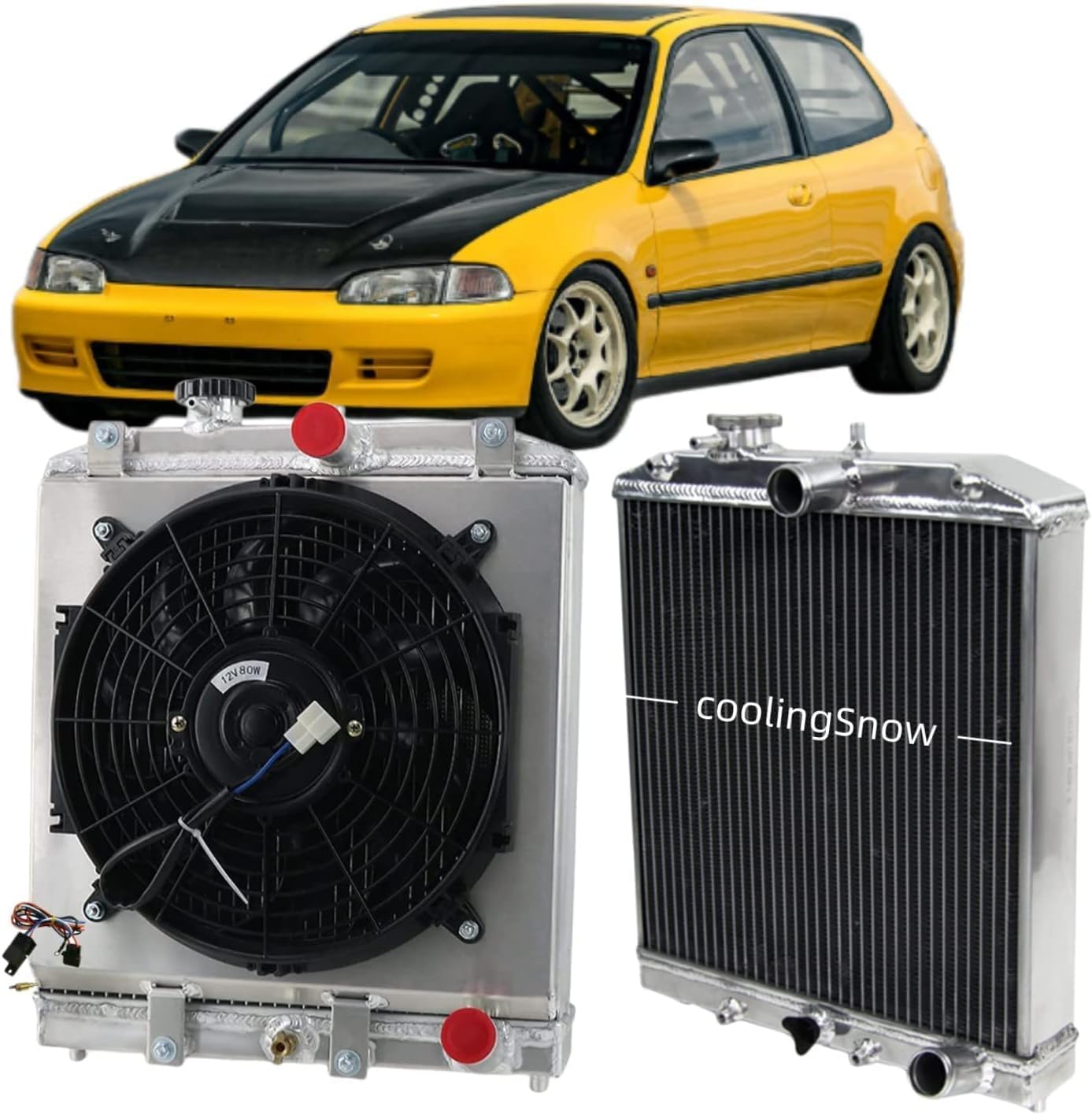
| Core Row | 3 Row |
|---|---|
| Core Material | Full Aluminum |
| Maximum Fan CFM | 2300±200 cfm |
| Fan Diameter | 12.050” |
| Amp Draw | 12.70 amps |
This CoolingSnow kit replaces the factory radiator with a 3-row, full AA5052 aluminum core and tanks and ships with an aluminum shroud and a 12" electric fan. It is intended as a direct bolt-in replacement for compatible 1992–2000 Civic/Integra installations and is marketed for improved cooling capacity over the stock unit. In practice the thicker three-row core and aircraft-grade aluminum construction should raise heat rejection and resist corrosion compared with older brass or thin aluminum cores, while the included electric fan provides higher airflow at low speeds. The fan specs indicate about 2300 cfm and a 10-blade, 12" design that runs near 12.7 amps, so wiring and mounting should be checked during installation. Buyers report tight fitment to B-series engines and generally good build quality, though the kit can be heavier and requires careful handling and correct fan wiring. This is a practical upgrade for Civic drivers who need a more robust, long-lasting cooling solution but expect a factory-style installation rather than a race-oriented, lightweight option.
Best for: Buyers who prioritize a durable, higher-capacity cooling system to reduce overheating risk and extend service life on older Civics and Integras; good for those who want a near-factory installation with better cooling performance.
Less Ideal for: Not the best pick for drivers seeking the lightest possible racing-focused radiator or those who need a plug-and-play fan controller included with the kit.
- Full AA5052 aluminum core and tanks for improved corrosion resistance and thermal performance
- Three-row core increases cooling capacity compared with single-row replacements
- Includes aluminum shroud and 12" electric fan for low-speed airflow without separate purchases
- Direct bolt-on design aiming for straightforward replacement and reported tight fitment on B-series installations
- Fan draws about 12.7 amps which may require checking electrical capacity and proper relay/fuse setup
Verdict: If you want a reliable, higher-capacity replacement to reduce overheating and extend cooling system life on a 1992–2000 Civic or Integra, this full-aluminum 3-row radiator kit delivers a practical, factory-style upgrade.
5. DNA Motoring 2-Row Aluminum Radiator with Fan Shroud (fits 1992–2000 Honda Civic manual)
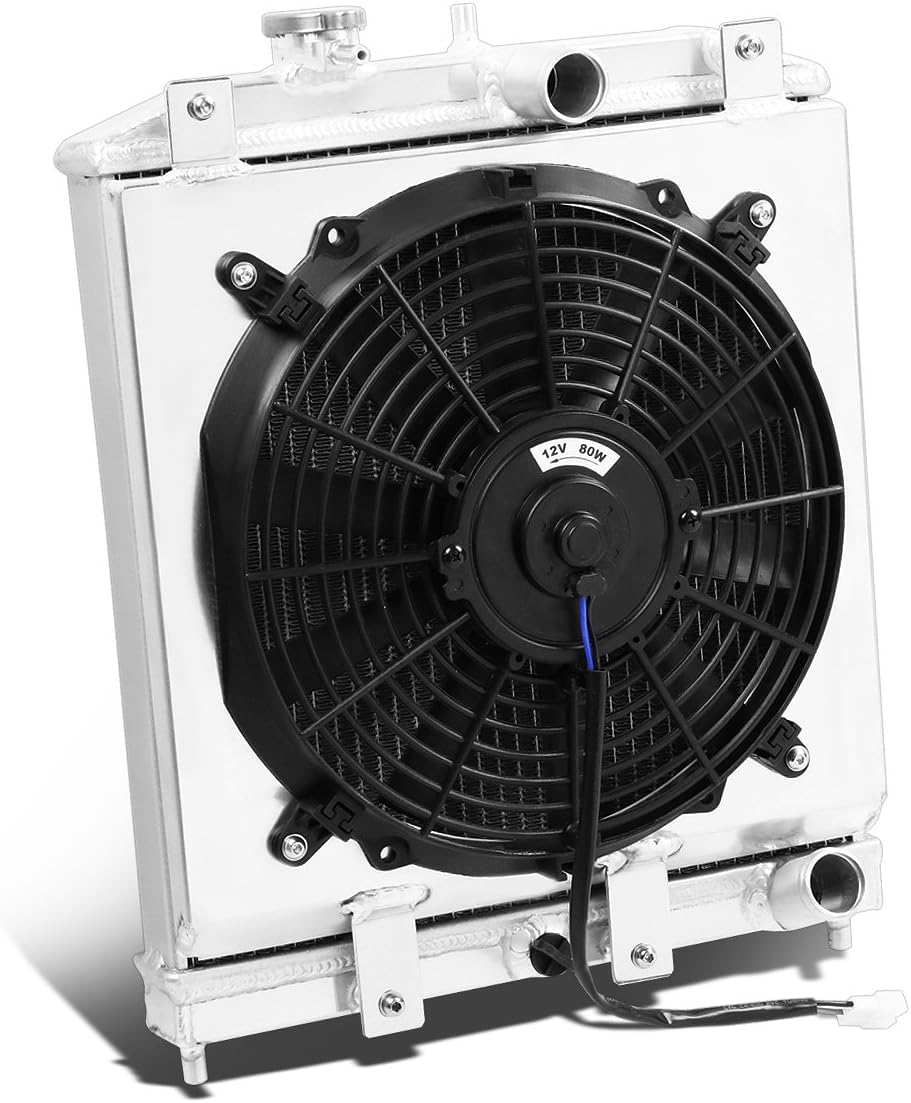
| Voltage | 12 Volts |
|---|---|
| Wattage | 80 watts |
| Power Connector Type | 3-Pin |
| Maximum Rotational Speed | 5500 RPM |
| Material | Aluminum (radiator) |
This DNA Motoring radiator replaces the factory unit with a lightweight 2-row aluminum core and a preassembled fan shroud, intended for manual-transmission Civics with D15, D16, B16 or B18 engines. It is typically used as an OEM-style upgrade or replacement when the stock radiator is leaking or when improved cooling is needed for a mildly modified car. The aluminum core and racing-style design aim to increase heat dissipation by the manufacturer’s claim of roughly 35 to 45 percent, and the included low-profile 12V fan provides forced airflow at idle. Installation is described as a bolt-on fit but several users note the fan wiring may require splicing and occasional fitment tweaks to align tabs and mounts. Practical benefits are better cooling under load and lighter weight than a stock unit, but buyers should inspect units for shipping damage and expect the fan assembly to be the weaker component compared with the radiator core; some owners have replaced the fans for long-term reliability.
Best for: A cautious Civic owner who wants a stronger, lighter aluminum replacement that improves cooling for street or mild-performance use and is willing to check the part at delivery and handle basic wiring or installer adjustments.
Less Ideal for: Buyers seeking a guaranteed flawless plug-and-play solution or those who want a heavy-duty race-spec cooling system without replacing the fan assembly should consider higher-end or purpose-built radiators instead.
- Aluminum 2-row core provides improved heat dissipation compared with many stock radiators
- Ships with a preassembled fan shroud and low-profile 12V fan for immediate use
- Direct bolt-on design for compatible 1992–2000 Honda Civic manual models simplifies installation
- Lightweight construction reduces front-end mass for easier handling during installation and track use
- Some units arrive with bent fins, misaligned tabs, or shipping damage so pre-install inspection is advised
- Integrated fans and shroud have mixed reliability reports and may need replacement or wiring splices
- Not truly plug-and-play for all installs; minor trimming or electrical splicing can be required
Verdict: A budget-friendly aluminum 2-row radiator that gives Civic owners noticeably better cooling and a ready-to-install fan shroud if you inspect the unit on arrival and are prepared to address minor wiring or fitment tweaks.
Choosing the Right Honda Civic Aluminum Radiator: Key Factors to Consider
Cooling Capacity and Core Design
Cooling capacity determines how effectively the radiator moves heat away from the engine. For a Civic, look for radiators with an appropriate core thickness and tube count to increase surface area without blocking airflow. Tube-and-fin cores generally offer a good balance of airflow and heat transfer for everyday driving, while thicker bar-and-plate cores provide higher capacity for heavy towing or track use.
Core design also affects weight and fitment. A larger core can improve cooling but may necessitate changes to mounting or fan shroud clearance. Consider the type of driving you do and pick a core that matches that thermal load rather than choosing the biggest one available.
Fitment and Mounting Accuracy
Exact fitment is crucial for a straightforward swap into a Civic. Misaligned mounting tabs, filler necks in the wrong place, or incompatible hose inlet sizes can mean extra adapters, bracket fabrication, or even radiator trim. A proper-fit radiator maintains OEM mounting points, supports factory fan and shroud placement, and aligns with transmission cooler lines if your Civic uses an integrated cooler.
Poor fitment increases installation time and can introduce stress to hoses and fittings that leads to premature failure. Verifying measurements and OEM-style connection points will reduce surprises during installation.
Material Quality and Corrosion Resistance
Although the core is aluminum, the quality of aluminum, brazing technique, and choice of end tanks matter. High-grade aluminum and consistent brazing reduce the risk of early leaks. Coatings or anodizing on tanks and seams help resist road salt and coolant chemistry variations that can accelerate corrosion.
Pay attention to seam reinforcement and whether the radiator uses welded or crimped end tanks. Those build details influence longevity in the varied environmental conditions a Civic encounters.
Compatibility with Cooling System Components
A radiator must work with your Civic's thermostat, water pump, hoses, and cooling fans. Mismatched inlet sizes or incompatible sensor ports can prevent proper temperature readings or lead to coolant leaks. If your Civic has an integrated transmission cooler, confirm the radiator accepts the original transmission line fittings to avoid routing changes.
Compatibility also covers the filler neck and cap pressure rating. Using a radiator with an incorrect cap pressure can alter boiling characteristics and affect cooling system performance.
Ease of Installation and Serviceability
Installation considerations include whether factory hoses, shroud, and supports can be reused, how accessible the mounting bolts are, and whether the radiator requires special tools or additional parts. A radiator designed for direct bolt-in replacement minimizes labor and reduces the chance of installation errors.
Serviceability matters for routine maintenance. Radiators with accessible drain petcocks, standard filler necks, and clear sensor locations make coolant changes and diagnostics easier for DIYers and technicians alike.
Warranty and Support
A solid warranty signals confidence in manufacturing quality and provides protection against early failures. Look for clear terms that cover core failures and leaks, and check whether the warranty requires specific coolant types or installation steps. Responsive technical support and documented installation instructions add practical value when problems arise.
Warranty length should be weighed with real-world durability expectations; a longer warranty is helpful but only meaningful when the manufacturer stands behind service and claims handling.
Signs Your Civic Needs a Radiator Replacement
Recognizing symptoms early can prevent engine damage. Common signs include frequent overheating during idling or heavy load, visible coolant leaks under the vehicle, discolored or rusty coolant, and a persistently low coolant level after topping up. A failing radiator may also cause the temperature gauge to fluctuate erratically as the core's flow or cooling efficiency degrades.
- Consistent engine temperature above normal range
- Puddles or damp spots under the front of the car
- Steam or sweet smell from the engine bay
- Coolant contamination or rust-colored fluid
Preparing Your Civic for Radiator Installation
Before you start a replacement, gather the right tools and parts: correct coolant, replacement hoses or clamps if needed, a new radiator cap that matches pressure rating, and any recommended gaskets. Park on a level surface, let the engine fully cool, and relieve system pressure by slowly opening the cap only when safe.
Bleeding air from the cooling system after installation is important to prevent hot spots. Follow a procedure that allows the thermostat to open and the coolant to circulate while purging trapped air. Keep a catch container to dispose of old coolant responsibly according to local regulations.
- Verify hose diameters and mounting points before ordering
- Inspect and replace worn clamps and hoses
- Have a torque wrench for mounting fasteners
- Use the correct coolant specification for your Civic
Transmission Cooler Integration and Considerations
Some Honda Civic configurations route transmission fluid through the radiator. If your Civic uses an integrated cooler, ensure the replacement radiator accepts the same transmission line fittings and flow path. Incorrect integration can cause fluid leaks or cooling inefficiency for the transmission.
If the radiator does not include transmission cooler ports, plan for a separate cooler or an adapter that maintains proper line routing and secure fittings. Any change should preserve the correct flow and sealing to avoid cross-contamination and pressure issues.
- Confirm presence and type of transmission cooler ports
- Check line fitting orientation and thread type
- Ensure transmission lines have secure mounting points to avoid vibration wear
Choosing the Right Coolant and Maintenance Schedule
Your radiator choice should align with the coolant type recommended for Civic engines. Mixing incompatible coolants or using plain water can accelerate corrosion and reduce the lifespan of an aluminum radiator. Follow manufacturer guidance for coolant formulation and concentration.
Regular maintenance helps extend radiator life. Periodic coolant flushes remove sediment and contaminants that impede heat transfer. Inspect the cooling system at service intervals for leaks, hose condition, and cap sealing performance to catch issues early.
- Use the coolant formula specified for your Civic engine
- Schedule coolant flushes based on driving conditions and mileage
- Inspect hoses and clamps at every oil change
Common Radiator Leak Locations and Repair Basics
Leaks often occur at seams, hose connections, and where the core meets end tanks. Hairline cracks in the core or degraded solder joints can lead to slow leaks that worsen over time. Identifying the leak source before attempting a repair avoids wasted effort.
Small leaks may sometimes be temporarily addressed by sealants, but these are not permanent fixes and can clog the cooling system or heater core if used improperly. Proper repair typically involves replacing the radiator or having it professionally rebuilt to restore structural integrity and proper flow.
- Check seams and hose connections for wetness
- Avoid long-term reliance on chemical sealants
- Consider professional rebuild only if core damage is localized and documented
Still looking for the perfect fit?
Select your Honda Civic configuration to see the most relevant Radiators recommendations
How We Chose the Best Honda Civic Aluminum Radiator
Our selection process focused on attributes that directly impact performance and ownership for Honda Civic cars. We prioritized cooling capacity and thermal efficiency because Civic engines are compact and sensitive to temperature spikes. Build quality and materials were evaluated with attention to tube-and-fin or bar-and-plate construction, brazing integrity, and corrosion-resistant coatings suitable for aluminum cores.Fitment and dimensional accuracy were mandatory filters. Each radiator considered had to match Civic mounting points, hose outlets, and transmission cooler integration where applicable. Ease of installation was included as a practical criterion, factoring in filler neck location, bracket alignment, and whether factory hoses and sensors are retained. Durability under road conditions and resistance to galvanic corrosion were weighed, along with warranty coverage and manufacturer support.We excluded any units lacking clear Civic-specific fit information, radiators with unverified core material claims, and parts that required major chassis modification to install. The shortlist emphasizes parts that balance thermal performance, longevity, and straightforward installation for typical Civic ownership scenarios.
Our full evaluation process is outlined in our review methodology.
FAQ
How do I know if my Civic's radiator is the cause of overheating?
Overheating can stem from several components, but if you see coolant loss, visible leaks at the front of the car, or temperature spikes that correlate with engine load, the radiator is a likely suspect. Inspect for external leaks, poor coolant flow, and clogged fins that restrict airflow.
Can I install an aluminum radiator myself on a Civic?
Many owners can perform a radiator swap if they have basic mechanical skills and tools. Key steps include draining coolant, unbolting fans and shrouds, disconnecting hoses and lines, and ensuring proper bleeding afterward. If transmission lines or complex mounts are involved, professional help is advisable.
Will a higher-capacity radiator cause any issues in my Civic?
A higher-capacity radiator can reduce operating temperatures but may require additional clearance and could change airflow dynamics. Ensure the larger unit matches mounting points and allows the fan and shroud to operate correctly to avoid installation and cooling issues.
How often should I flush the cooling system on a Civic with a new radiator?
Flush intervals depend on coolant type and driving conditions, but a typical recommendation is every 2 to 5 years. Severe conditions like frequent short trips or heavy traffic may justify more frequent flushing to prevent sediment buildup and corrosion.
Is it okay to reuse the factory hoses and clamps when installing a new radiator?
You can reuse hoses and clamps if they are in good condition with no soft spots, cracks, or oversized clamp marks. However, replacing worn hoses and upgrading to quality clamps reduces the chance of post-install leaks and ensures a more reliable installation.
What should I check if the temperature gauge still reads high after installing a new radiator?
Confirm the cooling system was properly bled to remove trapped air, verify the thermostat and water pump are functioning, and check that fans are operating at the correct temperatures. Also inspect for restricted airflow from bent fins or debris in front of the radiator.
Final Verdict
Prioritize fitment, cooling capacity, and build quality when replacing the radiator in your Honda Civic. A correctly sized aluminum radiator that matches OEM mounting points and integrates with your cooling and transmission lines will minimize installation headaches and reduce the risk of overheating.Balance the desire for extra cooling with practical considerations like clearance, compatibility, and serviceability. Choose the option that meets your driving needs and confirms to the criteria outlined above so you can rely on consistent engine temperatures and fewer trips to the shop.
Explore More:
- Check out all Honda Civic parts & accessories
- Explore Radiators Maintenance & Repair Guides
- Explore Cooling System
- Browse all Auto Parts
