

Note: This article contains affiliate links. If you click on these links and make a purchase, I may earn a small commission at no extra cost to you. This helps support my research and content. Read my full affiliate disclosure here.
If your Honda Civic EK is showing cooling issues, picking the right radiator matters for everyday reliability and engine longevity. A properly matched radiator restores cooling capacity, reduces the risk of overheating, and avoids installation headaches caused by improper fit. This guide covers seven top-rated Honda Civic EK radiators shortlisted for their cooling performance, build quality, and long-term durability.Below you will find concise evaluations focused on core construction, fitment, and serviceability, followed by practical buying guidance and installation considerations to help you choose the best replacement radiator for your EK Civic.
Looking for other parts? See all Honda Civic parts & accessories.
Top Picks at a Glance
| Best Overall The best all-around choice for most situations | Mishimoto Performance Aluminum Radiator for Honda Civic (1992–2000) |  |
| Best Quality Built to a higher standard if you want something more solid | Mishimoto Performance Aluminum Radiator for Honda Civic EK (K-Series Swap) |  |
| Best Value The sweet spot between price and what you get | Auto Dynasty Full Aluminum 2-Row 42mm Radiator for 1992–2001 Civic/Del Sol/Integra |  |
| Best Budget The cheapest option that still gets the job done reliably | DWVO Aluminum Radiator for 1992–2000 Honda Civic (Direct Fit) |  |
| Highest Rated A top-rated pick with lots of positive feedback | CoolingSnow 3-Row Full Aluminum Radiator with 12" Fan and Shroud |  |
| Most Popular A crowd favorite that many people choose with confidence | DNA Motoring RA-HC92-42-2 2-Row T-6061 Aluminum Radiator for Honda D15/D16/B18 (Manual) |  |
| Best Seller A high-volume bestseller chosen again and again | DNA Motoring 2-Row Aluminum Radiator with Fan Shroud for 1992–2000 Honda Civic (Manual) |  |
1. Mishimoto Performance Aluminum Radiator for Honda Civic (1992–2000)

| Compatible model years | 1992-2000 Honda Civic |
|---|---|
| Core construction | Brazed aluminum dual core |
| Included cap pressure | 1.3 bar |
| Fit type | Vehicle Specific Fit |
This Mishimoto aluminum radiator replaces the factory unit with a heavier-duty, dual-core brazed-aluminum design aimed at lowering engine temperatures during daily driving and spirited use. It is a drop-in, vehicle-specific fit meant to bolt into the Civic cooling system and comes with a 1.3 bar high-pressure radiator cap and a magnetic drain plug. In practice the thicker core and TIG-welded end tanks provide more cooling capacity and durability than the stock plastic/aluminum radiator, which helps control temps under load or in warmer climates. Several reviewers note it fits tightly and may require larger hoses, minor bracket modification, or extra effort to seat factory hoses and the coolant reservoir because it is physically thicker than the OEM part. The included lifetime warranty and serial plate add confidence, but buyers doing custom engine swaps should be prepared for possible trimming or bracket fabrication. Overall this is a practical cooling upgrade for Civic owners wanting more reliable temperature control without a complex installation for most common setups.
Best for: Buyers who want a reliable, long-lasting cooling upgrade for a 1992–2000 Civic and prioritize lower operating temperatures for daily driving or occasional spirited use.
Less Ideal for: If you need a perfect, no-modification OEM-sized replacement or have a very tight engine bay where clearance and stock hose fitment cannot change, this may not be the best choice.
- Full brazed aluminum dual-core construction for improved cooling and reduced distortion
- Includes high-pressure 1.3 bar radiator cap to raise coolant boiling point
- TIG-welded end tanks and magnetic drain plug for durability and engine protection
- Vehicle-specific drop-in design intended to simplify installation for Civic models
- Thicker core than factory radiator can require larger hoses, different clamps, or minor bracket modification
- Some users report occasional shipping damage to units on arrival
Verdict: A durable, higher-capacity aluminum radiator that meaningfully reduces operating temps for 1992–2000 Civics while keeping installation straightforward for most owners.
2. Mishimoto Performance Aluminum Radiator for Honda Civic EK (K-Series Swap)

| Fits | 1996-2000 Honda Civic EK with K-series swap |
|---|---|
| Core Rows | 2 |
| Inlet & Outlet | 1.25" |
| Cooler Heatsink Material | Aluminum |
| Warranty Description | Limited Lifetime Warranty |
This Mishimoto radiator replaces the stock cooling core with a compact, high-capacity aluminum unit engineered specifically for Civic EK K-series swaps. It is a half-size, direct-fit replacement that installs without cutting or modifying mounts and includes ports for the fan switch and coolant temperature sensor so integrations with the swapped engine are straightforward. The brazed aluminum core and TIG-welded end tanks increase durability and resistance to distortion compared with welded or plastic tanks, while the included high-pressure radiator cap raises coolant boiling point for better performance under load. A magnetic drain plug helps keep metal particles out of the cooling system. The radiator is optimized for performance driving and repeated heat cycles, but because it is a compact half-size core it may require careful fan and shroud selection to match cooling needs in extreme track conditions. For street-driven builds and most spirited use this unit offers a clear upgrade in cooling capacity and reliability over stock setups.
Best for: Drivers building a Civic EK with a K-series swap who prioritize reliable, higher-capacity cooling for spirited street driving and occasional track use and want a clean, plug-and-play solution.
Less Ideal for: People looking for a full-width, maximum cooling solution for extended track endurance or high-horsepower builds should consider larger-core race radiators or custom cooling setups.
- Direct-fit design for EK chassis K-series swaps requires no trimming or mount modification
- All-aluminum brazed core with TIG-welded end tanks for improved durability and heat transfer
- Includes high-pressure radiator cap to raise coolant boiling point for better high-load cooling
- Magnetic drain plug helps capture metal fragments and protect the engine
- Half-size core may need upgraded fans or shroud setup for very aggressive track or high-heat applications
Verdict: Choose this Mishimoto radiator if you want a durable, direct-fit aluminum cooling upgrade tailored to Civic EK K-swapped cars for better temperature control during spirited driving.
3. Auto Dynasty Full Aluminum 2-Row 42mm Radiator for 1992–2001 Civic/Del Sol/Integra

| Compatibility | Honda Civic 1992-2000, Del Sol 1993-1997, Acura Integra 1994-2001 |
|---|---|
| Core | 2-row, 42mm |
| Material | T-6061 aluminum |
| Inlet/Outlet | 1.25 inch | 1.25 inch |
This Auto Dynasty radiator is a direct-replacement style full aluminum unit built as a 2-row, 42mm core intended for mid-1990s to early-2000s Civics, Del Sols, and Integras. It replaces the factory radiator with a lightweight T-6061 aluminum core and tanks to increase heat transfer and visual appeal. Typical use is as a service replacement or as a modest cooling upgrade for street and spirited driving where extra capacity helps reduce operating temperatures. Buyers will appreciate the welded aluminum construction, larger inlet/outlet sizing, and bolt-on mounting points that usually make installation straightforward for mechanically competent owners. Several users report small fitment tweaks are sometimes necessary such as shimming mounts, trimming the radiator support, or stretching hoses to fit the oversized outlets, and automatic-transmission cars may need transmission cooler line adapters. While the radiator provides solid cooling and value, expect occasional minor alignment or hose-fitment work during installation and consider professional help if you are not comfortable modifying mounts or lines.
Best for: Buyers who want a practical, cost-effective cooling upgrade or replacement for an EK-era Civic and are willing to perform basic mechanical work or adapt minor fitment issues themselves.
Less Ideal for: Drivers who need a perfect drop-in replacement with no modifications, or those unwilling to adapt hoses or modify mounts should consider a factory-quality OEM match instead.
- Full aluminum T-6061 construction for improved heat transfer and durability
- Larger 2-row, 42mm core increases cooling capacity over many stock radiators
- Direct bolt-on mounting points reduce installation complexity for many installations
- Inlet/outlet diameters are larger than some stock hoses which may require stretching or adapters
- Some units need minor radiator-support trimming or shims for proper alignment
- Not supplied with installation instructions or transmission line fittings for automatic models
Verdict: A budget-friendly full-aluminum radiator that reliably improves cooling for EK-era Civics if you accept minor fitment adjustments during installation.
4. DWVO Aluminum Radiator for 1992–2000 Honda Civic (Direct Fit)

| Model | Radiator Compatible with 1992-2000 Honda Civic |
|---|---|
| Manufacturer | DWVO |
| OEM Part Number | 19010P03505, 19010P07024, 19010P07014 |
| Exterior | Machined |
This DWVO replacement radiator is a direct-fit aluminum unit designed to match Honda part numbers for 1992–2000 Civic applications. It replaces the factory radiator with a high-density multi-louvered fin core and TIG-welded construction intended to improve cooling efficiency and resist leaks. The radiator includes brass transmission oil cooler fittings and PA66 GF30 inlet/outlet tanks, and arrives as a complete unit ready for installation although the radiator cap is not included. Typical use is a like-for-like repair when a cracked or leaking radiator needs replacing; it is aimed at DIYers or shops doing routine cooling-system service. Benefits include improved heat dissipation from the dense fins and a construction that should withstand normal driving and cold weather. Limitations to note are manufacturer variability in fittings reported by some buyers and the absence of a radiator cap in the package, so expect to reuse the original cap or buy a replacement. Professional installation is recommended for proper mounting and coolant system bleeding.
Best for: Buyers looking for an affordable, factory-style radiator replacement for a Civic EK who prioritize correct fitment and improved cooling over premium brand name parts.
Less Ideal for: Those who want a high-performance or upgraded racing cooling solution or who need a plug-and-play kit that includes every small accessory out of the box.
- Direct-fit design matched to Honda OEM part numbers for straightforward replacement
- Aluminum core with multi-louvered fins improves heat dissipation compared with damaged originals
- TIG-welded construction and treated coating for corrosion resistance and durability
- Includes brass transmission oil cooler fitting for reliable fluid connections
- Radiator cap not included, so you must reuse or purchase a separate cap
- Some buyers report variability in fittings and occasional quality inconsistencies between units
Verdict: A budget-friendly, direct-fit aluminum radiator that restores proper cooling for 1992–2000 Civic owners who want a reliable factory-style replacement.
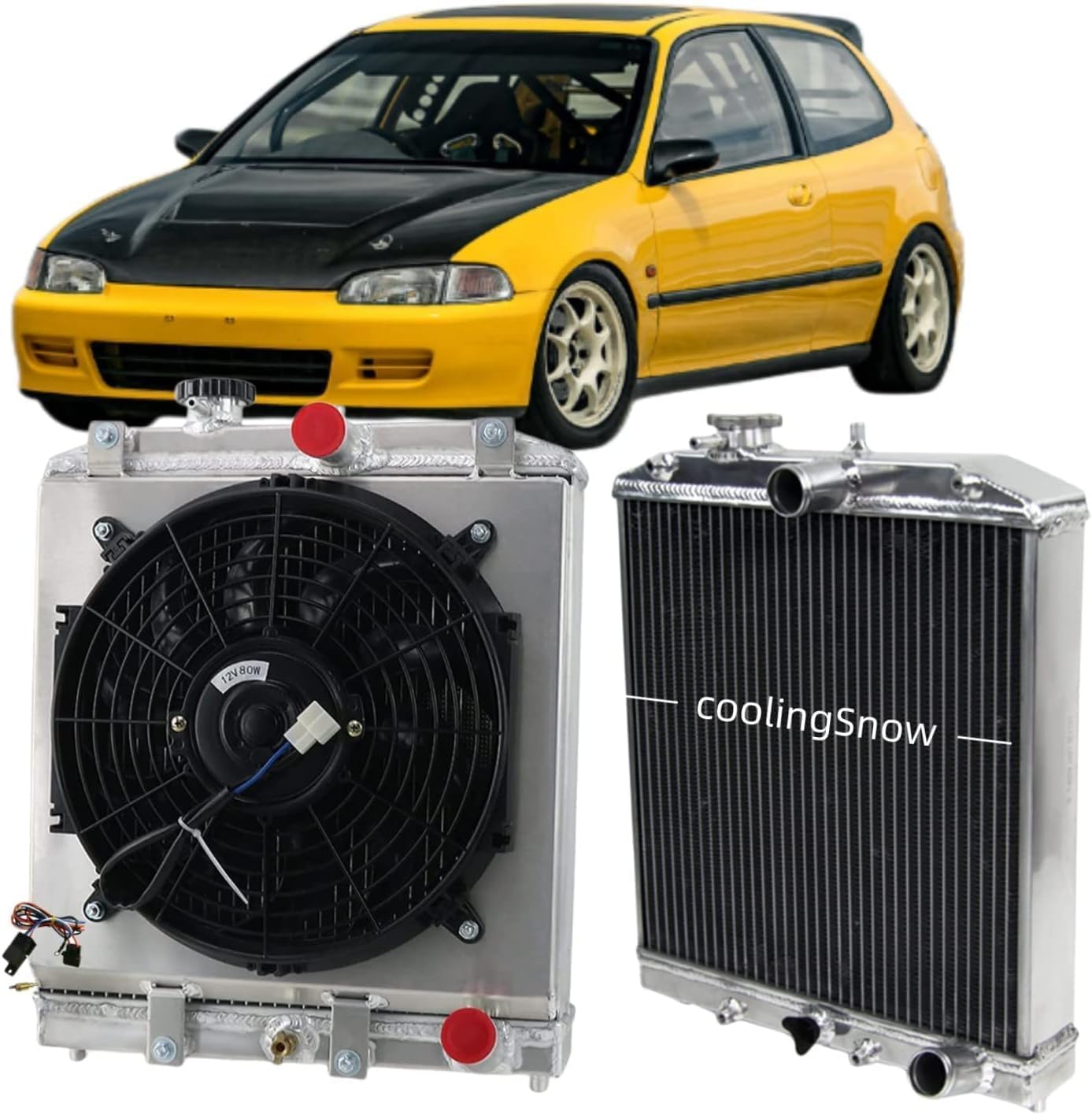
5. CoolingSnow 3-Row Full Aluminum Radiator with 12" Fan and Shroud
| Core Row | 3 Row |
|---|---|
| Core Material | Full Aluminum |
| Maximum Fan CFM | 2300±200 cfm |
| Fan Diameter (in) | 12.050” |
| Amp Draw | 12.70 amps |
This CoolingSnow kit replaces the factory radiator with a three-row, full-aluminum core and includes an aluminum shroud plus a 12" electric fan. It is intended as a direct bolt-in replacement for older Civic and Integra models and is used to improve cooling capacity and durability compared with the stock unit. The 3-row AA5052 construction and welded tanks provide higher heat rejection and a more corrosion-resistant assembly, while the included 12-blade fan (about 12" diameter) supplies active airflow up to roughly 2300 cfm at peak RPM. For daily driving and moderate performance use this radiator will lower operating temperatures and reduce overheating risk under load. Installation is straightforward for a mechanically inclined owner since it is a direct replacement, but fitment can be tight on modified engine bays and you may need to reuse or adapt existing hoses and brackets. The fan is plastic-bladed and draws about 12.7 amps, so plan wiring with an appropriate relay and fuse. Overall this kit is a solid reliability upgrade for older Civics seeking better cooling without complicated fabrication.
Best for: Buyers who want a robust, long-lasting factory-replacement upgrade to reduce engine temperatures and avoid overheating on aging Civic or Integra cooling systems.
Less Ideal for: People looking for a lightweight, track-focused racing radiator or those unwilling to handle basic wiring and minor fitment adjustments during installation.
- Full aluminum 3-row core and tanks for improved heat transfer and corrosion resistance
- Includes aluminum shroud and a 12" electric fan for a complete cooling swap
- Higher cooling capacity than stock design, reducing operating temperatures under load
- Designed as a direct bolt-in replacement for 1992–2000 Civic/Integra D15/D16 EK/EG applications
- Plastic fan blades and a relatively high amp draw require a proper relay, fuse, and secure mounting to avoid premature wear
Verdict: A durable, full-aluminum 3-row replacement radiator kit that delivers noticeably better cooling and reliability for older Civic/Integra engines.
6. DNA Motoring RA-HC92-42-2 2-Row T-6061 Aluminum Radiator for Honda D15/D16/B18 (Manual)

| Core Dimensions | 14.25 x 13.75 x 1.50 inches |
|---|---|
| Material | T-6061 Aluminum Core |
| Fitment | 1992-2000 Civic MT; 1993-1997 Del Sol MT; 1994-2001 Integra MT (Half Size) |
| Transmission Oil Cooler | No |
| Voltage | 12 Volts |
This DNA Motoring radiator is a full T-6061 aluminum, two-row unit aimed at replacing the factory radiator on manual-transmission Civic, Del Sol, and half-size Integra installs. It uses a high-density louvered fin core to increase heat dissipation and claims a 35 to 45 percent improvement in cooling efficiency versus stock. Typical use is direct replacement during a cooling system refresh or when upgrading to a lighter, more thermally efficient radiator for street or mild performance use. Buyers report the aluminum construction and welds look sturdy and the larger inlet/outlet diameters suit B-series swaps, but expect some fitment fiddling: several users needed to slightly modify mounting tabs, source larger hose clamps, or trim hoses for a clean install. Quality control seems mixed; most units work well with proper installation but a few customers reported leaks or cosmetic issues out of the box. Professional installation is recommended if you want a trouble-free swap.
Best for: A buyer who values improved cooling performance and lighter aluminum construction but checks peer reviews and is prepared to make minor fitment adjustments during installation.
Less Ideal for: Anyone seeking a guaranteed bolt-in, perfect cosmetic finish or a radiator for an automatic-transmission application; buyers wanting a no-modify factory-identical swap should consider alternatives.
- Full T-6061 aluminum core and high-density louvered fins for improved heat dissipation
- Two-row design provides stronger cooling capacity than many stock radiators
- Compatible fitment list covers 1992–2000 Civic, 1993–1997 Del Sol, and 1994–2001 Integra (manual)
- Fitment may require minor modifications to mounting tabs or hose routing on some cars
- Some units show cosmetic imperfections or occasional weld/drain leaks reported by buyers
Verdict: If you want a lightweight aluminum replacement that noticeably improves cooling and you are willing to tolerate minor fitment tweaks, this radiator is a strong value for EK-era Honda builds.
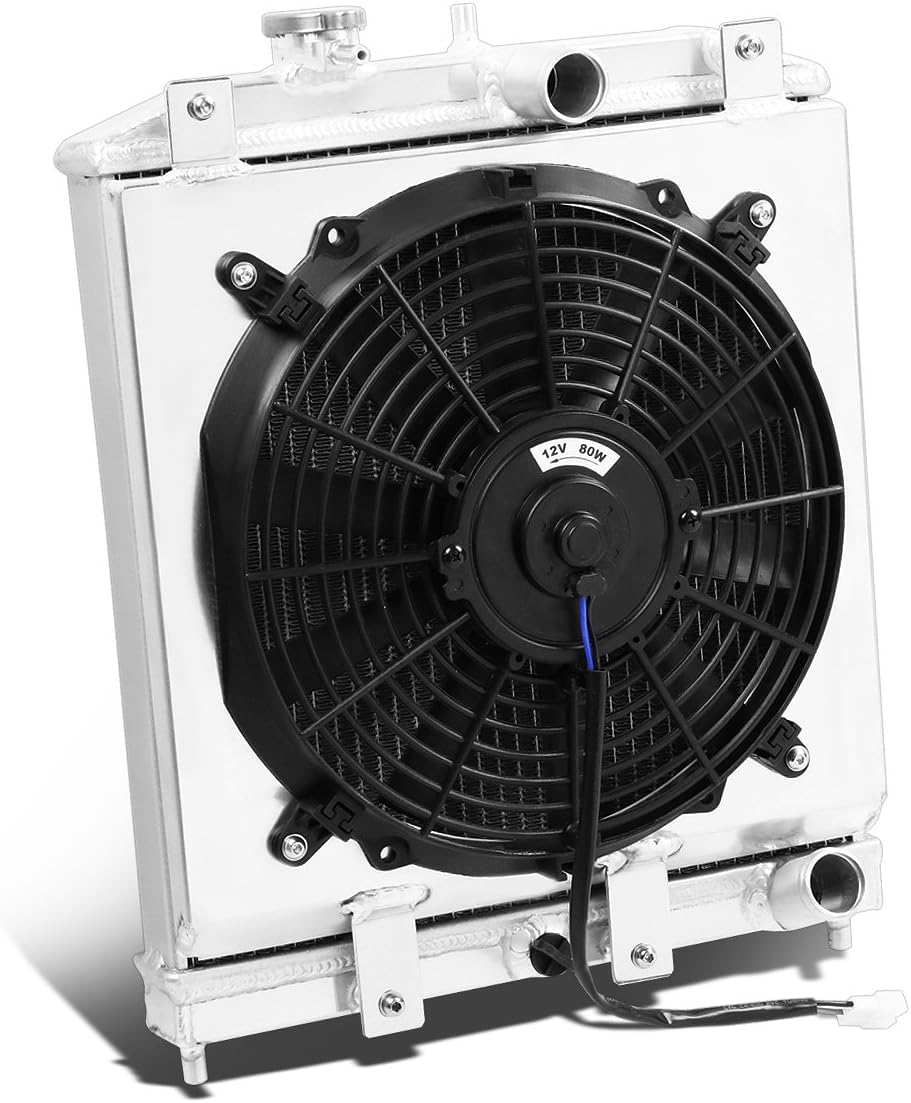
7. DNA Motoring 2-Row Aluminum Radiator with Fan Shroud for 1992–2000 Honda Civic (Manual)
| Power Connector Type | 3-Pin |
|---|---|
| Voltage | 12 Volts |
| Wattage | 80 watts |
| Cooling Method | fan-based |
| Material | Aluminum (radiator) |
This DNA Motoring radiator is a direct-fit, 2-row aluminum replacement preassembled with a fan shroud and a low-profile 12V electric fan, aimed at owners who need improved cooling compared with the factory unit. It bolts in as a light-weight aftermarket swap for 1992–2000 Civic manual-transmission models and similar chassis, and the thicker aluminum core is intended to dissipate more heat under load. Typical use is street driving and mild performance builds where lower operating temperature matters; buyers report measurable temperature drops when the fan runs. The kit includes the fan and shroud but may require splicing the fan power lead to match the vehicle harness and careful inspection for bent fins or packaging damage on arrival. Some users praise fit and cooling performance while others have reported fan reliability and occasional leaks, so expect to verify seal integrity and test the fan function before full installation. Professional installation is recommended if you want a worry-free swap.
Best for: Buyers who prioritize reliable cooling improvements for a Civic EK build or replacement and prefer a ready-made radiator/fan assembly they can bolt in or have professionally installed.
Less Ideal for: Do not choose this if you need a factory-exact plug-and-play fan harness or if you want the highest-end multi-row racing radiator; consider higher-grade options for heavy track use.
- Preassembled with fan shroud and low-profile 12V fan for simpler installation
- Aluminum 2-row core offers higher cooling capacity than stock for lower engine temps
- Lightweight direct bolt-on design intended for manual-transmission Civic EK fitment
- Reports of clear temperature improvement in street and mildly boosted setups
- Some customers report fan failures and inconsistent fan wiring requiring splicing
- Occasional shipping damage or bent fins reported so inspection on arrival is necessary
Verdict: A ready-made aluminum 2-row radiator with fan shroud that brings noticeable cooling gains for Civic EK owners who want a straightforward performance-minded replacement.
Choosing the Right Honda Civic EK Radiator: Key Factors to Consider
Core Design and Cooling Capacity
Core design determines how efficiently the radiator transfers heat from coolant to ambient air. Denser tube and fin arrangements increase surface area and boost heat rejection, which matters when you drive in stop-and-go traffic, tow light loads, or operate in hot climates. A multi-row core often improves cooling capacity but can add weight and reduce clearance in tight engine bays.
For the Civic EK, consider whether your driving frequently pushes the cooling system. If you track the car or do heavy-duty commuting, prioritize cores with higher fin density and more rows. If you mainly perform city and highway driving, an OE-equivalent core size usually provides balanced cooling without unnecessary bulk.
Fitment and Mounting Accuracy
Accurate fitment prevents installation problems and ensures proper coolant flow path and fan clearance. Mounting ear placement, inlet and outlet diameters, and alignment of transmission cooler fittings (if applicable) must match the Civic EK layout to avoid hose stretching or adapter use.
A radiator that requires bracket modification or alternative hose couplers increases installation time and can introduce leak points. Choosing a unit designed specifically for the EK configuration avoids these issues and keeps factory fan shroud and support pieces usable.
Construction Materials and Tank Type
Radiators commonly use an aluminum core with either plastic or metal tanks. Aluminum cores offer good thermal conductivity, while metal tanks provide greater resistance to heat cycling and less risk of cracking with age. Plastic tanks are lighter and typically less expensive but may become brittle after many heat cycles.
For an older Civic EK, metal tanks or reinforced plastic designs with robust welds or crimping often age better. Consider the local climate and how long you expect to keep the car when weighing material choices.
Corrosion Resistance and Coatings
Coolant composition, road salt exposure, and humidity affect corrosion over time. Radiators with anti-corrosive coatings or treated cores resist electrochemical degradation and extend service life. Internal coatings that reduce galvanic corrosion between dissimilar metals also help preserve cooling passages.
If you live in coastal regions or areas that use road salt, prioritize radiators with clear corrosion-resistant treatments and quality brazing. These features reduce the likelihood of leaks and maintain thermal performance longer.
Serviceability and Maintenance Features
Practical service features speed repairs and routine maintenance. Look for radiators with accessible drain petcocks, standard-sized hose fittings, and clear locations for transmission cooler connections if your Civic is an automatic. Compatibility with standard fan shrouds and mounts reduces labor during replacement.
Easier serviceability matters for do-it-yourself owners who want shorter bench time during coolant changes or radiator swaps. It also lowers the risk of improper reassembly that can cause leaks or reduced cooling effectiveness.
Compatibility With Cooling System Upgrades
Some owners fit upgraded fans, thermostats, or upgraded coolant hoses. Ensure the replacement radiator accommodates those changes without clearance problems or the need for adapters. The radiator should accept the same hose diameters and maintain required fan-to-core distance for effective airflow.
When planning future upgrades or running a mildly modified EK Civic, select radiators with flexible mounting options and standard fittings so other enhancements integrate smoothly.
Signs Your Civic EK Radiator Needs Replacement
Pay attention to trapping signs before a small leak becomes a breakdown. Visible coolant puddles or a sweet smell under the car often indicate an external leak. Frequent low coolant level warnings and needing to top off between drives are common early clues.
Engine overheating during idle or slow traffic, white exhaust steam shortly after start, or a rapidly rising temperature gauge are signals the radiator is not transferring heat effectively. Also watch for discolored coolant, which can indicate internal corrosion or cross-contamination.
- Coolant puddles or wet spots near the front of the car
- Persistent low coolant level despite no obvious leak
- Temperature gauge spikes during normal driving
- Discolored or sludgy coolant
Preparing Your EK for a Radiator Swap
Before ordering a replacement, gather basic tools, a proper coolant drain container, and any replacement hoses or clamps you may want to change at the same time. Inspect the fan shroud, mounting brackets, and radiator support for damage that could interfere with a new unit.
Plan the coolant flush and routing of hoses. If the vehicle has an automatic transmission, confirm whether the radiator integrates transmission cooler lines; if so, prepare the proper fittings and seals. Make sure replacement parts match the EK-specific inlet and outlet positions to avoid last-minute adjustments.
- Check fan shroud and mounting ears for cracks
- Have replacement hose clamps and hose ends ready
- Confirm transmission cooler port locations if applicable
- Use a catch pan to fully drain old coolant
Radiator Coolant and Maintenance Best Practices
Using the correct coolant type and maintaining the system prevents premature radiator failure. Flush the cooling system periodically per service interval recommendations to remove contaminants and maintain flow. Do not mix incompatible coolant chemistries as that accelerates corrosion.
Regularly inspect hoses, clamps, and the pressure cap. A failing pressure cap can reduce boilover resistance and contribute to overheating. After installation, bleed air from the cooling system according to Civic EK procedures to avoid hot spots and inaccurate temperature readings.
- Follow manufacturer coolant type and concentration guidelines
- Perform periodic coolant flushes to remove deposits
- Inspect and replace aging hoses and the pressure cap
- Bleed trapped air after refilling to ensure proper circulation
When to Choose OE-Equivalent Versus Upgraded Radiators
OE-equivalent radiators match factory dimensions and performance and are a practical choice for daily drivers who want straightforward replacements with predictable fit. They usually simplify installation and maintain original cooling characteristics for normal driving demands.
Upgraded radiators with thicker cores, higher fin density, or metal tanks are suitable when you need improved heat rejection or greater long-term durability. These are logical choices if you encounter chronic high-temperature conditions, plan to keep the EK long-term, or run small engine modifications that increase heat load.
- OE-equivalent: best for stock engines and simple swaps
- Upgraded cores: better for heavy duty use or modified engines
- Consider long-term durability if the car will be kept for many years
- Verify compatibility with existing fan and shroud before upgrading
Common Radiator Installation Pitfalls
Improper hose alignment, reused brittle clamps, or failing to secure the fan shroud can create leaks or interfere with airflow. Reusing old hoses that have softened or cracks can lead to split hoses when torqued with new clamps.
Failing to fully bleed the cooling system often causes air pockets that lead to overheating and inaccurate temperature readings. Also confirm that transmission cooler lines are properly sealed and that all mounting bolts are tightened to specified torque to prevent vibration-induced fatigue.
- Do not reuse brittle rubber hoses or old clamps
- Bleed the cooling system thoroughly after refill
- Double-check transmission cooler connections for automatics
- Torque mounts to spec to avoid vibration issues
Still looking for the perfect fit?
Select your Honda Civic configuration to see the most relevant Radiators recommendations
How We Chose the Best Honda Civic EK Radiator
We focused on objective, vehicle-specific criteria to narrow down the seven radiators included in this list. Primary evaluation factors were cooling efficiency, measured by core design and tube/fin density; fitment accuracy, ensuring mounting points, inlet/outlet sizing, and petcock/drain alignment match Civic EK factory locations; and construction materials such as aluminum core thickness and plastic versus metal tanks.We also assessed corrosion resistance and coatings that affect longevity in varied climates, and serviceability features like integrated transmission cooler ports, removable shrouds, and ease of hose access. Durability under thermal cycling and vibration resistance were weighted for older EK models. Exclusions included radiators designed for other Civic generations, universal-fit cores without Civic EK-specific mounting, and units lacking clear spec sheets.The result is a selection that emphasizes components appropriate for a Honda Civic EK owner who wants dependable cooling performance, straightforward installation, and predictable long-term behavior.
Our full evaluation process is outlined in our review methodology.
FAQ
How long does a typical Civic EK radiator last?
Radiator lifespan varies based on material and environmental exposure. Many radiators last 8 to 15 years under normal conditions, but exposure to road salt, poor coolant maintenance, or repeated overheating episodes can shorten that timeframe.
Can I replace the radiator myself on an EK Civic?
Many owners can perform the swap with basic tools and a service manual. The job requires draining coolant, detaching hoses, and supporting the fan shroud. If you are not comfortable with bleeding the system or dealing with transmission cooler lines, seek professional help.
Should I replace hoses and clamps when installing a new radiator?
It often makes sense to replace old hoses and clamps at the same time. Rubber hoses age and can develop weak spots that cause leaks when reinstalled. New clamps ensure a secure seal and reduce the risk of post-install leaks.
Does radiator material affect coolant compatibility?
Material by itself does not change the type of coolant required, but metals and coatings can influence corrosion rates with certain coolant chemistries. Always use a coolant that meets Honda specifications and avoid mixing incompatible formulas.
What are common signs of an internal radiator leak?
Internal leaks may show as milky or discolored coolant, contaminated oil (if transmission cooler failure contaminates engine oil), or unexplained coolant loss without external puddles. Monitoring fluid condition and levels helps detect these issues early.
Is a radiator flush necessary when replacing the radiator?
Performing a coolant flush is recommended to remove rust, scale, and contaminants from the rest of the cooling system. A clean system helps the new radiator operate at peak efficiency and reduces the chance of premature blockage or corrosion.
Final Verdict
When choosing a replacement radiator for a Honda Civic EK, prioritize fitment accuracy, core design, and construction material. Those aspects most directly influence cooling performance, installation ease, and long-term durability. Balance your needs between an OE-equivalent unit for straightforward replacement and an upgraded core if you require extra cooling capacity or enhanced longevity.Focus on corrosion resistance, proper hose and mount alignment, and serviceability features that simplify future maintenance. With those priorities in mind, you can select a radiator that keeps your EK running cool and reliable for years to come.
Explore More:
- Check out all Honda Civic parts & accessories
- Explore Radiators Maintenance & Repair Guides
- Explore Cooling System
- Browse all Auto Parts
