

Note: This article contains affiliate links. If you click on these links and make a purchase, I may earn a small commission at no extra cost to you. This helps support my research and content. Read my full affiliate disclosure here.
If your Civic is showing signs of overheating or you want extra cooling capacity for towing, spirited driving, or hot climates, a 4-row radiator can make a meaningful difference. This guide focuses on top 4-row radiators that fit the Honda Civic, shortlisted for their cooling performance, build quality, and installation fit.You will find the best options recommended for common Civic engine bays and usage scenarios, plus the key technical factors we evaluated such as core design, inlet/outlet placement, and mounting compatibility. Read on for what matters when upgrading to a 4-row radiator and how to match the right unit to your Civic before you open the hood.
Looking for other parts? See all Honda Civic parts & accessories.
Top Picks at a Glance
| Best Overall The best all-around choice for most situations | HKAUTOPART 4-Row Aluminum Radiator with Shroud, Fan and Relay Kit for 1992–2001 Honda Civic/Acura Integra Fitments |  |
| Best Quality Built to a higher standard if you want something more solid | ALLOYWORKS 4-Row All-Aluminum Radiator with Fan Shroud and Thermostat Kit |  |
| Best Value The sweet spot between price and what you get | CoolingSnow 4-Row Full Aluminum Radiator for 1992–2001 Honda Civic / Acura Integra |  |
| Best Budget The cheapest option that still gets the job done reliably | Xoslmon 4-Row All-Aluminum Radiator for 1992–2001 Honda Civic/Acura Integra 1.5–1.8L I4 |  |
| Most Popular A crowd favorite that many people choose with confidence | CoolingSnow 4-Row Full Aluminum Radiator with Shroud, 12" Fan and Relay Kit for Honda Civic/Acura Integra (1992–2001) |  |
1. HKAUTOPART 4-Row Aluminum Radiator with Shroud, Fan and Relay Kit for 1992–2001 Honda Civic/Acura Integra Fitments

| Fitment | 1992–2000 Honda Civic; 1994–2001 Acura Integra |
|---|---|
| Core construction | 100% brazed aluminum core |
| Fan | Pre-installed high-speed electric fan with shroud |
| Wiring | Pre-assembled relay harness with temperature sensor |
This HKAUTOPART kit replaces the factory unit with a multi-row aluminum core plus pre-installed shroud and a high-CFM electric fan, intended to improve cooling under load. It is typically used as a direct-fit replacement for 1992–2000 Honda Civic and 1994–2001 Acura Integra engines listed in the fitment notes, and it includes a relay harness and temperature sensor to simplify wiring. The all-aluminum, brazed construction and TIG-welded tanks aim to resist cracking and improve heat dissipation compared with older stock units. In practice the kit benefits owners who tow, track, or drive in hot climates since the larger core and active fan help keep coolant temperatures lower. Installation is described as plug-and-play with pre-drilled mounting holes but no printed instructions are included, so DIYers should be comfortable with basic electrical hookups or plan for professional install. Some buyers report excellent performance and a preinstalled fan, while a small number have seen leaks or cosmetic weld imperfections, so checking for pressure integrity after installation is wise.
Best for: Buyers who want a balanced upgrade over the stock radiator—better cooling performance, a complete fan/shroud kit, and relatively straightforward installation—especially for everyday drivers who occasionally tow, track, or drive in hot conditions.
Less Ideal for: If you want a strictly stock-appearance replacement with guaranteed factory finish or need a no-hands installation with step-by-step instructions, this kit may be a poor fit.
- Full multi-row brazed aluminum core for improved heat transfer and corrosion resistance
- Includes shroud, high-speed fan and relay harness for a mostly plug-and-play replacement
- Pre-drilled mounting holes to match factory positions and avoid cutting or drilling
- TIG-welded aluminum end tanks intended to reduce thermal cracking under high temperature loads
- No printed fitting instructions included so fan wiring and relay hookup require electrical know-how or shop help
- Some customers reported cosmetic welds and occasional leakage in a few units
Verdict: A practical, performance-minded 4-row aluminum radiator kit that upgrades cooling and includes fan and wiring for a straightforward replacement on compatible Civic and Integra models.
2. ALLOYWORKS 4-Row All-Aluminum Radiator with Fan Shroud and Thermostat Kit

| Core rows | 4 Row Core |
|---|---|
| Material | Full Aluminum |
| Fan diameter | 12.05 in |
| Maximum fan CFM | 1730 cfm |
| Fan amp draw | 12.70 amps |
This ALLOYWORKS 4-row all-aluminum radiator kit replaces the factory unit with a thicker, higher-capacity cooling core and adds an electric fan, shroud, relay and thermostat control for a complete cooling upgrade. Designed for 1992–2000 Honda Civic and related models with manual transmission, the 4-row core and full-aluminum tanks increase coolant capacity and heat rejection compared with stock radiators, making it useful for daily drivers that run hotter after engine swaps or modest tuning. The included 12" 10-blade fan is rated up to about 1,730 CFM and runs at roughly 12.7 amps, providing strong airflow when the thermostat triggers the relay. Installation is simplified by TIG-welded construction, supplied mounting tabs for zip-tie attachment and a radiator cap and probe adapter for the thermostat kit. Expect better temperature control under load and improved longevity versus older plastic/tank units, though the kit is built for manual-transmission setups and may require minor hose or mounting adjustments on some chassis trims.
Best for: Buyers who prioritize lower engine temps and durable cooling when upgrading a 1992–2000 Honda Civic or Del Sol for higher performance or reliability under load.
Less Ideal for: If you want a direct, no-modification swap for every factory trim or need an automatic-transmission specific unit, this kit is not the best choice.
- Full T-6061/all-aluminum core and tanks for improved durability over plastic-tank radiators
- 4-row core increases cooling capacity and coolant volume compared with typical factory units
- Includes 12" electric fan, shroud, relay and thermostat kit for a ready-to-install cooling upgrade
- TIG welded and pressure tested to reduce leak risk
- Specified for manual transmission applications only
- May need minor hose or mounting adjustments to fit different Civic/Del Sol/CRX/Integra trim variations
Verdict: A complete, performance-minded cooling kit that significantly improves heat rejection and durability for 1992–2000 Honda Civic and related builds.
3. CoolingSnow 4-Row Full Aluminum Radiator for 1992–2001 Honda Civic / Acura Integra

| Core Row | 4 Row |
|---|---|
| Core Material | Full Aluminum (AA5052) |
| Tank Material | Full Aluminum |
| Inlet/Outlet | 1.25" / 1.25" |
This CoolingSnow 4-row full-aluminum radiator is a direct-replacement cooling core intended for 1992–2000 Honda Civic and 1992–2001 Acura Integra applications. It uses an AA5052 aircraft-grade aluminum core and tanks with a CNC-machined filler neck and includes a radiator cap and an OEM-style brass petcock. In everyday use the denser 4-row core increases cooling capacity compared with typical stock units, making it useful for cars that run hot, modified engines, or towing light loads. The radiator is described as a drop-in fit, so installation should be straightforward for a home mechanic with basic tools. Buyers will notice sturdier construction and a higher heat rejection rate, but some customers have reported cosmetic surface contamination and slight core warping that could complicate custom welding or modification. The unit is optimized for cooling performance rather than perfect factory finish, so expect solid thermal gains with occasional minor fitment or finish touch-ups required on older vehicles.
Best for: Buyers who prioritize practical cooling gains and reliable, higher-capacity replacement parts for older Civic or Integra cars and want a mostly direct-fit upgrade they can install themselves.
Less Ideal for: Those seeking a cosmetically pristine, show-quality radiator or anyone planning extensive custom welding without first inspecting and preparing the core.
- Full AA5052 aluminum core and tanks for improved heat transfer over stock
- 4-row core increases cooling capacity for hotter-running engines or mild performance builds
- CNC-machined filler neck and included radiator cap for a secure seal
- Drop-in design intended for direct replacement in specified Civic and Integra years
- Some units show surface contamination and slight core warping that may need addressing for custom fabrication
- Finish and fitment may require minor adjustments on older vehicles
Verdict: A straightforward full-aluminum 4-row replacement that delivers noticeably better cooling for older Civic and Integra engines.
4. Xoslmon 4-Row All-Aluminum Radiator for 1992–2001 Honda Civic/Acura Integra 1.5–1.8L I4

| Fitment | 1992–2001 Acura Integra / 1992–2000 Honda Civic / Civic del Sol 1.5–1.8L I4 GAS |
|---|---|
| Core rows | 4-Row |
| Material | All Aluminum |
| Inlet/Outlet | 1.25" / 1.25" |
| Includes | Radiator cap and brass petcock drain |
This Xoslmon 4-row aluminum radiator is a direct-fit replacement built to handle higher cooling demand than the stock unit. It installs in the factory downflow location and ships with a CNC-machined filler neck, cap, and brass petcock drain, so installation mostly follows the original layout without major modification. The four-row tube-and-fin core and high-density fins increase surface area and coolant capacity, which helps lower engine temperatures during spirited driving or in hot climates. The unit is brazed and pressure tested to check for leaks and is intended for professional installation. On the downside it is a performance-style radiator so it can be heavier on coolant consumption and may require careful measurement to confirm fit; the seller still advises verifying dimensions before buying. For a budget-focused buyer looking to upgrade cooling on older Honda Civic or Integra engines, this radiator offers a noticeable thermal improvement over typical stock replacements at a modest cost.
Best for: Buyers who need a cost-effective performance upgrade to reduce engine temperatures on older Civic or Integra 1.5–1.8L engines and prioritize improved cooling over maintaining exact stock appearance.
Less Ideal for: Drivers who want a direct factory-appearance replacement without any change in coolant capacity or who prefer a plug-and-play unit installed without professional help.
- 4-row all-aluminum core increases cooling surface area for better heat dissipation
- CNC-machined filler neck and included cap for a secure fill point
- Brazed core construction and 100% leak testing for basic reliability
- Includes OEM-style brass petcock drain and fittings for straightforward installation
- Requires verifying measurements and may need professional installation to ensure proper fit and mounting
Verdict: If you want an affordable, higher-capacity aluminum radiator to lower operating temps on older Civic and Integra 1.5–1.8L engines, this 4-row Xoslmon unit delivers solid performance for the price.
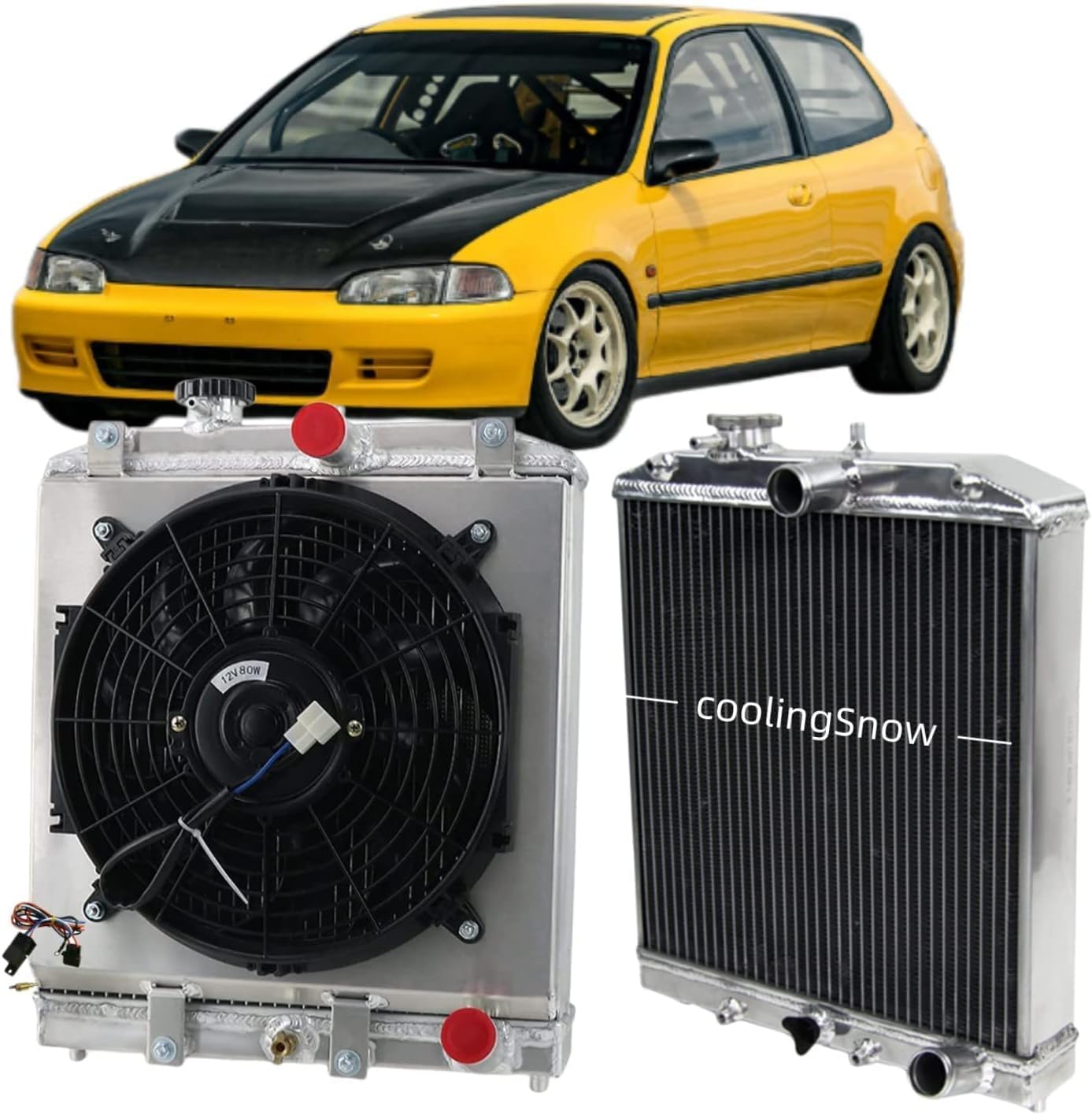
5. CoolingSnow 4-Row Full Aluminum Radiator with Shroud, 12" Fan and Relay Kit for Honda Civic/Acura Integra (1992–2001)
| Core Rows | 4 Row Core |
|---|---|
| Core Material | Full AA5052 Aluminum |
| Radiator Flow | Down Flow |
| Fan Diameter | 12.05 in |
| Max Fan CFM | 2300±200 cfm |
This CoolingSnow kit replaces the factory radiator with a 4-row, full AA5052 aluminum core and welded tanks, and ships with an aluminum shroud, a 12" electric fan and a relay/thermostat wiring kit for a drop-in style installation on compatible 1992–2001 Civics and Integras. In use it provides noticeably more cooling capacity than the stock unit thanks to the thicker 4-row core and higher-flow fan rated near 2,300 CFM, which helps bring temperatures down quickly when under sustained load or turbo setups. The kit is aimed at DIY installers and project cars; the fan, relay and mounting tabs make wiring and securing the fan straightforward, but some buyers reported missing overflow hardware and a few instances of early leaks or brittle plastic tabs. Expect better thermal performance and a relatively simple bolt-on swap, but plan to double-check included fittings and reinforce the shroud tabs if you want long-term durability in aggressive use. Ideal for improving cooling on high-temp or modified street engines, not a factory-longevity guaranteed OEM unit.
Best for: Buyers who want a significant cooling upgrade for older Civic or Integra street builds or light performance projects and who value peer feedback when choosing parts, preferring products that are relatively easy to install and offer measurable thermal benefit.
Less Ideal for: Drivers seeking an exact factory-quality lifetime replacement or fully guaranteed long-term reliability without inspecting included hardware should consider OEM-style replacements or higher-end race-grade radiators.
- Full AA5052 aluminum 4-row core and welded tanks for higher heat transfer than typical stock radiators
- Includes aluminum shroud, 12" high-flow fan and relay wiring kit for a largely complete cooling upgrade
- CNC machined filler neck and included radiator cap simplify installation and sealing
- Bolt-on fitment and supplied fan mounting tabs make it suitable for DIY installation and custom projects
- Some customers reported leaks developing within months, indicating variable long-term durability
- Fan shroud mounting tabs and some plastic parts have failed for some users and may need reinforcement or replacement
Verdict: A ready-to-install 4-row aluminum radiator kit that delivers clear cooling gains for 1992–2001 Civic and Integra projects while keeping installation simple for DIY builders.
Choosing the Right Honda Civic 4-Row Radiator: Key Factors to Consider
Cooling Capacity and Core Density
Cooling capacity determines how much heat the radiator can remove from the engine coolant during normal and heavy use. A 4-row core increases the contact surface and coolant volume compared with a two-row or three-row design, which helps reduce peak coolant temperatures during sustained loads such as highway towing, track days, or stop-and-go traffic in hot weather.
Core density and fin design also affect airflow resistance. While a denser fin pack can improve heat transfer, it may restrict airflow and require a more powerful fan or cleaner airflow path. Balance is important: choose a core that increases heat rejection without creating excessive back pressure on airflow through the Civic's condenser and AC components.
Fitment and Mounting Compatibility
Correct fitment is essential to avoid modification during installation. Verify inlet and outlet locations, hose diameters, mounting bracket positions, and transmission cooler ports when applicable. A radiator that matches the Civic's factory layout reduces installation time, avoids interference with the condenser or fan shroud, and preserves sensor and overflow tube routing.
Even small misalignments can force cutting or custom brackets, which adds cost and risk. Prioritize units that explicitly list Civic fitment or provide the same mounting footprint and port arrangement as the original unit to ensure a straightforward swap.
Material Quality and Corrosion Resistance
Radiator longevity depends heavily on materials and protective treatments. Aluminum cores paired with brass or aluminum tanks are common; full-aluminum construction generally offers lighter weight and good thermal conductivity. Look for corrosion-resistant coatings, quality brazing, and robust seam construction to minimize the risk of leaks over time.
Internal corrosion is often accelerated by poor coolant maintenance or electrolyte contamination. Choosing a radiator with proven corrosion resistance and paying attention to coolant type and service intervals will extend service life and reduce the likelihood of unexpected failures.
Factory Ports and Service Access
Practical serviceability matters for long-term ownership. Radiators that retain factory-style sensor ports, petcock drain locations, and transmission cooler fittings make routine maintenance such as coolant changes and bleeding easier. Access to the radiator drain and a compatible trans cooler port can save time and reduce the chance of fluid spills during service.
Consider also how the new radiator interfaces with the fan assembly and shroud. Units that allow reusing the OEM shroud simplify installation and maintain correct fan-to-core clearance for reliable cooling performance.
Fan Compatibility and Airflow Management
A heavier core may need the same or greater airflow to perform as intended. Confirm that the radiator works with the Civic's OEM fan or with common aftermarket fans that fit without modification. Proper shroud clearance and fan mounting points are critical to ensure the fan draws air effectively across the full core face.
Also consider the vehicle's condenser and AC system placement. A radiator design that interferes with condenser airflow can raise AC pressures and reduce comfort. Look for units engineered to preserve or improve the overall front-end airflow balance.
Warranty and Expected Service Life
Warranty terms can indicate manufacturer confidence and protect against premature failures. Check the length and coverage for core leaks, seam failures, and manufacturing defects. While warranty does not replace good cooling system maintenance, it provides recourse if a unit develops issues early in service.
Evaluate expected service life in the context of your driving habits. Drivers who subject their Civic to heavy loads, high ambient temperatures, or frequent short trips place more demand on cooling and should favor robust construction and longer warranty coverage.
When a 4-Row Radiator Makes Sense for Your Civic
Upgrading to a 4-row radiator is most beneficial when the stock cooling system struggles under repeated high-load conditions. Examples include towing small trailers, extended high-speed runs, performance driving, or consistently operating in very hot climates. These scenarios raise sustained coolant temperatures and can expose weaknesses in a smaller core.
If your Civic primarily sees city commuting in moderate temperatures, the factory radiator may be adequate. For owners who want extra thermal headroom or who plan engine modifications that increase heat output, a 4-row unit provides a thicker, higher-capacity core that helps stabilize temperatures under stress.
- Improves coolant capacity and heat rejection
- Helps resist overheating under sustained load
- Adds thermal reserve for mild performance upgrades
Signs Your Civic Radiator Needs Attention
Watch for obvious symptoms such as recurring overheating, low coolant levels without visible external leaks, steam from the engine bay, or a rising temperature gauge during normal driving. Other clues include discolored coolant, a sweet smell indicating antifreeze, or external wet spots on the radiator and hoses.
Not all issues show as external leaks. Internal blockages, corroded cores, and collapsed fins can reduce heat transfer before a full leak develops. If you encounter any of these symptoms, inspect hoses, clamps, the coolant reservoir, and the radiator surface. A pressure test or professional inspection will reveal whether replacement is necessary.
- Rising temperature gauge at idle or under load
- Coolant level drops without visible puddles
- Visible corrosion, wet spots, or coolant discoloration
Preparing Your Civic for Radiator Installation
Before installing a new 4-row radiator, gather the right replacement hoses, clamps, and any necessary gaskets. Drain the cooling system completely and dispose of coolant responsibly. Inspect the fan shroud, radiator mounts, and nearby components for wear so you can replace or repair them during the job if needed.
Take measurements of inlet and outlet spacing and verify trans cooler connections if present. Label and photograph hose routing and sensor connections to simplify reassembly. When possible, reuse OEM mounting hardware and the shroud to maintain correct fan clearance and airflow.
- Drain coolant and inspect accessory components
- Verify inlet/outlet spacing and mounting points
- Have replacement hoses and clamps on hand
Maintaining Cooling Performance After Installation
After fitting a new radiator, perform a complete coolant flush and use the correct coolant type and mixture recommended for the Civic. Properly bleed air from the system to prevent hot spots and overheating. Regularly check coolant level and condition, and inspect for any signs of seepage at seams and hose connections.
Monitor operating temperature over the first few drives and under different load conditions to confirm the radiator is delivering expected improvements. Maintain routine coolant service intervals and consider a periodic visual inspection of the radiator face and fins to remove debris that can restrict airflow.
- Flush and refill with manufacturer-recommended coolant
- Bleed system thoroughly to eliminate trapped air
- Inspect core face and hoses periodically for debris and wear
Common Installation Pitfalls to Avoid
Avoid overtightening hose clamps, which can cut hoses or distort ports and lead to premature leaks. Do not assume universal-fit brackets will align; confirm the radiator mounts exactly where the OEM unit did. Also be careful when reusing an old fan shroud that may have warped or cracked over time.
Neglecting to properly seat transmission cooler lines or sensor fittings can cause leaks after the install. Take time to torque fittings to the correct spec and pressure-test the cooled system before finishing the job to catch any issues while you can still make quick adjustments.
- Do not overtighten clamps or fittings
- Confirm mounting points and shroud alignment
- Pressure-test the system before completing installation
Still looking for the perfect fit?
Select your Honda Civic configuration to see the most relevant Radiators recommendations
How We Chose the Best Honda Civic 4-Row Radiator
We prioritized candidates that offer measurable improvements in heat rejection and long-term durability while maintaining correct fitment for the Honda Civic. Evaluation focused on cooling capacity under load, core construction and materials, inlet/outlet positioning and mounting compatibility, and corrosion resistance. We also considered factory-style hose and sensor ports to minimize modification during installation, and how straightforward the unit is to bleed and service during coolant changes. Reliability history and user-reported longevity were weighed alongside technical specs to avoid options prone to premature leaks or failures.Excluded items included universal-fit cores that require extensive trimming or welding, novelty products with unverified claims, and radiators that alter cooling system routing in ways that force ancillary component changes. The shortlist reflects units that balance increased thermal performance with practical fitment for typical Civic engine compartments and common driving conditions.
Our full evaluation process is outlined in our review methodology.
FAQ
How can I tell if my Civic needs a radiator replacement rather than a repair?
If you see active leaks from the core seams, extensive corrosion, or repeated failures after patch repairs, replacement is usually the best long-term option. Small hose or clamp issues can often be repaired, but core damage or internal blockage typically requires a new unit.
Will a 4-row radiator prevent overheating in extreme heat?
A 4-row radiator increases cooling capacity and helps reduce peak coolant temperatures, but it is not a cure-all. Proper coolant maintenance, functional fans, and intact airflow through the condenser and shroud are also necessary to prevent overheating in extreme conditions.
Is professional installation required for a 4-row radiator on a Civic?
Many mechanically inclined owners can perform the swap with basic tools, but professional installation is recommended if you are unsure about bleeding the system, routing hoses, or securing transmission cooler lines. Proper installation avoids leaks and ensures reliable cooling performance.
How often should I flush the coolant after installing a new radiator?
Follow the vehicle manufacturer's recommended interval for coolant service, which often ranges from a few years to longer depending on coolant type. After installation, check coolant condition and level after the first few hundred miles and then adhere to regular inspection intervals.
Can upgrading to a 4-row radiator cause any negative effects?
Potential downsides are minimal but can include reduced airflow if the thicker core interferes with the fan or shroud, and slightly increased front-end weight. Ensuring fan clearance and proper shroud fit prevents most issues.
Should I replace hoses when installing a new radiator?
Inspect hoses for soft spots, cracks, or swelling. Replacing aging hoses and clamps during radiator installation is a low-cost step that reduces the chance of a future failure and helps ensure a reliable seal.
Final Verdict
Prioritize a 4-row radiator that matches your Civic's factory mounting and port layout while offering proven core construction and corrosion resistance. Focus on units that improve cooling capacity without compromising airflow or service access. Balance cooling performance with practical fitment and warranty coverage to minimize installation hassle and long-term maintenance.If you drive in hot conditions, tow, or push your Civic harder than average, favor a robust 4-row unit with good materials and clear service access. For typical commuting, ensure fitment and serviceability to get the most reliable outcome from the upgrade.
Explore More:
- Check out all Honda Civic parts & accessories
- Explore Radiators Maintenance & Repair Guides
- Explore Cooling System
- Browse all Auto Parts
