

Note: This article contains affiliate links. If you click on these links and make a purchase, I may earn a small commission at no extra cost to you. This helps support my research and content. Read my full affiliate disclosure here.
If your Civic 1.7L is showing signs of overheating or coolant loss, choosing the right radiator matters for everyday reliability and engine longevity. A properly sized, well-built radiator restores consistent engine temperature control, reduces the risk of head gasket issues, and keeps the cooling system operating efficiently under highway and stop-and-go conditions.This guide covers our shortlisted top radiators for the Honda Civic 1.7L, focusing on core decision factors like cooling capacity, fitment accuracy, and installation considerations. Read on to compare options suited to routine use, towing, or hotter climates and learn what to check before you buy.
Looking for other parts? See all Honda Civic parts & accessories.
Top Picks at a Glance
| Best Overall The best all-around choice for most situations | KAX CU2354 Engine Cooling Radiator for Honda Civic 1.7L (2001, 2002–2005) |  |
| Best Quality Built to a higher standard if you want something more solid | Mishimoto Performance Aluminum Radiator for Honda Civic 2001–2005 (1.7L) |  |
| Best Value The sweet spot between price and what you get | PHILTOP CU2354 Replacement Aluminum Radiator for Honda Civic 1.7L |  |
| Best Budget The cheapest option that still gets the job done reliably | Autoshack Radiator for Honda Civic / Acura EL (2001–2005) |  |
| Highest Rated A top-rated pick with lots of positive feedback | Zynrako Aluminum Radiator Replacement for 2001–2005 Honda Civic 1.7L |  |
| Most Popular A crowd favorite that many people choose with confidence | AUTOSAVER88 Radiator for 2001–2005 Honda Civic 1.7L (fits D17 engines) |  |
| Best Seller A high-volume bestseller chosen again and again | Readair Engine Coolant Radiator with Transmission Oil Cooler for Honda Civic/Acura EL 1.7L (2001–2005) |  |
1. KAX CU2354 Engine Cooling Radiator for Honda Civic 1.7L (2001, 2002–2005)

| Compatible vehicles | 2001 and 2002–2005 Honda Civic 1.7L |
|---|---|
| Core thickness | 5/8 in |
| Inlet/outlet diameter | 1-1/8 in |
| Construction | Aluminum core with PA66 GF30 tanks |
This KAX CU2354 radiator is a factory-style replacement for the Honda Civic 1.7L (2001 and 2002–2005) engineered to provide reliable engine cooling and straightforward installation. It uses a high-density, multi-louvered aluminum core and precision TIG-welded joints to improve heat transfer and resist leaks, while PA66 GF30 plastic tanks reduce corrosion risk. The unit is built to match multiple OEM part numbers so it should drop into the stock location with minimal modification for properly matched cars. For everyday driving and moderate towing or hot-climate use the upgraded fin density helps keep temperatures in check, and the seller states parts pass leak and durability tests. Packaging and corner protection are enhanced to reduce shipping damage. Important limitations are that installation may require professional attention and the plastic tanks, while common, are not as impact-resistant as full-metal tanks, so long-term rugged use could favor heavier-duty aftermarket cores. Verify fitment for your VIN before buying.
Best for: Buyers seeking a balanced, reliable replacement radiator that closely matches factory fit and performance for routine driving and occasional heavy use on a Civic 1.7L.
Less Ideal for: Drivers who need an extreme-duty or race-spec cooling solution or who prefer a full-aluminum tank design for maximum durability should consider higher-end aftermarket radiators.
- Matches multiple factory part numbers for straightforward replacement fit
- High-density multi-louvered aluminum core for improved heat dissipation
- Precision TIG welding and tested assemblies to reduce risk of leaks
- Reinforced packaging to protect the radiator during transit
- Uses plastic (PA66 GF30) tanks which may be less impact-resistant than all-aluminum designs
Verdict: A practical, factory-matched replacement that delivers improved cooling over aged cores while keeping fitment and installation straightforward for Civic 1.7L owners.
2. Mishimoto Performance Aluminum Radiator for Honda Civic 2001–2005 (1.7L)

| Compatible engine | Honda Civic 1.7L (2001–2005) |
|---|---|
| Core type | Dual-core brazed aluminum |
| Includes | High-pressure radiator cap and magnetic drain plug |
| Construction | TIG-welded aluminum end tanks |
This Mishimoto performance radiator replaces the factory Civic unit with a lightweight, all-aluminum dual-core design aimed at lowering engine temperatures during spirited driving and heavy use. It installs as a direct-fit unit and includes a high-pressure radiator cap and magnetic drain plug, which raise coolant boiling point and help collect metal debris. The brazed aluminum core and TIG-welded end tanks promise durability and reduced distortion compared with stamped cores. In everyday use the larger core area and dual rows should reduce operating temps under load, making it a good choice for track days, towing, or any owner who sees elevated coolant temps. Installation is straightforward for a competent DIYer or shop, though buyers should expect to reuse or transfer some factory mounting hardware and hoses. The radiator adds performance-focused hardware at the cost of a higher weight than some plastic-tank alternatives and may be overkill for owners who only drive gently around town.
Best for: Enthusiasts who prioritize lower operating temperatures and reliable cooling under performance driving or towing and want a durable, long-lasting upgrade for a 1.7L Civic.
Less Ideal for: Drivers who only use their Civic for low-stress commuting and want the lowest-cost or lightest possible replacement should consider simpler factory-style radiators instead.
- Direct-fit design for drop-in replacement with minimal modification
- All-aluminum brazed core and TIG-welded end tanks for improved durability and heat transfer
- Includes high-pressure radiator cap to raise coolant boiling point
- Magnetic drain plug helps capture metal particles and protect the engine
- Heavier than comparable plastic-tank radiators, which may matter for extreme weight-conscious builds
Verdict: Choose this radiator when you need a durable, direct-fit cooling upgrade that reliably lowers temps during performance driving of a 2001–2005 Civic 1.7L.
3. PHILTOP CU2354 Replacement Aluminum Radiator for Honda Civic 1.7L

| Direct fit | 2002-2005 Civic 1.7L, 2001 Civic |
|---|---|
| Item model number | CU2354 |
| IATF16949 | Designed to original specifications |
| Manufacturer | PHILTOP |
This PHILTOP CU2354 radiator is a direct-fit replacement for 2001 and 2002–2005 Honda Civics with the 1.7L engine, built from aluminum with machined exterior components. It installs like a factory unit so no modification should be needed, which makes it suitable for a quick radiator swap or routine cooling system repair. The listing cites IATF16949 design standards and a core sized to match the vehicle, which indicates attention to durability and cooling capacity under normal driving. Practical benefits include lighter aluminum construction and factory-style connections for coolant inlet and outlet, simplifying installation and reducing installation time. Limitations to keep in mind are that this is a vehicle-specific aftermarket part rather than a branded OEM unit, so fit and finish can vary and long-term durability depends on installation and maintenance. Buyers should also confirm compatibility with their exact model year and any nonstandard engine or accessory configurations before purchase.
Best for: Buyers who prioritize a practical, no-fuss replacement to restore cooling performance quickly and keep repair time and complexity low.
Less Ideal for: Those seeking an exact factory-branded part or who are building a high-performance cooling system should consider other options tailored to upgraded needs.
- Direct-fit design for 2001 and 2002–2005 Honda Civic 1.7L models reduces installation time and need for modifications
- Aluminum construction offers good heat dissipation and lighter weight compared with older brass/copper units
- Designed to match factory connections and core dimensions for straightforward replacement
- Aftermarket unit rather than factory-branded part so long-term durability and exact fit can vary between vehicles
Verdict: A straightforward direct-fit aluminum replacement that gets a 1.7L Civic back to factory-style cooling with minimal fuss.
4. Autoshack Radiator for Honda Civic / Acura EL (2001–2005)

| Fitment | Honda Civic & Acura EL 2001–2005, L4 1.3L/1.7L/2.0L |
|---|---|
| Core Rows | 1 |
| Transmission Oil Cooler | Yes |
| Exterior | Aluminum, Plastic |
This Autoshack radiator is a budget-minded direct replacement intended to restore engine cooling to 2001–2005 Honda Civic and Acura EL models with L4 engines. It installs in place of the factory unit and includes a single-row aluminum core with a transmission oil cooler but no radiator cap. Typical use is straightforward: swap the old, leaking, or clogged radiator to regain steady coolant temperatures for daily driving. The aluminum core and plastic end tanks keep weight and cost down while offering adequate heat dissipation for street use. Fitment notes and the included transmission cooler make it suitable for cars with automatic or manual transmissions that require that feature. Limitations are its single-row core, which is less capable under heavy towing, track use, or extreme heat compared with multi-row or performance radiators, and the radiator cap is not supplied so you must reuse the factory cap or buy a replacement. Professional installation is recommended to ensure proper hose, sensor, and mounting alignment.
Best for: Buyers replacing a failing radiator who prioritize an affordable, correct-fit unit to restore reliable daily driving cooling without upgrading to a performance system.
Less Ideal for: Drivers who run heavy loads, tow, drive in extreme heat, or pursue performance cooling should consider multi-row or high-capacity aftermarket radiators instead.
- Direct-fit replacement for 2001–2005 Civic and Acura EL for straightforward installation
- Aluminum core with plastic tanks provides effective everyday cooling and low cost
- Includes transmission oil cooler provision compatible with automatic or manual transmissions
- Lightweight construction aids handling and ease of installation
- Single-row core offers limited cooling capacity for high-load, towing, or track conditions
- Radiator cap is not included so a cap must be reused or purchased separately
Verdict: A cost-effective, direct-fit radiator that restores reliable daily-driving cooling for 2001–2005 Civic and Acura EL models.
5. Zynrako Aluminum Radiator Replacement for 2001–2005 Honda Civic 1.7L
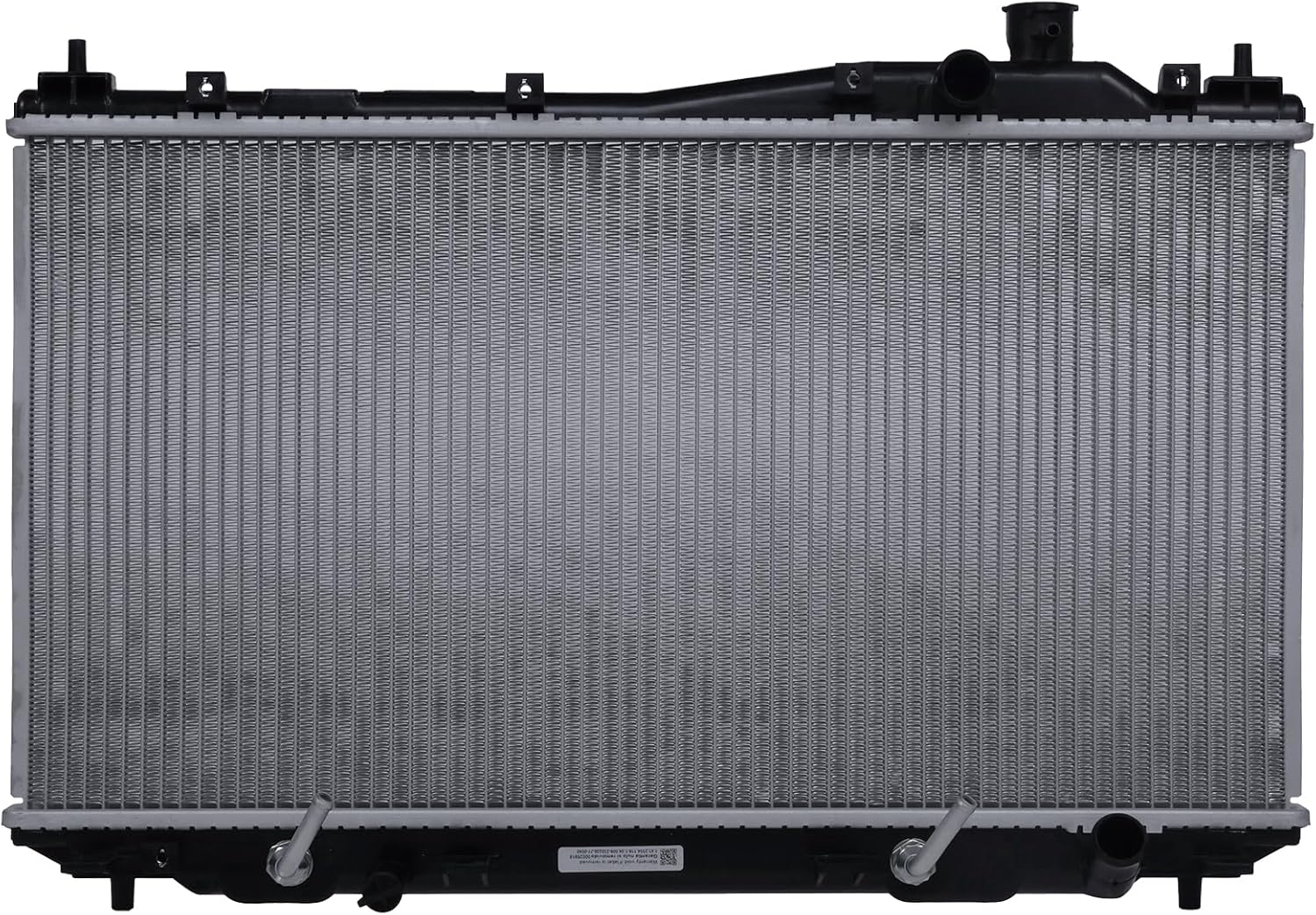
| Vehicle compatibility | 2001–2005 Honda Civic 1.7L; 2001–2005 Acura EL 1.7L |
|---|---|
| Core material | Aluminum |
| Position | Front |
| Fitment | Direct OEM replacement for listed part numbers |
| Construction | Reinforced plastic tanks; leak-tested |
This Zynrako radiator replaces the factory unit in 2001–2005 Honda Civic 1.7L and Acura EL 1.7L vehicles and is intended as a direct bolt-in swap. It uses a high-density aluminum core with multi-louvered fins and flat-flow tubes to improve heat transfer, and reinforced plastic tanks with pressure and leak testing for durability. Installation is straightforward for a DIYer comfortable with cooling-system work because the mounting points and hose connections follow OEM locations, though the radiator cap is not included. In normal daily driving the improved core helps maintain stable engine temperatures and should be a robust long-term replacement when installed correctly. Expect to retain or reuse factory mounting bushings and the cap, and consider professional installation if you are unsure about coolant bleeding or removing the fan shroud. The unit balances solid cooling performance and fit with the usual caveat that aftermarket plastic tanks can be less durable than full-metal designs under extreme heavy-duty use.
Best for: Buyers who prioritize long-term, reliable cooling for everyday driving and want a straightforward factory-quality replacement that fits without modification.
Less Ideal for: Not the best choice for drivers needing an all-metal heavy-duty performance radiator for towing, racing, or heavy commercial use.
- Direct fit to factory mounting points for bolt-on installation
- High-density aluminum core with multi-louvered fins for improved heat transfer
- Each unit pressure and leak tested before shipping
- Compatible with both manual and automatic transmissions for the listed engines
- Radiator cap not included so the original cap must be reused or purchased separately
- Plastic tanks rather than full-metal tanks may be less durable under extreme heavy-duty conditions
Verdict: Choose this radiator when you want a factory-matching, leak-tested aluminum replacement that restores reliable cooling for a 2001–2005 Civic 1.7L.
6. AUTOSAVER88 Radiator for 2001–2005 Honda Civic 1.7L (fits D17 engines)

| Compatible engines | Civic 1.7L D17 (2001–2005) |
|---|---|
| OEM part numbers | 19010-PLM-A01, 19010-PLM-A51, 19010-PMM-A51, 19010-PMM-A52 |
| Core material | Aluminum core |
| Tank material | PA66 GF30 plastic |
| Includes | Complete radiator with integrated oil cooler |
This AUTOSAVER88 radiator is a budget-minded, direct-fit replacement built to match factory mounting and coolant connections for 2001–2005 Honda Civic 1.7L engines. Installation is straightforward for a familiar DIYer or mechanic because the unit follows the original layout and accepts standard hose clamps rather than proprietary quick-connect fittings. The radiator combines an aluminum core with PA66 GF30 plastic tanks and an integrated aluminum oil cooler, which helps speed heat rejection and keep engine temperatures down under normal driving. Buyers report generally good fitment and quick installation, and some note the need to source a separate radiator cap. Expect solid short-term performance for everyday commuting and light towing, but the plastic tank and lighter-feeling core suggest this is a cost-focused alternative rather than an upgraded heavy-duty item; a few reviews mention molding issues around the cap and occasional leaks. Professional installation is recommended if you want a clean seal and to verify fittings before first use.
Best for: Buyers who value matching factory fit and immediate cooling performance at a lower cost, and who prioritize social proof of fitment from other Civic owners when choosing a replacement part.
Less Ideal for: Drivers needing a heavy-duty or long-term performance upgrade for high-load or extreme-temperature use should consider performance-focused radiators with reinforced tanks and thicker cores.
- Direct-fit design that matches factory mounting points for 2001–2005 Civic 1.7L engines
- Aluminum core with multi-louvered fins for improved cooling efficiency
- Includes an integrated aluminum oil cooler to assist temperature control
- Generally reported easy installation and good fitment by multiple buyers
- Plastic tank construction can be prone to molding or sealing issues around the filler area in some units
- Radiator cap is not included, so you may need to buy a compatible cap separately
Verdict: A cost-conscious, direct-fit replacement that restores cooling for 2001–2005 Civic 1.7L engines with widely reported good fitment and easy installation.
7. Readair Engine Coolant Radiator with Transmission Oil Cooler for Honda Civic/Acura EL 1.7L (2001–2005)

| Fitment | Honda Civic/Acura EL 2001–2005 L4 1.7L |
|---|---|
| Transmission oil cooler | Included |
| Core thickness | 3/5 inch |
| Inlet diameter | 1-1/10 inch |
| Outlet diameter | 1-1/10 inch |
This Readair radiator is a direct-fit replacement for 2001–2005 Honda Civic and Acura EL 1.7L engines and includes a built-in transmission oil cooler to simplify installation where applicable. It uses an aluminum core with TIG-welded joints and reinforced plastic inlet and outlet tanks intended to resist leaks, and the surface coating and included brass cooler indicate attention to corrosion resistance. Typical use is a straight swap for a failed or leaking factory radiator; reviewers report it drops into place and restores normal coolant temperatures. The unit ships without a radiator cap so expect to reuse your original cap or source a replacement. Buyers should appreciate the factory-style fitment and the included cooler, but DIY installers will need basic tools and to transfer or confirm cap and hose compatibility. The two-year unlimited-mileage guarantee and claimed leak testing add confidence for cautious buyers, though long-term durability depends on installation and vehicle conditions.
Best for: A cautious buyer who wants a factory-style replacement that minimizes surprises and restores cooling performance, and who prefers a tested product with a visible warranty and easy bolt-in fitment.
Less Ideal for: People seeking a performance upgrade beyond factory-spec cooling or those who cannot verify hose and cap compatibility before purchase should look at purpose-built performance radiators or a local parts supplier.
- Direct-fit design specifically listed for 2001–2005 Civic and 2001–2005 Acura EL 1.7L for straightforward replacement
- Aluminum core with TIG-welded joints and treated coating for improved corrosion resistance
- Integrated brass transmission oil cooler included to replace both radiator and cooler without additional parts
- Manufacturer states leak testing and provides a two-year unlimited-mileage guarantee
- Ships without a radiator cap so buyer must reuse the original cap or purchase one separately
- Some fitment or hose differences can occur, requiring verification before installation
Verdict: Choose this radiator if you want a direct-fit, factory-style replacement with an integrated transmission cooler and a two-year guarantee for your 2001–2005 1.7L Civic or Acura EL.
Choosing the Right Honda Civic 1.7L Radiator: Key Factors to Consider
Cooling Capacity and Core Design
Cooling capacity determines how well a radiator controls engine temperature under different driving conditions. A larger core with more rows or higher fin density improves heat transfer, which matters if you do highway driving in hot climates or frequently encounter heavy traffic where low-speed cooling is critical.
Core design also affects airflow resistance and how quickly coolant releases heat. Multi-row cores often cool better but can be heavier and slightly harder to purge of air during a coolant change. Look for specifications that list core dimensions, tube count, and fin density to match the Civic 1.7L cooling needs without compromising airflow to other front-end components.
Fitment and Mounting Precision
Accurate fitment is essential for an easy installation and reliable performance in the Civic 1.7L. Hoses, mounting tabs, and transmission cooler ports need to align with the stock layout to avoid cutting or fabricating brackets. A radiator that fits precisely reduces the risk of leaks caused by strained hoses or misaligned fittings.
Check inlet and outlet diameters and placement, the location of drain ports, and whether the unit includes mounting hardware or brackets matched to the Civic 1.7L. Proper fitment minimizes installation time and prevents interference with adjacent components like fans, shrouds, and the AC condenser.
Material Quality and Corrosion Resistance
Materials affect longevity and resistance to common failure modes such as corrosion, cracked end tanks, and solder joint failure. Aluminum cores with robust brazing are common for better heat transfer and weight savings, while some radiators use plastic end tanks to reduce cost.
For the Civic 1.7L, prioritize radiators that use corrosion-resistant materials and quality seals. Consider the expected service life in your climate: areas with road salt or hard water demand better corrosion resistance. Manufacturers that specify anti-corrosion treatments or thicker wall tubes offer an advantage for long-term reliability.
Transmission Cooling Integration
If your Civic 1.7L configuration includes an automatic transmission with an in-radiator cooler, confirm the radiator provides the correct transmission ports and flow direction. Incorrect or missing cooler provisions can prevent proper transmission cooling and lead to overheating or premature transmission wear.
Even for manual-transmission Civics, some replacement radiators route hoses differently; ensure the replacement preserves factory routing and pressure ratings. Where applicable, check whether the radiator includes adapters or fittings needed for the transmission lines to seat properly without leaks.
Ease of Installation
Installation complexity impacts cost if you plan to install the radiator yourself and affects the chance of a proper repair. Radiators that use factory-style mounting points, include necessary grommets, and do not require trimming or extra brackets reduce installation time and the potential for mistakes.
Consider whether the unit requires special tools for the hose clamps or transmission line fittings, and whether the top and bottom tank orientation matches factory layout. A radiator that integrates with the original fan shroud and supports common coolant bleed procedures will make post-installation coolant system servicing straightforward.
Warranty and Support
A clear warranty signals confidence in build quality and offers owners recourse if a defect appears. Warranty terms vary widely, including limited lifetime, multi-year, or shorter coverage tied to intended use. For the Civic 1.7L, a practical warranty length matters because radiators often fail from corrosion over time rather than immediate manufacturing defects.
Also consider manufacturer support and availability of replacement parts or hardware. A strong warranty combined with accessible customer service reduces long-term ownership risk and can be a deciding factor when two radiators have similar technical specs.
Signs Your Civic 1.7L Radiator Needs Replacement
Recognizing early symptoms prevents engine damage. Common signs include persistent coolant loss, visible leaks or puddles under the car, and frequent need to top off the coolant reservoir. Engine temperature spikes, especially under load or while idling in traffic, also indicate reduced cooling capacity.
Other indicators are rusty or discolored coolant, a soft or swollen upper radiator hose, and steam from the engine bay. Pay attention to heater performance; a radiator that cannot circulate adequate coolant can reduce cabin heating or cause fluctuating temperature gauge readings.
- Coolant puddles or wet spots beneath the front of the car
- Temperature gauge drifting higher or frequent overheating events
- Rust-colored or contaminated coolant in the reservoir
- Reduced cabin heat or inconsistent heater output
Preparing Your Civic for Radiator Service
Before removing the old radiator, gather the right tools, new coolant, and replacement seals or clamps. Park the Civic on a level surface, allow the engine to cool fully, and relieve any residual pressure by slowly opening the coolant reservoir cap. Disconnect the battery as a safety precaution when working near fans and electrical connectors.
Drain the cooling system into an appropriate container and inspect hoses and clamps for wear. Replacing worn hoses and clamps during the radiator service prevents premature leaks and saves time. Keep a torque reference for mounting bolts and follow a safe bleed procedure after installation to avoid air pockets.
- Allow engine to cool completely before opening system
- Have catch pan and proper disposal method for old coolant
- Inspect and replace radiator hoses and clamps if brittle
- Keep shop manual or torque specs handy for reassembly
Coolant Types and Fluid Maintenance for the 1.7L Engine
Use the coolant specification recommended for Honda Civic 1.7L engines to maintain corrosion protection and heat transfer. Mixing types can reduce inhibitor effectiveness and shorten radiator life. When refilling, use a premixed coolant or correctly diluted concentrate to ensure the proper freeze and boil-over protection.
Regular coolant maintenance includes periodic flushing according to the vehicle schedule or sooner if the coolant appears contaminated. A proper coolant flush helps remove scale and deposits that reduce heat transfer, and combining a new radiator with a clean cooling system maximizes performance and longevity.
- Follow manufacturer coolant type and concentration recommendations
- Avoid mixing different coolant chemistries
- Flush the system if coolant is rusty or contains debris
- Bleed air after refill to maintain correct circulation
Common Radiator Leak Locations and Quick Checks
Leaks frequently occur at hose connections, the radiator drain petcock, and where the tank meets the core. Inspect these areas visually and feel for dampness when the engine is cool. Small leaks may show as crusty dried coolant deposits or localized corrosion.
Cracks in plastic end tanks are another common issue. While some temporary sealants can stop small leaks, they are not a long-term solution and can clog the cooling system. For reliable repair, identify the leak source and choose a replacement that addresses the original failure mode.
- Check hose clamps and inlet/outlet junctions for wetness
- Inspect drain petcock and mounting flanges for seepage
- Look for white or orange residue indicating dried coolant
- Avoid prolonged use of sealants without addressing root cause
Installation Tips to Avoid Air Locks and Overheating
Proper bleeding of the cooling system is vital after installing a new radiator. Air pockets reduce flow and create hot spots that can cause overheating. Follow a step-by-step bleed routine: fill slowly, run the engine with the heater on high, and top off as air works out of the system.
Use the correct sequence for reconnecting hoses and ensure clamps are tightened to factory recommendations. Recheck coolant level after a short test drive and after the engine cools. Confirm there are no leaks and that the temperature gauge reaches and maintains a normal operating level.
- Fill slowly and run engine at idle with heater on to purge air
- Tighten hose clamps but avoid over-torquing plastic fittings
- Recheck coolant after a warm-up cycle and a short drive
- Inspect for leaks and monitor temperature gauge closely
Still looking for the perfect fit?
Select your Honda Civic configuration to see the most relevant Radiators recommendations
How We Chose the Best Honda Civic 1.7L Radiator
We evaluated candidates using criteria that matter for the Honda Civic 1.7L and typical owner use cases. Key evaluation dimensions included cooling efficiency under load and idle, measured by core design and flow capacity; fitment and mounting accuracy for the Civic 1.7L engine bay to minimize modification and ensure correct hose alignment; material quality and corrosion resistance, including tube and fin construction and end tank materials; warranty coverage and manufacturer support as a signal of durability; and installation friendliness, covering whether common tools and basic mechanical skills are sufficient. We also considered compatibility with factory transmission cooling circuits where applicable and the need for additional fittings or adapters.We excluded units that required substantive radiator support or chassis modification, radiators built for non-1.7L configurations, and those lacking clear technical specifications about core size or inlet/outlet positions. The final list favors parts that balance durability, straightforward installation, and verified fitment for Honda Civic 1.7L owners.
Our full evaluation process is outlined in our review methodology.
FAQ
How long does a typical radiator last on a Honda Civic 1.7L?
Service life varies with climate and maintenance, but radiators often last many years. Corrosion and external damage reduce lifespan, so regular coolant maintenance and inspections influence longevity.
Can I replace the radiator myself on a Civic 1.7L?
Many owners can perform the replacement with basic hand tools and mechanical aptitude. Expect some coolant handling and bleeding steps; replace worn hoses and clamps while the system is open to avoid repeat trips to the shop.
What are the risks of using a radiator with the wrong inlet or outlet positions?
Misaligned inlets or outlets can strain hoses and create tension that leads to leaks or premature failure. Incorrect port locations may also prevent proper transmission line connection where applicable, compromising cooling performance.
Is it worth flushing the cooling system when installing a new radiator?
Yes. Flushing removes corrosion, scale, and debris that can reduce the new radiator's effectiveness. A clean system improves coolant flow and heat transfer, extending the life of the replacement radiator.
What should I check if the car still overheats after installing a new radiator?
Verify the system is properly bled of air, ensure the thermostat and water pump are functioning, and inspect fan operation and coolant level. Drive conditions and a compromised head gasket are less common but possible causes to investigate.
Do transmission line fittings need replacement when swapping the radiator?
If the radiator includes transmission cooler ports, inspect the line fittings and seals for wear. Replacing soft O-rings or seals during the swap is often a low-cost way to prevent future leaks and ensure a secure connection.
Final Verdict
When selecting a radiator for a Honda Civic 1.7L, prioritize fitment accuracy, core cooling capacity, and material durability. Those three factors most directly affect installation ease, day-to-day engine temperature control, and long-term reliability. Consider transmission cooling provisions and warranty terms as tie-breakers when two radiators otherwise meet your needs.Balance the tradeoffs between core size and installation complexity. If you maintain coolant regularly and use correct fluids, a properly fitted radiator will restore stable engine temperatures and reduce the risk of overheating. Choose the option that best matches your driving conditions and installation preferences for a dependable outcome.
Explore More:
- Check out all Honda Civic parts & accessories
- Explore Radiators Maintenance & Repair Guides
- Explore Cooling System
- Browse all Auto Parts
