

Note: This article contains affiliate links. If you click on these links and make a purchase, I may earn a small commission at no extra cost to you. This helps support my research and content. Read my full affiliate disclosure here.
If your 2006-2011 Honda Civic is showing cooling issues, selecting the right radiator matters for reliability and engine health. A correct replacement restores proper coolant flow, reduces overheating risk, and avoids fitment headaches that lead to extra labor. This guide focuses on direct-fit radiators that suit the 2006-2011 Civic platform, noting the FA and FG generation code where relevant for clarity.Below you will find a short list of the top shortlisted radiators for this Civic range, along with the practical criteria we used to evaluate them and the most common symptoms and installation considerations to expect.
Looking for other parts? See all Honda Civic parts & accessories.
Top Picks at a Glance
| Best Overall The best all-around choice for most situations | Readair Engine Coolant Radiator Assembly for Honda Civic 2006–2011 (1.8L / 2.0L) |  |
| Best Quality Built to a higher standard if you want something more solid | Mishimoto Performance Aluminum Radiator for Honda Civic Si (2006–2011) |  |
| Best Value The sweet spot between price and what you get | DWVO Complete Radiator for 2006–2011 Honda Civic (fits select 1.8L and 2.0L) |  |
| Best Budget The cheapest option that still gets the job done reliably | ANPART Aluminum Radiator Replacement for 2006–2011 Honda Civic / 2006–2011 Acura CSX |  |
| Highest Rated A top-rated pick with lots of positive feedback | SCITOO Replacement Radiator for 2006–2011 Honda Civic (2922) |  |
| Most Popular A crowd favorite that many people choose with confidence | SCITOO Full Aluminum Radiator Replacement for 2006–2011 Honda Civic 1.8L/2.0L | |
| Best Seller A high-volume bestseller chosen again and again | A-Premium Engine Coolant Radiator Assembly for Honda Civic 2006–2011 |  |
1. Readair Engine Coolant Radiator Assembly for Honda Civic 2006–2011 (1.8L / 2.0L)

| Compatible vehicles | Honda Civic 2006–2011 L4 1.8L (USA/Canada) and L4 2.0L |
|---|---|
| Core thickness | 1 inch |
| Core height | 14-3/4 inch |
| Inlet diameter | 1-5/16 inch |
| Outlet diameter | 1-1/4 inch |
This Readair radiator is a direct-fit replacement for 2006–2011 Honda Civic 1.8L and 2.0L engines and replaces the factory cooling assembly with a TIG-welded aluminum core and molded inlet/outlet tanks. It installs the same way a factory unit does, so most DIYers and professional installers can drop the old radiator out and bolt this in without modifying hoses or brackets when fitment is correct. Notable features include a leak-tested aluminum core, treated coating for corrosion resistance, and factory-style inlet and outlet dimensions to maintain coolant flow. The unit does not include transmission or engine oil coolers, so it is intended solely as the engine coolant radiator. Practical benefits are reliable cooling performance, a construction designed to resist leaks, and a design that simplifies replacement for Civic owners restoring cooling capacity. The main limitation is that fitment must be confirmed for your specific Civic build since inlet/outlet and mounting details vary by production location and engine submodel, and it does not provide integrated oil cooling functions.
Best for: Buyers wanting a balanced, reliable factory-quality replacement radiator for a 2006–2011 Civic who value straightforward installation and durable cooling performance.
Less Ideal for: People needing an integrated transmission or engine oil cooler or those with heavily modified cooling systems should look for purpose-built options instead.
- Direct OEM-style fit for 2006–2011 Honda Civic 1.8L and 2.0L applications
- Aluminum core with TIG-welded construction and treated coating for corrosion resistance
- Leak-tested design and factory-style inlet/outlet placement for straightforward installation
- Does not include transmission or engine oil coolers so it will not replace integrated cooler-equipped units
Verdict: Choose this if you want a durable, direct-fit aluminum replacement radiator that restores factory-style cooling to a 2006–2011 Honda Civic with minimal fuss.
2. Mishimoto Performance Aluminum Radiator for Honda Civic Si (2006–2011)

| Compatibility | 2006-2011 Honda Civic Si (K-series engine) |
|---|---|
| Core Thickness | 1.57 inch |
| Inlet & Outlet | 1.25 inch |
| Material | Aluminum |
This Mishimoto performance aluminum radiator is a drop-in replacement for the 2006–2011 Civic Si with the K-series engine and is built to lower coolant temperatures compared with the factory radiator. It uses a two-row brazed aluminum core with TIG-welded end tanks and a magnetic drain plug, which helps with durability, efficient heat transfer, and easy service during coolant changes. Typical use is daily driving and spirited street or light-track use where improved cooling reduces thermal stress and helps maintain power under load. Installation is straightforward for a mechanic or experienced DIYer because it is designed for direct fitment. Practical benefits are reduced operating temps, all-aluminum construction that resists plastic tank failures, and a serial plate for authenticity. The main limitations are that this is an application-specific upgrade only for the 2006–2011 Civic Si K-series cars and core thickness and inlet/outlet sizes must match hoses and mounts, so minor adapter work can be required on nonstandard setups.
Best for: Drivers seeking a performance-focused, reliable cooling upgrade for a 2006–2011 Civic Si who prioritize lower operating temperatures and a durable all-aluminum replacement over stock components.
Less Ideal for: Buyers who need a radiator for different Civic models or years, or those looking for a universal or budget plastic-end replacement.
- All-aluminum brazed core and TIG-welded end tanks for stronger, longer-lasting construction
- Two-row, 1.57 inch core increases cooling capacity versus typical factory units
- Direct-fit design aimed at drop-in installation for the 2006–2011 Civic Si K-series
- Magnetic drain plug helps trap metal particles during coolant changes
- Fitment limited to 2006–2011 Civic Si K-series applications and not a universal solution
Verdict: Choose this Mishimoto radiator if you want a durable, direct-fit aluminum upgrade that noticeably improves cooling for a 2006–2011 Civic Si.
3. DWVO Complete Radiator for 2006–2011 Honda Civic (fits select 1.8L and 2.0L)
| Core size | 26" x 14" |
|---|---|
| OEM part number | 19010RNBA01, 19010RNBC51 |
| Compatible engines | 1.8L and 2.0L variants (see fitment notes) |
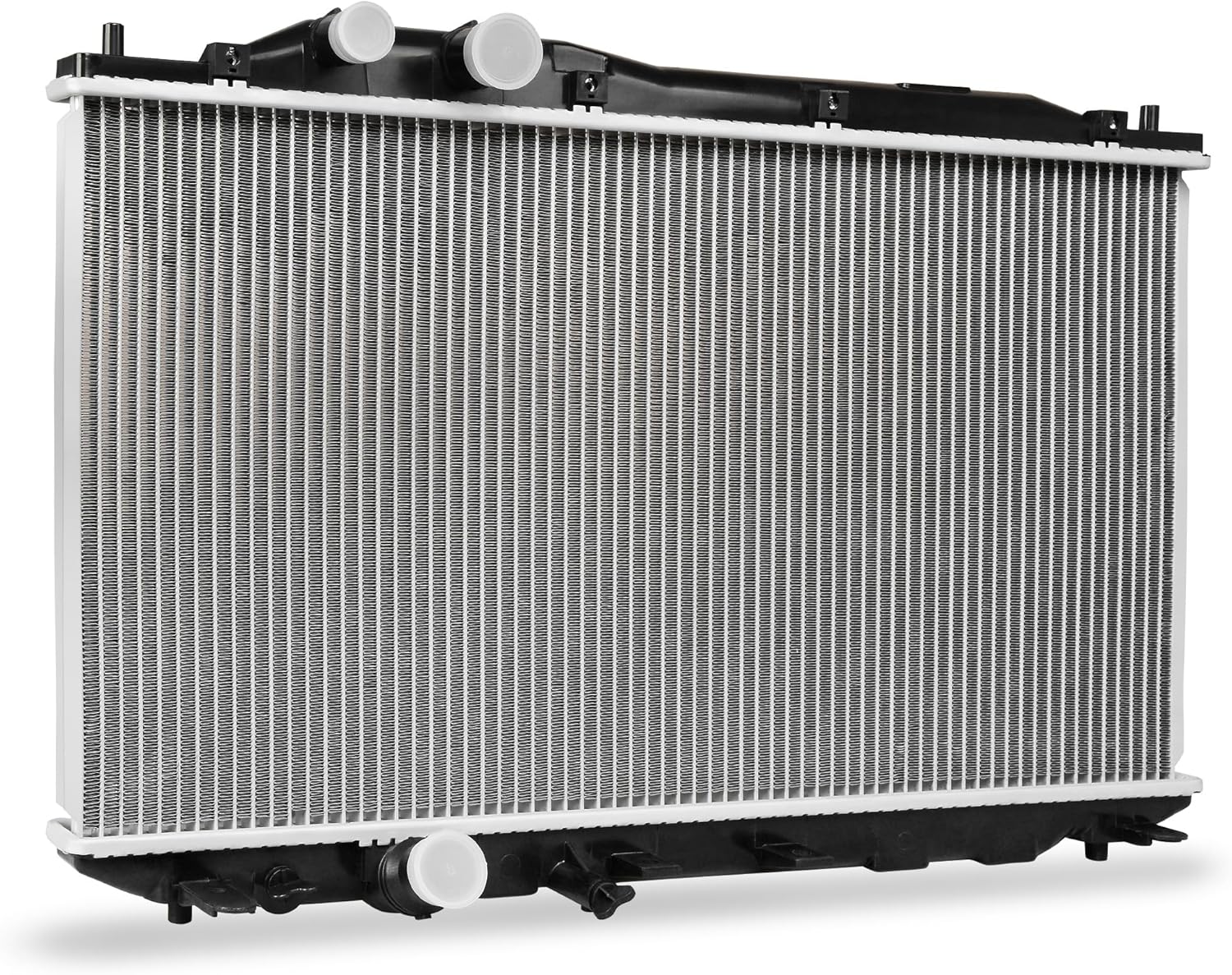
This DWVO complete radiator is a full replacement intended to match factory fit for many 2006–2011 Honda Civic and some Acura CSX models. It uses a high-density aluminum core with multi-louvered fins and TIG-welded connections to improve heat transfer and durability compared with older, damaged cores. The unit arrives as a complete radiator assembly (radiator cap not included) and is packaged with foam corner supports to reduce shipping damage. In use it performs like a standard replacement radiator: install in place of the original to restore cooling capacity, reduce engine temperatures, and stop leaks from a worn core. The manufacturer recommends professional installation because the inlet/outlet tanks are molded PA66 GF30 and the design assumes proper mating to factory hoses and mounts. Limitations include the missing radiator cap and the need to verify the exact build origin and transmission type compatibility listed in the fitment notes; you should confirm fitment for your Civic variant before buying. Regular coolant and pressure-cap checks remain important to avoid electrochemical corrosion or premature failure.
Best for: Buyers who want a cost-effective, ready-to-install replacement that restores factory cooling performance on affected Civic models and prioritize a reliable, OEM-style swap.
Less Ideal for: If you need an upgraded high-capacity performance radiator for tuned engines or heavy towing use a purpose-built performance unit instead.
- Direct-fit replacement for many 2006–2011 Civic and select Acura CSX models providing factory-style installation points
- Aluminum core with multi-louvered fins for improved heat dissipation compared with degraded original cores
- TIG-welded construction and reinforced inlet/outlet tanks intended for durability under normal driving conditions
- Protective foam in packaging reduces risk of shipping damage to fins and mounting points
- Radiator cap is not included so you must reuse the original cap or purchase one separately
- Fitment varies by production location and transmission; buyer must confirm compatibility before installation
Verdict: A practical, factory-style replacement radiator that restores cooling reliability for 2006–2011 Civic owners seeking a straightforward swap.
4. ANPART Aluminum Radiator Replacement for 2006–2011 Honda Civic / 2006–2011 Acura CSX

| Applicable vehicles | 2006–2011 Honda Civic; 2006–2011 Acura CSX |
|---|---|
| Core material | Aluminum |
| Position | Front |
| Item model number | 125090-5260-1842536101 |
This ANPART radiator is a full-aluminum replacement built to match factory fitment for 2006–2011 Honda Civic and 2006–2011 Acura CSX applications. It is designed as a direct front-position swap and uses a high-density fin core intended to improve cooling capacity over older or damaged units. Typical use is a standard cooling system repair or a proactive upgrade when the original radiator shows corrosion or leaks. The radiator’s aluminum core and factory-style mounting points make installation straightforward for a competent DIYer or a shop, and several customer reports show exact fit and leak-free performance out of the box. Because it is a value-oriented aftermarket part, expect OEM-like fit and function but not premium refinements such as thicker end tanks or factory-brand provenance. The unit is pressure tested and includes reinforced gaskets and rings for durability, though some buyers note the construction is lighter than original equipment. For a budget repair that restores cooling performance, this radiator offers a solid balance of price and function.
Best for: Buyers looking for an affordable, functional radiator replacement to restore cooling on a 2006–2011 Civic or Acura CSX who prioritize cost and straightforward fitment over premium materials.
Less Ideal for: Drivers seeking a factory-brand part with heavier-duty construction or who require a performance-oriented cooling upgrade beyond stock capacity.
- Full-aluminum core for improved heat dissipation compared with many older radiators
- Designed for direct drop-in installation to match factory mounting and plumbing
- High-density multi-louvered fins aimed at increased cooling efficiency
- Pressure tested and fitted with thermal-shocked gaskets for leak resistance
- Widely reported to fit listed Civic and CSX model years without modification
- Aftermarket construction is generally lighter than some factory radiators which may affect perceived robustness
Verdict: A cost-conscious, direct-fit aluminum radiator that reliably restores cooling for 2006–2011 Civic and CSX models.
5. SCITOO Replacement Radiator for 2006–2011 Honda Civic (2922)
| Fitment | 2006–2011 Honda Civic L4 1.8L / 2.0L |
|---|---|
| Core Rows | 1 Row |
| Inlet Diameter | 1.25 in. |
| Outlet Diameter | 1.25 in. |
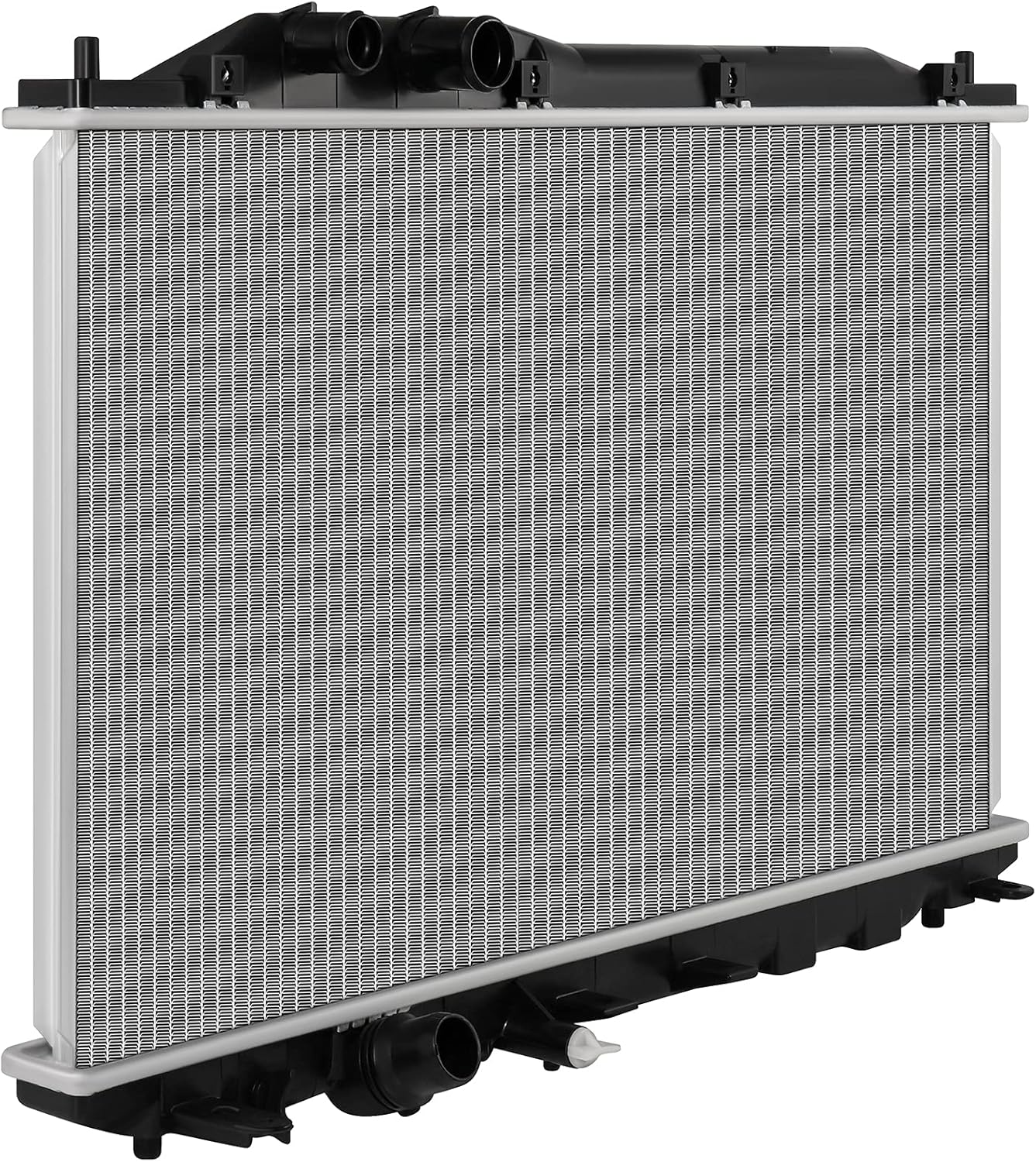
This SCITOO radiator is a direct-fit replacement for 2006–2011 Honda Civic L4 1.8L and 2.0L engines and is built as a single-row aluminum core unit sized to the Civic cooling area. Typical use is a full radiator swap when the original has failed, leaking, or clogged; installation is described as model specific and plug-and-play for the 2-door coupe trim. The unit does not include transmission or engine oil coolers so it suits Civics that use a plain coolant-only radiator. Notable features from the listing are 1.25 inch inlet and outlet diameters and a one-row core which makes the radiator lighter and simpler to install. In practical terms this means straightforward replacement and restored cooling capacity for everyday driving and moderate highway use. Limitations to consider are the single-row core, which provides less thermal mass than multi-row radiators under sustained heavy load, and the omission of an integrated oil cooler if your vehicle required one. Overall the SCITOO radiator is a budget-friendly, factory-replacement style option for common Civic cooling repairs.
Best for: Buyers who need a reliable, factory-replacement style radiator to restore normal cooling after a failure and prioritize straightforward fitment and dependability over maximum cooling performance.
Less Ideal for: Drivers who regularly tow, track, or operate the car under prolonged heavy loads and need increased cooling capacity or integrated oil cooling should consider a multi-row or performance radiator instead.
- Model-specific fit for 2006–2011 Civic for easier installation
- Aluminum single-row core offers good corrosion resistance
- Standard 1.25 inch inlet and outlet match factory hose sizes
- Lightweight design simplifies handling during replacement
- Single-row core offers less cooling capacity under sustained heavy load
- Does not include transmission or engine oil cooler functionality
Verdict: A straightforward, model-specific aluminum replacement that restores reliable cooling for 2006–2011 Civics with an emphasis on fit and dependability.
6. SCITOO Full Aluminum Radiator Replacement for 2006–2011 Honda Civic 1.8L/2.0L
| Fitment | 2006–2011 Honda Civic 1.8L/2.0L |
|---|---|
| Core Rows | 1 Row |
| Inlet Diameter | 1.25 in. |
| Outlet Diameter | 1.25 in. |
This SCITOO full-aluminum radiator is a model-specific replacement for 2006–2011 Honda Civic sedans and coupes with 1.8L or 2.0L engines. It swaps in like a factory radiator and provides single-row core cooling in an aluminum construction that resists corrosion better than standard plastic-tank units. Typical use is direct replacement during a cooling-system repair or when upgrading an aging OEM radiator; the unit does not include oil or transmission coolers so it is intended as a straightforward coolant heat-exchanger. Buyers will appreciate the correct inlet and outlet diameters and the advertised one-row core for reasonable flow and cooling in everyday driving. Some owners report occasional missing or mis-sized mounting clips and the need for minor fabrication or reuse of original hardware, so inspect the part and be prepared to transfer small brackets or clips from the old radiator. Overall it offers good cooling and value for Civic owners who want a durable aluminum core but want to verify fitment and mounting details before installation.
Best for: Buyers who prioritize a durable replacement that restores factory cooling performance and want reassurance from model-specific listings and user feedback before committing.
Less Ideal for: If you need an integrated transmission or oil cooler or expect perfect out-of-box mounting hardware without modification, consider alternatives or plan to reuse factory brackets.
- Full-aluminum core offers improved corrosion resistance compared with plastic-tank radiators
- Model-specific fitment for 2006–2011 Honda Civic 1.8L and 2.0L simplifies replacement
- Correct inlet and outlet diameters documented for straightforward hose connection
- Single-row core provides adequate cooling for normal driving and daily use
- Some units may arrive with missing or incorrectly sized mounting clips requiring fabrication or reuse of old hardware
- Does not include transmission or engine oil coolers so not suitable where those are required
Verdict: A budget-friendly full-aluminum replacement that restores reliable cooling for 2006–2011 Civic owners who want a durable, model-specific radiator.
7. A-Premium Engine Coolant Radiator Assembly for Honda Civic 2006–2011

| Vehicle fitment | Honda Civic 2006–2011 L4 1.8L and 2.0L |
|---|---|
| Reference numbers | CU2922, 2922, 2926, 8012926, 8012922, 19010RNBA51, 19010RNBC51 |
| Core height | 14-3/4 inch |
| Core thickness | 1 inch |
| Core width | 26-5/16 inch |
This A-Premium radiator is a full replacement cooling assembly built for 2006–2011 Honda Civic 1.8L and 2.0L four-cylinder applications. It is used the same way a factory replacement radiator is: remove the old unit, transfer any brackets or sensors as needed, and install this assembly to restore coolant flow and heat rejection. Notable features include a vehicle-specific fitment list, a one-year unlimited-mileage guarantee, and core dimensions that match typical Civic cooling requirements. In practice the radiator should return engine temperatures to normal operation and is suitable for street-driven Civics with stock cooling demands. The product does not include transmission or engine oil coolers so vehicles that need those integrated coolers will require separate parts or a different assembly. Buyers should expect a basic aftermarket fit and may need to reuse factory mounting hardware or trim minor attachments during installation. The one-year coverage and stated testing give extra peace of mind for buyers who prefer conservative, reliable replacements.
Best for: Buyers who want a conservative, vehicle-matched radiator to restore factory cooling performance on a 2006–2011 Civic and prefer a covered aftermarket replacement with documented fitment.
Less Ideal for: Drivers planning to upgrade cooling capacity for heavy towing, racing, or modified engines should consider performance radiators or assemblies with integrated coolers instead.
- Vehicle-specific fitment for Honda Civic 2006–2011 L4 1.8L and 2.0L engines
- Manufactured and tested to meet performance standards for restoring cooling function
- Includes a one-year unlimited-mileage guarantee for added buyer confidence
- Core dimensions listed so installers can confirm fit before purchasing
- Does not include transmission or engine oil coolers if your vehicle requires them
Verdict: A-Premium offers a vehicle-specific, thoroughly tested replacement radiator with a one-year guarantee that restores factory cooling for 2006–2011 Honda Civics.
Choosing the Right 2006-2011 Honda Civic Radiator: Key Factors to Consider
Fitment and Mounting Points
Correct fitment prevents installation delays and eliminates the need for custom brackets or hose modifications. For the 2006-2011 Civic, confirm radiator mounts, fan shroud clearance, and transmission cooler port orientation if your car has an automatic transmission. A direct-fit unit aligns with factory mounting tabs and sensor ports, which reduces risk of rubbing, leaks, or fan interference.
Even small differences in neck height or hose offset can create stress on hoses and clamps, leading to leaks over time. Check that the replacement preserves radiator-to-hood clearance and allows the stock fan assembly to bolt on without forcing any components.
Core Design and Cooling Capacity
Core construction determines how effectively heat moves from coolant to air. Common variables include tube count, fin density, and whether the core is single- or multi-pass. For the Civic, prioritize cores that maintain proper coolant flow without excessive backpressure and that provide sufficient surface area to reject heat under load or hot weather.
A higher fin density can improve cooling but may clog more easily in dirty environments. Balance core size and fin design against typical driving conditions to maintain consistent operating temperature and avoid boil-over or frequent overheating episodes.
Material Quality and Corrosion Resistance
Radiators are commonly made from aluminum cores with plastic or aluminum tanks. Aluminum offers good heat transfer but can corrode if incompatible coolant or additives are used. Plastic tanks are lighter and lower cost but may crack over time at stress points or under repeated heating cycles. Consider radiator units with corrosion-resistant coatings, quality brazing, and robust tank materials to reduce failure risk.
Environmental exposure, road salt, and coolant chemistry all influence longevity. Picking materials suited to your climate and maintenance habits reduces the chances of premature leaks or core degradation.
Leak Tightness and Pressure Handling
A radiator must hold pressure to maintain the cooling system's boiling point and to prevent air intrusion. Look for units that specify pressure ratings compatible with the Civic's cap and cooling system. Quality seals, robust necks, and properly welded or brazed joints lower the chance of slow leaks or sudden failures.
Small manufacturing defects or poor assembly can manifest as seepage at seams or hose connections. Choosing radiators with documented quality controls or warranties helps protect against early-life leakage and the associated repair costs.
Compatibility With Transmission Cooling
Many automatic-transmission Civics use integrated transmission cooler passages in the radiator. Ensure the replacement preserves these ports and the correct hose routing. Failure to match the transmission cooler fittings can result in poor transmission cooling or the need for additional adapters.
If your Civic is manual, transmission passages may not be present and are less relevant. Verify the radiator's product details against your specific drivetrain to avoid incorrect fitment.
Serviceability and Installation Requirements
Consider how easy the radiator is to install and service. Features such as OEM-style inlet and outlet necks, included mounting hardware, and pre-drilled sensor ports speed installation. Also check whether the radiator requires special tools or sealants and whether the fan shroud or auxiliary components must be transferred from the old unit.
Shorter labor times reduce replacement cost and the chance of installation errors. Choose a radiator that minimizes required additional parts and that accommodates routine maintenance tasks like coolant flushing and bleed procedures.
Common Radiator Symptoms on 2006-2011 Civics
Recognizing symptoms early helps you decide whether a radiator repair, leak fix, or full replacement is needed. Typical signs include persistent overheating, coolant loss without visible external puddles, or a sweet smell indicating coolant vapor. Temperature gauge fluctuations during idle or stop-and-go traffic also point to reduced cooling efficiency.
Other symptoms to watch for are visible coolant leakage at the radiator seams or hose connections, steam from the engine bay after heavy use, and discolored or greasy deposits near tank joints that suggest slow seepage. Addressing these indicators promptly avoids engine damage and can limit repair costs.
- Consistent engine overheating under load or in warm weather
- Coolant puddles or dried coolant residue beneath the front of the car
- Temperature gauge spikes when idling or in traffic
- Steam or sweet-smelling vapor from the engine bay
- Visible corrosion or cracking on tanks and seams
When to Repair Vs Replace the Radiator
Small, localized leaks at a hose neck or a minor seam seepage can sometimes be addressed with clamp adjustments or a professional leak repair. However, repairs are generally temporary if the core shows widespread corrosion, the tanks are cracked, or multiple seams leak. For long-term reliability, replacement is often the better choice when signs of extensive wear appear.
Consider replacement if the radiator has recurring leaks, if pressure testing reveals an inability to hold system pressure, or if coolant passages are internally scaled and cannot be cleaned effectively. New radiators that match the Civic's mounting and cooling needs reduce the likelihood of repeated trips to the shop.
- Repair may be suitable for small, single-location leaks
- Replace for cracked tanks, multiple leaks, or core corrosion
- Pressure testing helps decide repair viability
- Replace when transmission cooler passages are compromised
Radiator Coolant Flush and Maintenance Tips
A regular coolant flush helps preserve radiator life by removing sediment and contaminants that clog thin cooling passages. Use coolant compatible with Honda specifications and follow recommended intervals in the vehicle's maintenance schedule. Flushing also gives you a chance to inspect the radiator, hoses, and clamps for early signs of deterioration.
When flushing, drain the system completely, inspect the recovered fluid for oil or heavy rust particles, and run fresh coolant through until it clears. Replace old or cracked hoses and use new clamps where necessary. Proper maintenance reduces the likelihood of premature radiator leakage and keeps the cooling system operating efficiently.
- Use Honda-compatible coolant and adhere to scheduled flush intervals
- Inspect coolant for oil contamination or heavy rust during flush
- Replace worn hoses and clamps when servicing the radiator
- Bleed the cooling system thoroughly to avoid air pockets
Installation Considerations for 2006-2011 (FA and FG) Civics
Installation is straightforward for direct-fit radiators that preserve the Civic's factory mounting pattern, fan shroud alignment, and inlet/outlet locations. Plan for basic tools, about one to three hours of labor for experienced DIYers, and a small parts kit of new hose clamps and possibly new fill neck seals. Always support the fan assembly when removing the radiator to avoid damage.
If your car has an automatic transmission, ensure the replacement maintains the integrated cooler ports. After installation, pressure-test the system and check for leaks at hose connections, drain plugs, and seams. Top off coolant to the proper level and run the engine to operating temperature while monitoring for stable thermostat behavior.
- Have new clamps and seals on hand before starting
- Support the fan shroud when removing and installing the radiator
- Verify transmission cooler port alignment on automatic models
- Pressure-test and bleed the system after installation
Understanding OEM Vs Aftermarket Radiator Tradeoffs
OEM-style radiators match factory specifications and often fit with minimal fuss, which can be especially valuable for owners wanting to preserve original mounting and sensor locations. Aftermarket options may offer performance tweaks like thicker cores, higher fin density, or alternative tank materials. Those can improve cooling but require careful fitment checks.
When evaluating alternatives, prioritize units that document compatibility with the 2006-2011 Civic and that include necessary mounting hardware. Consider warranty coverage and stated manufacturing standards as indicators of build quality. Ultimately, choose the option that balances reliability, cooling needs, and installation simplicity for your driving habits.
- OEM-style units aim for drop-in compatibility
- Aftermarket cores may increase cooling but need fit checks
- Check warranty and stated manufacturing standards
- Ensure necessary hardware and sensor ports are included
Estimating Radiator Repair Cost and Shop Time
Repair costs vary based on whether a simple seal or hose clamp fix is possible versus a full radiator replacement. Smaller repairs can be quick and inexpensive, while replacement involves more labor to drain coolant, remove fan assemblies, and reassemble the front end. Expect longer shop time if transmission cooler lines must be disconnected and reconnected.
DIY installation can reduce labor costs but requires confidence in bleeding the system and verifying leak-free operation. Factor in the cost of replacement hoses, clamps, and new coolant when estimating total expense. Choosing a direct-fit radiator and preparing the necessary parts ahead of time reduces unexpected delays and additional charges.
- Simple leak repairs require less labor than full replacement
- Automatic models may need extra time for transmission cooler reconnection
- Include hoses, clamps, and coolant in your cost estimate
- DIY installations save labor but require proper bleeding and testing
Still looking for the perfect fit?
Select your Honda Civic configuration to see the most relevant Radiators recommendations
How We Chose the Best 2006-2011 Honda Civic Radiator
We evaluated candidate radiators using criteria that matter most to owners of 2006-2011 Honda Civic models. Cooling performance was prioritized by looking at core design, tube and fin density, and claimed heat dissipation capacity to ensure adequate coolant flow for typical driving and summer conditions. Fitment reliability was assessed through compatibility with mounting points, hose locations, and transmission cooler ports where applicable so replacements are direct-fit and reduce installation time. Durability considerations included material choice for cores and tanks, corrosion resistance, and the quality of brazing or welds for long life under road conditions. Leak resistance and pressure-holding capability were reviewed to reduce likelihood of premature failure. Ease of installation and serviceability was factored by checking for OEM-style inlet/outlet placement, sensor port availability, and whether common hardware or brackets are retained.We excluded radiators that required significant modification, universal-fit cores that need custom brackets, or units with unclear fitment documentation. The final list focuses on radiators that match the Civic's mounting architecture and service points, perform reliably in normal driving, and minimize the need for extra parts or shop time.
Our full evaluation process is outlined in our review methodology.
FAQ
How do I tell if my Civic's radiator is leaking or if the leak is elsewhere?
Look for coolant residue or puddles under the front of the car and inspect the radiator seams, hose connections, and fill neck. If coolant appears near the engine block or heater hoses, trace the source while the system is cool. A pressure test can confirm whether the radiator holds system pressure or if a leak originates from another component.
Can a small radiator leak be patched, or do I need a replacement?
Small localized leaks can sometimes be temporarily sealed with professional repair methods, but widespread corrosion, cracked tanks, or multiple leak points usually warrant replacement for durability. Pressure testing helps determine if a repair will hold long term.
Does an automatic transmission affect which radiator I should buy for my Civic?
Yes. Many automatic Civics require radiators with integrated transmission cooler passages. Confirm the replacement lists compatibility with automatic transmissions and that the cooler ports align with the factory hose routing to avoid adapters or extra labor.
What role does coolant type play when replacing a radiator?
Use coolant that meets Honda specifications to protect aluminum cores and internal passages. Mixing incompatible coolants or using untreated water increases corrosion risk and shortens radiator life. Always flush the system and use fresh, correct-spec coolant after installation.
How long does a typical radiator replacement take on a 2006-2011 Civic?
An experienced technician can often complete a direct-fit radiator replacement in one to three hours depending on whether transmission cooler lines need attention. DIYers should plan additional time for careful bleeding and leak checks.
Will a higher-capacity radiator fix recurring overheating on my Civic?
A higher-capacity core can improve heat rejection but may not solve issues caused by a failing thermostat, clogged passages, or low coolant flow. Diagnose the system holistically to ensure the radiator is the root cause before upgrading.
Final Verdict
Prioritize a radiator that fits the 2006-2011 Civic's mounting and hose layout, holds system pressure, and offers durable construction suited to your driving conditions. Balance cooling capacity against potential fitment changes and aim for a direct-fit unit to minimize labor and installation risk.Ultimately, choose based on verified fitment, solid build quality, and serviceability. That approach helps you restore reliable cooling performance while limiting the chance of repeat repairs and unexpected downtime.
Explore More:
- Check out all Honda Civic parts & accessories
- Explore Radiators Maintenance & Repair Guides
- Explore Cooling System
- Browse all Auto Parts
