

Note: This article contains affiliate links. If you click on these links and make a purchase, I may earn a small commission at no extra cost to you. This helps support my research and content. Read my full affiliate disclosure here.
If you own a 1996-2000 Honda Civic, a dependable cooling fan is essential to keep engine temperatures in check during daily driving and long runs. The 1996-2000 (EJ, EK, and EM) Civics can suffer from overheating, noisy fans, or intermittent fan operation that affect comfort and engine longevity. This guide shortlists the best cooling fan assemblies and electric cooling fans suited to the EJ, EK, and EM Civic chassis, focusing on units that restore proper airflow and reliable motor performance.We evaluated options based on airflow, motor durability, electrical compatibility, and ease of installation so you can pick a replacement that addresses common cooling fan symptoms and fitment concerns. Below are the top picks for radiator fan replacement and installation-friendly assemblies for the 1996-2000 Honda Civic, followed by practical buying guidance and FAQs.
Looking for other parts? See all Honda Civic parts & accessories.
Top Picks at a Glance
| Best Overall The best all-around choice for most situations | TYC Cooling Fan Assembly for 1999–2000 Honda Civic |  |
| Best Value The sweet spot between price and what you get | Dorman 620-204 Engine Cooling Fan Assembly |  |
| Best Budget The cheapest option that still gets the job done reliably | SCITOO Radiator Cooling Fan for 1992–1998 Honda Civic/Del Sol & 1997–1998 Acura EL |  |
| Highest Rated A top-rated pick with lots of positive feedback | Dorman 620-217 Engine Cooling Fan Assembly |  |
| Most Popular A crowd favorite that many people choose with confidence | TYC 600380 Cooling Fan Assembly (Right) |  |
| Best Seller A high-volume bestseller chosen again and again | TRQ Radiator Cooling Fan Assembly for 1999–2000 Honda Civic |  |
1. TYC Cooling Fan Assembly for 1999–2000 Honda Civic

| Fitment | 1999-2000 Honda Civic |
|---|---|
| Construction | High-heat PA material |
| Design source | Licensed Bosch/Continental VDO shroud and blade patterns |
This TYC cooling fan assembly replaces the factory unit on 1999–2000 Honda Civics and is intended for straightforward, drop-in installation. It uses a motor and mounting points comparable to factory specifications and includes the wiring harness needed for a direct swap. The shroud and blade design follow licensed Bosch/Continental VDO patterns, which helps deliver consistent airflow and reliable cooling performance. Molded from high-heat PA material, the assembly aims to resist warping and reduce vibration and noise during operation. It is vehicle tested for compatibility with control modules and brushless systems, so it should integrate without electrical issues on the specified Civics. Keep in mind this is a like-for-like replacement rather than a high-performance upgrade, so buyers looking for increased cooling capacity for track use should look elsewhere. For routine repairs or restoring factory cooling performance, this unit provides a practical and durable option.
Best for: Buyers seeking a dependable, factory-quality replacement fan for everyday driving and routine maintenance who prioritize fitment and quiet operation.
Less Ideal for: Drivers needing upgraded cooling for heavy-duty towing, track use, or significant engine modifications should consider performance-focused cooling solutions instead.
- Direct-fit design with compatible motor, mounting points, and wiring harness for easy installation
- Shroud and blade follow licensed Bosch/Continental VDO designs for reliable airflow
- High-heat PA construction improves durability and reduces vibration and noise
- Vehicle-tested for integration with control modules and brushless systems
- Not designed to increase cooling capacity beyond factory performance
Verdict: A reliable, vehicle-tested factory-quality replacement fan that restores stock cooling performance for 1999–2000 Honda Civics with minimal fuss.
2. Dorman 620-204 Engine Cooling Fan Assembly

| Power Connector Type | 8-Pin |
|---|---|
| Voltage | 12 Volts |
| Wattage | 80 watts |
| Maximum Rotational Speed | 3500 RPM |
| Material Type | Plastic, Stamped Steel |
This Dorman cooling fan assembly is a direct-fit replacement intended to restore radiator airflow and engine cooling on compatible Honda Civics from the mid 1990s. It ships as a complete assembly with motor and shroud so installation is straightforward for a DIYer or tech: remove the old unit, bolt this assembly in place, and connect the 8-pin power connector. Notable features include a tested 12 volt motor rated at about 80 watts with a top speed near 3500 RPM and a stamped steel/plastic construction that mirrors factory materials. In practice the unit cools like the original part and reviewers report reliable performance and correct fitment most of the time. Some users noted stiff or brittle plastic mounting tabs that require careful handling during installation, so take care aligning the bracket slots. This assembly is a cost effective way to replace a failing fan motor without replacing the whole radiator or sourcing used parts, but expect typical aftermarket fitment quirks and handle plastic parts gently during install.
Best for: Buyers who want a reliable, ready-to-install replacement to restore proper cooling on a mid 1990s Honda Civic and prefer a practical, cost-conscious repair over sourcing OEM used parts.
Less Ideal for: People seeking an upgraded high-performance cooling solution or heavier-duty materials should consider purpose-built aftermarket performance fans instead.
- Complete assembly including motor and shroud for quicker installation
- Factory-style motor performance: 12 V, ~80 W and up to 3500 RPM for effective cooling
- Made from familiar materials (plastic and stamped steel) that match factory replacements
- Includes standard 8-pin power connector for direct electrical hookup
- Plastic mounting arms can be stiff or fragile and may require cautious handling or slight modification to fit
Verdict: A complete, factory-style replacement fan assembly that brings affordable, practical cooling restoration to 1992–1998 Honda Civic models.
3. SCITOO Radiator Cooling Fan for 1992–1998 Honda Civic/Del Sol & 1997–1998 Acura EL
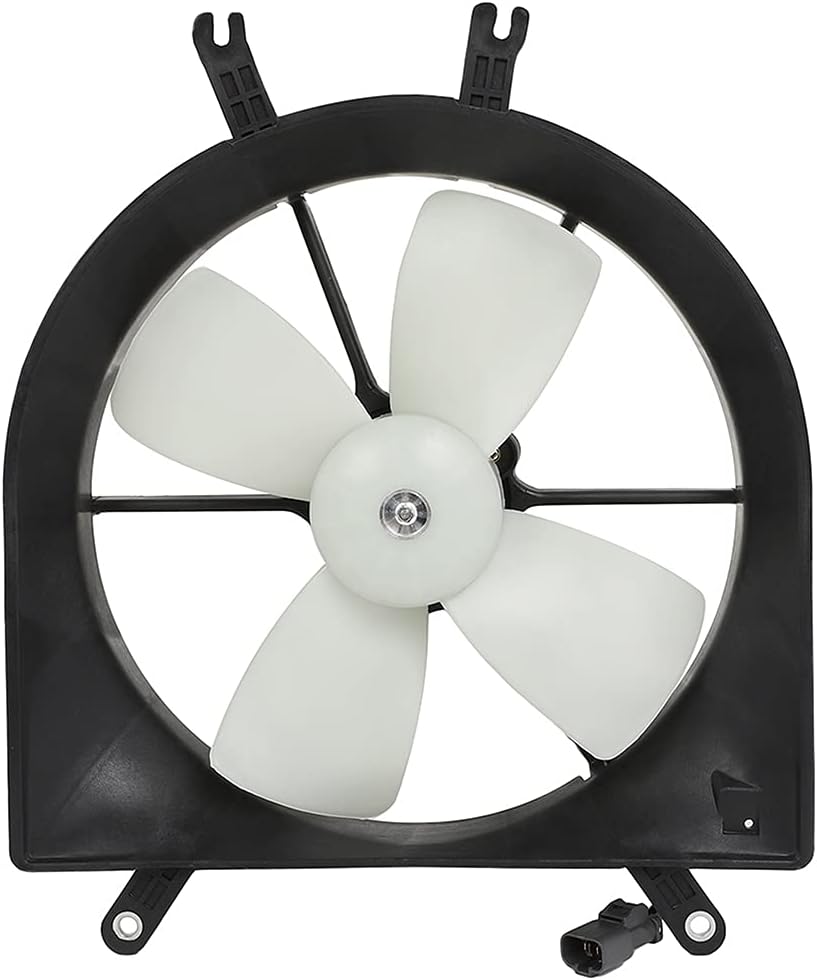
| Power Connector Type | 2-Pin |
|---|---|
| Voltage | 12 Volts |
| Wattage | 80 watts |
| Maximum Rotational Speed | 3500 RPM |
This SCITOO radiator cooling fan is a direct replacement-style electric fan intended to restore cooling performance on older Civics, Civic del Sol, and Acura ELs. It uses a 12 volt, two-pin connector and an 80 watt motor rated up to 3500 RPM to move air through the radiator while running quietly at about 4 decibels on the spec sheet. Typical use is straightforward: swap the faulty fan for this unit to regain engine cooling and prevent overheating at idle or in traffic. The plastic shroud and fan blades keep weight down and make installation easier for DIYers who can reuse existing mounts and wiring. Practical benefits include factory-style fitment intent and a compact, low-noise operation that keeps cabin disturbance to a minimum. Limitations are that the part is a single-speed design and made of plastic, so longevity may lag behind heavier-duty OEM-metal alternatives; confirm the two-pin connector and OE part numbers before buying to ensure fitment.
Best for: Buyers who need an affordable, plug-in replacement to restore cooling on older Civics or Acura ELs and prefer a straightforward DIY swap over sourcing a factory unit.
Less Ideal for: Drivers looking for heavy-duty or high-performance cooling upgrades for track use or for those who want metal-bodied, long-life components.
- Direct-replacement design aimed at specific 1992–1998 Civic and 1997–1998 Acura EL fitments
- Quiet operation with low specified noise level
- Uses standard 2-pin 12V connector for simple plug-and-play wiring
- Plastic construction may wear faster than heavier-duty metal alternatives
Verdict: A budget-friendly, quiet direct-replacement fan that gets an older Civic or Acura EL back to reliable cooling with minimal fuss.
4. Dorman 620-217 Engine Cooling Fan Assembly

| Power Connector Type | 6-Pin |
|---|---|
| Voltage | 12 Volts |
| Wattage | 80 watts |
| Maximum Rotational Speed | 3500 RPM |
This Dorman fan assembly is a ready-to-install replacement engineered to replicate the fit and cooling performance of the original radiator fan for compatible Honda Civic years. It ships as a complete assembly with the motor and connector in place, so installation usually requires minimal wiring or modification for matching trims. The motor is rated at 12 volts and 80 watts with a maximum speed of 3500 RPM, which gives it the airflow needed to manage engine bay temperatures under normal driving and light load conditions. Dorman reports laboratory testing for motor performance and customers commonly report straightforward fit and reliable operation after installation. Practical benefits include included mounting hardware and a painted finish to resist corrosion. Limitations are that this unit is made as a vehicle-specific replacement so it only fits the listed model years and requires confirming trim fitment before purchase; it does not upgrade cooling capacity beyond factory specifications.
Best for: Buyers who prioritize a dependable, factory-style replacement that restores original cooling function with minimal installation hassle and long-term reliability in daily driving.
Less Ideal for: Not a good choice for someone seeking increased cooling performance beyond stock or a universal fan for multiple vehicle applications.
- Complete assembly with motor and connector installed for simpler installation
- Engineered to match factory fit and cooling performance for the listed Civic years
- Laboratory-tested motor specifications (12 V, 80 W, 3500 RPM) indicate reliable operation
- Painted exterior and included mounting features help resist corrosion and ease installation
- Fitment is limited to the specific model years and trims listed so vehicle confirmation is required
Verdict: A reliable, factory-fit replacement fan assembly that restores stock cooling performance for the specified Civic years with minimal installation effort.
5. TYC 600380 Cooling Fan Assembly (Right)

| Power Connector Type | 2-Pin |
|---|---|
| Voltage | 12 Volts |
| Wattage | 24 watts |
| Maximum Rotational Speed | 3000 RPM |
This TYC cooling fan assembly replaces the right-side radiator fan as a complete assembly with motor, blade, and shroud for a straightforward swap. Intended as a factory-style replacement, it uses a 12V, 24W motor and a two-pin power connector so installation is usually plug-and-play for Civic models it fits. The unit is molded from PA material for higher heat resistance and is tested for corrosion, vibration, moisture, and endurance to help ensure reliable operation. Buyers will appreciate the assembled shroud and fan which simplify installation compared with replacing individual components and the claimed airflow validation that aims to match factory cooling capacity. Practical limitations include possible differences in motor orientation that can affect small dust covers and the usual tight-space installation on Civics that may require battery or bumper removal; some users also report that fitment varies by model year so confirming year compatibility is important before purchase.
Best for: Buyers who want a low-risk, ready-to-install replacement that closely matches factory cooling performance and are prioritizing proven user experience and validated testing over premium OEM pricing.
Less Ideal for: If you need an exact OEM identical motor orientation or a custom high-performance cooling upgrade, this aftermarket assembly is not the best choice.
- Complete assembly with motor, blade, and shroud for easier, faster replacement
- Constructed from PA material for improved heat resistance and durability
- Tested for corrosion, vibration, moisture, and endurance to promote reliability
- Designed to match factory airflow performance through validated air volume testing
- Fitment can differ between model years so buyers must verify compatibility for 1996–2000 Civics
- Motor mount orientation differs from some OEM units which can prevent reuse of small dust covers
Verdict: A dependable, tested plug-and-play right-side cooling fan assembly that gives Civic owners a practical factory-style replacement without OEM cost.
6. TRQ Radiator Cooling Fan Assembly for 1999–2000 Honda Civic

| Power Connector Type | 3-Pin |
|---|---|
| Voltage | 12 Volts |
| Cooling Method | forced air |
| Compatible Devices | Radiator |
| Material Type | Metal, Plastic |
This TRQ radiator cooling fan assembly is a direct-fit replacement for 1999–2000 Honda Civic radiator cooling systems. It ships as a single, pre-assembled fan and motor with a 3-pin power connector and operates at standard 12-volt automotive electrical systems using forced-air cooling. Installation is aimed at DIY installers and technicians who want a straightforward swap because the assembly is built to match the factory mounting points and electrical connection, reducing the need for modifications. The metal and plastic construction balances durability with weight, and TRQ provides supporting DIY videos to guide installation. Practical benefits include quick replacement when the original fan motor fails and restoring proper engine cooling and A/C condenser airflow. Limitations are typical of aftermarket single-fan assemblies: fitment must be confirmed against the vehicle reference numbers and the unit replaces one fan only, so vehicles that use dual-fan setups or upgraded cooling needs may require a different solution.
Best for: Buyers who want a straightforward, low-risk replacement that restores factory cooling function without custom work and who value clear fitment guidance and installation support.
Less Ideal for: Drivers planning performance cooling upgrades, custom installations, or those who require a dual-fan or higher-capacity cooling solution.
- Direct-fit pre-assembled unit reduces installation time and need for modifications
- Standard 3-pin 12-volt connector matches factory wiring for simple plug-in replacement
- Metal and plastic construction offers a practical balance of durability and cost
- Includes reference numbers and supporting DIY videos to help confirm fitment and guide installation
- Sold as a single fan assembly so vehicles needing both cooling and condenser fan replacements may need an additional unit
Verdict: Choose this TRQ pre-assembled fan if you need a reliable, direct-fit replacement to restore factory cooling on a 1999–2000 Honda Civic.
Choosing the Right 1996-2000 Honda Civic Cooling Fan: Key Factors to Consider
Airflow and Static Pressure
Airflow measured in cubic feet per minute and static pressure determine how effectively a fan pulls or pushes air through the radiator core and A/C condenser. For the 1996-2000 Civic EJ, EK, and EM chassis, adequate airflow helps prevent heat soak at low speeds or idle when natural airflow from vehicle motion is minimal. Higher static pressure is especially important if the vehicle has a thicker or denser radiator, an added oil cooler, or a front-mounted intercooler. Evaluate published airflow curves when available and prioritize units that balance high CFM with reasonable static pressure so cooling performance remains consistent across driving conditions.
A fan with impressive CFM but poor static pressure can fail to clear air through a restrictive core, while a high-pressure fan with low overall flow may not provide adequate volume at cruising speeds. For the Civic, choose a fan that maintains strong airflow at the low RPM and electrical load levels typical of the OEM system.
Motor Durability and Bearings
The cooling fan motor is a common failure point on older Civics. Motor durability depends on build quality, thermal design, and bearing type. Brushless motors and sealed bearings tend to last longer under heat and moisture exposure than inexpensive brushed motors. Consider units that specify sealed bearings or higher-grade motor components to reduce the likelihood of premature failure, grinding noises, or seizure.
Because the EJ, EK, and EM chassis is now decades old, replacement motors should tolerate the engine bay environment, including exposure to temperature cycles and road contaminants. A durable motor reduces the need for repeated radiator fan motor replacements and minimizes downtime.
Electrical Compatibility and Control
Electrical compatibility covers connector type, operating voltage, current draw, and how the fan integrates with the Civic's existing relay and temperature-sensing circuits. Some aftermarket electric cooling fans draw more current than stock units and may require upgraded relays, wiring, or fuses. Confirming that the replacement supports the EJ, EK, and EM Civic's factory connector or including an adapter avoids complex rewiring.
Also consider how the fan is controlled. Thermally switched fans behave differently than pulse-width-modulated units. For the Civic, preserving reliable temperature control and avoiding unintended continuous operation means selecting a fan whose control method meshes with the vehicle's temperature sensor or the aftermarket controller you plan to use.
Fitment and Fan Shroud Assembly Design
Proper fitment is crucial. The fan shroud assembly ensures the fan draws air through the entire radiator core rather than allowing bypass around the edges. For the 1996-2000 Civic EJ, EK, and EM, verify that mounting holes, shroud contours, and clearance to the hood and A/C lines match the OE layout. A well-designed shroud improves cooling efficiency and simplifies radiator fan replacement by keeping alignment straightforward.
Assess whether the assembly includes necessary mounting hardware and if it clears adjacent components such as the condenser, intake plumbing, or accessory brackets. Poorly fitting shrouds can lead to rattle, reduced performance, or contact with moving parts.
Noise, Vibration and Acoustic Comfort
Noise and vibration affect perceived quality and daily drivability. Fans with unbalanced blades or poor motor mounts can produce whining, chirping, or thumping that becomes more noticeable at idle or under load. For an older Civic used for commuting or long trips, acoustic comfort matters.
Look for balanced impellers, rubber isolation mounts, and motors rated for low-vibration operation. Consider how blade design influences sound; more blades can smooth airflow but may increase drag and motor load. Prioritize quieter designs if you spend a lot of time in stop-and-go traffic or frequently idle with the A/C engaged.
Serviceability and Long-Term Maintenance
Think about how easy it will be to service or replace components later. A modular fan assembly that allows motor replacement without removing the entire shroud or radiator makes future repairs faster and less costly. Replacement motors and bearings should be readily available for the Civic EJ, EK, and EM chassis.
Also consider warranty support and how easy it is to inspect the fan and electrical connections. A design that allows quick access to connectors and mounting points will simplify radiator fan replacement and reduce labor time during routine checks.
Diagnosing Cooling Fan Symptoms on an EJ, EK, and EM Civic
Recognizing early signs of a failing cooling fan helps avoid overheating and engine damage. Common symptoms include the engine running hotter than normal at idle, the A/C losing effectiveness, or the fan failing to engage when the temperature climbs. Intermittent operation can indicate a weak motor, a failing relay, or a temperature sensor issue.
Use a simple step-by-step check to isolate the problem: inspect fuses and relays, listen for motor noise, check for voltage at the fan connector when the engine is warm, and examine the shroud for debris or contact. Addressing electrical faults and mechanical binding can often restore function without a full assembly replacement.
- Engine temperature rising at idle or in stop-and-go traffic
- A/C performance drops when vehicle is stationary
- Unusual fan noise such as grinding or whining
- Fan spins freely by hand when engine is off but fails under load
Wiring, Relays, and Fuse Considerations
The Civic's factory wiring and relay setup is designed around the original fan's current draw. When upgrading to a higher-performance electric cooling fan, confirm that existing wiring, fuse ratings, and relays can handle the increased load. Overstressed wiring can cause heat buildup and intermittent failures.
If the replacement fan draws substantially more current, plan to use an appropriately rated relay and fuse, and consider wiring kits with heavier-gauge leads and in-line fuses. Also verify connector pinouts and whether an adapter harness is needed to avoid cutting factory connectors. Proper grounding is equally important for reliable operation.
- Check OEM fuse and relay ratings before installation
- Use correct gauge wiring for higher-current fans
- Test voltage at the fan connector with the system commanded on
- Verify solid chassis grounding to prevent erratic operation
Installation Tips for Radiator Fan Replacement
Plan the job with a few tools and modest mechanical skill. Typical steps include draining minimal coolant if required for clearance, supporting the radiator if needed, removing the old fan shroud assembly, and test-fitting the replacement to ensure bolt alignment. Have both the vehicle service manual and photos of the existing setup handy to speed reassembly.
Pay attention to hose and wiring routing to prevent pinched lines. Tighten mounting hardware to recommended torque and confirm the fan clears the radiator and other nearby components during a full range of motion. After installation, test operation with the engine at operating temperature and confirm that the fan engages at the expected threshold.
- Disconnect the battery before starting electrical work
- Label and photograph connector locations for reassembly
- Check for coolant leaks if radiator movement was required
- Run the engine to normal operating temperature and observe fan activation
Choosing Between Single and Dual Fan Configurations
Some Civic owners may encounter single-fan or dual-fan shroud layouts depending on equipment and trim. Single fans are lighter and simpler, while dual fans can offer better cooling redundancy and higher total airflow. For the EJ, EK, and EM Civic, choose the configuration that matches the original equipment location and radiator cutout to avoid fitment issues.
Dual fans can be helpful if the vehicle carries heavy load, frequently tows, or operates in very hot climates. However, they require more electrical capacity and careful control logic to prevent simultaneous full-current draws that might overload the circuit. Maintain the factory control scheme unless you have a plan for upgraded relays and wiring.
- Match the assembly to the EJ, EK, and EM Civic's original cutout
- Consider dual fans for heavy-duty cooling needs
- Ensure control logic prevents electrical overload
- Verify space for dual-shroud mounting and hose clearance
Maintaining the Fan and Shroud for Long Life
Routine inspection and cleaning extend service life. Remove debris, leaves, and grease that can cause imbalance or block airflow. Periodically check for loosened mounting hardware and inspect the motor for oil or coolant contamination which harm bearings.
If you notice increased vibration or noise, investigate quickly. Small issues like a loose mounting bolt or minor misalignment can escalate into motor failure. Keep electrical connections clean and protected from corrosion to ensure consistent fan operation over time.
- Clean debris from blades and shroud regularly
- Inspect mounting hardware for tightness
- Protect electrical connectors with dielectric grease
- Address unusual noises promptly to prevent damage
Compatibility with Air Conditioning and Condenser Clearance
The cooling fan assembly must work with the A/C condenser without restricting airflow or touching the condenser fins. For Civics with factory air conditioning, confirm the replacement shroud leaves sufficient clearance and does not alter condenser airflow paths. Reduced condenser airflow can lower A/C performance, especially while idling.
When fitting an aftermarket fan, verify that the assembly does not push against A/C lines or the receiver-drier. Careful test-fitting before final torqueing helps prevent accidental contact that could lead to leaks or reduced cooling efficiency.
- Confirm shroud clearance to condenser fins
- Avoid contact with A/C lines and fittings
- Test A/C performance after fan installation
- Ensure condenser airflow is not obstructed by the new shroud
Still looking for the perfect fit?
Select your Honda Civic configuration to see the most relevant Cooling Fans recommendations
How We Chose the Best 1996-2000 Honda Civic Cooling Fan
We selected candidates using criteria tailored to 1996-2000 Honda Civic cooling needs and the EJ, EK, and EM chassis fitment constraints. Primary factors included measured airflow capacity and static pressure to ensure the fan moves enough air through the radiator and condenser under real-world loads. Motor durability and thermal tolerance were evaluated by looking at common motor failure modes and typical lifetime expectations for electric cooling fan motors. Electrical compatibility was checked by confirming voltage, connector types, and relay/fuse requirements common to the Civic EJ, EK, and EM wiring harness. Fitment and fan shroud assembly design were reviewed for bolt pattern accuracy, mounting points, and whether the assembly supports the stock radiator profile.We also considered noise levels and vibration characteristics because excessive vibration or bearing noise is a frequent complaint on these model years. Units that required major wiring changes, significant radiator modification, or did not match EJ, EK, and EM mounting specifics were excluded. The final list favors assemblies that balance airflow performance with straightforward radiator fan replacement and long-term serviceability.
Our full evaluation process is outlined in our review methodology.
FAQ
How can I tell if the cooling fan motor is failing on my 1996-2000 Civic?
Common signs include intermittent operation, grinding or whining noises, and the fan failing to reach full speed. You can test the motor by applying 12V directly to the fan connector with proper safety precautions; if the motor runs erratically or not at all, the motor is likely at fault.
Will an upgraded electric cooling fan improve A/C performance in traffic?
Often it will. A fan that provides higher airflow and better static pressure helps the condenser shed heat while stationary, which can restore A/C cooling at idle. Ensure the upgraded fan maintains safe control logic so it does not run continuously and overload the electrical system.
Do I need to change relays or wiring when installing a higher-output fan?
It depends on the fan's current draw. Many higher-output fans require heavier-gauge wiring and a higher-rated relay or fuse to handle the increased load safely. Always check the replacement fan's amperage requirements and upgrade wiring and protection as needed.
Can I replace just the motor instead of the whole fan assembly?
Sometimes you can, if the design allows motor removal without affecting the shroud or blade integrity. Modular assemblies that permit motor swaps are more serviceable, but ensure any replacement motor matches the blade balance and mounting to avoid vibration issues.
Why does the fan sometimes run longer after installing a new thermostat?
A thermostat with a different opening temperature or a thermostat that changes system dynamics can alter when the fan engages. The cooling system relies on multiple sensors and components, so replacing one part can change thermal behavior and fan control thresholds.
What precautions should I take when testing the fan electrically?
Disconnect the battery before making connector changes, use insulated tools, and follow proper polarity when applying 12V power. Secure the vehicle so the engine cannot start accidentally, and keep hands and clothing away from moving blades during live tests.
Final Verdict
For the 1996-2000 Honda Civic (EJ, EK, and EM), prioritize a replacement cooling fan that provides reliable airflow and a durable motor while matching the EJ, EK, and EM chassis mounting and electrical characteristics. Balance cooling capacity with noise and electrical requirements to avoid repeat service. Consider shroud fitment and control compatibility first, then evaluate motor quality and serviceability. By focusing on airflow, motor durability, and correct fitment, you can choose a cooling fan that restores safe engine temperatures and minimizes future maintenance.
Explore More:
- Check out all Honda Civic parts & accessories
- Explore Cooling Fans Maintenance & Repair Guides
- Explore Cooling System
- Browse all Auto Parts
