

Note: This article contains affiliate links. If you click on these links and make a purchase, I may earn a small commission at no extra cost to you. This helps support my research and content. Read my full affiliate disclosure here.
Choosing the right Honda Civic LX radiator matters because the cooling system protects your engine from heat-related damage and ensures dependable daily driving. A correctly sized, well-built radiator reduces the risk of overheating, minimizes the chance of coolant loss, and can save you from roadside breakdowns and costly repairs.This guide shortlists the top choices for Civic LX owners and explains the practical tradeoffs between build quality, cooling capacity, and ease of installation. We evaluated options based on core durability, cooling efficiency, and fitment to the Civic LX to help you find the best replacement radiator. Read on for the top picks and what to consider before you install a new radiator.
Looking for other parts? See all Honda Civic parts & accessories.
Top Picks at a Glance
| Best Overall The best all-around choice for most situations | Alpaspare CU2922 Direct-Fit Radiator for Acura CSX & Honda Civic (2006–2011) |  |
| Best Quality Built to a higher standard if you want something more solid | Denso 221-3220 Radiator |  |
| Best Value The sweet spot between price and what you get | SCITOO Aluminum Radiator Assembly for 2016–2020 Honda Civic 2.0L |  |
| Best Budget The cheapest option that still gets the job done reliably | AUTOSAVER88 Complete Radiator for Honda Civic (compatible with D16/D15/B16 engines) |  |
| Highest Rated A top-rated pick with lots of positive feedback | ANPART Aluminum Radiator Replacement for 2001–2005 Honda Civic 1.7L LX |  |
| Most Popular A crowd favorite that many people choose with confidence | SCITOO Full Aluminum Replacement Radiator for Honda Civic 2006–2011 |  |
| Best Seller A high-volume bestseller chosen again and again | AUTOSAVER88 Radiator for 2001–2005 Honda Civic 1.7L (fits D17 engines) |  |
1. Alpaspare CU2922 Direct-Fit Radiator for Acura CSX & Honda Civic (2006–2011)

| Compatible vehicles | Acura CSX L4 2.0L 2006-2011; Honda Civic L4 1.8L/2.0L 2006-2011 |
|---|---|
| Material | Aluminum |
| OEM part numbers | 19010RNBA01;19010RNCT01 |
| Transmission | MT |
This Alpaspare CU2922 radiator is a 1:1 direct replacement designed to restore factory cooling on compatible 2006–2011 Civic and CSX four-cylinder engines. Built from aluminum, it aligns with original mounting points and hose connections so installation typically requires no modifications, making it suitable for DIY swaps or shop installation. The unit is pressure and leak tested and claims good corrosion resistance, which helps long-term reliability in everyday driving and highway use. Specified core dimensions and inlet/outlet sizes mirror the original part numbers listed, so it fits without trimming or adapter hoses. Expect solid heat dissipation for routine commuting and occasional heavy load situations, though this is a like-for-like replacement rather than a high-performance upgrade for racing applications. Buyers should verify manual transmission fitment details before purchase since the listing notes MT configuration. Overall it offers reliable, factory-style cooling for owners who need a straightforward replacement radiator.
Best for: Buyers who want a reliable, factory-equivalent radiator to restore proper cooling on a 2006–2011 Civic or CSX without modification and who value straightforward installation and long-term dependability.
Less Ideal for: Drivers seeking a high-capacity performance upgrade for track use or heavy-duty cooling beyond stock specifications should look at performance radiators instead.
- Direct 1:1 fit with original mounting points and hose connections for straightforward installation
- Aluminum construction provides corrosion resistance and good heat dissipation
- Pressure and leak tested to meet factory-style reliability standards
- Includes compatible OEM reference numbers for easy verification of fitment
- Designed as a factory-style replacement rather than a performance-enhancing radiator
Verdict: A dependable, direct-fit aluminum replacement that restores factory cooling for 2006–2011 Civic and CSX four-cylinder models with minimal fuss.
2. Denso 221-3220 Radiator

| Fit Type | Vehicle Specific |
|---|---|
| Fuel Type | Gasoline |
| Product Grade | Performance Part |
| Position | Front, Rear |
The Denso 221-3220 is a vehicle-specific replacement radiator that restores cooling performance for 2001–2005 Honda Civic engines. It pairs an aluminum core with molded plastic tanks and includes a transmission oil cooler, so it handles engine and ATF heat loads the way the factory intended. Typical use is direct replacement during a cooling system overhaul or to fix leaks and overheating; reviewers report accurate fitment and a pressure-tight install when handled carefully. Notable features include factory-grade construction, a supplied transmission cooler, and careful packaging to protect the delicate fins in transit. The practical benefits are straightforward: you get a nearly OEM match that bolts in without heavy modification and brings cooling back to specification, which can resolve overheating and drivability issues. Installation can be time consuming and requires moderate mechanical skill because access on these Civics is tight, and the unit uses plastic tanks rather than full aluminum which some performance builders prefer for extreme high-heat or track use.
Best for: Drivers who need a reliable, factory-equivalent radiator to stop overheating and restore cooling performance on a 2001–2005 Honda Civic while keeping installation straightforward.
Less Ideal for: Enthusiasts building a high-boost or track-focused Civic who need a full-metal or heavy-duty aftermarket radiator should consider purpose-built performance cores instead.
- Factory-quality aluminum core for effective heat transfer
- Supplied transmission oil cooler adds integrated functionality
- Vehicle-specific fit for 2001–2005 Honda Civic simplifies installation
- Well packaged to protect fins during shipping
- Plastic end tanks instead of full metal may be less durable under extreme track use
Verdict: Choose this Denso radiator if you want a near‑OEM, performance-grade replacement that fits 2001–2005 Honda Civics and restores reliable cooling with minimal fuss.
3. SCITOO Aluminum Radiator Assembly for 2016–2020 Honda Civic 2.0L

| Fitment | 2016–2020 Honda Civic 2.0L |
|---|---|
| Construction | Aluminum radiator assembly |
| Inlet diameter | 1 1/4 in. |
| Outlet diameter | 1 1/4 in. |
This SCITOO aluminum radiator is a model-specific replacement for the 2016–2020 Honda Civic 2.0L that swaps in where the factory unit mounts. It provides the core function of cooling engine coolant and is marketed as a direct-fit assembly with factory-style inlet and outlet locations. Typical use is straightforward: remove the failed radiator, transfer any reusable fittings, and install the new unit using the OEM mounting points and supplied grommets. Notable features include an all-aluminum construction and 1 1/4-inch inlet and outlet diameters, and the listing indicates no transmission or engine oil coolers are integrated. In practice buyers report easy installation and working performance; some users note thinner materials compared with factory parts and occasional mismatched fittings that may require adapter swaps or minor line adjustments. The radiator does not include a cap and quality can vary between batches, so expect to inspect adapters and fitment on arrival and have basic tools or small modifications handy if needed.
Best for: Buyers who prioritize a practical, lower-cost factory-replacement option that installs with minimal modification and restores cooling function reliably for daily driving.
Less Ideal for: Drivers seeking a heavy-duty or performance cooling upgrade, or people who want guaranteed OEM-material thickness and factory-sourced fittings without inspecting parts on arrival.
- Vehicle-specific design for 2016–2020 Honda Civic 2.0L for straightforward fitment
- All-aluminum construction for good heat transfer and corrosion resistance
- Standard 1 1/4-inch inlet and outlet diameters that match common coolant hoses
- Includes rubber lower grommets and other mounting accessories for installation
- Does not include a radiator cap
- No integrated transmission or engine oil cooler
- Some units may use thinner sheet metal and require careful handling during installation
Verdict: A cost-conscious, direct-fit aluminum replacement that restores cooling for 2016–2020 Civic 2.0L owners who want a practical factory-style swap.
4. AUTOSAVER88 Complete Radiator for Honda Civic (compatible with D16/D15/B16 engines)

| Manufacturer Part Number | ATRD1002 |
|---|---|
| OEM Part Number | 19010P03505, 19010P07024, 19010P07014 |
| Exterior | Machined |
| Core Material | Aluminum |
| Tank Material | PA66 GF30 |
This AUTOSAVER88 complete radiator is a budget-oriented direct replacement for many Honda Civic and Acura EL models using D16/D15/B16 engines. It installs like a factory-style unit and is typically used to replace a failed or leaking original radiator. The core uses a high-density multi-louvered fin design and an aluminum oil cooler to improve cooling efficiency while PA66 GF30 plastic tanks are intended to resist leaks and extend service life. Buyers report straightforward, plug-and-play installation and that the electric fan and hose connections fit as expected; the lower inlet uses a clamp-style connection rather than an OEM quick-disconnect which can simplify installs but may require a different hose approach. Practical benefits are lower cost compared with dealer parts and generally good fitment and cooling for daily driving. Important limitations include variable plastic tank quality reported by some users and occasional cap sealing issues, so professional installation and inspection of the filler area are recommended for long-term reliability.
Best for: Buyers looking for a low-cost, ready-to-install radiator that restores cooling function on older Civics and similar models and prioritizes value over OEM-level materials.
Less Ideal for: Drivers who need a heavy-duty or long-term performance upgrade for high-stress use or who prefer fully metal tank construction should consider higher-end alternatives.
- Direct-fit replacement for specified Honda Civic and Acura EL models for easier installation
- Aluminum core with high-density multi-louvered fins for improved cooling efficiency
- Includes aluminum oil cooler to help lower engine temperatures when working hard
- Plastic tanks and filler area have mixed durability reports and some users experienced leaks
- Radiator cap not included so buyers must source a compatible cap separately
Verdict: A wallet-friendly, direct-fit radiator that restores cooling on compatible Honda Civics with a focus on value and easy installation.
5. ANPART Aluminum Radiator Replacement for 2001–2005 Honda Civic 1.7L LX

| Vehicle fitment | 2001-2005 Honda Civic 1.7L LX |
|---|---|
| Core material | Aluminum |
| OE number | CU2588 |
This ANPART radiator is a direct-fit replacement built with a full aluminum core intended to restore or improve cooling on 2001–2005 Honda Civic 1.7L LX models. It installs like a factory part and is leak checked at the factory, so typical use is a drop-in swap when the original radiator has failed or is showing signs of corrosion. The all-aluminum core and claimed increased cooling capacity help the engine maintain operating temperature under normal driving and light towing conditions. Practical benefits include easier installation thanks to a factory-style design and a corrosion-resistant core that can outlast older mixed-material radiators. Limitations to be aware of are that this is an aftermarket unit so finish quality and bracket alignment can vary slightly between batches, and buyers should double-check hose/end tank fitment before installation. Regular maintenance such as periodic cleaning is still required to preserve long-term performance.
Best for: Buyers who prioritize a reliable, factory-style replacement to restore cooling performance on a 2001–2005 Civic LX and want a durable aluminum core without extensive modification.
Less Ideal for: Drivers seeking high-performance cooling upgrades for racing or heavy-duty towing should consider performance-specific radiators instead.
- Full aluminum core for improved cooling capacity compared with some older radiators
- Manufacture leak checked to reduce likelihood of shipping defects
- Designed to match factory fit for straightforward drop-in installation
- Supplier states ISO 9001 manufacturing which suggests production quality controls
- Aftermarket build quality can vary so minor alignment or finish issues are possible
Verdict: A dependable full-aluminum replacement that restores factory-style cooling for 2001–2005 Civic LX owners who want a straightforward, long-lasting swap.
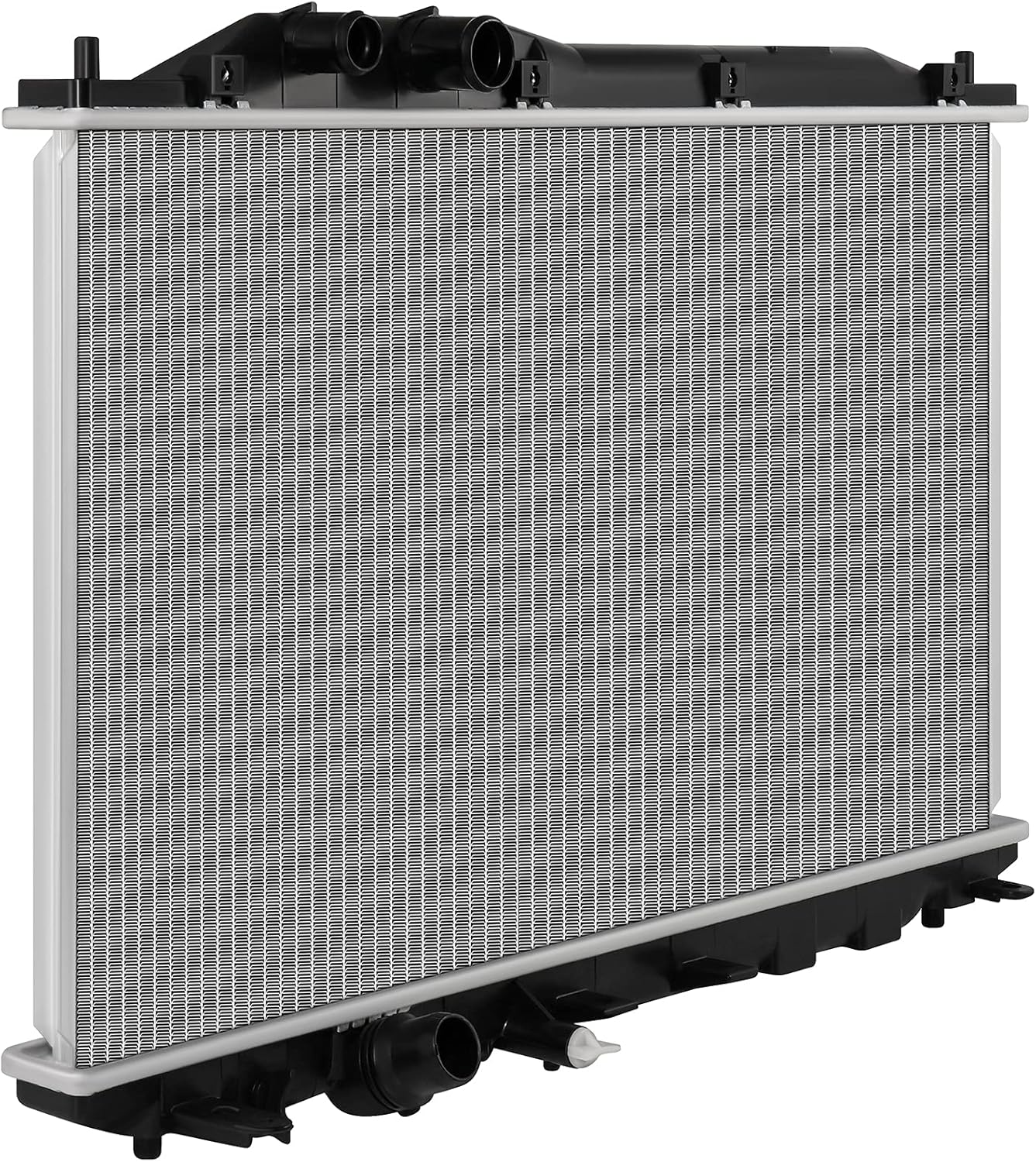
6. SCITOO Full Aluminum Replacement Radiator for Honda Civic 2006–2011
| Fitment | 2006–2011 Honda Civic L4 1.8L and 2.0L |
|---|---|
| Core Rows | 1 Row |
| Inlet Diameter | 1.25 in |
| Outlet Diameter | 1.25 in |
| Model | 125090 |
This SCITOO full-aluminum radiator is a direct-replacement option for 2006–2011 Honda Civic 1.8L and 2.0L models and is built as a single-row core intended to restore engine cooling performance. It installs in the factory location and uses 1.25-inch inlet and outlet connections so hoses mate correctly with the stock cooling plumbing. Buyers report straightforward fitment in many Civics and generally good cooling after installation, which makes it a practical swap when an original radiator is leaking or clogged. Strengths are the all-aluminum construction for improved heat transfer and a model-specific design that reduces required modifications. Common issues in some reviews include missing or mismatched mounting clips and occasional need for minor fabrication or reuse of original clips to secure the unit. The radiator does not include transmission or engine oil coolers, so it is strictly a coolant radiator. If you are comfortable checking mounting points and reusing small hardware when needed, this unit delivers solid cooling at a budget-friendly value for Civic owners replacing a failed core.
Best for: A buyer who values proven cooling performance and wants a budget-conscious, vehicle-specific replacement that most often fits with minimal trimming; good for Civic owners comfortable verifying mount points and swapping small fasteners.
Less Ideal for: Not a fit for buyers needing integrated transmission or engine oil cooling or those unwilling to do minor bracket or clip adjustments during installation.
- Full-aluminum core improves heat dissipation compared with plastic-tank radiators
- Model-specific fit for 2006–2011 Civic reduces major modifications
- Standard 1.25-inch inlet and outlet match factory hose sizes
- Single-row core keeps installation simpler and lighter than multi-row performance radiators
- Some units arrive with missing or incorrect mounting clips requiring reuse of original hardware or minor fabrication
- Does not include transmission or engine oil coolers so not suitable where those are required
Verdict: A cost-effective, full-aluminum replacement that restores cooling for 2006–2011 Honda Civics when you want a direct-fit radiator and are prepared to address small mounting hardware issues if they arise.
7. AUTOSAVER88 Radiator for 2001–2005 Honda Civic 1.7L (fits D17 engines)

| Vehicle fitment | 2001–2005 Honda Civic 1.7L (D17) variants |
|---|---|
| Core material | Aluminum core |
| Tank material | PA66 GF30 plastic |
| OEM part numbers | 19010-PLM-A01, 19010-PLM-A51, 19010-PMM-A51, 19010-PMM-A52 |
This AUTOSAVER88 radiator is a budget-minded, direct-fit replacement for 2001–2005 Civic 1.7L engines. It installs like a factory replacement and is intended to be used with the vehicle's existing fan and hoses; the unit features a high-density multilouvered aluminum core, PA66 GF30 plastic tanks, and an integrated aluminum oil cooler to help maintain coolant temperature. In real-world use it provides plug-and-play fitment for the listed Civic trims and usually requires only standard hose clamps rather than special quick-connect fittings. Buyers report straightforward installation and satisfactory cooling and leak performance initially, although some users have experienced cap/tank sealing issues over time. The radiator ships as a complete core assembly but does not include a radiator cap, so plan to reuse or source a cap separately and expect professional installation if you are not experienced with cooling systems. For a conservative buyer this product offers a cost-effective replacement that mirrors factory layout, with the usual durability uncertainty that comes with non-factory aftermarket radiators.
Best for: Buyers who prioritize a direct, factory-style replacement at a lower cost and want a radiator that installs with minimal modification and behaves like the original unit.
Less Ideal for: Those seeking a heavy-duty performance upgrade or long-term racing use should look for higher-specification radiators with thicker cores and reinforced tanks rather than this economy replacement.
- Direct-fit design matched to 2001–2005 Civic 1.7L models for straightforward installation
- Aluminum core with high-density multilouvered fins for improved heat transfer
- PA66 GF30 plastic tanks intended to resist cracking and improve longevity
- Integrated aluminum oil cooler adds extra cooling capacity
- Generally reported as leak-free and compatible with stock electric fan mounting
- Radiator cap is not included so a compatible cap must be sourced separately
- Some users report occasional plastic tank or cap sealing failures after weeks of use
Verdict: A cost-effective, factory-style replacement radiator for 2001–2005 Civic 1.7L owners who want straightforward fitment and improved cooling without a premium price.
Choosing the Right Honda Civic LX Radiator: Key Factors to Consider
Core Material and Construction
The radiator core and end tank materials determine long-term durability and resistance to corrosion. Aluminum cores are common because they provide good heat transfer and are lighter than copper-brass units. However, the way the end tanks are joined to the core matters: mechanical crimping, brazing, or welded seams offer different strength and leak resistance.
For a Civic LX, which often sees a mix of stop-and-go city driving and highway use, pick a construction that resists road-salt corrosion and vibration fatigue. Materials and joining methods also influence whether repairs are feasible if a small leak develops. A more robust construction can cost more up front but reduce the likelihood of needing another replacement soon.
Cooling Capacity and Core Design
Cooling capacity is a function of core thickness, fin density, and overall surface area. A thicker or multi-row core generally provides better heat rejection but can require more airflow and may slightly change fitment clearance. Fin density affects how effectively air carries heat away; very dense fins can perform well but may clog faster in dirty environments.
For Civic LX owners, adequate cooling capacity prevents temperature spikes during long climbs or heavy traffic. Consider the typical driving conditions and whether you tow, carry heavy loads, or frequently drive in hot climates. The right core design balances maximum cooling with practical maintenance and compatibility with the factory fan and shroud setup.
Fitment and Mounting Accuracy
A radiator that matches the Civic LX mounting points, hose heights, and transmission cooler ports saves installation time and avoids additional parts. Even small differences in inlet/outlet placement can force you to modify hoses or use adapter fittings, which introduces leak risks.
Check that the replacement aligns with the factory fan, shroud, and sensor locations. Proper fitment reduces the chance of interference with nearby components like the condenser or A/C lines. For owners who want a straightforward swap, prioritize radiators labeled explicitly for the Honda Civic LX configuration.
Compatibility With Transmission Cooler Lines
If your Civic LX has an automatic transmission, many radiators include an integrated transmission cooler. The internal routing and port sizes need to match the factory lines to prevent leaks and ensure proper transmission cooling. An incompatible cooler port arrangement can cause reduced transmission life or require retrofitting external coolers.
Even for manual transmissions, ensure the radiator design does not interfere with adjacent cooling components. Confirming transmission line compatibility avoids unexpected shop hours and additional parts. Proper cooling for the transmission is important because excessive heat shortens fluid life and accelerates wear.
Ease Of Installation And Serviceability
Radiators that accept the factory fan, shroud, and sensor locations reduce labor time and the potential for installation errors. Consider whether the radiator comes with necessary seals, mounting hardware, or sensor ports, which makes installation cleaner and more reliable. Some units require you to transfer factory parts; others include replacements.
Serviceability also covers future maintenance, such as access to drain plugs and how easy it is to flush the coolant. A radiator that is straightforward to bleed of air and includes accessible drain points simplifies routine coolant maintenance and reduces the chance of trapped air causing overheating after replacement.
Warranty And Corrosion Protection
A solid warranty indicates manufacturer confidence and can protect you against premature failure. Look for corrosion-resistant coatings, pressure-tested cores, and warranties that cover leaking or cracking for a reasonable term. Civic LX owners driving in salt-prone or humid regions should prioritize radiators with explicit corrosion protection measures.
Warranty terms often specify proper coolant use and installation practices, so read the fine print. A longer warranty can justify selecting a higher-quality replacement because it lowers the total ownership risk over time.
Signs Your Civic LX Radiator Needs Replacement
Recognizing early symptoms helps you avoid overheating and engine damage. Common signs include frequent coolant loss without visible external leaks, a steady rise in engine temperature, or visible coolant staining under the car. You may also notice a sweet smell inside or outside the vehicle after driving.
Other indicators include steam from the engine bay, the temperature gauge moving into the red under load, or fluctuating cabin heat. If you detect these signs, inspect hoses, clamps, and the radiator cap first, then the radiator core and tanks for soft spots or visible damage.
- Persistent low coolant level with no obvious hose leaks
- Engine temperature rising during idle or slow traffic
- Visible coolant stains or green/orange residue around the radiator
- Steam or sweet coolant odor from the engine bay
When To Choose A Direct-Fit Replacement
Most Civic LX owners benefit from a direct-fit radiator that matches factory dimensions and connections. Direct-fit units minimize installation time and reduce the chance of hose or fan interference. They are especially practical if your goal is a straightforward, reliable replacement without modifying other cooling components.
Choose direct-fit when you want to maintain factory cooling behavior, keep warranty compliance, and avoid sourcing extra adapters. This option is well suited for typical daily driving and ensures plug-and-play compatibility with the Civic LX fan assembly and sensors.
- Simplifies installation and reduces modification
- Preserves factory cooling flow and sensor placement
- Reduces risk of leaks caused by adapters or altered hose routing
Upgraded Cooling Options For Hot Climates Or Performance Use
If you regularly drive in high temperatures, tow light loads, or have a performance-tuned engine, consider a radiator with increased cooling capacity. Upgraded cores offer greater heat rejection and can keep temperatures stable under heavier thermal loads. However, verify that the thicker or multi-row core fits without altering the fan shroud or condenser.
Upgraded units can deliver measurable benefits in extreme conditions, but they may require additional attention to airflow and may be more susceptible to road debris on dense fins. Balance the need for added cooling with installation complexity and long-term maintenance.
- Higher core volume improves heat rejection
- May need to confirm clearance with fan and condenser
- Better suited for frequent highway grades and hot climates
Basic Steps For A Safe Radiator Installation
Prepare by fully draining coolant, disconnecting battery, and allowing the engine to cool. Label hoses and electrical connectors so reassembly is straightforward. Transfer any reusable components such as sensors or fan shrouds unless the replacement includes them.
Install the new radiator by aligning mounting points, reconnecting hoses and transmission cooler lines if applicable, and topping up with the correct coolant mixture. Bleed the cooling system to remove air pockets and verify there are no leaks by running the engine up to normal operating temperature while monitoring for drips and gauge behavior.
- Drain coolant and disconnect battery before starting
- Label hoses and connectors to avoid misrouting
- Bleed the system after installation to remove trapped air
How Coolant Type And Maintenance Affect Radiator Life
Using the recommended coolant type and maintaining proper coolant concentration slow corrosion and protect internal passages. Old or contaminated coolant accelerates electrochemical corrosion and can clog narrow channels in modern cores, reducing efficiency and increasing the risk of leaks.
Regular coolant flushes at manufacturer-recommended intervals preserve heat transfer and prevent buildup. For Civic LX owners, following the recommended schedule and using the correct coolant formulation preserves radiator life and helps avoid premature replacement.
- Use the coolant type specified for Honda Civic LX
- Flush and replace coolant at recommended intervals
- Monitor coolant condition and top up with proper mixture
Still looking for the perfect fit?
Select your Honda Civic configuration to see the most relevant Radiators recommendations
How We Chose the Best Honda Civic LX Radiator
We prioritized attributes that matter for Honda Civic LX owners who need a reliable replacement radiator. Durability was weighted heavily, including core material and end tank construction, because Civic engines can suffer from corrosion and vibration over time. Cooling efficiency and core design were evaluated next, as modern engines demand effective heat rejection to prevent temperature spikes during city traffic and highway driving.Fitment accuracy and compatibility with Civic LX mounting points, hose locations, and transmission cooler connections were essential filters. We also considered ease of installation, including whether the radiator accepts stock fans and shrouds without modification. Corrosion resistance, warranty length, and the quality of included seals or sensors were additional decision criteria.We excluded radiators that required aftermarket brackets or significant trimming to fit the Civic LX, units with unsupported transmission cooler configurations for automatic-equipped cars, and any options with poor documentation. The final list reflects products that balance dependable cooling performance, long-term durability, and straightforward fitment for the Honda Civic LX.
Our full evaluation process is outlined in our review methodology.
FAQ
How long does a typical radiator last in a Honda Civic LX?
Radiator life often depends on driving conditions and maintenance. Many last 8 to 12 years with proper coolant changes and corrosion protection, but exposure to road salt or neglected coolant can shorten that lifespan.
Can I replace the Civic LX radiator myself?
You can replace it yourself if you have basic mechanical skills and tools. The job involves draining coolant, removing hoses and mounting hardware, and bleeding the system afterward. If you are unsure about transmission cooler lines or electrical connections, professional help is advisable.
What are common radiator failure symptoms to watch for?
Typical symptoms include persistent coolant loss, overheating during idle or slow traffic, visible coolant stains, and steam from the engine bay. Soft or swollen end tanks and pressure loss in the cooling system also signal issues.
Do I need to flush the cooling system when installing a new radiator?
Yes, flushing the cooling system before installing a new radiator removes old contaminants and prevents premature clogging. A proper flush and refill help ensure the new unit operates at full efficiency and reduces corrosion risk.
Should I transfer the factory fan and shroud to the new radiator?
If the new radiator is a direct-fit unit, transferring the factory fan and shroud is usually recommended to maintain proper airflow and sensor alignment. Some replacement radiators include compatible fans or mounting hardware, which can simplify reassembly.
How do I check for radiator leaks after installation?
Run the engine to normal operating temperature with the heater on and inspect for visible drips or coolant stains. Monitor the temperature gauge for stability and check coolant level after a short test drive. Pressure-testing the system can reveal small leaks not visible during a cold inspection.
Final Verdict
When selecting a radiator for a Honda Civic LX, prioritize fitment accuracy, core construction, and cooling capacity appropriate to your driving conditions. Direct-fit replacements offer the simplest installation and retain factory sensor and fan alignment, while upgraded cores provide extra cooling for hot climates or heavy use.Balance the risks and benefits: choose a radiator with durable construction, clear transmission cooler compatibility if applicable, and good corrosion protection. That approach will minimize downtime and give you a reliable cooling system for everyday driving.
Explore More:
- Check out all Honda Civic parts & accessories
- Explore Radiators Maintenance & Repair Guides
- Explore Cooling System
- Browse all Auto Parts
