

Note: This article contains affiliate links. If you click on these links and make a purchase, I may earn a small commission at no extra cost to you. This helps support my research and content. Read my full affiliate disclosure here.
If your Honda Civic Coupe is running hot, leaking coolant, or showing early overheating signs, replacing the radiator is one of the most direct repairs you can make. A correctly matched radiator restores proper engine temperature control, reduces the risk of head gasket damage, and extends the life of cooling-system components. This guide presents seven shortlisted radiators selected for fitment and cooling performance specifically for the Honda Civic Coupe.Below you will find clear reasons why each option made the list and the evaluation criteria we used so you can pick the radiator that best matches your driving habits and repair budget.
Looking for other parts? See all Honda Civic parts & accessories.
Top Picks at a Glance
| Best Overall The best all-around choice for most situations | AlpaSpare CU2922 Direct-Fit Radiator for Acura CSX & Honda Civic (2006-2011) |  |
| Best Quality Built to a higher standard if you want something more solid | TRQ Radiator Aluminum Core, 1-Row, Direct Fit for 2006–2011 Honda Civic 1.8L |  |
| Best Value The sweet spot between price and what you get | KUIPERAUTO 27" Aluminum Radiator for 2006–2011 Honda Civic 1.8L |  |
| Best Budget The cheapest option that still gets the job done reliably | ANPART Aluminum Radiator for Honda Civic 2006–2011 / Acura CSX 2006–2011 |  |
| Highest Rated A top-rated pick with lots of positive feedback | SCITOO Replacement Radiator for Honda Civic (2006–2011) 2922 |  |
| Most Popular A crowd favorite that many people choose with confidence | SCITOO Full Aluminum Radiator Replacement for Honda Civic 2006–2011 | |
| Best Seller A high-volume bestseller chosen again and again | A-Premium Engine Coolant Radiator Assembly Compatible with Honda Civic 2006–2011 1.8L/2.0L |  |
1. AlpaSpare CU2922 Direct-Fit Radiator for Acura CSX & Honda Civic (2006-2011)

| Compatible models | Acura CSX L4 2.0L 2006-2011; Honda Civic L4 1.8L/2.0L 2006-2011 |
|---|---|
| Material | Aluminum |
| Manufacturer | Alpaspare |
| Manufacturer part number | RADIATOR2922ALPA |
This AlpaSpare CU2922 radiator is a direct replacement designed to drop into compatible Acura CSX and Honda Civic four-cylinder models without modification. Constructed from aluminum, it aims to deliver reliable heat dissipation and corrosion resistance while matching original mounting points, hose connections, and inlet/outlet sizes for a straightforward swap. Typical use is as a factory-quality replacement when the original radiator is leaking, clogged, or damaged; it is suitable for DIY installation or professional fitment thanks to the claimed 1:1 fit. Notable features include pressure and leak testing, machined exterior finish, and compliance with the listed OEM part numbers for fit verification. Practical benefits are improved cooling reliability after old-unit failure and the convenience of a direct-fit part that minimizes installation time. Limitations are that the listing does not include transmission oil cooler fittings or extra hardware, so verify your vehicle configuration and required parts before starting the job.
Best for: Buyers seeking a dependable, factory-style replacement radiator for a mid-2000s Honda Civic or Acura CSX who want a straightforward install and balanced performance without upgrading components.
Less Ideal for: Drivers looking for a high-performance aftermarket upgrade or integrated transmission cooler should consider purpose-built or upgraded radiators instead.
- Direct 1:1 drop-in fit to the listed Acura and Honda four-cylinder models, matching factory mounting points
- Aluminum construction for good thermal conductivity and corrosion resistance
- Engineered and pressure tested to reduce risk of leaks and ensure long-term reliability
- Meets listed OEM part numbers for straightforward fitment verification
- Does not include transmission oil cooler (TOC) or external fittings if your vehicle requires them
- Some vehicle configurations may require additional hoses or hardware not supplied with the radiator
Verdict: A practical, factory-style aluminum replacement radiator that makes a quick, reliable swap for mid-2000s Civic and CSX four-cylinder models.
2. TRQ Radiator Aluminum Core, 1-Row, Direct Fit for 2006–2011 Honda Civic 1.8L

| Core Row Quantity | 1 |
|---|---|
| Core Thickness | 1 in |
| Core Material | Aluminum |
| Inlet Diameter | 1.25 in |
| Outlet Diameter | 1.25 in |
This TRQ radiator is a drop-in replacement built around a 1-row aluminum core and plastic tanks intended for 2006–2011 Honda Civic 1.8L coupes and sedans with automatic transmissions. It replaces the original unit using the factory mounting points and same inlet/outlet locations so installation is straightforward for DIYers or shops. The 1-inch core thickness and down-flow design make it a close match to factory cooling capacity for normal and moderately demanding driving, while the aluminum core offers good heat transfer and corrosion resistance compared with all-plastic aftermarket alternatives. TRQ ships the part preassembled and provides installation videos to simplify the swap. Limitations to note are the single-row core, which may not dissipate as much heat as multi-row performance radiators under sustained heavy loads, and plastic tanks that can be less durable than full-alloy designs. A few user reports also mention occasional fitment quirks with fan panels or minor shipping damage, so check alignment and packaging on arrival.
Best for: Drivers who want a reliable, factory-style replacement that bolts into a 2006–2011 Civic coupe 1.8L with minimal fuss and prefer a straightforward DIY or shop swap over modifying the cooling system.
Less Ideal for: Enthusiasts seeking upgraded cooling for track use, towing, or heavy sustained loads should consider multi-row or performance radiators with larger cores and full-metal construction instead.
- Direct-fit design that uses factory mounting points for easier installation
- Aluminum core provides effective heat transfer and improved corrosion resistance
- Preassembled unit with matching inlet and outlet locations reduces installation time
- Manufacturer offers installation videos to help DIY replacement
- Single-row core limits peak cooling compared with multi-row performance radiators
- Plastic end tanks instead of full-alloy construction may be less durable over the long term
Verdict: Choose this TRQ radiator when you need a direct-fit, factory-style aluminum-core replacement for a 2006–2011 Honda Civic 1.8L that makes DIY installation simple.
3. KUIPERAUTO 27" Aluminum Radiator for 2006–2011 Honda Civic 1.8L

| Fitment | 2006–2011 Honda Civic 1.8L models |
|---|---|
| Core type | High-density corrugated fins, 1.6mm fine-pitch |
| Material | 3003 aluminum |
| Core dimension | 27 x 15 In. |
This KUIPERAUTO 27-inch aluminum radiator is a factory-style replacement for 2006–2011 Honda Civic 1.8L engines. It replaces the original cooling core and connects to the stock hoses and mounts, so installation is typically performed as a like-for-like swap during a cooling-system repair. The radiator uses high-density, multi-layered corrugated fins and a 1.6mm fine-pitch core to increase heat dissipation, and the 3003 aluminum construction resists corrosion while remaining lightweight. In practice that means more stable engine temperatures under normal driving and during heavier use, which helps prevent overheating and extends engine life. Buyers should note the transmission oil cooler is not included and one review mentions the lower hose neck differs from the factory part, so a tight hose fit or small adjustments may be necessary during install. The radiator comes painted and appears to match OEM attachment points for the Civic coupe, making it a practical replacement when the original core fails.
Best for: Buyers who want a practical, value-focused replacement that restores reliable cooling to a Civic coupe without upgrading to a performance-only unit; ideal for routine repairs and keeping an older car roadworthy.
Less Ideal for: Drivers seeking an integrated transmission oil cooler or a performance radiator for track use should look at purpose-built options with those features.
- Direct-fit design for 2006–2011 Honda Civic 1.8L intended to simplify replacement
- High-density corrugated fins and 1.6mm fine-pitch core for improved heat dissipation
- Made from 3003 aluminum for corrosion resistance and good thermal conductivity
- Painted finish and factory-style mounting points for a near-stock appearance
- Does not include a transmission oil cooler
- Lower hose neck geometry differs from some factory pieces and may require careful hose routing or trimming
Verdict: A practical, corrosion-resistant direct replacement that restores stable cooling for 2006–2011 Honda Civic 1.8L coupes without unnecessary extras.
4. ANPART Aluminum Radiator for Honda Civic 2006–2011 / Acura CSX 2006–2011

| Compatible vehicles | 2006–2011 Honda Civic 1.8L; 2006–2011 Acura CSX 2.0L |
|---|---|
| Core Material | Aluminum |
| Position | Front |
| Item model number | 125090-5260-1842536101 |
| Manufacturer Part Number | 125090-5260-1842536101 |
This ANPART radiator is a full-aluminum replacement built to drop into 2006–2011 Honda Civic and 2006–2011 Acura CSX cooling systems. It replaces the factory unit with a high-density fin core that increases cooling capacity and is intended for a straightforward front-end swap. Typical use is as a budget replacement when the original radiator leaks, corrodes, or underperforms; installers report it fits well and arrives pressure tested. Notable features include an all-aluminum core for improved heat transfer, factory-style mounting points for easier alignment, and thermal-shocked gaskets and rings for better cold-weather durability. The practical benefits are lower replacement cost and improved cooling compared with some plastic-core aftermarket options, plus generally straightforward installation for DIY mechanics or shops. Limitations are typical of economy aftermarket radiators: the finish and thickness may differ from factory parts and some buyers prefer replacing the condenser, hoses, or clips at the same time to avoid rework. Expect a solid value choice for routine radiator replacement rather than an upgraded performance cooling solution.
Best for: Buyers looking for an affordable, straightforward replacement radiator for a 2006–2011 Civic coupe or similar Civic applications who prioritize fit and basic improved cooling over performance upgrades.
Less Ideal for: Drivers seeking a heavy-duty or performance cooling upgrade or those who want an exact factory-spec part finish should consider higher-end or OEM options instead.
- Full-aluminum core for better heat transfer than many plastic-core replacements
- Designed to match factory mounting points for easier drop-in installation
- High-density fins to increase cooling capacity
- Includes thermal-shocked gaskets and rings to resist cold-weather cracking
- Not positioned as a high-performance aftermarket radiator; core thickness and finish may differ from factory parts
Verdict: A budget-friendly full-aluminum replacement radiator that offers improved cooling and easy drop-in fitment for 2006–2011 Honda Civic coupe owners.
5. SCITOO Replacement Radiator for Honda Civic (2006–2011) 2922
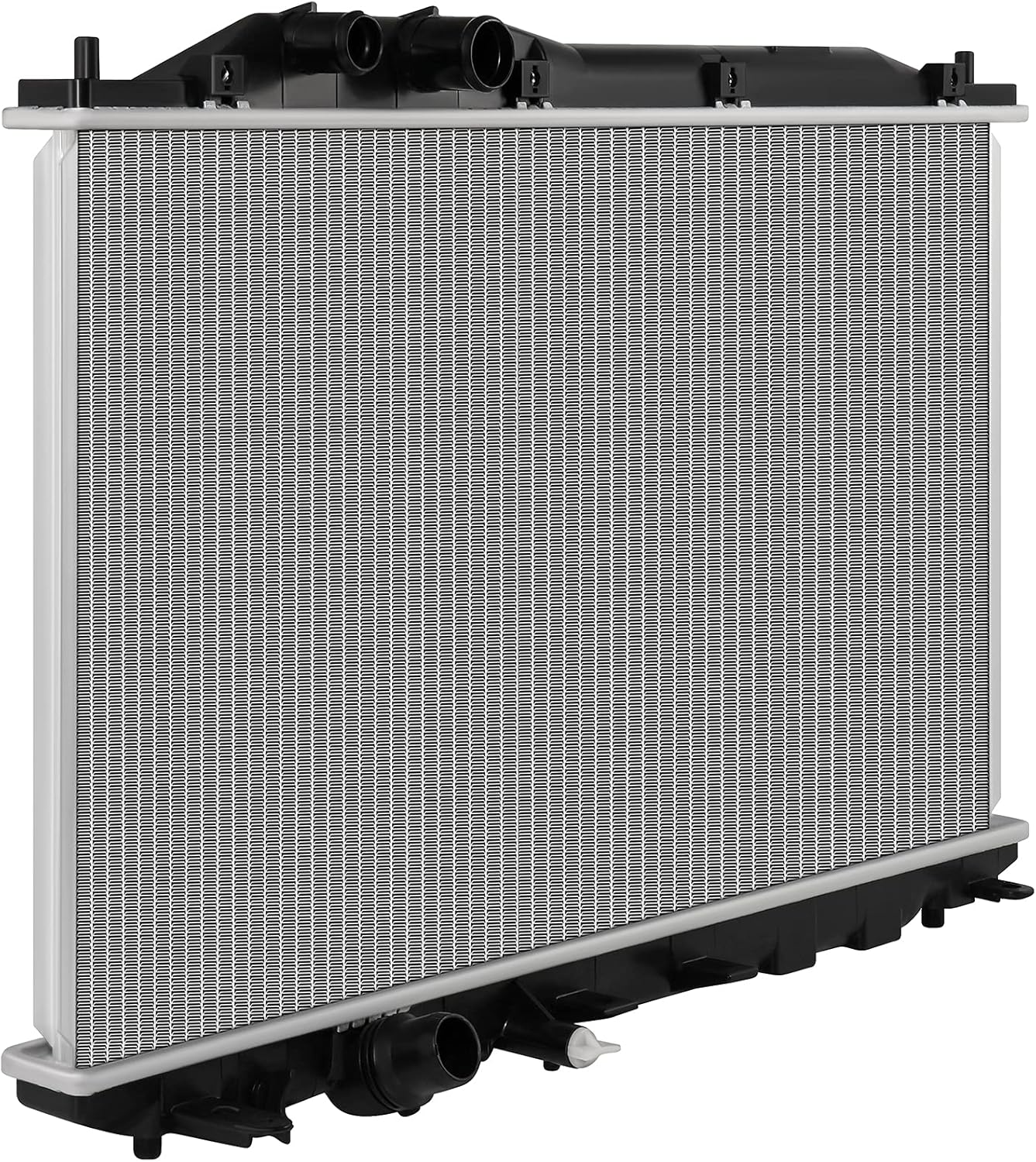
| Fitment | Honda Civic 2006-2011 Coupe L4 1.8L/2.0L |
|---|---|
| Core Rows | 1 Row |
| Inlet Diameter | 1.25 in |
| Outlet Diameter | 1.25 in |
| Model | 125090 |
This SCITOO radiator is a model-specific replacement for 2006–2011 Honda Civic coupes and is built as a single-row aluminum core with factory-style inlet and outlet fittings. It is typically used to restore cooling performance after a leaking or damaged stock radiator; installation is described as plug-and-play and commonly requires only routine coolant system steps. Notable features include a one-row core, 1.25 inch inlet and outlet diameters, and transmission/engine oil cooler not included. In practice the unit offers straightforward fitment for coupe applications and a lightweight aluminum construction that improves heat transfer compared with some plastic-end alternatives. Limitations are the single-row core, which provides adequate but not heavy-duty cooling under extreme towing or high-performance use, and the absence of an integrated oil cooler for transmissions. Buyers should also confirm the two-door coupe fitment callout before installing. For owners focused on a dependable factory-style replacement, this radiator delivers a practical and cost-effective fix.
Best for: A Civic owner who needs a reliable, direct-fit replacement radiator to restore stock cooling performance with minimal fuss and a focus on long-term dependability.
Less Ideal for: Not the best choice for drivers who push their Civic in racing, heavy towing, or high-heat environments that require upgraded multi-row or high-capacity radiators.
- Model-specific design for 2006–2011 Civic coupe simplifies installation and fitment.
- Aluminum single-row core offers effective heat transfer and corrosion resistance.
- Factory-style inlet and outlet diameters (1.25 in) match stock hose sizes for straightforward hookup.
- Lightweight construction that does not significantly change vehicle handling or mounting strain.
- Single-row core provides less cooling margin than multi-row or performance radiators under sustained high loads.
- Does not include transmission or engine oil coolers so additional cooling lines are not integrated.
Verdict: Choose this radiator when you want a dependable, model-specific aluminum replacement that restores factory cooling for a 2006–2011 Civic coupe.
6. SCITOO Full Aluminum Radiator Replacement for Honda Civic 2006–2011
| Fitment | Honda Civic 2006–2011 L4 1.8L and 2.0L |
|---|---|
| Core Rows | 1 Row |
| Inlet Diameter | 1.25 in. |
| Outlet Diameter | 1.25 in. |
This SCITOO full-aluminum radiator replaces the stock cooling core on 2006–2011 Honda Civic sedans and coupes and is intended as a direct-fit replacement for the listed engine options. It uses a single-row core and 1.25-inch inlet and outlet openings, so it installs like a standard radiator and works with the existing hoses on compatible Civics. The all-aluminum construction improves heat transfer compared with many plastic-tank replacements and reviewers report the car running cool after installation. Expect basic features only: there is no integrated transmission or engine oil cooler and a few buyers noted missing or mis-sized mounting clips that required reusing OEM fasteners or light fabrication. If you have mechanical experience the unit is a cost-effective way to restore cooling performance; less experienced installers should verify the part number and have the right clips and tools on hand.
Best for: Buyers who prioritize proven user feedback and want a budget-friendly, direct replacement radiator for a 2006–2011 Honda Civic that restores normal cooling without performance modifications.
Less Ideal for: Drivers planning heavy towing, track use, or significant engine upgrades should choose a multi-row or performance cooling solution instead.
- Full-aluminum core for improved heat dissipation versus many plastic-tank replacements
- Model-specific design intended to match 2006–2011 Civic mounting points and hose locations
- 1.25-inch inlet and outlet match common Civic hose sizes for straightforward hose connections
- Reported by multiple buyers to restore normal engine temperature after installation
- Relatively low weight and compact single-row core simplifies fitting into tight engine bays
- No built-in transmission or engine oil cooler
- Some units arrived with missing or incorrectly sized mounting clips requiring reuse of old clips or light fabrication
- Single-row core may offer less cooling reserve than multi-row performance radiators under heavy load
Verdict: A cost-effective, all-aluminum direct-replacement radiator for 2006–2011 Honda Civics that restores reliable cooling backed by solid customer feedback.
7. A-Premium Engine Coolant Radiator Assembly Compatible with Honda Civic 2006–2011 1.8L/2.0L

| Vehicle fitment | Honda Civic 2006-2011 L4 1.8L and 2.0L |
|---|---|
| Core thickness | 1 inch |
| Core height | 14-3/4 inch |
| Inlet diameter | 1-5/16 inch |
| Outlet diameter | 1-1/4 inch |
This A-Premium radiator assembly is a direct-fit replacement intended to bring a Civic's cooling system back to factory-quality operation. It installs in place of the original radiator for 2006–2011 Civic 1.8L and 2.0L engines and is typically used when the factory unit is leaking, clogged, or damaged. Notable features from the listing include a one-inch core thickness, measured core dimensions, and standard inlet and outlet diameters that match factory hose sizes for straightforward hose connections. The unit does not include a transmission or engine oil cooler, so it is best for Civics that use a separate cooler or do not require one. Practical benefits are restored cooling capacity, a tested assembly backed by a one-year unlimited-mileage guarantee, and visuals that suggest OEM-style mounting points for an easier swap. Limitations are the lack of integrated oil coolers and the fact that smaller fitment variances can require minor trimming or bracket adjustments on some vehicles, so installation may be easier if you have moderate mechanical experience or access to a shop.
Best for: Buyers who want a tested, direct-replacement radiator to reliably restore a Civic's cooling system to factory-like operation and who prioritize minimizing long-term risk over cutting cost.
Less Ideal for: People who need an integrated transmission or engine oil cooler or who prefer a performance-upgraded radiator with different core thickness or materials.
- Direct-fit design for 2006–2011 Honda Civic 1.8L and 2.0L applications
- Core dimensions and hose diameters match typical factory sizes for straightforward connections
- One-year unlimited-mileage guarantee provides added confidence
- Manufactured and tested to restore cooling performance to optimum condition
- Does not include a transmission or engine oil cooler
- May require minor bracket adjustments during installation on some cars
Verdict: A practical, tested direct-replacement radiator for 2006–2011 Honda Civics that restores factory cooling performance with minimal risk.
Choosing the Right Honda Civic Coupe Radiator: Key Factors to Consider
Fitment and Mounting Points
Correct fitment is the top priority for a Honda Civic Coupe radiator because improper alignment can lead to leaks, vibration, or interference with the fan assembly and condenser. A radiator that matches the Coupe's mounting points, hose inlet and outlet locations, and transmission cooler provisions will install faster and reduce the chance of damage to surrounding components.
When evaluating fitment, check whether the radiator is specified for the Coupe body style and if the product description notes direct replacement compatibility. Units that require bracket swaps, hose repositioning, or fan shroud modification increase installation time and the chance of error. For owners planning a DIY install, direct-fit radiators minimize tools and extra parts needed.
Core Design and Cooling Capacity
The core is the part that actually sheds heat, so differences in core height, thickness, tube count, and fin density affect cooling capacity. For the Civic Coupe, choose a core design that matches or improves on the OE heat rejection to handle normal driving and occasional heavy loads.
Higher fin density and more flow channels usually increase heat transfer but can be more sensitive to clogging from debris. Thicker cores can hold more coolant and provide better temperature stability during sustained highway or high-load operation. Consider your driving conditions and whether improved cooling performance is worth any added weight or clearance concerns.
Materials and Durability
Radiators come with combinations of aluminum cores, plastic tanks, and sometimes full-aluminum construction. For durability, many technicians prefer aluminum cores with brazed or welded joints that resist vibration and corrosion. Plastic tanks can reduce cost and weight but are more prone to cracking over time, especially in extreme temperature cycles.
Assess the expected service life against local climate and road conditions. Salted roads, prolonged high-heat environments, or frequent short trips can accelerate corrosion and tank degradation. Warranties and evidence of corrosion-resistant coatings are useful indicators of a radiator's longevity.
Compatibility With Cooling System Components
A radiator does not operate alone. It must work with the Civic Coupe's thermostat, hoses, water pump, and fans. Confirm that the replacement matches hose diameters, transmission cooler lines if present, and fan shroud mounting to avoid leaks or poor airflow. If a radiator requires different hose clamps, adapters, or a modified shroud, factor that into time and cost for installation.
Where transmission cooling lines run through the radiator end tanks, ensure line fittings match the Coupe's configuration. Using a radiator without the correct provisions can cause fluid cross-contamination or loss of transmission cooling performance.
Ease of Installation and Serviceability
Some radiators are designed for quick swapouts with minimal disassembly, while others require additional parts or trimming. Ease of installation affects labor time and the risk of installation errors that could cause leaks. Look for units that retain original hose routing, use common fasteners, and align with the stock fan and shroud.
Serviceability also includes how easy it is to flush the system and access the drain petcock if present. Radiators with accessible drain points and standardized fittings simplify coolant changes and future maintenance.
Warranty and Manufacturer Support
A radiator is a safety-critical component, so warranty coverage and manufacturer support matter. Longer warranties can indicate confidence in materials and workmanship. Check warranty terms for coverage on core failures, leaks, and premature corrosion.
Also consider the availability of replacement parts or technical documentation. Manufacturers that publish clear fitment guides and installation notes reduce uncertainty during selection and installation.
When to Replace Your Radiator
Recognizing the signs of a failing radiator early can prevent more serious engine damage. Common indicators include persistent overheating, visible coolant leaks under the vehicle, discolored coolant, or a decrease in heater performance during cold starts.
In many cases the radiator will show physical signs such as bent fins, corrosion deposits, or cracks at the tank seams. If you experience recurring low coolant levels despite no visible external leak, internal failure or a compromised core can be the cause and should prompt inspection.
- Consistent high temperature gauge readings during normal driving
- Coolant pooling under the front of the car after parking
- Sweet smell of coolant in the cabin or engine bay
- Frequent need to top off coolant between services
Preparing for a Radiator Replacement
Before purchasing a replacement radiator, verify the Coupe-specific part dimensions and note any transmission cooler fittings. Gather the right tools, new coolant, replacement hose clamps, and any auxiliary seals you might need.
Always let the engine cool fully before draining coolant. Use a catch container and follow local disposal guidelines for used coolant. Inspect connected components like hoses, thermostat, and water pump while the system is drained, replacing worn items to avoid having to remove the new radiator for a secondary repair.
- Confirm radiator matches hose inlet/outlet positions
- Plan to replace upper and lower radiator hoses if they are aged
- Have the correct type and amount of coolant on hand
Tips for Maintaining Cooling Performance
Regular coolant changes and system flushes keep heat transfer efficient and reduce the risk of corrosion or blockages. Follow recommended coolant change intervals and top up with the correct coolant specification if levels drop.
Keep the radiator core free of debris by inspecting and cleaning the front face. Small dents and crushed fins reduce airflow and cooling efficiency. During winter, avoid high-pressure washing directly into the fin pack to prevent damage.
- Perform a visual radiator check during routine oil changes
- Flush the cooling system at manufacturer-recommended intervals or when coolant is discolored
- Replace the pressure cap if the seal appears worn or the system does not hold pressure
DIY Vs Professional Installation
A radiator replacement on the Civic Coupe can be a DIY project for mechanically comfortable owners, especially when a direct-fit unit is used. Tasks include draining coolant, removing fan shroud and hoses, and transferring any required brackets. However, the job requires careful bleeding of air from the system to prevent hot spots.
Choose professional installation when transmission cooler lines need to be swapped, if the fan assembly is difficult to access, or if you prefer warranty-backed labor. Professionals can also pressure-test the system and verify correct coolant concentration and thermostat operation after installation.
- DIY saves labor cost but requires the right tools and time
- Professionals provide pressure testing and correct system bleeding
- Document any replaced parts and fluid types for future service records
Common Installation Pitfalls to Avoid
Failing to bleed trapped air from the cooling system is a common issue that leads to inconsistent gauge readings and potential overheating. Use proper bleed procedures and run the engine to operating temperature while monitoring for air pockets.
Another pitfall is reusing old hose clamps that can leak under pressure. Replace clamps and hoses as needed and torque mounting hardware to the recommended specifications to prevent vibration-related loosening.
- Do not overtighten fittings that are plastic or use adapters that cause misalignment
- Check for clearance between the radiator and fan blades before finishing reassembly
- Ensure the pressure cap is rated for the system to maintain correct boiling point
Still looking for the perfect fit?
Select your Honda Civic configuration to see the most relevant Radiators recommendations
How We Chose the Best Honda Civic Coupe Radiator
We focused on selection criteria that matter for Honda Civic Coupe owners and the typical service scenarios for this model. First, fitment accuracy was essential: we prioritized radiators built to match the Coupe chassis mounting points, hose locations, and fan shroud layout to minimize modification during installation. Second, cooling performance was evaluated by construction details that affect heat rejection, such as core design, tube and fin density, and tank material.Durability and corrosion resistance were weighted heavily, including choices of aluminum cores versus plastic tanks and the quality of brazing or welding used. Ease of installation and completeness of fit were included, looking for units that reuse OE hoses and mounts or provide necessary brackets and fittings. Finally, warranty terms and manufacturer support were considered as indicators of long-term reliability.We excluded universal or heavily modified radiators that require custom fabrication. Also excluded were units that lack clear fitment data for the Coupe configuration. The final list reflects radiators that balance direct fitment, effective heat dissipation, robust construction, and practical installation for typical Civic Coupe repairs.
Our full evaluation process is outlined in our review methodology.
FAQ
How long does a radiator typically last in a Civic Coupe?
Radiator lifespan varies by material and driving conditions. Often aluminum-core radiators last longer than plastic-tank units, and with regular coolant maintenance a radiator can last many years. However, exposure to road salt, frequent short trips, or physical damage can shorten service life.
Can I replace the radiator myself or should I use a shop?
You can replace a radiator yourself if you have basic mechanical skills and the right tools, especially when using a direct-fit replacement. Consider a shop if transmission cooler lines are involved, if you lack tools, or if you prefer professional pressure-testing and bleeding.
What cooling system maintenance should I do after installing a new radiator?
After installation, refill with the correct coolant type and concentration, bleed the system of air, and run the engine to operating temperature while monitoring for leaks. Recheck coolant level after a short test drive and again after a few days of normal use.
How do I know if my radiator is leaking or another component is the problem?
Visual inspection and pressure testing help locate leaks. Check hose connections, tank seams, and the core for wet spots. If cooling loss is intermittent, inspect the water pump, heater core, and head gasket for internal issues that can mimic radiator failure.
Is it necessary to replace hoses when I change the radiator?
Not always, but it is recommended to inspect and often replace upper and lower radiator hoses if they show age, soft spots, cracks, or swelling. New hoses reduce the risk of future leaks and simplify installation since old clamps may be seized.
Will upgrading to a higher-capacity core affect my Civic Coupe's performance?
A higher-capacity core can improve temperature stability under heavy load or towing conditions, but may add weight or require slight fitment checks. For typical daily driving, OE-equivalent cooling is usually sufficient unless you experience chronic overheating.
Final Verdict
When selecting a radiator for your Honda Civic Coupe, prioritize direct fitment, verified hose and mounting alignment, and a core design that meets your cooling needs. Balance durability and materials against ease of installation and serviceability to avoid repeat repairs. Pay attention to warranty coverage and be prepared to replace hoses and clamps during installation.Choose the option that best matches how you drive and how long you want the repair to last. A correctly selected radiator restores reliable cooling and reduces the risk of costly engine damage, letting you get back on the road with confidence.
Explore More:
- Check out all Honda Civic parts & accessories
- Explore Radiators Maintenance & Repair Guides
- Explore Cooling System
- Browse all Auto Parts
