

Note: This article contains affiliate links. If you click on these links and make a purchase, I may earn a small commission at no extra cost to you. This helps support my research and content. Read my full affiliate disclosure here.
If you drive a Honda Civic and are seeing higher operating temperatures or coolant loss, upgrading to a properly sized 3-row radiator can restore cooling performance and protect the engine. A correctly chosen radiator helps keep temperatures stable under load, reduces the chance of heat-related damage, and can increase longevity when paired with routine cooling-system care. This guide focuses on the top 3-row radiators suitable for the Honda Civic and explains the evaluation points that matter for fitment, cooling capacity, and long-term reliability. Below you will find shortlisted options that meet the core criteria and a clear breakdown of what to consider before installation.
Looking for other parts? See all Honda Civic parts & accessories.
Top Picks at a Glance
| Best Overall The best all-around choice for most situations | Mishimoto X-Line Performance Aluminum Triple-Core Radiator for 1992–2000 Honda Civic |  |
| Best Quality Built to a higher standard if you want something more solid | ALLOYWORKS 3-Row All-Aluminum Radiator with Shroud and Fan Kit |  |
| Best Value The sweet spot between price and what you get | frperce Full T-6061 Aluminum 3-Row Radiator for 1992–2000 Civic / 1993–1997 Del Sol / 1994–2001 Integra |  |
| Highest Rated A top-rated pick with lots of positive feedback | G-PLUS 3-Row Full Aluminum Racing Radiator for 1992–2000 Honda Civic EG/EK |  |
| Most Popular A crowd favorite that many people choose with confidence | Auto Dynasty 3-Row Full Aluminum Racing Radiator for 1992–2001 Honda Civic/Del Sol/Acura Integra (Manual) |  |
| Best Seller A high-volume bestseller chosen again and again | Auto Dynasty 3-Row 60mm Aluminum Radiator with 10" Slim Cooling Fan |  |
1. Mishimoto X-Line Performance Aluminum Triple-Core Radiator for 1992–2000 Honda Civic

| Compatible Model Years | 1992-2000 Honda Civic |
|---|---|
| Core Rows | 3 |
| Construction | Brazed aluminum core; TIG-welded end tanks |
| Maximum Pressure | 1.3 Bars |
This Mishimoto X-Line radiator replaces the factory unit with a 3-row, brazed aluminum core and TIG-welded end tanks to deliver stronger cooling for stock and mildly tuned Civic engines. It is a direct-fit upgrade sized for 1992–2000 Civics and includes a high-pressure 1.3 bar radiator cap and a magnetic drain plug for cleaner coolant. In practice the extra core thickness and increased coolant capacity reduce operating temperatures on street and occasional track use, and users report noticeably steadier gauge readings after installation. The radiator is finished for durability and comes with a serial plate and a limited lifetime warranty. Installation is generally straightforward for a competent DIYer, though some owners needed to trim or modify OEM brackets or address a stubborn radiator cap and an overflown outlet thread issue. Expect a heavier-duty, longer-lasting cooling solution compared with cheap replacements, but allow time for fitment tweaks on cars with nonstandard brackets or custom setups.
Best for: Buyers who want a reliable, long-lasting cooling upgrade that noticeably lowers operating temperatures on daily-driven or lightly tuned Civics and value a well-engineered direct-replacement part.
Less Ideal for: If you need a plug-and-play part with zero possibility of minor adjustments on older, modified, or custom-engineered setups, consider alternatives with guaranteed exact bracket alignment or professional installation.
- True triple-core brazed aluminum construction for higher cooling capacity
- TIG-welded end tanks and magnetic drain plug for durability and engine protection
- Includes high-pressure 1.3 bar radiator cap to raise coolant boiling point
- Direct-fit design targeted to 1992–2000 Honda Civic for simpler installation
- Limited lifetime warranty and serial plate for authenticity and support
- Some users reported fitment tweaks required such as trimming brackets or addressing misaligned OEM mounts
Verdict: Choose this Mishimoto triple-core radiator when you want a durable, higher-capacity cooling upgrade that keeps 1992–2000 Civics running cooler under daily and light performance use.
2. ALLOYWORKS 3-Row All-Aluminum Radiator with Shroud and Fan Kit

| Core rows | 3 Row |
|---|---|
| Core size | 14.25" x 13.75" |
| Overall size | 14.50" x 16.50" |
| Inlet/Outlet | 1.25" / 1.25" |
| Fan max CFM | 1730 cfm |
This ALLOYWORKS 3-row radiator is a direct-style full-aluminum replacement built for higher cooling capacity in Civic D15/D16 EK and EG platforms and Del Sols from the 1992–2000 era. It pairs a three-row core and integrated transmission cooler with a 12-inch high-flow electric fan and shroud, so it is typically used to lower operating temps in hot climates, heavy traffic, or for modestly modified engines. The kit’s T-6061 aluminum construction, TIG-welded joints and pressure testing point to good durability and reduced corrosion compared with stock copper-brass units. The included 12.05-inch fan (up to about 1730 cfm and 12.7 A draw) simplifies installation of an electric cooling setup and helps recovery after hard driving. Expect some trimming or relocation work for older Civic engine bays and the OEM overflow tank may need modification to fit. Installers should also plan basic wiring for the fan relay and verify inlet/outlet sizes before purchase.
Best for: Buyers wanting a performance-minded, higher-capacity cooling upgrade for a 1992–2000 Civic or Del Sol who prioritize lower operating temperatures under heavy traffic or light engine modifications.
Less Ideal for: People seeking a plug-and-play OEM-identical replacement with zero modification or those who prefer a dealer-sourced factory replacement without aftermarket fan wiring work.
- Full T-6061 aluminum construction for improved corrosion resistance and longevity
- Three-row core with built-in transmission cooler increases cooling capacity over stock
- Includes fan, shroud and mounting tabs for a more complete installation
- Pressure tested and TIG-welded assembly for reliable leak resistance
- May require modification or relocation of the OEM overflow tank and fitment trimming on some chassis
Verdict: Choose this kit if you want a durable, higher-capacity all-aluminum radiator with fan and shroud to reduce temps in 1992–2000 Civic/Del Sol engines.
3. frperce Full T-6061 Aluminum 3-Row Radiator for 1992–2000 Civic / 1993–1997 Del Sol / 1994–2001 Integra

| Material | Full T-6061 aluminum |
|---|---|
| Core rows | 3-row |
| Inlet/Outlet | 1.25" / 1.25" |
| Fitment | 1992–2000 Civic, 1993–1997 Del Sol, 1994–2001 Integra |
| Construction | TIG welded with nitrogen |
This frperce 3-row radiator replaces the factory unit with a full T-6061 aluminum core and multi-louvered tube-and-fin design intended to improve heat transfer. It installs as a direct bolt-on replacement for specified 1992–2000 Civic, 1993–1997 Del Sol, and 1994–2001 Integra half-size applications and is TIG welded with nitrogen backfilling for stronger seams. In real-world use it reduces temperature spikes in higher-load or track conditions thanks to the increased surface area and higher coolant capacity, and the lightweight construction helps keep overall vehicle weight down. The unit comes with 1.25-inch inlet and outlet fittings and is aimed at drivers who want better cooling without modifying mounting points or hoses. Limitations include the lack of installation instructions and the recommendation for professional installation, so DIYers should be comfortable fabricating small hose adapters or seeking shop help; core dimensions may differ from every factory variant, so double-check physical fit before purchase.
Best for: Buyers who want a straightforward, factory-replacement style cooling upgrade to reduce operating temperatures during spirited driving or occasional track use while keeping installation similar to the stock radiator.
Less Ideal for: People who need a plug-and-play DIY swap without any potential hose or adapter changes, or those seeking a purpose-built racing-only radiator with custom plumbing features.
- Full T-6061 aluminum construction with TIG welding for durability and leak resistance
- 3-row tube-and-fin core increases surface area for better heat dissipation under load
- Direct bolt-on design intended to replace the factory radiator without changing mounts
- Lightweight design reduces added mass compared with heavier aftermarket cores
- No installation instructions included and professional installation is recommended
- Inlet/outlet size is 1.25 inches which may require adapter hoses on some setups
Verdict: A lightweight, factory-style 3-row aluminum replacement that meaningfully improves cooling for late 1990s Honda Civics and related models without changing mounting points.
4. G-PLUS 3-Row Full Aluminum Racing Radiator for 1992–2000 Honda Civic EG/EK
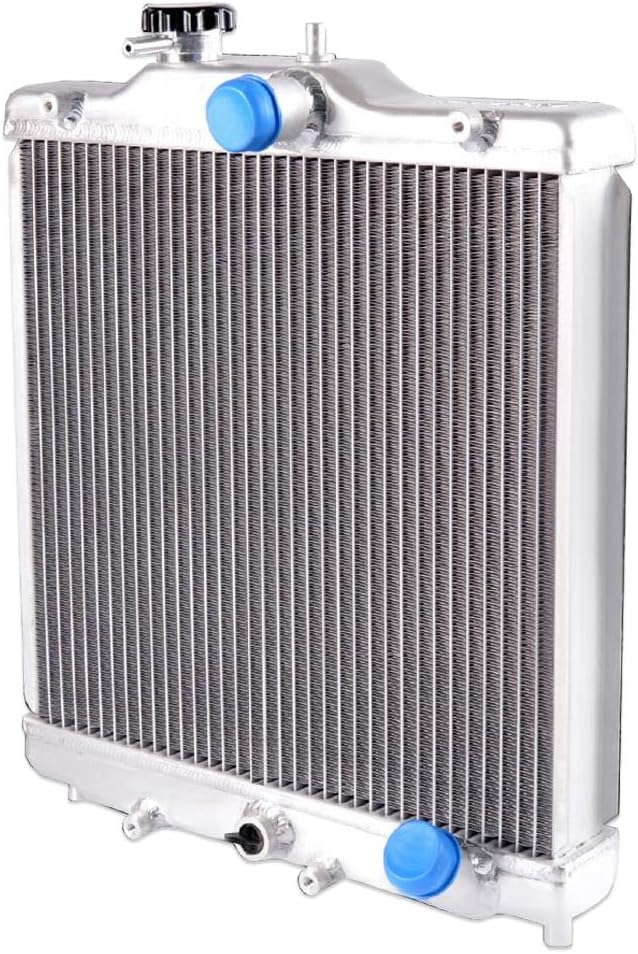
| Application | 1992–2000 Honda Civic EG/EK B16A B18C DOHC |
|---|---|
| Construction | Full T-6061 aluminum |
| Core type | 3-row tube-and-fin |
| Inlet/Outlet size | 1.25 inches |
| Claimed cooling improvement | 35 – 45% temperature reduction |
This G-PLUS 3-row aluminum radiator is a direct-fit replacement built for Civic EG and EK models with B16A/B18C DOHC engines from 1992 to 2000. It uses a full T-6061 aluminum construction and a tube-and-fin 3-row core intended to increase coolant capacity and thermal transfer compared with the factory unit. In real-world use that means lower running temperatures under load and better resistance to boil-over during spirited driving or towing. The unit is described as a bolt-on fit that accepts factory fans and hardware, so installation is straightforward for someone comfortable with basic cooling system work or a local shop. Reviewers report improved temperature control and solid fitment, though a few noted cosmetic scratches on arrival, so inspect the finish before installation. This radiator is lighter than stock and marketed as racing-spec, which benefits response and cooling but may be less cosmetically refined than OEM panels. Overall it is a practical upgrade when you need stronger, higher-capacity cooling for older Civics running factory or mildly modified engines.
Best for: Buyers who prioritize reliable temperature control and stronger cooling performance for a 1992–2000 Civic, especially if they drive hard, track occasionally, or run mild engine modifications.
Less Ideal for: If you want a cosmetically perfect, show-quality replacement or are looking for an exact factory-style appearance, this racing-style unit may not meet that priority.
- Full T-6061 aluminum construction for improved heat transfer and corrosion resistance
- 3-row racing-style core increases coolant capacity and cooling efficiency
- Direct bolt-on fitment that accepts factory fan hardware for easier installation
- Lighter than typical stock radiators which can marginally improve weight distribution
- Finish may arrive scratched or cosmetically imperfect on some units
Verdict: Choose this radiator when you need a stronger, lighter, bolt-on cooling upgrade to lower operating temperatures in a 1992–2000 Honda Civic EG/EK.
5. Auto Dynasty 3-Row Full Aluminum Racing Radiator for 1992–2001 Honda Civic/Del Sol/Acura Integra (Manual)

| Compatible Vehicles | 1992–2000 Honda Civic, 1993–1997 Honda Del Sol, 1994–2001 Acura Integra (half-size only) |
|---|---|
| Core | 3-Row racing design |
| Construction | Full T-6061 aluminum |
| Transmission Fitment | Manual transmission only |
| Inlet / Outlet | 1.25" |
This Auto Dynasty radiator is a full T-6061 aluminum, 3-row cooling core intended to improve cooling capacity over stock units for manual-transmission Civics, Del Sols, and compatible half-size Integras. It replaces the factory radiator with a taller, thicker 60mm core that spreads heat across more cooling surface and is commonly used by enthusiasts who push their cars harder or need to address overheating. Installation is typically straightforward for people familiar with cooling-system swaps but may require minor trimming, shims, or hose stretching because inlet/outlet diameters and some mounting points differ from factory. The radiator does not include transmission cooler fittings so it is only for manual transmission cars. Buyers report solid construction and improved temperatures after installation, though a few have found leaks or misaligned mounts on some units. This unit is best paired with basic mechanical skills or a professional installer and works well as an affordable performance-oriented replacement when greater cooling is the priority.
Best for: Buyers who prioritize improved engine cooling and value-tested community feedback, and who are comfortable making small fitment adjustments or hiring a professional for installation.
Less Ideal for: Drivers of automatic-transmission vehicles or anyone who needs a guaranteed drop-in, no-modification replacement should consider a factory-quality radiator that includes transmission cooler provisions.
- Full T-6061 aluminum 3-row core increases heat dissipation compared with standard single-row radiators
- Lightweight racing design that can reduce under-hood weight while improving cooling capacity
- Built to fit the specified 1992–2001 Civic/Del Sol/Integra manual-transmission applications with fan bolt locations included
- Affordable performance upgrade widely used by enthusiasts to eliminate mild overheating issues
- Inlet/outlet diameters and mount peg sizes can differ from factory, sometimes requiring hose stretching, shims, or minor trimming
- No fittings or provisions for automatic transmission cooler lines so it cannot be used on automatic models
- Some buyers reported occasional leaks or fitment issues on a minority of units
Verdict: A cost-effective full-aluminum 3-row radiator for manual-transmission Civic/Del Sol/Integra owners who want a proven performance upgrade to reduce overheating.
6. Auto Dynasty 3-Row 60mm Aluminum Radiator with 10" Slim Cooling Fan

| Compatible Vehicles | Honda Civic 1992-2000; Del Sol 1993-1997; Acura Integra 1994-2001 (manual transmissions, half-size radiators) |
|---|---|
| Rows | 3 |
| Material Type | Aluminum |
| Fan Air Flow Capacity | 1730 Cubic Feet Per Minute |
| Maximum Rotational Speed | 2250 RPM |
This Auto Dynasty bundle replaces the factory half-size radiator with a full T-6061 aluminum 3-row core and includes a slim 10-inch cooling fan plus mounting kit. It is intended as a direct bolt-in replacement for manual-transmission Civic, Del Sol, and Integra models listed, and the thicker core and larger coolant capacity aim to improve heat management for street and light track use. The slim fan is a high-flow unit that draws more air while using less horsepower and fits close to the radiator to free space for other aftermarket parts. Buyers should expect a performance-oriented fit that may require minor wiring or bracket adaptation since instructions are minimal and the fan harness sometimes needs splicing. Some customers report cosmetic shipping damage to fins and occasional cap leakage over long use, so inspect the unit on arrival and plan for basic installation work or professional fitting if you prefer a plug-and-play swap.
Best for: Buyers who want a stronger, higher-capacity replacement radiator that lowers operating temperatures for daily driving and occasional spirited use and who are comfortable doing light wiring or having a shop complete the install.
Less Ideal for: Shoppers seeking a guaranteed plug-and-play, factory-identical swap with full instructions and zero fitment work or those unwilling to inspect and straighten fins after shipping.
- Full T-6061 aluminum 3-row core improves heat transfer and coolant capacity
- Includes a slim high-flow 10-inch electric fan and fan mount kit for added cooling
- Designed for direct bolt-on fitment to specified half-size radiator manual-transmission models
- Slim fan profile creates extra clearance for other aftermarket components
- Many owners report strong real-world cooling even in hot ambient conditions
- Limited installation instructions and occasional need to splice wiring or fabricate a mount
- Some units arrive with bent cooling fins from shipping and may need straightening
- A few reviews mention minor long-term leakage at the cap
Verdict: Choose this bundle if you want a higher-capacity aluminum 3-row radiator with a slim high-flow fan to cut operating temps on older Civic/Del Sol/Integra manual-transmission applications.
Choosing the Right Honda Civic 3-Row Radiator: Key Factors to Consider
Core Construction and Cooling Capacity
The core is the heart of any 3-row radiator. Copper-brass cores transfer heat differently than aluminum cores, and fin density affects how effectively airflow dissipates engine heat. For a Civic, adequate core height, thickness, and number of rows determine how much additional cooling you gain over the stock unit.
A higher-capacity core reduces operating temperature under sustained loads, but it also needs to fit within the Civic's radiator support and allow clearance for the fan assembly. Check published BTU or flow-rate estimates if available, and consider vehicles that regularly carry heavy loads or see hot-climate driving when prioritizing higher capacity.
Fitment and Mounting Compatibility
Accurate fitment avoids modification and ensures the radiator connects cleanly to existing hoses, brackets, fan shroud, and sensors. For the Honda Civic this means verifying inlet and outlet locations, mounting tab positions, and whether the radiator accepts factory transmission cooler lines if applicable.
A radiator that aligns with OEM mounting points reduces installation time and potential for leaks. If a unit requires custom brackets, factor in the additional work and potential for misalignment that could stress hoses or produce vibration.
Material Durability and Corrosion Resistance
Radiator lifetime depends heavily on materials and corrosion protection. Aluminum cores with welded tanks offer a good strength-to-weight ratio and resist electrochemical corrosion when properly prepared. Plastic tanks are lighter and cheaper but can crack over time, especially with repeated heat cycles or exposure to certain coolant chemistries.
Look for radiators with protective coatings, quality welds, and robust tank construction for longer service intervals. Consider local climate and coolant maintenance habits; salty or mineral-rich environments increase the importance of corrosion-resistant materials.
Inlet/Outlet Size and Hose Compatibility
Hose diameters and neck placement affect flow and ease of installation. A 3-row radiator that uses the same inlet and outlet diameters as the Civic's original unit will usually fit without hose adapters. Mismatched diameters can require reducers or new hoses, which increases cost and complexity.
Also consider sensor bung locations and any transmission cooler fittings. Radiators that provide OEM-style ports simplify installation and preserve factory sensor function, which is important for accurate temperature readings and system operation.
Ease of Installation and Serviceability
Ease of installation reduces labor time and the chance of mistakes. Radiators that route correctly with the Civic's fan shroud, require no trimming, and include clear instructions are preferable. Serviceable features such as replaceable fittings or welded-in drainage points can simplify future maintenance.
Consider whether the unit permits straightforward radiator coolant flushes and bleeding of air pockets after installation. Radiators that complicate routine maintenance may increase lifetime ownership costs even if initial cost is low.
Warranty, Support, and Documentation
A reliable warranty signals confidence in materials and workmanship. Look for radiators with clear warranty terms that cover leaks and structural failures. Documentation such as fitment guides, exploded views, or installation instructions is useful when you or a technician install the unit.
Good post-sale support helps resolve fitment questions or replacement parts for mounting hardware. When warranty terms are vague or absent, prepare for potential gaps in recourse if a premature failure occurs.
When To Consider Upgrading To A 3-Row Radiator
Owners commonly upgrade to a 3-row radiator when the stock unit struggles to keep temperatures in check during heavy use. Signs that an upgrade may be warranted include frequent high temperature readings during highway towing, stop-and-go driving in hot climates, or after engine modifications that increase heat output.
Upgrading is also reasonable when the original radiator shows signs of internal blockage, persistent overheating despite proper coolant level, or when you want additional cooling margin for longevity. Keep in mind that fitment and proper installation are essential to gain the expected benefits without introducing new issues.
- Sustained high temps under load
- Old radiator with reduced flow or corrosion
- Intention to improve heat margin for long drives
Signs Your Civic's Radiator Needs Attention
Several symptoms commonly indicate radiator problems. Recurring coolant loss, visible leaks under the car, steam from the engine bay, or consistent rise in operating temperature are all red flags. Also watch for milky oil or coolant mixing which can point to deeper issues but sometimes appears alongside radiator failure.
If you notice irregular temperature gauge behavior or heating inconsistency, inspect hoses, clamps, and the radiator core for damage. Addressing small leaks or corrosion early can prevent complete failure and the need for towing or emergency repairs.
- Coolant puddles or drips beneath the front of the vehicle
- Overheating during normal driving or idle
- Visible corrosion or clogged fins on the radiator core
Installation Considerations For Honda Civic Owners
Plan for proper draining and disposal of coolant, and allow the engine to fully cool before beginning work. Verify that the replacement 3-row radiator aligns with the Civic's fan shroud, supports factory fan mounting points, and leaves sufficient clearance for the AC condenser and condenser lines.
Torque specifications for mounting bolts and hose clamp placement matter. Bleeding trapped air from the cooling system after installation is critical to avoid hot spots. If you are not familiar with bleeding procedures, consult the vehicle service manual or a qualified technician to ensure correct coolant circulation.
- Confirm fan shroud and condenser clearance
- Use correct torque values and clamp positioning
- Bleed the cooling system to remove air pockets
Maintenance Tips To Maximize Radiator Life
Regular coolant changes and using the correct coolant chemistry prevent internal corrosion and deposits that reduce heat transfer. Inspect hoses, clamps, and the radiator core periodically for signs of wear, and keep the grille area free of debris that can restrict airflow.
After installation, monitor coolant level and engine temperature closely for the first few drives. Address small leaks immediately to avoid more extensive damage. Routine radiator coolant flushes as part of scheduled maintenance will help preserve core efficiency and reduce the chance of internal fouling.
- Replace coolant at manufacturer-recommended intervals
- Inspect for external debris and clean fins carefully
- Check hoses and clamps for tightness and aging
Troubleshooting Common Radiator Issues
For intermittent overheating, start by checking coolant level, thermostat function, and fan operation. A stuck thermostat or non-functioning electric fan can mimic radiator failure. If the system is low on coolant or shows air pockets after a recent service, re-bleed the system and retest.
For visible leaks, determine whether the source is a hose, clamp, or the radiator itself. Small pinhole leaks in the core sometimes respond to temporary sealants, but permanent repair typically requires radiator replacement. Address root causes like electrolysis or corrosion that can cause repeat leaks if not corrected.
- Verify thermostat and fan operation before condemning the radiator
- Differentiate hose/clamp leaks from core leaks
- Consider root-cause checks for recurring corrosion or electrolysis
Still looking for the perfect fit?
Select your Honda Civic configuration to see the most relevant Radiators recommendations
How We Chose the Best Honda Civic 3-Row Radiator
We evaluated candidates using criteria that reflect real-world needs for Honda Civic owners and the demands placed on a 3-row radiator. Primary evaluation points included core construction and cooling capacity to ensure efficient heat transfer under typical driving and towing loads. Fitment accuracy and mounting design were reviewed to confirm bolt patterns, inlet/outlet placement, and compatibility with factory shrouds and sensors. Durability factors such as tube and fin materials, header tank construction, and corrosion protection were considered to predict service life in varied climates.We also looked at thermal testing data or manufacturer cooling specs where available, plus ease of installation including provision for OEM hoses and sensor ports. Weight and thickness were noted to judge compatibility with the Civic's front-end geometry. Exclusions included any radiator lacking clear specifications for the vehicle, units without serviceable warranty information, and products that required extensive modifications to fit. Final selections were those that balanced reliable cooling performance, correct fitment, and practical durability for typical Honda Civic use cases.
Our full evaluation process is outlined in our review methodology.
FAQ
How do I tell if my Honda Civic needs a new radiator?
Common indicators include persistent coolant loss, overheating during normal driving, visible leaks under the vehicle, or significant corrosion on the radiator core. Also watch for fluctuating temperature gauge readings and steam from the engine bay.
Can I install a 3-row radiator myself?
If you have intermediate mechanical skills, you can install a radiator by following proper procedures for draining coolant, aligning mounts, and bleeding the system. However, ensure compatibility with the Civic's fan shroud and sensor ports, and get professional help if you are uncertain.
Will a 3-row radiator solve all overheating problems?
Not always. Overheating can result from thermostat failure, cooling-fan issues, water pump wear, or clogged passages. A 3-row radiator increases cooling capacity but you should verify other cooling-system components are functioning properly.
How often should I flush the coolant after installing a new radiator?
Follow the vehicle manufacturer's recommended intervals, which often range from every 2 to 5 years depending on coolant type. After installation, inspect coolant condition at the first service interval and flush if you see contamination or degraded coolant.
Are metal tanks better than plastic tanks on a radiator?
Metal tanks typically offer greater durability and resistance to heat cycling, while plastic tanks save weight and cost. Metal tanks can be preferable for longevity, but ensure the radiator's construction and corrosion protection suit your climate and maintenance habits.
What should I check if my Civic's temperature still runs high after replacement?
Recheck coolant level, confirm there are no trapped air pockets, verify that the fan engages at the correct temperature, and ensure the thermostat and water pump are operating. Also confirm the replacement radiator was installed with correct alignment and hose connections.
Final Verdict
Choosing the right 3-row radiator for a Honda Civic means balancing increased cooling capacity with precise fitment and durable construction. Prioritize units that match the Civic's inlet/outlet locations and mounting points, offer corrosion-resistant materials, and provide documentation for proper installation. Remember that a higher-capacity radiator helps only if the rest of the cooling system is in good condition. When you weigh core design, fitment accuracy, and ease of serviceability, you can select a radiator that reliably reduces operating temperatures and supports long-term engine health.
Explore More:
- Check out all Honda Civic parts & accessories
- Explore Radiators Maintenance & Repair Guides
- Explore Cooling System
- Browse all Auto Parts
