

Note: This article contains affiliate links. If you click on these links and make a purchase, I may earn a small commission at no extra cost to you. This helps support my research and content. Read my full affiliate disclosure here.
Choosing the right engine oil for a Honda Civic Si matters more than you might think. The Si's rev-happy four-cylinder benefits from an oil that maintains film strength at high rpm, controls deposits, and supports smooth valve and turbo behavior if fitted. Using the correct oil affects long-term reliability, throttle response, and the frequency of oil change intervals.This guide presents seven shortlisted engine oils well suited to the Civic Si. We focus on viscosity requirements, wear protection, and compatibility with the vehicle's service intervals so you can pick an option that matches your driving style and maintenance plan.
Looking for other parts? See all Honda Civic parts & accessories.
Top Picks at a Glance
| Best Overall Engine Oil The best all-around oil balancing protection, efficiency, and longevity | Mobil 1 Advanced Fuel Economy Full Synthetic Motor Oil 0W-20, 5 Quart |  |
| Best Budget Engine Oil A low-cost oil that still meets essential protection standards | LIQUI MOLY Molygen New Generation SAE 0W-20 Fully Synthetic Engine Oil, 1 L |  |
| Best Premium Engine Oil A top-tier oil with advanced additives and extended protection | Honda Full Synthetic SAE 0W-20 Motor Oil, 5-Quart Pack |  |
| Best Full-Synthetic Engine Oil 100% synthetic formula for maximum protection and stability | Castrol EDGE 0W-20 Advanced Full Synthetic Motor Oil, 5 Quart Jug |  |
| Best Synthetic Blend Engine Oil A partial-synthetic option balancing performance and affordability | Honda Genuine Synthetic Blend Engine Oil 5W-20 (29.6 oz) |  |
| Best High-Mileage Engine Oil Formulated for engines with lots of miles to reduce wear and leaks | Castrol EDGE High Mileage 0W-20 Full Synthetic Motor Oil, 5 Quart |  |
| Best 0W-20 Engine Oil A specific low-viscosity grade for modern, fuel-efficient engines | Castrol GTX Full Synthetic 0W-20 Motor Oil, 5 qt |  |
1. Mobil 1 Advanced Fuel Economy Full Synthetic Motor Oil 0W-20, 5 Quart
Best Overall Engine Oil

| Viscosity | 0W-20 |
|---|---|
| Size | 5 Quart |
| Flash Point | 224 Degrees Celsius |
| SAE J300 Viscosity Grade | 0W-20 |
Mobil 1 Advanced Fuel Economy 0W-20 is a low-viscosity full-synthetic motor oil designed for modern gasoline engines and daily driving. In practice it reduces internal friction compared with heavier oils, which can help marginally improve fuel economy and deliver quick cold starts in cooler weather. Mobil 1 markets a Triple Action Formula that focuses on performance, cleanliness, and wear protection, and the formulation is rated for extended drain intervals up to 10,000 miles or one year when following the product guidance. For a Honda Civic Si this weight supports the factory-recommended viscosity in many recent model years and helps protect timing chain components and reduce the risk of low-speed pre-ignition in turbocharged variants. The oil resists oxidation and high heat, so it stays stable under everyday commuting and spirited driving. The main practical compromise is cost versus conventional or lower-cost synthetic blends, and drivers who change oil more frequently may not need the full extended-interval capability. Overall it is a dependable, widely available synthetic that fits Civic Si owners who want solid protection and possible fuel savings without fuss.
Best for: DIY mechanics who want a reliable, factory-quality 0W-20 that balances wear protection, engine cleanliness, and modest fuel-economy gains for everyday and spirited driving in a Civic Si.
Less Ideal for: Drivers on a strict budget who prefer cheaper conventional oils or owners who routinely prefer shorter oil-change intervals and do not need extended-drain performance.
- Full-synthetic 0W-20 reduces friction for improved cold starts and potential fuel economy gains
- Formulation resists oxidation and high temperatures for stable protection during extended drain intervals
- Meets ILSAC GF-6 standards for LSPI and timing chain wear protection relevant to modern engines
- Proven brand reputation and broad availability for routine DIY maintenance
- Higher price than conventional oils and some store-brand synthetics
Verdict: The best all-around engine oil for DIY mechanics who want a balanced mix of wear protection, fuel efficiency, and dependable performance across everyday driving conditions.
2. LIQUI MOLY Molygen New Generation SAE 0W-20 Fully Synthetic Engine Oil, 1 L
Best Budget Engine Oil

| Viscosity | 0W-20 |
|---|---|
| Brand | Liqui Moly |
| Vehicle Service Type | Asian and American gasoline vehicles with multi-valve technology and turbo charging |
| Size | 1 Liter |
| SAE J300 Viscosity Grade | 0W-20 |
Liqui Moly Molygen 0W-20 is a fully synthetic engine oil designed to reduce friction and protect modern gasoline engines. It uses MFC (Molecular Friction Control) chemistry that aims to lower frictional losses, minimize deposit formation, and improve cold-start lubrication. Typical use is a routine oil change or top-off for vehicles specifying 0W-20 viscosity, where it provides smoother idling, quieter starts, and modest fuel economy gains. Notable features include the branded friction-control additive and a fluorescent dye that can help with leak detection. Practical benefits for an owner are improved engine smoothness and potential marginal MPG improvements versus conventional oils, while still meeting the viscosity needs of modern engines. Limitations are that this formula positions itself as a performance-minded synthetic rather than a stripped-down budget blend; buyers seeking the absolute lowest-cost generic 0W-20 may find cheaper store-brand oils, and some users recommend a follow-up change when switching from different formulations. For a Civic Si, it performs like a reliable factory-quality 0W-20 replacement when the vehicle manufacturer approves this viscosity.
Best for: Cost-conscious Civic Si owners who prioritize factory-grade 0W-20 viscosity and measurable friction reduction without paying for the highest-performance specialty oils.
Less Ideal for: Buyers whose primary goal is the absolute cheapest 0W-20 replacement or those wanting extended drain-interval claims and maximum detergent/cleaning additives.
- Fully synthetic 0W-20 viscosity suited for modern gasoline engines
- Molygen MFC additive reduces friction and helps limit deposit formation
- Good cold-start lubrication for smoother startups
- Fluorescent dye can aid leak detection during maintenance
- Priced and formulated more toward performance than the lowest-cost generic 0W-20
Verdict: The best budget engine oil for cost-conscious buyers who need adequate wear protection and OEM-grade viscosity at a lower price without unnecessary premium additives.
3. Honda Full Synthetic SAE 0W-20 Motor Oil, 5-Quart Pack
Best Premium Engine Oil

| Brand | Honda |
|---|---|
| SAE J300 Viscosity Grade | 0W-20 |
| Liquid Volume | 5 Quarts |
This Honda Genuine full synthetic 0W-20 motor oil is formulated specifically for Honda engines and comes as five one-quart bottles for routine service. In everyday use it circulates quickly at cold starts, helps reduce engine deposits and oil volatility, and is designed to help maintain fuel economy and protect against viscosity breakdown in high-temperature driving. The product is tested and approved by Honda R&D and is positioned for DIY oil changes where matching factory-recommended fluid helps preserve engine performance and longevity. Practical benefits include the convenience of five quarts for a complete drain-and-fill and a formulation intended to limit oil consumption and buildup in modern narrow-viscosity engines. The main limitation is that this is a vehicle-specific factory-branded oil rather than a performance-specified aftermarket blend, so buyers seeking extreme extended drain intervals beyond factory guidance or niche racing additives may prefer specialty formulations from performance oil makers.
Best for: DIY Honda owners who prioritize factory-fit fluids and want a ready-to-use five-quart pack for regular maintenance and strong detergency in everyday and spirited driving.
Less Ideal for: Drivers who need extreme extended oil-change intervals, track-focused lubricants, or aftermarket additives tuned for high-mileage performance should consider purpose-built performance oils instead.
- Formulated and tested by Honda R&D for compatibility with Honda engines
- Full synthetic 0W-20 viscosity provides quick cold-start circulation
- Helps minimize engine deposits and reduce oil volatility for lower consumption
- Five-quart pack supplies a full service and is convenient for DIY oil changes
- Not a specialty racing or extended-drain performance formulation
Verdict: The best premium engine oil for DIYers willing to pay more for superior detergency, shear stability, and longer service intervals under demanding driving or higher-mileage conditions.
4. Castrol EDGE 0W-20 Advanced Full Synthetic Motor Oil, 5 Quart Jug
Best Full-Synthetic Engine Oil

| Container Type | Jug |
|---|---|
| Compatible with Vehicle Type | Car, Hybrids, Truck |
| Viscosity Level | Low to Medium |
| Liquid Volume | 5 Quarts |
Castrol EDGE 0W-20 is designed to protect modern high-performance engines like the Honda Civic Si by maintaining stable viscosity at low and high temperatures while reducing wear and sludge. In typical use it replaces factory-recommended 0W-20 oil at service intervals and is suitable for regular street driving and spirited use; its formulation emphasizes thermal and oxidative resistance to help preserve engine internals under sustained loads. Notable features include full synthetic basestocks, additives targeting wear control and sludge prevention, and compatibility with current API and ILSAC specifications. Practical benefits for a Civic Si owner include improved cold-start flow, steady oil pressure during aggressive driving, and cleaner internals that can help maintain throttle response and longevity. Limitations are that the 0W-20 grade prioritizes fuel economy and low-temperature flow over the thicker protection some high-mileage or heavily modified engines may need, and some buyers report occasional packaging or shipping damage with multi-pack economy options rather than the single jug.
Best for: A Civic Si owner or mechanic who wants a factory-quality full synthetic that preserves engine performance, reduces deposits, and keeps viscosity stable across typical street and spirited driving conditions.
Less Ideal for: Not the best choice for Civic Si engines that have high-mileage wear or major modifications seeking thicker film protection; those owners should consider a higher-viscosity or specialty performance grade.
- Full synthetic formula for stronger thermal and oxidative stability
- Formulated for wear protection to help preserve high-revving engines
- 0W-20 viscosity offers excellent cold-start flow and consistent pressure during normal and spirited driving
- 0W-20 may offer less film thickness than heavier grades for high-mileage or heavily modified engines
Verdict: The best full-synthetic engine oil for mechanics who prioritize maximum thermal and oxidative stability, reduced engine wear, and consistent viscosity over a wider temperature range.
5. Honda Genuine Synthetic Blend Engine Oil 5W-20 (29.6 oz)
Best Synthetic Blend Engine Oil

| SAE J300 Viscosity Grade | 5W-20 |
|---|---|
| Container Type | Bottle |
| Compatible with Vehicle Type | Car |
| Unit Count | 29.6 Ounce |
This is Honda's factory synthetic blend motor oil in 5W-20 viscosity sold in a single 29.6 ounce bottle intended as a direct-fit, vehicle-specific replacement. It is used like any engine oil at oil changes and top-offs and provides better high-temperature protection and stability than conventional oils while costing less than a full synthetic. Because it is a genuine Honda product, it matches the fill recommendations for Hondas that call for a 5W-20 synthetic blend and should simplify parts sourcing for DIY maintenance. Practical benefits include predictable viscosity at cold starts, reliable film strength under everyday driving, and easy pouring from a standard bottle. Limitations are that a single bottle is under one quart so you may need multiple bottles for a full drain-and-fill on many Civic engines, and as a blend it will not offer the same extended interval performance or highest-temperature protection of premium full synthetics.
Best for: DIY owners who want better engine protection than conventional oil while keeping costs below full synthetics and who prefer using a factory-branded fluid for routine maintenance on their Honda Civic Si.
Less Ideal for: Drivers seeking maximum high-heat protection, longest oil change intervals, or the highest-performance full synthetic formulations should consider full synthetic alternatives.
- Factory-branded formula matched to Honda vehicle recommendations
- Synthetic blend offers improved protection over conventional oil
- Sold in a convenient single bottle for easy DIY top-offs and routine oil changes
- 29.6 ounce unit is less than a quart so multiple bottles may be required for a full oil change
Verdict: The best synthetic blend engine oil for DIYers who want improved protection and performance over conventional oils while keeping costs lower than full synthetics.
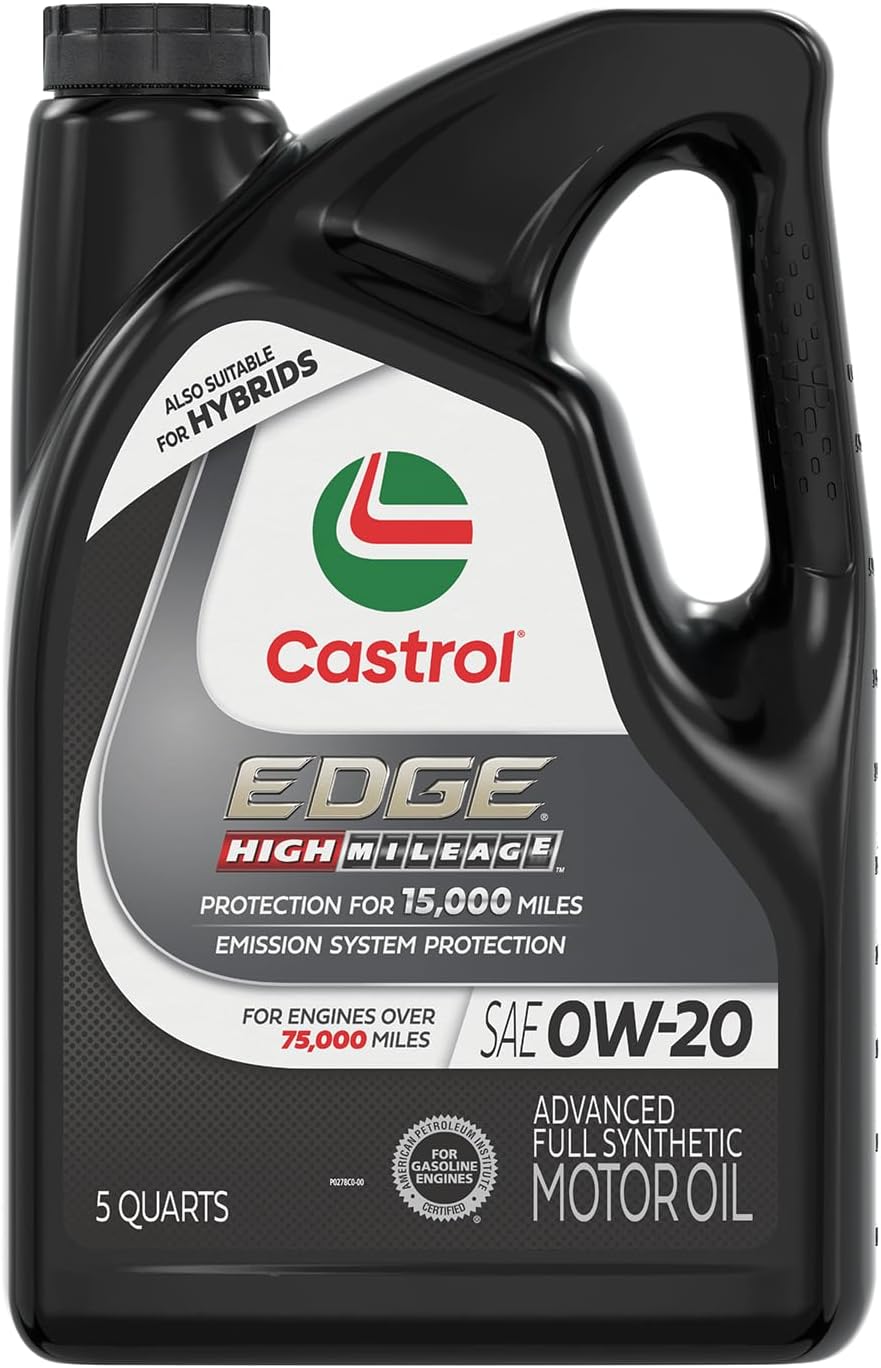
6. Castrol EDGE High Mileage 0W-20 Full Synthetic Motor Oil, 5 Quart
Best High-Mileage Engine Oil
| SAE Viscosity Grade | 0W-20 |
|---|---|
| Compatible with Vehicle Type | For vehicles with over 75,000 miles |
| Liquid Volume | 5 Quarts |
| Unit Count | 160.0 Fluid Ounces |
Castrol EDGE High Mileage 0W-20 is a full synthetic motor oil designed for higher-mileage engines and daily-driven cars that need extra protection as mileage climbs. It is used like any multigrade motor oil at routine oil changes and is intended to reduce leaks, oil burnoff, sludge and friction-related wear thanks to its additive package and Phosphorus Replacement Technology. Notable features include a high-mileage formulation tuned for engines over 75,000 miles, a 0W-20 viscosity for modern tight-tolerance engines, and claims of extended drain capability up to 15,000 miles or one year under recommended conditions. In practice it gives smoother idle and reduced engine noise for worn powertrains and helps protect emissions components by lowering harmful phosphorus levels. Limitations are that extended drain intervals depend on driving conditions and manufacturer requirements and this specific viscosity is only suitable where 0W-20 is recommended, so it is not a universal fix for every older engine that calls for a different grade.
Best for: Buyers who prioritize protecting an older engine from leaks, oil consumption and wear while keeping a factory-recommended 0W-20 viscosity and who prefer a high-mileage specific formula.
Less Ideal for: Drivers whose engines require a different viscosity than 0W-20 or who must strictly follow OEM shorter service intervals should consider a different grade or schedule.
- Formulated specifically for vehicles with over 75,000 miles to address common high-mileage issues
- 0W-20 viscosity supports modern, tight-tolerance engines and cold starts
- Contains additives aimed at reducing leaks, oil burnoff, sludge and friction wear
- Phosphorus Replacement Technology to help protect the catalytic converter and emission system
- Extended 15,000-mile drain interval is conditional and may not apply to all driving styles or manufacturer schedules
Verdict: The best high-mileage engine oil for older engines, offering conditioners and seal-compatible additives that help reduce oil consumption, leaks, and wear in higher-mileage powerplants.
7. Castrol GTX Full Synthetic 0W-20 Motor Oil, 5 qt
Best 0W-20 Engine Oil

| SAE J300 Viscosity Grade | 0W-20 |
|---|---|
| Compatible with Vehicle Type | Car, Truck |
| Container Type | Can |
| Liquid Volume | 5 Quarts |
Castrol GTX Full Synthetic 0W-20 is a low-viscosity engine oil designed to improve cold-start flow and protect modern engines from wear and sludge. For DIY mechanics changing oil on a Civic Si, the 5-quart jug covers a full service and pours cleanly, making roadside or garage swaps straightforward. The formula emphasizes high-temperature stability and resistance to viscosity breakdown, so it holds protective film under heat and pressure while helping reduce deposits compared with older standards. Castrol states extended oil-change endurance and improved fuel economy by lowering friction, which is relevant for drivers who want better mileage between services. It meets current API and manufacturer specifications that Honda requires for 0W-20 oils, so compatibility with Civic Si factory viscosity recommendations is addressed. The main limitation is that any extended drain intervals should follow Honda’s service schedule and warranty guidance rather than blanket claims about mileage between changes.
Best for: DIY mechanics who maintain a Honda Civic Si and prioritize a low-viscosity synthetic that eases cold starts and supports fuel economy while matching manufacturer viscosity requirements.
Less Ideal for: Drivers planning to extend service intervals beyond Honda’s recommended schedule without consulting the owner’s manual or dealer should choose a product and interval approved by Honda.
- Full-synthetic 0W-20 formula for improved cold-start flow and reduced friction
- Claims strong sludge control and wear protection compared with industry standards
- 5-quart container is convenient for a complete DIY oil change
- Formulation resists viscosity breakdown at high temperatures
- Manufacturer statements about long oil-change intervals should be verified against Honda maintenance recommendations
Verdict: The best 0W-20 engine oil for DIY mechanics who need a low-viscosity formulation that improves cold-start flow and fuel economy while meeting manufacturer viscosity requirements.
Choosing the Right Honda Civic Si Engine Oil: Key Factors to Consider
Viscosity Grade and Multigrade Behavior
Viscosity determines how the oil flows at cold startup and how it protects at operating temperature. For the Civic Si, choosing the correct multigrade ensures quick oil pressure recovery on cold mornings and adequate film strength during high-rpm driving.
A grade that is too thin can reduce protection under load, while one that is too thick can increase drag and reduce fuel economy. Look for oils that demonstrate stable viscosity across temperature ranges and list both low-temperature and high-temperature numbers to indicate multigrade performance.
Synthetic Versus Conventional Formulation
Full synthetic oils generally offer superior thermal stability, lower volatility, and better shear resistance compared with conventional oils. For a performance-oriented Civic Si, synthetic formulations help preserve film strength during spirited driving and resist breakdown during extended high-temperature operation.
Conversely, conventional or basic blends may be acceptable for low-mileage, light-duty use, but they usually require more frequent changes and can deteriorate faster under high load. Consider synthetic options if you prioritize protection, longer drain intervals, and consistent performance.
Wear Protection and Additive Chemistry
Anti-wear additives, detergents, and dispersants keep engine components protected and clean. The Civic Si's valve train and high-revving characteristics place extra demands on lubrication and boundary protection systems.
Select oils with proven anti-wear chemistry and strong detergent performance to limit deposits and scuffing. Oils that maintain a clean internal environment reduce the risk of sludge and varnish, which can impair oil flow and component longevity.
Cold-Start Performance and Low-Temperature Flow
Cold-start protection is crucial for minimizing wear during the first minutes of operation. Oils with good low-temperature flow reach oil galleries faster and establish hydrodynamic lubrication sooner.
For owners who drive in cooler climates or who expect frequent short trips, prioritize oils with low pour points and proven pumpability. That reduces initial wear and helps maintain consistent pressure readings during warm-up.
Oxidation Resistance and Drain Interval Durability
Oxidation resistance determines how long an oil can function before it thickens or forms varnish. Civic Si owners who favor longer drain intervals or who subject the engine to higher temperatures should consider oils formulated for extended service life.
Look for oils with antioxidants and viscosity index improvers that resist viscosity growth. However, longer drain intervals depend on regular monitoring and following manufacturer guidance to avoid contamination-related failures.
Compatibility with Seals and Oil Consumption Control
Oil formulations interact with engine seals and piston rings, affecting seepage and consumption. An oil that is too low in viscosity or contains solvents incompatible with seal compounds can increase leaks or burn-off.
Select oils with a track record of compatibility in modern Honda engines and that do not aggressively promote oil consumption. If the vehicle has higher mileage, consider formulations aimed at stabilizing seals and reducing consumption without causing swelling that could create other issues.
Recommended Viscosity Options for Driving Styles
Different driving patterns call for distinct viscosity priorities. For daily commuting and mixed city/highway use, a balanced multigrade that favors fuel economy while providing protection at operating temperature is appropriate. If you regularly push the Civic Si near redline or use the car on track days, prioritize oils with stronger high-temperature film strength and shear resistance.
- Daily driving: choose a viscosity that improves fuel economy and offers solid wear protection.
- Performance driving: choose oils with higher shear stability and sustained high-temp protection.
- Cold climates: prioritize lower cold-start viscosities for faster circulation.
How Viscosity Affects Fuel Economy and Response
Viscosity impacts parasitic loss in the engine and can change throttle feel. Thinner oils reduce internal friction and can marginally improve fuel economy, while thicker oils can dampen response but sometimes improve protection under heavy load. Balancing these effects is key for the Civic Si, which benefits from quick throttle response and consistent lubrication at high rpm.
- Lower viscosity can improve mpg and throttle sharpness.
- Higher viscosity can provide extra film strength during sustained high-load operation.
Maintenance Practices That Extend Oil Life
Regular oil analysis and adhering to service intervals tailored to your driving conditions keep the engine healthier longer. Short trips, heavy traffic, and frequent aggressive driving produce contaminants and thermal stress that accelerate oil degradation.Use clean filters, top off with the correct viscosity when needed, and monitor oil level between services. Addressing leaks, cooling system issues, or fuel dilution promptly reduces stress on the oil and prolongs its protective life.
- Follow vehicle-recommended drain intervals adjusted for severe service.
- Change the oil filter with every oil service.
- Keep an eye on oil level and color between changes.
Understanding OEM Specifications and Certifications
OEM specifications and industry certifications indicate that an oil meets baseline performance standards. Look for oils that meet the API and ILSAC benchmarks relevant to modern Honda engines and reference manufacturer viscosity recommendations.Certifications do not guarantee identical performance across brands, but they provide assurance of minimum protection levels. Prioritize oils that explicitly list relevant industry specs and viscosity grades compatible with the Civic Si.
- Check for applicable API and ILSAC certifications.
- Confirm the oil lists the recommended viscosity grades for the vehicle.
Storage, Handling, and Proper Disposal
Store oil in a cool, dry place away from direct heat and contamination. Keep containers sealed to avoid moisture ingress and dirt that can compromise chemical additives.When disposing of used oil, follow local regulations. Contaminated or mixed oil can alter properties and should be handled and recycled through designated facilities.
- Keep new oil sealed and upright to prevent leaks.
- Recycle used oil at approved collection points.
Still looking for the perfect fit?
Select your Honda Civic configuration to see the most relevant Engine Oils recommendations
How We Chose the Best Honda Civic Si Engine Oil
Our selection process prioritized engine oils that meet Honda specifications and the operating demands of the Civic Si's high-revving four-cylinder. We evaluated technical specifications such as viscosity grades and multigrade performance, API and ILSAC certifications, and manufacturer approvals relevant to modern Honda engines. Thermal and shear stability, high-temperature deposit control, and cold-start viscosity were weighted to reflect the balance between performance driving and everyday commuting. Longevity factors included oxidation resistance and the oil's ability to maintain film strength over extended drain intervals.We included both full synthetic and advanced synthetic blend formulations that match recommended viscosity grades, and we looked for oils that provide strong wear protection without increasing oil consumption. Exclusions included formulations lacking recognized industry certifications, specialty racing-only oils not intended for street service, and products without clear viscosity or spec data. Final picks reflect a mix of durability, protection, and suitability for the Civic Si's operating range.
Our full evaluation process is outlined in our review methodology.
FAQ
What viscosity should I use for a Honda Civic Si in mixed driving?
For mixed city and highway driving, choose a multigrade that balances cold-start flow with high-temperature protection. Consult the owner's manual for the recommended range and select a synthetic or advanced blend within that viscosity.
Can I switch between 0W-20 and 5W-30 if I change driving habits?
Switching viscosities can be acceptable if both grades fall within the manufacturer's allowed range. Thicker grades offer more high-temperature protection but may slightly affect fuel economy. Confirm compatibility with the Civic Si specifications before changing.
How often should I check oil level and condition in the Civic Si?
Check oil level at least monthly and before long trips or track use. Inspect color and smell for signs of contamination. For high-performance driving, more frequent checks are advisable.
Does synthetic motor oil help with high-temperature track use?
Synthetic motor oils typically resist thermal breakdown and maintain viscosity better under sustained high temperatures, making them preferable for track or spirited driving. They also tend to offer better protection during extended high-rpm operation.
Will a high-mileage formulation benefit a Civic Si with over 100,000 miles?
High-mileage formulations can help condition seals and reduce minor leaks or consumption in older engines. Their detergents and seal-conditioning additives may benefit a Civic Si showing signs of wear, but monitor for any changes in oil consumption after switching.
Is it okay to top off with a different brand or formulation between changes?
Topping off with a compatible viscosity and spec is generally acceptable in small amounts. Avoid mixing radically different formulations or unknown additives. When in doubt, use the same type and viscosity as the last fill. ]
Final Verdict
Prioritize an oil that matches the Civic Si's operating profile and the viscosity recommendations in the owner's manual. For everyday driving, choose a formulation that balances cold-start flow with adequate high-temperature protection. If you drive more aggressively or occasionally take the car on track, favor oils with stronger shear stability and oxidation resistance.Weigh tradeoffs between fuel economy and maximum protection, and maintain disciplined oil checks and timely filter changes. With the right oil and proper maintenance, you can keep the Civic Si responsive and reliable for many miles.
Explore More:
- Check out all Honda Civic parts & accessories
- Explore Fluids & Chemicals
- Browse all Accessories
