

Note: This article contains affiliate links. If you click on these links and make a purchase, I may earn a small commission at no extra cost to you. This helps support my research and content. Read my full affiliate disclosure here.
If you drive a Honda Civic Hybrid, choosing the right engine oil affects fuel economy, emissions, and long-term engine health. The Civic Hybrid's smaller-displacement engine and hybrid load cycles place unique demands on lubrication, so the wrong oil can reduce mpg or accelerate wear over time. This guide shortlists the top engine oils suited to the Civic Hybrid and explains the tradeoffs between viscosity grades, synthetic blends, and high-mileage formulations.Each pick has been evaluated for real-world drivability, protection under frequent stop-start conditions, and compatibility with hybrid fuel-saving goals. Read on to understand the key factors that determined our shortlist and which characteristics matter most for routine service and long-term ownership.
Looking for other parts? See all Honda Civic parts & accessories.
Top Picks at a Glance
| Best Overall Engine Oil A well-rounded oil balancing protection, fuel economy, and longevity | Castrol GTX Full Synthetic 0W-20 Motor Oil, 5 Quart |  |
| Best Budget Engine Oil A low-cost oil that still meets basic protection standards | Mobil 1 Extended Performance 0W-20 Synthetic Engine Oil, 1 Quart |  |
| Best Premium Engine Oil Higher-end formulations aimed at maximum protection and longevity | Honda Ultimate Full Synthetic SAE 0W-20 Motor Oil (1 Quart, 6-Pack) |  |
| Best Full-Synthetic Engine Oil Fully synthetic formulation for superior flow and engine protection | Castrol EDGE 0W-20 Full Synthetic Motor Oil, 5 Quart Jug |  |
| Best 0W-20 Engine Oil A specific low-viscosity grade for modern fuel-economy engines | Mobil 1 Advanced Fuel Economy Full Synthetic Motor Oil 0W-20, 5 Quart |  |
| Best High-Mileage Engine Oil Formulated additives to protect and condition older engines’ seals | Castrol EDGE High Mileage 0W-20 Full Synthetic Motor Oil, 5 Quart |  |
1. Castrol GTX Full Synthetic 0W-20 Motor Oil, 5 Quart
Best Overall Engine Oil

| SAE J300 Viscosity Grade | 0W-20 |
|---|---|
| Liquid Volume | 5 Quarts |
| Item Type Name | Full Synthetic Motor Oil |
| Compatible with Vehicle Type | Car, Truck |
Castrol GTX Full Synthetic 0W-20 is a full-synthetic engine oil aimed at protecting modern gasoline engines through a combination of anti-wear additives and detergents. For a Honda Civic Hybrid this grade supports the car’s small-displacement, fuel-efficient engine by improving cold-start flow and reducing friction that can sap fuel economy. The formula advertises stronger protection against viscosity breakdown and better sludge control than industry standards, which helps keep the hybrid’s combustion and accessory systems cleaner between changes. The 5-quart jug is convenient for a full DIY oil change plus a little left over. Keep in mind the oil is specified as 0W-20 only; confirm your Civic Hybrid owner’s manual for recommended viscosity and manufacturer approvals before use. Also, while the product emphasizes long drain intervals, actual oil-change frequency should follow Honda’s service schedule and driving conditions rather than marketing claims.
Best for: Drivers who want a balanced, factory-replacement synthetic oil for routine maintenance of a Honda Civic Hybrid and prioritize engine protection, cold-start performance, and maintaining fuel efficiency.
Less Ideal for: Owners who must follow a different viscosity or a specific factory-branded oil requirement from Honda, or those planning extended service intervals beyond Honda’s recommended schedule without independent oil analysis.
- Full synthetic 0W-20 suitable for modern fuel-efficient gasoline engines
- Formulated to reduce engine wear and resist viscosity breakdown
- Detergent additives target sludge and help keep the engine cleaner between services
- 5-quart container size covers a full Civic Hybrid oil change with extra for topping off
- Only available in a single viscosity so not suitable if a different grade is required by the vehicle
Verdict: The best overall engine oil balances wear protection, fuel economy, cold-start performance, and long-term stability for typical passenger-car use.
2. Mobil 1 Extended Performance 0W-20 Synthetic Engine Oil, 1 Quart
Best Budget Engine Oil

| SAE J300 Viscosity Grade | 0W-20 |
|---|---|
| Compatible with Vehicle Type | Car |
| Container Type | Bottle |
| Liquid Volume | 32 Fluid Ounces |
Mobil 1 Extended Performance 0W-20 is a full-synthetic engine oil designed to give long-lasting protection while maintaining the thin cold-start viscosity modern engines need. It is typically used for routine oil changes in passenger cars that call for 0W-20, and it emphasizes extended protection between services compared with conventional oils. Key features visible on the bottle are the 0W-20 SAE grade and Mobil's long-running formulation history, which translate into consistent cold-start flow, reduced engine wear, and good control of deposits over time. For a budget-conscious DIYer maintaining a Honda Civic Hybrid, it delivers factory-quality lubrication and easy pourability from the one-quart bottle. Limitations are that a single quart is suited for top-ups or small-capacity oil changes rather than full-change quantities for vehicles that require more fluid, and extended-interval claims depend on manufacturer service schedules so you should follow Honda's maintenance recommendations.
Best for: Budget-minded DIYers who want a reliable full-synthetic 0W-20 for routine maintenance on a Civic Hybrid and prioritize wear protection and cold-start performance over buying in bulk.
Less Ideal for: Drivers who prefer factory-recommended multi-quart service packages or those seeking specialty oils formulated for racing or heavy-duty towing conditions.
- Full-synthetic formula for stronger wear protection and deposit control
- 0W-20 viscosity supports fast cold-start lubrication in modern engines
- From a well-known brand with a formulation intended for extended protection
- Single-quart bottle is easy to store and pour for DIY top-ups
- Sold as one-quart units which may require purchasing multiple bottles for a full oil change
Verdict: The best budget engine oil provides reliable wear protection and viscosity control at a low price for routine maintenance and budget-conscious DIYers.
3. Honda Ultimate Full Synthetic SAE 0W-20 Motor Oil (1 Quart, 6-Pack)
Best Premium Engine Oil

| SAE J300 Viscosity Grade | 0W-20 |
|---|---|
| Viscosity Level | Low to Medium |
| Compatible with Vehicle Type | Car |
| Liquid Volume | 6 Quarts |
This Honda Ultimate Full Synthetic 0W-20 is a premium motor oil developed and tested by Honda R&D to meet the needs of modern Honda engines. It is formulated to resist varnish, corrosion, and foam while maintaining viscosity at high temperatures and reducing volatility that leads to oil consumption. Typical use is as a factory-replacement oil for regular service intervals in Honda vehicles, especially those that specify 0W-20. Notable features include full synthetic base stocks for thermal stability, claimed reduction in deposit formation, and faster circulation at low temperatures for better cold-start protection. Practical benefits are improved engine cleanliness, consistent protection under a wide range of temperatures, and potential fuel efficiency gains when used as specified. Limitations are that the product is vehicle-specific in formulation so it is intended for Honda applications and offers less value for buyers who do not need a factory-grade synthetic or who prefer oils with alternative specifications for non-Honda engines.
Best for: Buyers who want a top-tier, factory-formulated oil for Honda vehicles and prioritize long-term engine protection and thermal stability over lower-cost alternatives.
Less Ideal for: Drivers who need a broad-specification oil for multiple makes or those seeking the lowest-cost option for routine oil changes should consider other synthetic oils.
- Formulated and tested by Honda R&D for compatibility with Honda engines
- Full synthetic 0W-20 grade offers strong thermal stability and cold-start circulation
- Claims to reduce deposits and resist varnish and corrosion under high temperatures
- Intended as a factory-formulated product so benefits are tuned to Honda engines rather than universal performance across all makes
Verdict: The best premium engine oil delivers superior thermal stability, deposit control, and extended protection for owners willing to pay more for top-tier performance.
4. Castrol EDGE 0W-20 Full Synthetic Motor Oil, 5 Quart Jug
Best Full-Synthetic Engine Oil

| Viscosity | 0W-20 |
|---|---|
| Container Type | Jug |
| Liquid Volume | 5 Quarts |
| Automotive Fit Type | Universal Fit |
| Specifications | ILSAC GF-7; exceeds API SQ/SP/SN PLUS/SN |
Castrol EDGE 0W-20 is a full synthetic engine oil designed to deliver strong film strength, good cold-start flow, and resistance to high-temperature breakdown. It is typically used for passenger cars and hybrids that specify 0W-20 viscosity and drivers who want extended protective performance between services. The formula emphasizes wear protection, sludge control, and pressure resistance, translating to smoother oil pressure stability and reduced metal-to-metal contact under load. Castrol highlights endurance and longer oil life, which can support longer drain intervals when matched to manufacturer recommendations. Practical benefits include consistent viscosity at low temperatures for easier cold starts and a focus on fuel economy by lowering friction. Limitations are that compatibility must match your vehicle manufacturer API/ILSAC requirements and that claimed extended intervals depend on actual driving conditions and follow manufacturer service schedules; packaging complaints have been reported separately from oil performance.
Best for: Buyers who prioritize maximum film strength, reliable cold-start performance, and long-term engine protection for modern gasoline and hybrid cars and want a full-synthetic 0W-20 oil that meets current industry specifications.
Less Ideal for: Drivers who must follow a specific manufacturer-prescribed oil type other than 0W-20 or those who prefer conventional or blended oils for older engines.
- Full synthetic 0W-20 formulation for strong low-temperature flow and startup protection
- Formulated to resist high-temperature breakdown and reduce sludge buildup
- Engine wear protection and viscosity control aimed at preserving engine parts
- Meets modern specs including ILSAC GF-7 and various OEM test requirements
- Extended oil change interval claims depend on driving conditions and vehicle recommendations
Verdict: The best full-synthetic engine oil offers the highest consistent film strength, improved cold-start flow, and longer-term performance compared with conventional blends.
5. Mobil 1 Advanced Fuel Economy Full Synthetic Motor Oil 0W-20, 5 Quart
Best 0W-20 Engine Oil

| Viscosity | 0W-20 |
|---|---|
| Brand | Mobil |
| Vehicle Service Type | Car, Truck |
| Flash Point | 224 Degrees Celsius |
| Size | 5 Quart |
Mobil 1 Advanced Fuel Economy 0W‑20 is a low‑viscosity full‑synthetic motor oil meant for drivers who need improved cold‑start flow and reduced internal drag. Typical use is routine oil changes in passenger cars, hybrids, and light trucks where a 0W‑20 grade is specified; it is formulated to help improve fuel economy compared with higher‑viscosity oils and to provide protection for up to 10,000 miles or one year. Notable features include Mobil 1’s Triple Action Formula for deposit control and wear protection, ILSAC GF‑6 compliance for LSPI and timing chain wear protection, and thermal stability up to high internal temperatures. In practice this oil pours easily in cold weather, helps engines start smoothly, and maintains clean internals under normal and turbocharged operation. The main compromise is cost versus conventional or lower‑cost synthetics, so buyers prioritizing maximum savings may prefer less expensive options. For Honda Civic Hybrid owners the formulation matches the low‑viscosity intent of fuel‑saving engine service without sacrificing long‑term protection.
Best for: Drivers who need a true 0W‑20 synthetic for improved cold‑start flow and fuel economy while maintaining strong engine protection during extended drain intervals.
Less Ideal for: Buyers on a tight budget who prioritize lowest upfront cost or those whose vehicle manufacturer does not recommend 0W‑20 oil.
- Low 0W‑20 viscosity improves cold‑start lubricity and can reduce engine drag for better fuel economy
- Full‑synthetic formulation resists oxidation and helps maintain oil condition up to 10,000 miles
- Meets ILSAC GF‑6 for modern engine protections including LSPI and timing chain wear
- Proven brand reputation and consistent performance across a wide range of vehicles
- Higher price compared with conventional or budget synthetic blends
Verdict: The best 0W-20 engine oil is the ideal choice when a low-viscosity, fuel-economy grade is required for optimal cold-start flow and reduced drag.
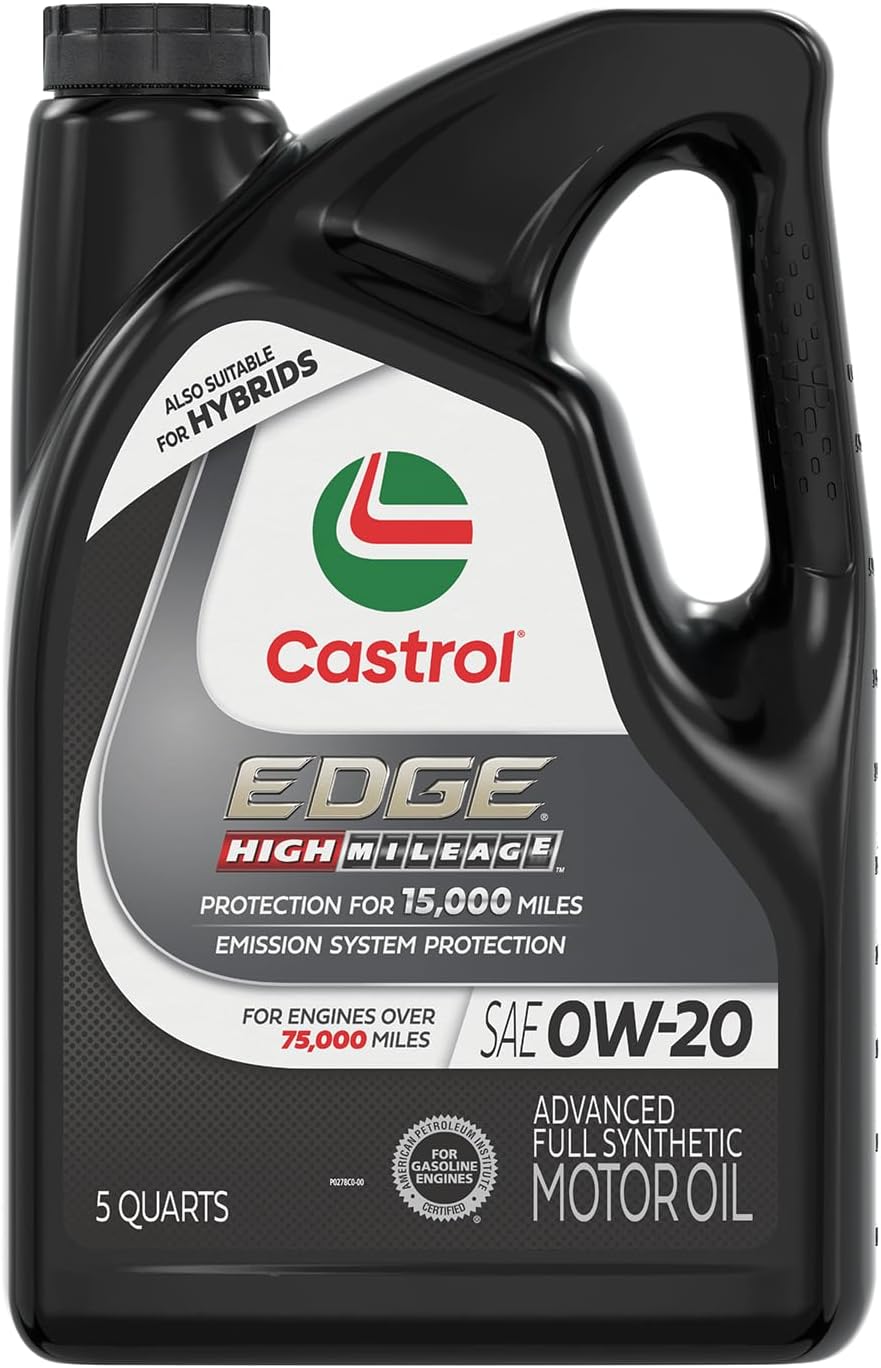
6. Castrol EDGE High Mileage 0W-20 Full Synthetic Motor Oil, 5 Quart
Best High-Mileage Engine Oil
| Compatible with Vehicle Type | For vehicles with over 75,000 miles |
|---|---|
| SAE J300 Viscosity Grade | 0W-20 |
| Viscosity Level | Low to Medium |
| Liquid Volume | 5 Quarts |
Castrol EDGE High Mileage 0W-20 is a full synthetic motor oil formulated for high-mileage engines and intended to reduce leaks, oil burnoff, and wear. It is typically used in older vehicles or hybrids that call for 0W-20 viscosity and need extra protection as mileage climbs. Notable features include phosphorus replacement technology to limit harmful phosphorus in the catalytic converter, as well as additives targeting corrosion prevention, sludge control, and friction wear. In real-world use this means smoother running, potential reduction in oil consumption, and support for emission system longevity. The product advertises up to 15,000 miles between oil changes under ideal conditions, though many owners still choose shorter intervals. As a purpose-built high-mileage formulation it helps condition seals and reduce leaks, but drivers should follow their Honda Civic Hybrid service interval recommendations and monitor oil levels since driving conditions and engine condition determine actual drain intervals.
Best for: Buyers looking to preserve and protect an older Honda Civic Hybrid engine who prioritize leak reduction, emission-system protection, and low-viscosity performance.
Less Ideal for: Drivers who prefer very short oil-change intervals, those using a different SAE grade than 0W-20, or owners seeking budget conventional oils should consider alternatives.
- Formulated specifically for vehicles with over 75,000 miles with additives to help condition seals and reduce leaks
- 0W-20 viscosity suitable for modern engines and hybrids that require low-viscosity oil
- Includes phosphorus replacement technology to help protect the catalytic converter and emission system
- Claims extended drain capability up to 15,000 miles under recommended conditions
- Extended 15,000-mile drain recommendation may be optimistic for many drivers and engine conditions
Verdict: The best high-mileage engine oil contains seal conditioners and anti-wear additives designed to reduce leaks, minimize oil consumption, and protect aging engine components.
Choosing the Right Honda Civic Hybrid Engine Oil: Key Factors to Consider
Correct Viscosity Grade
Choosing the right viscosity grade matters because it determines how quickly oil circulates at startup and how well it maintains a protective film at operating temperature. For the Civic Hybrid, lower-viscosity oils often help with fuel economy by reducing parasitic drag, but they still need to be thick enough at temperature to prevent metal-to-metal contact.
Consider the manufacturer recommendation first, then think about typical ambient temperatures and driving habits. Short, frequent trips with many cold starts favor oils with strong low-temperature flow, while longer highway runs require stable high-temperature viscosity. The ideal oil for this vehicle balances low-temperature flow and high-temperature film strength.
Synthetic Versus Conventional Formulation
Synthetic oils generally provide better thermal stability, improved flow at low temperatures, and superior shear resistance compared with conventional oils. For a hybrid like the Civic Hybrid that frequently cycles the engine on and off, those properties translate into more consistent protection during repeated warm-up and cool-down phases.
Synthetic formulations also tend to resist oxidation and deposit formation, which helps preserve engine cleanliness and performance over longer drain intervals. However, cost and service interval preferences may lead some owners to choose synthetic blends or conventional oils; the primary consideration is whether the chosen formulation meets OEM specs for this vehicle.
Additive Package and Deposit Control
The additive package governs detergency, dispersancy, antiwear, and friction modification. Good detergents and dispersants prevent sludge and varnish buildup, which is particularly important in hybrid engines where transitional combustion can produce varied combustion byproducts.
Antiwear agents like zinc dialkyldithiophosphate help protect camshafts, lifters, and other contact surfaces. Friction modifiers can improve fuel economy but should be compatible with the Civic Hybrid's valvetrain and emissions equipment. Evaluate oils for explicit deposit-control claims and relevant performance approvals.
Compatibility With Emissions and Aftertreatment
Modern engines rely on clean exhaust systems and sensors to meet emissions goals. Oils that produce high levels of phosphorus or ash can shorten catalytic converter life or foul sensors. For the Civic Hybrid, choose oils formulated to limit potentially harmful elements and that comply with ILSAC or API standards aimed at emissions system compatibility.
Check specifications for low SAPS or manufacturer endorsements when applicable. Compatibility reduces the risk of sensor degradation and maintains emission control performance over time.
Shear Stability and Viscosity Retention
Shear stability describes an oil's resistance to mechanical breakdown of its viscosity-controlling polymers under stress. The Civic Hybrid's frequent torque changes and occasional high-load periods require oil that maintains its rated viscosity to keep ring seal and bearing protection consistent.
Oils with poor shear stability can thin out, reducing film thickness and increasing wear. Look for oils with documented viscosity retention and robust additive systems so the oil performs reliably between changes.
Service Interval and Condition-Based Maintenance
Decide whether you'll follow conservative change intervals or extend drains based on oil performance and vehicle usage. Hybrid owners who do many short trips may need more frequent changes due to condensate and fuel dilution, while those with mostly highway miles can often benefit from longer intervals if the oil is rated for it.
Factor in the vehicle's warranty requirements and any monitoring systems that indicate oil condition. Selecting an oil with a suitable performance class for your intended drain interval helps balance cost and protection.
Viscosity Choices for Different Climates
Ambient temperature should drive your viscosity choice because it affects cold-start flow and high-temperature film strength. In colder regions, choose an oil grade that provides quick lubrication at startup to reduce wear during the critical first seconds of engine operation. In milder or hot climates, prioritize an oil that resists thinning at operating temperature to preserve protection under load.
For hybrid owners who experience a mix of climate conditions, selecting a multi-grade oil that covers the expected temperature range is the best compromise. That lets the oil behave like a low-viscosity product at startup while still maintaining enough thickness once the engine reaches normal running temperature.
- Cold climates: favor lower cold-crank viscosity for faster flow
- Hot climates: prioritize high-temperature film strength
- Mixed driving: choose multi-grade oils optimized across range
High-Mileage Considerations for Older Hybrids
As mileage climbs, internal engine clearances and seal condition change. High-mileage formulations contain conditioners that help swell aging seals and reduce oil consumption, while also offering enhanced detergency to address existing deposits. For Civic Hybrid owners with higher miles, these formulations can improve sealing and reduce leaks without altering recommended viscosity.
Bear in mind that high-mileage oils often include extra conditioners that can marginally affect fuel economy. Balance the benefit of reduced seepage and improved lubrication against any potential impact on mpg when making your choice.
- Seal conditioners help reduce leaks in older engines
- Enhanced detergents assist with deposit removal
- Weigh marginal fuel economy impact against leak control
Oil and Hybrid Start-Stop Duty Cycles
Hybrid systems switch the engine on and off frequently to save fuel. Each start and stop increases the number of cold starts, which is when most wear occurs. Oils with strong low-temperature properties and fast circulation reduce wear during these transitions. Look for oils that emphasize rapid film formation and low-temperature pumpability.
Additionally, stop-start duty can promote fuel dilution and condensation in oil, especially during many short trips. Ensure the oil you choose maintains dispersancy to manage contaminants and resists oxidation that accelerates when the engine does not fully warm.
- Rapid circulation reduces wear on frequent cold starts
- Dispersants help manage fuel dilution and condensation
- Thermal stability prevents accelerated oxidation from short trips
Impact of Oil on Fuel Economy
Oil viscosity and friction modifiers directly affect parasitic losses in the engine. Lower-viscosity oils and formulations with controlled friction can yield measurable improvements in mpg, which is particularly important for a hybrid where small gains compound over many miles. If fuel economy is a priority, select oils that balance low friction with adequate wear protection.
Remember that achieving the absolute best fuel economy with oil alone may involve tradeoffs in longevity or protection. Choose an oil that supports fuel efficiency goals without compromising the engine's long-term health.
- Lower viscosity reduces engine drag and can improve mpg
- Friction modifiers boost efficiency but must not sacrifice protection
- Aim for balanced formulations that support both economy and durability
Routine Maintenance and Oil Change Intervals
Follow the vehicle's recommended intervals as a baseline, then adjust based on driving patterns. Owners who subject the Civic Hybrid to many short trips or heavy stop-and-go traffic may need shorter intervals due to contaminants and fuel dilution. Conversely, those who do predominantly highway miles may be able to extend intervals if using a high-performance synthetic rated for longer service.
Always check the oil level and condition regularly, and watch for signs of contamination or unusual consumption. Maintaining timely oil changes preserves engine cleanliness and reduces the likelihood of accelerated wear or component issues related to poor lubrication.
- Use manufacturer intervals as the starting point
- Short trips may necessitate more frequent changes
- Highway miles and high-quality synthetics can justify longer drains
Interpreting Labels and Specifications
Engine oil labels list key specifications such as API, ILSAC, and viscosity grade. For the Civic Hybrid, confirm the oil meets the recommended API and ILSAC levels and matches the suggested viscosity range. These ratings indicate baseline performance for protection, fuel economy, and emissions compatibility.
Beyond standards, look for technical details on shear stability, low-temperature pumpability, and deposit control. These specifics reveal how the oil will perform under the hybrid's distinctive operating conditions and help you choose an oil suited to your priorities.
- Check API and ILSAC certifications against manufacturer guidance
- Review technical claims for shear and thermal stability
- Choose oils with clear performance data relevant to hybrid duty
Still looking for the perfect fit?
Select your Honda Civic configuration to see the most relevant Engine Oils recommendations
How We Chose the Best Honda Civic Hybrid Engine Oil
Our selection focused on engine oils that meet the needs of Honda Civic Hybrid owners by prioritizing performance in fuel economy, wear protection, and compatibility with hybrid driving cycles. We evaluated candidate oils on a set of concrete, vehicle-relevant criteria: viscosity behavior across operating temperatures, API and ILSAC performance levels, additive package for sludge and deposit control, and compatibility with emissions systems and manufacturer-recommended change intervals. We also considered shear stability to ensure viscosity holds under torque loads typical of the Civic Hybrid powertrain, and thermal stability for resistance to breakdown during prolonged highway runs.Editorial filters excluded products that did not meet OEM viscosity recommendations or lacked clear performance specifications for modern gasoline-hybrid engines. We gave extra weight to oils with proven low-friction formulations that support fuel economy, and to high-mileage options when addressing older hybrid engines. Oils without published lab data or performance claims were not included. The result is a focused list of options suited to the Civic Hybrid's operating profile and long-term maintenance goals.
Our full evaluation process is outlined in our review methodology.
FAQ
What viscosity oil should I use in my Civic Hybrid?
Follow the manufacturer's recommended viscosity as the primary guide. Ambient temperature and driving patterns can influence whether you choose a lower- or higher-viscosity within that recommended range. For mixed driving, a multi-grade oil that performs across temperature extremes is usually best.
Is synthetic oil necessary for a Civic Hybrid?
Synthetic oil offers better low-temperature flow, thermal stability, and resistance to oxidation, which are beneficial for hybrid start-stop duty. While not strictly required, many owners choose synthetic for consistent protection and longer service intervals when appropriate.
How often should I change the oil in a Civic Hybrid?
Use the vehicle's service schedule as a baseline and adjust for driving habits. Frequent short trips and stop-start operation can justify shorter intervals, while mostly highway driving with a high-quality synthetic may allow longer intervals within manufacturer guidelines.
Can I switch viscosity grades between changes?
Switching viscosity grades is acceptable if the new grade falls within the manufacturer's specified range and is suitable for your climate. Avoid large jumps between grades, and ensure the oil meets required performance specifications.
Do high-mileage oils help older Civic Hybrids?
High-mileage oils can help by including seal conditioners and enhanced detergents that reduce leaks and clean deposits. They are useful for engines with higher miles but may have a small effect on fuel economy, so weigh benefits against priorities.
Will oil choice affect my hybrid battery or electrical components?
Oil selection does not directly impact hybrid battery function, but an oil that leads to increased engine emissions or contaminant buildup could indirectly affect emissions controls and sensors. Choose oils formulated for emissions compatibility and low sensor-fouling tendencies.
Final Verdict
Prioritize oils that meet the Civic Hybrid's recommended viscosity and performance specifications while balancing fuel economy and deposit control. For most owners, a stable synthetic formulation that offers low-temperature flow and strong thermal and shear stability provides the best mix of efficiency and engine protection. If your vehicle has higher mileage, consider a high-mileage formulation to address seals and deposits, but remain mindful of the potential tradeoff with marginal fuel-economy changes.Ultimately, follow manufacturer guidance for viscosity and service intervals, monitor oil condition, and choose an oil whose stated properties align with your driving patterns. That approach will help you get the most reliable performance and longevity from your Civic Hybrid's engine.
Explore More:
- Check out all Honda Civic parts & accessories
- Explore Fluids & Chemicals
- Browse all Accessories
