

Note: This article contains affiliate links. If you click on these links and make a purchase, I may earn a small commission at no extra cost to you. This helps support my research and content. Read my full affiliate disclosure here.
If you own a 2006-2011 Honda Civic, picking the right engine oil has a direct impact on reliability, fuel economy, and how the engine behaves on cold mornings. This guide focuses on the specific needs of the 2006-2011 Civic generation (FA and FG) and explains why viscosity, additive chemistry, and mileage-rated formulations matter for everyday driving and longer-term engine health.Below are the top shortlisted engine oils for this Civic generation chosen for real-world use. The following sections explain our evaluation approach and the key traits to consider before you pick an oil and perform an oil change.
Looking for other parts? See all Honda Civic parts & accessories.
Top Picks at a Glance
| Best Overall Engine Oil The top all-around oil offering balanced protection and performance | Valvoline Advanced Full Synthetic 0W-20 Motor Oil, 5 qt |  |
| Best Budget Engine Oil Affordable, no-frills oil that still meets basic OEM specs | Valvoline High Mileage MaxLife 5W-20 Synthetic Blend Motor Oil, 5 qt |  |
| Best Full‑Synthetic 0W‑20 Oil Lowest-viscosity full synthetic for cold starts and modern engines | Castrol EDGE 0W-20 Full Synthetic Motor Oil, 5 qt |  |
| Best High‑Mileage Synthetic Oil Formulated with conditioners to protect older engines and seals | Valvoline MaxLife Full Synthetic High Mileage 5W-20 Motor Oil, 5 qt |  |
| Best OEM Honda Motor Oil Factory-formulated oil sold under the manufacturer’s brand or spec | Honda Genuine Full Synthetic Motor Oil 08798-9137 (1 bottle) |  |
| Best Oil Change Kit Complete kit with quarts, filter, and drain hardware included | Factory Racing Parts 0W-20 Full Synthetic Oil Change Kit (3.5 qt) |  |
| Best Extended‑Protection 0W‑20 Oil Formulation claiming longer protection and stronger thermal stability | Valvoline Extended Protection Full Synthetic Motor Oil SAE 0W-20, 5 qt |  |
1. Valvoline Advanced Full Synthetic 0W-20 Motor Oil, 5 qt
Best Overall Engine Oil

| Viscosity | 0W-20 |
|---|---|
| Size | 5 QT |
| Flash Point | 200 Degrees Celsius |
| API/ILSAC Specs | ILSAC GF-7A, API SP/SN, Resource Conserving |
| Manufacturer Approvals | GM dexos1 Gen 3; Ford WSS-M2C962-A1; Chrysler MS-13340 |
Valvoline Advanced Full Synthetic 0W-20 is a 5-quart full synthetic engine oil aimed at protecting modern gasoline engines during everyday driving. It is typically used at scheduled oil changes in vehicles that specify 0W-20 viscosity, delivering improved low-temperature flow for easier cold starts and steady film strength under operating temperatures. Notable features include formulations that claim stronger wear protection, better deposit defense, and increased heat protection versus industry baselines, plus compliance with current API and ILSAC specifications and manufacturer approvals like GM dexos1 Gen 3 and relevant Ford and Chrysler specs. In practice this means cleaner internals over multiple changes, smoother cold starts, and consistent protection that can help preserve engine life and fuel economy. The practical trade-offs are that benefits marketed as "restore" or deposit-cleaning appear over several oil changes rather than instantly, and 0W-20 is only appropriate for engines that call for that viscosity, so it is not a universal fit for every older Civic variation without checking the owner manual.
Best for: A buyer who wants one dependable, modern 0W-20 oil to protect a daily-driven Civic and prioritize engine longevity and fuel economy over experimental blends.
Less Ideal for: Not a good choice for owners whose Civic requires a different viscosity than 0W-20 or those seeking immediate, one‑time engine restoration results.
- Full synthetic formulation for improved low-temperature flow and cold-start protection
- Claims stronger wear protection and enhanced heat resistance compared with industry standards
- Meets modern API and ILSAC specifications and several manufacturer performance approvals
- Designed to help control deposits over multiple oil-change cycles to maintain engine cleanliness
- Deposit-cleaning and "restore" effects typically require several oil changes to become noticeable
Verdict: Choose this when you want a single oil that delivers reliable wear protection, deposit control, and recommended viscosity for most driving conditions.
2. Valvoline High Mileage MaxLife 5W-20 Synthetic Blend Motor Oil, 5 qt
Best Budget Engine Oil

| SAE J300 Viscosity Grade | 5W-20 |
|---|---|
| Compatible with Vehicle Type | Car, Truck |
| Liquid Volume | 5 Quarts |
| Flash Point | 390 Degrees Fahrenheit |
Valvoline High Mileage MaxLife 5W-20 is a synthetic blend motor oil aimed at vehicles with more than 75,000 miles. You use it like any standard 5W-20 oil for routine drains and fills; it meets current ILSAC and API specifications so it will satisfy factory viscosity and oil spec requirements for many late-model compact cars. The formula includes anti-wear additives, detergents to help control sludge and deposits, friction modifiers to help preserve power, and seal conditioners designed to reduce leaks on older engines. In practice that means better protection against wear and cleaner internals compared with basic conventional oils, and it helps limit oil consumption on aging engines. Because it is a synthetic blend rather than a full synthetic, it offers a balance of improved protection and lower cost, but it is not the absolute highest-performance option for extreme track use or very extended drain intervals. For regular maintenance on high-mileage Civics following manufacturer service intervals, it provides a sensible, budget-conscious upgrade over plain conventional oil.
Best for: Drivers seeking an affordable, factory-spec 5W-20 oil for routine maintenance on higher-mileage compact cars who prioritize cost savings while maintaining solid engine protection.
Less Ideal for: Drivers planning extended drain intervals, high-performance driving, or those who want the maximum protection of a full-synthetic oil should choose a different product.
- Meets ILSAC GF-6A and API SP/SN specifications so it satisfies manufacturer viscosity and API requirements
- Formulated with detergents and anti-wear additives to reduce sludge and protect aging components
- Seal conditioners help reduce leaks and oil consumption in high-mileage engines
- Synthetic blend provides better protection than conventional oil while keeping cost lower than full synthetics
- Not a full synthetic so it is less capable than premium full-synthetic oils for extreme heat, track use, or very long oil-change intervals
Verdict: Pick this if you need a low-cost option that satisfies manufacturer viscosity and API specs for routine oil changes without premium additives.
3. Castrol EDGE 0W-20 Full Synthetic Motor Oil, 5 qt
Best Full‑Synthetic 0W‑20 Oil

| Viscosity Level | Low to Medium |
|---|---|
| Container Type | Jug |
| Liquid Volume | 5 Quarts |
| Compatible with Vehicle Type | Car, Hybrids, Truck |
Castrol EDGE 0W-20 is a full synthetic oil designed to keep tight‑tolerance engines lubricated at startup and under sustained load. It flows easily at low temperatures for faster oil pressure recovery, while its synthetic base and additive package aim to maintain film strength and resist high‑temperature breakdown. Typical use is routine oil changes in passenger cars where a 0W‑20 viscosity is specified; it claims extended service capability and addresses sludge, wear, and fuel economy. Notable features include approvals to modern API and ILSAC specifications and manufacturer test claims for endurance and high‑temperature performance. In practice this oil delivers smooth cold starts and stable operation in daily driving and highway use, and many users report minimal oil consumption compared with older conventional oils. Tradeoffs are limited: there is no vehicle‑specific formulation for older Civic engines, and extended drain claims depend on driving conditions and manufacturer recommendations, so follow the Civic service interval guidance rather than assuming very long drain intervals.
Best for: Drivers of 2006–2011 Honda Civic who want a modern full synthetic 0W‑20 that improves cold-start lubrication and helps protect tight‑tolerance valve trains during everyday and highway driving.
Less Ideal for: Owners who prefer to strictly follow original long‑term dealer schedules that require different viscosities or who need an oil specified for very high-mileage engines beyond factory recommendations.
- Full synthetic base promotes fast low-temperature flow and quick oil pressure recovery
- Formulated for thermal stability to resist sludge and deposits
- Additive system aimed at wear protection for tight‑tolerance engines
- Meets current API and ILSAC specifications accepted by many modern engines
- Extended drain and 20,000 mile interval claims depend on driving conditions and may not match manufacturer service intervals
Verdict: Use this slot for fully synthetic 0W‑20 formulations that maximize low-temperature flow and long-term film strength for tight‑tolerance engines.
4. Valvoline MaxLife Full Synthetic High Mileage 5W-20 Motor Oil, 5 qt
Best High‑Mileage Synthetic Oil

| SAE J300 Viscosity Grade | 5W-20 |
|---|---|
| Compatible with Vehicle Type | Car, Truck |
| Liquid Volume | 5 Quarts |
| Flash Point | 390 Degrees Fahrenheit |
Valvoline MaxLife Full Synthetic 5W-20 is designed for higher-mileage engines and delivers a synthetic formulation that combines anti-wear additives and seal conditioners to address common age-related issues. For a 2006–2011 Honda Civic, this oil is used like any engine oil during routine changes and aims to reduce oil consumption, quiet valve train noise on cold starts, and limit sludge buildup. Notable features include a factory-quality full synthetic base, added seal conditioners to help shrink or softened gaskets, and stated improvements in wear, sludge, and heat protection versus industry baselines. In practice that means more consistent viscosity under temperature swings and potential reduction in small leaks that develop over time. Trade-offs are minimal for Civics that require 5W-20, though owners should confirm their specific engine and manufacturer fluid specs before switching and expect no performance gains beyond improved longevity and protection in older engines.
Best for: Drivers of 2006–2011 Honda Civics who prioritize protecting an aging engine and want an oil that targets wear, deposits, and seal care to extend service life.
Less Ideal for: Owners whose Civic engine calls for a different viscosity grade or who prefer a product specified by their dealer for warranty reasons should consider alternatives.
- Formulated for high-mileage engines with seal conditioners to help reduce leaks.
- Full synthetic base provides stronger wear and heat protection than conventional oils.
- Stated resistance to sludge and deposits helps maintain engine cleanliness over time.
- Available in a 5 quart bottle which suits a full oil change for most Civic engines.
- Viscosity grade is 5W-20 only, so it is not suitable where a different SAE grade is required.
- Claims are comparative to industry baselines rather than specific measured Civic-only results.
Verdict: Select this when you want synthetic oil blended with seal conditioners and anti-wear additives to reduce leaks and extend life in higher-mileage engines.
5. Honda Genuine Full Synthetic Motor Oil 08798-9137 (1 bottle)
Best OEM Honda Motor Oil

| Container Type | Bottle |
|---|---|
| Compatible with Vehicle Type | Honda |
| Automotive Fit Type | Universal Fit |
| Liquid Volume | 70.86 Milliliters |
This is Honda-branded full synthetic motor oil in a single bottle intended as a factory replacement fluid. It provides a factory-recommended formulation designed to meet Honda specifications and is typically used for top-ups or oil changes where you want to maintain factory service standards. The product is packaged in a bottle and labeled for universal fit to Honda vehicles, which makes it convenient for DIY oil changes or for installers who prefer factory-branded fluids. Practical benefits include formulation engineered by the vehicle maker to match recommended viscosity and additive chemistry and straightforward single-bottle dosing for small-volume fills. Limitations are the small 70.86 milliliter unit size shown in the listing, which is far less than a full oil change requirement, so this item is only useful for topping off or as a sample rather than a complete service supply. Buyers should plan to purchase multiple bottles or a larger container from another source when performing a full oil change.
Best for: Buyers who want a factory-recommended oil to maintain Honda service standards and who need a small, ready-to-use bottle for topping off between changes or for sampling the OEM fluid.
Less Ideal for: Drivers planning to perform a complete oil change will need larger containers or multiple bottles, so this single small bottle is not a practical one-stop purchase for that task.
- Factory-branded formulation engineered to meet Honda specifications
- Full synthetic base for better high-temperature stability and engine protection
- Single-bottle packaging convenient for top-offs or targeted small-volume use
- Listed volume is very small so it does not supply enough oil for a full engine oil change
Verdict: Choose an OEM-labeled oil if you prefer a factory-recommended formulation engineered to meet the original equipment specifications and warranty expectations.
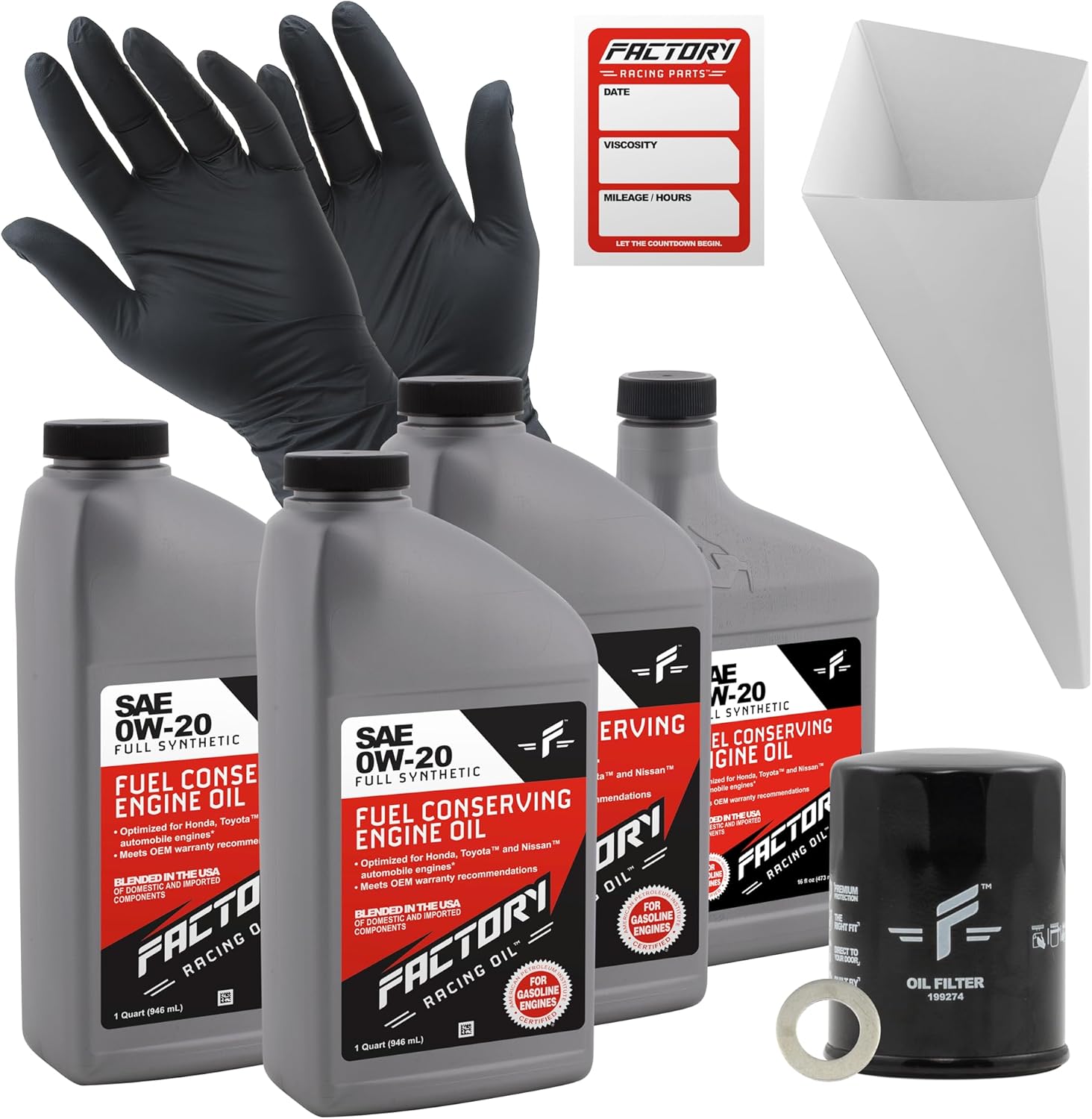
6. Factory Racing Parts 0W-20 Full Synthetic Oil Change Kit (3.5 qt)
Best Oil Change Kit
| SAE J300 Viscosity Grade | 0W-20 |
|---|---|
| Liquid Volume | 3.5 Quarts |
| API Rating | API SP Resource Conserving |
| ILSAC Rating | GF-6A |
| Included Components | oil, filter, washer, funnel, gloves, oil change stickers |
This oil change kit bundles everything needed for a DIY service on compatible Honda models: 3.5 quarts of Factory Racing Parts SAE 0W-20 full synthetic oil, a matching oil filter, a crush washer, gloves, a funnel, and an oil change sticker. The oil is API SP and ILSAC GF-6A certified for fuel-conserving performance and is formulated to limit LSPI and support start-stop engines. For a DIYer working on a 2006–2011 Honda Civic (the article scope), the kit provides the correct oil grade and a filter advertised as replacing the OEM 15400-PLM-A02, so you avoid sourcing separate parts. Practical benefits include simplified shopping and fewer compatibility checks before you start. Limitations: the kit contains 3.5 quarts, which fits many Civic engines but may leave a small shortfall or small excess depending on exact engine and drain/ refill practice, so double-check the required capacity and have an extra quart on hand if you prefer topping to a precise level.
Best for: DIY Honda owners who want a single purchase that supplies the correct oil grade and a compatible filter to simplify a home oil change on the Civic covered by the article.
Less Ideal for: Shoppers who need an exact factory capacity refill without topping or who prefer premium dealer-branded filters and oils should consider buying fluids and filters separately.
- Complete kit includes oil, vehicle-specific filter, crush washer, funnel and gloves to simplify a DIY change
- Uses full synthetic SAE 0W-20 oil with API SP and ILSAC GF-6A certifications for modern engine protection
- Formulated to help prevent LSPI and designed for start-stop engines, aiding longevity and fuel economy
- Kit contains 3.5 quarts which may not exactly match every Civic engine's full capacity so final top-up may be needed
Verdict: This pick is for shoppers who want a one‑stop kit containing the correct oil quantity, compatible filter, and drain parts to simplify DIY oil changes.
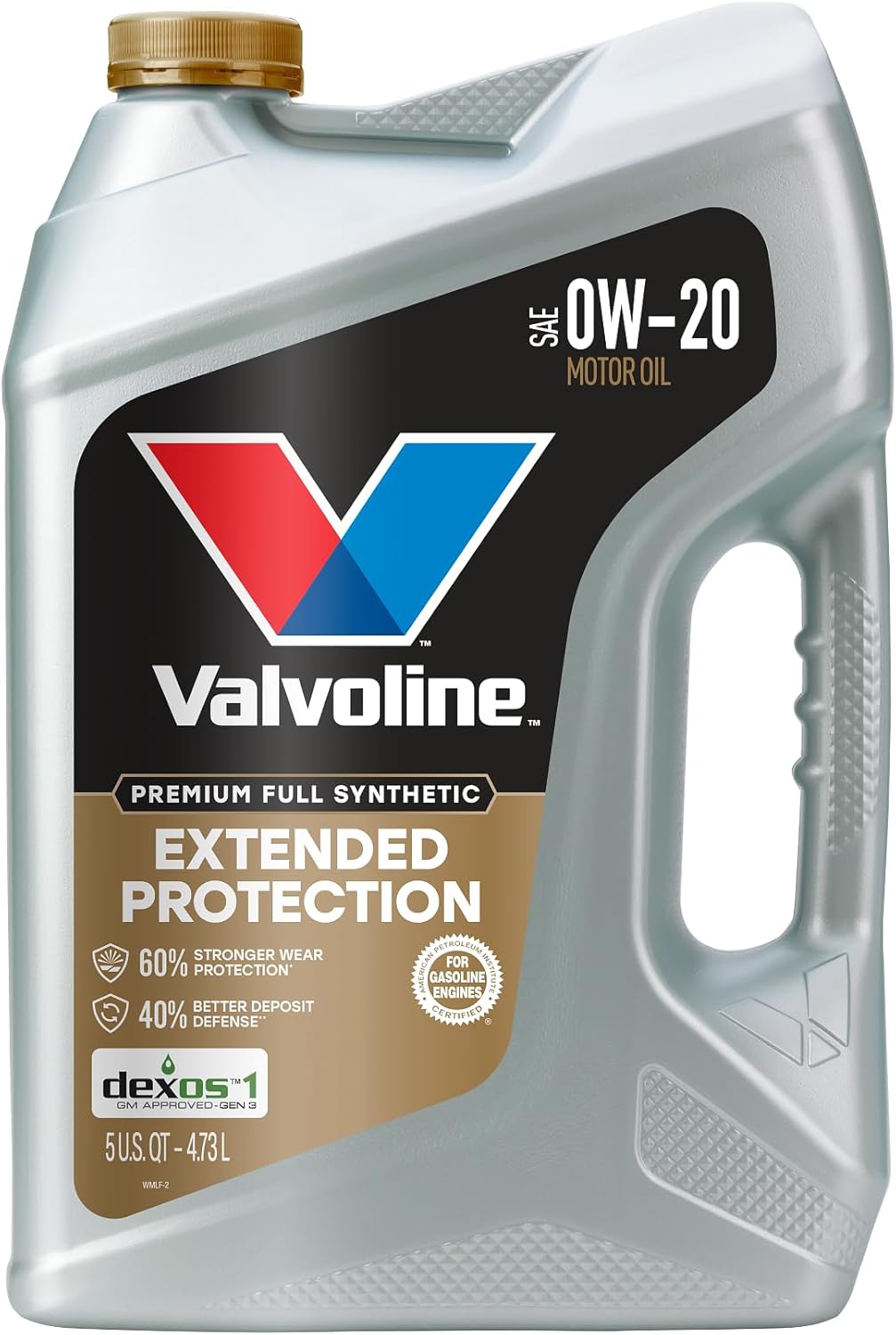
7. Valvoline Extended Protection Full Synthetic Motor Oil SAE 0W-20, 5 qt
Best Extended‑Protection 0W‑20 Oil
| SAE J300 Viscosity Grade | 0W-20 |
|---|---|
| Compatible with Vehicle Type | Car, Truck |
| Liquid Volume | 5 Quarts |
| Viscosity Level | Low to Medium |
Valvoline Extended Protection 0W-20 is a premium full synthetic motor oil aimed at giving long-lasting engine defense during everyday and severe driving. It is used the same way as any 0W-20: poured into the crankcase at oil change and matched to vehicles that specify 0W-20. The formula highlights Dual Defense Additive Technology, which Valvoline says improves wear protection, reduces deposits, and increases heat resistance compared with industry baselines. For a 2006–2011 Honda Civic that calls for 0W-20, this oil’s strong anti-wear and deposit-control claims translate into cleaner rings and valvetrain components and greater stability under higher operating temperatures or extended drain intervals. The product meets current ILSAC and API gasoline specifications and also lists several manufacturer approvals, supporting compatibility with modern gasoline engines. Expect reliable cold starts and thin low-temperature flow thanks to the 0W grade, but note that extended drain intervals depend on driving conditions and manufacturer guidance, so follow Honda’s service recommendations when deciding oil change frequency.
Best for: Drivers who want a 0W-20 oil that emphasizes long-term engine protection and cleaner internals, especially if they plan longer service intervals while keeping maintenance aligned with manufacturer guidance.
Less Ideal for: Drivers who prefer to strictly follow shorter factory-recommended oil change intervals or those using nonstandard engine modifications that require a different viscosity or specification.
- Full synthetic 0W-20 formulation for improved cold-start flow and fuel economy potential
- Claims stronger wear protection and deposit control than industry standards
- Meets ILSAC GF-7A and API SP/SQ specifications and lists manufacturer approvals
- Designed for extended protection and better heat resistance versus baseline oils
- Extended drain interval suitability must be judged against Honda’s maintenance schedule and driving conditions
Verdict: Opt for an extended‑protection 0W‑20 if your priority is an oil designed for longer drain intervals and extra defense against viscosity breakdown under heat.
Choosing the Right 2006-2011 Honda Civic Engine Oil: Key Factors to Consider
Manufacturer Viscosity Recommendation
Following Honda's recommended viscosity for your 2006-2011 Civic ensures the oil provides the intended balance between cold-start flow and high-temperature film strength. Using the recommended grade helps maintain designed oil pressure, avoids excessive oil consumption, and supports proper hydraulic lifter and timing chain lubrication.
When choosing oil, consult the vehicle manual or a reliable maintenance source for the specified grades for your engine and expected climate. Selecting a different viscosity can be appropriate in certain climates or for high-mileage engines, but understand the tradeoffs: thinner oils aid startup protection in cold weather while thicker oils maintain film under heavy loads and higher temperatures.
Viscosity Range and Multi-grade Benefits
Multi-grade oils such as 5W-30 or 0W-20 cover a wider temperature range and help ensure pumpability at low temperatures while protecting under normal operating heat. For the 2006-2011 Civic, the right multi-grade keeps oil pressure stable during warmup and limits viscosity breakdown during highway drives.
Consider local climate and driving patterns when deciding between grades. A lower "W" rating improves cold-start protection but may slightly change fuel economy and oil consumption characteristics. Conversely, a higher high-temperature number can give extra protection for frequent highway or heavy-load driving.
Synthetic Versus Conventional Formulations
Full synthetic and synthetic blend oils offer better oxidative stability, reduced volatility, and a stronger film at high temperature compared with conventional oils. These traits can reduce engine wear, minimize sludge formation, and extend effective oil life in the 2006-2011 Civic.
Synthetic options are especially beneficial if you drive in extremes, tow lightly, or prefer longer drain intervals. Conventional oils can be acceptable for low-mileage, light-use cars but generally require more frequent changes and may not protect as well under thermal stress.
Additive Chemistry and Detergency
A robust additive package—detergents, dispersants, antiwear agents, and antioxidants—helps keep the oil clean and protects metal surfaces. Detergency prevents sludge and deposits that can interfere with cooling and oil flow in the Civic's engine over time.
Pay attention to oils that meet current API and ILSAC standards and list antiwear agents like zinc dialkyldithiophosphate (ZDDP) for older engines. Additives also influence seal compatibility and can affect leaks in high-mileage engines, so choose formulations appropriate for an older Civic if you have higher mileage.
High-mileage Formulations
High-mileage engine oils include conditioners and seal swell agents designed to reduce leaks and restore sealing on older engines. For a 2006-2011 Civic with significant mileage, these formulations can reduce external seepage and improve compression retention by conditioning seals.
These oils often include extra detergents to clean sludge while providing wear protection. While helpful for aging engines, they can slightly change oil consumption and should be selected based on the engine's current condition and any existing oil leaks.
Oil Change Interval and Service Practicality
Deciding how often to change oil depends on oil formulation, driving conditions, and engine condition. Full synthetic oils generally allow longer intervals between changes if manufacturer recommendations and oil-monitoring systems permit, while conventional oils usually require shorter intervals.
Consider the ease of performing oil changes, availability of the chosen oil grade, and whether you use a dealer or independent shop. Consistent, timely oil changes with the correct grade and filter deliver the most reliable protection for the 2006-2011 Civic.
Which Viscosity Fits Your Climate and Driving
Viscosity choice should reflect ambient temperatures and typical driving. In colder regions, a lower cold-grade like 0W-20 improves pumpability during startup and reduces wear from delayed oil flow. In moderate climates, 5W-30 balances cold-start performance with thicker film under sustained highway speeds.
If your Civic regularly carries heavy loads or sees extended highway driving, lean toward a grade with a higher high-temperature rating to maintain protective film thickness. Conversely, if you mostly do short, low-speed trips in mild weather, prioritize low-temperature flow.
- 0W-20: better cold-start performance and slightly improved fuel economy
- 5W-30: broader high-temperature protection for sustained highway use
- Check the owner's manual for OEM guidance before changing grades
Benefits of Full Synthetic Oils for the 2006-2011 Civic
Full synthetic oils resist thermal breakdown and oxidation better than conventional oils, which helps maintain protective properties over longer service intervals. For the Civic's older engine designs, that stability reduces sludge build-up and preserves engine cleanliness.
Synthetic oils also have lower volatility, leading to reduced top-up needs in many engines. If you want the best protection for sustained performance and are open to longer drain intervals where appropriate, a quality synthetic formulation is a practical choice.
- Improved high-temp film strength
- Reduced sludge and deposit formation
- Better low-temp flow compared with conventional oils
Choosing an Oil for Higher-Mileage Civics
If your 2006-2011 Civic has higher mileage, select an oil that addresses seal condition and wear. High-mileage formulations include conditioners that can reduce minor leaks and improve compression consistency by helping seals swell slightly to reestablish tightness.
These oils also emphasize detergency to remove accumulated deposits. However, if you are experiencing significant leaks or mechanical issues, oil selection is a temporary aid and mechanical repair should be considered.
- Look for seal conditioners and enhanced detergents
- Balance cleaning action with mildness to avoid exposing weak seals
- Consider increased service frequency if the engine shows wear symptoms
How Oil Additives Protect Moving Parts
Additives such as antiwear agents, friction modifiers, and antioxidants play a crucial role in preserving metal surfaces and preventing wear. The right antiwear chemistry reduces metal-to-metal contact, extending component life in the Civic's valvetrain and bearings.
Detergents and dispersants keep contaminants suspended so the oil filter can capture them, preventing varnish and sludge buildup. Choose oils that meet recognized industry standards and list specific performance claims tied to wear protection.
- ZDDP and other antiwear agents protect camshafts and lifters
- Antioxidants delay oil aging and maintain viscosity
- Detergents prevent deposit formation on piston rings and cylinders
Practical Tips for Oil Change Intervals and Maintenance
Follow the manufacturer interval as a baseline and adjust based on oil type and driving. Full synthetic oils often allow longer intervals, but frequent short-trip driving or dusty conditions justify more frequent changes regardless of formulation.
Always replace the oil filter at each change and use the correct filter specification for the 2006-2011 Civic. Track oil consumption after switching oil types, and recheck level after the first few hundred miles to ensure the engine is stable with the new formulation.
- Change the filter with every oil service
- Recheck oil level shortly after switching grades or formulations
- Short trips and stop-start driving require more frequent service
Environmental and Disposal Considerations
Properly disposing of used oil and used filters is important. Most communities offer recycling centers or collection points for used motor oil and filters. Recycling used oil prevents environmental contamination and often allows recovery of base oils.
When planning longer drain intervals with synthetic oil, be mindful that extended service intervals should still include timely filter changes and proper disposal. Keep records of oil changes and recycling receipts for good maintenance tracking.
- Recycle used oil and filters at designated facilities
- Follow local regulations for waste oil disposal
- Maintain service records when extending change intervals
Still looking for the perfect fit?
Select your Honda Civic configuration to see the most relevant Engine Oils recommendations
How We Chose the Best 2006-2011 Honda Civic Engine Oil
We started by focusing on properties that matter most to owners of 2006-2011 Honda Civic models. Evaluation centered on viscosity recommendations for this engine family, the balance between cold-start flow and high-temperature protection, additive package quality for wear control, and compatibility with Honda engine seals. We also prioritized oils with clear mileage and API/ILSAC specifications and looked at published oxidative stability and volatility ratings where available.Practical service considerations shaped selection as well. We favored oils with good low-temperature pumpability for regions with cold starts and formulations that limit sludge and varnish risk under mixed driving. Long-drain performance and compatibility with higher-mileage engines were included as separate criteria so owners with older Civics can choose appropriately.Excluded items included any oil formulation that lacked clear specification data, products intended only for racing or extreme high-performance use, and oils with additive packages known to be incompatible with Honda's engines. The final list balances everyday drivability, protection, and real-world service intervals for the 2006-2011 Civic.
Our full evaluation process is outlined in our review methodology.
FAQ
Can I use 0W-20 instead of 5W-30 in a 2006-2011 Civic?
Often it depends on your engine variant and climate. 0W-20 improves cold-start flow and can slightly boost fuel economy in cold climates, while 5W-30 offers thicker film at operating temperature for heavy highway use. Check the owner's manual and consider engine condition before changing grades.
Is synthetic motor oil necessary for a Civic built between 2006 and 2011?
Synthetic oil is not strictly required but offers better thermal stability and resistance to breakdown, which helps reduce sludge and extend service life. It is especially useful if you drive in extreme temperatures or prefer longer drain intervals.
What are signs my Civic needs a high-mileage oil?
Visible seepage or small external leaks, increased oil consumption, or reduced compression are common reasons to try a high-mileage formulation. These oils include seal conditioners and detergents aimed at older engines, but significant mechanical issues should be inspected and repaired.
How often should I change engine oil in mixed city and highway driving?
It usually depends on oil type and driving severity. For conventional oils, shorter intervals are recommended, while full synthetic oils can permit longer intervals if the manufacturer and oil-monitoring systems allow. In mixed driving with many short trips, err toward more frequent changes.
Will switching oil grades affect fuel economy?
Changing to a lower-viscosity oil often yields a modest fuel economy improvement because of reduced internal friction. The effect is usually small and depends on driving habits, but switching grades should be done with consideration of protection at operating temperature.
Can I extend drain intervals with synthetic oil in my Civic?
You can in many cases, but only if the oil meets relevant specifications and you monitor oil condition and level. Follow manufacturer guidance and consider factors like driving style, climate, and engine condition before extending intervals.
Does using a different oil affect my Civic's engine warranty?
Warranty considerations vary. Using an oil that meets the manufacturer's specified viscosity and API/ILSAC standards generally preserves warranty coverage. Always follow the manufacturer's documented requirements for oil specifications.
Final Verdict
Prioritize the viscosity and formulation that match your 2006-2011 Civic's operating temperatures and mileage. For most owners, selecting a synthetic or high-quality blend in the recommended grade provides the best balance of cold-start protection and high-temperature wear resistance. Higher-mileage Civics benefit from seal-conditioning and enhanced detergency, while drivers in cold climates should favor lower "W" ratings.Make maintenance decisions based on the tradeoffs between startup protection, long-term wear control, and service interval practicality. Consistent oil and filter changes using the correct grade will deliver the most reliable results for your Civic's longevity.
Explore More:
- Check out all Honda Civic parts & accessories
- Explore Fluids & Chemicals
- Browse all Accessories
