

Note: This article contains affiliate links. If you click on these links and make a purchase, I may earn a small commission at no extra cost to you. This helps support my research and content. Read my full affiliate disclosure here.
Choosing the right engine oil for a 2022-present Honda Civic matters for reliability, fuel economy, and engine longevity. Modern Civic engines have tight tolerances and depend on the correct viscosity and formulation to maintain oil pressure, reduce friction, and protect valve trains and turbo systems if equipped.This guide covers six shortlisted engine oils that suit the Civic's needs across normal driving, highway cruising, and higher-mileage use. We evaluated each option for viscosity fit, additive package, and long-term protection so you can pick an oil that matches your driving pattern and the manufacturer's recommendations. Read on for what we weighed and how to match oil choices to your Civic's service routine.
Looking for other parts? See all Honda Civic parts & accessories.
Top Picks at a Glance
| Best Overall Engine Oil The best all-around oil balancing protection, efficiency, and value | Valvoline Extended Protection Full Synthetic Motor Oil SAE 0W-20, 5 qt |  |
| Best Budget Engine Oil A low-cost oil that still meets standard engine protection needs | Valvoline Full Synthetic High Mileage with MaxLife Technology SAE 0W-20 Motor Oil, 1 QT |  |
| Best Premium Engine Oil A higher-end formulation offering enhanced protection and longevity | Honda Full Synthetic SAE 0W-20 Motor Oil (5 qt pack) |  |
| Best Full Synthetic Engine Oil 100% synthetic oil for top-tier performance and engine protection | Valvoline Advanced Protection Full Synthetic 0W-20 Motor Oil, 5 qt |  |
| Best Synthetic Blend Engine Oil A mix of synthetic and conventional oils for balanced value | Honda Synthetic Blend Motor Oil SAE 5W-20 (5 Quart) |  |
| Best High-Mileage Engine Oil Formulated for engines with many miles to reduce wear and leaks | Valvoline MaxLife Extended Protection High Mileage 0W-20 Full Synthetic Motor Oil, 5 qt |  |
1. Valvoline Extended Protection Full Synthetic Motor Oil SAE 0W-20, 5 qt
Best Overall Engine Oil
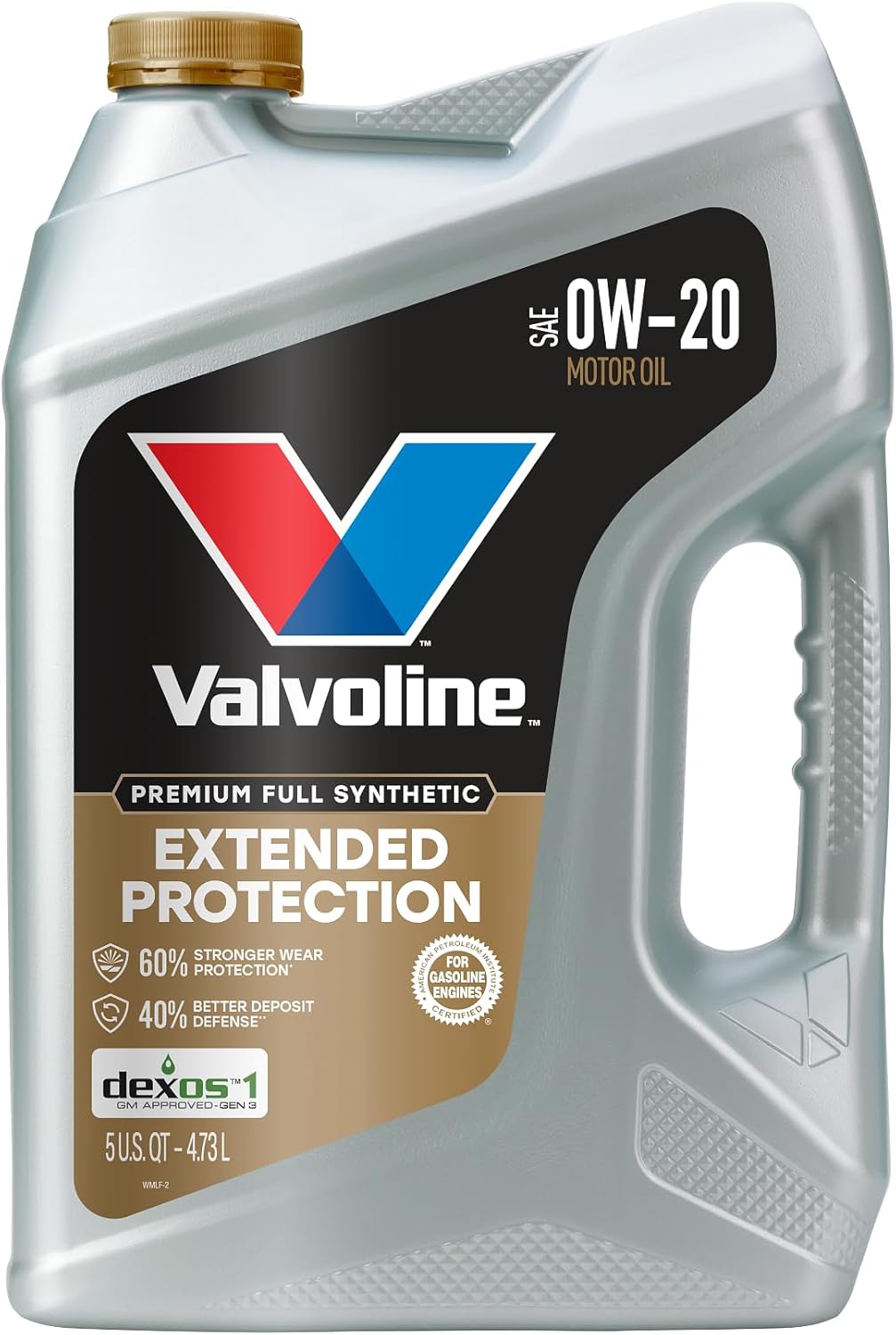
| SAE J300 Viscosity Grade | 0W-20 |
|---|---|
| Liquid Volume | 5 Quarts |
| Compatible with Vehicle Type | Car, Truck |
| Automotive Fit Type | Universal Fit |
| Meets/Exceeds | ILSAC GF-7A, API SP, API SN |
Valvoline Extended Protection 0W-20 is a full synthetic engine oil designed to protect modern small-displacement and turbocharged gasoline engines. It is typically used at regular oil-change intervals in passenger cars, hybrids, and light trucks that call for 0W-20 viscosity. The formula emphasizes wear reduction and deposit control using a Dual Defense Additive Technology that Valvoline says boosts wear protection and heat resistance above industry baselines. In practice that translates to better engine cleanliness, reduced friction and stronger protection for components like bearings, timing chains, and valvetrain parts, which helps preserve long-term performance and fuel economy. The 5 quart bottle covers most Civic oil changes without multiple purchases and meets current API and ILSAC specifications plus several OEM approvals. The main trade-offs are that this is a premium full synthetic so it costs more than conventional oil and its 0W-20 grade is only appropriate where that viscosity is specified by the manufacturer; it is not a universal replacement for higher-viscosity needs.
Best for: Drivers who want a single, high-quality 0W-20 oil that balances engine protection and fuel economy for routine maintenance on modern gasoline cars.
Less Ideal for: People who need a different viscosity grade for older or high-mileage engines or buyers prioritizing the lowest upfront cost over long-term protection.
- Strong wear protection and heat resistance compared with industry standards
- Additive system aimed at keeping engines cleaner and reducing deposits
- Meets ILSAC GF-7A and API SP/SQ specs plus multiple OEM approvals
- Available in a 5 quart size suitable for most single oil changes
- Higher cost compared with conventional or lower-grade synthetic blends
Verdict: The best all-around engine oil that balances wear protection, fuel efficiency, and cost for most drivers and routine maintenance schedules.
2. Valvoline Full Synthetic High Mileage with MaxLife Technology SAE 0W-20 Motor Oil, 1 QT
Best Budget Engine Oil

| SAE J300 Viscosity Grade | 0W-20 |
|---|---|
| Compatible with Vehicle Type | Car, Truck |
| Flash Point | 221 Degrees Celsius |
| Liquid Volume | 32 Fluid Ounces |
Valvoline Full Synthetic High Mileage 0W-20 is a full synthetic motor oil designed to protect aging engines and reduce oil consumption and leaks. It is typically used in vehicles with higher mileage but is safe for any engine calling for 0W-20 viscosity; application is the same as a standard oil change. Notable features include Enhanced MaxLife additives and seal conditioners intended to help rejuvenate hardening gaskets, plus detergents and anti-wear chemistry to limit deposits and engine wear. In practice that means smoother cold starts, quieter running on older engines, and fewer top-offs between changes for many users. For the budget-minded buyer this product stands out because it offers a factory-grade viscosity spec and high-mileage additives in a competitively priced one-quart bottle. The main compromises are that a one-quart retail bottle is small for do-it-yourselfers who do full oil changes and you must follow your Civic's recommended service interval and oil capacity rather than relying on any extended claims specific to a particular engine.
Best for: Buyers who need a low-cost full synthetic 0W-20 that still meets modern viscosity specs and offers high-mileage protection for routine oil changes on a daily-driven Civic.
Less Ideal for: Drivers looking to buy in bulk for frequent DIY full oil changes or those who need a different viscosity than 0W-20 should consider other options.
- Formulated specifically to help high-mileage engines with seal conditioners to reduce leaks
- Full synthetic 0W-20 viscosity meets modern manufacturer requirements
- Adds anti-wear and detergent chemistry to limit deposits and protect engine parts
- Widely reviewed with consistent user reports of smoother running and reduced oil consumption
- Sold in single 1-quart bottles which can be inconvenient for full oil changes requiring multiple quarts
Verdict: The best budget engine oil for buyers prioritizing low price while still meeting OEM viscosity and basic wear-protection requirements for regular service intervals.
3. Honda Full Synthetic SAE 0W-20 Motor Oil (5 qt pack)
Best Premium Engine Oil

| Brand | Honda |
|---|---|
| SAE J300 Viscosity Grade | 0W-20 |
| Liquid Volume | 5 Quarts |
| Included Components | Five Bottles of Full Synthetic SAE 0W-20 Motor Oil |
This Honda full synthetic 0W-20 motor oil is made and tested by Honda to meet the brand's recommendations for modern small-displacement engines. It is intended for use in Honda cars and is formulated to circulate quickly at low temperatures for improved cold-start protection while resisting viscosity breakdown at high operating temperatures. The oil claims reduced volatility to help limit oil consumption and contains chemistry aimed at minimizing deposits to preserve fuel efficiency and long-term engine cleanliness. Packaged as five quarts, it is convenient for a full drain-and-fill and for owners who prefer factory-specified fluid. The main limitation is that this is a vehicle-specific, factory-branded fluid optimized for Honda engines, so buyers seeking a multi-make, universal oil spec or looking for extended drain interval data beyond Honda testing should consult service guidance or aftermarket oils designed and certified for longer drain schedules.
Best for: Buyers who prioritize factory-formulated protection and want a direct replacement oil tuned for Honda engines to preserve performance and reliability.
Less Ideal for: Drivers seeking oils certified for extended drain intervals or cross-brand universal formulations should consider third-party synthetics with specific long-drain testing and certifications.
- Formulated and tested by Honda for compatibility with Honda engines
- Full synthetic 0W-20 viscosity for fast cold flow and high-temperature stability
- Designed to reduce engine deposits and help maintain fuel efficiency
- Sold as a five-quart pack for a complete service without buying multiple single bottles
- Manufacturer does not publish extended drain interval specifications for longer-than-factory oil change schedules
Verdict: The best premium engine oil for owners willing to pay more for superior thermal stability, extended-drain performance, and maximum long-term engine protection.
4. Valvoline Advanced Protection Full Synthetic 0W-20 Motor Oil, 5 qt
Best Full Synthetic Engine Oil

| Viscosity | 0W-20 SAE Grade |
|---|---|
| Size | 5 QT |
| Flash Point | 200 Degrees Celsius |
| Meets | ILSAC GF-7A, API SQ, API SP, API SN with SN PLUS |
Valvoline Advanced Protection 0W-20 is a full synthetic motor oil designed to protect modern gasoline engines under a range of conditions. It is typically used as a direct replacement for factory-recommended 0W-20 oils and is formulated to deliver higher wear protection, better deposit control, and improved heat resistance compared with industry baselines. The formula emphasizes low-temperature flow to reduce metal-to-metal contact at cold starts and lists modern API and ILSAC specifications plus several manufacturer approvals, making it suitable for routine oil changes in current Civic engines that call for 0W-20. In daily use it helps maintain smoother startups, stable operating viscosity in traffic and highway driving, and cleaner internals over multiple changes. Trade-offs are typical for high-performance synthetics: benefits like enhanced protection and cleaning action are most noticeable over several oil-change cycles, and drivers with strictly infrequent, short-trip use may see less immediate difference. It is intended for owners who prioritize long-term engine health and consistent viscosity under severe operating conditions.
Best for: Drivers who prioritize maximum shear stability, cold-start protection, and long-term engine cleanliness for a 2022-present Honda Civic that specifies 0W-20, and who plan regular oil-change intervals to realize those benefits.
Less Ideal for: Drivers who rarely drive the vehicle or change oil infrequently and those who do not need incremental protection beyond a standard full synthetic may not notice measurable gains.
- Meets ILSAC GF-7A and modern API service categories for broad compatibility with current gasoline engines
- Improved low-temperature flow reduces wear during cold starts
- Claims stronger wear protection, deposit defense, and heat resistance versus industry standards
- Formulated to help maintain stable viscosity and fuel economy in everyday and severe driving
- Restorative cleaning effects are gradual and require several oil-change cycles to notice
Verdict: The best full synthetic engine oil for drivers who want the highest-level shear stability, cold-start protection, and consistent viscosity under severe operating conditions.
5. Honda Synthetic Blend Motor Oil SAE 5W-20 (5 Quart)
Best Synthetic Blend Engine Oil

| SAE J300 Viscosity Grade | 5W-20 |
|---|---|
| Compatible with Vehicle Type | Car |
| Container Type | Bottle |
| Liquid Volume | 5 Quarts |
This Honda synthetic blend motor oil is formulated to meet API SN and ILSAC GF-7 standards and is aimed at drivers who want better protection than conventional oil without the cost of a full synthetic. It is a 5W-20 grade, so it flows readily at cold starts while maintaining thermal stability at higher operating temperatures. The blend helps resist sludge and varnish build-up, protects against rust and bearing corrosion, and is designed to help preserve catalyst-equipped emission systems. In day-to-day use it suits routine oil changes and offers a practical balance of protection and efficiency for modern Honda engines. Limitations are the fixed viscosity choice and that it is a blended formula rather than a full synthetic, so extreme performance or maximum extended-interval protection may be less than top-tier synthetics. Packaged in a five-quart container, it covers typical service needs for most Civic oil changes.
Best for: Buyers who want better-than-conventional protection and improved fuel efficiency for 2022-present Honda Civic engines while keeping fluid cost lower than full synthetics.
Less Ideal for: Drivers seeking the highest possible thermal stability for track use or maximum extended drain intervals should consider a full synthetic oil instead.
- Meets API SN and ILSAC GF-7 standards for modern engine protection
- Low-viscosity 5W-20 formulation for easier cold starts and potential fuel economy gains
- Formulated to resist sludge, varnish, foam, and thermal breakdown
- Includes rust and bearing corrosion protection and is safe for catalyst-equipped emission systems
- Blended formula is not a full synthetic so extreme-performance and maximum interval protection are lower than top-tier full synthetics
Verdict: The best synthetic blend engine oil for buyers who want improved protection and performance over conventional oil at a lower price than full synthetics.
6. Valvoline MaxLife Extended Protection High Mileage 0W-20 Full Synthetic Motor Oil, 5 qt
Best High-Mileage Engine Oil

| SAE Viscosity Grade | 0W-20 |
|---|---|
| Compatible Vehicle Type | Car, Truck |
| Container Type | Bottle |
| Liquid Volume | 5 Quarts |
Valvoline MaxLife Extended Protection 0W-20 is a full synthetic oil engineered for high-mileage engines and everyday use in compatible gasoline and hybrid vehicles. It delivers anti-wear additives, detergents, and seal conditioners intended to reduce oil leaks and consumption as engines age. In real-world use this means quieter operation, improved sludge control, and thermal stability that helps the oil resist breakdown under extended driving. The 5-quart bottle covers most Civic oil capacities with a single purchase for many common change intervals. It meets modern API and ILSAC specifications and is suitable for the 2022-present Civic when 0W-20 is the manufacturer recommendation. The main limitation is viscosity choice: if your Civic requires a different grade consult the owner’s manual, and some engines that need slightly more volume may require an extra quart. For owners prioritizing longer engine life in a high-mileage Civic, this oil focuses on seal conditioning and extra wear protection rather than extreme performance racing applications.
Best for: Drivers of 2022-present Honda Civics with significant mileage who want an oil focused on reducing leaks, lowering oil consumption, and extending engine life.
Less Ideal for: Drivers whose Civic requires a different viscosity grade or who prioritize motorsport or extreme performance formulations should consider other oils.
- Formulated for high-mileage engines with seal conditioners to help reduce leaks.
- Full synthetic 0W-20 meets current API and ILSAC specifications for modern gasoline engines.
- Detergent and antioxidant additives improve sludge control and thermal stability.
- 5-quart bottle is convenient for most oil changes on compact cars like the Civic.
- Only available in 0W-20 for this listing, so not suitable if a different viscosity is required.
Verdict: The best high-mileage engine oil for vehicles with significant miles that need enhanced seal conditioners, reduced oil consumption, and extra wear protection.
Choosing the Right 2022-Present Honda Civic Engine Oil: Key Factors to Consider
Manufacturer Viscosity Recommendations
Following the Honda-recommended viscosity matters because it matches the engine's internal clearances and oil pump flow characteristics. Using the correct cold-start and operating viscosity ensures proper oil pressure at startup and consistent film protection at operating temperature. For many 2022-present Civic engines, lightweight grades like 0W-20 are specified to help fuel economy and maintain valve train protection; alternate viscosities such as 5W-30 may be appropriate under heavy loads or in hotter climates.
Deviating from recommended viscosity can increase wear, alter oil consumption, or affect timing chain and cam phaser lubrication. When choosing an oil, confirm the vehicle's oil cap or owner manual for the exact grade and choose a product that lists the matching SAE viscosity on the label.
Base Oil Type and Quality
The base oil—whether conventional, synthetic blend, or full synthetic—affects thermal stability, volatility, and shear resistance. Full synthetic motor oil typically offers superior high-temperature protection and lower volatility, which helps maintain viscosity and reduces top-off frequency over extended drains. Synthetic formulations also flow better at cold starts, improving protection in early minutes after ignition.
For a late-model Civic, selecting a higher-quality base oil supports consistent film strength in turbocharged variants and helps protect against sludge in stop-and-go driving. Consider oils that explicitly state polyalphaolefin (PAO) or equivalent synthetic bases and list modern performance specifications.
Additive Package and Deposit Control
Additives determine detergency, dispersancy, anti-wear properties, and oxidation resistance. A robust additive package helps keep piston crowns, rings, and oil passages clean, which is essential for maintaining compression and minimizing oil consumption as mileage rises. Anti-wear additives such as zinc dialkyldithiophosphate and friction modifiers can preserve cam lobes and lifters, especially during high-load operation.
Oxidation inhibitors and corrosion inhibitors extend oil life and protect bearings and other internal surfaces. Look for oils that emphasize deposit control and low volatility to reduce sludge and varnish risks in the Civic's engine over normal and extended service intervals.
Cold-Start Performance
Cold-start protection is critical because most engine wear happens in the first seconds after start when oil must reach critical components quickly. Lower starting viscosities, indicated by the 'W' rating such as 0W-20 or 5W-30, enable faster oil flow at low temperatures and help maintain lubrication to valvetrain and bearings during warm-up.
If you operate your Civic in colder climates or frequently take short trips, prioritize oils with excellent low-temperature fluidity and proven pumpability. Improved cold-flow properties reduce wear and support smoother idling and accessory drive behavior until the engine reaches normal temperature.
High-Temperature Stability and Shear Resistance
Engines reach elevated oil temperatures during sustained highway drives or under heavy loads, so the oil must resist viscosity loss and oxidation. High-temperature film strength prevents metal-to-metal contact in bearings and cam lobes. Shear resistance is important to keep the oil from thinning out under mechanical stress, which would compromise protection.
For Civic owners who do long highway trips or drive in warm climates, choose oils with strong high-temperature/high-shear (HTHS) performance and antioxidant additives that reduce viscosity breakdown and maintain protection across the drain interval.
Compatibility With Emission and Sealing Systems
Some additives can affect catalytic converters, oxygen sensors, or cause seal hardening or swelling. Oils formulated for modern emission systems use balanced additive chemistries to protect components while minimizing ash and harmful deposits. Seal compatibility is also important to prevent leaks, particularly as the vehicle accrues miles.
Ensure the oil meets the necessary API and ILSAC specifications for passenger cars and references compatibility with modern emission controls. This reduces the risk of premature sensor fouling or seal deterioration that could lead to oil leaks or emissions issues.
Which Viscosity Is Right for Your Civic
Choosing the right SAE viscosity depends on the engine variant and your typical driving conditions. Many 2022-present Honda Civic engines are optimized for 0W-20 to maximize fuel economy and ensure quick cold-start lubrication. However, if you frequently tow light loads, carry heavy cargo, or regularly drive in very hot climates, a thicker operating grade like 5W-30 may provide extra high-temperature film strength.
Check the owner's manual for the official recommendation and consider how you drive. If your driving is largely urban with short trips, prioritize a low 'W' rating for cold-flow performance. For extended highway driving or spirited use, weigh an oil with higher HTHS and thermal stability.
- 0W-20: Best for fuel economy and cold starts in normal conditions.
- 5W-30: Consider for hotter climates or heavier duty cycles.
- Follow manual guidance when in doubt; viscosity changes should be conservative.
Synthetic Vs Conventional: What a Civic Benefits From
Full synthetics generally offer better overall protection for modern Civic engines because they resist oxidation and maintain viscosity across a wider temperature range. They also reduce volatility, leading to lower oil consumption between services. For a 2022-present Civic, synthetic motor oil helps preserve timing chain tensioners, valve train components, and turbo bearings in turbocharged variants.
If you plan longer drain intervals or drive in demanding conditions, synthetics are a practical choice. Conventional oils may be acceptable for low-mileage urban use with short service intervals, but they provide less margin against thermal breakdown and deposit formation.
- Synthetic: Superior thermal stability and cold-flow; recommended for most Civic owners.
- Conventional: Suitable for frequent oil changes and low-stress use but offers less protection.
Oil Change Intervals and Maintenance Tips
Follow the maintenance schedule in your owner's manual for oil change intervals, which takes into account your specific engine and driving conditions. For 2022-present Civic engines, Honda may recommend different intervals based on normal versus severe service. Severe service includes frequent short trips, stop-and-go driving, and driving in dusty or very hot environments.
When extending drain intervals, ensure the oil's specifications support longer service and monitor oil level and condition between changes. Regularly check for signs of contamination, rising oil consumption, or sludge, and top off or change the oil as needed to maintain protection.
- Inspect oil level monthly and before long trips.
- Use OEM filters or high-quality equivalents sized for the Civic.
- Record oil change dates and mileage to track intervals reliably.
High-Mileage Considerations
As mileage increases, oil consumption, seal wear, and deposit buildup can become more noticeable. High mileage formulations include seal conditioners and additives that can reduce leaks and help restore minor seal pliability. They also tend to emphasize detergents that clean deposits without accelerating wear.
If your Civic has elevated miles, prioritize oils with stronger anti-wear additives and lower volatility to minimize top-offs. Pair these oils with regular inspections for oil leaks and consumption to address any emerging issues promptly.
- High-mileage oils may reduce seepage and improve compression retention.
- Monitor for finish changes like darker color or increased consumption as mileage climbs.
Cold Weather and Short-Trip Driving
Cold climates and frequent short trips raise the importance of low-temperature flow. Oils rated 0W-20 pump quickly at low temperatures and reduce wear during the critical warm-up period. Short-trip drivers should avoid extended drain intervals because contaminants do not get a chance to be burned off during normal warm periods.
If you start many short trips, choose oils with excellent low-temperature properties and change oil more frequently under severe-service conditions to prevent sludge and premature wear.
- Prioritize 0W-rated oils for improved cold-start protection.
- Short trips may require shorter oil change intervals than highway driving.
Reading Labels and Certifications
Look for API and ILSAC performance marks and any OEM approvals referenced by Honda. Labels that list up-to-date API service categories and ILSAC GF numbers indicate the oil meets baseline modern engine protection standards. Also check for manufacturer claims about low-temperature pumpability, HTHS values, and volatility metrics.
Avoid oils that lack clear specifications or omit viscosity and certification data. Clear labeling helps confirm the oil is suitable for the Civic's engine and future service needs.
- API and ILSAC marks are minimum checks for compatibility.
- OEM references and HTHS numbers give insight into high-temperature behavior.
Still looking for the perfect fit?
Select your Honda Civic configuration to see the most relevant Engine Oils recommendations
How We Chose the Best 2022-Present Honda Civic Engine Oil
We prioritized oils that meet Honda specifications and deliver proven protection for modern Civic engines. Primary evaluation criteria included viscosity compatibility with the 2022-present Civic engine family, base oil type and quality, and additive chemistry for wear control and deposit prevention. We also weighed cold-start performance, thermal stability under highway and hot-weather conditions, and compatibility with emission system components such as catalytic converters and turbochargers where applicable.Longevity and service interval performance were considered by examining reported oil drain intervals and manufacturer guidance for comparable service conditions. Resistance to viscosity breakdown and sludge formation was a key filter because Civic engines rely on stable oil films for cam and bearing protection. We excluded conventional single-grade oils and formulations that do not meet modern OEM standards or lack appropriate certifications. Finally, we favored oils with clear viscosity options for the Civic, including commonly recommended 0W-20 and alternatives like 5W-30 for specific duty cycles.
Our full evaluation process is outlined in our review methodology.
FAQ
Can I switch from 0W-20 to 5W-30 in my 2022 Civic?
You can switch only if the owner's manual allows alternate viscosities. 5W-30 provides more high-temperature film strength but may slightly reduce fuel economy. Consult the manual and consider climate and load before changing viscosity.
How often should I check oil level on a 2022-present Civic?
Check the oil level at least once a month and before long trips. More frequent checks are wise if the vehicle is high-mileage, consumes oil, or operates under severe conditions.
Does synthetic motor oil help with oil consumption in older Civics?
Synthetic oils can reduce consumption due to lower volatility and better shear stability, but results vary. For higher-mileage engines, look for oils formulated for high mileage that include seal conditioners and detergents.
Is there a downside to using full synthetic in a Civic?
Full synthetics generally offer better protection and cold-flow with few downsides. If you change oil very frequently and drive in mild conditions, the benefits are smaller, but there is usually no harm in using full synthetic that meets the required specifications.
What oil viscosity is best for cold climates with the 2022 Civic?
A 0W-rated oil such as 0W-20 is best for cold starts because it flows quickly at low temperatures. This rating helps protect components during initial seconds after startup when wear risk is highest.
Should I use a high-mileage formula if my Civic has over 100,000 miles?
High-mileage formulas can help by adding seal conditioners and detergents tailored to older engines. They may reduce seepage and clean deposits, but you should also monitor for leaks and oil consumption after switching.
Final Verdict
For a 2022-present Honda Civic, prioritize oils that match the manufacturer's viscosity guidance while offering strong thermal stability and deposit control. Full synthetic formulations typically give the best protection for modern engines and support longer service intervals and lower oil consumption. Balance cold-start needs, driving patterns, and mileage when selecting a grade and consider high-mileage formulations if the car has accumulated significant miles.Ultimately, select an oil that lists the correct SAE viscosity, meets current API and ILSAC standards, and aligns with how you drive. That approach delivers reliable protection and helps you maintain the Civic's performance and efficiency over time.
Explore More:
- Check out all Honda Civic parts & accessories
- Explore Fluids & Chemicals
- Browse all Accessories
