

Note: This article contains affiliate links. If you click on these links and make a purchase, I may earn a small commission at no extra cost to you. This helps support my research and content. Read my full affiliate disclosure here.
If you own a Honda Civic with an automatic transmission, picking the correct transmission fluid matters more than you might think. The right fluid helps the gearbox shift smoothly, resists heat breakdown, and protects clutch plates and seals — all of which reduce wear and help the transmission last longer.This guide shortlists the top transmission fluids for Honda Civic Automatic applications, focusing on products that meet Honda specifications and deliver reliable friction control, thermal stability, and oxidation resistance. Below you will find our recommended options and the key criteria we used to evaluate them so you can choose the best fit for your driving style and maintenance plan.
Looking for other parts? See all Honda Civic parts & accessories.
Top Picks at a Glance
| Best Overall Transmission Fluid A balanced pick that meets specs, performance, and reliability | Honda Genuine ATF DW-1 Automatic Transmission Fluid (4 qt kit) |  |
| Best Budget Transmission Fluid Affordable single-quart bottles that cover routine fluid top-offs and changes | Valvoline Multi‑Vehicle Full Synthetic MaxLife ATF, 1 Quart |  |
| Best OEM-Formula Transmission Fluid Genuine factory-formula ATF sold in OEM packaging for exact compatibility | Honda Genuine ATF DW-1 Automatic Transmission Fluid, 2-Quart |  |
| Best CVT-Specific Transmission Fluid Fluids formulated to HCF-2/CVT specs for smooth, anti-shudder CVT operation | Honda Genuine HCF-2 Transmission Fluid, 1 U.S. qt (946 ml) |  |
| Best Bulk / Value Pack Multi-quart kits or multi-packs for full fluid changes and frequent servicing | Honda DW-1 Automatic Transmission Fluid, 1 qt (Pack of 12) |  |
| Best Universal Multi‑Vehicle ATF Multi‑vehicle synthetic ATF that lists compatibility with many OEM specs | Valvoline MaxLife Multi‑Vehicle Full Synthetic ATF, 1 Gallon |  |
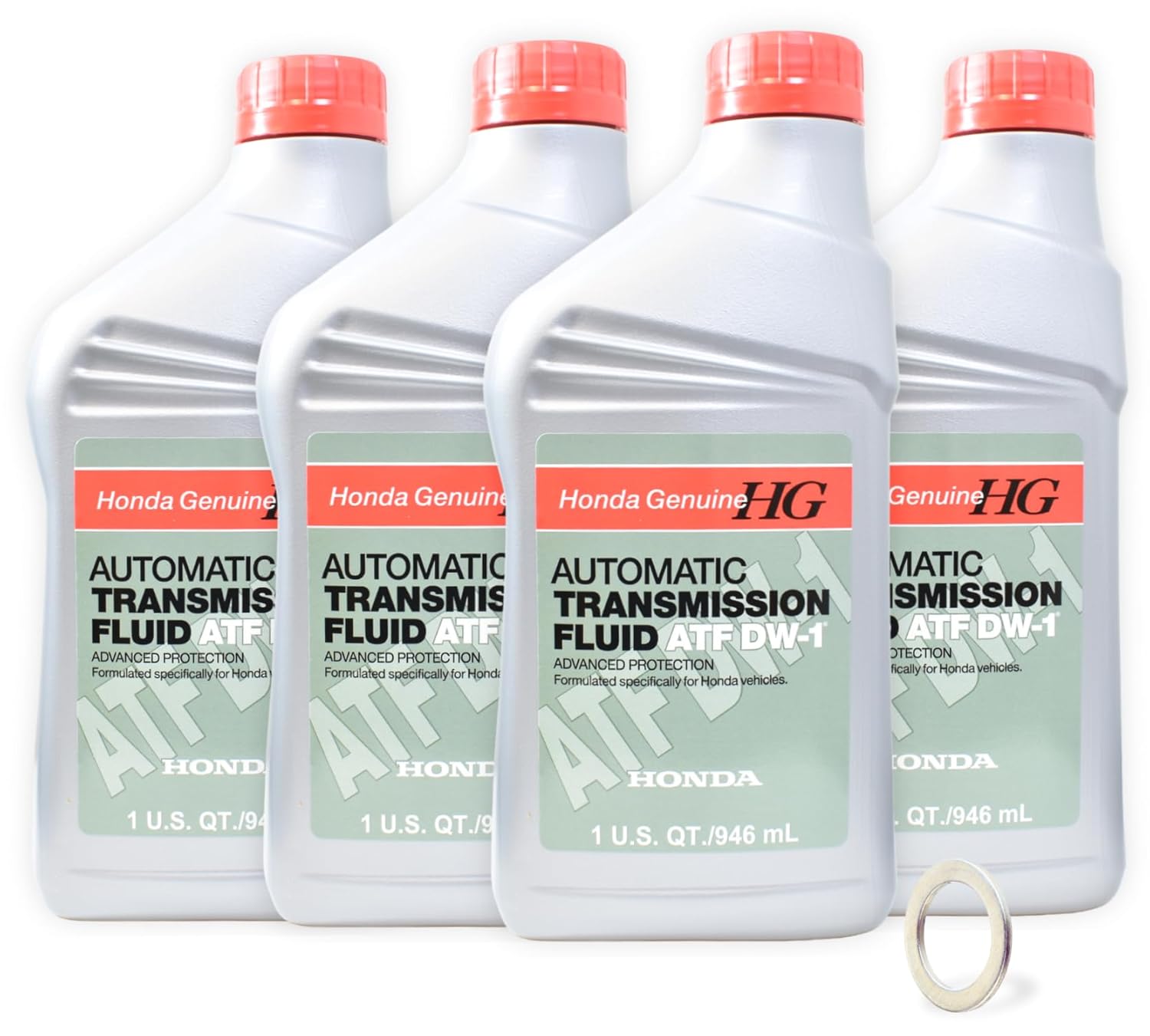
1. Honda Genuine ATF DW-1 Automatic Transmission Fluid (4 qt kit)
Best Overall Transmission Fluid
| Brand | Honda |
|---|---|
| Liquid Volume | 4 Quarts |
| SAE J300 Viscosity Grade | 10W-30 |
| Unit Count | 128.0 Fluid Ounces |
This Honda Genuine ATF DW-1 kit supplies four one-quart bottles of the factory transmission fluid plus an 18 mm drain plug washer for a drain-and-fill service. It is formulated to match Honda transmission friction characteristics, so it helps restore smooth, consistent shifts and reduces noise and shudder in automatics that call for DW-1. Typical use is a drain-and-fill or multi-step fluid change during routine maintenance on vehicles that require this specification. The main benefits are factory-designed friction modifiers for predictable shift feel, resistance to thermal breakdown for long-term protection, and the convenience of a service kit that includes the crush washer. Limitations are straightforward: this is a specification-specific fluid, so it must only be used in Honda transmissions that list DW-1; it is not a universal ATF replacement and does not include additives for non-Honda transmissions or extreme performance applications.
Best for: DIYers who prioritize using the manufacturer-recommended fluid to maintain original shift feel and long-term transmission reliability during routine service.
Less Ideal for: Drivers looking for a universal or high-performance aftermarket ATF for non-Honda transmissions or heavily modified vehicles should consider alternatives.
- Factory-formulated to Honda DW-1 specification for correct friction and shift performance
- Sold as a complete four-quart service kit useful for a drain-and-fill or one full service
- Includes an 18 mm drain plug crush washer so you get a fresh sealing gasket with the fluid
- Designed to resist thermal breakdown and oxidation for longer transmission life
- Only appropriate where the manufacturer specifies ATF DW-1 and not suitable as a universal alternative
Verdict: The go-to choice for DIYers who want a dependable, spec-correct transmission fluid that delivers consistent shifting and long-term protection.
2. Valvoline Multi‑Vehicle Full Synthetic MaxLife ATF, 1 Quart
Best Budget Transmission Fluid

| Material | Synthetic |
|---|---|
| Liquid Volume | 1 Quarts |
| Flash Point | 394 Degrees Fahrenheit |
| Viscosity | 1 |
Valvoline MaxLife Multi‑Vehicle ATF is a full synthetic transmission fluid formulated for broad compatibility across light‑duty automatic and many CVT transmissions. It is typically used for routine drain-and-fill services or topping off during maintenance on commuter cars like the Honda Civic. Key features include additives for seal conditioning to reduce leaks, anti‑wear chemistry to protect gears and clutches, and enhanced thermal and viscosity stability for consistent shifting across temperatures. In practice it delivers smoother engagements and can reduce shudder or harsh shifts on higher‑mile transmissions compared with conventional fluids. The product comes in a convenient 1 quart bottle for DIY servicing and pours cleanly without fuss. Limitations are that compatibility should be confirmed against the Civic model year and manufacturer fluid specification before use, and a single quart may not cover a full flush on many transmissions. For budget‑minded owners who want better protection than conventional ATF, this offers a strong balance of performance and affordability when matched to the vehicle’s required ATF spec.
Best for: Budget‑conscious Civic owners who need a reliable, full synthetic ATF for routine service or topping off and prioritize improved shift feel over buying dealer‑branded fluid.
Less Ideal for: Do not use this if your Civic requires a very specific factory‑specified ATF formulation listed by the manufacturer or if you need enough fluid for a complete transmission flush in one purchase.
- Full synthetic formula provides improved thermal and viscosity stability versus conventional fluids
- Multi‑vehicle compatibility covers most light‑duty ATFs and many CVTs, simplifying choices for mixed garages
- Additives for seal conditioning and anti‑wear protection help reduce leaks and extend transmission life
- 1 quart bottle size is convenient for DIY top‑offs and small service jobs
- Not guaranteed to match every manufacturer's specific ATF specification so verify compatibility for your Civic model year
Verdict: For shoppers replacing or topping off ATF on a tight budget who still need acceptable shift quality and basic protection.
3. Honda Genuine ATF DW-1 Automatic Transmission Fluid, 2-Quart
Best OEM-Formula Transmission Fluid

| Manufacturer | HONDA |
|---|---|
| Brand | Honda |
| Model | FBA_08200-9008 |
Honda Genuine ATF DW-1 is the factory-formulated automatic transmission fluid designed for Honda transmissions that call for DW-1 (also labeled ATF-Z1). It is used when topping off or servicing the transmission to maintain the manufacturer’s intended shift feel and hydraulic properties. The product comes in a two-quart container and is identical in formulation to the fluid used by dealerships, so it removes guesswork about compatibility and long-term transmission behavior. For everyday driving it helps preserve smooth gear changes, consistent line pressure, and the calibration of shift control components. The main limitation is that this is a specific Honda formula and must be used only where DW-1 is specified; it is not a universal ATF replacement and will not substitute for fluids with different specifications. Buyers should check their Civic’s service manual for the correct fluid specification before use.
Best for: Buyers who prioritize using the exact factory-recommended fluid to preserve transmission shift quality and long-term reliability in Hondas that specify DW-1.
Less Ideal for: Anyone looking for a multi-vehicle or all-purpose ATF or a budget aftermarket alternative should consider different fluids that match those broader needs.
- Factory-formulated DW-1 matching Honda dealership fluid for guaranteed specification compatibility
- Helps maintain original shift feel and transmission calibration
- Sold in a convenient 2-quart container suitable for service topping or partial fluid changes
- Widely recognized by owners and technicians as the correct fluid for Honda transmissions requiring DW-1
- Only appropriate where DW-1/ATF-Z1 is specified and not a universal replacement for other ATF specs
- Available only in limited container sizes which may require buying multiple units for a full flush
Verdict: Buy this when you want the factory-recommended fluid formula to guarantee compatibility, preserve shift feel, and protect the transmission.
4. Honda Genuine HCF-2 Transmission Fluid, 1 U.S. qt (946 ml)
Best CVT-Specific Transmission Fluid

| Unit Count | 32.0 Fluid Ounces |
|---|---|
| SAE J300 Viscosity Grade | 20W-50 |
| Material | Synthetic |
| Part Number | 08200-HCF2 |
Honda Genuine HCF-2 is a factory replacement transmission fluid formulated for Honda automatic and CVT applications that call for HCF-2. It is supplied in a 1 U.S. quart bottle and is synthetic-based with a 20W-50 SAE J300 viscosity grade listed. In practice this fluid is used during transmission service, top-ups, or flushes to maintain correct friction characteristics and reduce shudder in vehicles requiring Honda HCF-2. Buyers will appreciate the factory-fit formulation designed to match Honda specifications and the familiar packaging that makes pouring and storage straightforward. The product is limited to Honda-recommended applications and is not a universal ATF; installers should confirm the HCF-2 requirement before use. Also the listing shows one quart only, so multiple quarts are needed for full transmission fills on many vehicles. For owners prioritizing exact compatibility with Honda CVTs and automatics, this genuine fluid simplifies maintenance and helps preserve shifting smoothness when used as directed.
Best for: Buyers who need a Honda-specified transmission fluid for vehicles with continuously variable or other Honda automatic transmissions and who prioritize matching factory friction and anti-shudder performance.
Less Ideal for: Drivers who need a universal or non-Honda replacement fluid, or those completing full transmission fills who prefer bulk packaging to reduce bottle count.
- Factory-formulated for Honda to match recommended friction properties
- Synthetic material for stable performance over temperature
- Convenient 1 U.S. quart bottle suitable for top-ups and small services
- SAE J300 grade listed, indicating a defined viscosity characteristic
- Single-quart packaging may require multiple bottles for a full transmission service
- Intended specifically for Honda HCF-2 applications and not a universal ATF
Verdict: Choose a CVT-specific fluid when your car has a continuously variable transmission and you need anti-shudder performance and correct friction characteristics.
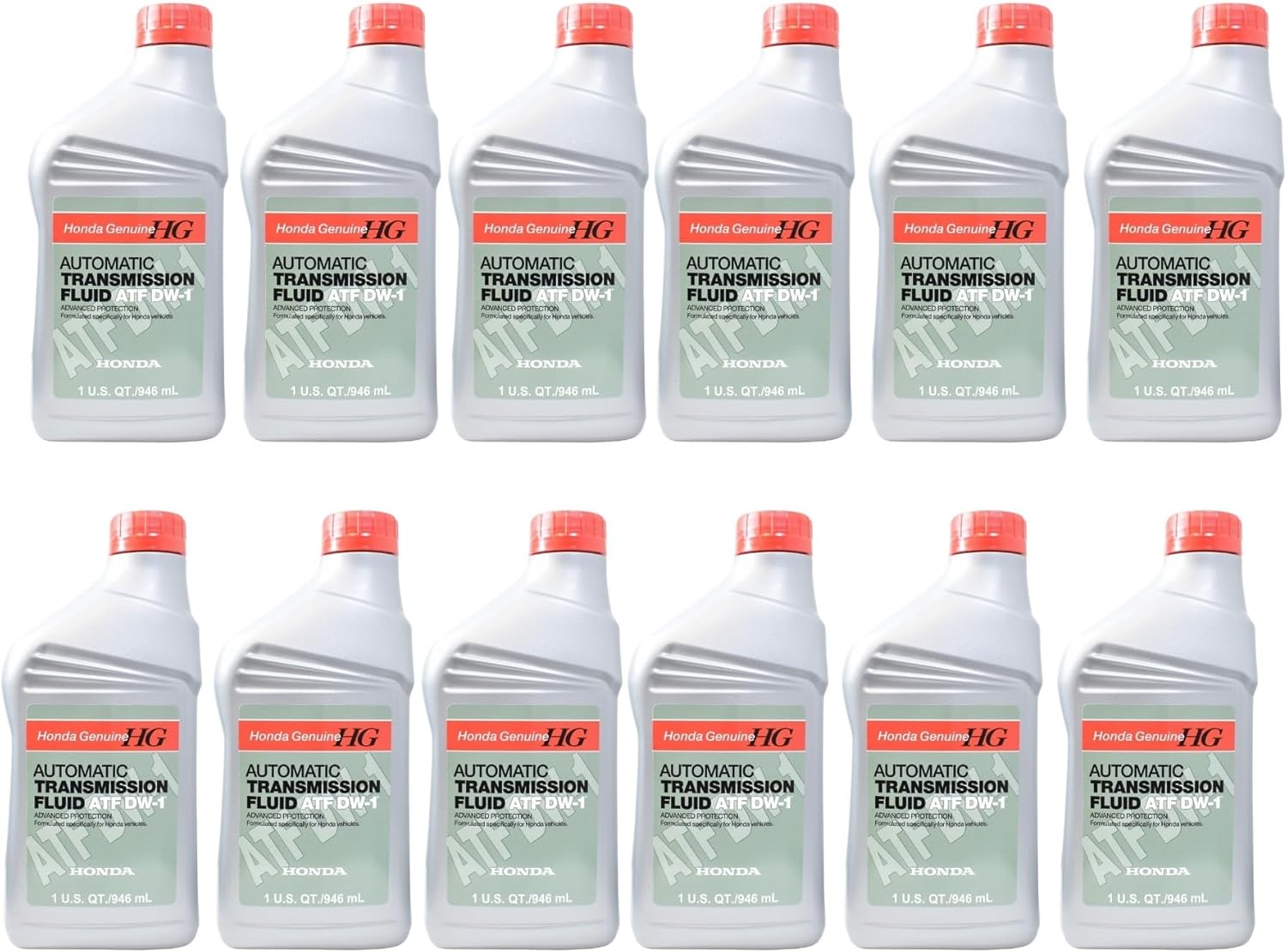
5. Honda DW-1 Automatic Transmission Fluid, 1 qt (Pack of 12)
Best Bulk / Value Pack
| Liquid Volume | 32 Fluid Ounces per bottle |
|---|---|
| Unit Count | 384.0 Fluid Ounces (12 quarts total) |
| OEM Part Number | DW-1 |
| Model | 08200-9008 |
This is the factory-spec Honda DW-1 automatic transmission fluid packaged as a 12-quart case intended for routine service and multiple drain-and-fill cycles. Buyers typically use it for scheduled maintenance or to perform the recommended sequence of drain-and-fills to refresh transmission fluid without a machine flush. The product is genuine Honda fluid so it matches the specifications used in many Honda automatic transmissions and helps maintain precise shifting and component protection under normal driving. The 12-quart pack is convenient if you service more than one car, do the repeated drain/refill process that gets most of the old fluid out, or want to keep extra on hand. Expect straightforward storage and easy pouring from individual one-quart bottles, though the bulk pack is heavier and takes storage space. The main compromise is buying twelve quarts at once which is ideal for multiple services but unnecessary for a single small job unless you plan to store the remainder properly.
Best for: Buyers who perform scheduled transmission maintenance on Hondas or multiple vehicles and want an economical, ready-to-use supply for repeated drain-and-fill services.
Less Ideal for: Someone who only needs a single quart for an occasional top-up or who cannot store unopened fluid for future use should consider smaller quantities instead.
- Factory-specified DW-1 formula that matches Honda transmission requirements
- Sold as a 12-quart case for lower per-quart cost when servicing multiple vehicles or multiple drain/fills
- One-quart bottles make pouring and storage during repeated drain/refill cycles simple
- Consistent, clean fluid that supports smooth, precise shifting when changed on schedule
- Requires storage space and ties up capital because you buy a full case even if you only need a few quarts
Verdict: Opt for a bulk or multi-pack when you're doing a full drain-and-fill, servicing multiple cars, or want lower per-quart cost.
6. Valvoline MaxLife Multi‑Vehicle Full Synthetic ATF, 1 Gallon
Best Universal Multi‑Vehicle ATF

| Material | Synthetic |
|---|---|
| Liquid Volume | 1 Gallons |
| Viscosity | 1 |
| Flash Point | 394 Degrees Fahrenheit |
Valvoline MaxLife Multi‑Vehicle ATF is a full synthetic transmission fluid formulated to work across many automatic and some CVT applications. It is typically used as a service or refill fluid when one product that meets multiple manufacturer specs is desired. The formula includes conditioning agents to preserve seal elasticity, anti‑wear additives to reduce internal wear, and frictional modifiers to support smoother gear changes and consistent shift feel. That combination improves thermal and viscosity stability compared with conventional ATF, which helps performance in varied temperatures and longer drain intervals. The product lists compatibility with many factory specs from GM, Ford, Toyota, Honda, Nissan, Hyundai/Kia and several European makes, so it is convenient for mixed fleets or a Civic owner needing a single approved fluid. Limitations are that some vehicle manufacturers require a specific branded or uniquely formulated fluid for warranty coverage or certain CVT designs, so always confirm the Civic model year and transmission spec before switching to a universal ATF.
Best for: Buyers who want one ATF that covers many automatic and common CVT specifications so they can service mixed vehicles or keep a single fluid on hand for routine maintenance.
Less Ideal for: Drivers whose vehicle manual specifies a unique branded ATF or a transmission that explicitly disallows universal multi‑spec fluids should use the manufacturer recommended fluid instead.
- Full synthetic formula with enhanced thermal and viscosity stability for consistent operation in varied temperatures
- Broad list of manufacturer specifications and applications, reducing the need to stock multiple fluids
- Additives that help maintain seal elasticity and reduce wear to support longer transmission life
- Frictional enhancements designed to promote smooth gear engagements and steady shift feel
- Not guaranteed to match every manufacturer’s proprietary fluid formulation so some vehicles may still require a specific factory‑recommended fluid
Verdict: Pick a universal, multi‑spec ATF when you need one fluid that safely covers several different transmissions and spec requirements.
Choosing the Right Honda Civic Automatic Transmission Fluid: Key Factors to Consider
OEM Specification and Compatibility
Fluids that meet Honda or equivalent OEM specifications are formulated to provide the correct friction coefficients and chemical compatibility with the Civic's automatic transmission materials. Using a fluid without the right spec can cause improper clutch engagement, increased wear, or seal degradation.
Check the vehicle's service manual for the exact spec and look for fluids that explicitly list compatibility. This ensures compatibility with the valve body, clutch packs, and seals used in the Civic and reduces the chance of malfunctions that can be traced to fluid chemistry.
Friction Characteristics and Shift Quality
The friction modifier package in a transmission fluid controls how clutches and bands engage. For a Civic automatic, consistent friction behavior produces smooth, predictable shifts and reduces shudder during partial engagements.
When evaluating fluids, prioritize those formulated to stabilize friction over a wide temperature range. Stable friction characteristics maintain shift timing and firmness whether the transmission is cold, at normal operating temperature, or under heavier loads.
Thermal Stability and Oxidation Resistance
Automatic transmissions operate at elevated temperatures, especially in stop-and-go driving or on long climbs. Fluids with strong thermal stability and oxidation resistance maintain viscosity and avoid formation of varnish or sludge that can impair hydraulic circuits.
A fluid that resists breakdown helps preserve hydraulic control, prolongs the life of filters, and reduces the frequency of fluid changes. Consider the operating conditions you subject the Civic to when choosing a product with adequate thermal performance.
Cold-Temperature Flow and Pumpability
Cold starts require a fluid that flows quickly through the pump and valve body to establish hydraulic pressure and enable accurate shifts. If a fluid is too viscous at low temperatures, shift delays and excessive wear can occur until the transmission warms up.
If you live in a colder climate or frequently drive short trips, select a fluid with good low-temperature properties so the Civic shifts cleanly from the first drive.
Seal Compatibility and Additive Chemistry
Additives that improve friction and protect metal surfaces must also be compatible with the transmission's elastomers and seals. Wrong chemistries can lead to swelling, hardening, or leaks over time.
Prioritize fluids that list compatibility with common automatic transmission seal materials or that state suitability for Honda units to avoid unintended seal issues.
Service Interval and Maintenance Practicality
The recommended service interval for transmission fluid varies with fluid type and driving conditions. Some formulations are designed for extended drain intervals, while others call for more frequent replacement.
Factor in your driving habits, expected lifespan of fluid performance, and whether you plan to perform full fluid exchanges or simple drain-and-fill services. Practical availability in convenient container sizes and clear maintenance guidance also matter for ongoing upkeep.
When To Change Transmission Fluid in a Civic Automatic
Change frequency depends on driving conditions and the fluid used. For typical commuting and highway driving, many modern formulations suggest service intervals aligned with the manufacturer's maintenance schedule, but severe use like towing or extensive city traffic may require shorter intervals.
Inspect service history and fluid condition regularly. Dark, burnt-smelling fluid or metallic particles are signs that the transmission needs attention. Regular fluid checks and scheduled changes help maintain smooth shifting and protect internal components.
- Normal driving: follow manufacturer-recommended interval or the fluid maker's guidance.
- Severe driving: consider more frequent checks and earlier fluid replacement.
- Always verify fluid level and condition with the transmission at the correct temperature range specified in the service manual.
How Fluid Type Affects Civic Shift Behavior
Different automatic transmission fluids vary in viscosity, frictional properties, and additive packages. These differences change how quickly and firmly the Civic shifts between gears. A fluid with stable friction control will produce predictable, smooth shifts.
Choosing a fluid designed to match the Civic's hydraulic and clutch characteristics reduces the chance of delayed engagements or harsh shifts, particularly after cold starts or during spirited driving.
- Low-viscosity fluids can improve cold shift response but may behave differently when hot.
- Friction-stabilized fluids aim to reduce shudder and tremor during partial clutch engagements.
Checking Fluid Level and Condition
Accurate fluid level is critical for correct hydraulic pressure and shift timing. Some Civic automatic transmissions require checking at a specified operating temperature with the engine idling and the vehicle level. Consult the service manual procedure to obtain an accurate reading.
Fluid color and odor give practical cues: healthy fluid is typically clear to light red and has a neutral odor. Dark color, burnt smell, or contamination indicate the need for service or inspection by a technician.
- Check level at the proper operating temperature and vehicle orientation.
- Look for metal flakes or particulates that could signal internal wear.
- Record fluid condition during each service to spot progressive changes.
Performing a Fluid Change or Flush
A simple drain-and-fill replaces a portion of the fluid, while a full flush or exchange replaces most of it. Each approach has pros and cons for older or high-mileage transmissions. For a Civic automatic, follow recommended procedures and avoid aggressive flushing that could dislodge deposits and cause issues in marginal units.
When replacing fluid, also replace the filter and gasket where applicable, and use the specified quantity and type to restore proper hydraulic function.
- Drain-and-fill is straightforward and safer for older transmissions.
- Full exchange offers more complete fluid replacement but should be done carefully.
- Always torque pan bolts to spec and check for leaks after service.
Symptoms That Suggest Fluid-Related Issues
Certain drivability symptoms point to fluid problems rather than mechanical failure. These include delayed or soft shifts, slipping under load, shudder during partial engagements, and unusual fluid odor. Monitoring these signs helps you decide if fluid service or a professional inspection is needed.
Addressing fluid issues early can prevent escalation to more expensive repairs. Keep service records and note when symptoms started relative to fluid age and driving conditions.
- Delayed engagement after selecting drive or reverse.
- Harsh or abrupt upshifts or downshifts.
- Unusual whining or grinding noises correlated with fluid temperature.
Still looking for the perfect fit?
Select your Honda Civic configuration to see the most relevant Transmission Fluids recommendations
How We Chose the Best Honda Civic Automatic Transmission Fluid
We focused on selection criteria that reflect real-world needs for Honda Civic automatic transmissions and that matter most during ownership and maintenance. Primary evaluation factors included API and OEM specification compliance, because fluids that meet Honda or equivalent specifications ensure proper friction characteristics and compatibility with seals and clutch materials. Thermal stability and oxidation resistance were assessed to predict how well a fluid maintains viscosity under high temperatures, which affects shift consistency and component wear.Frictional properties and torque-transmission performance were considered to ensure smooth engagement and minimize shudder in multi-plate clutch packs. Low-temperature flow and pumpability were evaluated for reliable cold starts and quick hydraulic response. Compatibility with seal materials and additives was included to avoid leaks or accelerated seal wear. Finally, we prioritized fluids with clear service-life expectations and change-interval guidance from manufacturers.We excluded fluids intended exclusively for manual gearboxes or continuous-variable transmissions unless they explicitly list compatibility with Honda automatic units. We did not consider motor oils or DIY fluid blends. The final list reflects products that meet the spec, demonstrate appropriate thermal and friction performance, and are practical for routine service.
Our full evaluation process is outlined in our review methodology.
FAQ
Can I use general automatic transmission fluid in my Civic?
Often a general ATF will function, but compatibility depends on the fluid meeting Honda-specified performance and friction characteristics. Using a fluid that explicitly lists Honda compatibility reduces the risk of improper shift behavior or seal issues.
How do I check the transmission fluid level on a Civic automatic?
Check the level with the engine at the recommended operating temperature and the vehicle on level ground, following the service manual procedure. Many Civics require the engine idling and the gear selector cycled to pressurize the system before checking.
Will a fluid change fix rough shifting in my Civic?
If rough shifting is caused by degraded or contaminated fluid, a change can improve shift quality. However, mechanical wear or internal component failure can also cause rough shifts, so persistent symptoms should be diagnosed by a technician.
How often should I replace the transmission filter?
Filter replacement intervals depend on the service procedure and fluid type. Many routine services include filter change every time the pan is removed; consult the Civic's maintenance schedule and follow the recommended service interval for reliable performance.
Is it okay to mix different transmission fluids?
Mixing fluids with different additive chemistries can alter friction behavior and may affect shift quality or seal compatibility. It is best to use a single fluid type that meets the required specifications for the Civic to ensure consistent performance.
What should I do if I find metal particles in the transmission fluid?
Small, fine particles can be normal wear, but larger flakes or a sudden increase in metallic debris warrants inspection. Have the transmission checked by a qualified technician to assess internal wear and determine whether further service is needed.
Final Verdict
Prioritize fluids that meet the Honda-specified performance requirements and that demonstrate stable friction control and thermal resistance. Consider your driving conditions, such as frequent short trips or heavy traffic, when choosing a formulation with appropriate low-temperature flow and heat tolerance.Aim for regular fluid checks and timely service based on the fluid maker's guidance and your Civic's maintenance schedule. Selecting a compatible, properly specified fluid and following recommended service intervals will deliver the best balance of shift quality and transmission longevity.
Explore More:
- Check out all Honda Civic parts & accessories
- Explore Fluids & Chemicals
- Browse all Accessories
