

Note: This article contains affiliate links. If you click on these links and make a purchase, I may earn a small commission at no extra cost to you. This helps support my research and content. Read my full affiliate disclosure here.
If you own a 2012-2015 Honda Civic, choosing the right engine oil matters for longevity, fuel economy, and everyday drivability. This guide narrows the field to the top options suitable for the FB and FG chassis used across those model years, explaining how oil type and viscosity affect wear protection and cold-start performance. We shortlisted seven strong candidates that suit common Civic use cases from daily commuting to higher-mileage engines.Below you will find a practical summary of why each oil earned a spot, plus the evaluation criteria used to compare them and real-world considerations for routine oil changes.
Looking for other parts? See all Honda Civic parts & accessories.
Top Picks at a Glance
| Best Overall Engine Oil A well-rounded oil that balances protection, efficiency, and price | Mobil 1 Extended Performance Full Synthetic Motor Oil 0W-20, 5 Quart |  |
| Best Budget Engine Oil Lowest-cost option that still meets basic protection and specs | Castrol GTX High Mileage 5W-20 Synthetic Blend Motor Oil, 5 qt |  |
| Best Premium Engine Oil Higher-end formulation offering superior protection and additives | Castrol EDGE 0W-20 Full Synthetic Motor Oil, 5 qt |  |
| Best Full Synthetic Engine Oil 100% synthetic base oil for maximum wear protection and stability | Pennzoil Platinum Full Synthetic 5W-20 Motor Oil (5-Quart) |  |
| Best Synthetic Blend Engine Oil A mid-tier mix of synthetic and conventional oils for value | Valvoline High Mileage with MaxLife Technology SAE 5W-20 Synthetic Blend Motor Oil, 5 qt |  |
| Best 5W-20 Engine Oil The correct viscosity grade for many compact gasoline engines | Castrol EDGE 5W-20 Full Synthetic Motor Oil, 5 Quart Jug |  |
| Best High-Mileage Engine Oil Formulated with seal conditioners and wear inhibitors for older engines | Castrol EDGE High Mileage 0W-20 Full Synthetic Motor Oil, 5 qt |  |
1. Mobil 1 Extended Performance Full Synthetic Motor Oil 0W-20, 5 Quart
Best Overall Engine Oil

| SAE J300 Viscosity Grade | 0W-20 |
|---|---|
| Compatible with Vehicle Type | Car |
| Liquid Volume | 5 Quarts |
| Viscosity Level | Low to Medium |
Mobil 1 Extended Performance 0W-20 is a full-synthetic motor oil designed to provide long-lasting protection and maintain engine cleanliness in modern passenger cars like the 2012–2015 Honda Civic. It is used as a routine engine oil replacement and is intended for longer service intervals, with the manufacturer advertising protection up to 20,000 miles or one year. The formula emphasizes oxidation control, heat protection up to 500 degrees Fahrenheit, and low-temperature flow down to -40 degrees Fahrenheit, which helps cold starts and rapid lubrication. It meets ILSAC GF-6 standards and is positioned to reduce sludge and timing chain wear while helping fuel economy. Practical benefits for Civic owners include strong cold-start performance, reduced deposit formation, and the convenience of extended drain intervals if you follow recommended monitoring. Limits to consider are that extended-interval claims depend on driving conditions and maintenance practices and some users may prefer standard change intervals for peace of mind; also this is a single-viscosity grade, so verify 0W-20 is recommended for your Civic engine variant before switching.
Best for: Owners seeking a single oil that balances protection, cleanliness, and fuel economy for routine maintenance of a 2012–2015 Honda Civic and who prioritize longer drain intervals when following manufacturer guidance.
Less Ideal for: Drivers who prefer short, conservative oil-change intervals, those with severe-duty driving patterns, or anyone whose Civic engine requires a different viscosity than 0W-20 should consider alternatives.
- Full-synthetic formulation for strong thermal and oxidative stability
- Meets ILSAC GF-6 standards for modern engine protections including LSPI and timing chain wear
- Designed for extended drain intervals to reduce frequency of oil changes
- Good low-temperature flow for quicker protection at cold starts
- Extended 20,000-mile change interval depends on driving conditions and may not suit all maintenance philosophies
Verdict: The best all-around engine oil that balances wear protection, fuel efficiency, and compatibility for the widest range of routine maintenance needs.
2. Castrol GTX High Mileage 5W-20 Synthetic Blend Motor Oil, 5 qt
Best Budget Engine Oil

| SAE J300 Viscosity Grade | 5W-20 |
|---|---|
| Compatible with Vehicle Type | For use in vehicles with over 75,000 miles, Passenger cars, trucks, and SUVs |
| Liquid Volume | 160 Fluid Ounces |
| Brand Name | Castrol |
Castrol GTX High Mileage 5W-20 is a synthetic blend designed for vehicles with more than 75,000 miles and is used the same way as any regular oil in a routine DIY oil change. It supplies dispersants and antiwear additives that help control sludge, reduce timing and friction wear, and include a phosphorus-replacement formula intended to protect the catalytic converter. For a budget-oriented choice it covers common modern specifications including API SP and ILSAC GF-6 and comes in a familiar 5-quart bottle that makes filling a Civic straightforward. Expect solid short-term protection and improved resistance to burn-off compared with lower-grade conventional oils, plus seal conditioners that can help reduce minor leaks on older engines. The trade-off is that it is a synthetic blend rather than a full synthetic, so you will not get the maximum high-temperature performance or the longest drain intervals available from full-synthetic oils. Still, for regular DIY changes on a 2012–2015 Civic it balances cost, spec coverage, and reliable everyday protection.
Best for: DIYers on a budget who want a reliable, spec-compliant oil for routine oil changes on a 2012–2015 Civic and prefer proven protection over premium full-synthetic performance.
Less Ideal for: Drivers seeking the longest possible drain intervals or the highest thermal stability for track days or heavy towing should choose a full-synthetic motor oil instead.
- Formulated for high-mileage engines with additives to reduce sludge and protect wear surfaces.
- Meets modern specifications including API SP and ILSAC GF-6 for required compatibility.
- Phosphorus Replacement Technology aims to reduce harmful phosphorus to protect the catalytic converter.
- Available in a 5-quart bottle that is convenient for one full oil change without extra containers.
- Synthetic blend rather than full synthetic so it offers shorter optimal drain intervals and lower high-temperature stability compared with full-synthetic oils.
Verdict: The best low-cost engine oil that meets required API specifications and provides reliable short-term protection for routine DIY oil changes without extra frills.
3. Castrol EDGE 0W-20 Full Synthetic Motor Oil, 5 qt
Best Premium Engine Oil

| Viscosity Grade | 0W-20 |
|---|---|
| Container Type | Jug |
| Liquid Volume | 5 Quarts |
| Compatible Vehicle Type | Car, Hybrids, Truck |
Castrol EDGE 0W-20 is a full synthetic motor oil designed to protect and maintain modern gasoline engines through strong thermal stability and an advanced additive package. For a 2012–2015 Honda Civic this grade matches recommended low-viscosity oils and is used the same way as any engine oil: drain the old oil, replace the filter, and refill to the factory-specified capacity. Notable features include formulation aimed at reduced sludge and wear, engine cleanliness, and claimed extended oil life under demanding conditions. In practice that translates to consistent cold starts, stable viscosity at highway temperatures, and reduced metal-to-metal wear over time. The product is universally compatible with passenger cars and hybrids and carries industry approvals that cover current engine requirements. Limitations to keep in mind are that extended-change claims vary by driving conditions and manufacturer guidance, so follow Honda’s service interval recommendations rather than relying solely on marketing mileage figures. Also some packaging formats from third-party sellers have produced occasional shipping or container issues reported by buyers.
Best for: Drivers who prioritize maximum engine protection and stability and are willing to choose a premium synthetic oil for long-term engine care and consistent performance in a compact daily driver.
Less Ideal for: Drivers who strictly follow longer dealer-prescribed extended service intervals without regard to driving conditions or those on a tight budget seeking the cheapest replacement oil.
- Full synthetic 0W-20 viscosity suited to modern low-friction engines
- Formulated for high-temperature stability and reduced sludge buildup
- Advanced additive chemistry aimed at wear protection and improved fuel economy
- Widely accepted industry specifications and approvals
- Extended oil-change mileage claims depend on driving style and should not replace manufacturer intervals
Verdict: The best premium engine oil for owners willing to pay more for enhanced additive chemistry, improved thermal stability, and maximum long-term engine protection.
4. Pennzoil Platinum Full Synthetic 5W-20 Motor Oil (5-Quart)
Best Full Synthetic Engine Oil

| SAE Viscosity Grade | 5W-20 |
|---|---|
| Liquid Volume | 5 Quarts |
| Compatible Vehicle Type | Car |
| Viscosity Level | Low to Medium |
| Flash Point | 392 Degrees Fahrenheit |
Pennzoil Platinum Full Synthetic 5W-20 is designed to protect modern gasoline engines with a focus on clean pistons, wear resistance, and stable performance across temperature extremes. For a 2012–2015 Honda Civic that calls for 5W-20, this oil delivers fast low-temperature flow for easier cold starts and strong high-temperature stability to resist breakdown on long drives. The formulation is made from a gas-to-liquid base and includes additives aimed at keeping pistons cleaner than standard industry tests require and reducing engine wear over time. You can expect smoother cold starts, steady oil pressure, and potentially modest fuel-economy gains compared with a degraded oil. The product carries a 15,000-mile protection guarantee under specific enrollment and vehicle conditions, which supports longer drain intervals when paired with an appropriate filter and following the Civic’s oil-life monitoring. Note that warranty enrollment conditions apply and the extended protection excludes severe or commercial use, so follow the owner’s manual for intervals and eligibility requirements.
Best for: DIY mechanics who prioritize maximum wear protection and reliable cold-start performance for a 2012–2015 Honda Civic and follow factory service intervals and oil-life monitoring.
Less Ideal for: Drivers who prefer very short, standardized oil-change intervals regardless of oil-life systems or those who need oils specified for different viscosity grades than 5W-20.
- Formulated for fast low-temperature flow to improve cold starts.
- Designed to keep pistons cleaner than the ILSAC GF-6 industry standard.
- Good high-temperature stability to protect against wear and oil breakdown.
- Meets multiple OEM specifications including GM dexos1 Gen 3 and Ford WSS-M2C970-A relevant to modern gasoline engines.
- 15,000-mile protection guarantee requires enrollment and specific vehicle/usage conditions to apply.
Verdict: The best full synthetic engine oil for DIY mechanics who want the highest level of wear protection, cold-start flow, and long-term viscosity stability.
5. Valvoline High Mileage with MaxLife Technology SAE 5W-20 Synthetic Blend Motor Oil, 5 qt
Best Synthetic Blend Engine Oil

| SAE J300 Viscosity Grade | 5W-20 |
|---|---|
| Liquid Volume | 5 Quarts |
| Compatible with Vehicle Type | Car, Truck |
| Viscosity Level | Low to Medium |
Valvoline High Mileage MaxLife 5W-20 is a synthetic blend designed to help older engines run cleaner and reduce common age-related problems. It is typically used in routine oil changes for cars and light trucks that have accumulated significant miles; the formula adds anti-wear chemistry, detergents to limit sludge and deposits, and seal conditioners aimed at reducing minor oil leaks and consumption. For a 2012–2015 Honda Civic with higher mileage, this oil provides a step up in protection and friction control compared with conventional oils while staying less expensive than full synthetic options. The 5W-20 viscosity matches factory recommendations for many Civics in this model range, so it pours and circulates normally on cold starts and maintains film strength at operating temperature. Expect quieter operation, reduced deposits over time, and potential lower oil burn-off. Trade-offs are that it is not a full synthetic, so it will not offer the same extended drain capability or top-end thermal stability as premium full synthetics, and drivers who prefer maximum synthetic protection may opt for a full synthetic instead.
Best for: Drivers of 2012–2015 Honda Civics who want better engine protection and cleaner operation than conventional oil without the higher cost of full synthetic products.
Less Ideal for: Owners seeking the maximum possible thermal stability or the longest extended oil change intervals should consider a full synthetic oil instead.
- Formulated with MaxLife additives and seal conditioners to reduce leaks in aging engines
- 5W-20 viscosity that aligns with factory recommendations for many 2012–2015 Civics
- Synthetic blend offers better wear protection and detergency than conventional oil
- Widely available in 5 quart bottles suitable for DIY oil changes
- Not a full synthetic so it does not provide the highest thermal stability or the longest recommended drain intervals
Verdict: The best synthetic blend engine oil for buyers seeking improved protection and performance over conventional oil at a lower price than full synthetics.
6. Castrol EDGE 5W-20 Full Synthetic Motor Oil, 5 Quart Jug
Best 5W-20 Engine Oil
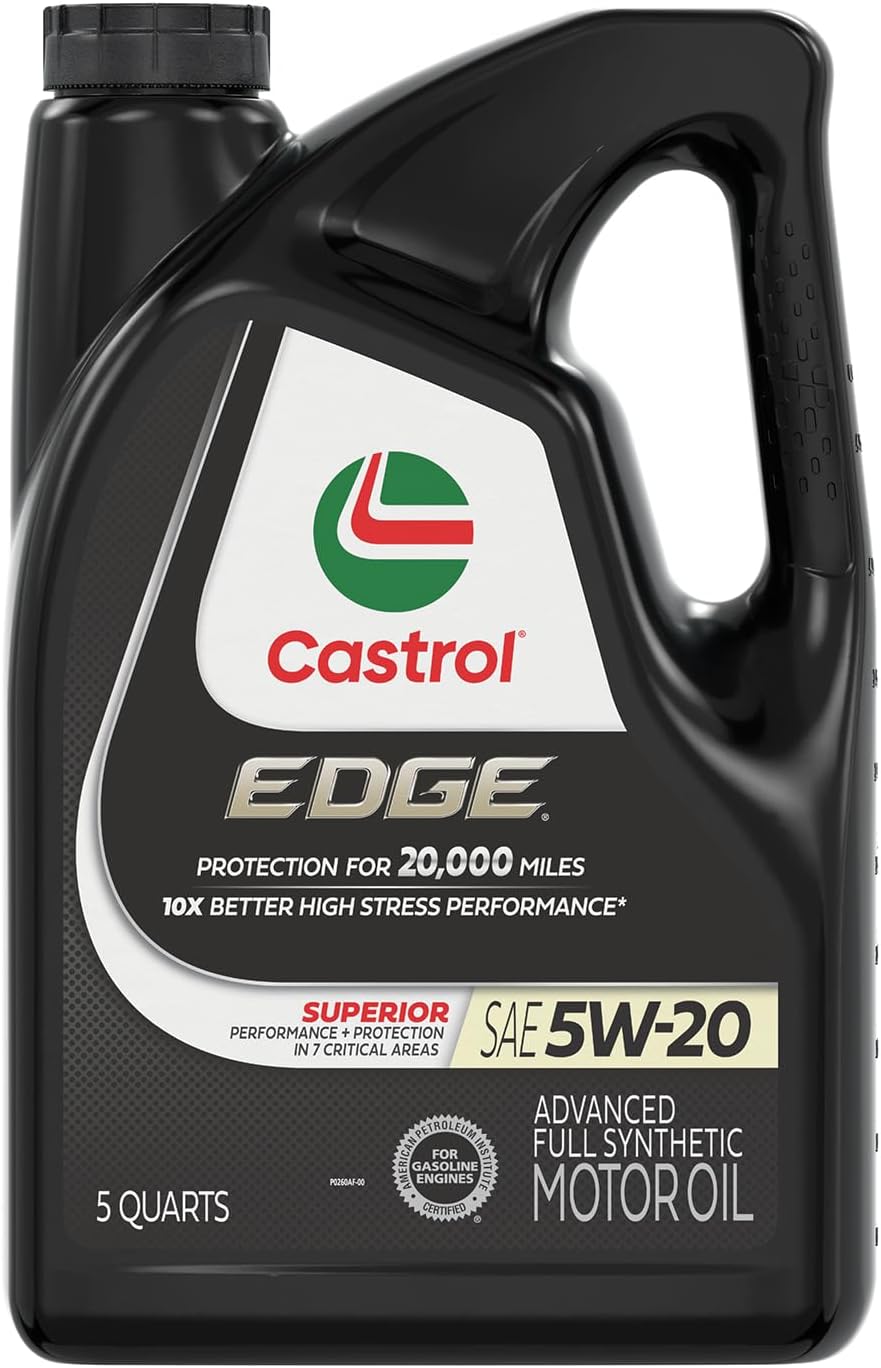
| SAE Viscosity Grade | 5W-20 |
|---|---|
| Container Type | Jug |
| Liquid Volume | 5 Quarts |
| Compatible with Vehicle Type | Car, Truck |
Castrol EDGE 5W-20 is a full synthetic motor oil designed for drivers who need a factory-recommended 5W-20 viscosity. It is used like any engine oil replacement during routine oil changes and is aimed at providing stronger film strength and improved high-temperature stability compared with conventional oils. Notable features include Castrol’s advanced additive system that targets wear protection, sludge control, and consistent viscosity under stress, plus licensing to modern API and ILSAC specifications. In practical use you can expect smoother idling, stable oil performance on hot runs, and reduced deposit formation that helps keep the valvetrain and rings cleaner over time. The product also supports extended intervals claimed by the manufacturer, though following Civic service schedules is advised. Trade-offs are typical for premium synthetics: higher cost than basic oils and limited benefit for very high‑mileage engines with existing wear products or leaks. Overall it is a straightforward choice when a 5W-20 synthetic is required for proper cold-start flow and engine protection.
Best for: Buyers who must use a 5W-20 oil to meet manufacturer recommendations and want a synthetic that improves protection, cleanliness, and hot‑running stability in everyday and highway driving.
Less Ideal for: Those looking to save money on basic oil changes or owners of very high‑mileage engines who prefer break‑in or high‑viscosity formulations for worn seals and clearances.
- Formulated specifically in a 5W-20 viscosity for correct cold-start flow and oil pressure.
- Advanced additive technology for wear protection and reduced sludge buildup.
- Good high-temperature stability to maintain viscosity under stress.
- Meets API and ILSAC modern specifications for passenger cars.
- Premium synthetic costing more than conventional oils.
Verdict: The best 5W-20 engine oil pick for owners who need that specific viscosity grade to match manufacturer recommendations and ensure proper cold-start flow and protection.
7. Castrol EDGE High Mileage 0W-20 Full Synthetic Motor Oil, 5 qt
Best High-Mileage Engine Oil
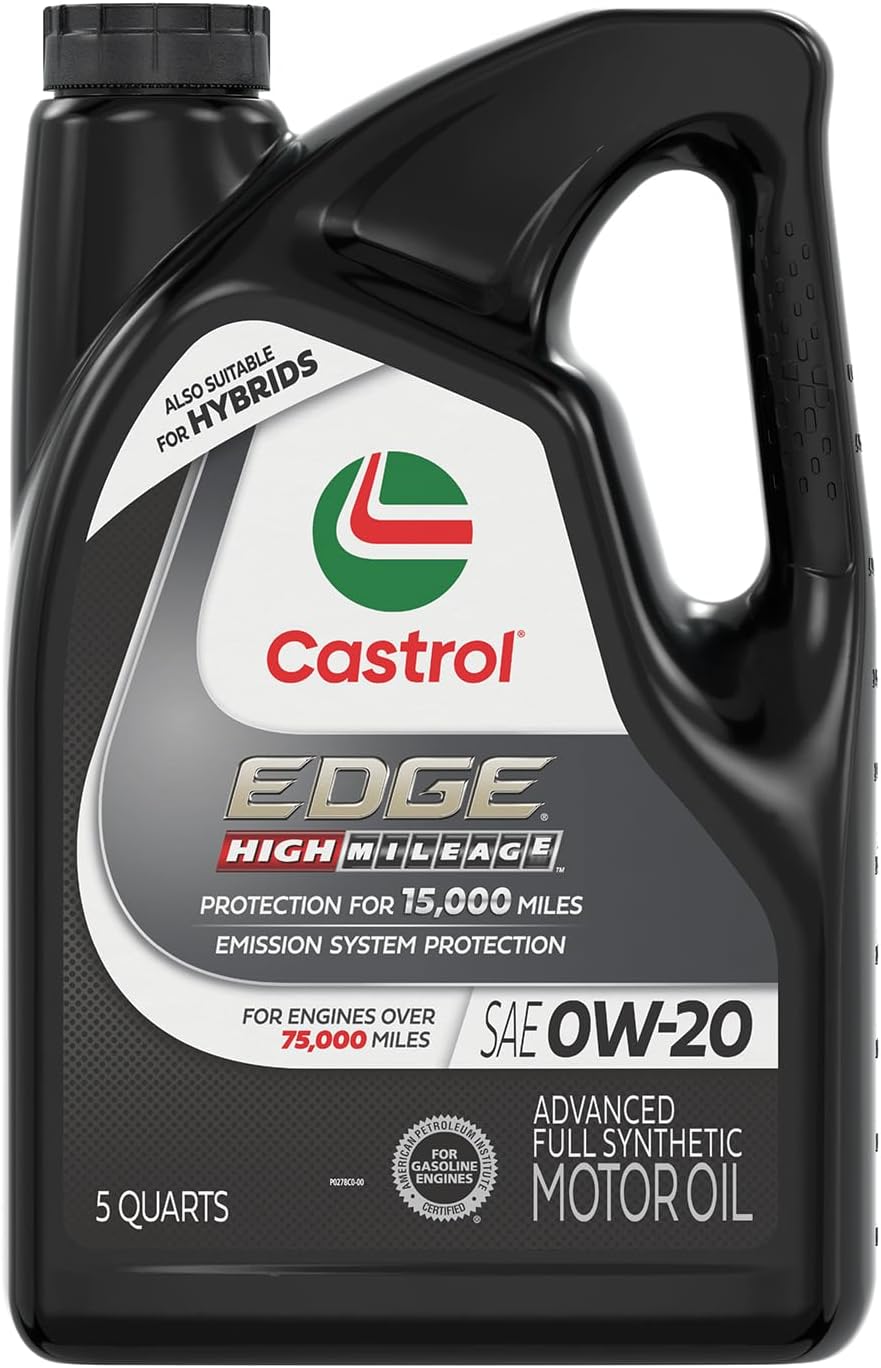
| SAE Viscosity | 0W-20 |
|---|---|
| Compatible with Vehicle Type | For vehicles with over 75,000 miles |
| Container Type | Bottle |
| Liquid Volume | 5 Quarts |
| Specifications | API SP | ILSAC GF-6 |
Castrol EDGE High Mileage 0W-20 is a full synthetic motor oil engineered for higher-mileage engines and intended for routine DIY oil changes. It supplies low-viscosity 0W-20 flow at cold start and stable protection at operating temperature, while an added high-mileage additive package includes seal conditioners to reduce leaks and a phosphorus replacement technology to limit harmful phosphorus exposure to the catalytic converter. That combination helps control sludge and reduce oil burnoff, which can cut down on consumption in older engines. Castrol claims extended change intervals up to 15,000 miles or one year, although many owners of older engines prefer shorter intervals. The formula meets current API and ILSAC standards and carries vehicle manufacturer test approvals for several Ford and Chrysler specs. For DIYers it pours cleanly from the 5 quart bottle and is a direct, universal-fit replacement where 0W-20 is recommended, but those wanting the absolute longest interval or a different viscosity should confirm compatibility with their Civic engine before switching.
Best for: DIY mechanics caring for higher-mileage Civic engines who want a factory-quality 0W-20 that adds seal conditioning, helps limit oil consumption, and provides extra wear protection during regular oil changes.
Less Ideal for: Drivers seeking a different viscosity grade or those who strictly follow very short oil-change intervals for heavily modified engines should choose a product matched to their required spec instead.
- Formulated specifically for vehicles with over 75,000 miles with seal conditioners to reduce leaks
- Low-viscosity 0W-20 provides good cold-start flow and fuel economy benefits
- Contains additives to control sludge and reduce oil burnoff in older engines
- Meets API SP and ILSAC GF-6 specifications and several manufacturer test requirements
- Manufacturer-stated 15,000-mile drain interval may be optimistic for older engines and many DIYers prefer shorter intervals
Verdict: The best high-mileage engine oil for DIY mechanics caring for higher-mileage engines who want added seal conditioners, reduced oil consumption, and extra wear protection.
Choosing the Right 2012-2015 Honda Civic Engine Oil: Key Factors to Consider
Viscosity Grade and Climate Fit
Viscosity determines how the oil flows at cold start and at running temperature. For the 2012-2015 Civic, selecting an oil with the right cold-flow rating reduces start-up wear and improves drivability after overnight parking.
In colder regions a 0W-20 grade will reach critical components faster at startup, while in hotter climates a 5W-30 option can maintain a thicker lubricating film at operating temperature. Consider local temperature ranges and the Civic's typical engine operating temperature when choosing a grade, and follow the recommended viscosity range in the owner's manual as your baseline.
Base Oil Type and Additive Chemistry
Base oil—conventional, synthetic blend, or full synthetic—affects oxidation resistance, volatility, and long-term sludge control. Full synthetic oils typically resist breakdown longer and sustain viscosity better under heat, which helps preserve the narrow tolerances in Honda four-cylinder engines.
Additives such as detergents, dispersants, antiwear agents, and friction modifiers influence deposit control, wear protection, and fuel economy. For Civics with typical street use, a balanced additive package that prevents sludge without being overly aggressive on seals is preferable.
Manufacturer Specifications and Industry Approvals
Look for oils that meet or exceed API and ILSAC specifications cited in Honda guidance for 2012-2015 Civics. These approvals ensure the oil passes standard tests for wear protection, oxidation, and volatility.
Choosing oils that align with Honda's recommended specs helps avoid warranty or service complications and ensures the formulation is suited to the engine's metallurgy and emission controls.
High-Mileage Considerations
Civics with higher miles often benefit from oils formulated for older engines. High-mileage oils include seal conditioners and slightly different additive balances to reduce leaks and restore compression balance.
If the Civic has significant wear, selecting an oil that addresses minor leaks and curbs oil consumption can postpone more intensive repairs and improve drivability. However, these oils may change friction characteristics slightly, so evaluate their effect on fuel economy and idle smoothness.
Fuel Economy and Friction Modifiers
Modern passenger engines, including the Civic's, can realize small but meaningful fuel economy gains from low-viscosity oils and friction-reducing additives. If maximizing MPG for daily driving is a priority, choose oils formulated to reduce internal friction while still providing adequate wear protection.
Be mindful that the lowest-viscosity oils trade some film strength for efficiency. Balance your desire for improved fuel economy with the need for protective film thickness, especially in warmer climates or under heavier loads.
Service Interval and Oil Life
Decide whether you plan to follow shorter, conventional intervals or extended drain intervals supported by full synthetic oils. Longer drain intervals can reduce maintenance frequency, but the oil must resist oxidation and maintain protective additives over time.
Factor in driving patterns, such as frequent short trips or towing, which accelerate oil degradation. Choosing an oil with proven thermal and oxidative stability helps preserve engine cleanliness and component life between changes.
Which Viscosity Works Best for 2012-2015 Civics
The best viscosity depends on local temperatures and engine condition. For most temperate climates and newer engines in the 2012-2015 Civic range, 0W-20 offers quick lubrication at cold start and is often recommended for fuel economy. In hotter environments or for engines showing mild oil consumption, 5W-30 can provide a more robust lubricating film at operating temperature.
When in doubt, refer to the owner's manual for the FB and FG chassis guidance and cross-check that the oil meets required API and ILSAC ratings. If you plan extended oil change intervals, favor oils rated for sustained thermal stability.
- 0W-20: better cold-start protection and fuel economy in moderate climates
- 5W-30: thicker film at operating temp, useful in hot climates or higher-mileage engines
- Follow OEM viscosity recommendations as the baseline
Synthetic Vs Conventional: Tradeoffs for Civic Owners
Full synthetic oils offer superior oxidation resistance and consistent viscosity at high temperatures, which helps maintain clearances in the Civic's four-cylinder engine. They also tend to resist sludge formation and support longer drain intervals.
Conventional oils are less expensive and acceptable for routine, short-interval service, but they break down sooner under heat and may not protect as well during extended intervals. For owners prioritizing long-term wear protection and less frequent oil changes, synthetic is often the better choice.
- Synthetic: better thermal stability, longer oil life, enhanced wear protection
- Conventional: lower cost, adequate for short drain intervals and light use
High-Mileage Oils and Older Civic Engines
If your Civic has over 100,000 miles, consider oils formulated for high-mileage engines. These products often include seal conditioners to reduce minor leaks and additives aimed at decreasing oil consumption and restoring compression behavior.
High-mileage oils can temporarily improve drivability in worn engines, but they do not replace mechanical repairs. Monitor oil consumption and compression over time to determine whether further engine work is needed.
- Look for seal conditioners and anti-wear chemistries
- Watch for changes in oil consumption and engine smoothness after switching
How Oil Choice Affects Emissions and Evaporative Behavior
Oils with high volatility can increase evaporative losses and affect emission system sensors over time. Choosing oils that meet modern low-ash and low-volatility standards helps preserve emissions component performance on the FB and FG Civic.
Follow recommended specifications to reduce potential impacts on catalytic converters and onboard sensors. Oils that exceed required standards for volatility and ash content reduce the risk of downstream contamination.
- Prefer oils with low volatility and appropriate ash levels
- Check API and ILSAC certifications for emission-friendly formulations
Practical Tips for Changing Oil on a 2012-2015 Civic
When performing an oil change, always use the correct viscosity and a new filter rated for passenger gasoline engines. Properly torquing the drain plug and filter avoids leaks and ensures a reliable seal.
Warm the engine briefly before draining to help the oil flow, and inspect for signs of coolant contamination or metal particles. Dispose of used oil at an appropriate recycling facility and reset any service interval reminders according to the owner's manual for the FB and FG chassis.
- Warm engine before drain to aid flow
- Replace oil filter each change and torque fittings to spec
- Inspect drained oil for metal flakes or milky appearance
Still looking for the perfect fit?
Select your Honda Civic configuration to see the most relevant Engine Oils recommendations
How We Chose the Best 2012-2015 Honda Civic Engine Oil
We evaluated candidate oils using criteria that reflect how owners actually use 2012-2015 Honda Civic engines and what affects service outcomes. Primary evaluation factors included viscosity appropriateness for the Civic's tolerances and climate, base oil type and additive formulation for wear control, and compatibility with Honda engine seals and emission system tolerances. We also checked published OEM viscosity recommendations and common service intervals for this generation to ensure candidate oils meet expected specifications.Additional filters included lab-backed specifications such as API and ILSAC ratings, manufacturer guidance on viscosity grades like 0W-20 and 5W-30, and performance indicators for fuel economy and high-mileage protection. We excluded specialty race compounds and oils formulated exclusively for diesels, since those do not match typical Civic usage. Priority was given to oils that balance cold-start protection, long drain capability, and seal conditioning for higher-mileage FB and FG engines.
Our full evaluation process is outlined in our review methodology.
FAQ
Can I use 0W-20 in my 2012-2015 Civic year-round?
Often yes, 0W-20 is commonly recommended for these model years and provides strong cold-start protection and fuel economy. In consistently hot climates or engines with elevated oil consumption, a slightly thicker grade like 5W-30 may be preferable.
How often should I change oil in a Civic with mostly city driving?
Typically, frequent short trips accelerate oil contamination and you may benefit from shorter intervals, such as every 5,000 miles or as recommended in the owner's manual. If you use a full synthetic oil and drive mostly highway miles, longer intervals can be acceptable within manufacturer guidance.
Is synthetic motor oil necessary for the FB and FG Civic engines?
Synthetic is not strictly required but offers better thermal stability and longer-lasting protection, which is useful if you want extended drain intervals or improved resistance to sludge. For short-interval maintenance, conventional oils can be acceptable.
Will switching to a high-mileage oil fix small oil leaks?
High-mileage oils contain seal conditioners that can reduce minor leaks and swell aging seals slightly, which often reduces seepage. This is a temporary measure and does not replace necessary mechanical repairs for significant leaks.
What should I look for on the oil container to confirm suitability?
Check the viscosity grade and industry approvals such as API and ILSAC that match Honda recommendations for 2012-2015 Civics. Also note base oil type and any claims about fuel economy, high-mileage formulation, or extended drain compatibility.
Can using a lower-viscosity oil improve fuel economy in my Civic?
Usually yes, lower-viscosity oils reduce internal friction and can yield small fuel economy gains. However, ensure the lower viscosity still provides adequate film strength for your climate and engine condition to avoid increased wear.
Final Verdict
Prioritize viscosity that matches your climate and the Civic's operating condition, then choose an oil base and additive package that balances wear protection with fuel economy. For most 2012-2015 FB and FG Civics, full synthetic oils in the recommended viscosity range offer the best overall protection and flexibility for longer intervals. If the engine has high mileage or minor leaks, consider a high-mileage formulation, but monitor performance and consumption after switching to confirm it meets your expectations.
Explore More:
- Check out all Honda Civic parts & accessories
- Explore Fluids & Chemicals
- Browse all Accessories
