

Note: This article contains affiliate links. If you click on these links and make a purchase, I may earn a small commission at no extra cost to you. This helps support my research and content. Read my full affiliate disclosure here.
Picking the right oil for a Honda Civic 1.5L matters for fuel economy, engine responsiveness, and long-term wear. Oil viscosity and additive chemistry directly affect cold starts, turbocharger lubrication when applicable, and how often you need to change the oil. This guide shortlists the top options for the Civic 1.5L and explains the evaluation criteria used to compare them.Below you will find the top picks for this engine, followed by clear buying guidance on viscosity choices, synthetic versus conventional options, and maintenance considerations to help you pick the best fit for your driving style and climate.
Looking for other parts? See all Honda Civic parts & accessories.
Top Picks at a Glance
| Best Overall Engine Oil A balanced, top-performing oil that protects and improves driveability | Valvoline Advanced Protection Full Synthetic SAE 0W-20 Motor Oil, 5 qt |  |
| Best Budget Engine Oil Low-cost option that still meets basic API/ILSAC specs for protection | Valvoline Advanced Full Synthetic SAE 0W-20 Motor Oil — 1 QT |  |
| Best Full‑Synthetic 0W‑20 Oil Full‑synthetic 0W‑20 formulations for modern turbocharged and fuel‑saving engines | Royal Purple SAE 0W-20 High Performance Full Synthetic Motor Oil, 5 qt |  |
| Best High‑Mileage Engine Oil Formulated with conditioners and extra detergents to protect older engines | Valvoline MaxLife Extended Protection High Mileage 0W-20 Full Synthetic Motor Oil, 5 qt |  |
| Best OEM Honda Engine Oil Genuine or factory‑spec oils formulated to OEM viscosity and additives | Honda Genuine Full Synthetic Engine Oil, 70.86 mL Bottle |  |
| Best 5‑Quart Value Engine Oil Five‑quart bottles offering the best per‑quart price and convenience | Mobil 1 High Mileage Full Synthetic Motor Oil 0W-20 — 5 Quart |  |
| Best Oil Change Kit (with Filter) Complete do‑it‑yourself kits that include oil, filter and drain washer | Factory Racing Parts 0W-20 Full Synthetic Oil Change Kit with Filter (3.5 qt) |  |
1. Valvoline Advanced Protection Full Synthetic SAE 0W-20 Motor Oil, 5 qt
Best Overall Engine Oil

| Viscosity | 0W-20 |
|---|---|
| Size | 5 QT |
| Manufacturer | Valvoline |
| Flash Point | 200 Degrees Celsius |
| SAE J300 Viscosity Grade | 0W-20 |
Valvoline Advanced Protection 0W-20 is a full synthetic engine oil designed to protect modern gasoline engines through tougher wear and thermal stresses. It is typically used in routine oil changes for daily-driven cars, flowing easily at low temperatures for gentler cold starts and remaining stable under higher operating heat. Notable features include claims of 40% stronger wear protection, improved deposit defense, and up to 2.5 times better heat protection versus industry baselines, plus compliance with ILSAC GF-7A, API SP and several manufacturer specifications. In practice that means smoother startups, reduced engine deposits over multiple changes, and potentially modest fuel-economy gains compared with heavier grades. The formula is well suited to frequent street use and highway driving, and reviewers report quieter idles and steady performance in higher-mileage engines. Trade-offs are typical for a performance-focused synthetic: benefits that restore deposits take several oil changes to appear and the product is optimized for engines requiring 0W-20 rather than a universal fix for every application.
Best for: A DIYer who wants a dependable, factory-quality 0W-20 oil that prioritizes long-term engine protection and smoother cold starts for everyday driving and highway use in a Civic 1.5L.
Less Ideal for: Not the best choice if your Civic requires a different viscosity or you prefer extended-interval specialty oils specified for racing or severe-duty applications.
- Full synthetic 0W-20 formulation for strong low-temperature flow and cold-start protection
- Spec-compliant with ILSAC GF-7A and API SP for compatibility with modern gasoline engines
- Manufacturer claims improved wear, deposit, and heat protection versus industry standards
- Suitable for both newer and higher-mileage gasoline engines according to product guidance
- Restorative cleaning effects are gradual and typically require multiple oil-change cycles to notice
Verdict: The pick for DIYers who want a reliable, all-around motor oil that delivers strong wear protection, deposit control, and fuel-economy benefits for everyday use.
2. Valvoline Advanced Full Synthetic SAE 0W-20 Motor Oil — 1 QT
Best Budget Engine Oil

| SAE Viscosity Grade | 0W-20 |
|---|---|
| Volume | 1 Quarts |
| Viscosity Level | Low |
| Compatible Vehicle Type | Car, Truck |
| Standards | ILSAC GF-7A, API SP/SN |
Valvoline Advanced Full Synthetic 0W-20 is a one-quart, full synthetic motor oil intended for everyday driving and routine maintenance on vehicles that call for 0W-20. It is formulated to improve cold-start flow, cut friction, and resist thermal breakdown so engines run cleaner and with less wear over time. Notable features include enhanced additive boosters that Valvoline says deliver stronger wear protection, better deposit control, and increased heat resistance compared with industry baselines. In practical use that means easier starts in cold weather, less sludge under stop-and-go conditions, and potential small gains in fuel economy versus conventional oils. It meets current ILSAC and API gasoline specifications and several factory specs, so it fits cars that require 0W-20. The main limitation is that this is a single-quart retail pack, so anyone doing a full oil change will need multiple quarts; also synthetic oils cost more than conventional options, which affects per-change expense despite longer protection between changes.
Best for: Buyers who want a dependable, factory-spec full synthetic oil that protects modern small-displacement gasoline engines while keeping maintenance simple and predictable.
Less Ideal for: If your priority is the lowest possible up-front cost per oil change or you prefer bulk economy packaging, a conventional oil or larger multi-quart containers may suit you better.
- Full synthetic 0W-20 formulation for improved cold-start flow and reduced engine wear.
- Claims enhanced deposit control and heat protection for cleaner operation under everyday severe driving.
- Meets ILSAC GF-7A and current API gasoline service categories and several factory specifications.
- Widely available single-quart bottle suitable for topping off between changes or for small-capacity engines.
- Sold as single one-quart bottles so buying enough for a full drain and fill requires multiple units.
- Higher per-quart cost than conventional or blend oils.
Verdict: Choose this slot when you need a dependable, affordable motor oil that passes manufacturer specifications and stretches your maintenance budget without risky trade-offs.
3. Royal Purple SAE 0W-20 High Performance Full Synthetic Motor Oil, 5 qt
Best Full‑Synthetic 0W‑20 Oil
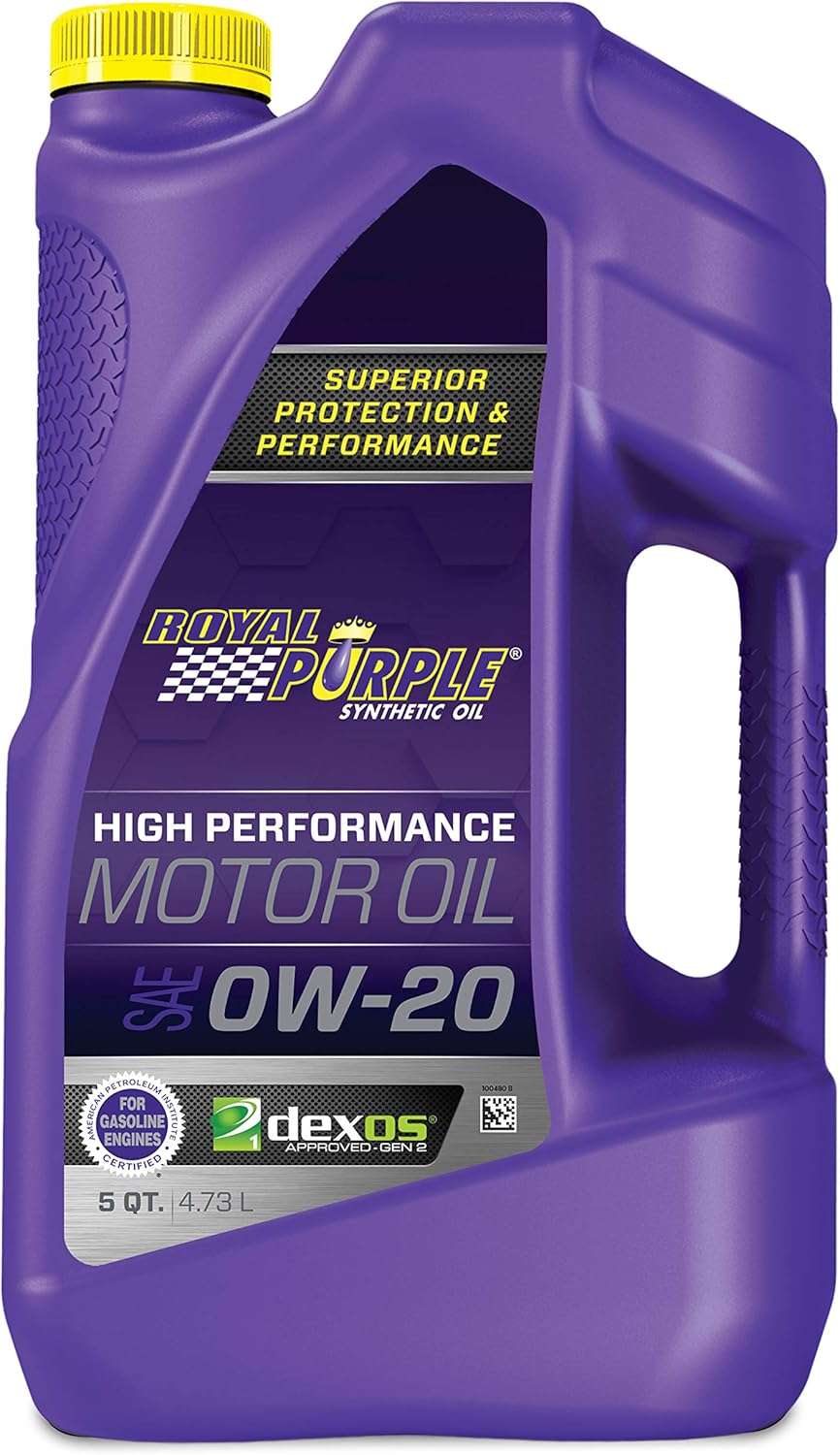
| Viscosity | SAE 0W-20 |
|---|---|
| Volume | 5 qt (4.73 L) |
| API/ILSAC | API SN, ILSAC GF-5 |
| Fit Type | Vehicle Specific Fit |
Royal Purple 0W-20 is a full-synthetic motor oil designed to deliver quick cold-start flow and long-term protection in modern small-displacement gasoline engines. It is typically used as a direct replacement for factory 0W-20 oils during routine service intervals and is compatible with conventional and other synthetic oils so you can switch without extra procedures. Notable features include proprietary anti-wear and polar additives that aim to minimize metal-to-metal contact, detergent chemistry that resists sludge and varnish, and claimed LSPI reduction for turbocharged direct-injection engines. In practical terms that means easier starting in cold weather, cleaner internals over multiple drains, and modest improvements in highway fuel economy compared with thicker grades. The main compromises are cost compared with budget synthetics and the thin viscosity of 0W-20, which can increase consumption slightly on older, high-mileage engines designed for thicker oils. For a 1.5L turbocharged Civic, this oil targets the key priorities of cold-start protection, LSPI mitigation, and maximizing mileage while preserving emissions components.
Best for: Drivers of small modern gasoline cars who prioritize fast cold-start protection, LSPI resistance, and maximizing fuel economy for daily commuting and highway driving.
Less Ideal for: Owners of older high-mileage engines that run better on thicker oils or those seeking the lowest-cost conventional or synthetic blend options.
- Full synthetic 0W-20 formulation for fast cold-start lubrication
- Additive package claims to reduce LSPI and protect turbocharged GDI engines
- Detergents and anti-wear chemistry help keep intake and valve train cleaner over time
- Meets API SN and ILSAC GF-5 performance requirements
- Priced higher than many mainstream 0W-20 oils
Verdict: This slot is for full‑synthetic 0W‑20 oils that prioritize fast cold‑start flow and LSPI protection while maximizing fuel economy in modern small‑displacement engines.
4. Valvoline MaxLife Extended Protection High Mileage 0W-20 Full Synthetic Motor Oil, 5 qt
Best High‑Mileage Engine Oil

| SAE J300 Viscosity Grade | 0W-20 |
|---|---|
| Compatible with Vehicle Type | Car, Truck |
| Liquid Volume | 5 Quarts |
| Viscosity Level | Low to Medium |
| Flash Point | 394 Degrees Fahrenheit |
Valvoline MaxLife Extended Protection 0W-20 is a full synthetic motor oil aimed at engines with significant mileage and those you want to preserve. It combines premium base oils with anti‑wear additives, detergents, and seal conditioners so it both defends moving parts from wear and helps restore flexibility to hardened seals that cause leaks. In real use it functions like a drop‑in service oil for routine changes, offering improved sludge control, oxidation resistance, and reduced oil consumption compared with conventional standards. For a 1.5L Honda Civic, the low‑viscosity 0W-20 supports easy cold starts and stable oil pressure in normal driving while the high‑mileage chemistry addresses common aging symptoms such as reduced compression, increased consumption, and minor leaks. Limitations: if your Civic specifies a different viscosity you must follow the manufacturer recommendation, and this 5‑quart single bottle may require an extra quart for engines with larger capacities. Expect the typical benefits of a branded high‑mileage synthetic rather than any miraculous restoration of badly worn engines.
Best for: Drivers who want a full synthetic oil that prioritizes protecting and prolonging an older 1.5L Civic engine by reducing wear, leaks, and deposits while maintaining modern low‑viscosity performance.
Less Ideal for: Owners planning to follow strict factory fluid specs that require a different viscosity or formulations targeted at racing, heavy towing, or diesel engines.
- Formulated for high‑mileage engines with seal conditioners to help reduce leaks.
- Anti‑wear additives and detergents that target sludge and deposits.
- 0W-20 viscosity supports easy cold starts and modern fuel economy targets.
- Full synthetic base oils provide stronger oxidation and heat resistance than conventional oils.
- Available only in a 5‑quart bottle which may not match every oil capacity without buying extra.
- Not suitable if the Honda Civic 1.5L owner's manual calls for a different viscosity grade.
Verdict: Pick this when you want oil with seal conditioners and anti‑wear additives designed to reduce leaks, limit consumption, and clean deposits in higher‑mileage engines.
5. Honda Genuine Full Synthetic Engine Oil, 70.86 mL Bottle
Best OEM Honda Engine Oil

| Container Type | Bottle |
|---|---|
| Compatible with Vehicle Type | Honda |
| Automotive Fit Type | Universal Fit |
| Liquid Volume | 70.86 Milliliters |
This is Honda's factory full synthetic engine oil packaged as a genuine OEM product. It is intended for topping off or small-volume service needs on Honda engines and is sold in a compact bottle for easy handling. As a factory-specified fluid, it matches Honda's formulation and compatibility expectations, which helps maintain engine internals, seals, and fuel-system components designed for Honda fluids. Typical use is quick top-ups between scheduled oil changes or as the exact replacement fluid when the owner wants factory-brand assurance. The small 70.86 milliliter volume means it is not meant for complete oil changes but is convenient to carry for emergency top-offs or to keep a correct-match sample on hand. Because it is an OEM-labeled product, it supports maintenance strategies that favor factory compatibility and may simplify conversations at dealerships or with service technicians. If you need full-capacity oil changes you will need larger bottles or a service kit, but for maintaining factory-spec fluid chemistry in small doses this bottle is practical and confidence-inspiring.
Best for: Buyers who prioritize using Honda-specified fluids and want a factory-matched product for topping off between services or for keeping an exact-match sample on hand.
Less Ideal for: Drivers who need bulk oil for routine full oil changes or long-term DIY servicing should choose larger-capacity oil containers instead.
- Factory-branded formulation ensures compatibility with Honda engines and components
- Full synthetic base provides stability and protection appropriate for modern engines
- Small bottle size is convenient for emergency top-offs or carrying in a vehicle
- OEM labeling simplifies adherence to manufacturer service recommendations
- Very small 70.86 mL volume is insufficient for a full oil change
Verdict: This slot is for factory‑specified oils engineered to Honda's standards for fit‑and‑finish, viscosity stability, and compatibility with factory warranties and maintenance intervals.
6. Mobil 1 High Mileage Full Synthetic Motor Oil 0W-20 — 5 Quart
Best 5‑Quart Value Engine Oil

| Viscosity | 0W-20 |
|---|---|
| Size | 5 Quart |
| Vehicle Service Type | Car |
| SAE J300 Viscosity Grade | 0W-20 |
| Model | Extended Performance |
Mobil 1 High Mileage 0W-20 is a full-synthetic motor oil aimed at vehicles with higher mileage and designed to let DIYers complete a full oil change from one 5-quart jug. It uses Mobil 1’s advertised Triple Action Formula to help reduce friction, control oxidation, and remove sludge and deposits, and the brand specifies protection for up to 10,000 miles between changes under recommended conditions. For a Honda Civic 1.5L this 0W-20 grade provides modern low-temperature flow for cold starts and stable protection at operating temperatures, plus formulations that target timing chain wear and low-speed pre-ignition concerns relevant to modern turbocharged small-displacement engines. The 5-quart size means you can do a complete drain and refill without mixing containers, which saves time and reduces waste. Limitations: its high-mileage marketing is targeted at engines with significant mileage, so benefits like deposit control are less meaningful in a newer or low-mileage Civic; always follow the vehicle manufacturer oil spec and change interval recommendations.
Best for: Someone who performs their own maintenance and wants a single 5-quart jug that matches Honda Civic 1.5L recommended 0W-20 viscosity while offering extended-cleaning protection.
Less Ideal for: Drivers who follow the shortest factory service intervals, owners of very low-mileage vehicles who prioritize minimal additive packages, or shops that prefer pre-measured single-quart bottles for mixed-use service.
- Full-synthetic 0W-20 suitable for modern 1.5L turbo engines' cold-start and operating protection
- 5-quart container covers a complete Civic oil change without topping up from multiple bottles
- Formulation claims to reduce sludge and control oxidation for extended drain intervals up to 10,000 miles
- Meets ILSAC GF-6 standards for LSPI and timing chain wear protection
- Marketing emphasizes benefits for engines with over 75,000 miles which may be less relevant for newer engines
Verdict: Choose this when you want to buy a full 5‑quart container for home oil changes to save money per quart and avoid frequent reordering.
7. Factory Racing Parts 0W-20 Full Synthetic Oil Change Kit with Filter (3.5 qt)
Best Oil Change Kit (With Filter)
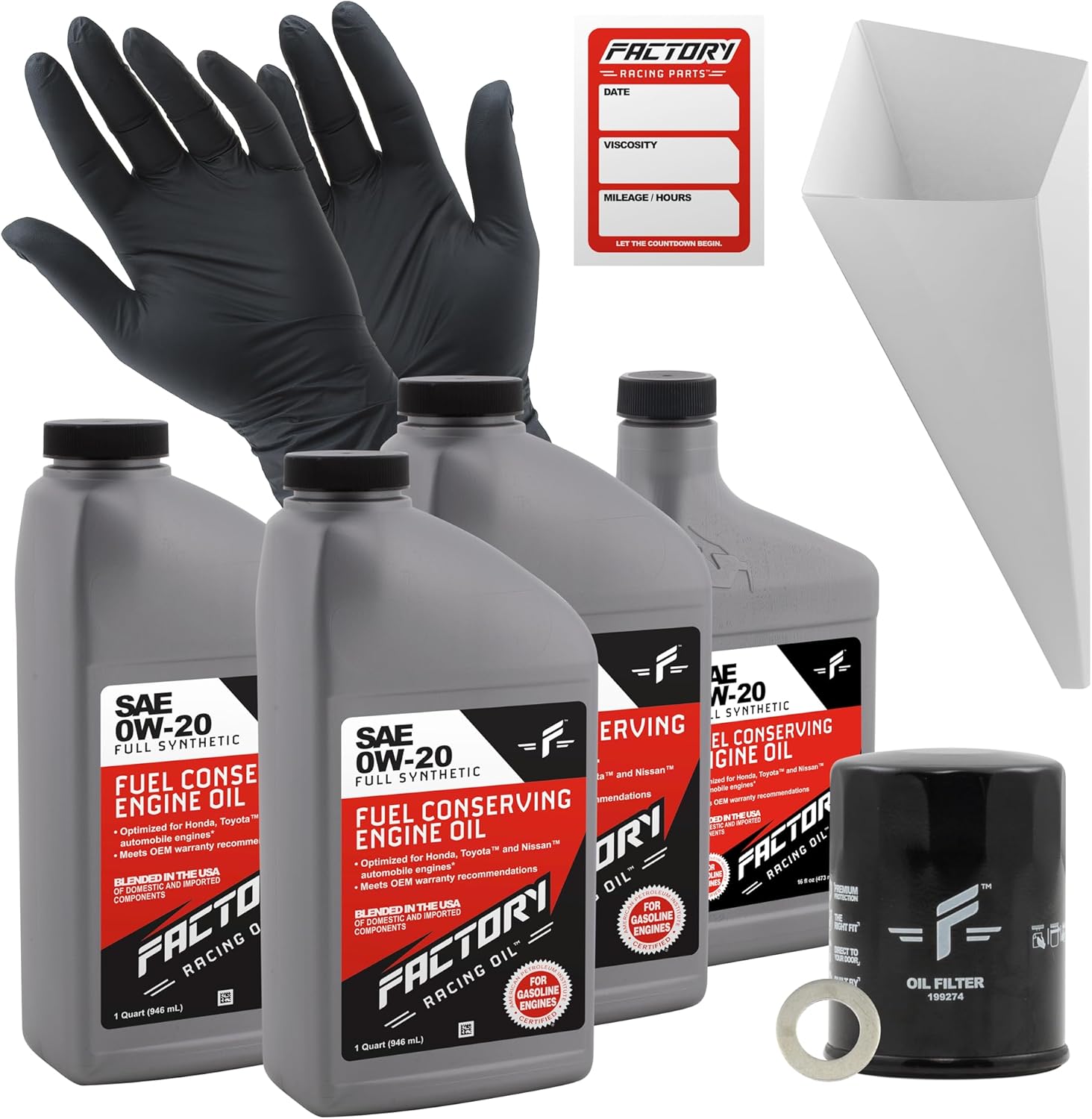
| SAE Viscosity | 0W-20 |
|---|---|
| Volume | 3.5 Quarts |
| Certifications | API SP, ILSAC GF-6A |
| Includes | Oil, filter, crush washer, funnel, gloves, sticker |
This kit supplies everything needed for a single DIY oil change on compatible Honda 1.5L engines: 3.5 quarts of Factory Racing Parts SAE 0W-20 full synthetic oil, an oil filter matched to OEM fitment, a crush washer, funnel, gloves, and an oil change sticker. The oil is API SP and ILSAC GF-6A certified and is formulated to help prevent LSPI and support start-stop engines while aiming to improve fuel economy. The included filter is specified to replace OEM part 15400-PLM-A02, so installation is straightforward for owners replacing their own filter. The single-kit quantity is convenient for one service without leftover bulk containers, and the funnel and gloves make the job tidier. Expect typical benefits of a modern 0W-20 synthetic: improved cold starts, fuel-conserving viscosity, and strong wear protection. Limitations are that the kit is sized for a single oil change on certain Honda 1.5L models and will not cover vehicles requiring larger capacities or different oil grades.
Best for: Home mechanics who want a single, ready-to-use oil change kit that matches Honda 1.5L engine fitment and simplifies a DIY service in one purchase.
Less Ideal for: Drivers who need larger oil quantities, a different viscosity grade, or who prefer bulk oil for multiple services should look elsewhere.
- Includes correct oil volume and a vehicle-specific oil filter for a single service
- API SP and ILSAC GF-6A certifications address LSPI and modern engine protections
- Kit contains helpful accessories like funnel, gloves, crush washer, and reminder sticker
- Formulated as 0W-20 full synthetic for better cold-start flow and fuel-conserving operation
- 3.5 quart quantity is limited to specific Honda 1.5L applications and will not fit larger oil capacities
Verdict: This pick is for bundled oil change kits that include the correct oil quantity plus filter and hardware to simplify at‑home maintenance with one purchase.
Choosing the Right Honda Civic 1.5L Engine Oil: Key Factors to Consider
Viscosity Grade and Cold-Start Performance
Viscosity grade is one of the most important choices for the Honda Civic 1.5L because it governs how quickly oil circulates at startup and how it behaves at operating temperature. A lower first number helps thin the oil at cold temperatures so the pump can build pressure quickly and reduce wear during initial seconds after start. At the same time, the second number reflects high-temperature viscosity and the oil's ability to maintain a protective film under load.
Choosing the right grade affects fuel economy and turbocharger protection when the 1.5L engine is fitted with forced induction. If you drive in cold climates, prioritize a lower cold-viscosity number; for consistently hot climates or heavy-load driving, a higher hot-viscosity rating may help maintain oil film strength.
Full Synthetic Versus Conventional
Full synthetic oils provide more consistent molecular structure and typically better shear stability than conventional oils, which helps the Civic 1.5L maintain viscosity and protect engine components over long drives. Synthetics also flow better at low temperatures, improving cold-start protection and reducing wear during initial crank cycles.
Conventional oils may be adequate for low-mileage, gentle-use vehicles, but if you want extended drain intervals, better fuel economy, or stronger thermal protection under sustained highway speeds, a full synthetic formulation is usually the better choice for this engine.
Additives and Detergency
Detergent and dispersant additives help prevent sludge and varnish buildup in the oil passages and on valve-train components. Cleanliness is particularly important for modern direct-injection engines and turbocharged 1.5L variants that can be prone to deposit formation under short-trip use.
Look for oils with robust detergent packages and proven deposit control claims to extend component life and maintain consistent performance between service intervals. Additive balance also affects corrosive wear and compatibility with sensors.
High-Temperature Stability and Shear Resistance
The Civic 1.5L spends time at elevated operating temperatures during highway or spirited driving, so oils with strong high-temperature stability and resistance to mechanical shear will retain protective film thickness. High-temperature high-shear (HTHS) values and viscosity retention specifications indicate how well an oil preserves protection under stress.
When oils shear down and lose viscosity, pump pressure and film strength can drop, increasing wear. For drivers who tow small loads, drive on hilly routes, or frequently use higher speeds, choose oils with proven shear stability.
Compatibility With Seals and Emissions Systems
Oil formulations influence compatibility with engine seals and modern emissions control hardware. Some additives can cause hardening or swelling of seals over many change intervals, leading to leaks. Oils must also be formulated to avoid creating deposits that can affect exhaust aftertreatment or oxygen sensor operation.
Selecting oils that match OEM specifications reduces the risk of premature seal wear and helps maintain proper emissions system function. Always cross-check recommended specifications for seal compatibility in the owner documentation when selecting an oil.
Service Interval and Maintenance Considerations
Deciding how often to change the oil depends on driving patterns and the chosen oil type. Full synthetic oils often support longer intervals between changes due to better oxidation resistance, but driving conditions like frequent short trips, stop-and-go traffic, or dusty environments can necessitate shorter intervals.
Consider the typical service pattern you can adhere to and whether you prefer the convenience of longer drain intervals or the lower upfront cost of more frequent conventional oil changes. Also factor in the ease of obtaining the recommended grade and whether you plan to follow factory-interval recommendations or slightly extend them with higher-performance oils.
Choosing the Right Viscosity for Your Climate
Ambient temperature affects how quickly oil circulates at startup and how it protects engine components. For temperate regions, mid-range grades offer a good balance of cold-start flow and high-temperature protection. In colder climates, prioritize oils with lower cold-viscosity ratings to ensure fast pumpability and reduced wear during initial seconds after starting.
If you live in a consistently hot area or do sustained highway driving, a grade with stronger high-temperature film strength will help preserve protection under load. Check the owner manual for the manufacturer-recommended grades and use that as the starting point for seasonal adjustments.
- Cold regions: choose lower cold-viscosity grades for faster circulation.
- Hot regions: favor oils with higher high-temperature viscosity and stability.
- When in doubt, follow the owner manual's recommended grade.
Synthetic Oils and Long-Term Engine Health
Synthetic motor oils offer improved thermal stability and lower volatility compared with conventional oils, which helps the Civic 1.5L resist breakdown over longer drains. This is especially helpful for drivers who prefer extended service intervals or who do a mix of highway and city driving.
In addition to stability, synthetic oils often have additive packages tuned to minimize deposits and maintain engine cleanliness. That can translate to steadier performance and reduced risk of sludge-related issues during ownership.
- Better oxidation resistance supports longer drain intervals.
- Improved cold-flow properties reduce wear on startup.
- Consider synthetic if you do long highway miles or extended service intervals.
When to Consider High-Mileage Formulations
High-mileage engine oils include seal conditioners and additives intended to reduce leaks and swell older seals. For Civics with higher accumulated miles that show minor oil seepage or reduced compression, these formulations can help maintain seal pliability and reduce external leaks.
They also often include extra detergents and friction modifiers to address engines with slightly increased internal wear. Use them when the vehicle shows age-related symptoms, but continue to monitor for leaks and performance changes after switching.
- Best for Civics with significant mileage and minor seepage.
- Includes additives aimed at conditioning seals and reducing leaks.
- May reduce oil consumption and restore marginal seal performance.
Impact of Oil Choice on Fuel Economy
Oil viscosity and friction modifiers influence mechanical drag inside the engine and therefore affect fuel economy. Thinner oils at operating temperature can reduce parasitic losses, delivering small but measurable improvements in miles per gallon for the Civic 1.5L.
If maximizing fuel economy is a priority, select oils that balance low friction with adequate high-temperature protection. Keep in mind that the real-world effect is modest and should be weighed against protection needs and manufacturer recommendations.
- Lower friction oils can slightly improve mpg.
- Balance fuel economy benefits with required high-temperature protection.
- Monitor oil consumption after changing viscosity grade.
Oil Change Intervals and Practical Maintenance Tips
Establish an oil change schedule based on your driving style and the oil type you choose. Full synthetic oils often support longer intervals, but frequent short trips, heavy traffic, and towing reduce effective oil life. Follow oil condition checks and service indicators rather than calendar dates alone when possible.
Use a high-quality filter rated for fine particle capture and replace it with each oil change. Keep records of oil grades used and mileage between changes to identify trends in consumption or performance.
- Replace filter every oil change and use the correct specification.
- Track mileage and oil consumption to fine-tune intervals.
- Adhere to owner manual recommendations when uncertain.
Still looking for the perfect fit?
Select your Honda Civic configuration to see the most relevant Engine Oils recommendations
How We Chose the Best Honda Civic 1.5L Engine Oil
We evaluated candidates using a set of vehicle-specific priorities that matter for the Honda Civic 1.5L. Primary criteria included viscosity suitability and manufacturer-recommended grades, which determine cold-start flow and oil pressure behavior in this small-displacement turbocharged engine. We also prioritized thermal and shear stability so the oil maintains viscosity under sustained highway speeds and occasional hard driving.Additive chemistry and deposit control were assessed to reduce valve-train sludge and keep intake and turbo passages clear. Compatibility with OEM seals, fuel-economy impact measured via friction modifiers, and compatibility with extended drain intervals were considered because Civic owners often balance service intervals with overall operating costs. We checked claimed lab specs for high-temperature high-shear (HTHS) viscosity and industry certifications that align with automaker guidance.Excluded items: oils formulated only for heavy-duty diesel or exclusively for racing use were not considered. We focused on passenger-car motor oils compatible with the Civic 1.5L engine's service needs. The shortlisted products met our baseline for viscosity, stability, and manufacturer-aligned specifications.
Our full evaluation process is outlined in our review methodology.
FAQ
What viscosity should I use for a Honda Civic 1.5L?
Viscosity depends on climate and manufacturer guidance. Consult the owner manual for the recommended grade and adjust seasonally if needed. In cold climates choose a lower cold-viscosity number; in hot climates favor stronger high-temperature protection.
Is full synthetic oil worth it for the Civic 1.5L?
Full synthetic often provides better cold-start protection, thermal stability, and cleaner operation, which benefits longevity and may allow longer drain intervals. Whether it is worth it depends on driving patterns and how long you plan to keep the car.
Can I use high-mileage oil if my Civic has low miles?
High-mileage formulations are designed to address seals and wear common in older engines. Using them in a low-mileage Civic is usually unnecessary and may change additive balance, so stick to standard formulations until signs of age-related wear appear.
How often should I change oil if I mostly do short trips?
Frequent short trips are hard on oil because they limit full warm-up cycles and encourage moisture and deposit formation. Change intervals should be shorter than for mostly highway use; follow the severe-service schedule in the owner manual and monitor oil condition more closely.
Will switching viscosity affect engine performance?
Small changes in viscosity can affect cold-start behavior and how the engine feels at idle and during acceleration. Stick to manufacturer-recommended ranges and make incremental changes only for specific climate or fuel-economy goals while monitoring consumption.
Final Verdict
Choosing the right oil for the Honda Civic 1.5L comes down to balancing cold-start protection, high-temperature stability, and maintenance preferences. Follow the owner manual for recommended grades, favor full synthetic if you want stronger thermal and cold-flow performance, and consider high-mileage formulations only when the engine shows age-related symptoms. Prioritize oils with proven detergent and shear-stability characteristics to protect components and preserve efficiency.Decide based on your climate and driving patterns: lower cold-viscosity grades in cold regions, higher high-temperature stability in hot or demanding conditions. That approach will give you dependable protection and predictable maintenance intervals for the Civic 1.5L.
Explore More:
- Check out all Honda Civic parts & accessories
- Explore Fluids & Chemicals
- Browse all Accessories
