

Note: This article contains affiliate links. If you click on these links and make a purchase, I may earn a small commission at no extra cost to you. This helps support my research and content. Read my full affiliate disclosure here.
Choosing the right engine oil for your Honda Civic Hatchback matters for fuel economy, drivability, and long-term engine health. The wrong viscosity or additive package can increase wear, reduce performance, or shorten service intervals, while the right oil helps maintain compression, control deposits, and keep emissions systems operating cleanly. This guide presents seven shortlisted engine oils suited to the Civic Hatchback, covering common viscosity choices and formulation types that fit the vehicle's needs.Each pick was evaluated for protection, viscosity behavior, and compatibility with Honda-recommended intervals. Read on to understand the differences between synthetic and conventional blends, what viscosity to use in different climates, and how to plan oil-change intervals for reliable ownership.
Looking for other parts? See all Honda Civic parts & accessories.
Top Picks at a Glance
| Best Overall Engine Oil Top pick balancing protection, specs, and long-term value | Valvoline Advanced Full Synthetic 0W-20 Motor Oil, 5 qt |  |
| Best Budget Engine Oil Low-cost option that meets basic API service requirements | Castrol GTX Full Synthetic 5W-30 Motor Oil, 5 Quart Jug |  |
| Best OEM Honda Engine Oil Genuine or factory-formulated oil designed to OEM specifications | Honda Genuine Full Synthetic Engine Oil (08798-9137) |  |
| Best High‑Mileage Engine Oil Formulated with seal conditioners and extra protection for older engines | Valvoline MaxLife Full Synthetic High Mileage Motor Oil 5W-20, 5 qt |  |
| Best 0W‑20 Full Synthetic Engine Oil Low-viscosity full synthetic formulated for modern fuel economy and cold starts | Royal Purple SAE 0W-20 High Performance Full Synthetic Motor Oil, 5 qt. |  |
| Best Oil Change Kit Engine Oil Complete kit that includes oil plus filter and basic oil‑change items | Factory Racing Parts 0W-20 Full Synthetic Oil Change Kit (3.5 qt) |  |
1. Valvoline Advanced Full Synthetic 0W-20 Motor Oil, 5 qt
Best Overall Engine Oil

| Viscosity | 0W-20 |
|---|---|
| Size | 5 QT |
| Meets | ILSAC GF-7A, API SP, API SN with SN PLUS |
| Flash Point | 200 Degrees Celsius |
Valvoline Advanced Full Synthetic 0W-20 is a modern full synthetic engine oil intended for routine DIY oil changes in gasoline vehicles that call for a 0W-20 viscosity. It meets ILSAC GF-7A and API SP/SN categories and carries additional OEM approvals, so it works where factory 0W-20 is specified. The formula emphasizes wear reduction, deposit control, and heat resistance, claiming stronger wear protection and improved low-temperature flow for calmer cold starts and better fuel economy. In practice this means smoother startups, reduced engine noise, and cleaner internals over several oil-change cycles when paired with a proper filter. The 5 quart size covers a typical Civic oil change with filter. Limitations: the product is specific to 0W-20 service and is not suitable where a different viscosity or diesel-specific oil is required, and claimed "restore" effects occur over multiple changes rather than immediately. For routine Civic maintenance it provides factory-quality protection and modern spec coverage.
Best for: Buyers who prioritize balanced, factory-quality protection and modern spec coverage for routine DIY oil changes on a Civic and want an oil that helps reduce wear and improve cold-start behavior.
Less Ideal for: Drivers who need a different viscosity grade, are servicing diesel engines, or who expect instant engine restoration after a single fill should consider alternative products or formulations.
- Full synthetic base oils for stronger wear protection and improved low-temperature flow
- Meets modern specs including ILSAC GF-7A and API SP for current gasoline engines
- Claims enhanced deposit control and heat protection to help keep engines cleaner over time
- 5 quart container size suitable for a full oil change plus a little extra
- Only available in SAE 0W-20 so not suitable for engines that require other viscosities
Verdict: Choose this slot if you want the single best-engine oil that balances full synthetic protection, modern API/ILSAC specs, and proven engine longevity for routine DIY oil changes.
2. Castrol GTX Full Synthetic 5W-30 Motor Oil, 5 Quart Jug
Best Budget Engine Oil

| Liquid Volume | 5 Quarts |
|---|---|
| Automotive Fit Type | Universal Fit |
| Compatible with Vehicle Type | Car, Truck |
| Item Type Name | Full Synthetic Motor Oil |
| Meets or Exceeds | API SP / ILSAC GF-7 |
Castrol GTX Full Synthetic 5W-30 is a ready-to-use full synthetic engine oil sold in a 5 quart jug and designed for routine passenger car and light truck service. It is typically used at scheduled oil changes to reduce sludge, resist viscosity breakdown, and protect moving parts under high temperature and pressure. Notable features called out by the manufacturer include enhanced sludge control, improved wear protection in laboratory tests, and formulation to maintain performance out to extended intervals compared with many conventional oils. For day-to-day use in a Civic hatchback this oil offers easy compatibility with modern engines that require API SP/ILSAC GF-7 performance and factory-style protection for combustion components. The practical benefits are cleaner internals, stable viscosity at operating temperatures, and potential fuel economy gains from reduced friction. Downsides are minimal for the budget-minded buyer but include the usual need to follow manufacturer service intervals and to confirm 5W-30 is the recommended viscosity for your specific Civic year and engine before use.
Best for: Buyers who prioritize a dependable, lower-cost full synthetic that meets current industry specs and keeps routine maintenance simple for daily-driven compact cars.
Less Ideal for: Drivers wanting specialty viscosities, racing or track-focused formulations, or those who require an oil specified only by a specific OEM unique standard should look elsewhere.
- Full synthetic formulation for better high-temperature stability and reduced viscosity breakdown
- Meets API SP and ILSAC GF-7 specifications for modern gasoline engines
- Manufacturer claims improved sludge control and stronger wear protection based on industry tests
- Sold in a 5 quart jug which covers typical single oil changes for most compact cars
- Viscosity must be checked against the vehicle manufacturer recommendation before use
Verdict: Pick this when you need a reliable, inexpensive oil that meets minimum API/ILSAC specs and keeps maintenance costs down without compromising basic engine protection.
3. Honda Genuine Full Synthetic Engine Oil (08798-9137)
Best OEM Honda Engine Oil

| Container Type | Bottle |
|---|---|
| Compatible with Vehicle Type | Honda |
| Automotive Fit Type | Universal Fit |
| Liquid Volume | 70.86 Milliliters |
This is Honda-branded full synthetic engine oil packaged in a single factory bottle and intended for use where manufacturer-formulated oil is preferred. It is presented as a universal-fit motor oil compatible with Honda vehicles and is typically used for routine oil top-offs or oil changes when owners want a factory-recommended fluid. The product’s notable features are its genuine Honda branding and full synthetic formulation, which imply formulation to Honda specifications and compatibility with factory components. Practical benefits include peace of mind from using a dealer-formulated fluid and easy application from the bottle for maintenance tasks. Important limitations are the small listed liquid volume and the lack of detailed viscosity grade or spec listings on the packaging information provided here, so buyers should confirm the correct viscosity and API/ILSAC specifications for their Civic hatchback before use. This bottle is best treated as a factory-branded option for maintenance rather than a broad technical data source.
Best for: Buyers who prioritize using dealer-formulated fluids for peace of mind and want a factory-branded synthetic oil option for routine maintenance on their Honda Civic Hatchback.
Less Ideal for: People who need a specific viscosity grade, detailed API/ILSAC certifications, or larger quantities for frequent oil changes should consider other oils that list those specifications explicitly.
- Factory-branded full synthetic formulation intended to match Honda’s fluid recommendations
- Simple single-bottle packaging suitable for top-offs or small oil changes
- Marketed specifically as compatible with Honda vehicles which simplifies purchase decisions for owners
- Product listing does not specify viscosity grade or performance specs needed to confirm exact fit for a given engine
Verdict: Select this slot if you prefer dealer-approved or factory-formulated oil engineered to Honda's specifications for exact fitment and compatibility with stock engine components.
4. Valvoline MaxLife Full Synthetic High Mileage Motor Oil 5W-20, 5 qt
Best High‑Mileage Engine Oil

| SAE J300 Viscosity Grade | 5W-20 |
|---|---|
| Liquid Volume | 5 Quarts |
| Compatible with Vehicle Type | Car, Truck |
| Viscosity Level | Low to Medium |
| Flash Point | 390 Degrees Fahrenheit |
Valvoline MaxLife Full Synthetic 5W-20 is a high-mileage motor oil designed to extend the life of aging engines by addressing common wear issues. It is used like any engine oil replacement but targets vehicles with 75,000 miles or more through a blend that adds extra anti-wear chemistry and seal conditioners to minimize leaks and oil consumption. Notable features include a full synthetic base for improved heat stability, industry specification coverage (ILSAC GF-7A, API SP and others), and claimed improvements in wear protection, sludge control, and heat defense compared with standard oils. In practice this means quieter cold starts, steadier viscosity under temperature extremes, and potentially fewer top-offs and oil leaks on older seals. The bottle includes an anti-glug pour spout for cleaner filling. Limitations are that benefits depend on correct viscosity for the engine and changing intervals; a 5W-20 grade is not suitable for every Civic engine or climate, so confirm manufacturer recommendations before switching.
Best for: Drivers who prioritize preserving and maintaining an older vehicle and want an oil focused on reducing leaks, lowering oil consumption, and improving long-term engine protection.
Less Ideal for: Drivers who must follow a different factory-recommended viscosity or who prefer oils formulated specifically for performance tuning, diesel engines, or extremely cold climates where a different weight is advised.
- Formulated specifically for high-mileage engines with seal conditioners to reduce leaks
- Full synthetic base provides stronger heat and sludge protection than conventional oils
- Meets current ILSAC and API specifications for modern gasoline engines
- Anti-glug pour spout makes refilling cleaner and easier
- Widely used formula with strong user feedback on longevity and reduced oil consumption
- Available only in the SAE 5W-20 grade for this ASIN, so it may not match every engine that needs a different viscosity
Verdict: Use this when you want oil with additives that reduce leaks, control consumption, and protect engines with higher mileage or wear.
5. Royal Purple SAE 0W-20 High Performance Full Synthetic Motor Oil, 5 qt.
Best 0W‑20 Full Synthetic Engine Oil
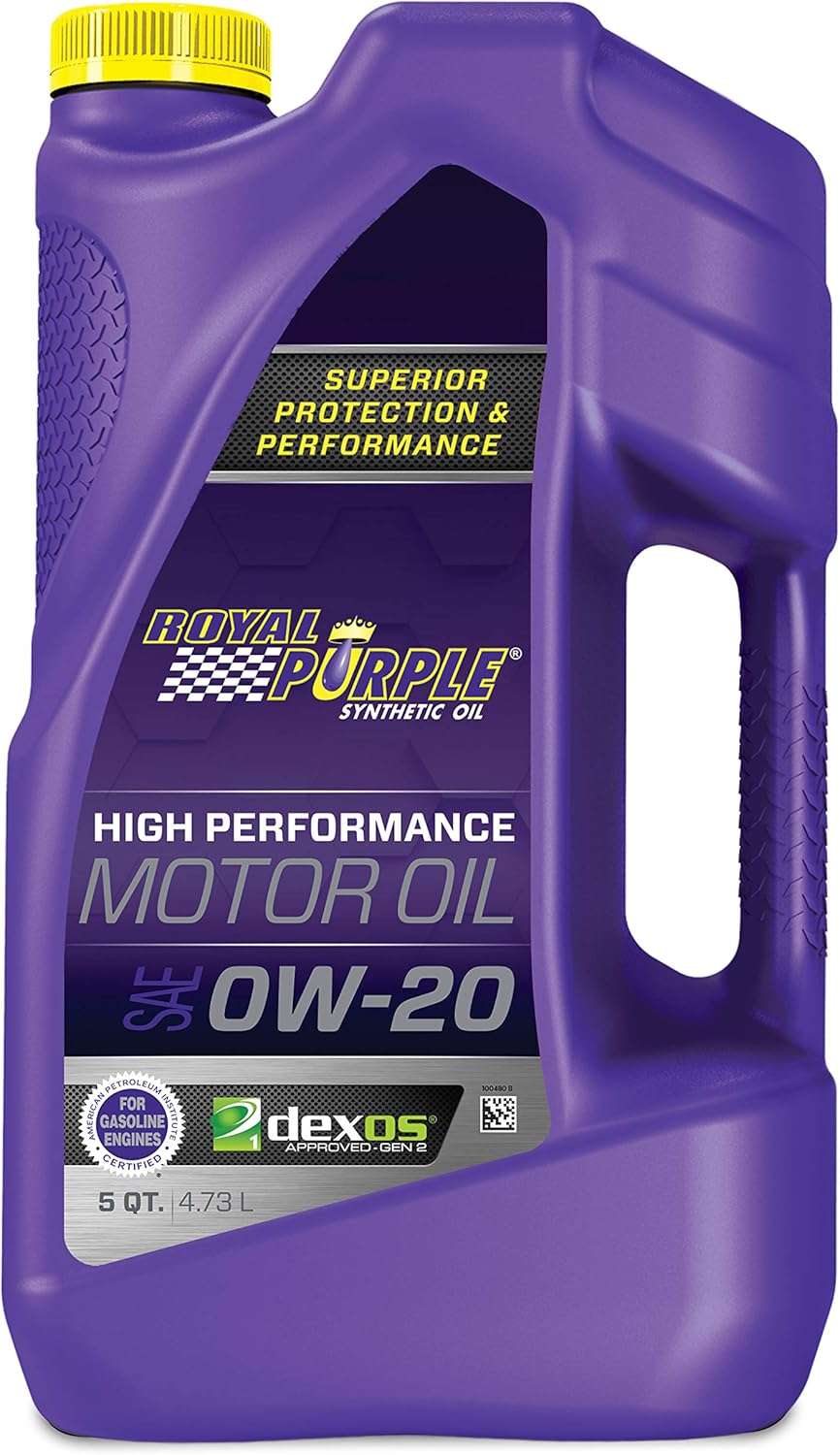
| Viscosity | SAE 0W-20 |
|---|---|
| Volume | 5 qt (4.73 L) |
| API/ILSAC | API SN, ILSAC GF-5 |
| Dexos | Dexos1 licensed |
| Fit Type | Vehicle Specific Fit |
Royal Purple 0W-20 is a high‑performance full synthetic motor oil designed for modern gasoline engines. It is used like any standard engine oil but targets drivers who want better cold‑start lubrication and improved fuel efficiency. The formula combines premium base oils with Royal Purple’s additive chemistry to reduce metal‑to‑metal contact, resist sludge and deposits, and help lower friction for modest gains in mpg. It is API licensed and meets ILSAC GF‑5 and Dexos1 requirements, so it fits vehicles requiring those specs. Practical benefits include strong wear protection, compatibility with mineral or other synthetics during a changeover, and claimed resistance to LSPI for turbocharged GDI engines. Limitations are typical for a premium branded oil: it is positioned above commodity oils in price, and some users note a thin pour characteristic for 0W‑20 that can make pouring messy from the jug unless poured carefully or using a funnel.
Best for: Buyers who prioritize cold‑start protection and fuel economy in a modern compact car and want a proven, specification‑compliant 0W‑20 synthetic for regular service intervals.
Less Ideal for: Drivers who are strictly cost‑sensitive or who prefer extended‑drain interval specialist oils from niche brands should consider other options.
- True 0W‑20 full synthetic formulation for improved cold start flow
- Meets API SN/ILSAC GF‑5 and Dexos1 performance requirements
- Additive chemistry aimed at reducing wear, sludge, and LSPI risk
- Compatible with other oils for straightforward oil change swaps
- Priced higher than many mainstream 0W‑20 oils
Verdict: Choose this slot if you need a true 0W‑20 full synthetic that improves cold-start flow and maximizes fuel efficiency while meeting current API/ILSAC standards.
6. Factory Racing Parts 0W-20 Full Synthetic Oil Change Kit (3.5 qt)
Best Oil Change Kit Engine Oil
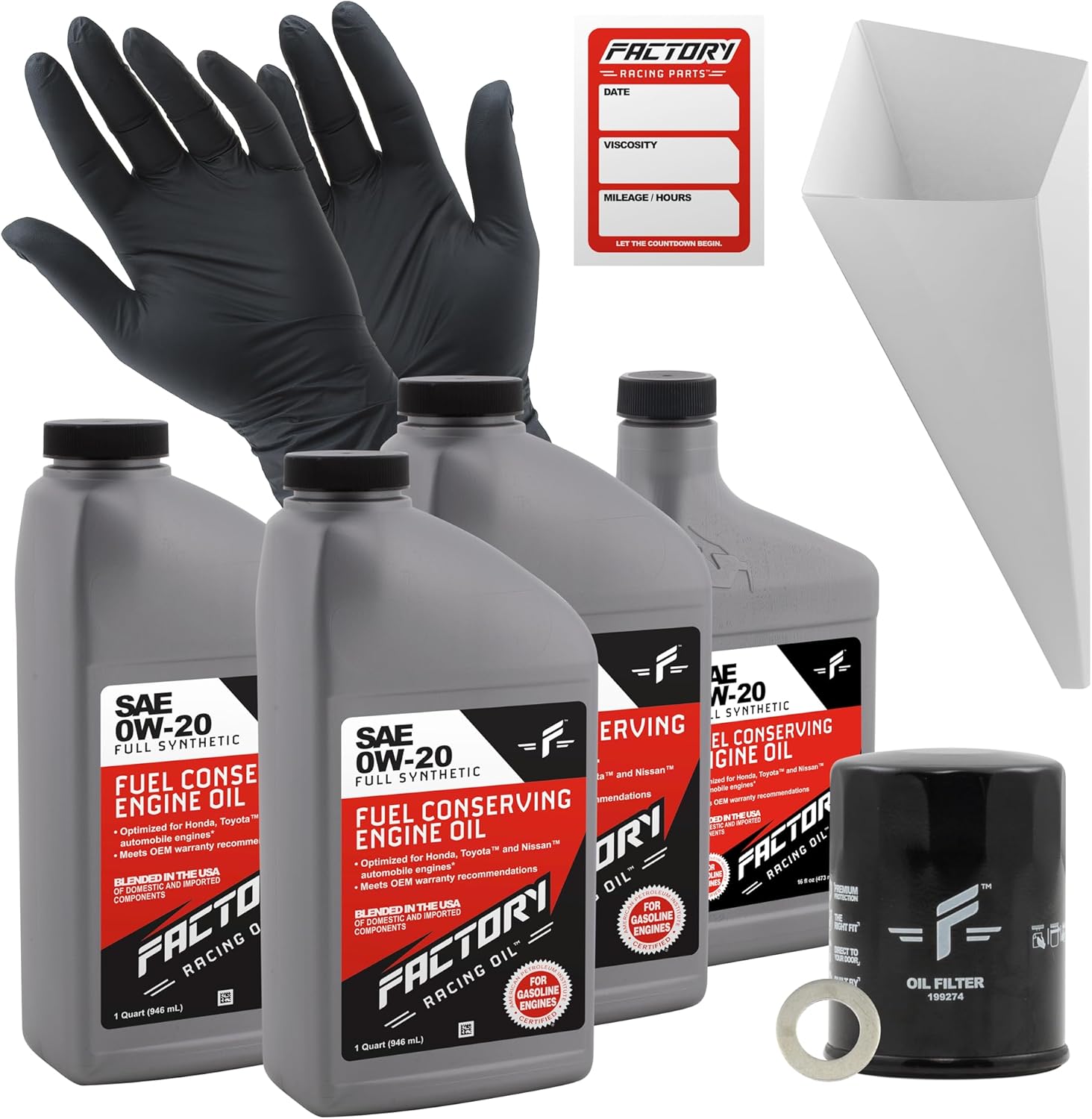
| SAE Viscosity | 0W-20 |
|---|---|
| Oil Volume | 3.5 Quarts |
| Certifications | API SP, ILSAC GF-6A |
| Included Components | oil, filter, washer, funnel, gloves, oil change sticker |
This kit is designed as a single-purchase DIY oil change solution for Honda compact and mid‑size models that call for 0W-20. It includes 3.5 quarts of Factory Racing Parts SAE 0W-20 full synthetic oil plus a vehicle‑specific oil filter, a crush washer, a funnel, gloves, and an oil change sticker so you have the common items needed to complete a drain-and-fill at home. The oil is certified API SP and ILSAC GF-6A and is formulated to resist LSPI and to support start‑stop engines, which makes it well suited to modern turbocharged and hybrid Honda engines listed in the fitment. Practical benefits include factory‑grade spec compliance, fuel-conserving viscosity for everyday driving, and the convenience of a matched filter and drain washer. The main limitation is the 3.5 quart fill amount, which may be short for full-capacity changes on some engines that require closer to four quarts, so verify your model's capacity before starting. The kit focuses on essential items and does not include a drain pan or larger shop tools.
Best for: A DIY Honda owner who wants a ready-to-use oil change kit that pairs factory‑spec 0W-20 synthetic oil with a correctly matched filter to simplify routine maintenance.
Less Ideal for: Shoppers who perform high-volume or extended-capacity oil changes, or those who need a complete shop toolset including a drain pan and jack stands, should look elsewhere.
- All‑in‑one kit: oil, matching oil filter, crush washer, funnel and gloves included for a single DIY oil change
- Oil meets API SP and ILSAC GF-6A certifications and is formulated to reduce LSPI and support start‑stop operation
- Produced and blended in the USA and assembled as a vehicle‑specific kit to match listed Honda applications
- 3.5 quart oil volume may be insufficient for engines that require larger fill capacities
Verdict: Select this if you want a one‑purchase oil change kit that bundles oil with a compatible filter and drain washer or tools to simplify DIY maintenance.
Choosing the Right Honda Civic Hatchback Engine Oil: Key Factors to Consider
Viscosity and Climate
Viscosity determines how easily oil flows at cold start and how well it maintains a protective film at operating temperature. For a Civic Hatchback, selecting the right SAE grade affects cold-start wear during morning commutes and lubricating film strength on highway drives. In cooler climates, lower-winter grades help reduce start-up wear, while hotter regions favor grades that resist thinning. Consider how often you drive short trips versus sustained highway runs because frequent short trips keep oil cooler and increase the importance of cold-flow properties. Also think about seasonal temperature swings where a multigrade oil can provide reliable coverage across extremes.
Manufacturers publish viscosity recommendations for a reason; deviating can change oil pressure, increase wear, or affect fuel economy. If you live where temperatures vary widely, choose an oil with proven shear stability so it keeps its viscosity rating over time and does not thin excessively between changes.
Oil Type and Base Stock
Full synthetic oils typically offer superior thermal stability, oxidation resistance, and lower volatility than conventional oils. For the Civic Hatchback, synthetic oils can improve cold-start protection and maintain viscosity under higher engine loads, which can extend service intervals when recommended. Synthetic blends can be a compromise when cost is a concern, providing some benefits of synthetics while keeping budget reasonable. Always ensure the oil meets the vehicle's specification for base stock and additive compatibility.
Choice of base stock also influences deposit control and sludge resistance. Engines that experience stop-and-go city driving or long idling sessions benefit from oils formulated to resist sludge formation and keep oil passages and variable valve timing components free of buildup. Consider how the oil chemistry aligns with the Civic's engine design and whether it supports the expected driving pattern.
Additive Package and Wear Protection
Additives like detergents, dispersants, anti-wear agents, and antioxidants determine how well the oil protects moving parts and keeps contaminants in suspension. For a Civic Hatchback, strong anti-wear performance helps safeguard bearings, cam lobes, hydraulic lifters, and variable valve timing components during acceleration and deceleration cycles. Detergent and dispersant chemistry is especially important if you drive in dusty conditions or make frequent short trips that cause fuel dilution or condensation inside the crankcase.
Look for oils with proven anti-wear additives and antioxidant systems that limit varnish and sludge under typical service intervals. The right additive balance also supports emission system health by minimizing ash-forming components that can foul catalytic converters or oxygen sensors.
Manufacturer Specifications and Warranty Considerations
Honda publishes viscosity and specification guidance for the Civic Hatchback that reflects engineered tolerances and emissions controls. Using an oil that matches those specifications helps assure proper operation of the engine and emissions systems and aligns with warranty requirements where they apply. Even if a product promises advanced performance, it should meet or exceed the listed specifications for viscosity, API service categories, and any manufacturer recommendations.
When in doubt, follow the vehicle handbook guidance and confirm the oil meets the necessary API or ILSAC categories. Keeping service records that note the oil specification used can be helpful for future maintenance and resale value, and it reduces ambiguity when troubleshooting engine or emissions issues.
Fuel Economy and Viscosity Tradeoffs
Lower-viscosity oils can reduce internal friction and deliver small fuel economy gains, which matters for drivers focused on efficiency. For the Civic Hatchback, choosing a lighter viscosity like 0W-20 may improve mpg numbers compared with thicker grades, especially in urban driving. However, lower viscosity can mean slightly less film thickness under extreme loads or high temperatures, so balance fuel economy with the need for protection in your driving context.
If you tow, carry heavy loads, or frequently drive on steep grades, favor oils with proven high-temperature viscosity retention. For primarily light-load commuting, a lower-viscosity oil that meets Honda specifications will often be the best compromise between efficiency and protection.
Service Intervals and Oil Longevity
Service interval planning depends on oil formulation and driving habits. Synthetics often offer longer stability and resistance to breakdown, allowing for extended intervals when aligned with manufacturer guidance. For the Civic Hatchback, if you do a lot of highway miles, extended-interval synthetic oils can be efficient, but severe-service conditions such as many short trips, frequent idling, or dusty environments typically justify shorter intervals.
Consider how easy it is to monitor oil condition and whether you perform regular oil analysis or visual checks. Regardless of the oil chosen, following a consistent interval based on your driving pattern preserves engine health and prevents buildup of contaminants that degrade lubrication.
Understanding Honda Viscosity Recommendations
Honda publishes recommended viscosity grades for the Civic Hatchback based on ambient temperatures and engine design. These recommendations balance cold-start protection and hot-running film strength to protect bearings and valvetrain components across expected operating conditions.
Always consult the owner manual for the specific grade suitable for your climate and driving style. If you live in an area with extreme cold, prioritize oils that maintain low-temperature flow properties. For hotter climates, focus on oils with strong high-temperature viscosity retention.
- Check the owner manual for official viscosity guidance
- Choose multigrade oils that cover your seasonal temperature range
- Prefer oils with documented shear stability for long drives
Synthetic Versus Conventional: Practical Differences
Synthetic oils offer advantages in cold starts, oxidation resistance, and resistance to volatility. For Civic Hatchback owners, these benefits translate into quicker oil flow at startup and a more stable protective film under sustained highway driving.
Conventional oils may be sufficient for low-mileage, mild driving patterns, but synthetic formulations often provide better long-term protection and can reduce the frequency of oil changes when used within manufacturer guidelines.
- Synthetics improve cold-flow and high-temp stability
- Conventional oils can be cost-effective for light-duty use
- Synthetic blends are a middle-ground option
Choosing Viscosity: 0W-20, 5W-30 and Climate Effects
0W-20 and 5W-30 are common multigrade choices for modern compact engines. The lower first number improves cold-start flow and reduces start-up wear, while the second number indicates high-temperature film strength. For daily commuting in temperate climates, 0W-20 can help maximize fuel economy without sacrificing protection when it meets the vehicle specification.
If you operate in consistently hot conditions or put sustained high loads on the engine, a 5W-30 grade with strong high-temperature viscosity retention may better protect against thermal thinning. Match the grade to your typical operating temperatures and driving load.
- 0W-20 favors cold starts and fuel economy
- 5W-30 offers extra high-temp film strength
- Select based on climate and load demands
High-Mileage Considerations for Older Civic Hatchbacks
Engines with higher mileage can benefit from formulations designed to address seal conditioning and reduce oil consumption. High-mileage engine oils often include seal conditioners and additives that help minimize leaks and restore some elasticity to gaskets and seals, which is useful for older Civic Hatchbacks showing minor seepage.
However, not every high-mileage oil is appropriate for all engines. Check compatibility with your Civic's materials and follow the owner manual when considering a high-mileage formulation. Monitor consumption after switching and inspect for leaks or performance changes.
- High-mileage oils can help reduce minor leaks
- Monitor oil consumption after switching formulations
- Ensure additive packages are compatible with engine materials
Planning Your Oil-Change Routine
Establish oil-change intervals based on driving habits, oil type, and manufacturer guidance. Regular highway driving allows for longer intervals with high-quality synthetics, while frequent short trips and severe-service conditions typically require more frequent changes. Keep records of intervals and any oil consumption patterns you observe.
Perform a basic inspection at each oil change to check for unusual color, metal particles, or a milky appearance that could indicate coolant contamination. If you notice any of these signs, investigate before continuing with routine intervals.
- Base intervals on driving pattern and oil type
- Inspect oil visually at each change for contamination
- Keep maintenance records to track consumption trends
Environmental and Disposal Practices
Proper disposal and recycling of used engine oil protect the environment and comply with local regulations. Collect used oil in sealed containers and take it to an authorized recycling facility. Avoid disposing of oil in drains, soil, or municipal waste streams.
Also consider the environmental impact of oil choice. Lower-viscosity oils that improve fuel economy can reduce CO2 output over time, while longer-lasting synthetics reduce the frequency of oil changes and associated waste. Factor these considerations into your selection if environmental footprint matters to you.
- Recycle used oil at a certified facility
- Avoid illegal dumping to prevent soil and water contamination
- Consider fuel-economy gains and interval length in environmental impact
Still looking for the perfect fit?
Select your Honda Civic configuration to see the most relevant Engine Oils recommendations
How We Chose the Best Honda Civic Hatchback Engine Oil
We focused on technical suitability and owner priorities when selecting the seven engine oils recommended for the Honda Civic Hatchback. Primary evaluation criteria included viscosity and cold-start performance to ensure proper lubrication across operating temperatures, and additive package effectiveness for wear protection, deposit control, and compatibility with catalytic converters. We also considered oil type and base stock, preferring full synthetics or higher-quality blends where they demonstrably improve film strength and oxidation resistance under typical Civic driving conditions. Thermal stability and shear resistance were assessed to judge how well each oil maintains viscosity under load. Longevity and service interval compatibility were included to reflect real-world maintenance schedules.Excluded items included any oils not meeting the common specifications recommended for this vehicle and formulations with additives known to harm emissions equipment. We also filtered out niche racing formulas not intended for street-driven Civics and oils lacking verifiable performance or specification data. The resulting list prioritizes oils that balance protection, fuel economy, and practicality for Civic Hatchback owners.
Our full evaluation process is outlined in our review methodology.
FAQ
What viscosity should I use in my Civic Hatchback during winter?
Winter viscosity depends on local temperatures, but a lower cold-start grade improves flow and reduces startup wear. Refer to the vehicle's manual for recommended SAE grades for your temperature range and consider 0W-20 if it aligns with those recommendations.
Is synthetic oil necessary for the Honda Civic Hatchback?
Synthetic oil provides better cold-start performance and thermal stability, which can benefit longevity and fuel economy. It is not strictly required for all drivers, but it is often a practical choice for owners who want improved protection and longer change intervals within manufacturer limits.
Can switching to a high-mileage oil fix oil leaks in an older Civic Hatchback?
High-mileage oils contain conditioners that can reduce minor seepage by helping seals swell slightly, but they will not repair major leaks. Monitor the engine after switching and inspect seals to determine whether a mechanical repair is needed.
How often should I check oil level between changes?
Check the oil level at least once a month or before long trips. Frequent checks are especially important if you notice increased consumption, visible leaks, or abnormal smoke from the exhaust.
Will a lower-viscosity oil improve fuel economy in the Civic Hatchback?
Lower-viscosity oils can reduce internal friction and often yield small fuel economy gains. The effect depends on driving conditions and engine load, and should be weighed against protection needs in hot climates or heavy-load situations.
What signs indicate the oil needs to be changed sooner than scheduled?
Dark, gritty oil, a burnt smell, increased engine noise, or the oil pressure warning light are signs to change oil sooner. Also change oil early if you detect coolant contamination or metal particles during inspection.
Final Verdict
Prioritize oils that meet Honda's viscosity and specification guidance while matching your climate and driving pattern. For most Civic Hatchback owners, a full synthetic or high-quality synthetic blend that aligns with recommended grades provides the best balance of protection, cold-start performance, and potential fuel-economy gains. Older, higher-mileage engines can benefit from targeted formulations that address seal condition and consumption, but monitor for leaks after any change.Weigh the tradeoffs between lower-viscosity oils for efficiency and slightly thicker grades for high-temperature protection. Stick to documented specifications, maintain consistent service intervals, and inspect oil condition regularly to keep your Civic Hatchback running reliably.
Explore More:
- Check out all Honda Civic parts & accessories
- Explore Fluids & Chemicals
- Browse all Accessories
