

Note: This article contains affiliate links. If you click on these links and make a purchase, I may earn a small commission at no extra cost to you. This helps support my research and content. Read my full affiliate disclosure here.
Picking the right engine oil for your Honda Civic LX affects fuel economy, engine wear, and long-term reliability. The wrong viscosity or formulation can increase friction, reduce efficiency, or accelerate wear on moving components during daily driving and highway cruising.This guide presents seven shortlisted engine oils chosen for the Civic LX application and assesses them against key factors such as viscosity suitability, wear protection, and compatibility with recommended service intervals. Read on to understand which oil characteristics matter for your Civic LX and why they influence real-world performance and maintenance.
Looking for other parts? See all Honda Civic parts & accessories.
Top Picks at a Glance
| Best Overall Engine Oil The best all-around oil balancing protection, longevity, and price | Valvoline Advanced Protection Full Synthetic SAE 0W-20 Motor Oil, 5 qt |  |
| Best Budget Engine Oil A low-cost oil that meets basic protection and service intervals | Valvoline High Mileage with MaxLife Technology Synthetic Blend Motor Oil 5W-20, 5 qt |  |
| Best Premium Engine Oil A higher-end oil offering maximum protection and extended drain capability | Honda Genuine Full Synthetic 0W-20 Motor Oil, 5-Quart Pack |  |
| Best High-Mileage Engine Oil Formulated to protect older engines and condition seals and gaskets | Valvoline MaxLife Full Synthetic High Mileage Motor Oil 5W-20, 5 qt |  |
| Best Full-Synthetic Engine Oil 100% synthetic base stocks for improved performance and protection | Mobil Full Synthetic Motor Oil 0W-20, 5 Quart |  |
| Best Synthetic-Blend Engine Oil A middle-ground option mixing synthetic benefits with lower cost | Valvoline Daily Protection Synthetic Blend SAE 5W-20 Motor Oil, 5 qt |  |
| Best 5W-20 Engine Oil The right viscosity spec for engines requiring 5W-20 grade oil | Valvoline Advanced Full Synthetic SAE 5W-20 Motor Oil, 5 qt |  |
1. Valvoline Advanced Protection Full Synthetic SAE 0W-20 Motor Oil, 5 qt
Best Overall Engine Oil

| Viscosity | 0W-20 |
|---|---|
| Size | 5 QT |
| Flash Point | 200 Degrees Celsius |
| SAE J300 Viscosity Grade | 0W-20 |
Valvoline Advanced Protection 0W-20 is a full synthetic motor oil designed to protect modern gasoline engines during everyday driving and routine oil changes. It is typically used as the regularly scheduled service oil in late-model compact cars and hybrids where a 0W-20 viscosity is recommended. The formula emphasizes wear reduction, deposit control, and thermal stability, so you should notice smoother cold starts, lower friction under load, and reduced sludge buildup over multiple oil changes. It meets current ILSAC and API specifications and includes manufacturer approvals that cover many passenger cars. Practical benefits include easier cold-flow at startup for city driving and claimed improvements in fuel economy thanks to reduced internal friction. The main limitation is that its benefits—especially deposit reversal or "restore" effects—are gradual and realized across several change intervals, and it only fits engines that specify 0W-20, so it is not a universal replacement for vehicles requiring other viscosities.
Best for: Drivers looking for a reliable, factory-quality 0W-20 oil for routine maintenance who prioritize long-term engine protection and smoother cold starts in daily commute and light highway use.
Less Ideal for: Owners whose Honda Civic LX specifies a different viscosity or who need an oil formulated specifically for extreme track use or specialized performance modifications should consider alternative grades.
- Full synthetic base oils for strong low-temperature flow and reduced cold-start wear
- Claims improved wear protection, deposit defense, and heat resistance vs industry standards
- Meets ILSAC GF-7A and API SP/SQ specifications and several manufacturer requirements
- Designed to support fuel economy through lower internal friction
- Benefits like deposit cleaning and "restore" effects occur over multiple oil changes rather than immediately
Verdict: The best all-around engine oil that balances wear protection, fuel efficiency, and longevity while fitting most routine maintenance needs for everyday drivers.
2. Valvoline High Mileage with MaxLife Technology Synthetic Blend Motor Oil 5W-20, 5 qt
Best Budget Engine Oil

| SAE Grade | 5W-20 |
|---|---|
| Liquid Volume | 5 Quarts |
| Compatible Vehicle Type | Car, Truck |
| Viscosity Level | Low to Medium |
| Meets Specs | ILSAC GF-6A, API SP |
Valvoline High Mileage with MaxLife Technology 5W-20 is a synthetic blend oil designed to protect aging engines while staying budget-friendly. It is typically used in routine oil changes for cars like the Honda Civic LX, especially when the engine has accumulated higher mileage and needs extra protection against wear and leaks. Notable features include MaxLife additives and seal conditioners intended to reduce oil consumption and rejuvenate hardened gaskets, plus detergents to limit sludge and deposits. In practice this oil pours easily, meets ILSAC GF-6A and API SP specifications, and provides improved wear protection over standard oils, which can help maintain smoother, quieter operation between service intervals. The main compromise is that it is a synthetic blend rather than a full synthetic, so it does not offer the absolute longest drain intervals or the same high-temperature stability of premium full synthetics. For Civic owners doing regular oil changes on a budget, it balances protection and cost effectively, but drivers seeking maximum fuel economy gains or extended-service intervals may prefer a full synthetic option.
Best for: Buyers who need an affordable, factory-quality motor oil that still meets current API and ILSAC standards and want extra seal-conditioning benefits for higher-mileage Civic engines.
Less Ideal for: Drivers who prioritize the longest possible oil change intervals, maximum high-temperature protection, or the highest fuel-economy gains should consider a full synthetic instead.
- Formulated with MaxLife additives and seal conditioners to help reduce leaks in higher-mileage engines.
- Meets ILSAC GF-6A and API SP performance specifications required for modern gasoline engines.
- Good balance of detergents and anti-wear additives to reduce sludge and protect internal components.
- Available in common SAE 5W-20 grade suitable for many Honda Civic LX engines and poured from a convenient 5 quart bottle.
- Synthetic blend, not a full synthetic, so it offers shorter optimal drain intervals and lower high-temperature stability compared with premium full synthetics.
Verdict: The best budget engine oil for buyers who prioritize low price while still meeting required API and OEM-level protection for regular oil changes.
3. Honda Genuine Full Synthetic 0W-20 Motor Oil, 5-Quart Pack
Best Premium Engine Oil

| SAE J300 Viscosity Grade | 0W-20 |
|---|---|
| Container Type | Bottle |
| Compatible with Vehicle Type | Car |
| Liquid Volume | 5 Quarts |
This Honda Genuine full synthetic 0W-20 motor oil is formulated specifically for Honda engines and supplied as a five-quart pack for routine service. It circulates quickly at cold temperatures for improved cold-start protection and is designed to resist viscosity breakdown and deposit formation at high operating temperatures, which helps maintain fuel efficiency and long-term engine cleanliness. The formulation claims lower volatility to reduce oil consumption and meets GF-7 and HTO 06 performance expectations while being tested and approved by Honda R&D. For a Honda Civic LX used on-road, this oil makes oil-change maintenance straightforward and offers confidence when extending drain intervals within manufacturer recommendations. The primary limitation is that it is a brand-specific factory replacement fluid, so buyers seeking a multi-brand aftermarket oil with broader spec listings may prefer other synthetic options, and any extended-drain use should follow Honda's guidance rather than assuming indefinite interval increases.
Best for: Buyers who prioritize factory-tested protection for a Honda Civic and want a ready-to-use full synthetic oil that supports longer, manufacturer-aligned service intervals.
Less Ideal for: Drivers looking for a multi-brand aftermarket oil with explicit cross-spec approvals or those who plan unsanctioned extreme extended-drain intervals without following Honda service guidance.
- Formulated and tested by Honda R&D for compatibility with Honda engines
- Full synthetic 0W-20 grade provides fast cold circulation and high-temperature stability
- Designed to help reduce oil consumption through lower volatility
- Packaged as five quarts to cover a complete service fill for many Honda Civics
- Label focuses on Honda fitment and does not list a wide range of aftermarket industry specifications
- Manufacturer warranty does not apply to fluids and consumables
Verdict: The best premium engine oil for buyers willing to pay more for superior additives, extended-drain performance, and extra protection under heavier loads or longer intervals.
4. Valvoline MaxLife Full Synthetic High Mileage Motor Oil 5W-20, 5 qt
Best High-Mileage Engine Oil

| SAE J300 Viscosity Grade | 5W-20 |
|---|---|
| Liquid Volume | 5 Quarts |
| Compatible with Vehicle Type | Car, Truck |
| Viscosity Level | Low to Medium |
| Flash Point | 390 Degrees Fahrenheit |
Valvoline MaxLife Full Synthetic 5W-20 is designed for high-mileage engines and is intended to extend engine life by addressing common age-related problems. It contains extra anti-wear additives and seal conditioners to help reduce oil leaks and oil consumption, and the full synthetic base improves heat and sludge resistance compared with conventional oils. For routine use in a Honda Civic LX with many miles, this oil gives stronger wear protection, better sludge defense, and improved thermal stability—helpful for older valve seals, shrinking gaskets, and engines prone to burning oil. The bottle includes an anti-glug pour tube that makes topping off or a DIY oil change neater. Limits to consider are the SAE grade and viscosity: this SKU is 5W-20, so confirm the Civic LX owner’s manual calls for 5W-20 before switching; if the vehicle requires a different viscosity, pick the matching MaxLife grade. This formula is focused on longevity and seal conditioning rather than specialty performance gains like track-grade protection.
Best for: Drivers keeping a high-mileage Honda Civic LX who prioritize extending engine life, reducing leaks and oil consumption, and performing practical DIY maintenance.
Less Ideal for: People who need a different viscosity than 5W-20, motorists seeking oils formulated for racing or extreme-duty high-RPM performance, or those who prefer a different additive strategy than seal conditioners.
- Formulated specifically for high-mileage engines with seal conditioners to help reduce leaks.
- Full synthetic base offers improved wear protection, sludge control, and heat resistance versus conventional oils.
- Meets modern API and ILSAC specs for gasoline engines, ensuring compatibility with factory requirements.
- Anti-glug pour tube and 5 quart size suit DIY oil changes and easier, cleaner pours.
- This listing is for SAE 5W-20 only, so it is not suitable if your Civic requires a different viscosity.
- Not a specialty performance oil for extreme or track use; optimized for longevity rather than high-RPM protection.
Verdict: The best high-mileage engine oil for vehicles with many miles that need added seal conditioners, reduced oil consumption, and extra wear protection to extend engine life.
5. Mobil Full Synthetic Motor Oil 0W-20, 5 Quart
Best Full-Synthetic Engine Oil

| SAE J300 Viscosity Grade | 0W-20 |
|---|---|
| Container Type | Bottle |
| Compatible with Vehicle Type | Truck |
| Liquid Volume | 160 Fluid Ounces |
Mobil Full Synthetic 0W-20 is designed as a full-synthetic engine oil for gasoline vehicles and is suitable for a routine oil change on a Honda Civic LX that calls for 0W-20. It delivers easy cold starts and quick oil circulation during warmups thanks to the 0W grade, while the synthetic base and additive system resist viscosity breakdown at higher operating temperatures. The formulation targets sludge and deposit prevention to reduce long-term wear and is labeled to meet API SP resource-conserving standards. In practical use it functions as a direct factory-quality replacement for routine maintenance, supports extended drain intervals compared with conventional oils, and works with turbocharged engines if present. Trade-offs are typical for top-tier synthetics: you get improved protection and stability but not a unique vehicle-specific formulation; always follow the Civic LX owner manual for drain interval recommendations. The product comes in a 5 quart bottle which covers a full service plus a little extra for topping up during maintenance.
Best for: Drivers of a Honda Civic LX who prioritize maximum thermal stability, quick cold-start circulation, and robust wear protection during everyday driving and highway use.
Less Ideal for: Drivers who prefer extended drain intervals beyond manufacturer recommendations without consulting a mechanic or those seeking specialty oils outside the 0W-20 viscosity spec.
- Full synthetic base provides strong resistance to oil breakdown at high temperatures
- 0W-20 viscosity supports fast cold-start flow and protects during warmups
- Formulated to help prevent sludge and deposits, aiding long-term engine cleanliness
- Not a vehicle-specific engineered formulation so follow manufacturer drain interval guidance
Verdict: The best full-synthetic engine oil for drivers who want the highest thermal stability, cold-start flow, and wear protection compared with conventional or blended oils.
6. Valvoline Daily Protection Synthetic Blend SAE 5W-20 Motor Oil, 5 qt
Best Synthetic-Blend Engine Oil

| Viscosity | SAE 5W-20 |
|---|---|
| Liquid Volume | 160 Fluid Ounces |
| Compatible with Vehicle Type | Car, Truck |
| Flash Point | 390 Degrees Fahrenheit |
| Automotive Fit Type | Universal Fit |
Valvoline Daily Protection 5W-20 is a synthetic-blend motor oil designed for everyday engines that need better protection than conventional oil without paying full synthetic prices. It is intended for gasoline passenger cars like the Honda Civic LX requiring 5W-20 and is used the same way as any motor oil at routine oil changes. The formula emphasizes low-friction base stocks and anti-wear additives to help reduce start-up wear, resist high-temperature breakdown, and fight sludge and varnish. That makes it a practical option for drivers who want improved thermal protection in summer and reliable low-temperature flow in winter. Practical benefits include better deposit control, potential small gains in fuel economy from lower friction, and compatibility with turbocharged gasoline engines when 5W-20 is specified. Limitations are that it is not a full synthetic, so it will not match the extended drain intervals or the absolute high-temperature resilience of premium full synthetics; follow your Civic maker-recommended change intervals and oil specification.
Best for: Drivers who want upgraded protection over conventional oil for daily-driven Civics and prioritize balanced temperature performance and value over the highest-end oils.
Less Ideal for: Those seeking maximum high-temperature stability or extended drain intervals should choose a full synthetic instead.
- Synthetic-blend formulation reduces start-up wear compared with conventional oils
- Detergents and additives help resist sludge and varnish buildup
- Low-friction base stocks can improve fuel economy modestly
- Rated for gasoline passenger cars and light trucks including turbocharged engines when 5W-20 is required
- Not a full synthetic so it offers less extreme-heat durability and longer drain intervals than premium full synthetics
Verdict: The best synthetic-blend engine oil for buyers seeking improved protection and better temperature behavior than conventional oil without the full price of full synthetics.
7. Valvoline Advanced Full Synthetic SAE 5W-20 Motor Oil, 5 qt
Best 5W-20 Engine Oil
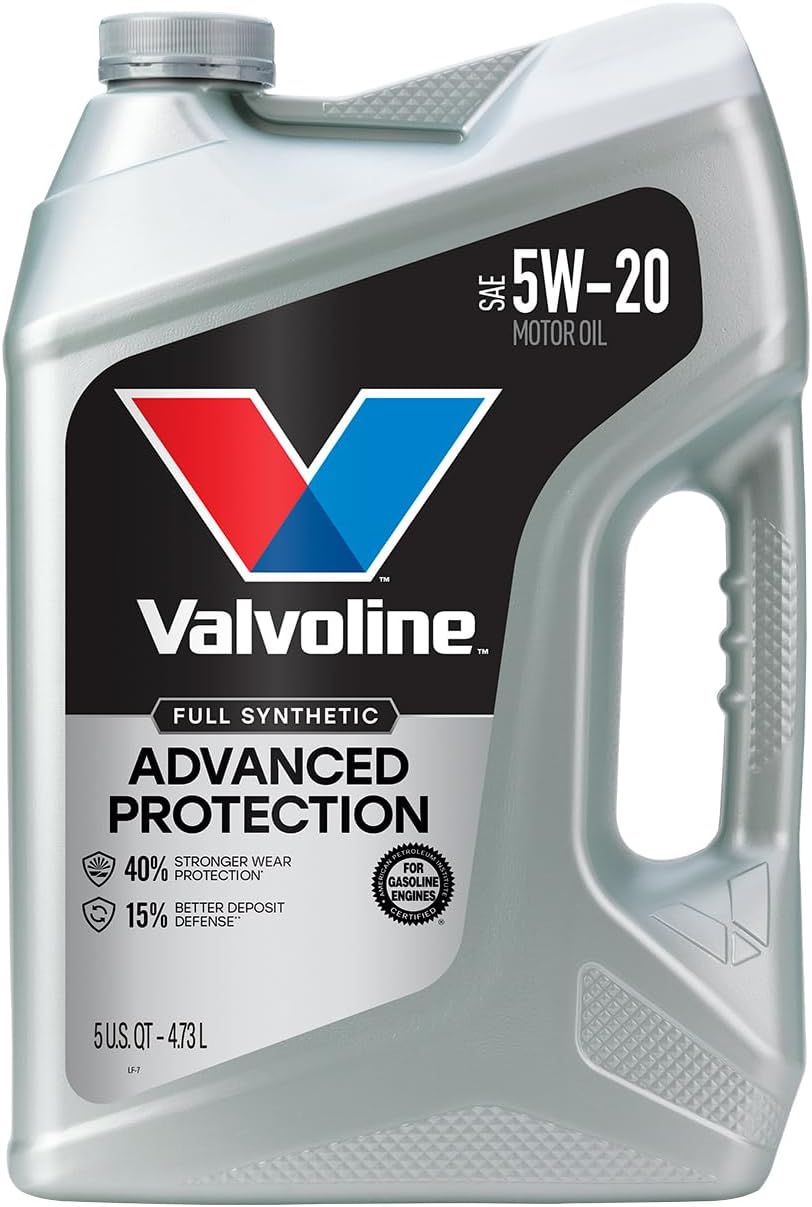
| SAE J300 Viscosity Grade | 5W-20 |
|---|---|
| Liquid Volume | 5 Quarts |
| Compatible with Vehicle Type | Truck |
| Viscosity Level | Low to Medium |
| Flash Point | 430 Degrees Fahrenheit |
Valvoline Advanced Full Synthetic SAE 5W-20 is a full synthetic engine oil intended to deliver strong wear and deposit protection for vehicles that call for 5W-20. It is typically used as the engine oil during routine oil changes to improve cold-start flow, reduce friction, and help maintain clearances specified by manufacturers. The formula highlights enhanced additive packages and detergents that the brand says reduce wear and deposits versus industry baselines and competing synthetics. In practice that means better protection during stop-and-go commuting, short trips, and moderate towing or load compared with conventional oils. The product comes in a 5 quart bottle, so a single unit covers a typical Civic oil change with room for the filter. Limitations include that benefits depend on following the Honda-recommended service intervals and using the correct oil filter and drain procedures; oil choice alone does not address mechanical issues. Also this single-viscosity grade is only appropriate where 5W-20 is specified by the vehicle manufacturer.
Best for: Shoppers who need a factory-quality 5W-20 oil to meet Honda Civic LX viscosity requirements and prioritize cold-start performance and fuel-efficient operation.
Less Ideal for: Drivers whose vehicle does not specify 5W-20 or who require a high-mileage or specialty formulation should consider other grades or targeted products.
- Full synthetic formula for improved cold-start flow and reduced friction
- Additive package claimed to provide stronger wear protection than industry standards
- Detergents and cleaners help limit deposits and sludge during short trips and stop-and-go driving
- 5 quart bottle size supplies a complete oil change for most compact cars
- Claims are manufacturer-tested figures rather than vehicle-specific independent results
Verdict: The best 5W-20 engine oil for shoppers who need that specific viscosity grade to ensure proper cold-start flow, fuel economy, and correct engine clearances per spec.
Choosing the Right Honda Civic LX Engine Oil: Key Factors to Consider
Viscosity Grade and Temperature Range
Viscosity grade determines how the oil flows at cold start and at operating temperature. For a Civic LX, choosing a viscosity within the manufacturer guidance ensures adequate oil film on bearings and piston rings during both cold mornings and hot highway runs.
If you live in colder climates, a lower cold-viscosity number helps reduce wear on startup by improving circulation. In warmer climates, a stable hot-viscosity helps prevent oil thinning during extended operation. Pay attention to multi-grade labels like 0W-20 or 5W-30 and pick the grade that matches recommended ranges and your typical ambient conditions.
Base Oil Type and Additive Chemistry
Base oil quality and the additive package control long-term protection, oxidation resistance, and deposit formation. Full synthetic base oils typically offer better shear stability and thermal resistance, which helps maintain viscosity and film strength across service intervals.
Additives such as detergents, dispersants, anti-wear agents, and antioxidants influence how well the oil prevents sludge, controls contaminants, and protects metal surfaces. For the Civic LX, an oil with a balanced additive suite helps keep intake and valvetrain areas clean while protecting bearings and cam lobes from wear.
Wear Protection and Film Strength
The oil must form a durable lubricating film between moving parts to prevent metal-to-metal contact, especially under higher loads during acceleration or steep grades. Anti-wear additives and robust film strength reduce scoring, taper wear, and premature component degradation.
Look for oils with proven anti-wear chemistry and stable viscosity under load. This is particularly important for Civic LX engines used for frequent stop-and-go commuting or carrying moderate loads, where transient high shear conditions can challenge thinner oils.
Compatibility With Drain Intervals
How long an oil can protect the engine before change affects your maintenance rhythm and total cost of ownership. Some formulations are designed for extended drain intervals and resist oxidation and viscosity breakdown longer than conventional oils.
Choose an oil that matches your intended service interval and driving style. If you prefer more frequent oil changes, a conventional or blended product may suffice. For longer intervals or highway-oriented driving, a stable synthetic that resists breakdown will maintain protection between services.
Fuel Economy Impact
Viscosity and friction modifiers in oil influence parasitic losses and as a result, fuel consumption. Lower-viscosity oils often reduce internal friction and can marginally improve fuel economy, which matters for drivers prioritizing efficiency in the Civic LX.
However, fuel economy gains should not come at the expense of wear protection. Balance the desire for improved miles per gallon with an oil that still provides adequate film strength and bearing protection under your usual operating conditions.
Deposit Control and Engine Cleanliness
Sludge and varnish buildup impair oil passages and valvetrain operation over time. Oils formulated with effective detergents and dispersants help keep pistons, rings, and valve areas cleaner, preserving compression and performance.
Regularly removing combustion byproducts and preventing deposits is especially relevant if you do many short trips or spend time in urban stop-and-go traffic, conditions that make oil contamination and deposit formation more likely.
Recommended Viscosity Choices for Different Climates
The Civic LX commonly operates well with lower-viscosity multi-grades, but climate should guide your final choice. In regions with long, freezing winters, a 0W-20 grade helps ensure fast cold-flow and reduced wear at startup. For moderate to warm climates, 5W-30 preserves thicker hot-film strength during sustained highway speeds.
Consider ambient temperature ranges when interpreting the owner's manual recommendation. Matching the oil viscosity to local conditions helps the engine reach proper oil pressure quickly without compromising protection once at operating temperature.
- 0W-20: better cold-start flow, often recommended for fuel economy in cooler climates
- 5W-30: stronger high-temperature film retention for prolonged highway or hot-weather operation
Synthetic Vs Conventional: What Suits the Civic LX
Full synthetic oils offer better shear stability and oxidation resistance, which helps maintain viscosity and protection across a wider temperature window. That stability supports longer drain intervals and more consistent wear protection for modern Civic LX engines.
Conventional and blended oils can be acceptable for owners who perform frequent oil changes and drive under gentle conditions. However, for drivers looking to maximize engine longevity and thermal stability, synthetic options typically provide a stronger overall protection profile.
- Synthetic: consistent performance across temperatures, better resistance to breakdown
- Conventional: acceptable with short drain intervals and conservative driving
High-Mileage Considerations for Civic LX Engines
As mileage climbs, internal clearances and seal condition change, which can create higher oil consumption and reduced compression. High-mileage formulations include conditioners and seal-swelling additives intended to reduce leaks and minimize oil usage while providing adequate protection.
If your Civic LX has significant mileage, select an oil designed to address seal health and deposit control. These formulations help maintain compression and reduce the risk of leaks without compromising wear protection.
- Look for seal conditioners to help reduce leaks
- Strong detergency helps remove accumulated deposits
How Oil Choice Affects Routine Maintenance
Your chosen oil dictates how often you should change it. Oils with better oxidation stability allow for longer intervals, but local driving patterns and contamination levels affect real-world longevity. Monitoring oil condition through periodic inspections remains important regardless of advertised drain intervals.
Also consider how oil choice interacts with filters and service procedures. Using the recommended viscosity and quality level simplifies maintenance planning and reduces the chance of warranty or operational issues stemming from inappropriate oil use.
- Match oil type to planned drain interval and driving conditions
- Inspect oil level and condition regularly, especially after long trips or towing
Cold Starts and Engine Wear
Cold starts are when most engine wear occurs because oil is thicker and circulation is slower, allowing more metal-to-metal contact. Oils formulated for fast cold flow reduce this wear by supplying lubricating film quickly to bearings and valvetrain components.
If your driving includes many short trips where the engine does not reach full operating temperature, prioritize an oil that provides strong startup protection and effective deposit control under frequent thermal cycling.
- Choose lower cold-viscosity grades for frequent short-trip use
- Consider oil change frequency if many cold starts occur daily
Still looking for the perfect fit?
Select your Honda Civic configuration to see the most relevant Engine Oils recommendations
How We Chose the Best Honda Civic LX Engine Oil
We narrowed the list to seven engine oils that align with the service needs and operating patterns typical of the Honda Civic LX. Selection prioritized compatibility with manufacturer-recommended viscosity ranges and modern engine requirements, plus formulations that address friction reduction, deposit control, and oxidation stability. We evaluated each option against measurable technical criteria: viscosity grade and temperature performance, additive package effectiveness for wear and deposit control, base oil type and quality, and demonstrated resistance to shear and oxidation under extended drain conditions.We also considered compatibility with common maintenance practices for the Civic LX, such as typical drain intervals, and how an oil supports fuel economy and cold starts. Oils that failed to meet basic viscosity recommendations or lacked adequate wear protection profiles were excluded. We did not include specialty competition-only or racing-only formulations that are not appropriate for daily-driven Civic LX engines. The final choices balance long-term engine health, everyday drivability, and practical service intervals.
Our full evaluation process is outlined in our review methodology.
FAQ
How often should I change the oil in my Honda Civic LX?
Change intervals depend on the oil type and driving habits. Conventional oils often suit shorter intervals around every 3,000 to 5,000 miles in severe use, while modern synthetic oils can extend intervals when driving is mostly highway. Always follow the maintenance schedule and monitor oil condition.
Can I switch between 0W-20 and 5W-30 in my Civic LX?
Switching between grades is possible if both are within the vehicle manufacturer's approved range. Choose the grade that best matches your climate and driving style. Consistency helps predict oil behavior, so avoid frequent grade changes unless conditions or recommendations change.
Is synthetic motor oil necessary for the Civic LX?
Synthetic oil offers advantages in shear stability, oxidation resistance, and cold-flow performance, which benefit engine longevity and can support longer drain intervals. It is not strictly required for all Civic LX engines, but many owners choose synthetic for its broader protection profile.
What oil viscosity helps improve fuel economy in a Civic LX?
Lower hot- and cold-viscosity grades like 0W-20 typically reduce internal friction and can marginally improve fuel economy. The actual difference depends on driving conditions, but lower-viscosity oils are commonly recommended when fuel efficiency is a priority.
Should I use high-mileage oil if my Civic LX has over 100,000 miles?
High-mileage formulations can help address seal wear and reduce leaks while maintaining deposit control in older engines. They are often beneficial for vehicles with significant mileage, but check for compatibility with your engine condition and maintenance history.
Final Verdict
Prioritize an oil that matches the Civic LX manufacturer guidance while balancing cold-start protection, wear resistance, and your typical driving conditions. If you want to maximize fuel economy, favor lower-viscosity multi-grades that still deliver reliable film strength; if you drive in hotter climates or at sustained high speeds, select a grade that maintains viscosity under heat.Ultimately, match oil type and service interval to how you use the vehicle and the engine's mileage profile. Focus on viscosity suitability, additive effectiveness, and oil stability so you can choose confidently and protect your Civic LX over the long term.
Explore More:
- Check out all Honda Civic parts & accessories
- Explore Fluids & Chemicals
- Browse all Accessories
