

Note: This article contains affiliate links. If you click on these links and make a purchase, I may earn a small commission at no extra cost to you. This helps support my research and content. Read my full affiliate disclosure here.
If your Toyota Camry XLE is showing drivability changes or an emissions warning, selecting the right catalytic converter matters for performance, emissions compliance, and long-term reliability. You want a unit that fits the Camry XLE exhaust layout, reduces pollutants effectively, and withstands the heat and vibration under typical driving conditions.This guide highlights six shortlisted catalytic converters chosen specifically for the Toyota Camry XLE. We evaluate each option against fitment accuracy, emission control effectiveness, durability, and installation practicality so you can make a confident choice for replacement or repair. Read on for the factors that matter and practical guidance for installation and maintenance.
Looking for other parts? See all Toyota Camry parts & accessories.
Top Picks at a Glance
| Best Overall The best all-around choice for most situations | Aumzong Front Manifold Catalytic Converter for 2012–2017 Toyota Camry 2.5L |  |
| Best Quality Built to a higher standard if you want something more solid | Walker Ultra EPA Direct-Fit Catalytic Converter with Integrated Exhaust Manifold |  |
| Best Value The sweet spot between price and what you get | VAVICARS Catalytic Converter for Toyota Camry 2012–2017 2.5L (EPA Approved) |  |
| Best Budget The cheapest option that still gets the job done reliably | FortunaFlow Front Catalytic Converter for Toyota Camry/Solara 2002–2006 2.4L |  |
| Highest Rated A top-rated pick with lots of positive feedback | SPEEDFusion Front Catalytic Converter for Toyota Camry/Solara 2.4L (2002–2006) |  |
| Most Popular A crowd favorite that many people choose with confidence | MAYASAF 2.5" Universal Catalytic Converter with O2 Port |  |
Aumzong Front Manifold Catalytic Converter for 2012–2017 Toyota Camry 2.5L

| Compatible vehicles | 2012–2017 Toyota Camry 2.5L |
|---|---|
| Material | Stainless steel housing |
| Substrate catalysts | Platinum, Rhodium, Palladium |
| Part number | 10H16692 |
This front manifold catalytic converter replaces the factory unit on 2012–2017 Camry 2.5L engines to restore exhaust emissions control and resolve codes such as P0420 and P0430 when caused by a failing catalyst. Constructed with stainless steel housing and a high-load ceramic substrate coated with precious metal catalysts, it aims to improve purification efficiency and withstand high exhaust temperatures. The part is supplied as a direct match to the original mounting points so installation is straightforward for a competent DIYer or a shop, and several buyers report successful fitment and clearing of check engine lights. Important limitations are regional emissions legality and compliance: this unit is not legal for sale or use in California, New York, Maine, or Colorado emissions-regulated vehicles, so it is only appropriate for federal-emissions Camry models. Some buyers noted minor fitment issues with heat shields, so expect possible adjustments during installation.
Best for: Buyers wanting a practical, factory-style replacement to restore emissions function and clear catalyst-related check engine lights without chasing premium OEM pricing.
Less Ideal for: Do not choose this part if your vehicle is registered in a state with stricter emissions regulations or if you require an emissions-legal converter for those states.
- Direct-fit design matches original mounting points for faster installation
- Stainless steel construction intended to resist high exhaust temperatures
- High-load ceramic substrate with Pt, Rh, and Pd coatings for improved catalytic activity
- Supplied with necessary hardware in many cases to simplify replacement
- Not legal for sale or use in certain states with strict emissions rules
Verdict: Aumzong's direct-fit front manifold catalytic converter is a practical, factory-style replacement to restore emissions performance on 2012–2017 Camry 2.5L models.
Walker Ultra EPA Direct-Fit Catalytic Converter with Integrated Exhaust Manifold
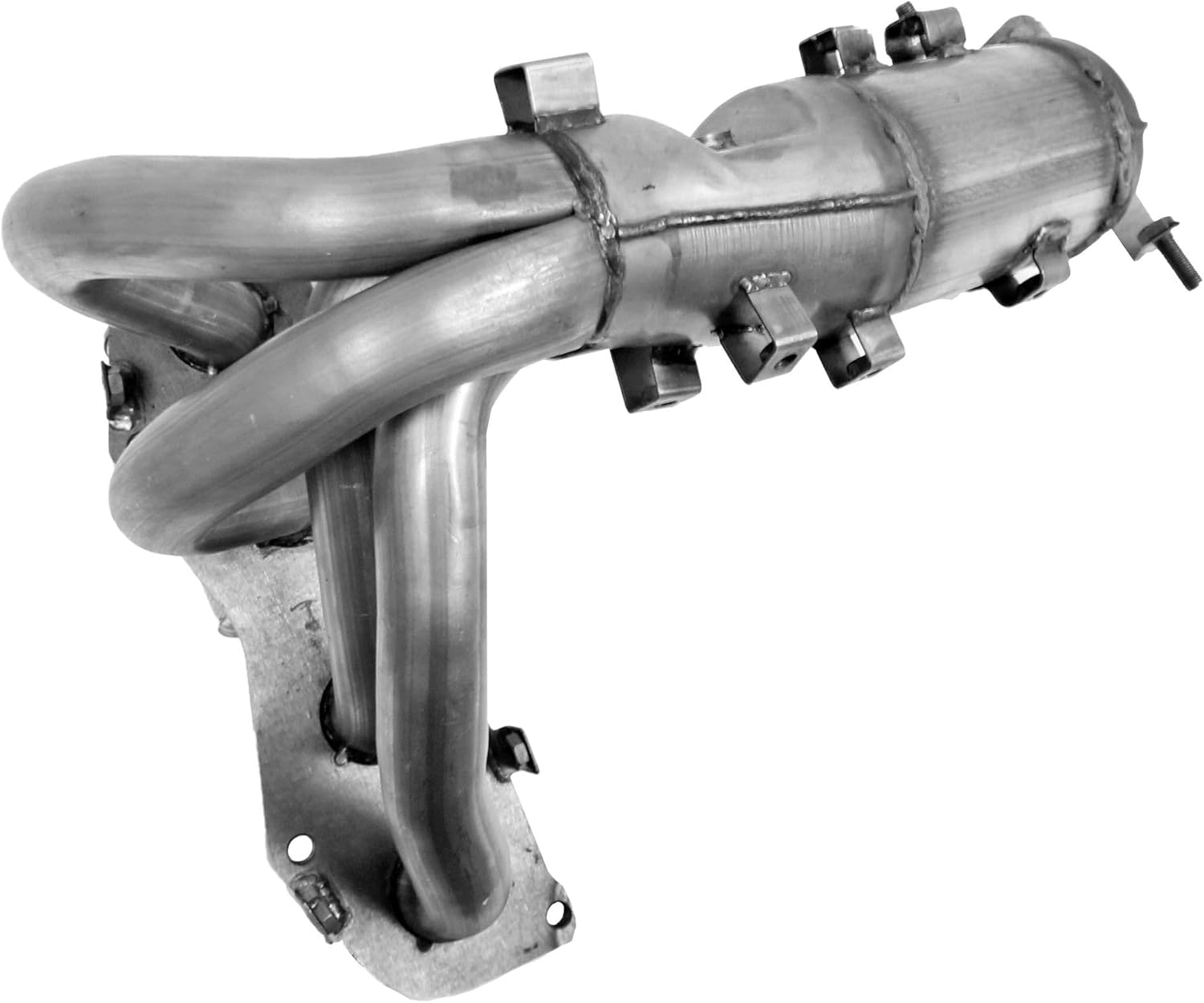
| Compatible vehicles | 2006–2009 Toyota Camry and Solara (OBDII) with specified fitment notes |
|---|---|
| Part number | 16498 |
| Exterior | Machined |
| Manufacturer | Walker Exhaust |
This Walker Ultra EPA direct-fit catalytic converter replaces the factory manifold-converter assembly and is intended to restore emissions control and drivability on compatible Camry models. It bolts to the cylinder head and mates to downstream exhaust components in the same way the original part does, so installation is straightforward for a mechanically competent DIYer or shop. Walker specifies an OE-style washcoat and precious metal load to meet EPA-compliant reduction in tailpipe emissions, and the integrated flanges and manifolds are thick for a durable seal. The unit includes welded heat shields where originally equipped so underbody heat protection matches factory design. Buyers should plan to reuse or purchase the lower donut gasket and manifold bolts because several users report the package lacks those items and transit damage can bend thin parts or the supplied gasket. Packaging quality has been inconsistent, so expect to inspect and straighten heat shields or replace a damaged gasket before installation.
Best for: Buyers who prioritize restoring or maintaining factory-level emissions performance and want a performance-minded, bolt-on replacement that fits the Camry XLE application without modification.
Less Ideal for: If you need a fully kitted aftermarket solution with all installation hardware and protective packaging included, this unit may require extra parts and handling that you want to avoid.
- Direct-fit design with integrated manifold for bolt-on replacement and straightforward installation
- EPA-compliant washcoat and precious metal loading intended to restore emissions performance
- Thick, OE-style flanges and manifolds for stronger sealing and durability
- Aluminized or welded heat shields provided to match factory underbody heat protection
- Shipment often arrives with minimal internal protection which can bend heat shields or damage the included gasket
- Does not include lower exhaust donut gasket or manifold bolts in the package, so additional parts may be required
Verdict: A factory-style, EPA-compliant direct-fit replacement that restores emissions control and provides a durable manifold-converter assembly for the Camry XLE.
VAVICARS Catalytic Converter for Toyota Camry 2012–2017 2.5L (EPA Approved)

| Fitment | Toyota Camry 2012–2017 2.5L |
|---|---|
| EPA Approval | Federal emissions certified |
| Shell Material | 409L stainless steel |
| Manufacturer | VAVICARS |
This VAVICARS catalytic converter is a direct-fit replacement intended for Toyota Camry 2.5L models from 2012 through 2017 and is certified to federal EPA standards for use on non‑California emissions vehicles. It installs in line with the factory exhaust using original mounting points and comes with gaskets and hardware to complete the swap, although some buyers report needing to reuse or modify original fasteners for an exact fit. The shell is 409L stainless steel for improved corrosion and heat resistance and the internal ceramic substrate is loaded with metal catalysts to restore emissions performance. Real-world users note the unit can require minor trimming, shimming, or adjustment of hangers to eliminate gaps or vibration, and some OBD‑II resets or driving cycles are needed to clear codes after installation. This unit is a practical, lower-cost alternative to dealer parts if you are comfortable with basic exhaust work or have a trusted shop to finish fitment and sensor hookups.
Best for: Buyers who want a cost-effective, EPA‑compliant replacement and are willing to do or supervise basic exhaust adjustments to restore emissions function and clear post‑install codes.
Less Ideal for: Drivers who need a guaranteed bolt‑in, dealer‑level part or who live in states with stricter emissions laws where this unit is not approved should look elsewhere.
- EPA certified for federal emissions models
- 409L stainless steel shell for corrosion and heat resistance
- Direct-fit design using original mold to match factory mounting points
- Includes gaskets, bolts, and springs to support installation
- Internal ceramic substrate with metal catalysts to restore emissions function
- Fitment may require trimming, shims, or hanger adjustments for a snug, vibration-free installation
- Some supplied fasteners and gaskets differ from factory parts and may need replacement or reuse of originals
- Not legal for sale or use in certain states with stricter emissions rules
Verdict: A budget‑minded, EPA‑approved replacement catalytic converter for 2012–2017 Camry 2.5L that restores emissions function if you or your shop handle minor fitment tweaks.
FortunaFlow Front Catalytic Converter for Toyota Camry/Solara 2002–2006 2.4L
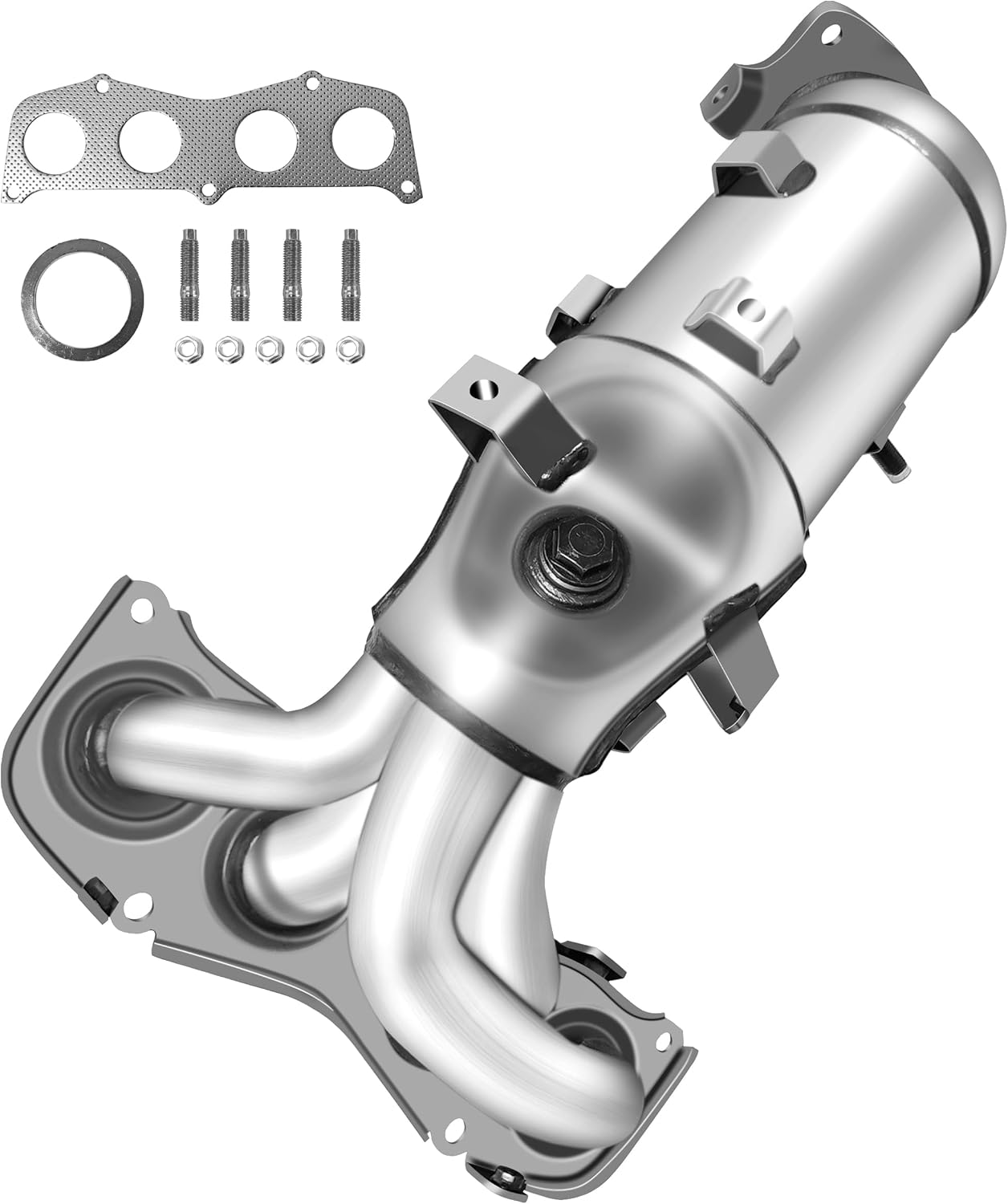
| Brand | FortunaFlow |
|---|---|
| Model | TCF022.4 |
| Position | Front |
| Compatible Engines | 2.4L |
This FortunaFlow front catalytic converter is a budget-focused replacement built to fit 2002–2006 Toyota Camry and Solara models with the 2.4L engine. It is supplied as a direct-fit unit with pre-drilled flanges, gaskets, and hardware so installation is straightforward for a shop or competent DIY mechanic. The converter uses a high-flow design intended to reduce restriction compared with some low-cost aftermarket cats, and the listing and user reports indicate it can resolve P0420/P0430 emissions fault codes and allow OBD-II monitoring to pass. Expect a practical, cost-saving alternative to dealer parts: the metal and weld quality is serviceable but not premium, so this is best for restoring emissions function and drivability rather than seeking long-term performance gains. Note that it is not legal for sale in certain states and may require minor pipe trimming or welding on some installations, so plan for a professional install if you want a clean fit and finish.
Best for: Drivers repairing emissions equipment on a budget who want a direct-fit replacement that restores OBD-II compliance and avoids dealer pricing; suited to owners prioritizing value and a functional repair over factory-level finish.
Less Ideal for: People who need a guaranteed long-term, high-end OEM-quality unit or who require a catalytic converter legal for sale and registration in states with stricter emissions rules should look elsewhere.
- Direct-fit design with matching flange and included gaskets and hardware for simpler installation
- High-flow core intended to reduce backpressure compared with more restrictive replacements
- Designed to clear common emissions codes (P0420/P0430) and allow OBD-II monitoring to pass
- Lower-cost alternative to dealer catalytic converters for significant savings
- Not legal for sale in California, New York, Colorado, and Maine
- Build and weld finish is described by some users as budget-grade rather than premium
Verdict: A cost-effective direct-fit front catalytic converter that restores emissions compliance for 2002–2006 Camry/Solara 2.4L models without the dealer price.
SPEEDFusion Front Catalytic Converter for Toyota Camry/Solara 2.4L (2002–2006)

| Position | Front |
|---|---|
| Manufacturer | SPEEDFusion |
| EPA Compliance | Yes (federal) |
| Manufacturer Part Number | SF_TY_CAMRY_F |
This SPEEDFusion front catalytic converter is a direct-fit replacement aimed at restoring emissions control and engine operation on 2002–2006 Toyota Camry and Solara 2.4L models. It uses a stainless steel shell and an OEM-grade 400-hole ceramic substrate plated with platinum, rhodium, and palladium to increase catalytic conversion efficiency. The unit is EPA compliant for federal emissions and is intended to keep the malfunction indicator lamp off by reducing exhaust pollutants and clearing related fault codes. Installation is straightforward for a professional shop because it is designed to match factory mounting and position. Practical benefits include corrosion-resistant stainless construction and a claimed high-flow design that can improve drivability compared with a clogged or failed original converter. Limitations include noncompliance with CARB rules so it cannot be used in states that require CARB-approved parts, and some buyers report occasional fitment quirks with heat shields or sensor bosses that may require minor adjustments during installation.
Best for: Buyers who prioritize restoring reliable emissions control and consistent engine operation on a 2002–2006 Camry or Solara and want a direct replacement that aims to meet federal standards.
Less Ideal for: People in states that require California emissions parts or those who need a CARB-certified converter should look for an approved alternative.
- Direct-fit design intended to align with factory mounting for the Camry/Solara 2.4L 2002–2006
- EPA compliant for federal emissions and built to meet OEM specifications
- Stainless steel shell with OEM-grade 400-hole ceramic substrate and precious metal plating for improved conversion
- Designed to reduce fault codes and keep the check engine light off when replacing a failing converter
- Not CARB compliant so illegal to install in states that require CARB parts
- Some users report minor fitment issues with heat shields or sensor locations that may need adjustment
Verdict: A factory-style, EPA-compliant front catalytic converter built to restore emissions performance and engine reliability on 2002–2006 Camry/Solara 2.4L models.
MAYASAF 2.5" Universal Catalytic Converter with O2 Port

| Inlet/Outlet ID | 2.5 inches |
|---|---|
| Overall length | 11 inches |
| O2 port | Included |
| Exterior | Machined |
This MAYASAF universal catalytic converter is a simple replacement-style unit for exhaust systems with a 2.5-inch inner diameter. It is typically used as a direct-in-line replacement when a damaged or missing converter needs a quick repair; installation may require cutting and welding and is best handled by a muffler shop. The built-in O2 port lets you reuse or relocate an oxygen sensor without additional adapters. Construction is described as stainless and machined, and users report straightforward fit and quicker completion of drive cycles on compatible vehicles. Limitations include its universal fit approach, so precise factory-style mating may require slight pipe adjustments or a shop to ensure correct inlet/outlet orientation, and it is restricted from sale in several states with stricter aftermarket converter rules. Expect a budget-friendly, functional unit rather than a vehicle-specific OEM exact match.
Best for: Buyers who want an affordable, serviceable catalytic converter repair backed by positive user experiences and are comfortable having a shop perform fitting or basic welding.
Less Ideal for: Do not choose this if you need a direct factory-specific replacement guaranteed to meet restrictive state emissions rules or if you require a plug-and-play OEM exact fit without any modification.
- Standard 2.5-inch inlet/outlet fits many aftermarket exhaust pipes with minimal modification
- Integrated O2 sensor port allows reuse or relocation of the vehicle’s oxygen sensor
- Machined exterior and reported durable construction for basic day-to-day use
- Short overall length makes it easier to fit into compact exhaust runs
- Universal design may require cutting, welding, or minor pipe adjustments for a clean fit
- Not intended as a vehicle-specific factory-quality replacement so fitment and emissions legality vary by state
Verdict: A budget-oriented universal catalytic converter with an O2 port that provides a practical repair option when a 2.5-inch exhaust fit is required.
Choosing the Right Toyota Camry XLE Catalytic Converter: Key Factors to Consider
Fitment and Mounting Style
Correct fitment is the single most important factor for the Toyota Camry XLE because the stock exhaust routing, flange locations, and oxygen sensor positions are specific to this trim. A converter that matches the Camry XLE mounting style reduces the need for cutting, expanding, or welding exhaust pipes and lowers the risk of exhaust leaks. When fitment is wrong you can introduce leaks that trigger emissions faults or degrade fuel trim.
Check whether the unit includes the correct flange type, the required oxygen sensor bungs in the right positions, and proper clearance for heat shields and nearby suspension components. Proper fitment also affects alignment with the catalytic converter heat shielding and preserves ground clearance, which matters in everyday driving and when encountering speed bumps or driveway aprons.
Emissions Efficiency and Substrate Design
The catalytic substrate and its cell density determine how effectively the converter transforms pollutants in exhaust gases. For the Camry XLE you want a substrate optimized for gasoline engine exhaust that balances conversion efficiency with acceptable backpressure. A converter with a high-quality washcoat and appropriate precious metal loading can reduce hydrocarbons, carbon monoxide, and nitrogen oxides more effectively.
Higher cell density can improve conversion but may increase backpressure, which can affect engine responsiveness. Consider the converter design as it relates to emissions control: what matters is achieving required emissions reductions while maintaining engine performance within the Camry XLE's operating range.
Durability and Thermal Management
Catalytic converters operate at very high temperatures and experience thermal cycling each time the engine heats and cools. For a Camry XLE, durability depends on quality of internal bonding, robustness of the substrate, and the outer shell construction. Units built with reinforced mounting points, good seam welding, and protective heat shields resist cracking and catalyst loss over time.
Also consider corrosion resistance for the shell and flanges, especially in climates with road salt or frequent moisture exposure. Thermal management features such as proper insulating gaps and heat-resistant coatings help prevent premature failure and extend service life.
Oxygen Sensor Compatibility and Placement
Modern vehicles like the Toyota Camry XLE rely on upstream and downstream oxygen sensors to monitor catalytic converter performance and adjust fuel delivery. A replacement converter must provide correctly placed and threaded sensor ports or allow reuse of the original sensor locations without forcing awkward extensions.
Incorrect sensor placement can lead to false catalyst efficiency readings, triggering the check engine light and causing poor fuel economy. Verify the number of sensor bungs and their thread types so they match the Camry XLE's sensors to maintain accurate engine management feedback.
Backpressure and Engine Performance
Any replacement catalytic converter affects exhaust backpressure, which influences engine breathing and throttle response. For the Toyota Camry XLE, which balances comfort and efficiency, you want a converter that maintains acceptable backpressure levels to avoid negatively impacting torque and fuel efficiency.
Manufacturers achieve this through internal cell design and flow characteristics. While aiming for emissions reduction, ensure the chosen unit does not introduce excessive restriction that would be noticeable during acceleration or cause the engine control unit to compensate in ways that hurt economy.
Warranty, Compliance, and Legal Considerations
Catalytic converters are subject to emissions regulations and installation rules that vary by region. For the Camry XLE, check that replacements meet applicable emissions standards for your area and are legal for on-road use. A warranty that covers catalytic performance and construction gives added confidence and indicates manufacturer backing.
Consider whether the unit has documentation of emissions compliance or certifications. Also understand the conditions that might void warranty coverage, such as improper installation, engine misfire, or contamination from improper fuels or oil consumption. Choosing a converter with clear warranty terms helps protect your investment and reduces the risk of being noncompliant with emissions inspections.
Signs Your Camry XLE Needs a Catalytic Converter
Several observable symptoms point to catalytic converter problems on a Toyota Camry XLE. Common indicators include a persistent check engine light with codes related to catalyst efficiency, a sudden drop in fuel economy, or reduced acceleration. You may also notice a rotten-egg or sulfur smell from the exhaust, which can indicate a failing catalyst chemistry.
Beyond obvious smells and warning lights, mechanical symptoms include rattling noises from the converter shell when the vehicle idles or upon acceleration, indicating possible substrate breakage. Pay attention to any sustained hesitation or rough running that coincides with emissions warnings, as these often accompany converter issues.
- Check engine light for catalyst efficiency or oxygen sensor codes
- Sulfur or rotten-egg exhaust odor
- Reduced acceleration or sluggish throttle response
- Rattling from undercarriage at idle or during acceleration
- Drop in fuel economy without other clear causes
Pre-Installation Checks for the Camry XLE
Before replacing the catalytic converter, rule out upstream causes that can damage a new unit. Address ignition or fuel system issues such as misfires, worn spark plugs, or excessive oil consumption, because these conditions can contaminate and prematurely degrade a replacement converter. Clear any stored trouble codes and verify sensor operation.
Inspect the exhaust system mounting, hangers, and heat shields. Confirm oxygen sensors are functioning and that wiring and connectors are in good condition. If you plan to reuse the stock sensors, check their threads and note their positions so the replacement converter provides matching ports.
- Scan and resolve engine codes related to misfires or fuel trim
- Inspect oxygen sensor condition and wiring
- Check exhaust hangers and heat shield clearance
- Measure existing flange and pipe dimensions for fit verification
Installation Tips and Common Pitfalls
Installation on the Camry XLE is straightforward when the replacement has matching flanges and sensor ports. Use proper torque on flange bolts and replace gaskets to prevent leaks. If cutting and welding are required, ensure clean, square cuts and professional welds to maintain proper alignment and avoid exhaust leaks or stress points.
When working under the vehicle, support it safely with jack stands or a lift. Avoid overtightening oxygen sensors and apply anti-seize to sensor threads where recommended, taking care to keep anti-seize off the sensor tip. Recheck all connections after the initial heat cycles to confirm there are no leaks or loose hardware.
- Replace flange gaskets and hardware during installation
- Use proper support and safety equipment when working under the car
- Apply anti-seize sparingly to sensor threads only
- Verify alignment and clearances after the engine reaches operating temperature
Maintenance and Longevity Strategies
To maximize service life of a catalytic converter on the Camry XLE, maintain the engine in good tune. Regular spark plug and ignition system maintenance, timely oil changes with the correct oil grade, and addressing coolant or oil leaks promptly reduce the risk of contamination. Avoid using fuels or additives that are not recommended by Toyota.
Periodic inspections for exhaust leaks, cracked heat shields, or loose hangers help prevent mechanical damage. If you detect any engine running issues or warning lights, diagnose and correct them promptly rather than deferring repairs, which can lead to converter damage and more expensive repairs down the line.
- Keep ignition and fuel systems in good repair
- Follow scheduled oil and maintenance intervals
- Inspect exhaust hardware and heat shields periodically
- Address any check engine light or performance issues promptly
How Emissions Testing Affects Replacement Choices
If your region requires periodic emissions testing, select a catalytic converter that is appropriate for the Camry XLE's model year and emissions baseline. A unit that restores the vehicle's original emissions characteristics helps ensure the car passes inspection. Documentation showing compliance with applicable emissions standards can simplify inspections.
When choosing a converter, confirm that the replacement maintains required sensor functions and does not interfere with onboard diagnostics. Properly functioning oxygen sensors and correct downstream monitoring are essential for tests that measure catalyst efficiency.
- Choose a converter that supports required emissions tests
- Ensure oxygen sensors and diagnostic ports remain functional
- Keep documentation of emissions compliance if available
Still looking for the perfect fit?
Select your Toyota Camry configuration to see the most relevant Catalytic Converters recommendations
How We Chose the Best Toyota Camry XLE Catalytic Converter
We selected catalytic converters for the Toyota Camry XLE using criteria that matter for emissions control, fit, and long-term reliability. Primary evaluation points included fitment accuracy to the Camry XLE exhaust geometry and mounting points to avoid additional welding or pipe modification. We prioritized converters with appropriate substrate and cell density characteristics known to influence conversion efficiency for gasoline engines. Thermal durability and resistance to catalyst washout were assessed conceptually as they affect service life under common driving cycles. Ease of installation was considered, including available flange styles, oxygen sensor ports, and compatibility with stock exhaust components. Emissions performance potential was evaluated via stated design features that target hydrocarbons, carbon monoxide, and NOx reduction. We excluded units that require extensive pipe modification, universal-fit assemblies without Camry XLE-specific options, or products with inadequate sensor provisions. The result is a concise list emphasizing correct fit, emissions effectiveness, and durability relevant to Camry XLE owners.
Our full evaluation process is outlined in our review methodology.
FAQ
What common error codes indicate a catalytic converter problem on a Camry XLE?
Codes related to catalyst efficiency or oxygen sensor readings are common indicators. You may see downstream sensor circuit or catalyst efficiency fault codes, often triggered when the downstream O2 sensor shows similar readings to the upstream sensor.
Can I reuse the Camry XLE's original oxygen sensors when replacing the converter?
Often you can reuse properly functioning sensors as long as their threads and connectors match the replacement converter's ports. Inspect sensor condition and wiring before installation and replace any sensors that show excessive wear or faulty readings.
How long should a catalytic converter last on a Toyota Camry XLE?
Lifespan varies with driving conditions and engine health, but a well-maintained vehicle typically has many years of service from a converter. Contamination from oil, coolant, or persistent misfires will shorten life, while proper maintenance extends it.
Will a clogged catalytic converter cause poor acceleration in my Camry XLE?
Yes. Excessive restriction from a clogged or damaged converter can reduce exhaust flow, leading to sluggish acceleration and reduced throttle response. If you notice these symptoms alongside emissions warnings, the converter should be inspected.
Is it necessary to replace gaskets and hardware when installing a new converter?
Replacing gaskets and mounting hardware is recommended to ensure a tight, leak-free connection. Reusing old gaskets or corroded bolts increases the risk of exhaust leaks and can compromise performance.
How do engine misfires affect the catalytic converter?
Engine misfires introduce unburned fuel into the exhaust stream, which can overheat and damage the catalyst substrate. Repeated misfires accelerate converter degradation and can lead to premature failure.
Final Verdict
Prioritize correct fitment, emissions control capability, and durability when choosing a catalytic converter for the Toyota Camry XLE. Start by confirming flange type, oxygen sensor port placement, and heat-shield clearance to avoid installation complications. Balance conversion efficiency with acceptable backpressure so the vehicle retains its normal responsiveness and fuel economy.Address underlying engine issues before installing a new unit and follow good installation practices. By focusing on those factors and the tradeoffs between durability and flow characteristics, you can select a converter that restores emissions performance and provides reliable service for the Camry XLE.
Explore More:
- Check out all Toyota Camry parts & accessories
- Explore Catalytic Converters Maintenance & Repair Guides
- Explore Exhaust & Emissions
- Browse all Auto Parts
