

Note: This article contains affiliate links. If you click on these links and make a purchase, I may earn a small commission at no extra cost to you. This helps support my research and content. Read my full affiliate disclosure here.
If you own a 2012-2017 Toyota Camry, choosing the right catalytic converter matters for emissions compliance, drivability, and avoiding repeated check-engine lights. A properly matched unit restores exhaust flow, keeps oxygen sensor readings stable, and helps the vehicle pass inspections where required. This guide presents the seven shortlisted catalytic converters that are best suited to the Camry's exhaust layout and common service needs. We evaluated candidates for correct fitment, construction quality, and emissions performance to highlight options that minimize installation hassles and long-term trouble. Read on for the key decision points and practical guidance to help you pick the best converter for your Camry and driving habits.
Looking for other parts? See all Toyota Camry parts & accessories.
Top Picks at a Glance
| Best Overall The best all-around choice for most situations | KAX Replacement Catalytic Converter for 2012–2017 Toyota Camry 2.5L |  |
| Best Quality Built to a higher standard if you want something more solid | MagnaFlow 51381 Catalytic Converter — Direct-Fit Manifold for 2012–2017 Toyota Camry |  |
| Best Value The sweet spot between price and what you get | Aumzong Front Manifold Catalytic Converter for 2012–2017 Toyota Camry 2.5L |  |
| Best Budget The cheapest option that still gets the job done reliably | SCITOO Front Catalytic Converter Kit, EPA Compliant |  |
| Highest Rated A top-rated pick with lots of positive feedback | ECHO AUTOMILES Catalytic Converter for Toyota Camry L4 2.5L (2012–2017) |  |
| Most Popular A crowd favorite that many people choose with confidence | SPEEDFusion Front Catalytic Converter for Toyota Camry 2012–2017 2.5L |  |
| Best Seller A high-volume bestseller chosen again and again | pulcherflow Catalytic Converter for 2012–2017 Toyota Camry 2.5L PZEV |  |
KAX Replacement Catalytic Converter for 2012–2017 Toyota Camry 2.5L

| Vehicle Fitment | 2012–2017 Camry 2.5L; 2009–2015 Venza 2.7L |
|---|---|
| Position | Front |
| Manufacturer | KAX |
| Model | Catalytic Converter Toyota Camry 2012-2017 |
| Manufacturer Part Number | 5151EXP748HUS |
This KAX catalytic converter is a direct-fit replacement for 2012–2017 Camry 2.5L applications designed to restore emissions control and exhaust flow without modification. It uses a high-flow ceramic honeycomb substrate inside a stainless/aluminized steel housing to reduce backpressure, which can help throttle response and fuel economy compared with a clogged or damaged unit. The unit ships with OE-style gaskets and mounting hardware so most installations line up with factory mounting points and can be completed in a few hours. It is marketed as EPA-compliant federal emissions equipment and is not legal for use in states that require CARB-certified parts. Buyers should expect a solidly built, machined finish and standard welds but should plan professional installation if they lack exhaust experience because fitment verification is important and longevity can vary with driving conditions. For a balanced replacement that restores function and drivability without performance modifications, this is a sensible option for Camry owners outside CARB states.
Best for: A practical owner who wants a straightforward, balanced replacement to restore emissions function and drivability without aftermarket performance changes.
Less Ideal for: Drivers in states that require CARB-certified parts or buyers seeking a performance-tuned or race-oriented catalytic solution should look elsewhere.
- Direct-fit design with included gaskets and hardware simplifies installation and aligns with factory mounting points.
- High-flow ceramic substrate reduces backpressure, which can improve throttle response and fuel economy versus a degraded converter.
- Stainless/aluminized construction resists rust and appears durable for typical driving conditions.
- Machined finish and clean welds suggest consistent manufacturing quality.
- Not CARB-compliant so it cannot be used in states that require California emissions parts.
Verdict: A practical, EPA-compliant direct-fit replacement that restores emissions control and drivability for 2012–2017 Camry 2.5L owners outside CARB states.
MagnaFlow 51381 Catalytic Converter — Direct-Fit Manifold for 2012–2017 Toyota Camry

| Manufacturer | MagnaFlow Exhaust Products |
|---|---|
| Exterior | Stainless Steel |
| Model | OEM Grade |
| Manufacturer Part Number | 51381 |
This MagnaFlow 51381 is a direct-fit manifold catalytic converter built to factory-quality standards for the 2012–2017 Toyota Camry. It uses 3D scanning and a spun-body design with laser fusion welds to replicate factory fit and reduce leak risk, and includes hardware to simplify installation. The stainless-steel construction, mandrel-bent piping, O2 port placement, and a vibration-reducing flex section aim to preserve exhaust flow and thermal efficiency, which benefits throttle response and keeps backpressure close to stock for performance-minded drivers. It is certified to meet Federal/EPA emissions rules, but note it is not legal for sale in certain states. Practical benefits include easier DIY installation and a compact, corrosion-resistant design that should last longer than many budget replacements. The unit is focused on matching original fit and emissions performance rather than increasing power, so drivers seeking measurable horsepower gains should look elsewhere. For Camry owners wanting a durable, factory-like replacement that keeps emissions systems functioning correctly, this is a strong choice.
Best for: Drivers who prioritize a durable, factory-like replacement that preserves emissions compliance and keeps exhaust flow near stock for reliable daily performance and responsiveness.
Less Ideal for: Enthusiasts seeking a catalytic upgrade specifically to increase horsepower or change exhaust tone should consider performance-focused alternatives instead.
- Direct-fit design using 3D-scanned contours for close factory fit and simpler installation
- Stainless-steel spun-body construction and laser fusion welds for improved corrosion resistance and reduced leak risk
- Includes installation hardware to avoid dealing with corroded factory bolts and studs
- Built to meet Federal/EPA emissions standards for OBDII registered vehicles
- Not legal for sale or use in some states, which limits where it can be installed
- Designed to match factory performance rather than provide measurable power gains
Verdict: A reliable, direct-fit stainless-steel catalytic converter built to factory-quality standards for Camry owners who want durable emissions-compliant replacement performance.
Aumzong Front Manifold Catalytic Converter for 2012–2017 Toyota Camry 2.5L

| Compatible vehicle | 2012–2017 Toyota Camry 2.5L |
|---|---|
| Material | Stainless steel |
| Catalyst metals | Pt, Rh, Pd |
| Manufacturer part number | 10H16692 |
This front manifold catalytic converter replaces the factory unit on 2012–2017 Toyota Camry 2.5L engines to restore emissions performance and stop upstream P0420/P0430 fault codes when those codes are caused by a failing catalyst. Built from stainless steel with a high-load ceramic substrate and precious metal loading of platinum, rhodium, and palladium, it increases catalyst contact area for better conversion efficiency. It ships as a complete unit meant to match the original mounting points and includes gaskets and fasteners in many cases, which simplifies installation for a competent DIYer or shop. It is not legal for use in states with stricter vehicle emissions rules, so it is suitable only for federal-emissions Camry models. Some customers noted minor fitment issues with heat shield bolt alignment, so expect occasional small adjustments during install. Overall it provides a practical, vehicle-specific replacement to get emissions systems back to working order without major modification.
Best for: Buyers who want a straightforward, vehicle-specific replacement to fix catalytic converter-related check-engine lights and restore emissions performance without upgrading or modifying the exhaust system.
Less Ideal for: Drivers located in states with California-style emissions rules or anyone who needs a certified emissions part for those jurisdictions should look for a compliant unit instead.
- Direct-fit design for 2012–2017 Camry 2.5L to simplify installation
- Stainless steel construction for improved durability against high-temperature gases
- High-load ceramic substrate with Pt, Rh, and Pd to improve conversion efficiency
- Includes gaskets and hardware in many listings to reduce additional parts purchases
- Not legal for sale or use in states with California-style emissions regulations
- Occasional misalignment of heat shield bolt holes reported requiring minor adjustment
Verdict: Aumzong's direct-fit front manifold converter is a practical, durable replacement to clear catalyst-related fault codes and restore emissions control on 2012–2017 Camry 2.5L models outside California-style states.
SCITOO Front Catalytic Converter Kit, EPA Compliant

| Position | Front |
|---|---|
| EPA Compliant | Yes |
| Material | Stainless Steel |
| Restricted States | CA, NY, CO, ME |
| Includes | Gaskets and mounting hardware |
This SCITOO front catalytic converter kit is a direct-fit replacement intended to restore exhaust emissions control and clear P0420/P0430 codes on compatible 2012–2017 Toyota Camry applications. It installs without cutting or welding and ships with gaskets and mounting hardware for a straightforward swap into the factory location. Made from stainless steel and labeled EPA compliant, it is aimed at buyers who need a budget-friendly repair that brings the vehicle back into emissions compliance and can improve drivability compared with a failing converter. Practical benefits include easier installation, coverage of front-bank catalytic duties, and advertised reduction in exhaust discharge and improved fuel efficiency. Limitations to consider are that restricted-state registration rules may apply and high-mileage engines with upstream sensor or exhaust leaks can still trigger codes after installation; the listing also notes a one-year replacement support which is shorter than factory warranties. Fitment must be verified against the Camry years and engine variations before purchase.
Best for: Buyers looking for an affordable, no-frills replacement to get a 2012–2017 Camry back into emissions compliance and fix a failing front catalytic converter with minimal installation hassle.
Less Ideal for: Drivers seeking a long-term OEM warranty or those in states with strict emissions certification requirements should consider factory-quality or certified state-specific options instead.
- Direct-fit design that requires no cutting or welding and includes gaskets and mounting hardware
- Stainless steel construction for corrosion resistance
- EPA compliant for federal emissions standards
- Advertised to resolve P0420 and P0430 codes and restore emissions performance
- May be subject to restricted-state registration rules which could limit legal use in some states
Verdict: A cost-conscious, direct-fit front catalytic converter that restores emissions function on 2012–2017 Toyota Camry models without cutting or welding.
ECHO AUTOMILES Catalytic Converter for Toyota Camry L4 2.5L (2012–2017)
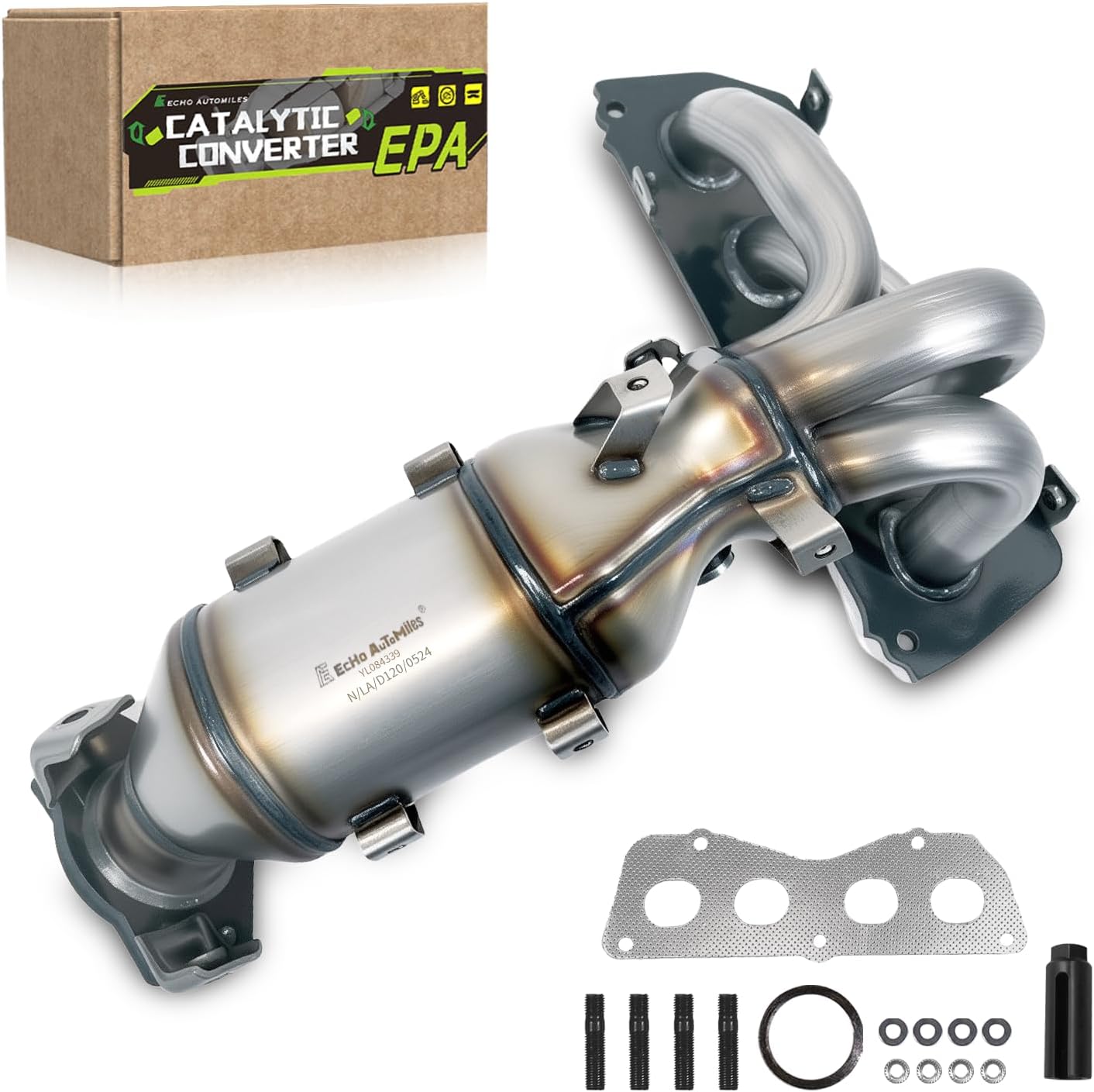
| Vehicle fitment | Toyota Camry 2012-2017 L4 2.5L |
|---|---|
| Cell count | 400-cell honeycomb |
| EPA compliance | Meets federal EPA standards |
| Includes | Gaskets and hardware |
This ECHO AUTOMILES catalytic converter is a direct-replacement unit intended for the 2012–2017 Toyota Camry with the 2.5L four-cylinder engine, offering a factory-style 400-cell honeycomb substrate to handle emissions conversion while limiting exhaust backpressure. It is typically used when an original converter has failed emissions testing or been damaged and is installed in place of the factory unit using the supplied gaskets and hardware. The 400-cell, high-flow design aims to preserve engine power and fuel economy while delivering high-temperature durability and long-term catalyst performance to help a vehicle pass emissions checks. The kit includes the parts needed for a standard replacement, which simplifies installation for a professional or experienced DIYer. Note that this part is not eligible for sale or installation in some states with stricter local regulations, so buyers should confirm local rules before purchasing.
Best for: Buyers who prioritize dependable, factory-style emission control and need a straightforward replacement to restore catalytic function and pass emissions testing on a 2012–2017 Camry 2.5L.
Less Ideal for: Drivers in states with stricter local emissions rules where this unit is restricted should look for locally compliant alternatives or dealer-specified parts.
- Direct-fit for 2012–2017 Camry 2.5L with no modification needed
- 400-cell honeycomb substrate designed to reduce backpressure and retain engine performance
- Meets federal EPA standards with high precious-metal loading for emissions conversion
- Includes necessary gaskets and hardware for replacement
- Not eligible for sale or installation in California and Colorado and restricted in some other states
Verdict: A reliable, direct-fit replacement catalytic converter built to restore emissions performance and preserve engine power on 2012–2017 Camry 2.5L models.
SPEEDFusion Front Catalytic Converter for Toyota Camry 2012–2017 2.5L
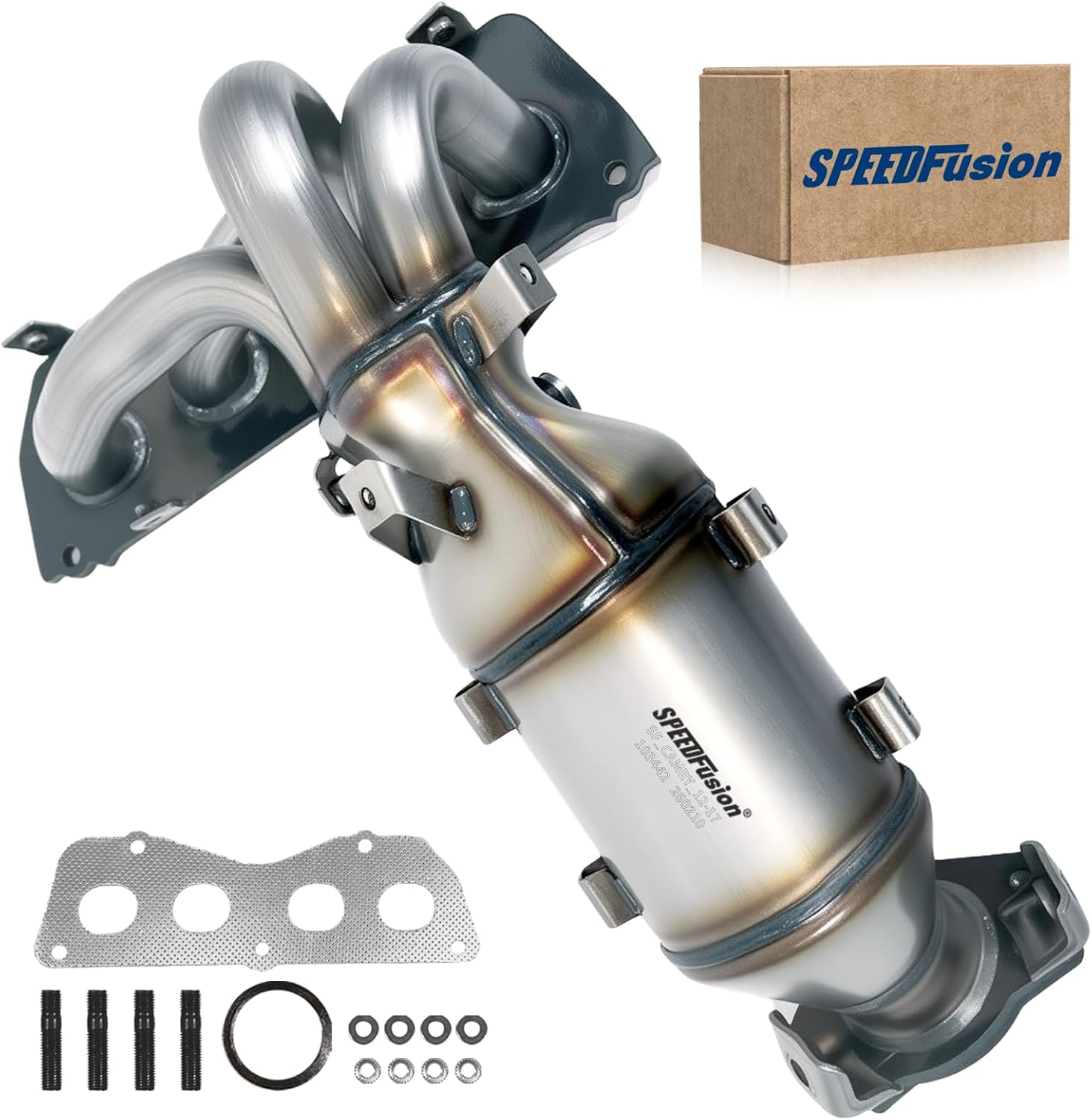
| Vehicle fitment | Toyota Camry 2012-2017 2.5L front (not hybrid/PZEV) |
|---|---|
| Certification | EPA compliant (federal) |
| Material | 409L stainless steel shell |
| Substrate | 400-hole ceramic substrate with Pt/Rh/Pd |
| Manufacturer | SPEEDFusion |
This SPEEDFusion front catalytic converter is a direct-fit replacement for the 2012–2017 Toyota Camry 2.5L (not for hybrid or PZEV models) and is intended to restore emission control and stop MIL codes related to the converter. It uses a stainless steel shell and an OEM-style ceramic substrate with precious metal coatings to improve catalytic conversion and help the vehicle meet federal emissions. Typical use is straightforward replacement of a failed front converter during routine exhaust repairs; sellers and some buyers report simple installation and that the part fits with the factory mounting points. The unit is EPA certified for federal compliance but not CARB-approved, so it is only legal in states following federal rules. Buyer experiences vary: many customers find it a cost-effective OEM-style replacement, while a minority report fitment and flange-welding issues that caused leaks or required additional welding and hardware adjustments. Expect solid emission performance when matched to the correct non-hybrid Camry and plan for professional installation if alignment or flange sealing is a concern.
Best for: Buyers who want a factory-style replacement to clear emission faults and restore a non-hybrid Camry to federal compliance while prioritizing social proof and documented user experience before purchasing.
Less Ideal for: Drivers in states that require CARB-certified parts or owners of hybrid/PZEV Camry models should not choose this converter.
- Direct-fit design intended for 2012–2017 Camry 2.5L reduces modification during installation
- EPA certified for federal emission compliance
- Stainless steel shell and OEM-style ceramic substrate with platinum, rhodium, and palladium for effective catalytic conversion
- Many buyers report straightforward installation and restored emission-system operation
- Not CARB-compliant and therefore illegal for use in states that require CARB approval
- Some users reported flange fitment or welding issues that caused leaks or required additional work
Verdict: A cost-effective, EPA-certified direct-fit front catalytic converter for non-hybrid 2012–2017 Camry 2.5L that restores emission control when you pick the correct fitment.
pulcherflow Catalytic Converter for 2012–2017 Toyota Camry 2.5L PZEV

| Vehicle Fitment | 2012-2017 Toyota Camry PZEV 2.5L |
|---|---|
| Material Type | Ceramic, Stainless Steel |
| Included Components | Catalytic Converter, Gasket, Screws |
| Automotive Fit Type | Vehicle Specific Fit |
This pulcherflow catalytic converter is a direct-fit replacement for 2012–2017 Toyota Camry 2.5L PZEV models intended to restore emissions control and exhaust flow. It installs using the supplied gaskets and hardware and is built with a stainless steel outer shell and an enlarged honeycomb ceramic substrate intended to increase precious metal loading and purification efficiency. In regular use it replaces a worn or damaged factory converter to pass tailpipe emission checks in federal-emission states and can improve exhaust flow compared with a clogged unit. Several buyers report minor bracket or bolt-hole alignment adjustments may be needed during installation, and a few experienced users saw check-engine codes when upstream oxygen sensors detected emissions that did not match factory sensor readings. The unit is not CARB compliant and cannot be sold for use in certain states, so confirm local emissions rules before buying. For mainstream owners who want a cost-effective, EPA-compliant replacement, this unit covers the basics while offering heavier stainless construction than cheap alternatives.
Best for: Buyers who prioritize replacing a failing converter with a factory-style, EPA-compliant unit that balances cost and reliable emissions performance without seeking a state-compliant CARB part.
Less Ideal for: Drivers in states that require CARB-certified parts or purchasers who need guaranteed plug-and-play alignment without any bracket or hole modification.
- Direct-fit design with included gasket and screws for straightforward installation
- Stainless steel shell offers corrosion and heat resistance
- Enlarged ceramic honeycomb substrate increases catalyst surface area for better purification
- EPA compliant for federal-emission vehicles
- Not compliant for sale or use in some states with strict emissions rules
- Some units may require minor bracket or hole modifications for perfect fitment
- A portion of users reported check-engine lights related to oxygen sensor readings after installation
Verdict: A cost-conscious, EPA-compliant direct-fit replacement for 2012–2017 Camry 2.5L PZEV owners who need a factory-style catalytic converter.
Choosing the Right 2012-2017 Toyota Camry Catalytic Converter: Key Factors to Consider
Exact Fitment and Compatibility
Getting a catalytic converter that matches the Camry's exhaust geometry is essential. The 2012-2017 Camry has specific inlet and outlet diameters, flange types, and pipe bends; a mismatched unit can require cutting, welding, or adapter fittings that increase labor and leak risk. Proper fit reduces the chance of exhaust leaks that can trigger oxygen sensor errors and the check-engine light.
Compatibility also means acceptance of the factory oxygen sensors in the correct mounting locations. If a converter does not have provisions for the upstream and downstream sensors used on these model years, you may need sensor extensions or relocations that can affect emissions monitoring. Prioritizing converters with documented fitment for the 2012-2017 Camry shortens installation time and improves reliability.
Emissions Performance and Substrate Type
The catalyst substrate and washcoat determine how effectively the converter reduces hydrocarbons, carbon monoxide, and NOx. Different substrate compositions and cell densities influence light-off temperature, conversion efficiency, and long-term durability. For the Camry, selecting a converter designed to meet or exceed factory emissions targets helps maintain proper exhaust chemistry and avoid failed emissions checks.
Higher cell density substrates can offer better conversion when warm but may be more prone to clogging if the engine is burning oil or running rich. Consider the tradeoffs between initial conversion efficiency and susceptibility to contamination based on your vehicle's condition and driving patterns.
Durability and Thermal Resistance
Catalytic converters operate under high temperatures and thermal cycling that can stress the internal substrate and housing. Durability matters for the 2012-2017 Camry because prolonged engine issues or frequent short trips can increase thermal stress. Look for housings made from corrosion-resistant alloys and robust internal mounting that resist substrate breakage when exposed to road vibration and temperature swings.
Thermal-resistant designs and quality welds reduce the chance of catastrophic failure or internal damage. A converter with better thermal tolerance will typically last longer and maintain conversion rates over more miles, reducing the need for premature replacement.
Oxygen Sensor Compatibility and Emissions Monitoring
The Camry relies on upstream and downstream oxygen sensors to monitor catalytic performance and adjust fuel trim. A replacement converter must allow proper sensor placement to ensure accurate readings. If the downstream sensor sees abnormal readings because of incorrect spacing or an ineffective substrate, the vehicle may set diagnostic trouble codes related to catalyst efficiency.
Ensuring sensor compatibility also means avoiding modifications that move sensors too far from their intended locations. A converter designed for the Camry will maintain the factory sensor positions or provide clear guidance for any required sensor relocations to preserve emissions monitoring integrity.
Corrosion Resistance and Environmental Exposure
Road salt, moisture, and debris can corrode converter housings and mounting flanges, especially in regions where winter road treatment is common. For 2012-2017 Camry owners in those environments, corrosion-resistant materials and protective coatings extend service life and prevent exhaust leaks at the flanges or seams.
Consider the vehicle's typical exposure to corrosive conditions when choosing a converter. A more corrosion-resistant unit may cost more up front but can avoid repeated repairs or exhaust replacement due to rusted connections and failing welds.
Installation and Serviceability
Some catalytic converters are direct-fit and bolt into the factory exhaust without additional work, while others may require minor modifications. For owners who plan DIY replacement, a direct-fit converter that preserves factory flanges and sensor ports simplifies the job and reduces the chance of installation errors. For shop installs, clear fitment documentation and included gaskets or hardware can reduce labor time.
Serviceability also covers the availability of replacement gaskets and mounting hardware and whether the converter's design allows straightforward removal of seized bolts. Choosing a unit designed with service in mind reduces unexpected shop charges and makes future replacements or repairs smoother.
Signs You Need a New Catalytic Converter
Watch for persistent check-engine lights that return after repairs or sensor resets. Codes related to catalyst efficiency or oxygen sensor readings often point to a converter that is no longer functioning effectively.
Other symptoms include a noticeable drop in fuel economy, reduced engine power, or an unusual rotten-egg smell from the exhaust. A physically rattling converter can indicate a broken internal substrate. Any of these signs in a 2012-2017 Camry warrant inspection of the converter and upstream engine conditions before replacement.
- Check-engine light with P0420 or similar catalyst efficiency codes
- Reduced acceleration or power loss under load
- Decreased fuel economy during normal driving
- Rattling noises from the underbody indicating internal breakage
- Strong sulfur or rotten-egg exhaust odor
Preparing Your Camry for Replacement
Before replacing the converter, address any underlying engine problems that could damage the new unit, such as oil burning, coolant leaks into the combustion chamber, or persistent fuel trim issues. Fixing those problems first prevents premature failure of a replacement converter.
Document sensor locations and any flange hardware that may be corroded. If you plan to do the work yourself, gather correct gaskets and any anti-seize compounds for bolts. For shop installations, provide the technician with the vehicle's year range and exhaust layout to ensure the correct direct-fit part is used.
- Diagnose and repair misfires, oil consumption, or coolant leaks first
- Inspect and, if necessary, replace oxygen sensors before swapping the converter
- Have correct gaskets and flange hardware on hand for a clean seal
Installation Considerations and Torque Specs
Proper installation helps avoid exhaust leaks and sensor issues. Use the manufacturer-recommended torque values for flange bolts to prevent warping and maintain a gas-tight seal. If bolts are severely corroded, replacing hardware is often safer than attempting to reuse weakened fasteners.
Keep sensors plugged in at the correct positions and check for exhaust leaks after the initial startup. A short test drive with a scan tool monitoring oxygen sensor readings can confirm the system is functioning and that the new converter is reaching normal operating temperatures.
- Replace corroded bolts and use anti-seize where appropriate
- Tighten flanges to specified torque to prevent leaks
- Verify oxygen sensor readings after installation with a scan tool
Legal and Emissions Compliance Notes
Emissions regulations vary by region. Ensure any replacement catalytic converter meets local emissions requirements for the 2012-2017 Camry. Using a converter that does not meet regulatory standards can lead to failed inspections or fines in areas with strict testing.
Keep documentation of the converter's emissions claims and installation records in case you need proof of compliance during an inspection. Opting for a unit with clear emissions performance data makes it easier to demonstrate that the vehicle meets required standards.
- Check local emissions regulations before purchasing a replacement
- Retain installation records and emissions documentation
- Consider converters with documented performance metrics for compliance
Maintaining a New Catalytic Converter
After replacement, maintain the engine in good tune to protect the converter. Regular oil changes, timely spark plug and ignition maintenance, and addressing coolant leaks will help preserve catalyst life. Avoid repeatedly driving the vehicle when it is running rich or misfiring.
If you frequently take short trips, consider occasional longer drives to help the converter reach full operating temperature and burn off deposits. Routine inspections for exhaust leaks and mounting integrity also extend service life.
- Keep engine combustion clean to avoid catalyst contamination
- Drive periodically at highway speeds to reach catalyst light-off temperature
- Inspect mounting hardware and flanges during regular service intervals
Still looking for the perfect fit?
Select your Toyota Camry configuration to see the most relevant Catalytic Converters recommendations
How We Chose the Best 2012-2017 Toyota Camry Catalytic Converter
We focused on fitment, emissions performance, build quality, thermal durability, and compatibility with the 2012-2017 Toyota Camry exhaust layout. Fitment was a primary filter: candidates had to match inlet/outlet orientation, flange style, and overall dimensions commonly used on the Camry between 2012 and 2017. Emissions performance and catalyst substrate design were evaluated to ensure catalytic efficiency and support for oxygen-sensor feedback. Build quality criteria covered housing material, weld integrity, and internal mounting to resist vibration and elemental exposure typical of regular road use. Thermal durability considered substrate type and washcoat formulation, which affect resistance to thermal shock and catalyst degradation. Serviceability and installation factors included whether the unit accepts factory sensors and the ease of gasket and flange replacement during installation. We excluded units that required extensive exhaust modification, nonstandard sensors, or ambiguous fitment information for the 2012-2017 Camry. Also filtered out converters with poor documentation or lacking clear emissions performance claims. The resulting list prioritizes converters that balance correct fit, durability, and emissions control for the Camry owner.
Our full evaluation process is outlined in our review methodology.
FAQ
How long should a catalytic converter last on a 2012-2017 Camry?
It often depends on driving conditions and engine health, but a properly maintained converter can last many years. Frequent short trips, oil burning, or persistent engine issues can shorten service life, while regular maintenance and corrosion-resistant installations help it last longer.
Will replacing the catalytic converter fix a recurring check-engine light?
Sometimes, but the underlying cause must be addressed first. If the check-engine light is due to reduced catalyst efficiency, replacement can help. However, if engine misfires, oxygen sensor failures, or fuel system issues persist, the light may return until those are fixed.
Can I install a replacement converter myself on the Camry?
Many owners can perform a direct-fit swap if they have basic tools and mechanical experience. Ensure correct fitment, proper torque on flanges, and intact sensor connections. If bolts are severely corroded or if welding is needed, professional installation is safer.
Do I need new oxygen sensors when I replace the catalytic converter?
Not always. If the sensors are within service life and functioning correctly, they can be reused. However, if they show slow response, contamination, or damaged wiring, replacing them at the same time helps ensure accurate emissions monitoring and avoids false catalyst codes.
What symptoms mean the converter is physically damaged?
A loud rattling noise from under the vehicle, a sudden drop in power, or excessive exhaust backpressure symptoms often indicate internal substrate breakage. Visual inspection for rusted-through housing or broken welds also confirms physical damage.
Will a new catalytic converter affect fuel economy?
A properly functioning converter can restore normal fuel trim and efficiency if a failing unit was causing poor oxygen sensor readings. It will not inherently improve economy beyond factory levels, but it can eliminate fuel-economy losses caused by a degraded converter.
Final Verdict
Focus on fitment, emissions performance, and durability when choosing a catalytic converter for a 2012-2017 Toyota Camry. Prioritize units that accommodate the factory oxygen sensors and match the Camry's flange and pipe geometry to avoid installation complications. Balance substrate type and corrosion resistance against your driving patterns and regional conditions. Address underlying engine issues before installation and keep service records for emissions compliance. With the right converter and proper installation, you can restore emissions control, prevent recurring diagnostic codes, and maintain reliable operation for years.
Explore More:
- Check out all Toyota Camry parts & accessories
- Explore Catalytic Converters Maintenance & Repair Guides
- Explore Exhaust & Emissions
- Browse all Auto Parts
