

Note: This article contains affiliate links. If you click on these links and make a purchase, I may earn a small commission at no extra cost to you. This helps support my research and content. Read my full affiliate disclosure here.
If you own a Toyota Camry with the 2.4L engine, a failing catalytic converter can affect fuel economy, trigger a check engine light, and cause your vehicle to fail emissions inspections. Picking the right catalytic converter for this engine matters because fitment, emissions performance, and durability all affect long-term reliability and compliance.This guide shortlists the top six catalytic converters suitable for the Toyota Camry 2.4L. Each option was evaluated against core criteria like correct fitment, emissions efficiency, and build quality so you can prioritize the attributes that matter most for your driving and inspection needs. Read on for what to consider and practical advice for replacement and troubleshooting.
Looking for other parts? See all Toyota Camry parts & accessories.
Top Picks at a Glance
| Best Overall The best all-around choice for most situations | Walker Ultra EPA Direct-Fit Catalytic Converter with Integrated Manifold |  |
| Best Quality Built to a higher standard if you want something more solid | AISIN Front Catalytic Converter CCTT-00252 for Toyota Camry/Solara 2.4L |  |
| Best Value The sweet spot between price and what you get | PTPDRH Catalytic Converter Kit for 2002–2006 Toyota Camry/Solara 2.4L (EPA Compliant) |  |
| Best Budget The cheapest option that still gets the job done reliably | PHILTOP Front Catalytic Converter Kit for Toyota Camry 2.4L (Front) |  |
| Highest Rated A top-rated pick with lots of positive feedback | RZOCARULE Catalytic Converter Compatible with Toyota Camry 2.4L (Front Left & Right) |  |
| Most Popular A crowd favorite that many people choose with confidence | PHILTOP Front and Rear Catalytic Converter Kit for 2002–2006 Camry/Solara 2.4L |  |
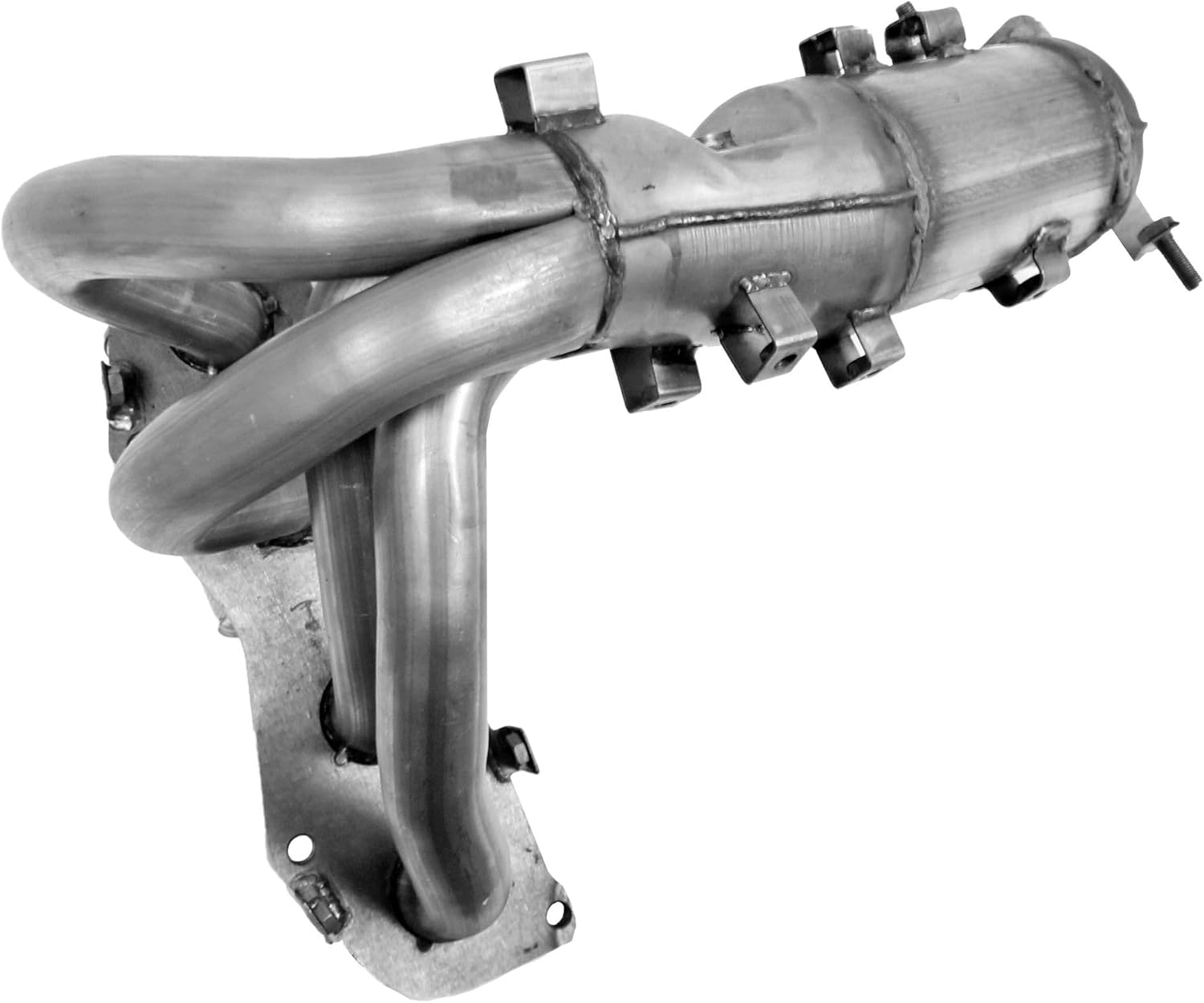
Walker Ultra EPA Direct-Fit Catalytic Converter with Integrated Manifold
| Fits | 2006-2009 Toyota Camry/Solara 2.4L (OBDII) |
|---|---|
| EPA compliance | For OBDII vehicles (1996 and newer) |
| Design | Direct-fit with integrated manifold |
| Exterior | Machined |
This Walker Ultra catalytic converter replaces the factory manifold and converter with a bolt-on, integrated assembly intended for 2006–2009 Toyota Camry and Solara 2.4L applications. It is designed to meet EPA emissions requirements for OBDII vehicles and uses a factory-style washcoat and precious metal load to reduce tailpipe emissions. Typical use is a direct replacement when the original manifold/converter is damaged or failing; installation involves bolting the unit to the cylinder head and attaching the downstream exhaust connection. Notable features include thick, OEM-style flanges and welded heat shields where originally equipped for added strength and underbody protection. Real-world benefits reported by owners are straightforward fitment, restored emissions performance and elimination of check-engine codes. The unit ships without many installation consumables so buyers should expect to reuse factory bolts or buy gaskets and the lower donut gasket separately. Packaging quality appears inconsistent, which has led to occasional bent flanges or damaged gaskets in transit and may require light straightening or replacement parts during installation.
Best for: Buyers who want a reliable, emissions-compliant direct replacement for a 2.4L Camry or Solara manifold-converter that restores function without extensive modification.
Less Ideal for: People seeking a complete hardware kit out of the box or those who prefer a unit that includes all gaskets and fasteners should consider other options or plan to purchase consumables separately.
- Direct-fit integrated manifold and converter that bolts to the cylinder head for straightforward replacement.
- Designed to meet EPA requirements for OBDII vehicles with factory-style washcoat and precious metal load.
- Thick, factory-style flanges and welded heat shields increase durability and resist leaks.
- Multiple customer reports of eliminating check-engine lights and restoring proper emissions behavior.
- Ships without lower donut gasket, manifold bolts, or protective internal packaging so additional gaskets or hardware may be needed.
- Packaging has occasionally resulted in bent heat shields or damaged manifold gaskets requiring minor repair or replacement.
Verdict: A solid factory-style, EPA-compliant direct-fit manifold and catalytic converter that gets a 2.4L Camry or Solara back to proper emissions performance.
AISIN Front Catalytic Converter CCTT-00252 for Toyota Camry/Solara 2.4L

| Manufacturer Part Number | CCTT-00252 |
|---|---|
| Compatible Engines | L4 2.4L |
| Special Features | Located at the Front Side |
| OEM Part Number Reference | 250510H010, 250510H040, 250510H011, 2505128101 |
This Aisin front catalytic converter replaces the factory unit on 2002–2006 Toyota Camry and Solara 2.4L engines and is built to meet EPA emissions requirements for OBDII vehicles. It installs in the exhaust front section and is engineered to match factory fit and mounting points, which helps simplify installation and reduces the need for modification. Aisin emphasizes durable construction and compatibility with several Toyota part numbers, so it will work as a like-for-like replacement when a worn converter is causing emissions or check-engine issues. Because it is EPA-compliant, it restores emissions control for federal-spec vehicles but is not legal in several states with California-equivalent rules. Practical benefits include straightforward fitment, known manufacturer pedigree, and the ability to clear emissions faults when paired with the correct sensor and exhaust hardware. The main limitation is regulatory: it cannot be sold for use in states that require CARB-compliant parts, so confirm local rules before purchase.
Best for: Buyers who want a reliable, performance-focused factory-style replacement to restore emissions control and maintain engine drivability on a 2002–2006 2.4L Camry or Solara.
Less Ideal for: Drivers in states that require CARB-compliant converters or owners seeking a high-flow performance converter outside emissions-legal requirements should look elsewhere.
- Direct-fit front-side replacement designed for 2002–2006 Camry and Solara 2.4L engines
- EPA-compliant for federal OBDII vehicles, restoring emissions control for eligible states
- Manufactured by Aisin, a recognized OEM supplier with emphasis on durability and factory-style fit
- Not legal for sale or use in states that require California-equivalent (CARB) catalytic converters
Verdict: Choose this Aisin front catalytic converter when you need a durable, factory-style, EPA-compliant replacement for a 2002–2006 Toyota Camry or Solara 2.4L.
PTPDRH Catalytic Converter Kit for 2002–2006 Toyota Camry/Solara 2.4L (EPA Compliant)

| Brand | PTPDRH |
|---|---|
| Model | PTPDRH78694 |
| Exterior | Stainless Steel |
| EPA Certification | Compliant (not for CA/WA/VT/OR) |
This PTPDRH catalytic converter is an EPA-certified, drop-in replacement intended for 2002–2006 Toyota Camry and Solara with the 2.4L engine. It uses a three-way catalytic process and factory-style interfaces to reduce harmful exhaust emissions while maintaining exhaust flow; installation is straightforward with no programming or calibration required. The housing is stainless steel and the internal substrate uses ceramic materials engineered for thermal resistance, which should help with longevity under normal driving. Real-world buyer feedback notes the unit bolts up and fits well and that the supplied hardware is hit-or-miss, so you may need to reuse or upgrade fasteners during installation. It is compliant with U.S. federal emissions rules but explicitly not for sale in certain states with their own rules. This is a practical replacement for returning a vehicle to compliant operation, but expect to check hardware fitment and state compliance before buying.
Best for: Buyers who want a straightforward, factory-style replacement to restore emission control and keep their older Camry or Solara running legally and reliably without complex modifications.
Less Ideal for: Drivers in states with their own stricter emissions rules should avoid this unit and seek a state-certified or OE dealer option; those wanting premium OEM-brand parts or guaranteed high-end hardware may prefer alternatives.
- EPA-certified for U.S. federal emissions compliance
- Direct-fit design for 2002–2006 Camry and Solara 2.4L for easy drop-in replacement
- Stainless steel construction and ceramic substrate for improved heat resistance
- Three-way catalytic design to restore emission control and exhaust flow
- Included fasteners and brackets may be low quality and could require replacing during installation
Verdict: A practical, EPA-certified direct-fit replacement that restores emissions control for 2002–2006 Toyota Camry and Solara 2.4L without need for tuning.
PHILTOP Front Catalytic Converter Kit for Toyota Camry 2.4L (Front)

| Position | Front |
|---|---|
| Manufacturer | PHILTOP |
| Material | Stainless Steel |
| Vehicle Fitment | Toyota Camry 2.4L (front) |
| EPA Compliance | Federal emissions (not for CA) |
This PHILTOP front catalytic converter is a direct-replacement unit for the 2.4L Camry front location designed to restore emissions control and resolve rattling or poor flow from a failed converter. It uses a high-flow ceramic honeycomb substrate to reduce backpressure and is welded in stainless steel to resist heat and corrosion for longer service life. The kit includes OE-style gaskets and basic hardware so most owners can install it in a few hours without cutting or modification, though some buyers reported the supplied clamps and bolts are lower grade and may need upgrading or welding in rusted installations. It is EPA federal-compliant, which makes it a legal aftermarket option outside states with stricter rules. Expect improved throttle response when replacing a clogged unit and a near-factory fit, but check local emissions rules before buying and be prepared to source heavier-duty clamps if your vehicle has significant rusted flanges.
Best for: Buyers looking for an affordable, serviceable replacement that restores emissions function and drivability on a budget and who are comfortable sourcing or upgrading small hardware if needed.
Less Ideal for: Drivers in states with California-equivalent emissions rules or those who want a lifetime, premium warranty and factory-sourced parts should look at certified or dealer options instead.
- Direct-fit design matches factory mounting points for straightforward replacement
- Stainless steel construction and welded joints offer good durability at exhaust temperatures
- High-flow ceramic substrate reduces backpressure for improved engine breathing
- Includes OE-style gaskets and basic hardware for quicker installation
- EPA federal-compliant for use where federal aftermarket converters are allowed
- Included clamps and fasteners are reported as low quality and may require replacement or welding
Verdict: A budget-friendly, direct-fit front catalytic converter that restores emissions control and engine breathing for Toyota Camry 2.4L owners who want a practical, low-cost replacement.
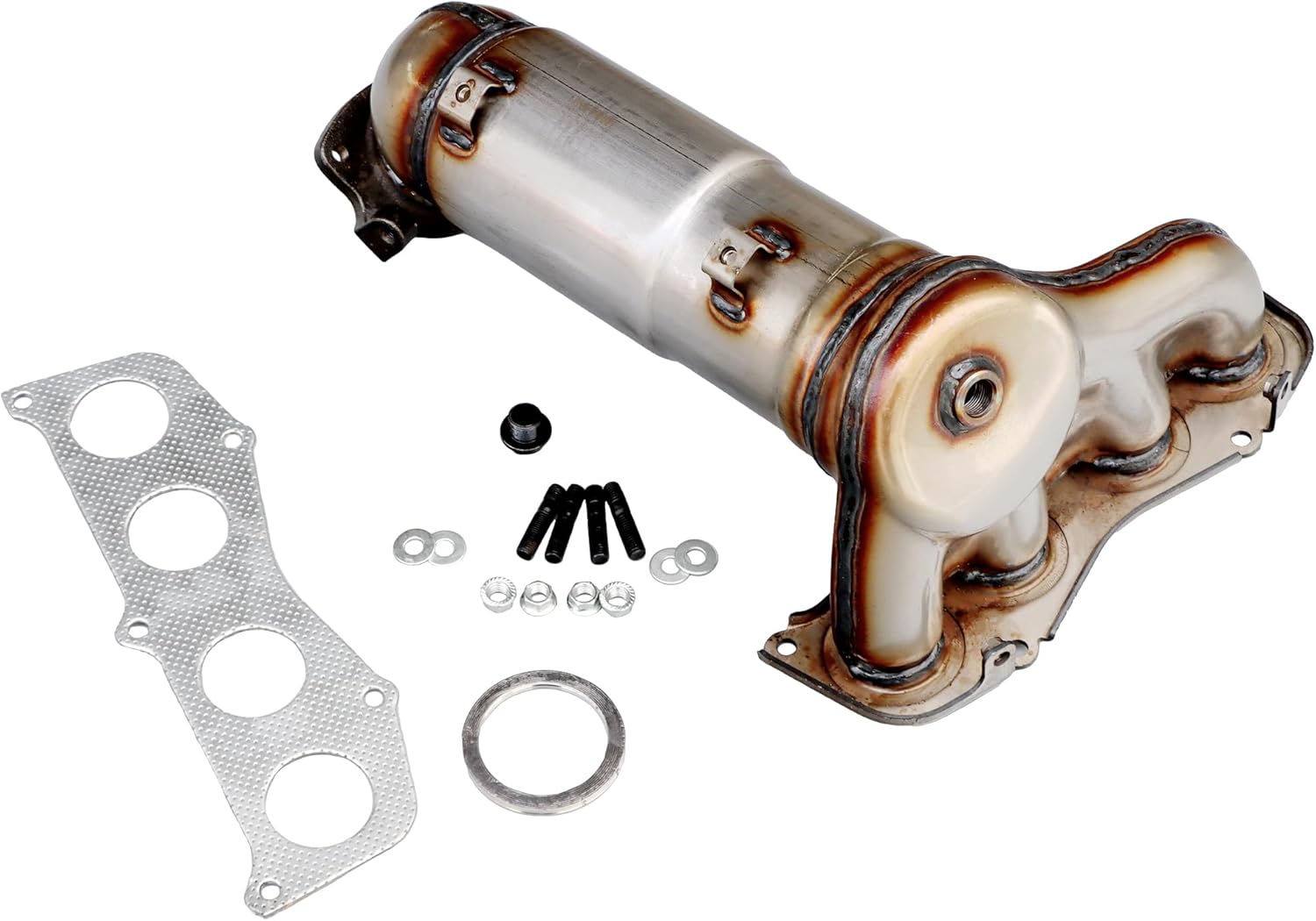
RZOCARULE Catalytic Converter Compatible with Toyota Camry 2.4L (Front Left & Right)
| Compatible vehicles | 2007–2009 Toyota Camry 2.4L; 2006–2008 Toyota Solara 2.4L |
|---|---|
| Cell count | 400Cell Ceramic |
| Housing material | Stainless steel |
| Fitment style | Flange-to-flange, bolt-on |
| EPA status | EPA compliant (not for CA, NY, ME) |
This RZOCARULE catalytic converter is a direct-fit style replacement for the front positions on the Toyota Camry 2.4L (and Solara 2.4L) that installs flange to flange using supplied gaskets and hardware. It uses a stainless steel outer shell and a 400-cell ceramic honeycomb core to convert emissions while maintaining exhaust flow. Typical use is as a like-for-like repair for a failed factory converter or to replace a damaged unit during exhaust work; install is straightforward for a shop or competent DIYer because of the bolt-on connections. The stainless housing helps resist corrosion and heat, and the internal ceramic matrix offers high surface area for catalytic reactions, which helps reduce tailpipe pollutants. Limitations to consider are mixed user reports about check-engine light persistence on some vehicles and that this kit is not legal for use in certain states with stricter emissions rules, so verify local regulations before purchasing.
Best for: Buyers who prioritize a straightforward, reliability-focused replacement to restore emissions control on a Camry 2.4L and expect a bolt-on, shop-installable part that matches factory layout.
Less Ideal for: Drivers living in states with stricter emissions rules or owners seeking an emissions part certified for California, New York, or Maine should look for a region-compliant alternative.
- Vehicle-specific fitment for Toyota Camry 2.4L and compatible Solara 2.4L simplifies installation.
- Stainless steel outer shell resists rust and high exhaust temperatures for longer service life.
- 400-cell ceramic honeycomb core provides high reaction area for emissions conversion.
- Includes flange-to-flange hardware and gaskets for a bolt-on replacement.
- Not legal for sale or use in certain states with stricter emissions regulations.
- Some buyers report persistent check-engine light or compatibility issues on certain vehicles.
Verdict: A practical, vehicle-specific replacement catalytic converter that restores emissions function with a stainless housing and ceramic core for Camry 2.4L applications.
PHILTOP Front and Rear Catalytic Converter Kit for 2002–2006 Camry/Solara 2.4L

| Compatibility | 2002–2006 Camry/Solara 2.4L |
|---|---|
| Position | Front, Rear |
| Manufacturer | PHILTOP |
| EPA compliance | Federal emissions (not for CA, NY, CO, ME) |
This PHILTOP kit supplies front and rear direct-fit catalytic converters intended as factory-replacement parts for 2002–2006 Toyota Camry and Solara 2.4L models. Each converter uses a high-flow ceramic substrate and stainless steel shell with welded connections, and the kit includes OE-style gaskets and hardware to simplify installation. In practice it is meant to bolt in without modification and can reduce exhaust noise, restore catalytic efficiency, and clear emission-related check-engine codes when a worn converter is the cause. Buyers report mixed fitment experiences: many units install and function as expected, while some users needed to adjust heat-shield bosses, replace bolts, or return defective pieces. The product is EPA-compliant for federal emissions use but not CARB-legal in several states. If installed properly it can save money versus dealer replacement, but there is variability in build and long-term durability noted by reviewers.
Best for: Buyers who prioritize saving money over dealer repairs and are comfortable verifying fit and handling minor installation adjustments or working with seller support when issues arise.
Less Ideal for: Drivers in states that require CARB-compliant parts or those who want a guaranteed bolt-on, no-modification installation experience from a premium OEM supplier.
- Direct-fit flange-to-flange design with OE-style gaskets and hardware for bolt-on installation
- High-flow ceramic substrate aimed at improving exhaust flow and catalytic conversion efficiency
- Stainless steel outer shell and welded connections for corrosion and heat resistance
- Includes both front and rear converters to fully replace a vehicle's aging catalytic system
- Not CARB-legal and therefore not legal for use in states with stricter emissions rules
- Some reported fitment and thread size inconsistencies requiring modification or hardware replacement
- Mixed quality reports with occasional defective units reported by buyers
Verdict: A cost-conscious direct-fit replacement kit that can restore emissions performance on 2002–2006 Camry/Solara 2.4L models when buyers accept some fitment variability.
Choosing the Right Toyota Camry 2.4L Catalytic Converter: Key Factors to Consider
Fitment and Flange Compatibility
Correct fitment is the single most important factor for the Toyota Camry 2.4L. The converter must match the factory flange pattern, inlet/outlet diameters, and overall length so it installs without stretching or compressing the exhaust system. Improper fit can cause exhaust leaks, misaligned hangers, and accelerated stress on the downstream components.
When a converter matches the Camry 2.4L routing, installation is typically straightforward using existing gaskets and bolts. Also check whether the unit is a direct bolt-on or requires minor modifications such as replacing short sections of pipe. Opting for a converter with documented Camry 2.4L fitment reduces installation time and the chance of post-installation issues.
Emissions Performance and Substrate Type
Emissions performance determines whether the catalytic converter reduces hydrocarbons, carbon monoxide, and NOx to acceptable levels for inspections. Different substrate designs and washcoat formulations affect conversion efficiency. For the Camry 2.4L, prioritize converters that specify high cell density and appropriate precious metal loadings for gasoline engines to ensure effective conversion at normal operating temperatures.
A properly designed substrate also helps the vehicle run cleaner and minimizes the chance of a persistent check engine light related to catalyst efficiency. Look for units that reference compliance with emissions standards applicable to your region and that have been designed for gasoline-powered 2.4L engines.
Durability and Thermal Resistance
Catalytic converters operate under high temperatures and varying thermal cycles. Durability against thermal shock and resistance to corrosion are key for long service life on a Camry 2.4L that sees daily driving and occasional highway use. Robust internal substrates and well-sealed housings prevent premature breakdown or substrate dislodgement.
Consider coatings, flange thickness, and the quality of welds because these influence how the converter handles road salt, moisture, and repeated heating and cooling. A converter that tolerates the thermal profile of the Camry 2.4L will maintain efficiency and avoid failures that can strand the vehicle or require frequent replacement.
Oxygen Sensor and Port Positioning
Proper oxygen sensor placement is essential for accurate engine management and for preventing false catalyst efficiency codes on the Camry 2.4L. A converter must have sensor ports in the correct positions relative to the factory harness and should maintain the OEM thread type and boss height.
If the oxygen sensor cannot be mounted in the correct location, the engine computer may show fluctuating readings or set a check engine light. Some replacement units include pre-drilled ports that match the Camry 2.4L layout, while others require sensor relocation or adapter fittings. Choose units that preserve sensor geometry to avoid calibration issues.
Installation and Serviceability
Ease of installation affects labor time, cost, and the likelihood the job will be done correctly. For the Toyota Camry 2.4L, direct-fit converters that use factory mounting points, gaskets, and bolts reduce installation complexity. Consider whether the unit allows for a bolt-on swap or if cutting and welding are needed.
Serviceability also covers future diagnostics: converters that allow access to sensor ports and do not obstruct downstream components make maintenance and inspections simpler. If you plan to do the replacement yourself, choose a unit with clear fitment instructions and standard hardware compatibility.
Regulatory Compliance and Warranty
Regulatory compliance is essential to pass state or local emissions inspections. Confirm that the converter meets the emissions coverage required for your locality and that it is intended for gasoline 2.4L Camry applications. Units that lack clear compliance documentation can lead to inspection failures.
Warranty terms also inform expected lifespan and manufacturer confidence. A reasonable warranty that covers defects and premature failures gives additional protection. When evaluating options for the Camry 2.4L, weigh documented emissions coverage and warranty periods alongside physical and performance criteria.
Symptoms of a Failing Catalytic Converter on a Camry 2.4L
Recognizing early signs of converter problems helps avoid escalated engine issues and failed emissions tests. The most common symptoms on a Camry 2.4L include a persistent check engine light related to catalyst efficiency, reduced acceleration or power, and unusual exhaust odors such as a rotten-egg smell from unburned fuel.
Another sign is a drop in fuel economy or rough idling. In severe cases a clogged converter can cause excessive backpressure that reduces engine performance and can even make the engine stall at low RPM. Addressing symptoms promptly prevents collateral damage to the exhaust and engine systems.
- Check engine light with catalyst-related fault codes
- Reduced power, poor acceleration, or rough idle
- Rotten-egg sulfur smell from exhaust
- Noticeable drop in fuel economy
- Hissing or exhaust leaks near the converter flange
Diagnostics: What To Check Before Replacing
Before replacing the catalytic converter on a Camry 2.4L, perform a systematic diagnosis to confirm the converter is the root cause. Start with reading engine codes to identify catalyst efficiency or oxygen sensor-related faults. Verify oxygen sensor operation and compare upstream and downstream O2 readings to determine whether the catalyst is performing as expected.
Also visually inspect the converter and surrounding exhaust piping for leaks, damage, or melted substrate signs. A temperature test using an infrared thermometer can reveal if the front and rear of the converter differ significantly in temperature, which can indicate a clogged or inactive catalyst.
- Scan for OBD-II codes and interpret catalyst-related codes
- Compare upstream and downstream O2 sensor voltages
- Visual inspection for physical damage or leaks
- Temperature differential check from front to rear of unit
Installation Options and What to Expect
Installation approaches vary between bolt-on direct-fit units and models that require cutting and welding. For the Camry 2.4L, direct-fit converters that match factory flanges and hanger locations minimize labor. If the replacement is a weld-on or requires pipe modification, account for extra shop time and potential need for alignment of hangers.
When replacing the converter, always use new gaskets and hardware where specified and double-check oxygen sensor positions. After installation, clear stored codes and complete a short drive cycle to confirm normal sensor operation and that no exhaust leaks are present.
- Direct-fit units reduce install time and hardware changes
- Weld-on options may require exhaust shop services
- Replace gaskets and use correct torque on flange bolts
- Verify oxygen sensor positioning post-install
Maintenance Tips to Prolong Converter Life
Regular engine maintenance helps extend catalytic converter life. Keep ignition and fuel systems in good repair because misfires and rich-running conditions can overheat and contaminate the catalyst. Replace faulty oxygen sensors and address persistent check engine lights promptly to avoid accelerated damage.
Avoid driving through deep water or repeatedly running the engine with known tuning issues. Using the correct grade of fuel and addressing oil or coolant leaks that reach the exhaust will also reduce risk of substrate contamination and premature failure.
- Fix misfires and fueling issues promptly
- Replace failed oxygen sensors to prevent rich conditions
- Avoid engine oil or coolant leaks that enter the exhaust
- Follow recommended service intervals for the Camry 2.4L
Legal and Inspection Considerations
Local emissions regulations determine acceptable replacement options for the Camry 2.4L. Some jurisdictions require converters to be certified for specific model years or engine types. Ensure the unit you choose provides the necessary compliance documentation for inspection and registration.
Removing emissions equipment or installing noncompliant units can result in failed inspections and legal penalties. Keep receipts and any compliance certificates in your vehicle records to demonstrate that the replacement meets required standards.
- Verify emissions certification applicable to Toyota Camry 2.4L
- Keep installation and compliance documentation for inspections
- Avoid noncompliant or removed emissions equipment
- Contact local inspection authority if unsure about requirements
Still looking for the perfect fit?
Select your Toyota Camry configuration to see the most relevant Catalytic Converters recommendations
How We Chose the Best Toyota Camry 2.4L Catalytic Converter
We focused on attributes that directly affect emissions compliance, drivability, and long-term reliability on the Toyota Camry 2.4L. Evaluation emphasized correct physical fitment to the Camry 2.4L exhaust routing and flange geometry, verified emissions substrate and conversion efficiency claims, and the quality of materials used in internal substrate and external housings. Durability factors such as resistance to thermal shock, corrosion protection on housings and flanges, and weld quality were also prioritized because they influence service life on this vehicle. Installation practicality was considered, including whether the unit supports bolt-on replacement or requires minor exhaust work, and how readily available mounting points and gaskets align with Camry 2.4L hardware.We excluded universal-fit units that require extensive fabrication or major exhaust modification since those add uncertainty for Camry 2.4L owners. Also excluded were converters with unclear emissions coverage or missing fitment details. The final selection balances verified fitment, emissions performance, construction quality, and installability for typical Camry 2.4L maintenance scenarios.
Our full evaluation process is outlined in our review methodology.
FAQ
How long should a catalytic converter last on a Toyota Camry 2.4L?
A converter often lasts many years under normal driving and maintenance, but life depends on driving habits and engine condition. Regular maintenance and prompt repair of engine problems usually extend service life; conversely, persistent misfires or oil leaks can shorten it.
Will a bad catalytic converter make my Camry 2.4L fail an emissions test?
Yes, a degraded or damaged converter commonly causes emissions failures because it cannot reduce pollutants effectively. If diagnostic codes indicate catalyst efficiency problems, the vehicle may not pass inspection until the issue is resolved or the converter is replaced.
Can I drive my Camry 2.4L with a failing catalytic converter?
You can often drive short distances, but prolonged driving with a failing or clogged converter is not recommended. A clogged converter can cause power loss, increased fuel use, and possible engine damage from excessive backpressure, so timely repair is advisable.
How do oxygen sensors relate to catalytic converter problems on this engine?
Oxygen sensors monitor exhaust composition before and after the converter. Faulty sensors can trigger incorrect fueling and may falsely suggest catalyst failure. It is important to confirm sensor health when diagnosing converter-related check engine lights.
Does replacing the catalytic converter require reprogramming the Camry 2.4L ECU?
In most cases, replacing the catalytic converter does not require ECU reprogramming. After replacement, clearing codes and completing a drive cycle allows the engine management system to relearn normal sensor readings. If issues persist, further diagnostics may be needed.
What should I do if my check engine light indicates a catalytic converter issue?
Start by reading the specific fault codes and verifying oxygen sensor operation. Perform a visual inspection for leaks or damage and check for misfires or fueling issues that could damage the converter. Replace the converter only after confirming it is the root cause.
Final Verdict
For the Toyota Camry 2.4L, prioritize converters that offer verified fitment, solid emissions performance, and robust construction. Focus on units that preserve oxygen sensor positions and flange geometry to simplify installation and avoid calibration issues.Weigh the tradeoffs between ease of installation and long-term durability: a direct-fit unit typically reduces labor and leak risk, while higher-quality construction improves lifespan under real-world driving. Use the factors above to select the option that best balances compliance, reliability, and serviceability for your Camry 2.4L.
Explore More:
- Check out all Toyota Camry parts & accessories
- Explore Catalytic Converters Maintenance & Repair Guides
- Explore Exhaust & Emissions
- Browse all Auto Parts
