

Note: This article contains affiliate links. If you click on these links and make a purchase, I may earn a small commission at no extra cost to you. This helps support my research and content. Read my full affiliate disclosure here.
If you own a Toyota Camry Hybrid, a failing catalytic converter can cause rough running, a persistent check engine light, or failed emissions tests. Choosing the right catalytic converter matters because fitment, durability, and emissions control affect drivability and legal compliance for hybrid-specific exhaust systems. This guide shortlists the top choices for the Camry Hybrid and explains the criteria we used to evaluate them. You will find options that prioritize proper fit, long-term core life, and compatibility with hybrid exhaust routing. Read on to see the top picks and the practical factors you should weigh before making a selection.
Looking for other parts? See all Toyota Camry parts & accessories.
Top Picks at a Glance
| Best Overall The best all-around choice for most situations | K&E EXHAUST 51363PC-C Replacement Catalytic Converter (Direct Fit) |  |
| Best Quality Built to a higher standard if you want something more solid | JT Exhaust Catalytic Converter for 2012–2017 Toyota Camry Hybrid and 2016–2018 RAV4 Hybrid (Catalyst+ Grade) |  |
| Best Value The sweet spot between price and what you get | SAROTIN Front Catalytic Converter for Toyota Camry Hybrid and Avalon Hybrid (EPA Compliant) |  |
| Best Budget The cheapest option that still gets the job done reliably | Koomaha Catalytic Converter 674-050 for 2007–2011 Toyota Camry Hybrid 2.4L |  |
| Highest Rated A top-rated pick with lots of positive feedback | pulcherflow Catalytic Converter for 2012–2017 Toyota Camry Hybrid (EPA Compliant) |  |
| Most Popular A crowd favorite that many people choose with confidence | ECHO AUTOMILES Catalytic Converter for Toyota Camry Hybrid 2.4L (2007–2009) |  |
K&E EXHAUST 51363PC-C Replacement Catalytic Converter (Direct Fit)

| Manufacturer Part Number | 51363PC-C |
|---|---|
| Manufacturer | PrimeCarzInc |
| Included Components | Bolts, Gasket |
| Installation Type | Bolt-On |
| Compatible with Vehicle Type | Car |
This K&E EXHAUST 51363PC-C is a bolt-on catalytic converter intended as a factory-style replacement for certain 2.5L hybrid Toyota and Lexus vehicles. It installs using the included bolts and gasket and is marketed to replicate OEM fit and performance so it can be used to replace a failed or clogged converter without modifying the exhaust. Typical use is straightforward: remove the old unit and bolt this replacement in place, restoring emissions control and exhaust flow. Notable features include factory-style construction, a claimed precise fit, and included hardware to simplify installation. Practical benefits are retaining factory emissions performance and avoiding custom fabrication. Limitations are that it is a generic aftermarket unit with restricted resale territories and it is not described as a direct CARB-compliant California part, so it may not be legal in all states and may not match the original manufacturer part exactly in internal substrate design. Buyers should confirm vehicle fitment and local emissions rules before purchasing.
Best for: Buyers who want a straightforward, factory-style replacement to restore emissions function and drivability on a hybrid 2.5L Toyota without custom exhaust work. Ideal for owners prioritizing a balanced mix of fit, ease of installation, and maintaining factory performance.
Less Ideal for: Drivers who need a guaranteed state-compliant (CARB) replacement or who require a factory-sourced original part should consider certified alternatives or dealer options.
- Direct bolt-on design for simple replacement using included bolts and gasket
- Marketed to match factory-style fit and finish to minimize installation adjustments
- Supplies a full replacement catalytic converter rather than a repair patch
- Not listed as compliant for states with strict emissions rules which may limit legal use
- Generic aftermarket unit so internal materials or substrate design may differ from the original part
Verdict: A practical direct-fit aftermarket catalytic converter that restores factory-style fit and function for hybrid 2.5L Toyota/Lexus models without custom work.
JT Exhaust Catalytic Converter for 2012–2017 Toyota Camry Hybrid and 2016–2018 RAV4 Hybrid (Catalyst+ Grade)

| Manufacturer | JT |
|---|---|
| Exterior | Polished |
| Manufacturer Part Number | TYSA034c |
| Date First Available | February 29, 2024 |
This JT Exhaust catalytic converter is a direct-fit replacement designed for 2.5L Toyota hybrid applications including Camry and RAV4 hybrids and aims to restore emissions control while reducing backpressure. It uses a stainless 409 shell, an OEM-grade honeycomb ceramic substrate, and a higher-dose precious metal coating labeled Catalyst+ Grade to increase conversion efficiency and extend service life compared with standard aftermarket units. The unit is intended for bolt-in installation using 3D-scanned fitment and robotic welds, which should make it straightforward for professional installers and experienced DIYers. Practical benefits include improved longevity, higher catalytic activity to help clear P0420 codes, and a construction focused on corrosion resistance. Limitations are that this aftermarket unit may not exactly match factory materials or calibration and buyers should ensure professional installation and post-fitment OBD checks; it also targets a specific set of hybrid models so it is not a universal solution.
Best for: Buyers who prioritize restoring or improving catalytic performance on a Camry or RAV4 hybrid and want a higher precious-metal load for longer life and better conversion rather than the cheapest replacement.
Less Ideal for: Drivers seeking a guaranteed factory-identical unit or those who need a universal or multi-vehicle solution should consider alternatives or dealer-sourced parts.
- Higher precious-metal coating (Catalyst+ grade) for improved conversion efficiency and longer service life
- Direct-fit design using 3D scanning for easier installation on specified Toyota hybrid models
- Stainless steel 409 shell and OEM-grade ceramic substrate for corrosion resistance and durability
- Built to meet EPA OBDII emission requirements and intended to address P0420 code issues
- Aftermarket construction may not exactly match factory calibration or materials
- Fitment is limited to specific 2.5L hybrid model years and engine configuration
Verdict: A direct-fit, higher-precious-metal aftermarket catalytic converter aimed at Camry and RAV4 hybrid owners who want improved conversion performance and longer service life.
SAROTIN Front Catalytic Converter for Toyota Camry Hybrid and Avalon Hybrid (EPA Compliant)

| Position | Front Inner |
|---|---|
| Body Material | 409 stainless steel |
| Substrate Material | Cordierite ceramic carrier |
| O2 Sensor Ports | 1 O2 Sensor Port |
| Fitment Type | Direct Replacement |
This SAROTIN front catalytic converter is a direct-replacement unit engineered for Toyota Camry Hybrid and Avalon Hybrid 2.5L models to clear P0420 codes and restore proper emissions control. It uses a cordierite ceramic substrate with precious metal coating and a 409 stainless steel shell, and ships with one O2 sensor port and factory-style bolt flanges for a bolt-on installation with no cutting or welding. In practice it reduces catalytic-related emissions warnings, quiets rattling or noisy cores, and brings the exhaust back toward factory emission performance on EPA-regulated vehicles. The converter is EPA compliant but not CARB compliant, so it is not legal in California or Colorado; buyers should confirm state rules before purchasing. Expect straightforward fitment for the listed Camry and Avalon hybrid years, but note that precious-metal load and long-term durability will vary versus higher-end OEM or premium aftermarket units. Overall it is a pragmatic replacement for restoring emissions function on compatible hybrids without major installation work.
Best for: Buyers who want a no-fuss, practical replacement to restore emissions performance and clear check-engine codes on compatible Toyota Camry and Avalon hybrids without custom exhaust work.
Less Ideal for: Drivers in states that require CARB-compliant parts or owners seeking a long-term premium or performance-grade catalytic solution should look elsewhere.
- Direct-fit design with bolt-on inlet and outlet flanges for installation without cutting or welding
- EPA compliant for federal emissions standards to address P0420 diagnostic codes
- Built from 409 stainless steel with a cordierite ceramic substrate and precious metal coating to restore conversion efficiency
- Includes one O2 sensor port matching factory locations for straightforward sensor reinstallation
- Not CARB compliant so it cannot be used in California or Colorado
- Precious-metal loading and long-term durability likely lower than premium or OEM converters
Verdict: A straightforward, bolt-on EPA-compliant catalytic converter for restoring emissions function on compatible Camry and Avalon hybrids without welding or modification.
Koomaha Catalytic Converter 674-050 for 2007–2011 Toyota Camry Hybrid 2.4L

| Manufacturer | Koomaha |
|---|---|
| Fitment | 2007-2011 Toyota Camry Hybrid 2.4L |
| Manufacturer Part Number | Koomaha 674-050 674050 |
This Koomaha catalytic converter is offered as a budget replacement for 2007–2011 Toyota Camry Hybrid 2.4L models. It replaces factory catalytic part numbers and installs in place of the original unit to restore exhaust emissions control and clear related check-engine codes. Typical use is a like-for-like replacement when the original converter has failed or been removed; installation requires standard exhaust work and possible gasket or flange alignment. The listing warns it is not legal for sale in several CARB states, so it is intended for vehicles registered elsewhere. Practical benefits include straightforward compatibility with the listed Camry hybrid applications and a lower-cost option compared with dealer parts. Reported limitations from buyers include mixed fitment accuracy and uneven longevity, so expect to verify flange alignment at install and plan for quality variation compared with higher-priced factory-quality units.
Best for: Buyers seeking the cheapest workable replacement for a failed catalytic converter on a 2007–2011 Camry Hybrid who prioritize getting the car roadworthy again over long-term factory-quality longevity.
Less Ideal for: Anyone who needs a CARB-compliant part for registration in restricted states or buyers who want a longer-lasting, higher-quality factory-grade replacement.
- Direct-replacement for listed Toyota Camry Hybrid 2.4L years and part numbers
- Lower-cost alternative to dealer or higher-end aftermarket converters
- Simple swap-in design that restores emissions control and can clear related engine codes
- Not legal for sale in California, New York, Colorado, and Maine due to CARB compliance
- Customer reports indicate inconsistent fitment and variable durability
Verdict: A cost-focused direct-replacement catalytic converter for 2007–2011 Camry Hybrid owners who need an affordable way to restore emissions function outside CARB states.
pulcherflow Catalytic Converter for 2012–2017 Toyota Camry Hybrid (EPA Compliant)
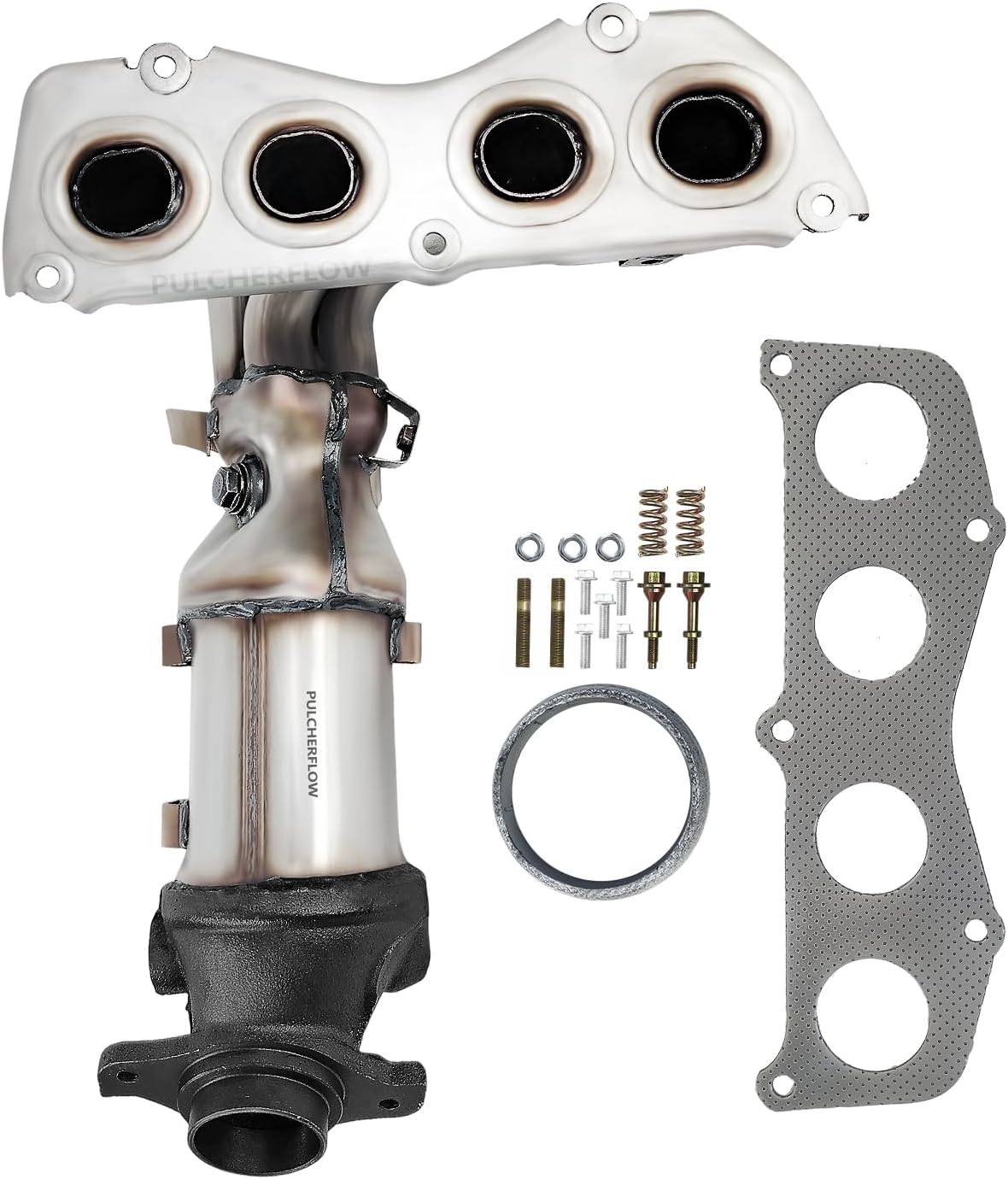
| Vehicle Fitment | 2012–2017 Toyota Camry Hybrid and select Avalon/ES/NX hybrid models (2.5L) |
|---|---|
| Certification | EPA compliant (46-state legal) |
| Material | Stainless steel shell |
This pulcherflow catalytic converter is a direct-fit replacement built for Camry hybrid applications and similar hybrid models, intended to restore emissions control and clear related engine codes. It installs using OE-style bolt locations and includes gaskets and mounting hardware so most installs are straightforward for a shop or experienced DIYer. The unit uses an enlarged honeycomb ceramic substrate and catalyst loading the seller says improves conversion efficiency, and the stainless steel shell with mandrel bends aims to resist corrosion and high heat for longer service life. Practical benefits include passing federal emissions checks outside restricted states and returning drivability when a failing converter triggered diagnostics. Limitations to consider are that it is not legal for sale in some states with stricter rules and a few buyers reported minor bracket or heat shield alignment tweaks were required during installation, so expect occasional fitting adjustments on older cars.
Best for: Buyers who prioritize a dependable, factory-style replacement to restore emissions performance and clear codes on a Camry hybrid and want a unit built to resist corrosion and heat for multi-year service.
Less Ideal for: Drivers living in states with strict emissions certification or vehicle owners who need a state-specific certified unit should seek a converter specifically approved for those jurisdictions.
- Direct-fit design with included gaskets and hardware for easier installation
- EPA-certified with catalyst loading and enlarged honeycomb substrate for effective emissions reduction
- Stainless steel shell and mandrel-bent tubing for improved corrosion and heat resistance
- Restores drivability and can clear emissions-related fault codes when replacing a failed converter
- Not legal for sale or use in California, New York, Maine, or Colorado emissions models
- Some units may require minor modification or bracket adjustment for perfect alignment
Verdict: A practical, EPA-compliant direct-fit replacement that restores emissions control and is built for durability on Camry hybrid models.
ECHO AUTOMILES Catalytic Converter for Toyota Camry Hybrid 2.4L (2007–2009)

| Vehicle fitment | 2007–2009 Toyota Camry Hybrid 2.4L |
|---|---|
| Compliance | EPA compliant |
| Manufacturer | ECHO AUTOMILES |
| Manufacturer part number | YL41771G |
This catalytic converter is sold as a vehicle-specific replacement for 2007–2009 Toyota Camry hybrid 2.4L models and is intended to restore emissions control and clear related fault codes. It features a high-flow internal design aimed at reducing backpressure, which can help maintain engine efficiency and fuel economy compared with a clogged unit. The listing highlights EPA-compliant construction and includes welded mounting brackets and an O2 sensor port to simplify installation for mechanically skilled owners or professional shops. Real-world feedback is mixed: several buyers report good fits and resolved check-engine lights while others found mounting bracket orientation or pipe lengths incorrect, so careful fit verification is important before purchase. This part is not allowed for sale or installation in California or Colorado and has restrictions in some other states, so confirm local emission rules. Expect to pay attention to fitment details and be prepared to return or rework mounting if factory alignment differs from the listing.
Best for: Buyers who value documented user experiences and want a budget-friendly replacement that can restore emissions function when fitment checks out and professional or DIY installation is acceptable.
Less Ideal for: Drivers in states with strict emissions rules or owners unwilling to verify fitment or perform minor welding or alignment adjustments should consider alternatives or a dealer-sourced replacement.
- Designed specifically for 2007–2009 Camry hybrid 2.4L so contours and sensor port are intended to match factory locations
- High-flow internal design aims to reduce backpressure and help restore fuel efficiency
- Includes O2 sensor port and welded mounting brackets to streamline installation
- Marketed as EPA-compliant to meet federal emissions standards
- Several customer reports of incorrect bracket orientation or misaligned flanges requiring modification or return
- Not legal for sale or installation in California and Colorado and has state-specific restrictions elsewhere
Verdict: A purpose-made, EPA-compliant replacement catalytic converter for 2007–2009 Camry hybrids that can restore emissions function and performance if you verify fitment first.
Choosing the Right Toyota Camry Hybrid Catalytic Converter: Key Factors to Consider
Exact Hybrid Fitment
Hybrid-specific exhaust routing and mounting points differ from non-hybrid Camry variants. Ensuring exact fitment means fewer modifications at installation and a better seal at flange joints, which reduces exhaust leaks that can trigger the check engine light or affect fuel trim. Also, correct fitment preserves the location and function of upstream and downstream oxygen sensors, which is critical for the vehicle's emissions control strategy.
When fitment is accurate, installation time drops and the need for adapter pipes or flange rework disappears. For owners, this reduces labor risk and the chance of improper sealing that can lead to early failure or recurring diagnostic trouble codes.
Catalytic Core Construction
The substrate type and washcoat thickness determine how effectively the converter converts hydrocarbons, carbon monoxide, and NOx. Higher-quality substrates and optimized washcoats maintain conversion efficiency over more thermal cycles, which is important in hybrid duty where the engine cycles on and off frequently.
A durable core also resists breakdown from contaminants and brief rich conditions. For Camry Hybrid owners, a robust core means longer time between failures and more consistent exhaust emissions performance through the life of the vehicle.
Thermal Durability and Heat Management
Hybrid driving often exposes the catalytic converter to rapid temperature swings as the gasoline engine cycles on and off. Thermal shocks can stress the substrate and its mounting, increasing the risk of cracking or washcoat detachment. Choosing a converter designed for strong thermal tolerance helps maintain conversion efficiency and structural integrity.
Look for features such as reinforced mounting, thermal insulation, or designs that manage heat distribution. These reduce the chance of premature failure and the attendant symptoms like rattling, poor conversion, or check engine illumination.
Emissions Certification and OBD Compatibility
Certifications and clear statements about OBD II compatibility matter because they indicate the converter is designed to meet regulatory conversion percentages and to interface properly with the vehicle's diagnostics. For the Camry Hybrid, compatibility with the existing oxygen sensor layout and the vehicle's emissions monitoring routines helps prevent false codes and ensures the vehicle can pass an official emissions test.
Products with documented certification or stated compliance give greater confidence that the replacement will restore legal emissions performance rather than introduce compliance gaps that could cause failed inspections or persistent fault codes.
Corrosion Resistance and Exterior Construction
The converter's outer shell, flange quality, and welds determine how well it resists road salt, moisture, and corrosion. Corrosion can cause leaks at welds or flanges and can make future removals difficult. For Camry Hybrid owners in regions with road salt or high humidity, a durable exterior finish and robust flange design reduce long-term maintenance problems.
Stainless steel shells and high-quality flange materials also support repeatable sealing over the life of the converter, which preserves emissions performance and prevents exhaust leaks into the cabin or underbody.
Installability and Sensor Integration
How a converter integrates with the vehicle's oxygen sensor locations and whether it requires additional gaskets, spacers, or sensor extensions affects real-world installation complexity. A converter that aligns with factory sensor ports and includes necessary flanges or sensor bungs is easier to fit and less likely to lead to sensor damage or incorrect readings.
For owners planning a do-it-yourself replacement or those coordinating with a local shop, clear installation considerations reduce labor time and the potential for diagnostic issues post-installation.
Why Catalytic Converter Choice Matters With Hybrid Systems
Hybrid powertrains change the way exhaust systems heat up and cool down because the gasoline engine cycles on and off more frequently. That behavior affects temperature exposure, chemical loading, and how the vehicle's diagnostics monitor converter efficiency. For the Camry Hybrid, selecting a converter designed to tolerate these conditions improves long-term reliability.
A converter that does not account for hybrid duty can fail sooner, show failure symptoms, or cause recurring check-engine lights tied to oxygen sensor readings and conversion efficiency. Prioritizing hybrid-appropriate design minimizes those risks and helps maintain emissions compliance.
- Hybrid engine cycling increases thermal stress on the converter
- Sensor placement and OBD monitoring are critical for fault-free operation
- Durable cores and secure mounting reduce risk of premature failure
Common Symptoms of Catalytic Converter Problems
Recognizing symptoms early can save time and prevent collateral engine or exhaust system damage. Typical signs include a persistent check engine light flagged to converter efficiency, decreased fuel economy, reduced acceleration, unusual exhaust odor, and rattling noises from the converter housing.
On a Camry Hybrid, you may also notice altered engine start behavior or more frequent engine-on events as the ECU tries to clear fault conditions. Identifying the cause requires reading diagnostic codes and confirming that oxygen sensors, wiring, and exhaust leaks are not the root cause before replacing the converter.
- Persistent check engine light related to converter efficiency
- Reduced engine responsiveness or acceleration
- Rattling noises indicating a broken substrate
Installation Tips Specific to Camry Hybrid Owners
Before replacing the converter, capture diagnostic trouble codes and verify upstream and downstream oxygen sensors are working. On the Camry Hybrid, sensor locations and the routing of the exhaust often require careful access; a lift or ramps make the job safer and easier. Use new gaskets and ensure flanges are properly torqued to the vehicle's specifications.
When installing, check that sensor ports align without stressing sensor wiring. If a sensor bung is included with the converter, ensure the bung is in the correct position. After installation, clear codes and perform a short drive cycle to let the vehicle's monitor run its OBD checks.
- Verify oxygen sensors and wiring before replacing the converter
- Use proper gaskets and correct flange torque values
- Perform a drive cycle post-install to allow OBD monitoring
How to Diagnose Before You Replace a Converter
Start with a full OBD scan to identify stored or pending codes related to catalytic efficiency or oxygen sensor performance. Confirm whether codes point to sensor faults, exhaust leaks, or converter efficiency drops. A smoke test or visual inspection can reveal leaks at flanges or joints that might mimic converter failure.
You can also monitor upstream and downstream oxygen sensor voltages with a scan tool while driving. If voltages are nearly identical and the downstream sensor does not show the expected switching behavior, that can indicate a loss of conversion efficiency. Use those diagnostics to avoid unnecessary replacement.
- Scan for OBD trouble codes and inspect sensor signals
- Check for exhaust leaks before condemning the converter
- Use live sensor data to confirm conversion performance
Maintenance and Longevity Tips
Avoiding contamination extends converter life. Do not run the engine rich for prolonged periods and address oil or coolant leaks promptly; both can poison the converter's washcoat. Regularly maintain ignition and fuel systems to prevent conditions that overwork the converter.
If you replace spark plugs, coils, or injectors, address those issues quickly to prevent unburned fuel from damaging the converter. For the Camry Hybrid, mind the vehicle's service schedule and correct any fuel or oil consumption issues early to preserve catalytic function.
- Fix ignition and fuel system faults promptly to prevent washcoat contamination
- Address oil and coolant leaks quickly
- Follow recommended service intervals to minimize converter stress
Still looking for the perfect fit?
Select your Toyota Camry configuration to see the most relevant Catalytic Converters recommendations
How We Chose the Best Toyota Camry Hybrid Catalytic Converter
We focused on factors that directly affect long-term performance and legal emissions control in the Toyota Camry Hybrid. Primary criteria included exact fitment to hybrid-specific exhaust routing and mounting points, catalytic core construction and washcoat quality for pollutant conversion, and thermal durability to withstand frequent transitions between engine and electric modes. We also evaluated materials and corrosion resistance because hybrid exhausts can experience different condensation and thermal cycles, and ease of installation for owners who plan to use a shop or perform a straightforward replacement. Emissions certification and compatibility with on-board diagnostics were considered to reduce the likelihood of recurring check-engine alerts. We excluded units lacking clear hybrid-specific fitment data or those without documented converter core specifications. Overall, our list favors converters that balance certified emissions performance, robust construction, and straightforward fitment for the Camry Hybrid.
Our full evaluation process is outlined in our review methodology.
FAQ
How do I know if my Camry Hybrid catalytic converter is failing?
Failure often shows as a persistent check engine light reporting converter efficiency or O2 sensor codes, reduced acceleration, poor fuel economy, unusual exhaust odor, or rattling from the housing. Confirm with an OBD scan and inspection to rule out sensor or exhaust leak causes.
Can a bad oxygen sensor mimic catalytic converter problems?
Yes. Faulty oxygen sensors, wiring issues, or exhaust leaks can produce codes or symptoms similar to converter failure. Always verify sensor operation with live data and inspect for leaks before replacing the converter.
Is the catalytic converter on a Camry Hybrid different from the non-hybrid version?
Hybrid exhaust systems may use different routing and thermal profiles because the engine cycles on and off. That means converters intended for hybrid duty often have fitment and thermal tolerance considerations specific to the Camry Hybrid.
Will replacing the catalytic converter clear a check engine light immediately?
Replacing a converter does not always clear codes immediately. After replacement you should clear stored codes and perform the required drive cycle so the vehicle's OBD system can re-run readiness monitors and confirm proper converter operation.
Can I install a replacement catalytic converter myself?
Many owners can perform the replacement if they have proper tools, a safe way to lift the vehicle, and basic exhaust experience. Ensure you can access sensor ports and secure flanges correctly. If you are unsure, a professional installation reduces the risk of leaks or sensor damage.
How long should a properly functioning catalytic converter last on a Camry Hybrid?
A well-designed converter in normal service typically lasts many years, but life depends on driving habits, maintenance, and exposure to contaminants. Promptly addressing engine or fuel system problems will help maximize converter lifespan.
Final Verdict
When selecting a catalytic converter for your Toyota Camry Hybrid, prioritize exact hybrid fitment, certified emissions performance, and a core built to handle thermal cycling. Balance durability and corrosion resistance with installability to minimize shop time and reduce future failure risk. Focus on options that document OBD compatibility and hybrid-appropriate construction so you can restore emissions performance and avoid recurring diagnostic issues.
Explore More:
- Check out all Toyota Camry parts & accessories
- Explore Catalytic Converters Maintenance & Repair Guides
- Explore Exhaust & Emissions
- Browse all Auto Parts
