

Note: This article contains affiliate links. If you click on these links and make a purchase, I may earn a small commission at no extra cost to you. This helps support my research and content. Read my full affiliate disclosure here.
If you drive a 2007–2011 Toyota Camry and are facing emissions failures or reduced engine performance, selecting the right catalytic converter matters. A proper replacement restores exhaust after-treatment, helps the engine run smoothly, and keeps the vehicle passing emissions inspections.This guide highlights seven shortlisted catalytic converters chosen for reliable fitment to the 2007–2011 Camry platform. We evaluate candidates for correct fitment, emissions processing efficiency, durability, and installation practicality so you can pick the option that best matches your needs. Read on for focused guidance and what to expect during replacement.
Looking for other parts? See all Toyota Camry parts & accessories.
Top Picks at a Glance
| Best Overall The best all-around choice for most situations | NutsCata Direct-Fit Catalytic Converter for 2007–2009 Toyota Camry 2.4L |  |
| Best Quality Built to a higher standard if you want something more solid | Walker Ultra EPA Direct-Fit Catalytic Converter with Integrated Manifold |  |
| Best Value The sweet spot between price and what you get | maXpeedingrods Catalytic Converter for Toyota Camry 2.4L (2007–2011) |  |
| Best Budget The cheapest option that still gets the job done reliably | ACZCR Rear Catalytic Converter for Toyota Camry 2007–2009, 2.4L (EPA Compliant) |  |
| Highest Rated A top-rated pick with lots of positive feedback | ABYSMAUTO Direct-Fit Catalytic Converter for Toyota Camry 2007–2009 2.4L |  |
| Most Popular A crowd favorite that many people choose with confidence | SPEEDFusion Front Catalytic Converter for 2007–2009 Toyota Camry 2.4L (Gasoline) |  |
| Best Seller A high-volume bestseller chosen again and again | MAYASAF 2" Universal Catalytic Converter 2-Pack with O2 Port and Heat Shield |  |
NutsCata Direct-Fit Catalytic Converter for 2007–2009 Toyota Camry 2.4L

| Fitment | 2007-2009 Toyota Camry 2.4L; 2006-2008 Toyota Solara 2.4L |
|---|---|
| Compliance | EPA compliant (not for sale/use in CA, CO, NY, ME) |
| Manufacturer | NutsCata |
| Manufacturer Part Number | Nuts-ToCam-07-09-2.4L-L4-NC |
This NutsCata catalytic converter is a direct bolt-on replacement for 2007–2009 Toyota Camry 2.4L engines and is intended to restore emissions control and resolve check-engine light issues without custom welding or machining. It uses a honeycomb ceramic substrate loaded with platinum, rhodium, and palladium to convert exhaust pollutants and is sold as EPA compliant for vehicles meeting federal standards. Typical installation involves unbolting the old unit and fitting this converter with the supplied hardware; many buyers report straightforward fitment and passing emissions checks. The direct-fit design speeds repairs and reduces shop labor compared with universal converters that need adapters. Limitations include regulatory restrictions that prohibit sale or use in some states and that fitment is limited to the specified Camry/Solara 2.4L applications, so verifying exact model-year and chassis compatibility is important before purchase. The product comes with a multi-year performance assurance which adds confidence for an all-round replacement choice.
Best for: Buyers who want a straightforward, factory-style replacement to clear emissions faults and get their 2007–2009 Camry back to stock emissions performance with minimal installation hassle.
Less Ideal for: Drivers who need a converter legal in states with more stringent emissions rules or who require a universal or performance-oriented aftermarket unit for modified engines.
- Direct-fit bolt-on design for 2007–2009 Camry 2.4L reduces installation time and avoids welding
- Honeycomb ceramic substrate loaded with high-content precious metals for effective pollutant conversion
- EPA compliant for federal-standard vehicles, enabling emissions testing pass in applicable states
- Includes hardware and a multi-year/60,000-mile performance assurance from the maker
- Not legal for sale or use in certain states with stricter regulations
- Fitment strictly limited to the listed Camry/Solara 2.4L applications and may not match other variants
Verdict: If you need a hassle-free, direct-fit replacement to restore emissions control on a 2007–2009 Camry 2.4L, this NutsCata converter is a practical, factory-style choice.
Walker Ultra EPA Direct-Fit Catalytic Converter with Integrated Manifold
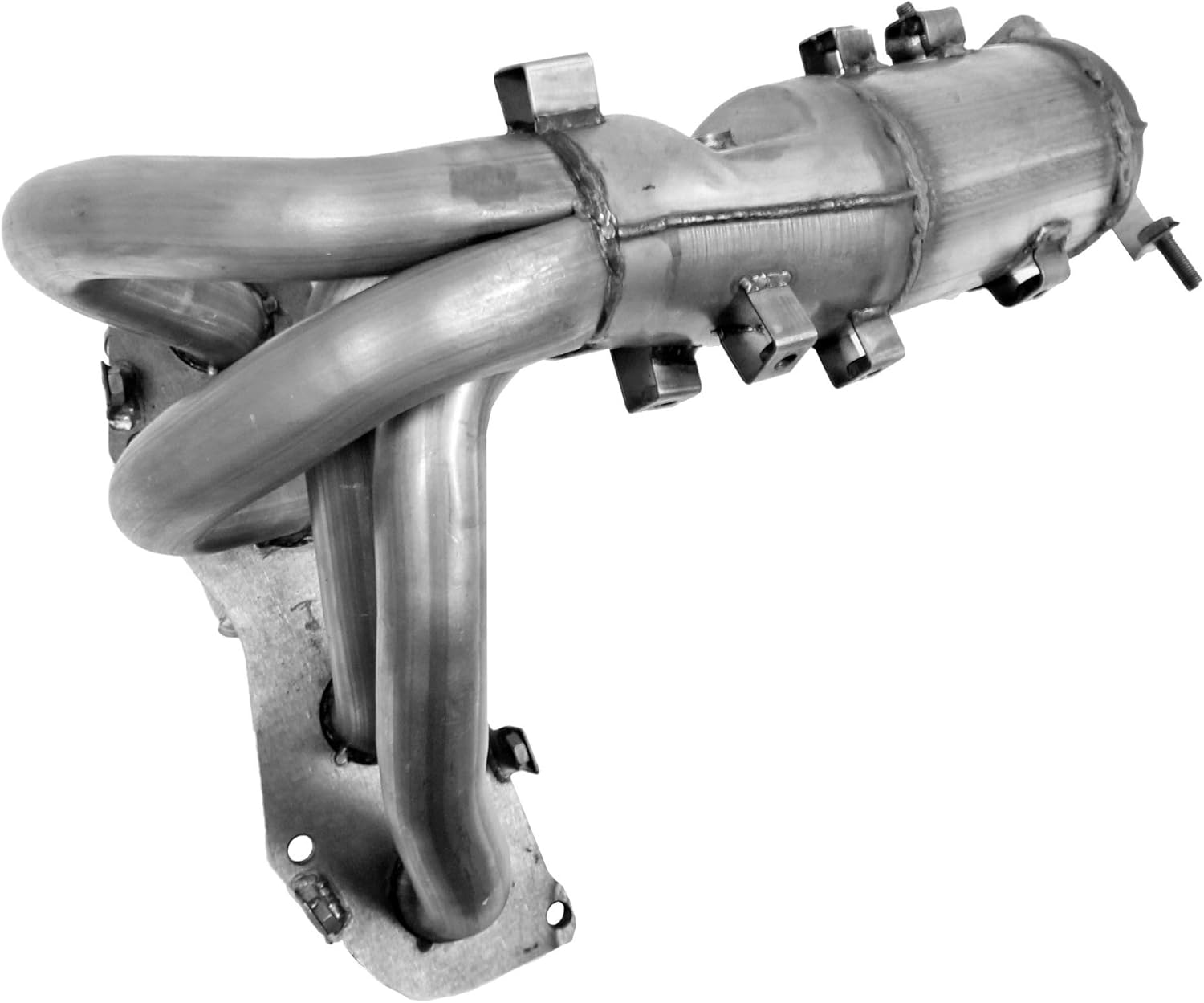
| Compatible Vehicles | 2006–2009 Toyota Solara; 2007–2009 Toyota Camry |
|---|---|
| OBDII | 1996 and newer vehicles |
| Exterior | Machined |
| Manufacturer | Walker Exhaust |
| Model | Ultra EPA Direct Fit Catalytic Converter with Integrated Exhaust Manifold |
The Walker Ultra EPA direct-fit catalytic converter replaces the factory manifold-converter assembly on compatible Toyota Camry and Solara models. It bolts to the cylinder head and matches downstream connections for a straightforward swap, making it useful when a leaking or clogged factory unit triggers emissions faults. Walker specifies an OEM-style washcoat and precious metal loading to restore emissions reduction and help clear check-engine lights, while thick flanges and welded heat shields improve strength and protect the undercarriage. In practice installers note the converter arrives ready to mount but often ships without protective padding and without hardware or the lower exhaust doughnut gasket, so plan to reuse factory bolts or source fasteners and the pipe gasket separately. The unit is intended for emissions compliance and daily driving rather than performance tuning, and some buyers report improved MPG and normal operation after installation. Expect some initial smoking as protective oils burn off and verify fitment for your year and engine before ordering.
Best for: Buyers who want a robust factory-style replacement to restore emissions function and drivability on a 2007–2011 Camry while prioritizing a durable, OE-like fit and finish.
Less Ideal for: Drivers looking for a performance-focused aftermarket converter or custom exhaust upgrades should consider purpose-built high-flow options instead.
- Direct-fit design with integrated manifold for straightforward bolt-on replacement
- EPA-compliant washcoat and precious metal load to restore emissions control on OBDII vehicles
- Thick, OE-style flanges and welded heat shields for durability and heat protection
- Ships without installation hardware or the lower exhaust donut gasket so additional parts may be needed
- Packaging has been reported as insufficient which can cause bent flanges or damaged gasket on arrival
Verdict: Choose this Walker Ultra EPA unit when you need a factory-style, EPA-compliant direct-fit manifold converter to restore emissions control and replace a failing factory assembly.
maXpeedingrods Catalytic Converter for Toyota Camry 2.4L (2007–2011)

| Brand | maXpeedingrods |
|---|---|
| Manufacturer Part Number | FU63VB |
| Compatibility | Toyota Camry 2.4L 2007-2011; Toyota Solara 2.4L 2006-2008 |
| EPA Compliance | Meets federal emissions standards |
This maXpeedingrods catalytic converter is a budget-minded direct replacement for 2007–2011 Toyota Camry 2.4L (and 2006–2008 Solara 2.4L) applications. It installs like a factory-style unit with matching flanges and threaded oxygen sensor ports so it typically bolts into the existing exhaust with the included gaskets and hardware, reducing the time and extra parts needed for a repair. Constructed from stainless steel, it resists corrosion and handles high exhaust temperatures, which helps longevity for daily driving. The part is EPA-compliant for federal-emissions areas so it will clear emissions checks where allowed and resolve common fault codes like P0420 when the original cat has failed. Expect a straightforward replacement that restores normal operation and emissions compliance without altering sound or performance. Note that this listing excludes certain states with stricter rules and that weld finish and machining are utilitarian rather than dealer-grade, so professional installation helps ensure a leak-free fit on older, rusted exhaust components.
Best for: Buyers who want a practical, no-frills replacement that restores emissions compliance and drivability without paying dealer-level prices. Ideal for owners who prioritize reliability and straightforward repairs over aesthetic upgrades.
Less Ideal for: Drivers in states with stricter emissions laws that prohibit this part or those seeking a premium, cosmetically refined aftermarket upgrade.
- Direct-fit design with factory-style flanges and oxygen sensor ports for straightforward installation
- EPA-compliant for federal-emissions areas so it can resolve emission fault codes and pass tests where allowed
- Stainless steel construction offers corrosion and heat resistance for longer service life
- Includes gaskets and hardware to reduce the need to source extra parts during installation
- Not legal for use in some states with strict emissions rules
- Finish and welds are functional rather than show-quality
Verdict: A cost-effective, direct-fit catalytic converter that reliably restores emissions compliance and normal operation for 2.4L Camry models.
ACZCR Rear Catalytic Converter for Toyota Camry 2007–2009, 2.4L (EPA Compliant)

| Compatibility | 2007–2009 Toyota Camry 2.4L |
|---|---|
| OEM Part Number | 54737, 18064, 1653, 55435 |
| Manufacturer | ACZCR |
| EPA Status | EPA compliant |
This ACZCR rear catalytic converter is a direct-fit replacement intended for 2007–2009 Toyota Camry 2.4L applications and claims EPA-compliant emissions performance. It uses a stainless steel shell with a honeycomb ceramic carrier and precious metal coating to restore catalytic conversion and clear fault codes. Typical installation replaces the failed rear converter to resolve decreased power, higher fuel use, or check engine light issues; the unit is built for bolt-in fitment to original mounting points. The practical benefits are simple: it restores emissions control, is reportedly durable against bending or melting, and can get a vehicle back into emissions compliance in states where EPA parts are allowed. Limitations include lack of CARB approval so it cannot be used in certain states, and buyers should verify fitment against the listed reference numbers before purchase. As a budget-oriented aftermarket option, it aims to balance cost and function but does not target stringent state-specific emissions regulations.
Best for: Drivers who need an affordable, straightforward replacement to restore emissions function and fix a check engine light on a 2007–2009 Camry 2.4L and prioritize cost over meeting California emissions rules.
Less Ideal for: Owners in CARB-regulated states or buyers who require a certified emissions part for strict state inspections should choose a CARB-compliant converter instead.
- Direct-fit design that replaces the factory rear catalytic converter mounting points
- Stainless steel construction and honeycomb ceramic carrier for durability and stable performance
- EPA-compliant manufacturing suitable for states that accept EPA parts
- Restores emissions control and can clear check engine light related to converter failure
- Not CARB-compliant so it cannot be used in states with California-style emissions rules
- Fitment must be confirmed against reference OEM numbers before purchase
Verdict: A budget-friendly direct-fit rear catalytic converter that restores emissions function on 2007–2009 Camry 2.4L models where EPA-compliant parts are acceptable.
ABYSMAUTO Direct-Fit Catalytic Converter for Toyota Camry 2007–2009 2.4L

| Vehicle fitment | Toyota Camry 2007-2009 2.4L l4; Toyota Solara 2006-2008 2.4L l4 |
|---|---|
| Material | Stainless steel |
| Compliance | EPA compliant (not CARB) |
This ABYSMAUTO catalytic converter is a direct-fit replacement built to restore emissions control and exhaust flow on compatible 2007–2009 Toyota Camry 2.4L vehicles. It installs in place of the factory unit and is designed to match mounting points so a shop or experienced DIYer can fit it without fabrication. Made from stainless steel with welded construction and a high-flow catalyst core, the unit aims to clear emissions faults and maintain drivability rather than boost performance. Notable features include EPA compliance for non-CARB states, an integrated design validated for fit, and a high-flow internal structure that helps keep throttle response and engine smoothness normal after replacement. Practical benefits are straightforward replacement, corrosion-resistant material, and a product geared toward fixing check-engine light and emissions failures. Limitations are regulatory: it is not CARB-compliant and therefore cannot be used on vehicles registered in California, New York, Maine, or Colorado, and long-term durability beyond typical service life depends on operating conditions and maintenance.
Best for: Buyers who prioritize a reliable, factory-style replacement to restore emissions function and eliminate check-engine warnings on a daily driver, wanting a straightforward swap with minimal fuss.
Less Ideal for: Drivers in CARB-regulated states or shoppers seeking a performance-oriented aftermarket upgrade should look for CARB-certified units or performance-specific converters instead.
- Direct-fit design made to align with factory mounting points for easier installation
- Stainless steel construction and welded seams for better heat and corrosion resistance
- High-flow catalyst core to restore exhaust flow and help clear emissions-related check-engine lights
- EPA-compliant for use in states that accept federal standards
- Not CARB-compliant so it is illegal for use on vehicles registered in California, New York, Maine, or Colorado
Verdict: A dependable, direct-fit stainless steel catalytic converter that restores emissions function for 2007–2009 Camry 2.4L owners in EPA-only states.
SPEEDFusion Front Catalytic Converter for 2007–2009 Toyota Camry 2.4L (Gasoline)

| Vehicle fitment | 2007–2009 Toyota Camry 2.4L (gasoline only) |
|---|---|
| Material | 409L stainless steel |
| Substrate | 400-hole ceramic with Pt/Rh/Pd coating |
| EPA status | EPA compliant (not CARB) |
This SPEEDFusion front catalytic converter replaces the factory unit on 2007–2009 Camry 2.4L gasoline engines and is intended to restore emissions performance and turn off related fault codes. It is a direct-fit part that uses a 400-hole ceramic substrate with precious metal coating to increase catalytic activity, and the stainless steel shell and anti-core-detachment welding are meant to improve durability. In practice this unit is used where the original converter has failed or is triggering PO420/PO430 codes; installation is straightforward for a professional shop because it matches factory mounting locations. The product is EPA compliant for federal emissions but not CARB-approved, so it cannot be used where strict state-level regulations apply. Reported experiences range from immediate problem resolution and good fit to an occasional mismatch with heat shields or early failure, so plan for professional installation and verify fit before finalizing. The manufacturer offers structural and limited emissions warranties for added reassurance.
Best for: Buyers who want a direct-replacement catalytic converter that restores emissions function and clears related trouble codes while relying on documented user experiences and manufacturer warranty for confidence.
Less Ideal for: Drivers who need California-level (CARB) compliance or who prefer guaranteed long-term durability validated by extended field data should consider CARB-approved or OEM-sourced alternatives.
- Direct-fit design intended to match factory mounting for 2007–2009 Camry 2.4L gasoline engines
- Uses OEM-style 400-hole ceramic substrate with platinum, rhodium and palladium coating to improve conversion efficiency
- Constructed from 409L stainless steel with anti-core-detachment welding for corrosion resistance and durability
- EPA compliant for vehicles meeting federal emissions standards
- Not CARB-compliant so it cannot be legally used in states with California-level emissions rules
- Some buyers reported fitment issues with heat shields or premature failure in isolated cases
Verdict: A direct-fit, EPA-compliant replacement that restores emissions performance on 2007–2009 Camry 2.4L gasoline cars while offering material and substrate features aimed at strong catalytic efficiency.
MAYASAF 2" Universal Catalytic Converter 2-Pack with O2 Port and Heat Shield

| Inlet/Outlet ID | 2 inches |
|---|---|
| Overall length | 13 inches |
| Includes | O2 port and heat shield |
| Material | Stainless steel |
This two-pack of MAYASAF universal catalytic converters is a basic aftermarket option for replacing a failed section of an exhaust on vehicles that accept a 2-inch inside-diameter pipe. Each unit includes an O2 sensor bung and a partial heat shield to help position the sensor and protect nearby components. Installation is intended to be welded or cut into the existing exhaust and is best done by a shop because orientation and sensor placement may need modification. The internal honeycomb and stainless construction are designed to restore some emissions control and improve flow compared with a straight pipe, but buyers should note universal cats can differ from factory parts in substrate density and sensor compatibility. The listing warns it does not ship to some states with stricter aftermarket rules and recommends checking local regulations before purchase. For a 2007–2011 Toyota Camry this part could work only if the Camry exhaust geometry and sensor locations match a 2-inch universal unit and the vehicle is outside state-restricted jurisdictions.
Best for: Buyers who prefer low-cost, do-it-yourself repair parts and prioritize getting a working emissions component quickly while accepting some modification work to fit.
Less Ideal for: Anyone who needs a guaranteed direct-fit factory-quality replacement, or who must meet strict state emissions certification without additional fabrication work.
- Includes oxygen sensor bung so you can keep the factory sensor in place or relocate it
- Sold as a two-pack for replacing paired sections or keeping a spare
- Universal 2-inch inlet/outlet fits many simple, single-sensor exhaust runs
- Stainless-steel construction and built-in heat shield give basic corrosion resistance and sensor protection
- Universal design may not match the Camry’s exact flange, length, or dual-sensor requirements without modification
- Not legal for sale in some states with strict aftermarket emissions rules
Verdict: A budget-friendly universal catalytic converter two-pack that can serve as a quick repair option when a 2-inch retrofit fits your Camry and state emissions rules allow it.
Choosing the Right 2007-2011 Toyota Camry Catalytic Converter: Key Factors to Consider
Fitment and Flange Compatibility
Correct fitment is the most important factor when replacing a catalytic converter on the 2007–2011 Toyota Camry. Differences in pipe diameter, flange type, and oxygen sensor boss locations mean a direct-fit unit avoids exhaust leaks and sensor errors. A converter that matches factory flange spacing and inlet/outlet diameter minimizes exhaust modifications and reduces installation time.
When fitment is off, you may need extra adapters, cutting, or welding that increase labor cost and risk of leaks. For owners doing the job themselves, a guaranteed direct-fit unit reduces tooling needs and simplifies the repair process.
Emissions Performance and Substrate Type
The converter's substrate and catalyst loading determine how effectively it converts harmful gases. For the 2007–2011 Camry, choose a unit with documented capability to reduce hydrocarbons, carbon monoxide, and nitrogen oxides to meet inspection standards. Higher precious metal loading or optimized cell density can improve conversion efficiency, especially after warm-up.
Poor emissions performance can trigger a failed inspection or leave the vehicle with a persistent check engine light. Consider how quickly the unit reaches operating temperature and whether it supports the emissions profile of the Camry's engine and exhaust layout.
Oxygen Sensor Integration
The Camry's engine management relies on upstream and downstream oxygen sensors to monitor catalyst efficiency. A replacement converter must position the sensor bungs at the correct distance from the engine so the vehicle's computer can read exhaust oxygen levels accurately. Incorrect sensor placement can cause false fault codes or prevent closed-loop fueling.
Some converters come with pre-threaded sensor ports, while others require sensor transfer from the original unit. Verify thread type and boss location to avoid check engine light catalytic converter issues after installation.
Durability and Material Construction
Thermal cycling, road debris, and corrosion are common failure modes for catalytic converters. For the 2007–2011 Camry, prioritize units built with corrosion-resistant shells and robust internal substrate supports. Reinforced welds and heat-resistant materials reduce the chance of internal breakage or external rust-through over time.
Durable construction reduces the likelihood of premature catalytic converter failure signs such as rattling substrates or exhaust leaks. Longevity is especially important if you plan to keep the vehicle for several years after replacement.
Backpressure and Engine Performance
A catalytic converter must balance emissions control with exhaust flow. Excessive backpressure can reduce engine power and fuel efficiency while insufficient substrate can lead to poor emissions conversion. For the 2007–2011 Camry, select a unit designed to maintain appropriate flow characteristics for the stock engine and exhaust configuration.
Consider whether the converter is targeted as a direct-fit OEM equivalent or a high-flow aftermarket variant; that choice affects throttle response and low-end torque. Aim for a unit that avoids noticeable drivability compromises while meeting emissions requirements.
Installation Ease and Serviceability
Ease of installation affects total repair time and cost. Direct-fit converters that use factory mounting points, pre-threaded oxygen sensor bungs, and included gaskets reduce labor and the chance of leaks. Some units are designed for bolt-on replacement, while others require cutting the old pipe or welding.
If you plan to replace the converter yourself, choose an option with clear instructions and hardware compatibility. For shop installations, confirm whether the unit will need extra adapters or welding, as that changes the service estimate.
Signs Your Camry Needs a Catalytic Converter Replacement
Many catalytic converter failure signs start as drivability or emissions issues. Common indicators on a 2007–2011 Camry include a persistent check engine light catalytic converter code, reduced acceleration, unusual exhaust smell, or visible damage and rattling from the converter area. A failing unit may also cause difficulty passing emissions testing.
Other symptoms can mimic unrelated problems, so it is important to confirm the diagnosis with an OBD-II scan and, if possible, a visual inspection. Addressing the root cause early helps avoid additional engine or exhaust system damage.
- Persistent check engine light with catalyst efficiency or O2 sensor codes
- Diminished acceleration or reduced fuel economy
- Rattling noises from under the vehicle indicating substrate breakage
- Strong sulfur or rotten-egg exhaust odor after startup
- Visible rust-through or external damage at converter shell
How Fitment Is Determined for 2007–2011 Camry
Fitment for the Camry is driven by model year, engine variant, and the vehicle's exhaust routing. The converter must match inlet and outlet pipe diameter, flange type, and the location of the upstream and downstream oxygen sensor bungs. Even small differences in flange bolt spacing can prevent a straightforward bolt-on replacement.
When sourcing a replacement, confirm the part references the 2007–2011 Camry year span and the correct engine or exhaust configuration. Fitment confirmation avoids modification work and reduces the chance of exhaust leaks or false sensor readings after installation.
- Check inlet/outlet diameters and flange bolt pattern
- Verify oxygen sensor bung positions relative to the manifold
- Confirm whether the replacement is direct-fit or requires welding
DIY Replacement Basics for Camry Owners
Replacing a catalytic converter on a 2007–2011 Camry can be within reach for a capable DIYer with the right tools. Key steps include safely raising the vehicle, removing heat shields if necessary, supporting the exhaust, unbolting or cutting the old converter, transferring oxygen sensors, and installing the new unit with proper gaskets and torque.
Use penetrating oil on corroded fasteners and consider having replacement studs or gaskets on hand. After installation, clear any fault codes and, if possible, perform a short drive cycle to allow the engine computer to re-evaluate catalyst efficiency.
- Gather tools: jack stands, penetrating oil, oxygen sensor socket, torque wrench
- Transfer sensor(s) or ensure pre-bunged ports align correctly
- Inspect and replace gaskets and hardware to prevent leaks
- Run a post-installation drive cycle and check for codes
Emissions Testing and Regulatory Considerations
For owners subject to emissions inspections, a compliant catalytic converter is essential. The replacement should maintain or restore the Camry's ability to meet local tailpipe standards. Some regions have strict rules about tampering with emissions equipment, so make sure the unit you choose meets local regulatory requirements.
Keep records of the replacement, including part details and installation notes. Proper documentation can help if an inspector questions the replacement during a test or if future disputes arise regarding emissions compliance.
- Confirm local emissions rules before replacing the converter
- Choose a unit with documented emissions capability when required
- Retain installation receipts and part identifiers for inspection purposes
Maintaining a New Converter to Avoid Early Failure
Proper maintenance reduces the chance of early failure. Address engine issues such as misfires, rich running, or oil burning promptly because unburned fuel or excess oil can overheat and damage the catalyst. Regular tune-ups and timely repairs help the converter reach and maintain optimal operating temperature.
Avoid driving through deep water or exposing the undercarriage to corrosive chemicals when possible. Periodic visual inspection for rust, dents, and secure mounting keeps small problems from becoming major failures.
- Repair misfires and fueling issues quickly
- Avoid long-term idling; allow the converter to reach operating temperature
- Inspect undercarriage and converter shell periodically for damage
Still looking for the perfect fit?
Select your Toyota Camry configuration to see the most relevant Catalytic Converters recommendations
How We Chose the Best 2007-2011 Toyota Camry Catalytic Converter
We prioritized criteria that matter for replacing a catalytic converter on a 2007–2011 Toyota Camry. Fitment and exact flange/pipe alignment were primary filters because improper fit leads to exhaust leaks and check engine lights. Emissions performance and substrate composition were assessed to ensure candidates can reduce hydrocarbons, CO, and NOx to levels compatible with inspection standards. Durability considerations included corrosion resistance, heat tolerance, and construction quality to avoid early failure from thermal cycling or road exposure. Backpressure and flow characteristics were considered to avoid drivability losses or reduced fuel economy. Ease of installation, including whether the unit uses factory-style flanges or bolts, was factored for owners planning DIY or shop installs.We excluded universal or heavily modified units that require cutting, welding, or major exhaust rework. Units with unclear fitment data or without documented emissions capability for the 2007–2011 Camry were not considered. The final list balances correct fit, expected emissions performance, longevity, and installation clarity so you can choose a replacement with confidence.
Our full evaluation process is outlined in our review methodology.
FAQ
How long does a catalytic converter last on a 2007–2011 Camry?
Lifespan varies widely depending on driving conditions and maintenance. Many converters last well over 100,000 miles under normal conditions, but exposure to engine misfires, oil consumption, or road salt can shorten service life.
Will replacing the catalytic converter turn off the check engine light immediately?
Not always. After replacement you may need to clear fault codes and complete a drive cycle for the engine computer to verify catalyst efficiency. If the underlying cause of the original fault is unresolved, the light can return.
Can I transfer oxygen sensors from the old converter to the new one?
Often you can transfer the sensors if they are in good condition and the new unit has compatible bung threads and locations. Check sensor condition and thread compatibility before relying on transfers during installation.
Do I need to weld a new converter in place on this Camry?
It depends on the replacement type. Many direct-fit converters for the 2007–2011 Camry use factory-style flanges and bolt-on installation, avoiding welding. Universal converters typically require cutting and welding, which increases installation complexity.
What are common catalytic converter symptoms to watch for?
Common symptoms include reduced acceleration, decreased fuel economy, a rotten-egg exhaust smell, rattling beneath the vehicle, and persistent emissions-related fault codes. These signs often indicate the catalyst is damaged or clogged.
How can I check if the new converter fits correctly before final installation?
Perform a dry fit by aligning the inlet and outlet pipes and confirming flange bolt locations and sensor bung positions. Ensure gaskets seat flush and there is no forced bending of the exhaust pipes. A proper dry fit reduces the chance of leaks after final torque.
Final Verdict
When replacing a catalytic converter on a 2007–2011 Toyota Camry, prioritize correct fitment, oxygen sensor placement, and proven emissions performance. Balance durability and flow characteristics to avoid compromising driveability while restoring emissions compliance. If you plan a DIY install, choose a direct-fit unit that matches flange and sensor specifications to minimize welding and modification.Ultimately, focus on the factors that most affect long-term function for this vehicle: fitment accuracy, substrate capability, and robust construction. That approach helps ensure a reliable replacement that addresses check engine light issues, passes emissions tests, and sustains engine performance.
Explore More:
- Check out all Toyota Camry parts & accessories
- Explore Catalytic Converters Maintenance & Repair Guides
- Explore Exhaust & Emissions
- Browse all Auto Parts
