

Looking for the perfect fit?
Select your Toyota Camry configuration to see the most relevant Catalytic Converters recommendations
Note: This article contains affiliate links. If you click on these links and make a purchase, I may earn a small commission at no extra cost to you. This helps support my research and content. Read my full affiliate disclosure here.
If you drive a Toyota Camry, the catalytic converter plays a key role in reducing emissions and keeping your exhaust system functioning properly. Choosing the right unit matters for fitment, emissions compliance, and long-term durability, so you can avoid drivability issues and costly rework. This guide highlights the top shortlisted options for Toyota Camry catalytic converter replacements and explains the criteria used to evaluate them. Read on to see which features to prioritize when picking a replacement.
Looking for other parts? See all Toyota Camry parts & accessories.
Top Picks at a Glance
| Best Overall The best all-around choice for most situations | Walker Ultra Direct-Fit Catalytic Converter (55537) for Toyota Camry |  |
| Best Quality Built to a higher standard if you want something more solid | Walker Ultra EPA 16465 Direct-Fit Catalytic Converter with Integrated Manifold for Toyota Camry |  |
| Best Value The sweet spot between price and what you get | QKVBKAU Direct-Fit Catalytic Converter for Toyota Camry (2.5L) |  |
| Best Budget The cheapest option that still gets the job done reliably | HIGHBRICK Catalytic Converter Kit for 2002–2006 Toyota Camry/Solara 2.4L (EPA Compliant) |  |
| Highest Rated A top-rated pick with lots of positive feedback | CAT CLEAN Front Catalytic Converter for Toyota Camry 2002–2006 (2.4L) |  |
| Most Popular A crowd favorite that many people choose with confidence | PHILTOP Front High-Flow Catalytic Converter for Toyota Camry 2.5L (2012–2017) |  |
| Best Seller A high-volume bestseller chosen again and again | Walker CalCat 82601 Universal Catalytic Converter |  |
Walker Ultra Direct-Fit Catalytic Converter (55537) for Toyota Camry
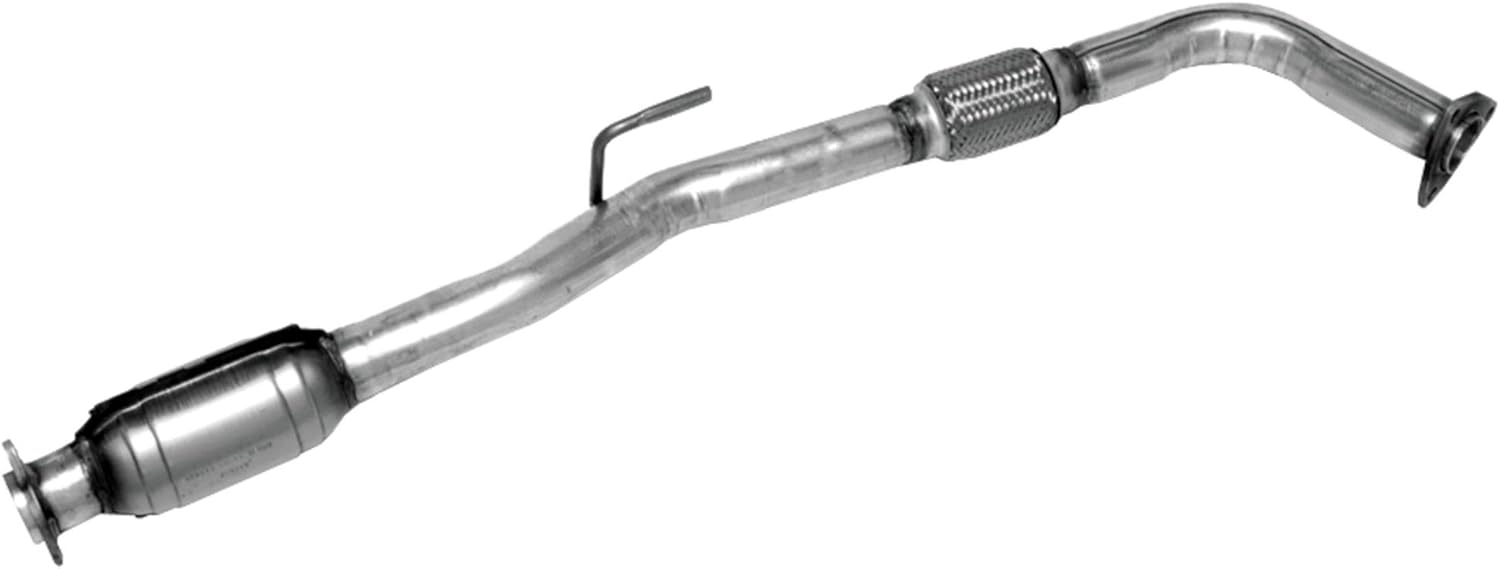
| Manufacturer | Tenneco (Walker) |
|---|---|
| Model | Catalytic Converter |
| Item model number | 55537 |
| Application years | 1997-2001 Camry/Solara (as listed) |
The Walker Ultra 55537 is a direct-fit catalytic converter made to replace the factory unit on compatible Toyota Camry and Solara models from the late 1990s and 2001. It installs like a factory replacement with OE-style flanges, hangers and brackets so you can bolt it in without cutting or welding in most cases. Walker specifies an EPA-compliant washcoat and precious metal loading to restore emissions control and silence a noisy, clogged cat. The unit includes aluminized heat shielding where originally equipped to protect the undercarriage and is built with thick flanges and brackets for durability. In practice it is commonly used as a DIY replacement during exhaust overhauls and paired with resonators or mufflers for a full system refresh. Expect a good fit and emissions compliance for qualifying OBDII vehicles, but some buyers report cosmetic differences from images and minor quality variation compared with factory parts. It does not include installation bolts or gaskets, so plan to source those separately for a straightforward swap.
Best for: Buyers restoring emissions function on qualifying Toyota Camry or Solara models who want a bolt-on, EPA-compliant replacement that fits like the factory part and is suitable for DIY installation.
Less Ideal for: Those seeking an exact factory-original longevity claim or a full hardware kit with bolts and gaskets included should consider other options or plan to buy installation parts separately.
- Direct-fit design with OEM-style flanges, hangers and brackets for bolt-on installation
- EPA-compliant washcoat and precious metal load aimed at restoring emissions control
- Aluminized heat shield where originally equipped to protect surrounding components
- Sturdy construction with thick flanges and brackets for durability
- Works as a practical DIY replacement for Camry exhaust repairs
- Does not include installation bolts or exhaust gaskets
- Some units may differ cosmetically from seller images
- Quality can feel slightly below factory in long-term durability for some users
Verdict: A practical, EPA-compliant direct-fit replacement for late 1990s and 2001 Toyota Camry models that restores emissions control and fits without fabrication, though you will need to supply mounting hardware and may notice minor cosmetic or longevity differences from factory parts.
Walker Ultra EPA 16465 Direct-Fit Catalytic Converter with Integrated Manifold for Toyota Camry

| Compatible vehicles | 2002-2006 Toyota Camry; 2002-2003 Lexus ES300 |
|---|---|
| EPA compliance | For OBDII (1996 and newer) vehicles |
| Part number | 16465 |
| Design | Direct-fit with integrated manifold |
The Walker Ultra 16465 is a direct-fit catalytic converter with an integrated exhaust manifold engineered to meet EPA emissions standards for OBDII vehicles. It replaces the factory manifold/converter assembly and bolts directly to the cylinder head and downstream exhaust, so installation typically involves unbolting the old unit and refitting the new assembly with replacement gaskets and sensors. Notable features include an OE-style washcoat and precious metal load intended to provide the required emissions reduction, thick factory-style flanges and manifolds for strength, and aluminized heat shields where originally equipped to protect the undercarriage. In practice this delivers a factory-replacement feel and restores proper emissions control, helping clear check engine codes tied to the converter when matched to the correct vehicle fit. Limitations are that it is specific to the listed Camry and ES300 years and engine applications and may require new gaskets or O2 sensors during installation for best results.
Best for: Buyers who need a factory-replacement catalytic converter assembly to restore emissions compliance and fitment on the specified Toyota Camry or Lexus ES300 models.
Less Ideal for: Owners looking for a universal or custom aftermarket exhaust solution or those with Camry models outside the listed fitment should consider other options.
- Direct-fit design with integrated manifold for straightforward replacement of the factory assembly
- EPA-compliant construction and OE-style washcoat for required emissions reduction on OBDII vehicles
- Thick flanges and manifolds increase strength and durability compared with generic converters
- Includes aluminized heat shields when originally equipped to protect undercarriage heat-sensitive components
- Fitment is limited to specific Toyota Camry and Lexus ES300 model years and engine configurations
- May require replacement gaskets or new O2 sensors during installation for a proper seal and to clear codes
Verdict: A factory-style, EPA-compliant direct-fit catalytic converter assembly for the listed Camry/ES300 models that restores emissions control with minimal modification.
QKVBKAU Direct-Fit Catalytic Converter for Toyota Camry (2.5L)
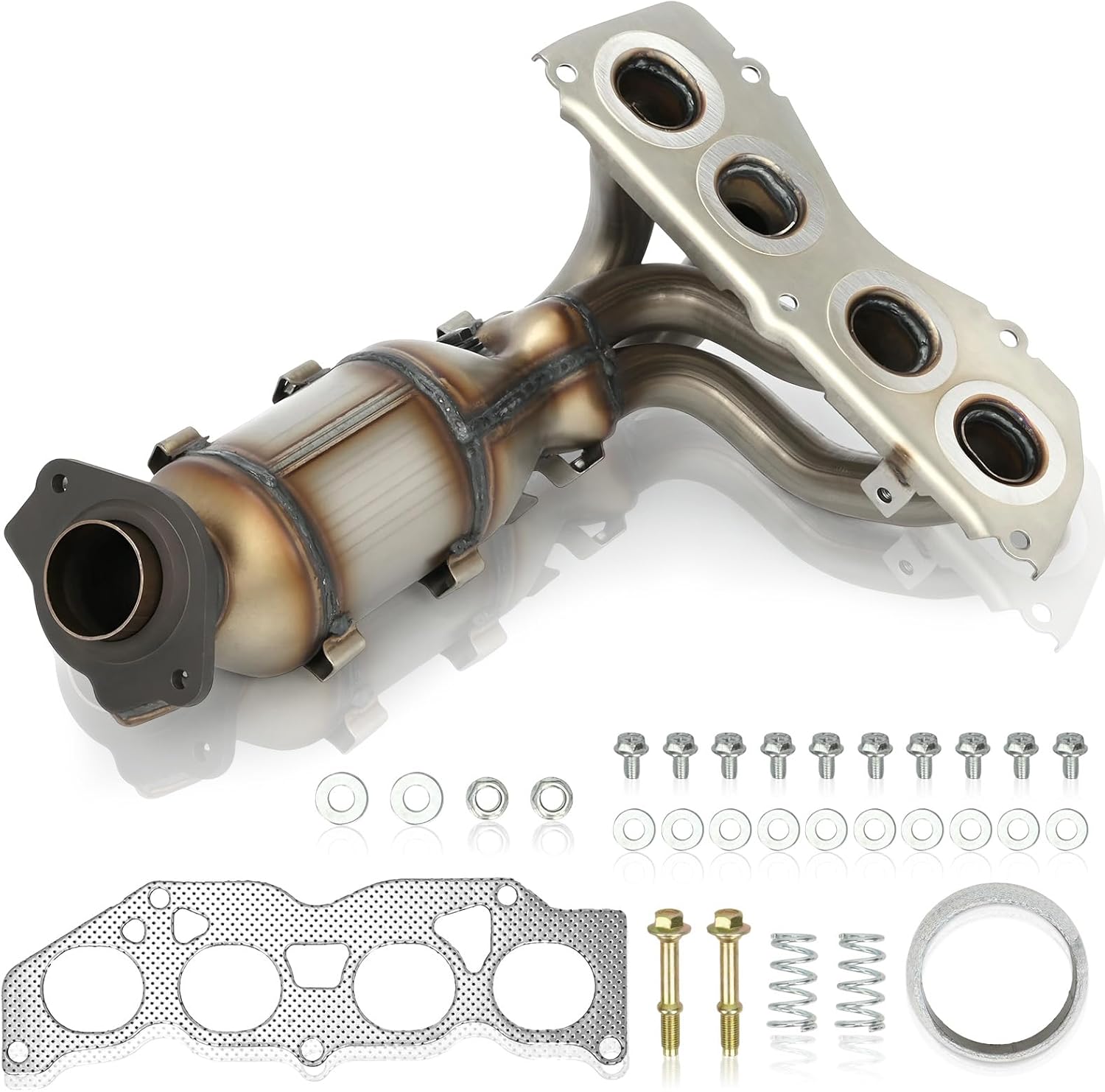
| Vehicle fitment | Toyota Camry 2.5L (2012-2017) |
|---|---|
| Compliance | EPA compliant, OBD II compatible |
| Replaces part numbers | 16692, 641489, 41100 |
| Manufacturer part number | GZBJ-US-TWC-19 |
This QKVBKAU catalytic converter is a direct-fit replacement intended for Toyota Camry 2.5L models and is built to match factory part references for straightforward installation. It installs between the exhaust manifold and downstream piping without modification, so a professional or experienced DIYer can bolt it in and retain factory sensor locations. The unit is EPA compliant and OBD II compatible, meaning it is designed to clear emissions-related faults and pass federal inspections in non-CARB states. Customers report clean welds, proper flange alignment, and a high-flow internal design that helps maintain exhaust flow and engine responsiveness after replacement. Limitations to consider are legal: this federal-compliant unit is not for sale or use in CARB states, so it will not be appropriate for owners in California and other CARB jurisdictions. Also the listing notes included hardware quality varies, and some installers prefer to reuse factory bolts for a tighter fit. For Camry owners outside CARB areas who need a budget-friendly, direct-fit replacement, this converter offers practical performance and a simple install.
Best for: Toyota Camry owners with a failing catalytic converter who need a budget-friendly, direct-fit EPA replacement to restore emissions compliance and drivability in non-CARB states.
Less Ideal for: Owners located in CARB-regulated states or anyone who requires a CARB-compliant converter should avoid this unit and seek a state-legal alternative.
- Direct-fit design that matches factory mounting points for easier installation on Camry 2.5L engines
- EPA compliant and OBD II compatible to restore emissions system function in federal jurisdictions
- High-flow design that maintains exhaust flow and helps vehicle responsiveness
- Clean welds and solid housing reported by multiple users, indicating reliable build quality
- Not legal for use in CARB-regulated states, limiting availability for some owners
- Included hardware may be lower quality so additional bolts or reuse of factory fasteners could be necessary
Verdict: A practical, budget-focused direct-fit catalytic converter for Camry 2.5L owners outside CARB states who want a straightforward emissions replacement.
HIGHBRICK Catalytic Converter Kit for 2002–2006 Toyota Camry/Solara 2.4L (EPA Compliant)

| Vehicle compatibility | 2002–2006 Toyota Camry and Solara 2.4L |
|---|---|
| Compliance | Federal EPA compliant |
| Manufacturer | HIGHBRICK |
| Manufacturer part number | HIGHBRICK15911 |
This HIGHBRICK catalytic converter kit is designed as a direct bolt-on replacement for 2002–2006 Toyota Camry and Solara models with the 2.4L four-cylinder. It installs in place of the factory unit without welding or cutting, using the supplied mounting points, gaskets, and hardware for a straightforward shop or DIY swap. The converter uses a three-way catalytic reaction and ceramic substrate to reduce emissions to federal EPA standards and the manufacturer says materials resist thermal shock and cracking for longer life. In real use you can expect restored exhaust flow and smoother acceleration on cars that had clogged or damaged converters, and compatibility with stock exhaust hangers helps keep fitment simple. Important limitations are that this part is only federally compliant and is not legal for sale or use in certain states with stricter regulations, and buyers should confirm fitment to their specific trim before ordering. The kit is positioned as a budget-friendly factory-replacement option for Camry owners needing a dependable, direct-fit converter.
Best for: Camry and Solara owners with a failing or clogged converter who want a straightforward, budget-friendly factory-replacement that restores emissions function and drivability.
Less Ideal for: Drivers in states that require stricter emission-certified parts or owners who need a dealer-authorized OEM-certified converter.
- Direct bolt-on design with matching mounting points for straightforward installation
- EPA compliant at the federal level for emissions reduction
- Constructed with stainless steel and ceramic materials for thermal resistance and durability
- Includes necessary gaskets and hardware to avoid additional parts purchases
- Not legal for sale or use in states with stricter emissions rules such as California
- Compatibility limited to 2002–2006 Camry and Solara 2.4L applications only
Verdict: A budget-friendly, direct-fit replacement that restores emissions performance on 2002–2006 Camry/Solara 2.4L models but is not compliant with some state-level emissions rules.
CAT CLEAN Front Catalytic Converter for Toyota Camry 2002–2006 (2.4L)

| Vehicle fitment | Toyota Camry/Solara 2002–2006 2.4L L4 |
|---|---|
| OEM reference | 641518, 16384, 58230 |
| Material | 409L stainless steel body |
| Compliance | EPA compliant (federal emissions) |
This CAT CLEAN front catalytic converter is a direct-replacement option intended for Toyota Camry and Solara models with the 2.4L L4 engine from 2002 through 2006. It uses a high-density honeycomb ceramic substrate loaded with precious metals to promote efficient catalytic reactions and reduce emissions. The converter body is stainless steel with internal high-temperature padding to protect the ceramic carrier, and it includes an O2 sensor port for straightforward integration with the vehicle wiring. The product is described as EPA compliant for federal emission standards and is built for bolt-on installation without welding on properly matched vehicles, which simplifies fitting for this Camry application. Practical benefits include restoring catalytic efficiency to clear P0420/P0430 codes and returning the exhaust to quieter, cleaner operation. Important limitations are region restrictions where it cannot be sold or used, and some buyers may still need to confirm exact flange and sensor placement for a true bolt-on fit; hardware like gaskets or clamps may not be provided. Professional installation is recommended if fitment adjustments are required.
Best for: Owners of Toyota Camry (2002–2006) with the 2.4L engine who need a factory-replacement front catalytic converter to restore emissions performance and clear related fault codes.
Less Ideal for: Drivers in states with non-federal emissions regulations or anyone unwilling to verify exact flange and sensor alignment before installation should consider alternatives or professional fitment help.
- Made with high-density honeycomb ceramic substrate and precious metal catalysts for efficient emissions conversion
- 409L stainless steel body and high-temperature padding for corrosion and heat resistance
- Includes an O2 sensor port to integrate with the Camry’s sensor without modification
- Designed for direct bolt connection on compatible models to reduce installation work
- EPA compliant for vehicles meeting federal emissions standards
- Cannot be sold or used in certain states with stricter emissions rules
- May require confirmation of flange, inlet/outlet dimensions, or hardware for a true bolt-on fit
- Gaskets, clamps, or mounting hardware are not guaranteed included
Verdict: A direct-replacement EPA-compliant front catalytic converter built to restore emissions performance on 2002–2006 Toyota Camry 2.4L models, provided fitment and regional restrictions are met.
PHILTOP Front High-Flow Catalytic Converter for Toyota Camry 2.5L (2012–2017)

| Compatibility | Toyota Camry 2.5L 2012-2017 |
|---|---|
| Position | Front |
| Manufacturer | PHILTOP |
| Manufacturer Part Number | 4582EXP748BUS |
This PHILTOP front catalytic converter is a direct-fit replacement for the Toyota Camry 2.5L (2012–2017) that installs flange-to-flange using the supplied gaskets and hardware. It is built with a stainless/aluminized shell and a double-layer, high-temperature ceramic carrier intended to increase flow and surface area for improved scavenging and potential fuel-economy or power consistency compared with a clogged original. The kit is EPA compliant for most states and arrives with the clamps and gaskets needed for bolt-on installation, so a typical DIYer or independent shop can swap it in without cutting or welding in many cases. Reported issues in some installs include thin housing metal and occasional fitment differences that require minor fabrication or heavier muffler clamps for a reliable seal. Also note EPA-compliant converters have legal restrictions in certain states, so confirm local regulations before replacing the Camry’s front converter. This unit is a strong budget-minded option if you need to clear a P0420 code and want a near-factory fit without complex modifications.
Best for: Camry owners with a failing or clogged front catalytic converter who want a direct-fit replacement that a competent DIYer or independent shop can install.
Less Ideal for: Drivers in states with restrictive aftermarket converter laws or anyone who needs a CARB-certified California-specific unit.
- Direct-fit flange-to-flange design for bolt-on replacement on Camry 2.5L 2012–2017
- Comes with gaskets and hardware to simplify installation
- High-temperature double-layer ceramic carrier aimed at improving flow and catalytic surface area
- Stainless/aluminized exterior resists rust and extends service life
- EPA-compliant unit cannot be sold or installed in some states
- Some users report thin housing metal and occasional need for minor fabrication or stronger clamps
Verdict: A budget-friendly, near-factory direct-fit front converter for the 2012–2017 Camry 2.5L that simplifies replacement but may be restricted by state regulations.
Walker CalCat 82601 Universal Catalytic Converter
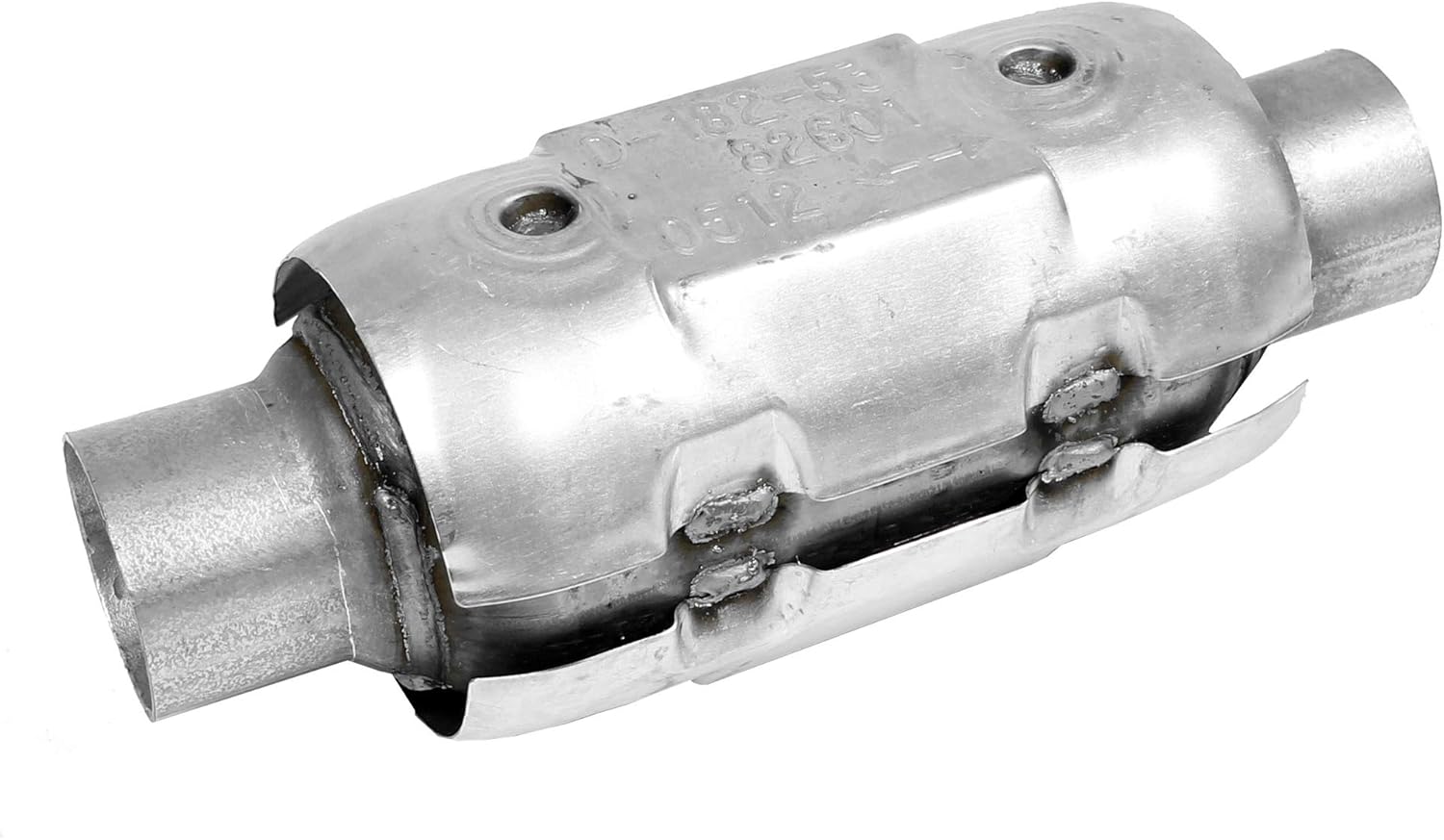
| Manufacturer | Walker Exhaust |
|---|---|
| Model | 82601 |
| CARB EO | D-182-53 |
| Compatible vehicles | Toyota Camry (listed model years) |
The Walker CalCat 82601 is a universal catalytic converter intended as a replacement for compatible Toyota Camry models. It is built with a stainless-steel body, aluminized pipe and heat shields for corrosion resistance and durability, and uses Walker’s OE-style coating process and advanced washcoat to apply catalyst material to the substrate. In practice this unit is typically used where a faulty or failed converter needs replacement to restore emissions compliance; installers will weld or clamp it into the exhaust system and may use the expandable bushings to fine-tune fitment. The CARB EO number indicates it meets California-style emissions requirements for OBDII vehicles, which simplifies passing emissions inspections when applicable. Limitations are that this is a universal-style converter so some fabrication or welding is usually required for a precise fit on a Camry, and installation may require a professional muffler shop if you lack welding experience. Expect good emissions performance and durable construction but plan for shop time to complete the install correctly.
Best for: Camry owners or technicians needing a CARB-compliant replacement catalytic converter to restore emissions compliance and reliable exhaust performance.
Less Ideal for: Owners who want a guaranteed bolt-in, vehicle-specific converter without any welding or exhaust work should consider a model-specific factory-quality replacement instead.
- CARB-compliant for use on OBDII Toyota Camry models ensuring emissions compliance
- Stainless-steel construction with aluminized pipe and heat shields for improved durability
- OE-style catalyst coating and advanced washcoat for consistent emissions performance
- Expandable bushings provide flexibility to achieve a better fit during installation
- Universal design often requires welding or professional fabrication for exact fitment on a Camry
- Not a vehicle-specific drop-in part so installers must verify fit and may modify piping
Verdict: A durable, CARB-compliant universal converter that delivers reliable emissions performance for Toyota Camry owners but requires welding or shop installation for a proper fit.
Choosing the Right Toyota Camry Catalytic Converter: Key Factors to Consider
Vehicle Fitment and Model Year Compatibility
Ensuring the catalytic converter is compatible with the specific Toyota Camry model year and engine configuration is essential. Fitment affects installation time, whether modifications are needed, and if the part will mate correctly with existing exhaust flanges and mounting points. Mismatched parts can lead to exhaust leaks, increased labor costs, and potential check engine light issues. Buyers should verify the converter matches engine displacement, emission system layout, and any factory brackets or heat shields required by their Camry. This factor also influences whether the unit is a direct fit or requires additional hardware, which affects overall cost and complexity. Confirming compatibility ahead of purchase reduces returns and ensures a smoother installation process. For many buyers, a unit designed specifically for their vehicle saves time and avoids guesswork during installation. Fitment information is often the first filter when comparing replacement options.
Emissions Certification and Compliance
Emissions compliance determines whether a catalytic converter is legal for street use in your area and whether it meets local or federal standards. Certification can vary by state or region, and a compliant unit helps ensure your Toyota Camry will pass emissions inspections and avoid fines. Certified converters are designed to reduce pollutants to specific thresholds, which affects long-term environmental performance and vehicle diagnostics. Choosing a compliant unit often means the product has been tested for durability and performance under typical driving conditions. Noncompliant or uncertified parts may save money upfront but can create legal or inspection issues down the line. Buyers should confirm certification status before purchasing to avoid unexpected regulatory complications. Emissions compliance also influences resale value and long-term ownership costs of the vehicle.
Materials and Construction Quality
The materials used in the catalytic converter and the overall construction quality impact durability, heat tolerance, and resistance to corrosion. High-quality substrates, robust stainless steel housings, and solid welds extend service life and reduce the risk of premature failure. Material choices affect how well the converter withstands road salt, moisture, and thermal cycling common in everyday driving. A well-constructed unit is less likely to develop cracks, rust through, or suffer internal breakdowns that reduce effectiveness. Construction quality also relates to weight and fit accuracy, which influence how the unit integrates with the vehicle's exhaust system. Buyers should consider how long they expect the replacement to last and whether they need a unit built for harsher climates or heavy use. Investing in better materials typically reduces the likelihood of repeat repairs and associated labor costs.
Internal Substrate Type and Cell Density
The internal substrate and its cell density affect how efficiently the catalytic converter converts harmful gases into less harmful emissions. Different substrate materials and cell designs balance conversion efficiency with backpressure and flow characteristics. A substrate with the appropriate cell density can provide effective emission control without negatively impacting engine performance or fuel economy. Buyers should consider how substrate choices align with their driving style and engine demands, as overly restrictive substrates can increase exhaust backpressure. Conversely, substrates with too low density may not provide the desired emissions reduction. Understanding substrate characteristics helps buyers select a unit that maintains engine responsiveness while meeting regulatory requirements. This factor is particularly important for drivers who want reliable emissions control without sacrificing drivability.
Installation Type and Required Modifications
Whether a converter is a direct fit or requires modifications influences installation difficulty, required tools, and total cost. Direct fit units are designed to replace the factory part without cutting or welding and usually reduce installation time and the risk of improper alignment. Universal or weld-on converters may offer broader compatibility but often require fabrication, precise measurements, and professional welding. Installation type also affects whether additional gaskets, bolts, or hangers are needed, which adds to the parts list and labor. Buyers should assess their mechanical skill level and whether they prefer a plug-and-play solution or are willing to arrange custom installation. Considering installation up front helps set realistic expectations for total outlay, downtime, and whether professional service will be necessary. Clear knowledge of installation requirements prevents surprises during replacement.
Warranty, Support, and Expected Service Life
Warranty coverage and manufacturer support indicate confidence in a product and provide protection against premature failure. A longer or more comprehensive warranty can reduce the financial risk if the catalytic converter fails early or has manufacturing defects. Support options, such as accessible customer service, installation guides, and return policies, also make the ownership experience smoother. Expected service life depends on build quality, driving conditions, and maintenance practices, so warranty terms often reflect anticipated durability. Buyers should compare warranty durations and what is covered to align with their risk tolerance and vehicle usage. Understanding warranty procedures and any required documentation or registration helps avoid complications if a claim becomes necessary. Good support and a solid warranty can make a higher initial cost easier to justify.
How We Chose the Best Toyota Camry Catalytic Converter
We started by focusing on components specifically intended for Toyota Camry fitment and on replacements that meet emissions requirements for the vehicle. Our selection filtered for units offering proper inlet and outlet alignment, compatible mounting points, and the correct substrate type to suit typical Camry exhaust configurations. We prioritized build quality factors such as housing material, internal washcoat and substrate density, and robust welds that influence longevity. We also considered ease of installation, including truly direct-fit designs and whether minor modifications are typically required for a clean installation. Exclusions included universal-only units lacking clear fitment guidance, parts with missing emissions documentation, and components with insufficient technical specifications. The result is a list that favors fit, emissions performance, durability, and straightforward installation for Camry owners.
Our full evaluation process is outlined in our review methodology.
FAQ
How do I know if my Toyota Camry catalytic converter needs replacement?
Common signs include a persistent check engine light, reduced engine performance, decreased fuel economy, or unusual exhaust odors. In many cases a diagnostic scan will show related trouble codes, and a qualified technician can confirm whether the catalytic converter is the cause. Visual inspection can sometimes reveal damage or excessive rust, but diagnosis usually combines scan data and a professional inspection.
What are the main differences between direct fit catalytic converter and universal catalytic converter options?
Direct fit catalytic converters are designed to match the Camry's original mounting points and plumbing, which often makes installation simpler and faster. Universal catalytic converters are more generic and usually require additional pipes, clamps, or welding to adapt them to the vehicle. For owners seeking easier installation and a closer match to the original configuration, direct fit units are commonly preferred.
Can I drive my Toyota Camry with a failing catalytic converter?
You can usually drive for a short period with a partially failing catalytic converter, but performance and fuel economy may be affected and emissions will likely increase. In some cases a clogged converter can cause engine overheating or damage to other components if not addressed. It is generally advisable to have the issue diagnosed and repaired sooner rather than later to avoid further problems.
What should I consider when choosing a Toyota Camry catalytic converter replacement?
Consider fitment type, materials, warranty, and whether the unit is intended for your specific Camry model year and engine configuration. Installation complexity and whether modification is required are also important factors. Finally, check applicable emissions requirements for your vehicle and region, since regulations can influence which replacement options are appropriate.
Is installation of a catalytic converter replacement difficult for a typical DIYer?
Difficulty depends on the fitment and your mechanical experience. Direct fit replacements typically involve unbolting the old unit and bolting in the new one, which is manageable for many DIYers with basic tools. Universal units often need cutting, welding, or additional pipes, so those jobs are usually better handled by someone with fabrication skills or a professional to ensure proper sealing and alignment.
Will replacing the catalytic converter affect my Toyota Camry's emissions tests?
A properly installed, compatible catalytic converter should help your Camry meet emissions standards and improve test results. It is important to use a unit that matches the vehicle's emissions requirements and to ensure the installation does not introduce leaks or sensor issues. If you are unsure about local testing rules, consult a qualified technician or local testing authority for guidance.
Final Verdict
When choosing a Toyota Camry catalytic converter, prioritize correct fitment, emissions efficiency, and durable construction. Decide whether a direct-fit unit is worth the convenience to avoid modifications, or if a different configuration matches your repair plans and installer capabilities. Keep in mind tradeoffs between ease of installation, documented compliance, and long-term durability to find the best balance for your needs.
Explore More:
- Check out all Toyota Camry parts & accessories
- Explore Catalytic Converters Maintenance & Repair Guides
- Explore Exhaust & Emissions
- Browse all Auto Parts
