

Note: This article contains affiliate links. If you click on these links and make a purchase, I may earn a small commission at no extra cost to you. This helps support my research and content. Read my full affiliate disclosure here.
If you want a lower stance and crisper handling without the complexity of coilovers, Honda Civic LX lowering springs are an effective upgrade. On the LX trim, the right springs reduce body roll, lower the center of gravity, and improve the car s response to steering inputs while keeping daily comfort acceptable for commuting and occasional spirited driving.This guide covers our shortlist of seven recommended lowering springs chosen for fitment to the Civic LX, plus practical evaluation criteria such as ride height change, spring rate, and long-term durability. Read on to understand what each set was evaluated for and how to match springs to the way you drive.
Looking for other parts? See all Honda Civic parts & accessories.
Top Picks at a Glance
| Best Overall The best all-around choice for most situations | maXpeedingrods Lowering Springs for Honda Civic (2016–2024) / Acura Integra (2023–2025) |  |
| Best Quality Built to a higher standard if you want something more solid | Skunk2 Racing Lowering Springs for 2001–2005 Honda Civic (front set) |  |
| Best Value The sweet spot between price and what you get | Truhart Lowering Springs for 2016+ Honda Civic |  |
| Best Budget The cheapest option that still gets the job done reliably | AJP Distributors JDM Suspension 2" Front & Rear Lowering Springs Kit |  |
| Highest Rated A top-rated pick with lots of positive feedback | Godspeed Traction-S Lowering Spring Set for Honda Civic 2012–2015 |  |
| Most Popular A crowd favorite that many people choose with confidence | D2 Pro Lowering Springs for 2016–2025 Honda Civic / 2017–2025 Si / 2022+ Integra |  |
1. maXpeedingrods Lowering Springs for Honda Civic (2016–2024) / Acura Integra (2023–2025)

| Fitment | Honda Civic 2016–2024; Acura Integra 2023–2025 |
|---|---|
| Material | SAE 9254 cold-wound steel |
| Corrosion test | 720-hour salt spray |
| Fatigue test | 200,000 cycles |
| Installation | Direct bolt-on, compatible with OEM and aftermarket shocks |
These maXpeedingrods lowering springs replace the factory coil springs to lower ride height and sharpen handling on compatible Civic and Integra models. Made from SAE 9254 cold-wound steel with an anti-corrosion coating, they are designed to resist moisture and road chemicals and to last through repeated stress. Typical use is as a bolt-on suspension upgrade for drivers wanting reduced body roll, a lower center of gravity, and a sportier stance without swapping shocks. The package is tested through fatigue and salt-spray protocols and the springs are compatible with factory and most aftermarket dampers, which keeps installation straightforward for a competent DIYer or shop. Expect firmer ride quality compared with stock; comfort is retained better than aggressive track springs but bump harshness increases. These are a budget-minded performance choice that delivers noticeable visual and handling gains, though long-term durability will depend on local roads and installation quality.
Best for: Drivers who want a balanced, budget-friendly handling upgrade that lowers their Civic for better cornering and a cleaner stance while keeping daily drivability practical.
Less Ideal for: Drivers who prioritize the smoothest possible ride or who need a suspension tuned specifically for track competition should consider softer springs or a dedicated coilover setup instead.
- Made from SAE 9254 cold-wound steel for strength and fatigue resistance
- Anti-corrosion coating tested with 720-hour salt spray for improved longevity
- Designed for direct bolt-on fitment with factory and most aftermarket shocks
- Lowers center of gravity to reduce body roll and improve cornering response
- Manufacturer testing includes 200,000-cycle fatigue tests indicating durability focus
- Will produce a firmer, slightly harsher ride compared with stock springs
Verdict: A cost-effective lowering spring set that gives Civic drivers a noticeable handling and stance upgrade while keeping the car usable for daily driving.
2. Skunk2 Racing Lowering Springs for 2001–2005 Honda Civic (front set)
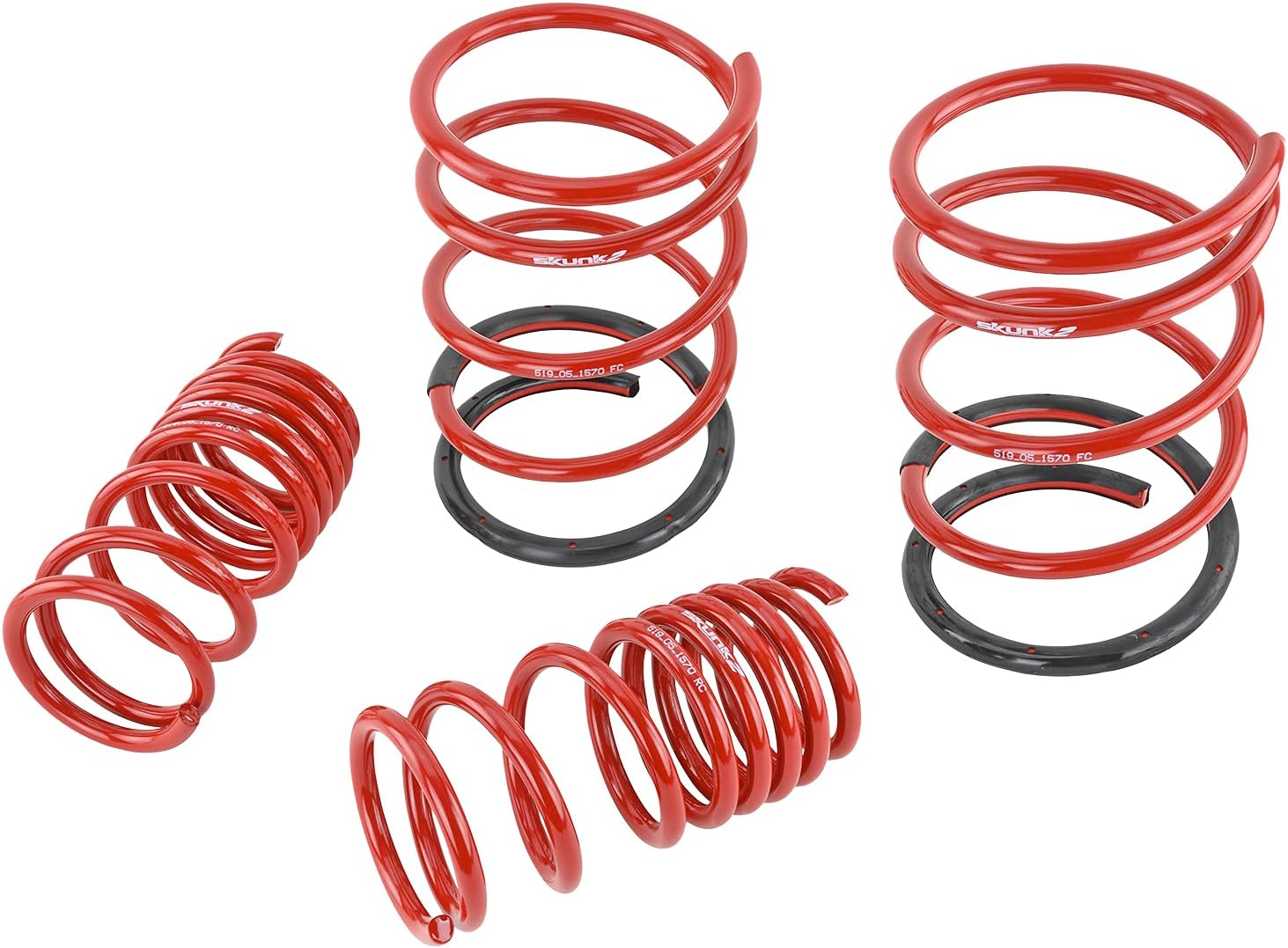
| Fitment | 2001 – 2005 Honda Civic 1.6L (DX/EX/GX/HX/LX/Si) |
|---|---|
| Material | SAE 9254V spring steel |
| Drop (Front / Rear) | 2.25" / 2.00" |
| Front Spring Rate (Tender / Main) | 123 lb-in / 260 lb-in |
| Rear Spring Rate (Tender / Main) | 156 lb-in / 313 lb-in |
Skunk2 Racing’s lowering springs are engineered to give 2001–2005 Honda Civics a firmer, lower stance aimed at improved cornering and reduced body roll. These springs are CNC-wound from SAE 9254V spring steel, shot-peened and corrosion-protected, and are intended to be a direct vehicle-specific fit for the Civic front and rear. In use they lower the car roughly 2.25 inches front and 2.00 inches rear, increasing spring rates so the chassis resists squat under acceleration and nose dive during braking. That translates to sharper turn-in and more predictable mid-corner behavior compared with stock springs, while the dual tender/main rates help retain reasonable ride compliance for daily driving. They work with factory or aftermarket shocks, though for best control you may want to pair them with uprated dampers or Skunk2 Sport Shocks. Expect a sportier, slightly firmer ride and improved visual stance; these springs are not a full suspension kit so alignment and possible bump stop or sway bar considerations may be required after installation.
Best for: Drivers who prioritize sharper handling, reduced body roll, and a lower stance on a 2001–2005 Honda Civic and are willing to accept a firmer ride for better cornering control.
Less Ideal for: Drivers seeking a plush, factory-comfort ride or those who want a bolt-on solution that requires no further suspension tuning or alignment work.
- Vehicle-specific fit for 2001–2005 Honda Civic for straightforward installation
- CNC-wound SAE 9254V spring steel construction with shot-peen and corrosion protection
- Noticeable handling improvements: reduced body roll, better cornering grip, and less squat/nose dive
- Matched tender and main spring rates to balance daily comfort with performance
- Requires attention to damping and alignment for best results since shocks are not included
- Lowering may limit suspension travel and could require bump stop or sway bar adjustments
Verdict: Choose these springs if you want a proven, vehicle-specific lowering setup that sharpens handling and gives a race-inspired stance for a 2001–2005 Honda Civic.
3. Truhart Lowering Springs for 2016+ Honda Civic

| Manufacturer | Truhart |
|---|---|
| Material | 55 chrome silicon steel |
| Fitment | 2016+ Honda Civic |
| Manufacturer Part Number | TH-H416 |
These Truhart lowering springs lower the ride height on 2016 and later Honda Civic models to tighten handling and reduce body roll during cornering. Made from 55 chrome silicon steel, the springs are built to resist sag and fatigue compared with softer aftermarket coils, and are intended to provide a firmer, sportier ride suitable for daily driving and occasional spirited use. Installation replaces the factory springs and is typically done at the front and rear with common suspension tools; pairing with compatible shocks or sport struts will preserve ride quality. The advertised front and rear drop rates give a predictable stance change for coupe, sedan, and hatch variants. Practical buyers will appreciate the lifetime unlimited mileage warranty for peace of mind, but expect a firmer ride and slightly reduced ride comfort over stock—these are not for those seeking a plush daily commute. Fitment is limited to 2016+ Civic platforms so check model specifics before ordering.
Best for: Buyers who want a durable, budget-friendly way to lower their 2016+ Civic for sharper handling and a more aggressive stance while prioritizing predictable performance over a cushioned ride.
Less Ideal for: Drivers who prioritize ultimate ride comfort or who need adjustable or track-specific suspension components should consider alternatives.
- Constructed from 55 chrome silicon steel for improved durability and resistance to sag
- Engineered drops for front and rear to improve handling and reduce body roll
- Lifetime unlimited mileage warranty provides long-term coverage
- Direct replacement design retains factory mounting points for straightforward installation
- Will produce a firmer, less comfortable ride compared with stock springs
Verdict: A cost-effective, durable lowering spring set that sharpens handling and stance on 2016+ Honda Civics for buyers who prefer predictable sportier performance.
4. AJP Distributors JDM Suspension 2" Front & Rear Lowering Springs Kit

| Compatible models | 2001–2005 Honda Civic coupe and sedan (2-door & 4-door) |
|---|---|
| Lowering drop | 2.0" front and 2.0" rear |
| Manufacturer | AJP Distributors |
This lowering spring kit is a straightforward option for bringing a noticeable 2.0-inch drop to 2001–2005 Honda Civic coupes and sedans. It replaces the factory springs and is intended for street use to give a lower stance, reduced body roll, and a firmer feel compared with stock springs. Installation requires spring compression and is best handled by a shop unless you have the proper tools. The kit is sold as springs only, so retain or reuse factory struts or pair with compatible shocks for best ride control. Buyers report the springs achieve the advertised drop and improve cornering, but expect a firmer ride and a slight reduction in ride comfort on rough roads. Helpful points are the clear vehicle fitment and the matched front and rear drop heights, though no installation hardware or instruction manual is included. For budget-focused Civic owners wanting a visible lowered look and sharper handling without replacing the entire suspension, this kit is a practical, no-frills choice.
Best for: Buyers looking to lower a 2001–2005 Civic on a tight budget who prioritize a sharper look and improved handling over ride comfort.
Less Ideal for: Drivers who need a comfortable daily ride over rough roads or who prefer adjustable height and damping controls should consider upgraded shocks or coilovers instead.
- Matched front and rear 2.0-inch drop for a balanced stance
- Designed specifically for 2001–2005 Civic coupe and sedan fitment
- Simple spring-only kit that can save cost versus full coilover replacement
- Improves handling and reduces body roll compared with stock springs
- May produce a noticeably firmer ride and reduced comfort on rough roads
- No installation hardware or detailed instructions included
Verdict: If you want an inexpensive, vehicle-specific way to lower a 2001–2005 Civic for a sharper look and firmer handling, this matched 2" spring kit delivers it simply and cheaply.
5. Godspeed Traction-S Lowering Spring Set for Honda Civic 2012–2015

| Compatibility | Honda Civic 2012-2015 (FG/FB) |
|---|---|
| Material | SAE 9254 spring wire |
| Average drop | Front: 1.4" Rear: 1.5" |
Godspeed Traction-S lowering springs are a budget-friendly option to lower a 2012–2015 Honda Civic and sharpen its handling without making the car uncomfortable for daily use. Cold wound from SAE 9254 wire and heat treated during manufacture, these springs are intended to resist sag and deliver consistent spring rates over time. They are designed to work with factory shocks and can also pair with performance dampers if you want a firmer setup. Expected drop is roughly 1.4 inches front and 1.5 inches rear, producing a noticeably lower stance and reduced body roll in corners. Installation is straightforward for a shop or competent DIYer, although a few users noted front springs can be labeled confusingly and minor trimming of bump stops may be required for ideal shock travel. The springs are a good match for drivers who want improved response and a cleaner look without the complexity or cost of coilovers, but they do not include shocks so pairing with worn dampers will reduce the benefit.
Best for: Buyers who prioritize a reliable, durable lowering solution that improves handling and stance without sacrificing everyday comfort and who prefer a simple spring-only upgrade over full coilovers.
Less Ideal for: Drivers seeking fully adjustable ride height or a race-oriented suspension setup should consider coilovers or a matched spring-and-shock kit instead.
- Cold wound SAE 9254 spring steel with heat treatment aims to resist premature sag
- Designed to maintain a comfortable daily ride while giving improved handling and reduced body roll
- Works with factory shocks and can be upgraded with aftermarket performance dampers
- Relatively easy installation for a shop or experienced DIY installer
- Does not include shocks so worn dampers may negate handling improvements
- Actual drop can vary and some users reported slightly less drop than described
- Front springs have been reported mislabeled on some sets, which can add installation confusion
Verdict: A durable, comfort-minded lowering spring set that gives a Civic a lower stance and crisper handling while remaining suitable for daily driving.
6. D2 Pro Lowering Springs for 2016–2025 Honda Civic / 2017–2025 Si / 2022+ Integra

| Material | High tensile chrome silicon steel |
|---|---|
| Manufacturing Process | Cold-wound and heat-treated |
| Spring Design | Progressive-rate coils |
| Fitment | Direct factory replacement |
D2 Pro lowering springs replace the factory coils with cold-wound, heat-treated chrome silicon steel springs that lower the car and increase spring rate as they compress. They are typically used by drivers who want a sportier stance and firmer handling on street and occasional track runs. The progressive design aims to balance everyday ride comfort with improved cornering and reduced body roll, and the purple corrosion-resistant finish helps longevity. Fitment is direct to factory mounting points so installation follows standard spring-for-spring replacement procedures, though front strut work can take more time and may require help or basic shop tools. Real-world feedback shows a noticeable drop in ride height and sharper turn-in, with some users reporting a firmer ride over bumps and occasional rubbing on aggressive wheel/tire setups. The springs are bench tested and made in an ISO 9001 facility with TÜV approval, which supports their durability and consistent spring rates. Expect improved road feel and appearance at the cost of a stiffer ride compared with stock springs and the usual alignment adjustments after installation.
Best for: Drivers who prioritize a lowered stance and sharper handling but still want a usable daily ride backed by proven product testing and positive owner feedback.
Less Ideal for: Drivers who need a plush, commuter-focused ride or those who frequently carry heavy loads and require maximum suspension travel and comfort.
- Progressive-rate design that firms up on compression for better cornering without being overly harsh at small bumps
- Cold-wound, heat-treated chrome silicon steel construction for consistent spring rates and durability
- Direct fit to factory mounts for straightforward spring-for-spring replacement
- Durable surface finish for corrosion resistance and longer service life
- TÜV approval and ISO 9001 manufacturing that indicate tested quality control
- Produces a firmer, sometimes noticeably stiffer ride compared with factory springs
Verdict: Choose these springs if you want a reliable, tested lowering kit that sharpens handling and gives a sporty look while remaining suitable for daily driving.
Choosing the Right Honda Civic LX Lowering Springs: Key Factors to Consider
Target Ride Height and Stance
How much the springs lower the Civic LX affects handling, tire clearance, and everyday usability. A modest drop of one to two inches usually improves cornering and reduces front lip scrape risk while preserving suspension travel for speed bumps and steep driveways. A more aggressive drop increases the chance of rubbing on fenders and trim and can require additional adjustments such as roll or trim modifications to maintain safe clearance.
Decide the height by balancing aesthetics and function. If you plan frequent highway driving or carry passengers and cargo, err toward a conservative drop. If the goal is a show stance or track-focused look, expect to sacrifice some daily comfort and potentially need other suspension changes.
Spring Rate and Ride Quality
Spring rate determines how firm the suspension feels and how quickly the car responds to inputs. Higher rates reduce body roll and improve turn-in at the expense of ride comfort over rough pavement. Progressive-rate springs offer a softer initial response for small bumps and firm up under heavier loads or during cornering, providing a middle ground for daily-driven Civics.
Consider how you drive. If you commute on varied road surfaces, a moderate or progressive rate will keep the Civic LX comfortable. If you prioritize precise handling on smooth roads, stiffer linear rates may be preferable but will transmit more shock to the cabin.
Compatibility With OEM Suspension Components
Lowering springs should work with the Civic LX s existing shocks and struts unless the kit specifies matched dampers. Using much stiffer springs on worn or OEM dampers can cause poor control and accelerated wear. Confirm whether the springs are designed for use with stock shocks or if upgraded dampers are recommended for optimal performance.
If replacing springs only, budget time to inspect shocks for leaks or wear and consider whether a damper refresh is needed. Proper pairing prevents unpredictable handling and extends the life of both springs and dampers.
Handling Tradeoffs and Tire Wear
Lowering alters suspension geometry and can change camber and toe characteristics, which influences cornering grip and tire wear. A moderate lowering kit typically improves cornering grip by lowering roll center and reducing weight transfer. However, aggressive lowering can increase negative camber and accelerate inside tire wear if not corrected with alignment adjustments.
Plan to perform a professional alignment after installation and monitor tire wear closely during the first few thousand miles. Some owners accept slightly faster tire wear as a tradeoff for improved handling, while others prefer setups that minimize added maintenance.
Durability and Corrosion Resistance
Springs endure constant flexing and exposure to road debris and salt, so protective finishes and material quality matter. Coatings such as powder coat or durable epoxy reduce the risk of corrosion that can compromise spring life and safety. Manufacturing quality, including proper heat treatment and consistent winding, also affects fatigue resistance and long-term performance.
Choose springs from suppliers that specify corrosion protection and manufacturing tolerances. Longer-lasting springs reduce the need for early replacement and maintain consistent ride height and behavior over time.
Installation and Alignment Needs
Installation complexity varies but most lowering springs are a direct swap with the Civic LX s factory springs. You should be prepared to have the struts compressed and springs installed using proper tools and safety precautions. After installation, a full alignment is essential to correct camber and toe changes and to ensure safe handling.
Factor in whether you will DIY or use a shop. DIY installation saves labor cost but requires a spring compressor and mechanical competence. Professional installation ensures correct torque, safe spring handling, and a post-installation alignment for predictable on-road behavior.
How Much Lowering Springs Affect Civic LX Handling
Lowering springs change the Civic LX s center of gravity and reduce body roll, which typically sharpens turn-in and improves mid-corner stability. The magnitude of the effect depends on the drop and spring rates you choose, with modest drops offering subtle but noticeable improvements and aggressive drops producing more pronounced handling changes.
Expect improved steering response and reduced pitch during braking. However, the change in suspension travel can alter bump compliance, so the perceived improvement in handling is often linked to the tradeoff in ride comfort.
- Smaller drops yield predictable handling gains with minimal compromise to ride.
- Larger drops increase lateral grip potential but may reduce suspension compliance over rough roads.
- Progressive-rate springs can give a balance between comfort and control.
Installation Checklist for a Safe Swap
Prepare by checking parts compatibility, acquiring a spring compressor, and reviewing torque specs for the Civic LX strut assembly. Replace worn hardware like top mounts and rubber isolators if they show signs of degradation. Keep the work area level and use jack stands; compressed springs are dangerous if handled incorrectly.
After installation, follow up with a four-wheel alignment to set camber and toe back into specification. Verify brake lines, ABS sensor wiring, and sway bar link angles to ensure no binding occurs at full suspension travel.
- Inspect shocks and strut mounts before installing new springs.
- Replace any corroded or worn spring seats and isolators.
- Perform a professional alignment immediately after installation.
Progressive Vs Linear Spring Choices
Progressive springs have variable coil spacing so the effective rate increases with compression. This design smooths small impacts while providing firmer support during hard cornering. For Civic LX owners who drive daily and occasionally push the car, progressive springs often deliver a comfortable yet controlled feel.
Linear springs provide a consistent rate throughout compression and are preferred when predictability at the limits is important. They are commonly chosen for drivers who favor a more direct feedback and consistent handling characteristics across different loads.
- Progressive: better small-bump comfort, variable firmness under load.
- Linear: consistent response, favored for track or aggressive street driving.
Alignment and Ongoing Maintenance Tips
After any lowering spring install, alignment is not optional. Lowering changes camber and toe, and proper adjustment prevents uneven tire wear and preserves handling balance. Recheck alignment after the first 200 to 500 miles to allow settling and then again annually or after suspension work.
Inspect springs periodically for corrosion, cracked coating, or sagging. Listen for unusual noises and check ride height consistency across all four corners to spot early issues.
- Get a four-wheel alignment with ride-height aware settings.
- Re-inspect hardware and bushings after initial break-in miles.
- Monitor tire wear patterns and adjust alignment as necessary.
Matching Springs to Driving Goals
Define whether you want subtle street improvements, a more aggressive stance, or a compromise for spirited weekend driving. For lowered-but-comfortable daily use, target a moderate drop and consider progressive rates. For sharper handling and maximum reduction in body roll, choose firmer, lower springs and be prepared for a firmer ride.
Remember that lowering alone will not fix worn chassis components. Ensure the rest of the suspension is in good condition to realize the full benefits of new springs.
- Daily driver: modest drop, progressive rates.
- Weekend enthusiast: moderate drop, slightly stiffer linear rates.
- Aggressive stance: larger drop, expect ride compromises and more alignment work.
Still looking for the perfect fit?
Select your Honda Civic configuration to see the most relevant Lowering Springs recommendations
How We Chose the Best Honda Civic LX Lowering Springs
We narrowed the field by prioritizing fitment, safety, and ride behavior specific to the Honda Civic LX configuration. First, we required exact fitment to the LX suspension layout and mounting points so buyers would not need additional adapters or modifications. Next, we evaluated expected ride height and spring rate ranges to cover common owner goals from modest lowering and improved handling to more aggressive street stance. Durability factors included corrosion-resistant coatings and proven fatigue life for road-use conditions. We also considered ride comfort tradeoffs to ensure some options remained suitable for daily driving on varied pavement. Noise, vibration, and harshness potential was a factor, favoring progressive or linear rates that reduce harshness over typical road imperfections. Finally, we screened out any options that required strut modification or extensive alignment work beyond typical post-install adjustments. Exclusions: we excluded systems that are not direct-fit lowering springs, such as full coilover kits or products that require custom fabrication. The resulting shortlist reflects sets that balance predictable ride quality, consistent fitment, and real-world durability for Civic LX owners.
Our full evaluation process is outlined in our review methodology.
FAQ
How much will lowering springs lower my Civic LX?
Most lowering springs for the Civic LX reduce ride height between about 1.0 and 2.5 inches. The exact amount varies by kit and by front or rear springs. Check the manufacturer s stated drop and expect minor variance after settling and with different wheel/tire combinations.
Do I need new shocks when I install lowering springs?
Not always. If your OEM shocks are in good condition and the springs are a modest change, stock dampers often work fine. However, if the springs significantly increase rate or the shocks show wear, upgraded dampers are recommended to maintain control and prevent premature shock failure.
Will lowering springs affect my Civic LX s warranty or inspections?
Aftermarket lowering springs can affect warranty coverage depending on local policies and warranty terms. For inspections, ensure the vehicle retains safe ride height and that no sharp rubbing or structural modifications are present. Check local regulations and warranty documents for specifics.
Are progressive lowering springs better for daily driving?
Progressive springs are often a good choice for daily-driven Civic LX cars because they soften small bumps while stiffening under larger loads. This provides a compromise between comfort and improved handling for everyday use.
How long does installation usually take?
A professional shop can typically complete a lowering spring swap and alignment in a few hours. DIY time varies with experience but plan for a half day and allow for safety checks and a post-install alignment.
Will lowering springs cause accelerated tire wear?
Lowering can change camber and toe settings, which can increase inside tire wear if not corrected. A proper alignment after installation usually prevents significant accelerated wear, but more aggressive drops may still require frequent checks and alignment tweaks.
Final Verdict
When choosing lowering springs for a Honda Civic LX, prioritize a kit that matches your intended use—modest drops and progressive rates for comfortable daily driving, or firmer linear rates for sharper handling. Always confirm direct fitment to LX suspension components, inspect or refresh dampers if needed, and plan for a professional alignment after installation. By weighing ride height, spring rate, and durability tradeoffs, you can select a set of springs that delivers the handling and stance you want without compromising safety or long-term reliability.
Explore More:
- Check out all Honda Civic parts & accessories
- Explore Lowering Springs Maintenance & Repair Guides
- Explore Suspension & Steering
- Browse all Auto Parts
