

Note: This article contains affiliate links. If you click on these links and make a purchase, I may earn a small commission at no extra cost to you. This helps support my research and content. Read my full affiliate disclosure here.
If you own a 1996-2000 Honda Civic and want firmer handling and a neater stance, choosing the right lowering springs matters. The right springs change ride height, spring rate, and suspension response, and those changes have practical effects on daily driving, cornering, and tire wear. This guide focuses on the top shortlisted lowering springs ideal for the 1996-2000 (EJ, EK, and EM) Civic lineup. We evaluated candidates for ride comfort, expected drop height, fitment accuracy, and durability to surface the most useful options for street-driven Civics. Read on to understand the tradeoffs and which attributes matter most before you buy or install.
Looking for other parts? See all Honda Civic parts & accessories.
Top Picks at a Glance
| Best Overall The best all-around choice for most situations | D2 PRO Lowering Springs for 1996–2000 Honda Civic |  |
| Best Quality Built to a higher standard if you want something more solid | Truhart Lowering Springs for 1992–2000 Honda Civic / 1994–2001 Acura Integra |  |
| Best Value The sweet spot between price and what you get | AJP Distributors JDM Handling Drop Coil Lowering Springs Kit |  |
| Best Budget The cheapest option that still gets the job done reliably | AJP Distributors Lowering Coil Spring Kit, 2.0" Drop |  |
| Highest Rated A top-rated pick with lots of positive feedback | Eibach Pro-Kit Performance Lowering Spring Kit (Set of 4) |  |
| Most Popular A crowd favorite that many people choose with confidence | Skunk2 Racing Lowering Springs for 1996–2000 Honda Civic |  |
1. D2 PRO Lowering Springs for 1996–2000 Honda Civic

| Fitment | 1996-2000 Honda Civic |
|---|---|
| Material | 55 chrome silicon steel |
| Drop | 1.8" front / 1.4" rear |
| Series | PRO |
These D2 PRO lowering springs are a bolt-in suspension upgrade for 1996–2000 Honda Civic owners who want a sportier stance and crisper handling without swapping shocks. Made from 55 chrome silicon steel, the progressive-rate springs lower the car about 1.8 inches front and 1.4 inches rear to reduce body roll and improve turn-in. Installation is straightforward for anyone comfortable with basic suspension work or a shop install; the springs work with the factory struts but may benefit from upgraded dampers if the original shocks are worn. The build quality and progressive rates help preserve a reasonably compliant ride for daily driving while tightening up cornering and reducing squat under acceleration. Limitations include the fixed drop amount that may not suit drivers seeking a minimal or extreme stance and the possibility that older factory shocks will make the ride harsher. Overall these springs are a practical, performance-minded option for Civic owners wanting handling gains and a lower look without a full coilover conversion.
Best for: Drivers seeking a balanced upgrade that tightens handling and lowers ride height for a 1996–2000 Civic while still using the car for daily driving and occasional spirited use.
Less Ideal for: Those who want adjustable ride height, track-only performance hardware, or a very soft luxury-like ride should look at coilovers or different suspension options.
- Progressive-rate design improves handling and reduces body roll during cornering
- Manufactured from 55 chrome silicon steel for durable spring performance
- Moderate drop (1.8" front, 1.4" rear) gives a lowered stance without extreme lowering
- Designed to work with factory-style struts for relatively simple installation
- Fixed ride height may not suit those wanting a smaller or larger drop
- Older or worn factory shocks can lead to a firmer, less comfortable ride
Verdict: A practical progressive-rate lowering spring package that sharpens handling and gives a clean lowered look for 1996–2000 Civics without requiring a full suspension overhaul.
2. Truhart Lowering Springs for 1992–2000 Honda Civic / 1994–2001 Acura Integra

| Fitment | 1992-2000 Honda Civic; 1994-2001 Acura Integra |
|---|---|
| Drop | 2.5" front / 2.25" rear |
| Brand | Truhart |
| Manufacturer Part Number | TH-H402 |
These Truhart lowering springs reduce ride height by approximately 2.5 inches up front and 2.25 inches in the rear to give compatible Civics and Integras a lower stance and firmer handling. They are direct-fit springs intended to replace the factory springs without modifying struts or mounting points, so installation is straightforward for a shop or a competent home mechanic. The stiffer spring rates will reduce body roll and improve turn-in and cornering stability, making them a practical upgrade for spirited street driving and occasional autocross. Expect a firmer, sportier ride that transmits more road feedback; daily comfort on rough surfaces will be reduced compared with stock. These springs do not include shocks or struts, so pairing them with matching dampers is recommended to preserve ride quality and avoid premature wear on suspension components. Fitment is specific to 1992–2000 Honda Civic and 1994–2001 Acura Integra models listed by the manufacturer.
Best for: Drivers who prioritize sharper handling and a lowered stance for street performance or occasional track use and who are prepared to tune shock damping or replace struts to match.
Less Ideal for: If you want a plush daily ride or drive frequently on poor roads you should consider milder springs or a complete coilover setup designed for comfort.
- Significant lowering for improved center of gravity and sharper handling
- Direct-fit design for listed Civic and Integra model years simplifies installation
- Stiffer spring rates reduce body roll and improve cornering response
- Does not include replacement shocks or struts, which are recommended when lowering
- Firmer ride transmits more road harshness compared with factory springs
Verdict: Choose these Truhart springs if your main goal is a noticeable lower stance and sharper, more responsive handling for a 1992–2000 Civic or 1994–2001 Integra.
3. AJP Distributors JDM Handling Drop Coil Lowering Springs Kit
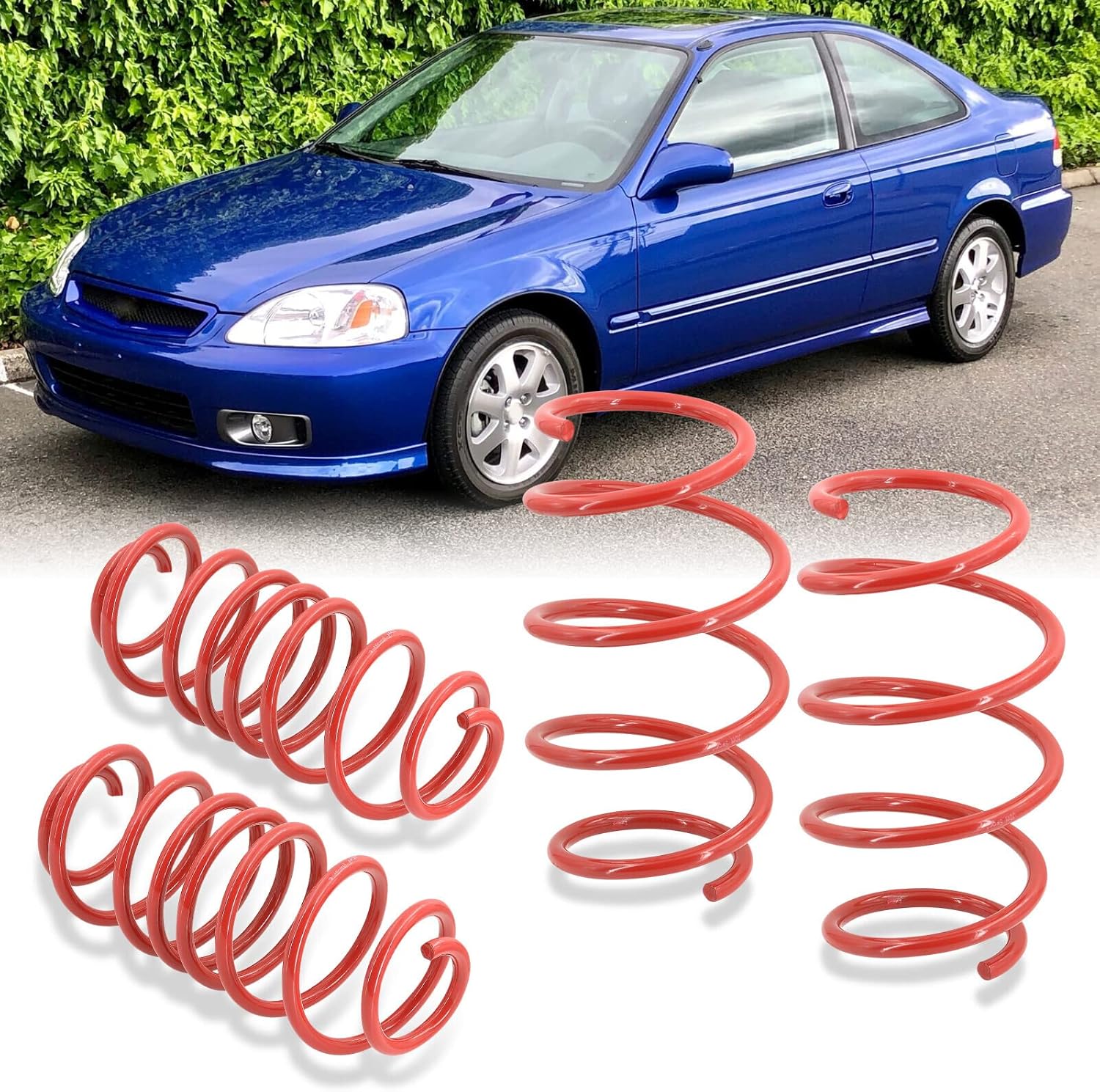
| Lowering Drop Rate | 2.0" (Front) / 2.0" (Rear) |
|---|---|
| Manufacturer | AJP Distributors |
| Manufacturer Part Number | LS-001RD-AMA-L1 |
These AJP JDM lowering springs are a simple way to drop a Civic's ride height about 2.0 inches at both front and rear while tightening up body control for firmer cornering. Designed as a direct coil spring replacement, the kit is typically used with stock struts or matched aftermarket dampers and is aimed at street drivers who want a lower center of gravity without major suspension surgery. The red powder coat and progressive winding help resist corrosion and deliver a firmer spring rate that reduces nose dive and body roll. Installation generally requires a spring compressor and basic mechanical skill or a shop visit; the listing notes professional installation is recommended. Expect a noticeably stiffer ride and reduced ground clearance that can affect daily comfort and speed-bump clearance. If you pair these springs with worn struts they will emphasize harshness and reduce ride quality, so consider replacing dampers if the car has high mileage.
Best for: Buyers wanting a practical, budget-friendly way to lower a 1996–2000 Civic and improve turn-in and body control while prioritizing handling gains over ride softness.
Less Ideal for: Drivers who need a comfortable daily ride, frequently encounter rough roads or tall driveways, or who want a full handling upgrade without replacing struts and shocks.
- Approximate 2.0 inch drop front and rear for a lower center of gravity and sharper handling
- Progressive coil design gives firmer control through corners and reduced body roll
- Powder-coated finish helps resist corrosion and maintains appearance
- Creates a noticeably firmer ride and reduced ground clearance that may compromise daily comfort
Verdict: AJP JDM lowering springs are a cost-conscious way to drop a 1996–2000 Civic about 2 inches and sharpen handling for street-focused drivers.
4. AJP Distributors Lowering Coil Spring Kit, 2.0" Drop

| Lowering drop | 2.0" front / 2.0" rear |
|---|---|
| Manufacturer | AJP Distributors |
| Manufacturer Part Number | LS-001PR-AMA-L2 |
This lowering spring kit is a straightforward option for drivers who want a modest 2.0-inch drop front and rear. It replaces factory springs to lower ride height, improving stance and reducing body roll compared with worn stock springs. Typical use is as a cost-conscious suspension upgrade for daily-driven Civics in the 1996 to 2000 range that need a lower center of gravity without extensive suspension rework. The springs are sold as a basic kit and do not include installation hardware or instructions, so professional installation or at least a competent DIY setup with proper tools is recommended. Benefits are improved appearance, slightly crisper handling, and a lower center of gravity at a budget price. Limitations include lack of matched shocks or camber components in the kit, so suspension geometry and ride quality will depend on the condition and valving of the existing struts. Expect a firmer ride and plan to check alignment after fitment to avoid uneven tire wear.
Best for: Buyers seeking an inexpensive way to lower a 1996–2000 Civic for improved stance and marginal handling gains while prioritizing low cost over a full suspension rebuild.
Less Ideal for: Drivers wanting a fully matched performance suspension with new dampers, aggressive drop beyond 2 inches, or a plush daily ride should consider complete spring-and-shock kits or adjustable setups instead.
- Clear 2.0-inch estimated drop front and rear improves stance and reduces body roll
- Affordable kit aimed at budget-minded buyers
- Simple direct-replacement spring design for straightforward installation by a shop
- Compact package that focuses on lowering without requiring full suspension overhaul
- Does not include shocks, mounts, or alignment hardware so additional components may be needed for best results
- No installation guide or vehicle-specific fitment list included in the package details
Verdict: AJP Distributors' springs are a budget-friendly way to achieve a reliable 2.0-inch drop on a 1996–2000 Civic for better stance and firmer handling.
5. Eibach Pro-Kit Performance Lowering Spring Kit (Set of 4)
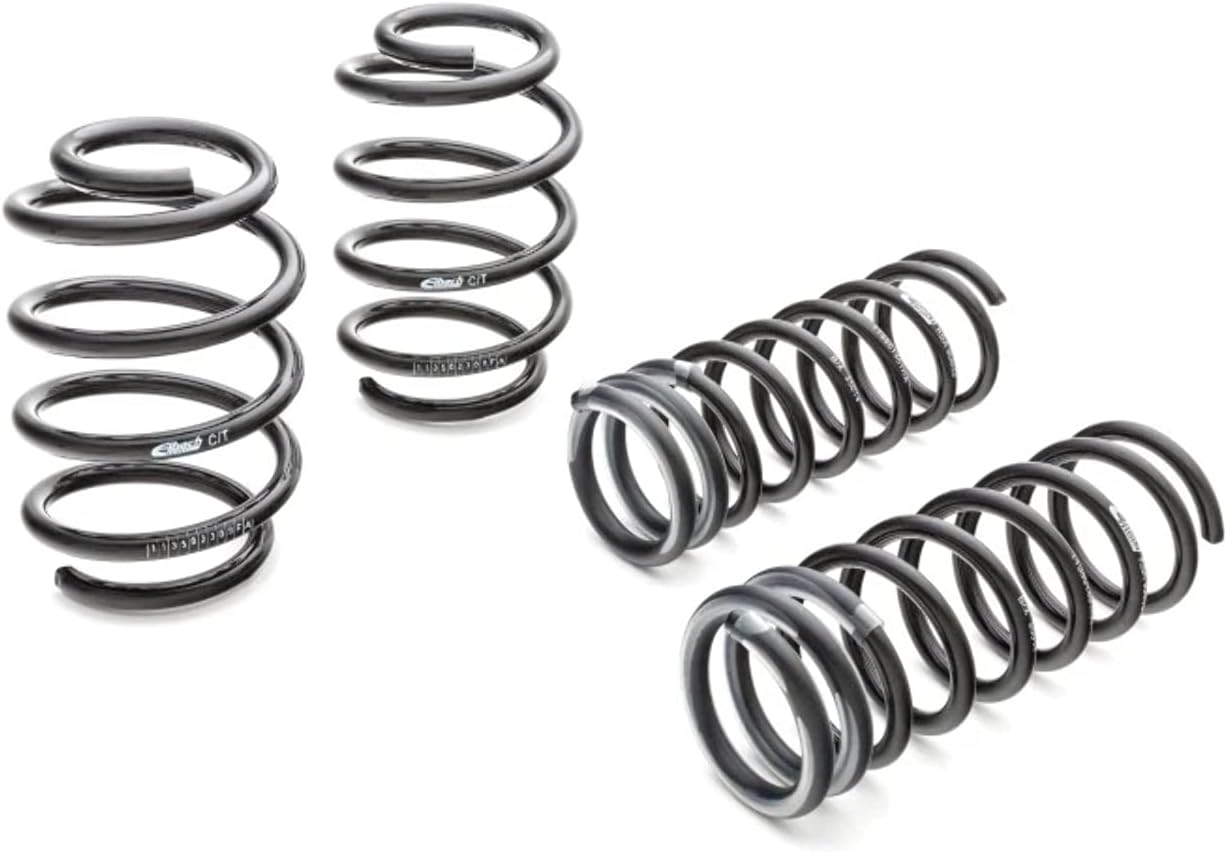
| Manufacturer | Eibach |
|---|---|
| Model | Pro-Kit Lowering Springs |
| Exterior | Powder Coat |
| Special Features | Progressive Spring Design; Lower Center of Gravity; Improves Handling |
The Eibach Pro-Kit lowering spring kit replaces factory springs with progressive-rate coils that lower the car and sharpen handling while keeping street ride quality usable. Installed as a direct replacement, the springs reduce body roll, nose dive under braking and squat during acceleration, which makes steering responses feel more immediate and improves cornering stability. The powder-coated finish helps resist corrosion and the springs are engineered and tested to retain predictable comfort for daily driving rather than an extreme track-only feel. Practical benefits include a more planted stance, reduced fender gap for a cleaner look, and potential fuel-efficiency gains from reduced aerodynamic drag. Limitations are that lowering springs change ride height and suspension geometry so an alignment and occasional bump-stop or swaybar check are needed after fitment, and they do not address worn dampers or other suspension components so pairing with healthy shocks or struts is important for long-term reliability.
Best for: Drivers who prioritize dependable, factory-quality handling improvements and a lower stance for frequent street use and confident daily driving.
Less Ideal for: Those who need a very soft, comfort-focused setup or who frequently drive on very rough roads where increased ground clearance is essential.
- Progressive spring rates improve handling and reduce body roll without overly harsh ride
- Engineered lowering gives a cleaner stance and reduces excessive fender-well clearance
- Powder-coated finish offers corrosion resistance for longer service life
- Designed and tested by a specialist suspension manufacturer for consistent performance
- Requires alignment after installation and may magnify issues from worn shocks or other suspension parts
- Lowers ride height which can increase risk of scraping on steep driveways or rough roads
Verdict: Choose these springs if you want a reliable, factory-quality lowering kit that sharpens handling and improves stance for regular street-driven Civics.
6. Skunk2 Racing Lowering Springs for 1996–2000 Honda Civic

| Compatible models | 1996–2000 Honda Civic (1.6L CX/DX/EX/GX/HX/LX/Si) |
|---|---|
| Material | SAE 9254V spring steel |
| Drop (Front / Rear) | 2.25" / 2.00" |
| Front spring rates | 173 lb-in (tender) / 520 lb-in (main) |
| Rear spring rates | 106 lb-in (tender) / 291 lb-in (main) |
These Skunk2 Racing lowering springs are built specifically for 1996–2000 Honda Civic models and are intended to improve handling and stance without requiring custom fabrication. They use CNC-wound SAE 9254V spring steel with shot-peen stress relief and protective coatings, and they provide a front drop of about 2.25 inches and rear drop of about 2.00 inches while raising the spring rates to reduce body roll, squat under acceleration, and nose dive under braking. In everyday use the result is a firmer, more connected feel in turns and a lower center of gravity that looks sportier on stock or aftermarket wheels. Installation is straightforward for a shop or experienced DIYer when paired with compatible shocks; Skunk2 recommends pairing with sport shocks and camber correction where applicable. Expect a firmer ride compared with stock springs and potential need for wheel alignment and occasional attention to fender clearance with lowered ride height.
Best for: Enthusiasts who want a noticeable handling and stance upgrade for a 1996–2000 Civic and prioritize improved cornering and reduced body roll over ride softness.
Less Ideal for: Drivers who prioritize maximum ride comfort, frequent rough-road driving, or those unwilling to perform a post-install alignment and basic suspension checks.
- Vehicle-specific fit for 1996–2000 Honda Civic simplifies installation and fitment decisions
- CNC-wound SAE 9254V spring steel with stress relief and coatings improves durability and fatigue resistance
- Designed spring rates and drops that noticeably reduce body roll and improve cornering grip
- Compatible with factory or aftermarket shocks and wheels so they work with common suspension setups
- Firmer ride compared with stock springs which may feel harsh on rough roads
- Lowered ride height can require alignment and may cause rubbing on vehicles with wide or aggressive wheels
Verdict: A vehicle-specific set that meaningfully sharpens handling and lowers stance on 1996–2000 Civics for enthusiasts seeking improved cornering and a sportier look.
Choosing the Right 1996-2000 Honda Civic Lowering Springs: Key Factors to Consider
Drop Height and Wheel Clearance
Drop height determines how low the Civic will sit and directly affects fender-to-tire clearance. On 1996-2000 Civics a modest drop usually preserves full suspension travel and minimizes rubbing. Excessive lowering increases the risk of contact over bumps, especially with stock bump stops and rear swaybar geometry.
Consider how drop height interacts with wheel offset and tire size. A lower ride height often requires trimming or rolling the fender lip on older Civics to prevent rubbing during compression. If you plan to run wider wheels or lower-profile tires, prioritize springs with proven clearances for your wheel-and-tire combination.
Spring Rate and Ride Quality
Spring rate controls how stiff the suspension feels under cornering and over road imperfections. Higher rates reduce body roll and improve turn-in on the Civic, but they can increase harshness on rough pavement. For 1996-2000 Civic owners who use the car daily, a progressive or moderate rate often gives the best compromise between grip and comfort.
Consider driving conditions and load. If you frequently carry passengers or cargo, a slightly firmer rear rate can help maintain level stance and reduce squat. Conversely, if comfort is the priority, choose rates that preserve some compliance rather than race-level stiffness.
Fitment Precision and Compatibility
Accurate fitment is essential to avoid installation headaches on the EJ, EK, and EM chassis. Look for springs with explicit fitment notes for the 1996-2000 Civic and for the car's factory strut/tower arrangement. Springs designed for specific submodels or trim levels can save time and reduce the need for additional parts like new mounts or extended bump stops.
Compatibility also covers ride height balance front-to-rear. Mismatched drop amounts can lead to poor handling or an awkward stance. Ensure the chosen set is engineered to work together as a matched front and rear kit for this Civic generation.
Durability and Corrosion Resistance
Because these Civics are older, surface protection matters. Quality coatings and finishing processes extend spring life and prevent rust-related sag or failure. Springs exposed to road salt or coastal environments benefit from thicker, more robust finishes.
Also consider the spring material and heat treatment. Springs that retain their rate and shape over time preserve handling performance and minimize the need for replacement. Check for warranties or stated fatigue testing where available.
Installation and Required Supporting Parts
Some lowering springs are bolt-in replacements, while others work best with upgraded mounts, bump stops, or alignment adjustments. For the 1996-2000 Civic, swapping springs often requires a professional or a spring compressor and a post-install alignment. Factor in whether additional parts like shortened swaybar links or adjustable top mounts are needed to maintain proper suspension geometry.
Plan for an alignment after installation. Lowering alters camber and toe; a proper four-wheel alignment restores predictable handling and reduces uneven tire wear. If you prefer DIY, choose springs that come with clear installation guidance and require minimal extra components.
Handling Goals and Driving Use
Define whether the goal is improved daily drivability, occasional autocross, or purely visual stance. For street-focused 1996-2000 Civic owners, prioritize springs that enhance turn-in and reduce body roll without making the ride uncomfortable on imperfect roads. If occasional track use is planned, slightly firmer rates can be appropriate but expect tradeoffs in comfort.
Also consider how lowering affects suspension travel and bump stop engagement. Overly aggressive drops can reduce usable suspension travel and increase the likelihood of bottoming out during enthusiastic driving, which impacts both comfort and control.
How Lowering Springs Change Civic Handling
Lowering springs reduce ride height and usually increase spring rates, which tightens body control and reduces weight transfer during cornering. On the 1996-2000 Civic chassis, even modest drops can sharpen turn-in and make the steering feel more immediate.
Reduced center of gravity helps limit body roll, but the net handling gain depends on matching springs to shocks and maintaining correct alignment. Without proper damping and alignment, a lower stance can make the ride harsher without meaningful handling improvement.
- Lower center of gravity improves cornering stability
- Higher spring rates reduce body roll but can increase harshness
- Alignment changes are necessary after lowering to optimize handling
Progressive Vs Linear Springs Explained
Progressive springs vary their rate through the compression cycle, offering compliance on small bumps and stiffer resistance during heavy cornering. Linear springs provide a constant rate for predictable behavior under load.
For daily-driven 1996-2000 Civics, progressive designs are often appealing because they preserve comfort while still improving handling. Drivers seeking repeatable track performance may prefer linear springs for their consistent response.
- Progressive: comfort and variable stiffness
- Linear: predictable, consistent behavior under load
- Choose based on whether street comfort or track repeatability is the priority
Coilovers Vs Lowering Springs: When Each Makes Sense
Coilovers offer adjustable ride height and often adjustable damping, while lowering springs are a simpler, usually less expensive way to drop the car and change spring rate. For many 1996-2000 Civic owners focused on street use, lowering springs provide a straightforward performance and aesthetic upgrade.
Consider coilovers if you need frequent height adjustments, track-focused damping, or corner-weighting. If you want a reliable, lower-cost improvement with minimal setup, lowering springs are typically the better fit.
- Coilovers: height and damping adjustability, better for track tuning
- Lowering springs: simplicity, lower cost, adequate for most street needs
- Evaluate whether you need damping adjustment or only a fixed drop
Common Installation Considerations for 1996-2000 Civics
Swapping lowering springs on the EJ, EK, and EM Civic usually requires a spring compressor and knowledge of strut reassembly. Many installers recommend replacing upper mounts and inspecting bump stops during the job. Because these cars are older, check for worn mounts or rusted components that can complicate installation.
A post-install alignment is essential. Expect changes to front camber and toe that affect tire wear and handling. If you plan a DIY install, budget time for a proper alignment and close inspection of surrounding suspension components.
- Inspect mounts and bump stops before reassembly
- Use a spring compressor and follow safety procedures
- Always perform a four-wheel alignment after installation
How Lowering Affects Tire Wear and Alignment
Lowering changes static camber and can accelerate inside tire wear if alignment is not corrected. For the 1996-2000 Civic, typical adjustments are increased negative camber and small toe corrections to maintain even contact during cornering.
Regularly check tire wear patterns during the first few thousand miles after installation and have alignment rechecked if you notice uneven wear or handling quirks. Proper alignment preserves the handling benefits of lowering springs and extends tire life.
- Expect camber and toe changes after lowering
- Monitor tire wear closely after the first few hundred miles
- Alignment settings should reflect intended use: street or track
Visual Stance: Balancing Form and Function
Many Civic owners choose lowering springs for improved aesthetics, but stance should not compromise daily drivability. Aim for a drop that clears common road hazards while achieving the look you want.
Front-to-rear balance is important. A more aggressive front drop can create a nosedown look, while too much rear drop can look awkward and affect handling. Choose springs designed to maintain balanced rake for the 1996-2000 Civic.
- Aim for balanced front and rear drop for a respectful stance
- Consider road clearance and common driving conditions
- Visual goals should be weighed against practical drivability
Still looking for the perfect fit?
Select your Honda Civic configuration to see the most relevant Lowering Springs recommendations
How We Chose the Best 1996-2000 Honda Civic Lowering Springs
Our selection process prioritized fitment accuracy, predictable ride behavior, and long-term durability specifically for 1996-2000 Civic chassis codes EJ, EK, and EM. We gave weight to measured spring rates and published drop heights so buyers can anticipate stance and wheel clearance on this model. Ride quality and NVH impact were assessed based on common owner reports and manufacturer specifications to balance comfort and performance. Corrosion resistance and coating methods were included as durability filters given the age of these vehicles. Ease of installation and parts compatibility were considered; we favored options that fit without additional suspension modification for stock geometry. Items were excluded if they lacked clear fitment data for the 1996-2000 Civic, required major suspension surgery, or relied solely on vague marketing claims. Overall, entries were chosen to serve street-focused Civic owners seeking a practical, reliable lowering solution rather than race-only hardware.
Our full evaluation process is outlined in our review methodology.
FAQ
How much do lowering springs lower a 1996-2000 Civic?
Drops vary by product, but most dedicated lowering springs for this Civic range reduce ride height by roughly 1 to 2 inches. Exact numbers depend on the spring design and the car's existing suspension condition.
Will lowering springs make my Civic ride harsh?
It depends on the spring rates chosen and road conditions. Moderate or progressive-rate springs often preserve comfort for daily driving; very stiff rates aimed at track use will feel firmer on rough roads.
Do I need new shocks when installing lowering springs?
If your shocks are worn or have many miles, replacing them is recommended because lowering alters damping requirements. Even if shocks are in good condition, some owners prefer matched dampers tuned for the new spring rates to optimize handling.
Can I install lowering springs myself on a 1996-2000 Civic?
Experienced DIYers can install lowering springs with the proper tools and safety precautions, such as a spring compressor and torque specifications. However, due to age-related wear on mounts and fasteners, some owners prefer professional installation to ensure safety and correct alignment.
Will lowering springs affect my Civic's alignment settings?
Yes. Lowering changes static ride height and can alter camber and toe. A four-wheel alignment is necessary after installation to maintain handling balance and prevent premature tire wear.
Are progressive lowering springs better than linear ones for daily driving?
Often progressive springs are better for daily-driven Civics because they offer compliance on small bumps and increased stiffness only when needed. Linear springs give more predictable response but can feel harsher in everyday use.
Final Verdict
Prioritize spring sets that match your driving goals for the 1996-2000 Civic. If you drive the car daily, look for moderate drop heights and progressive rates that improve handling while retaining comfort. If you want a more track-oriented feel, accept firmer rates and ensure shocks and alignment are updated to suit the change. Focus on fitment accuracy, durability, and post-install alignment to preserve handling gains and avoid common issues. With a clear goal and attention to supporting components, you can choose a lowering solution that delivers both a better stance and more confident driving.
Explore More:
- Check out all Honda Civic parts & accessories
- Explore Lowering Springs Maintenance & Repair Guides
- Explore Suspension & Steering
- Browse all Auto Parts
