

Note: This article contains affiliate links. If you click on these links and make a purchase, I may earn a small commission at no extra cost to you. This helps support my research and content. Read my full affiliate disclosure here.
If you own a 2001-2005 Honda Civic and want a lower stance with crisper handling, choosing the right lowering springs matters. The ES, EM, and EP era Civic has a range of suspension geometries and front-and-rear mounting points that affect ride height, bump compliance, and alignment after installation. This guide covers the top shortlisted lowering springs that fit this 2001-2005 (ES, EM, and EP) Civic span, and it explains how we evaluated drop height, spring rate, and ride comfort.Below you will find the selected options and clear notes on what each achieves, followed by the factors to weigh so you can pick the springs that match your goals and driving conditions.
Looking for other parts? See all Honda Civic parts & accessories.
Top Picks at a Glance
| Best Overall The best all-around choice for most situations | Truhart Lowering Springs 2" Front / 2" Rear for 2001–2005 Honda Civic |  |
| Best Quality Built to a higher standard if you want something more solid | H&R Sport Lowering Springs for Honda Civic 2001–2005 (51866) |  |
| Best Value The sweet spot between price and what you get | Auto Dynasty Adjustable Lowering Coil Springs for Honda Civic 2001-2005, 4-Pack |  |
| Best Budget The cheapest option that still gets the job done reliably | AJP Distributors JDM 2" Front & Rear Lowering Springs for 2001–2005 Honda Civic |  |
| Highest Rated A top-rated pick with lots of positive feedback | D2 Pro Lowering Springs for 2001–2005 Honda Civic (front and rear) |  |
| Most Popular A crowd favorite that many people choose with confidence | Skunk2 Racing Lowering Spring Set for 2001–2005 Honda Civic |  |
1. Truhart Lowering Springs 2" Front / 2" Rear for 2001–2005 Honda Civic

| Fit Type | Vehicle Specific Fit |
|---|---|
| Auto Part Position | Front |
| Auto Part Orientation | Rear |
| Material Type | Alloy Steel |
These Truhart lowering springs are a straightforward way to lower a 2001–2005 Honda Civic, tighten body control, and reduce wheel gap without swapping dampers. The springs are progressive-rate and about 20% stiffer than factory springs, which helps reduce body roll and improve turn-in while still aiming for a comfortable daily ride. They are cold-wound from 55 chrome silicon steel in an ISO 9001 and TUV approved facility, and Truhart states they are designed to pair with their sport shocks though they will also work with factory or other aftermarket dampers. Expect a roughly 2.0 inch drop front and rear, a firmer ride, and crisper handling at legal speeds. Installation requires spring compressors and an alignment afterward. Buyers should note the firmer spring rate can transmit more road imperfections and may highlight older shocks that need replacement. Overall these give a balanced mix of looks and handling for Civic owners who want a modest performance-oriented drop without a track-only setup.
Best for: Drivers who want a balanced combination of improved handling and a modest visual drop on a 2001–2005 Civic, prioritizing everyday usability with an aftermarket upgrade.
Less Ideal for: Those seeking an ultra-soft ride, extreme lowered stance, or a track-focused suspension that requires matched performance dampers and frequent adjustments.
- Vehicle-specific fit for 2001–2005 Honda Civic for straightforward installation
- Progressive-rate design and about 20% stiffer than factory springs for improved handling
- Manufactured from 55 chrome silicon steel in certified facilities for durability
- Lowers the car approximately 2.0 inches front and rear for a balanced stance
- Firmer spring rate increases road harshness and can expose worn shocks
Verdict: A practical, factory-focused lowering spring that gives a 2001–2005 Civic a 2-inch drop and firmer, more controlled handling without forcing a full shock upgrade.
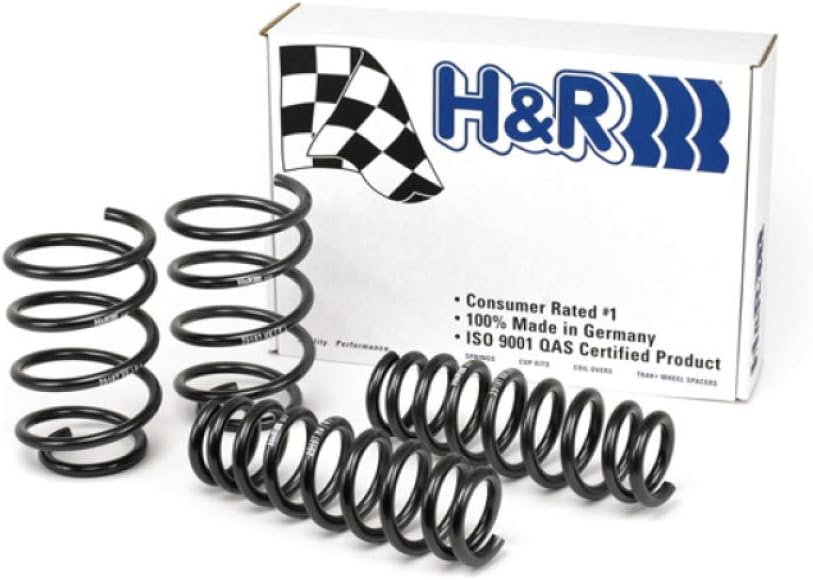
2. H&R Sport Lowering Springs for Honda Civic 2001–2005 (51866)
| Compatible years | 2001–2005 Civic (listed trims) |
|---|---|
| Part number | 51866 |
| Material | 54SiCr6 spring steel |
| Product type | Coil spring lowering kit |
These H&R sport springs are a coil lowering kit designed to drop the ride height of compatible 2001–2005 Honda Civic models while improving cornering and reducing body roll. Made from H&R's 54SiCr6 spring steel, the springs are built for high tensile strength and resiliency, so they keep their shape under spirited driving. Typical use is a bolt-in replacement of the factory front and rear springs to achieve a lowered stance, tighter turn-in, and a firmer feel at highway speeds and during enthusiasm driving. The progressive spring rate aims to preserve everyday comfort compared with simpler lowering springs, so daily driving remains manageable while handling sharpens. Important limitations are the firmer ride compared with stock springs and the need to check alignment and fender clearance after installation; this kit is a suspension-level change and does not include shocks or other components, so pairing with appropriate dampers may be necessary for best performance. Fitment is specific to the listed Civic years and trims, so confirm vehicle compatibility before purchase.
Best for: Drivers who prioritize sharper handling and a lower stance for street performance and spirited driving and who are willing to accept a firmer ride and perform basic suspension alignment after installation.
Less Ideal for: Drivers who need maximum ride comfort, frequent heavy load carrying, or who want a simple cosmetic change without addressing related suspension components.
- Designed from high-strength 54SiCr6 spring steel for durability under spirited driving
- Progressive spring rates intended to improve handling while maintaining reasonable everyday comfort
- Lowers vehicle center of gravity to reduce body roll and improve turn-in
- Factory-sealed, brand-new kit aimed at direct replacement installation
- Does not include shocks or struts so matching dampers may be required for ideal ride and control
- Lowered ride height may reduce ground clearance and require alignment and fender clearance checks
Verdict: Choose these H&R sport springs to lower your 2001–2005 Civic and get firmer, more responsive handling with durable, performance-oriented springs.
3. Auto Dynasty Adjustable Lowering Coil Springs for Honda Civic 2001-2005, 4-Pack

| Fitment | Honda Civic Coupe/Sedan 2001-2005 (not EP3 Hatchback) |
|---|---|
| Quantity | 4 pieces |
| Lowering range | 1 to 3 inches |
| Sleeves | CNC-machined aircraft aluminum |
These Auto Dynasty coil springs let you lower a 2001–2005 Honda Civic Coupe or Sedan by 1 to 3 inches using the included scaled sleeves to set ride height. The kit contains four cold-wound, powder-coated springs and four CNC-machined aircraft-aluminum sleeves that thread over the springs to lock in the adjusted position. Installation is a hands-on suspension job and may require partial removal of strut components, so plan for basic suspension tools and some alignment time after fitment. The powder coat and heavy winding suggest reasonable durability for street use, while the adjustable range gives flexibility to tune stance and clearance without swapping springs. Because these are spring-only components they change ride height and spring rate but not damping, so roughness can increase if your shocks are older. For a budget-conscious Civic owner wanting a simple, reversible way to lower the car and fine-tune height, this kit offers a practical option; drivers seeking refined ride control should consider pairing with upgraded dampers.
Best for: Practical Civic owners who want a cost-effective, adjustable way to lower their 2001–2005 Coupe or Sedan and are willing to do or pay for basic suspension work and a post-install alignment.
Less Ideal for: Drivers seeking a turnkey suspension overhaul with improved damping and handling out of the box should look for matched spring and shock packages instead.
- Adjustable 1–3 inch lowering range lets you dial in stance and ground clearance
- Includes four machined aluminum sleeves to lock selected height without cutting springs
- Powder-coated cold-wound springs provide corrosion resistance and durable finish
- Sold as a complete four-piece kit for front and rear installation on the specified Civic models
- Requires partial disassembly of strut components for installation which may complicate DIY fitment
- Does not include shocks or struts so suspension damping may need upgrading for balanced ride
Verdict: A budget-friendly, adjustable spring kit for 2001–2005 Honda Civic Coupe and Sedan owners who want to lower ride height without replacing shocks.
4. AJP Distributors JDM 2" Front & Rear Lowering Springs for 2001–2005 Honda Civic

| Fitment | 2001-2005 Honda Civic coupe & sedan |
|---|---|
| Lowering Drop | 2.0" front / 2.0" rear |
| Manufacturer | AJP Distributors |
These lowering springs reduce ride height by about 2.0 inches at both the front and rear to give 2001–2005 Civic coupes and sedans a lower stance and firmer ride. Intended as a direct replacement lowering kit, the springs are typically installed with basic suspension disassembly and are best fitted by a shop if you do not have spring compressors and alignment tools. The kit’s main benefit is its clear, moderate drop that improves visual stance and reduces body roll compared with stock springs. Because the springs are stiffer than factory units, expect a firmer ride and sharper response over corners at the cost of some ride comfort on rough surfaces. There are no shocks or installation hardware included so you may need to refresh mounts or dampers when fitting the springs for best results. For budget-focused builders wanting a simple, noticeable drop without extensive modification, this kit delivers straightforward lowering at an entry-level price point.
Best for: Buyers looking for an affordable, straightforward way to lower a 2001–2005 Civic for improved stance and handling without investing in full performance suspension upgrades.
Less Ideal for: Drivers who prioritize a supple daily ride, require adjustable ride height, or want a complete suspension overhaul with matched dampers and hardware.
- Consistent 2.0 inch drop front and rear for a balanced lowered stance
- Simple replacement kit designed specifically for 2001–2005 Civic coupe and sedan models
- Stiffer springs improve cornering response and reduce body roll
- Budget-friendly option compared with premium performance spring brands
- No shocks, mounts, or alignment hardware included so additional parts or service may be required
- Firmer ride can make daily driving on rough roads less comfortable
Verdict: A cost-conscious kit that gives 2001–2005 Civics a clean 2 inch drop and firmer handling without the complexity or price of full performance suspension upgrades.
5. D2 Pro Lowering Springs for 2001–2005 Honda Civic (front and rear)

| Fitment | 2001–2005 Honda Civic (including Si) |
|---|---|
| Material | High tensile chrome silicon steel |
| Drop | Approximately 1.8" front / 1.4" rear |
| Manufacturing | Cold-wound and heat-treated |
| Certification | ISO 9001 facility with TÜV approval |
These D2 Pro lowering springs are a direct-fit, factory-replacement style spring set for 2001–2005 Honda Civics that drops the car roughly 1.8 inches front and 1.4 inches rear. Made from high-tensile chrome silicon steel, the springs are cold-wound and heat-treated with a durable finish to resist corrosion. Their progressive-rate coil design aims to keep everyday ride quality acceptable while reducing body roll and improving corner stability, so they suit street-driven Civics where better handling and a lower center of gravity matter more than a plush ride. Installation is standard for a spring swap; reviewers report straightforward fitment and that the fronts can take more effort to change than the rears. Expect a firmer ride and possible rear camber change after lowering, and you may need alignment and rear control arm adjustments to avoid uneven tire wear. These are a budget-friendly, performance-oriented choice for owners who want a reliable, noticeable drop without switching to full coilovers.
Best for: A Civic owner who prioritizes long-term, factory-style reliability while wanting a modest, street-oriented drop and sharper cornering for daily driving and occasional spirited runs.
Less Ideal for: Not a good choice for drivers seeking a plush stock-like ride, extreme show/lowered clearance setups, or track-only suspension where adjustable coilovers would perform better.
- Direct fit for 2001–2005 Civic with Si-compatible applications
- High-tensile chrome silicon steel construction with cold-wound, heat-treated manufacturing
- Progressive-rate design balances improved handling with daily drivability
- Durable surface finish for corrosion resistance and long service life
- Lowers ride height at the cost of a firmer, less compliant ride over rough roads
- Rear camber change likely requires alignment or adjustable rear control arms to prevent uneven tire wear
Verdict: Solid, factory-fit lowering springs that give 2001–2005 Civics a reliable, noticeable drop and improved handling without moving to coilovers.
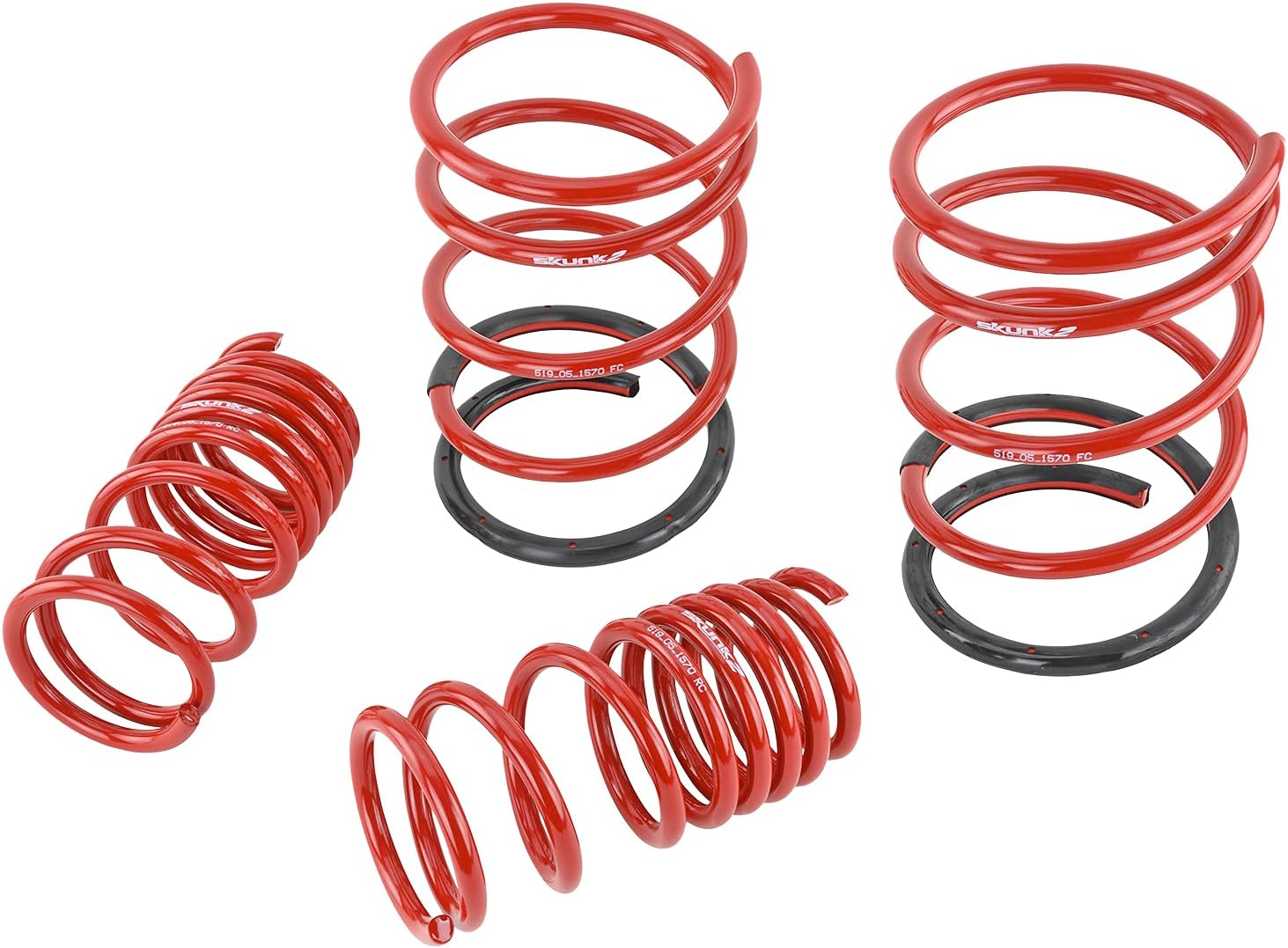
6. Skunk2 Racing Lowering Spring Set for 2001–2005 Honda Civic
| Fitment | 2001 – 2005 Honda Civic (1.6L DX/EX/GX/HX/LX/Si) |
|---|---|
| Auto Part Position | Front |
| Automotive Fit Type | Vehicle Specific Fit |
| Material Type | SAE 9254V Spring Steel |
Skunk2 Racing’s lowering springs for 2001–2005 Civic models are a performance-focused replacement that lowers the car by roughly 2.25 inches front and 2.00 inches rear to sharpen handling and reduce body roll. They are CNC-wound from SAE 9254V spring steel, shot-peen stress relieved, and coated to resist corrosion, so they are built for repeated street and spirited driving. In use these springs lower the center of gravity, reduce squat under acceleration and nose-dive under braking, and give a firmer, more responsive feel without the harshness of many race-only springs. They are designed to work with factory or aftermarket shocks, though pairing with performance dampers and camber correction is recommended to get the best handling and tire wear. The springs are vehicle-specific, so installation is straightforward for a competent DIYer or a suspension shop, but buyers should expect a firmer ride and may need alignment after fitting. For those seeking a balanced street/track upgrade that has a long history among Civic tuners, these deliver predictable handling gains.
Best for: Buyers who want a proven handling upgrade for a 2001–2005 Civic and prioritize measurable cornering improvements backed by a recognized performance brand and positive user feedback.
Less Ideal for: Drivers seeking the softest possible daily ride or those who need maximum ground clearance for rough roads should consider a less-aggressive or adjustable option.
- Vehicle-specific fit tuned for 2001–2005 Honda Civic front and rear
- CNC-wound SAE 9254V spring steel with shot-peen and corrosion protection
- Reduces body roll and improves cornering grip while lowering center of gravity
- Compatible with factory or aftermarket shocks for flexible setup
- Lower ride height produces a firmer ride and may require alignment and additional suspension components for ideal handling
Verdict: A well-built, vehicle-specific lowering spring set that gives 2001–2005 Civics sharper handling and reduced body roll while remaining compatible with stock or upgraded shocks.
Choosing the Right 2001-2005 Honda Civic Lowering Springs: Key Factors to Consider
Drop Height and Stance
Drop height is the advertised static reduction in ride height after installation and directly affects the Civic's visual stance and wheel clearance. For the 2001-2005 (ES, EM, and EP) Civic, modest drops preserve suspension geometry and reduce the need for camber correction, while aggressive drops can improve aesthetics and lower center of gravity but often increase negative camber and risk fender rubbing.
Consider how the claimed drop interacts with typical driving surfaces you encounter. A 1.0 to 1.5-inch drop may be sufficient for improved handling without daily clearance headaches, whereas larger drops can require additional trimming, different wheels, or aftermarket bump stops. Also factor in corner height balance; uneven drops front to rear can alter handling balance and necessitate further suspension tuning.
Spring Rate and Ride Quality
Spring rate determines how stiff the suspension feels under load and during cornering. Higher rates reduce body roll and provide a firmer, more responsive feel, but they transfer more vibration to the cabin. For an older Civic, overly stiff springs can highlight worn bushings and produce a harsh ride over rough pavement.
Look for spring rates that align with your goals: comfort-oriented drops use progressive or lower constant rates that absorb bumps, while performance-oriented setups adopt higher constant rates for improved turn-in and stability. Also consider how the spring rate affects rebound and compression with your existing shocks; mismatched damping can lead to poor control or a choppy ride.
Compatibility With Dampers
Lowering springs change suspension travel and load, so they must work with the Civic's existing dampers or with recommended compatible shocks. Using factory dampers with a significant drop often leads to reduced damping travel and premature wear. For the 2001-2005 Civic, confirm whether the springs are intended for use with stock shocks or whether they require upgraded dampers to maintain control and avoid bottoming out.
A matched spring-and-shock pairing preserves ride quality and safety. If you plan to keep factory shocks, favor springs with moderate drop and rates designed to pair with stock damping. If you want a firmer, sportier setup, budget for compatible dampers or adjustable shocks to fine-tune rebound and compression.
Installation and Alignment Needs
Installing lowering springs on the Civic typically requires disassembling strut tops or rear spring seats and performing a full alignment afterward. After lowering, toe and camber often change enough that a professional alignment is necessary to prevent uneven tire wear and to restore predictable handling. Some drops also affect ride height sensors or sway bar geometry on certain configurations, so check for any vehicle-specific considerations.
Factor in the time and tools for installation as well as potential extra parts such as new top mounts, sway bar end links, or extended bump stops. Owners who prefer DIY should be comfortable with torque specs and spring compression safety; otherwise use a qualified technician.
Durability and Corrosion Resistance
Springs on older vehicles face salt, road grime, and fatigue. Coatings, shot peening, and material treatments extend service life and reduce the risk of spring fracture or accelerated corrosion. For a Civic built between 2001 and 2005, prioritizing springs with durable finishes helps avoid seized components when future removal or replacement is needed.
Consider warranty coverage and manufacturer stated fatigue life when comparing options. Also evaluate whether replacement hardware or isolators are included or recommended to maintain NVH characteristics over time.
Intended Use and Driving Conditions
Choose springs that match how you use your Civic. Daily-driven cars need a balance of comfort and clearance, while track or canyon-focused builds demand firmer rates and more aggressive drops. Weather and road quality should influence your choice; lower clearance increases the chance of scraping on steep driveways or damaged pavement.
Think about load conditions such as frequent passenger or cargo weight, which can reduce effective ground clearance further. Progressive springs can offer a compromise for mixed-use drivers by providing softer initial travel for comfort and stiffening under larger loads or cornering.
Understanding Ride Height Vs. Static Drop
Static drop is the height reduction measured at rest after springs settle, while ride height during compression changes dynamically. For the 2001-2005 Civic, static drop figures are a useful baseline, but real-world clearance depends on wheel and tire size, suspension travel, and load.
When evaluating lowering springs, examine both advertised drop and owner-reported results on similar wheel setups. A small variance in drop can significantly affect fender-to-tire clearance on this chassis, so plan accordingly.
- Static drop does not account for squat during acceleration or compression in corners
- Wheel offset and tire diameter change apparent stance more than small drop differences
- Measure current corner heights before shopping to set realistic expectations
Progressive Vs Constant-Rate Springs
Progressive springs change stiffness through travel, offering softer initial compliance and firmer resistance as the spring compresses. This design helps daily-driven Civics absorb small bumps while still providing support during aggressive cornering.
Constant-rate springs deliver predictable linear behavior for consistent handling and are favored in performance setups. Choose progressive if you want more comfort without sacrificing too much performance, or constant-rate if you prioritize precise response.
- Progressive springs can be more forgiving on worn suspension components
- Constant-rate springs simplify tuning when matching to aftermarket dampers
Common Fitment Pitfalls on ES, EM, and EP Era Civic Chassis
The 2001-2005 Civic has a few fitment nuances such as specific strut top clearances and rear spring seat geometry. Some aftermarket springs assume different top mount heights, which can change camber and toe beyond expected ranges.
Confirm that the springs are specified for the ES, EM, and EP range and check whether additional hardware like different top mounts or extended sway bar links is recommended to preserve handling balance.
- Verify part numbers or fitment notes reference 2001-2005 (ES, EM, and EP) Civics
- Watch for comments about required trimming or special mounts for certain wheel sizes
How Lowering Springs Affect Alignment and Tires
Lowering changes suspension geometry and often increases static negative camber, which can accelerate inner tire wear if not corrected. After installing lowering springs on a 2001-2005 Civic, a professional alignment with camber and toe adjustments is essential to protect tires and preserve handling.
Some owners choose mild camber correction via adjustable camber kits or alignment settings, but those solutions should be matched to the degree of drop and the planned wheel fitment.
- Expect to realign after any lowering work
- Monitor tire wear closely for the first few hundred miles after installation
Installation Tips for Safer DIY Swaps
If you plan to install springs yourself, use a proper spring compressor and follow torque specifications for the 2001-2005 Civic strut and rear-spring hardware. Work on a stable lift or jack stands and replace any worn rubber isolators or top mounts while you have the assembly apart.
Take care when compressing springs and ensure the vehicle is supported before removing suspension fasteners. After installation, verify ride height at all four corners and drive gently until you can confirm handling and alignment.
- Replace isolators and top mounts when accessible
- Retorque fasteners after a short break-in period
When to Consider Dampers or Full Kits Instead
If the existing dampers show signs of wear, pairing lowering springs with new or adjustable shocks will yield better results. Upgraded dampers address reduced travel and altered damping requirements that happen with lowered springs on the ES, EM, and EP Civic.
Full coilover kits provide height and damping adjustability, which can be overkill for owners seeking only a moderate stance change. Choose full kits if adjustability and track-focused performance are top priorities.
- Match springs to damper capability for predictable control
- Full kits are useful when you need fine height and damping adjustment
Still looking for the perfect fit?
Select your Honda Civic configuration to see the most relevant Lowering Springs recommendations
How We Chose the Best 2001-2005 Honda Civic Lowering Springs
We evaluated lowering springs for the 2001-2005 Civic by focusing on technical fitment and real-world performance characteristics that matter to owners of the ES, EM, and EP era cars. Primary criteria included confirmed fitment to the 2001-2005 Civic suspension mounts, advertised static drop height and expected corner-to-corner consistency, and measured or commonly reported spring rates that influence handling and ride comfort. We also prioritized manufacturing quality factors such as material specification and coating to resist corrosion on older chassis, and validated whether springs maintain correct ride height under typical loading for this model.Additional selection filters included alignment impact and whether the springs allow compatible factory or aftermarket top mounts and shocks to work without premature wear. We excluded options that require major chassis modification or nonstandard rear suspension conversion. Where available, we incorporated installation complexity and owner-reported longevity to favor solutions that balance performance and everyday usability. The final list represents items that met fitment, durability, and performance thresholds for the 2001-2005 Civic without requiring extensive additional parts.
Our full evaluation process is outlined in our review methodology.
FAQ
How much do lowering springs lower a 2001-2005 Civic?
Typical lowering springs advertise drops from about 0.75 inch up to 2.0 inches. Actual results depend on wheel and tire size, corner weight, and whether springs settle further after initial install.
Can I use stock shocks with lowering springs on my Civic?
You can in many cases if the drop is modest, but significant lowering often reduces damper travel and may cause premature wear. For larger drops or firmer spring rates, upgraded dampers are recommended.
Will lowering springs affect my car insurance or inspections?
Regulatory and insurance effects vary by location. Lowering springs that do not modify safety structures typically do not trigger issues, but extreme modifications that compromise ground clearance or lighting aim points can affect inspections in some jurisdictions.
Are progressive lowering springs worth it for daily driving?
Progressive springs offer a comfortable initial compliance with firmer support under load, making them a good compromise for daily-driven Civics that still see occasional spirited driving.
How long does installation usually take?
Professional installation for both front and rear is typically a few hours. DIY time varies with experience and tools, but expect several hours including alignment afterward.
Will lowering springs cause rubbing with aftermarket wheels?
Lowering increases the chance of rubbing depending on wheel offset and tire diameter. Check wheel fitment notes and allow extra clearance if you plan wider wheels or low-profile tires.
Final Verdict
Lowering springs can sharpen handling and improve the stance of your 2001-2005 Civic when chosen to match your ride quality and clearance needs. Prioritize realistic drop heights, compatible spring rates, and whether your existing dampers will support the change. Factor in installation and alignment costs and expect to trade some ride compliance for improved body control.For most ES, EM, and EP era Civic owners, moderate drops with matched damping give the best balance of daily comfort and performance. Use the guide above to weigh the tradeoffs and pick the springs that align with how you drive and where you park.
Explore More:
- Check out all Honda Civic parts & accessories
- Explore Lowering Springs Maintenance & Repair Guides
- Explore Suspension & Steering
- Browse all Auto Parts
