

Note: This article contains affiliate links. If you click on these links and make a purchase, I may earn a small commission at no extra cost to you. This helps support my research and content. Read my full affiliate disclosure here.
If you own a 2006-2011 Honda Civic and want a lower stance with better body control, choosing the right lowering springs matters. Properly matched springs change ride height, handling balance, and suspension compliance in everyday driving and spirited cornering. This guide covers the top shortlisted lowering springs selected for the 2006-2011 Civic platform, explaining how they affect drop height, spring rate, and long-term fitment.The recommendations are focused on the 2006-2011 Civic chassis scope and evaluate ride quality, fitment accuracy, and durability so you can pick a set that suits daily driving, occasional track use, or a performance-minded street setup. Read on for practical guidance and installation considerations before you buy.
Looking for other parts? See all Honda Civic parts & accessories.
Top Picks at a Glance
| Best Overall The best all-around choice for most situations | DAZZLAIT TH-06CIVIC Lowering Coil Springs Set for 2006-2011 Honda Civic |  |
| Best Quality Built to a higher standard if you want something more solid | Eibach Pro-Kit Performance Lowering Springs (Set of 4) |  |
| Best Value The sweet spot between price and what you get | maXpeedingrods Lowering Springs for Honda Civic (2006–2011) — 1.97" Drop |  |
| Best Budget The cheapest option that still gets the job done reliably | AJP Distributors JDM Suspension 1.5" Front & Rear Lowering Springs Kit |  |
| Highest Rated A top-rated pick with lots of positive feedback | Godspeed Traction-S Performance Lowering Springs (set of 4) for Honda Civic 2006–2011 |  |
| Most Popular A crowd favorite that many people choose with confidence | D2 Racing Sports D2 Pro Lowering Springs for 2006–2011 Civic |  |
| Best Seller A high-volume bestseller chosen again and again | Skunk2 Racing Lowering Springs for 2006–2011 Honda Civic |  |
1. DAZZLAIT TH-06CIVIC Lowering Coil Springs Set for 2006-2011 Honda Civic

| Fitment | 2006-2011 Honda Civic |
|---|---|
| Drop height | 1.5 inches |
| Spring material | SAE 9254 wire |
| Finish | Powder coated |
These DAZZLAIT lowering springs are built to reduce ride height by roughly 1.5 inches and sharpen handling on 2006–2011 Honda Civics. They use SAE 9254 spring wire with multiple heat treatments and cold winding, plus a corrosion-resistant powder coat, which should yield durable spring rate behavior and long service life. The design increases spring rate progressively during compression, helping control body roll and reduce bottoming on spirited street driving or occasional track use while aiming to retain reasonable ride comfort. Installation replaces all four factory springs and is typical for lowering kits; alignment after fitment is recommended to avoid uneven tire wear. Expect firmer ride characteristics compared with stock, especially over sharp bumps, and reduced suspension travel that can make very rough roads less comfortable. The kit claims to meet or exceed factory performance standards and includes a short return window for peace of mind. For drivers wanting a balanced mix of improved cornering and daily drivability, these springs offer a straightforward way to lower and tighten a Civic’s handling without major other modifications.
Best for: Buyers who want a balanced lowering setup that tightens handling and improves cornering while keeping daily drivability for street and occasional track use.
Less Ideal for: Drivers who prioritize a plush factory-like ride, frequent off-road or very rough-road use, or who need adjustable ride height and damping options.
- Designed specifically for 2006–2011 Honda Civic fitment for direct replacement installation
- Progressive spring design increases rate during compression to reduce body roll and bottoming
- SAE 9254 wire with heat treatment and cold winding for durability and consistent performance
- Powder coating provides corrosion resistance for longer service life
- Firmer ride and reduced suspension travel compared with stock, which may feel harsh on rough roads
Verdict: A straightforward, vehicle-specific lowering spring set that sharpens handling on 2006–2011 Civics while keeping a usable daily ride.
2. Eibach Pro-Kit Performance Lowering Springs (Set of 4)
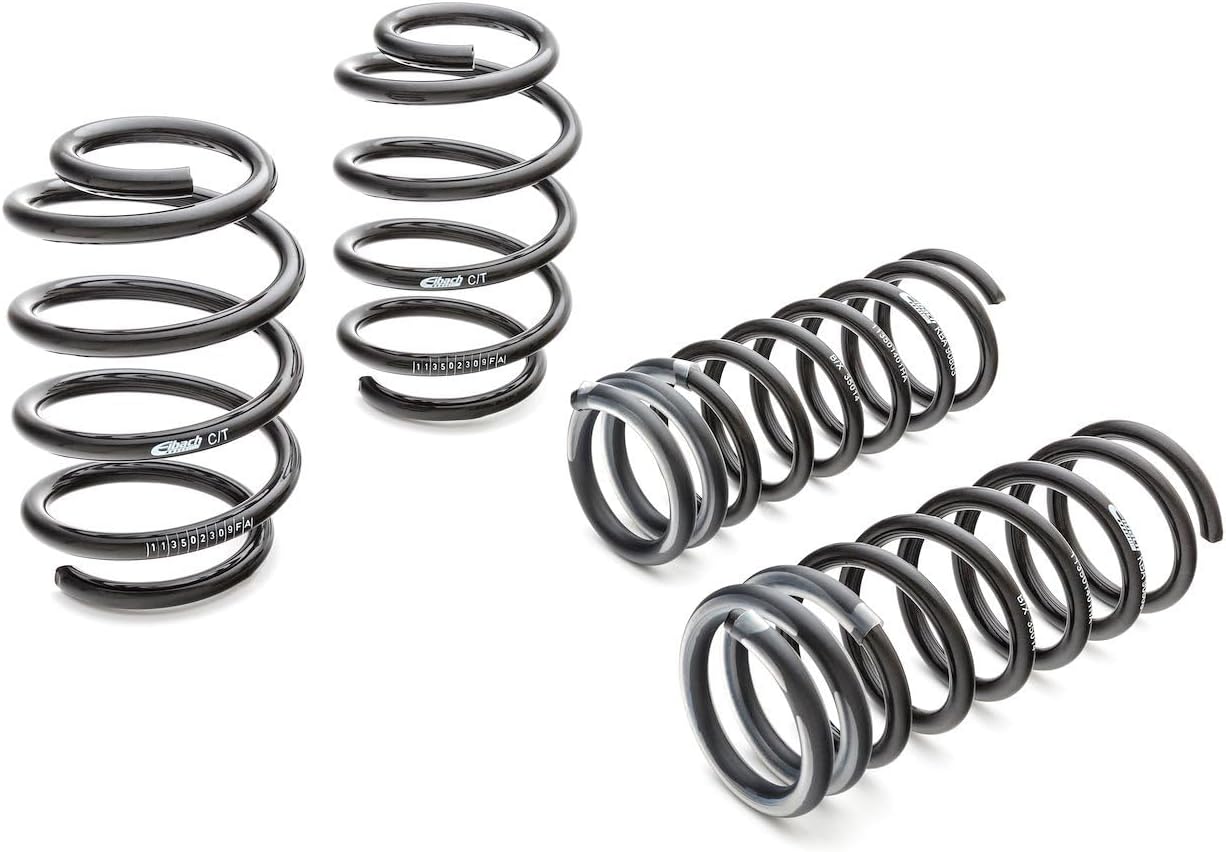
| Manufacturer | Eibach |
|---|---|
| Item model number | 4031.140 |
| Special Features | Progressive spring design; Lowers center of gravity |
The Eibach Pro-Kit is a four-spring lowering kit engineered to sharpen handling and tighten body control for everyday-driven performance cars. Designed to lower the vehicle roughly 1.0 to 1.5 inches, these progressive-rate springs reduce squat under acceleration, minimize nose dive during braking, and cut down body roll through corners while improving fender fitment. In daily use the springs deliver a firmer, more connected feel without sacrificing ride quality thanks to Eibach's progressive spring design. Installation typically replaces factory coils and works well with slightly larger wheels and tires for a finished look. Notable features include a lower center of gravity, engineered progressive rates for comfort and control, and the brand's tuning for street performance. Buyers should expect a firmer ride compared with stock and will likely need basic suspension alignment after installation to restore steering and tire wear geometry. These springs are aimed at drivers wanting a reliable, tested way to make their Civic handle and look sportier without extensive suspension overhaul.
Best for: Drivers focused on sharper street handling and a lower, more aggressive look for their Civic who prioritize measurable cornering and braking improvements over a plush ride.
Less Ideal for: If you prioritize maximum ride comfort for daily commuting on rough roads or need a suspension tuned for track-only competition, choose a different spring or a dedicated coilover setup.
- Progressive spring design balances improved handling with retained ride comfort
- Lowers vehicle 1.0 to 1.5 inches for reduced body roll and improved stance
- Engineered to reduce squat, nose dive, and improve cornering stability
- Designed and tested by suspension engineers for performance street use
- Produces a firmer ride compared with factory springs which may feel harsh on rough roads
- Requires alignment after installation to correct ride height and steering geometry
Verdict: A proven, street-focused lowering spring kit that tightens handling and improves stance for performance-minded Civic owners.
3. maXpeedingrods Lowering Springs for Honda Civic (2006–2011) — 1.97" Drop

| Fitment | Honda Civic 2006–2011 (coupe and sedan) |
|---|---|
| Front Spring Rate | 7.2 kg/mm (403.2 lbs/in) |
| Rear Spring Rate | 3.6 kg/mm (201.6 lbs/in) |
| Drop Height | About 1.97 inches (50 mm) |
These maXpeedingrods lowering springs are a direct-fit spring set for 2006–2011 Honda Civic coupes and sedans that lower the car roughly 1.97 inches and stiffen the suspension for sharper cornering and reduced body roll. Constructed from SAE 9254 cold-wound steel with an anti-corrosion coating, the springs are offered as front and rear pairs with specified spring rates and were tested for fatigue and salt-spray resistance. Installation is typical for lowering springs and is compatible with factory-quality or aftermarket shocks, so you can swap them in without major modifications. In real-world use the springs give a clear visual drop and a noticeably firmer, more responsive feel; that makes them a good budget way to improve handling and stance. Expect a firmer ride and somewhat reduced compliance over bumps compared with stock springs, and consider inspecting or upgrading shocks if your current dampers are worn to avoid premature wear or harshness.
Best for: Buyers who want an affordable, bolt-on way to lower their 2006–2011 Civic and prioritize improved handling and a lowered stance over plush ride comfort.
Less Ideal for: Drivers who prioritize a smooth, comfort-oriented daily ride or who have worn shocks and do not plan to refresh dampers should consider softer or complete coilover solutions instead.
- Vehicle-specific fitment for 2006–2011 Honda Civic coupe and sedan models
- Corrosion-resistant SAE 9254 cold-wound steel with protective coating
- Front and rear spring rates tuned to reduce body roll and improve cornering
- Direct bolt-on design compatible with factory and aftermarket shocks
- Stiffer spring rates produce a firmer ride and less comfort over rough roads
Verdict: A practical, budget-friendly lowering spring set that gives 2006–2011 Civics a near-2-inch drop and firmer, more controlled handling with direct-fit installation.
4. AJP Distributors JDM Suspension 1.5" Front & Rear Lowering Springs Kit

| Lowering drop | 1.5" front / 1.5" rear |
|---|---|
| Compatible models | 2006–2011 Honda Civic |
These AJP Distributors JDM lowering springs drop the ride height by about 1.5 inches at both front and rear, giving a Civic from 2006 to 2011 a noticeably lower stance and firmer ride. They are sold as a complete front and rear spring set intended for use as a direct replacement lowering kit; installation typically requires spring compressors and basic suspension disassembly so professional or experienced DIY installation is recommended. The main benefit is an economical way to lower the car and improve visual stance and cornering feel without replacing struts or shocks. Expect a firmer ride and more pronounced road feedback compared with stock springs, and note the kit does not include shocks or hardware, so matching dampers or alignment adjustments may be needed for best handling and tire wear. These springs are a budget-focused option that trades ride comfort and refinement for improved stance and sharper body control.
Best for: Buyers wanting an affordable, straightforward way to lower a 2006–2011 Civic for improved stance and firmer handling while prioritizing cost over ride comfort and premium components.
Less Ideal for: Drivers seeking a plush daily ride, adjustable ride height, or a full matched suspension upgrade should consider shocks, struts, or coilovers instead.
- 1.5 inch drop front and rear provides a uniform lowered stance and improved visual profile.
- Complete front and rear spring set designed as a direct replacement for 2006–2011 Civic models.
- Affordable option compared with coilovers or paired shock-and-spring upgrades.
- Stiffer spring rate improves body control and reduces squat during acceleration.
- Does not include shocks, struts, or installation hardware so additional parts or service may be required.
Verdict: A cost-conscious way to lower a 2006–2011 Civic for better stance and sharper handling without the expense of a full suspension rebuild.
5. Godspeed Traction-S Performance Lowering Springs (set of 4) for Honda Civic 2006–2011

| Compatible models | Honda Civic (FA and FG) 2006-2011 (excl. Hybrid) |
|---|---|
| Average drop | Front 1.5" / Rear 1.4" |
| Material | SAE 9254 steel, cold wound |
| Finish | Powder coat |
The Godspeed Traction-S lowering springs are a four-piece spring kit made to drop 2006–2011 Honda Civics about 1.5 inches front and 1.4 inches rear to sharpen turn-in and reduce body roll. Cold-wound SAE 9254 steel and multi heat treatment aim to limit sag over time, and a powder coat finish helps resist corrosion on street-driven cars. These springs are intended to work with factory shocks but pair best with upgraded performance dampers for a more controlled ride and to avoid harshness. In everyday use they give a firmer, more planted feel during cornering and improved steering response, while still being tuned to keep daily comfort reasonable. Installation is typical for coil spring swaps and may require an alignment afterward. If you prioritize long-term, low-maintenance performance, these springs are a solid budget-oriented option, though drivers looking for perfect ride compliance without any firmer edge should consider a matched shock and spring package instead.
Best for: Drivers who want a reliable, modestly lowered setup that improves handling and reduces body roll without sacrificing everyday usability, and who prefer a durable spring designed to resist sag over time.
Less Ideal for: Enthusiasts seeking a fully matched performance suspension or those who need the softest possible ride for rough roads should consider complete spring-and-shock kits or touring-oriented options instead.
- Cold-wound SAE 9254 steel and multi heat treatment to resist sag over time
- Powder coat finish provides corrosion protection for longevity
- Designed to work with factory shocks while improving turn-in and reducing body roll
- Moderate drop (approx. 1.5" front, 1.4" rear) balances handling gains with daily comfort
- Best results require pairing with upgraded shocks; using stock dampers may yield a firmer ride
- Not compatible with hybrid Civic models
Verdict: A durable, modest lowering spring set that improves handling and resists sag, making it a practical choice for reliability-minded Civic owners who want better cornering without losing daily comfort.
6. D2 Racing Sports D2 Pro Lowering Springs for 2006–2011 Civic

| Material | Chrome silicon steel |
|---|---|
| Drop (Front/Rear) | 1.8" F / 1.4" R |
| Spring Design | Progressive-rate coils |
| Fitment | Direct factory replacement |
| Certification | ISO 9001 manufactured with TÜV approval |
These D2 Pro lowering springs replace the factory coils with cold-wound, heat-treated chrome silicon steel springs designed to lower a 2006–2011 Civic and sharpen handling. Installation is a direct factory-quality fitment and typically involves swapping springs on the front struts and rear suspension; the rear install is straightforward while the front can take a bit more time and may benefit from a spring compressor or shop help. The progressive-rate design and lower center of gravity reduce body roll and give a sportier on-road feel at the cost of a firmer ride over bumps. The springs are bench-tested, finished for corrosion resistance, and built in an ISO 9001 facility with TÜV approval, so they present a competent blend of durability and performance for street use. Note that lowered clearance can cause rubbing with larger wheels or aggressive offsets and the firmer tune will increase road harshness compared with stock suspension, so alignment and possibly adjustable rear arms are recommended after install.
Best for: Buyers who want a reliable, proven way to lower a 2006–2011 Civic for improved handling and a more aggressive stance while prioritizing documented fitment and seller-reviewed results.
Less Ideal for: Drivers who need a comfortable daily commute over rough roads or who frequently carry heavy loads and require maximum suspension travel should consider softer springs or a different suspension solution.
- Direct factory-quality fitment for 2006–2011 Civic chassis makes installation simpler
- Progressive-rate coils reduce body roll and improve mid-corner stability
- Cold-wound, heat-treated chrome silicon steel construction with corrosion-resistant finish for durability
- Bench-tested and produced in an ISO 9001 facility with TÜV approval for consistent spring rate output
- Lowering increases ride firmness and can make the car noticeably harsher over rough roads
- Reduced clearance may require wheel/tire adjustments or spacers to avoid rubbing
Verdict: A durable, factory-fit progressive lowering spring set that reliably lowers 2006–2011 Civics for sharper handling and a cleaned-up stance.
7. Skunk2 Racing Lowering Springs for 2006–2011 Honda Civic
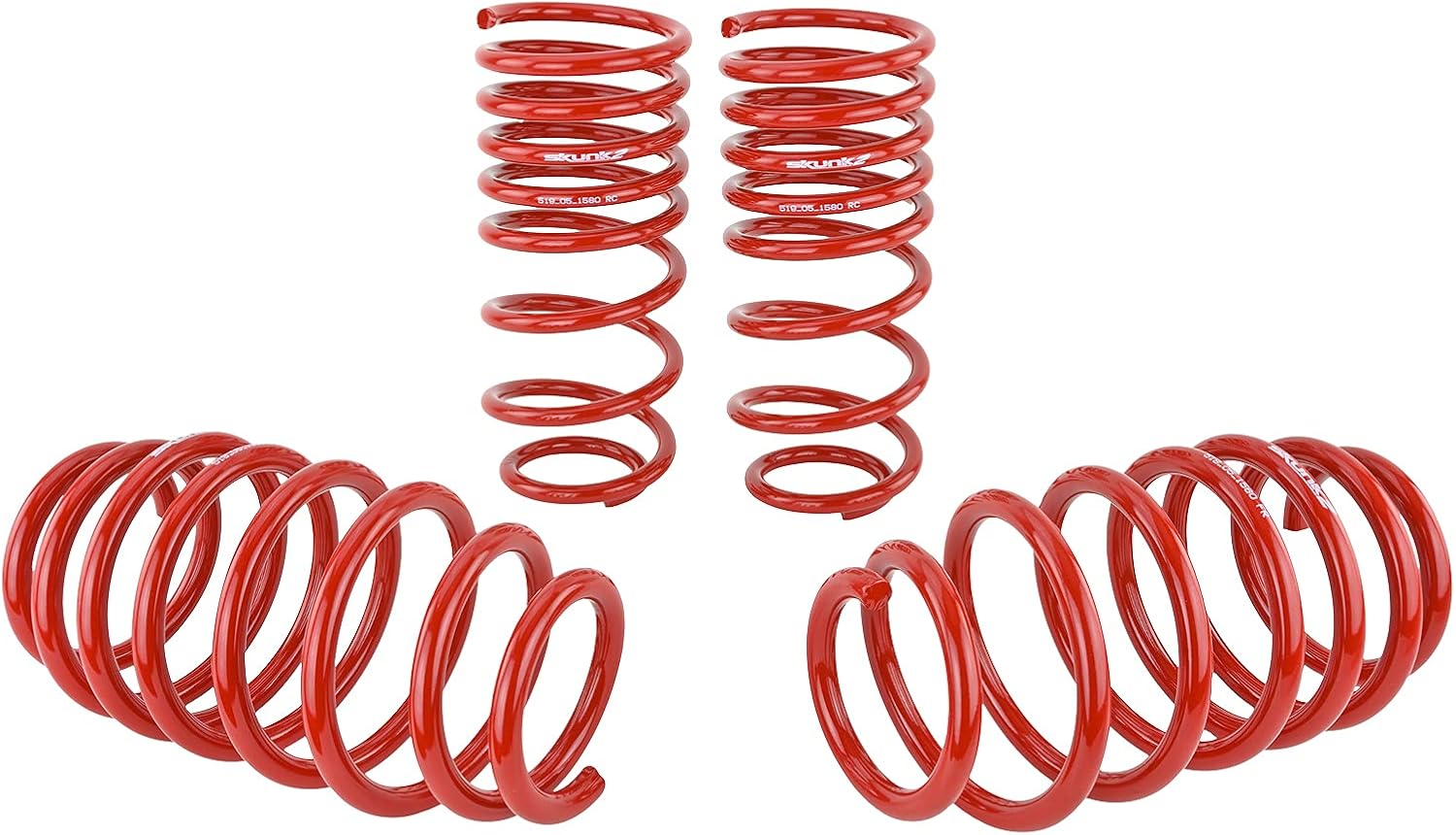
| Front Spring Rate (Tender / Main) | 135 lb-in / 184 lb-in |
|---|---|
| Rear Spring Rate (Tender / Main) | 125 lb-in / 273 lb-in |
| Drop (Front / Rear) | 2.25” / 2.00” |
| Fitment | 2006 – 2011 Honda Civic (1.8L/2.0L) |
Skunk2 Racing lowering springs are a straightforward way to give an 8th/9th generation Civic a firmer, lower stance without replacing the entire shock assembly. These springs are CNC-wound from high-grade spring steel with staggered front and rear rates to drop the front about 2.25 inches and the rear about 2.00 inches while increasing cornering grip and reducing body roll. In everyday use they tighten up handling and remove most wheel gap without making the ride harsh; many owners report a near-stock ride quality when paired with stock dampers, though upgrading shocks will maximize control. Installation requires basic suspension know-how and tools and can take longer than a simple bolt-on; some users note spring labeling confusion and minor settling time after fitment. They are marketed specifically for 2006–2011 Civics and are best used by drivers who want a reliable, factory-quality sport drop and improved handling rather than an extreme slammed look.
Best for: A buyer who wants a dependable, factory-quality performance drop that improves handling and appearance while keeping everyday ride comfort and reliability a priority.
Less Ideal for: Drivers seeking an aggressive slammed look or maximum track performance should consider coilovers or more extreme springs instead.
- Designed specifically for 2006–2011 Honda Civic fitment for straightforward compatibility
- CNC-wound SAE 9254V spring steel construction for consistent spring rates and durability
- Sport-focused spring rates that tighten cornering and reduce body roll
- Moderate drop (about 2.25" front, 2.00" rear) that removes wheel gap without extreme lowering
- May require shock/strut upgrade to get the best ride and control under aggressive driving
- Some users report confusing spring labels and a short settling period after installation
Verdict: Choose these Skunk2 springs if you want a reliable, moderate lowering kit that tightens handling and looks good without sacrificing daily drivability.
Choosing the Right 2006-2011 Honda Civic Lowering Springs: Key Factors to Consider
Drop Height and Stance
Drop height determines how low the front and rear sit compared with stock and directly affects fender clearance, wheel fitment, and center of gravity. For the 2006-2011 Civic, modest drops in the 1.0 to 1.5-inch range usually improve cornering without creating rubbing or requiring major suspension modifications.
Excessive drop increases the risk of rubbing on suspension travel, alters scrub radius and alignment geometry, and can negatively affect ride comfort on rough roads. Verify front and rear drop numbers separately because uneven drops can cause a nose-down or nose-up stance that changes handling balance.
Spring Rate and Handling Balance
Spring rate—measured in lb/in—affects body roll, pitch control, and how the car responds to steering inputs. Higher rates reduce body movement and improve responsiveness but increase transmitted harshness over bumps. For Civic owners seeking better midcorner grip without sacrificing daily comfort, aim for rates that are a modest increase over stock rather than extreme stiffening.
Consider how the chosen rates interact with OEM or replaced dampers. Springs that are much stiffer than the shocks can overwhelm damping and produce unpredictable rebound or contact patch loss. Matching spring rate to the intended use—commuter, canyon runs, or occasional track day—keeps handling balanced.
Ride Quality and Comfort Tradeoffs
Lowering springs change suspension compliance and can make the ride feel firmer. The key is to choose springs that offer improved control without turning daily driving into a harsh experience. Progressive or variable-rate springs can help by providing a softer initial spring rate for small bumps and ramping up during heavier loads and cornering.
Evaluate expected driving surfaces: owners who mostly drive on imperfect urban roads should prioritize modest drops and more compliant spring characteristics, while those who drive on smooth roads may accept firmer springs for sharper handling.
Compatibility and Fitment
Fitment means the springs seat properly on the Civic's strut mounts, clear suspension components, and do not interfere with brake lines or sway bar links. Confirm the springs are specified for the 2006-2011 Civic platform and for the correct front/rear mounting types. Some sets require matched top mounts or different rear spring perches.
Check whether installation needs supplemental parts such as bump stops or extended hardware. Proper fitment reduces the chance of premature wear, noise, or failure and simplifies installation for DIYers or shops familiar with the Civic chassis.
Corrosion Resistance and Build Quality
Springs are exposed to road salt, moisture, and debris, so coatings and steel grade matter for long-term performance. Powder coating or e-coating reduces the chance of paint chipping and rust that leads to sag or breakage. Higher quality steel and consistent winding improve ride predictability and longevity.
Inspect warranty terms and seller documentation for coverage against sag or material defects. Durable construction reduces the chance of needing replacement sooner than expected, making the initial investment more practical over time.
Installation Complexity and Maintenance
Some lowering springs are designed for straightforward replacement with existing struts, while others require a strut swap or additional hardware. Consider whether you will install them yourself or use a shop. DIY-friendly kits that avoid disassembling the entire assembly can save labor but may be limited in available drops.
After installation, alignments are essential to restore correct toe and camber. Maintenance includes periodic inspections for rust, seat settling, and any unusual noises. Choosing springs that do not demand excessive post-installation adjustments makes ownership easier.
How Much Lowering Affects Alignment and Tire Wear
Lowering changes suspension geometry and can increase negative camber and toe variation, which affects tire wear. For the 2006-2011 Civic, even modest drops can shift alignment enough that a professional alignment is required to maintain even tire wear and predictable handling.
Plan on a front-end alignment after installing lowering springs. Pay attention to camber settings and toe-in/toe-out adjustments. If the drop is substantial, additional corrections like camber kits or adjustable control arms may be needed to preserve tire contact patch during aggressive cornering.
- Always perform a full alignment after lowering.
- Monitor inner tire wear for the first few thousand miles.
- Consider adjustable suspension components for larger drops.
Progressive Versus Linear Spring Designs
Progressive springs vary their effective rate as they compress, offering a softer initial response for comfort and a stiffer rate under heavy loads. This makes them a good choice for Civic owners who need a compromise between everyday comfort and improved handling.
Linear springs have a constant rate and provide predictable behavior during repeated cornering and track use. Choose linear designs if you prioritize consistency and plan further suspension tuning with matched dampers.
- Progressive: more compliant over small bumps, ramps up in cornering.
- Linear: consistent feel, better for tuned damping and track use.
Installation Tips for 2006-2011 Civic Lowering Springs
Prepare for an alignment and check all related components such as strut mounts, bearings, and bump stops during installation. Replace worn top mounts and consider fresh hardware if the originals show corrosion or play. Use proper spring compressors and follow torque specs for safety.
Test-drive gradually after installation to hear for unusual noises and re-check fasteners and ride height. If you are lowering the car significantly, verify clearance with wheels and tires under full suspension travel.
- Inspect and replace worn mounts before installing springs.
- Use a proper spring compressor and follow torque specs.
- Re-check ride height and clearances after initial test drive.
How Lowering Springs Interact with Dampers
Springs and dampers work together; installing lower springs without compatible valving can lead to poor rebound control. On the 2006-2011 Civic, many owners pair springs with shocks designed for lowered ride height to preserve damping authority and prevent bottoming.
If you keep the original dampers, choose springs with moderate increases in rate to avoid creating an imbalance. When matching upgraded shocks, select valving tuned for the spring rates to get the intended handling improvements.
- Mismatched springs and shocks can cause excessive rebound or nose dive.
- Consider shock valving that matches the chosen spring rates for best results.
Legal and Practical Considerations
Some jurisdictions have minimum ride-height or headlight aim rules that can be affected by lowering. Check local regulations for allowable ride height and make sure brakes, lights, and safety systems are not compromised by the new stance.
Practical considerations include driveway ramp angles and speed bump clearance. Test common routes at the expected final ride height to avoid daily annoyance or damage.
- Confirm local rules on ride height and headlight aim.
- Assess common driveways and parking areas for clearance issues.
Tire and Wheel Fitment After Lowering
Lowering alters how tires sit relative to the fenders and can necessitate different wheel offsets or minor trimming. For the 2006-2011 Civic, modest drops usually work with common wheel sizes, but aggressive offsets combined with lowering increases the chance of rubbing.
When planning wheel upgrades, account for both drop height and backspacing. Test fit or consult fitment guides that reference the Civic chassis and the expected lowered ride height.
- Check wheel offset and brake clearance after lowering.
- Mock-up tires/wheels if switching to a different size to confirm no rubbing.
Still looking for the perfect fit?
Select your Honda Civic configuration to see the most relevant Lowering Springs recommendations
How We Chose the Best 2006-2011 Honda Civic Lowering Springs
We narrowed contenders by focusing on attributes that matter most for 2006-2011 Civic owners. Primary evaluation criteria included measured drop height and advertised spring rates to ensure the springs deliver the claimed stance and handling changes without causing excessive harshness. We also assessed fitment accuracy and kit completeness so each set fits the Civic chassis range covered here without additional modification.Durability and materials were weighed heavily, examining coating, steel grade, and warranty coverage to reduce corrosion and sag over time. Ride quality was judged by expected compliance at common drop heights for this platform, prioritizing springs that retain drivability on rougher pavement while improving body control. Noise, vibration, and harshness tendencies were considered to avoid sets that amplify road harshness unnecessarily.We excluded coilover kits, shocks without spring matched valving, and any products lacking clear drop specs or Civic-specific fitment notes. Also excluded were springs intended only for competition use that require extensive suspension rework. The final list favors balanced options that match typical Civic wheel and tire setups and real-world driving needs.
Our full evaluation process is outlined in our review methodology.
FAQ
How much lower do lowering springs typically drop a 2006-2011 Civic?
Lowering springs for this Civic often advertise drops between about 1.0 and 2.0 inches. The actual drop can vary front to rear, so check the specified front and rear numbers and plan for alignment to correct geometry changes.
Can I install lowering springs myself on a 2006-2011 Civic?
Experienced DIYers can install springs with the right tools and a spring compressor, but it requires careful work and torqueing. If you are not comfortable with suspension work, a professional installation is recommended and will include an alignment.
Will lowering springs affect my Civic's ride comfort a lot?
It depends on the drop and spring rate. Modest drops with progressive springs generally retain acceptable comfort, while stiffer or larger drops will feel firmer and transmit more road harshness.
Do I need new shocks when I fit lowering springs?
Not always. If the existing dampers are worn or the spring rates differ significantly from stock, replacing shocks with units valved for lowered ride height is advisable to maintain control and prevent premature damping wear.
How soon should I get an alignment after installing lowering springs?
Get a full alignment immediately after installation and again after a few hundred miles to account for initial settling. Proper alignment preserves tire life and predictable handling.
Are progressive springs better than linear for daily-driven Civics?
Progressive springs often suit daily-driven Civics because they provide comfort over small bumps and stiffen under load for better cornering. Linear springs can be preferable if you want a consistent track-oriented response.
Final Verdict
When choosing lowering springs for a 2006-2011 Civic, prioritize the combination of drop height and spring rate that matches how you drive. Modest drops and progressive designs usually deliver a good mix of improved handling and daily comfort, while larger drops and stiffer rates demand careful attention to alignment, damping, and wheel fitment. Consider corrosion protection and warranty coverage for long-term value.Balance the tradeoffs between stance, ride quality, and maintenance needs to make a confident selection. Aim for a setup that improves control without introducing excessive harshness or clearance problems for the Civic chassis.
Explore More:
- Check out all Honda Civic parts & accessories
- Explore Lowering Springs Maintenance & Repair Guides
- Explore Suspension & Steering
- Browse all Auto Parts
