

Note: This article contains affiliate links. If you click on these links and make a purchase, I may earn a small commission at no extra cost to you. This helps support my research and content. Read my full affiliate disclosure here.
If your Civic feels loose on-center, wanders, or produces uneven tire wear, replacing worn outer tie rod ends can immediately improve steering precision and vehicle safety. This guide highlights the top outer tie rod ends chosen specifically for the Honda Civic, explaining the practical differences that matter to owners.We shortlisted seven strong options and evaluated them on fit accuracy, joint durability, and how they affect alignment stability and steering feedback. Read on to understand which features matter most for reliable steering performance and what to expect during installation.
Looking for other parts? See all Honda Civic parts & accessories.
Top Picks at a Glance
| Best Overall The best all-around choice for most situations | TRQ 4-Piece Front Inner and Outer Tie Rod Set (PSA72496) |  |
| Best Quality Built to a higher standard if you want something more solid | MOOG ES801251 Outer Steering Tie Rod End |  |
| Best Value The sweet spot between price and what you get | KDSA Front Outer Tie Rod Ends (Pair) for Honda Civic 2016–2025 & Compatible Models |  |
| Best Budget The cheapest option that still gets the job done reliably | VANUODA Front Outer Tie Rod Ends (pair) — compatible with select Honda and Acura models |  |
| Highest Rated A top-rated pick with lots of positive feedback | Metrix Premium Chassis Parts Front Outer Tie Rod End Kit (2 pc) |  |
| Most Popular A crowd favorite that many people choose with confidence | Detroit Axle Pair Front Outer Tie Rod Ends for 2006–2011 Honda Civic |  |
| Best Seller A high-volume bestseller chosen again and again | HHCM Outer Tie Rod End Kit ES3581, front outer tie rod ends (2 pc) |  |
1. TRQ 4-Piece Front Inner and Outer Tie Rod Set (PSA72496)

| Quantity | 4 Piece |
|---|---|
| Position | Front Inner, Front Outer |
| Exterior | Machined |
| Manufacturer | TRQ |
| Model | TRQ PSA72496 4 Piece Tie Rod Set |
This TRQ kit supplies two front inner and two front outer tie rods as a direct-fit replacement for compatible Honda Civic, Insight, and Acura Integra models. It is designed for DIY or shop installation and aims to match factory steering geometry so alignment adjustments after fitting are straightforward. Notable features include machined exterior parts, a full four-piece set so both sides can be serviced at once, and a broad list of reference numbers for confirming fitment. In practice the kit simplifies a common steering repair by replacing worn ball joints and threaded tie rod ends that cause play or wandering steering. The pre-assembled elements reduce teardown time, but buyers should still factor in an alignment and basic steering inspection after installation. This set focuses strictly on the listed model years and trims, so verifying vehicle fitment before purchase is important. The packaging and TRQ support materials and videos help DIYers, while professional installers will appreciate the complete kit format for quick turnaround.
Best for: Buyers who want a balanced, reliable replacement that restores steering feel and lets them replace all front tie rod components in one job, whether doing the work themselves or sending the vehicle to a shop.
Less Ideal for: Drivers looking for performance steering upgrades, aftermarket steering geometry changes, or parts for vehicles outside the listed fitment should look elsewhere.
- Complete four-piece kit covers both front inner and outer tie rods so both sides can be serviced at once
- Machined exterior and factory-style fitment intended to match original steering geometry
- Includes parts for multiple model years and a long list of reference numbers to simplify fitment checks
- Pre-assembled components and TRQ installation videos reduce installation time for DIYers
- Limited to the specific Honda Civic, Insight, and Acura Integra years and trims listed so not a universal fit
- Does not include alignment service or hardware beyond the tie rods themselves
Verdict: A complete, factory-style four-piece front tie rod kit that makes restoring steering tightness and replacing worn components simple for the covered Honda models.
2. MOOG ES801251 Outer Steering Tie Rod End

| Fit Type | Vehicle Specific Fit |
|---|---|
| Compatible with Vehicle Type | Passenger Car |
| Material Type | Metal |
| Included Components | Tie Rod End |
The MOOG ES801251 outer tie rod end replaces a worn steering outer joint to restore precise steering response and stable handling on compatible Honda Civic models. It is a serviceable, metal-forged design with a grease fitting so the ball joint can be lubricated during routine maintenance, which helps extend service life. The part is engineered with protective features to resist road debris and moisture, and it installs in place of the factory outer tie rod to return steering feel closer to factory specifications. Typical use is as a direct steering component replacement during a front-end service or alignment job; installers will appreciate the grease nipple and robust construction. Limitations to note are that this is a vehicle-specific outer tie rod end so you must confirm exact fitment for your Civic, and it does not include installation instructions or torque specs in the package, so some users may need to source that information separately. A few reports of damaged threads have appeared, which suggests inspecting the part before installation.
Best for: Buyers who prioritize steering precision and long-term durability and plan to perform or have professional front-end work and alignments done to maintain handling performance.
Less Ideal for: Casual DIYers who want a universal, plug-and-play part with instructions included or those unwilling to verify exact fitment before purchase.
- Serviceable ball joint with grease fitting for periodic lubrication
- Forged metal construction aimed at durability and strength
- Designed to restore factory-like steering feel and handling
- Protective features to resist contaminants and extend component life
- Fitment is vehicle-specific so must be matched to exact Civic year/trim
- No installation instructions or torque specifications included
Verdict: Choose the MOOG ES801251 if you want a serviceable, factory-quality outer tie rod end that restores steering feel and is built for durability on compatible Honda Civic models.
3. KDSA Front Outer Tie Rod Ends (Pair) for Honda Civic 2016–2025 & Compatible Models
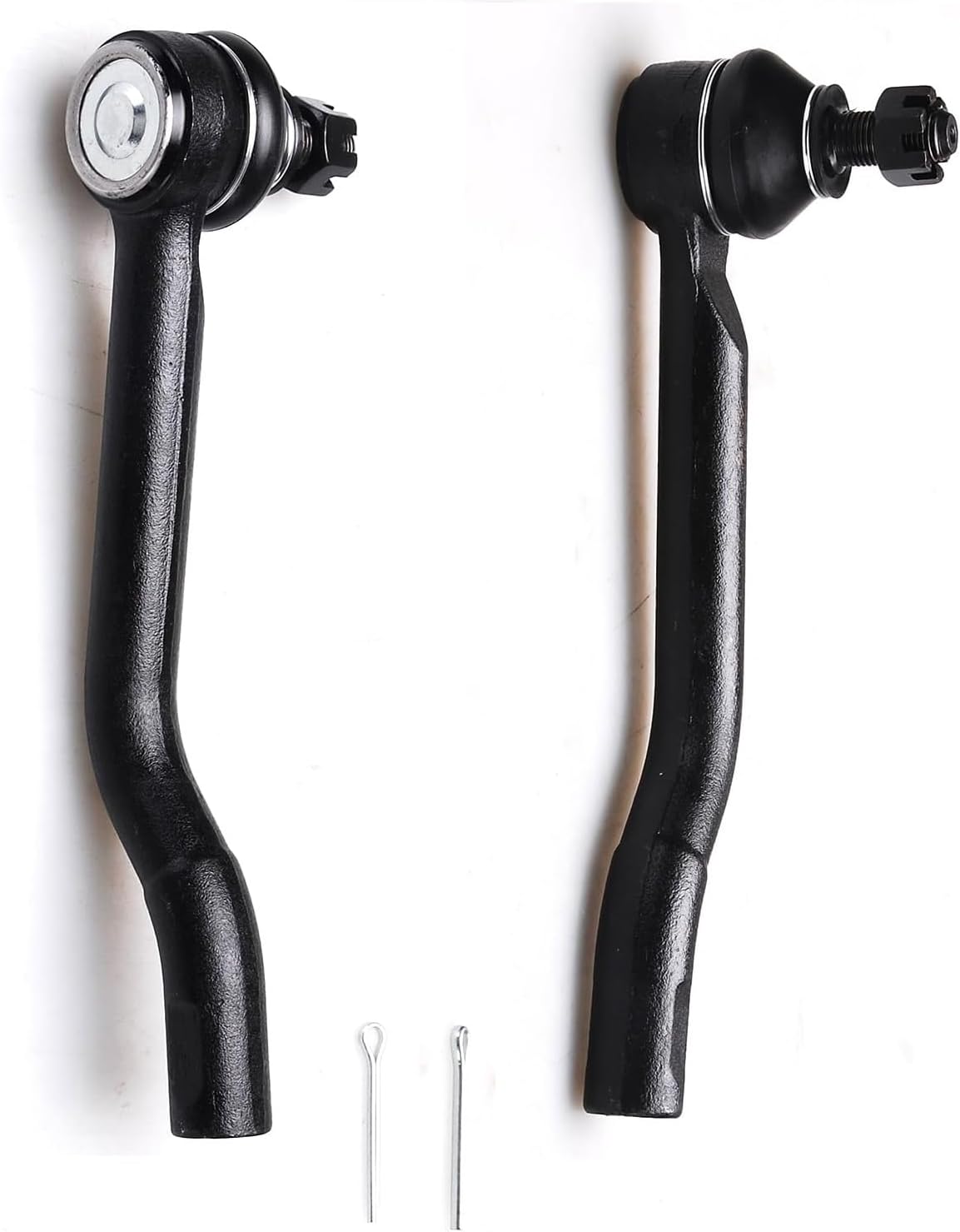
| Fitment | Honda Civic 2016-2025 (No Type R); Honda Insight 2019-2022; Acura Integra 2023-2025 1.5L |
|---|---|
| Package includes | Front left outer tie rod end ES801251 and front right outer tie rod end ES801250 |
| Manufacturer | KDSA |
| Manufacturer Part Number | ES801250 ES801251 |
This KDSA two-piece set replaces the front left and right outer tie rod ends and restores steering connection where play or noise has developed. It is sold as a matched driver and passenger side pair and is intended for direct replacement on specified Honda Civic, Honda Insight and Acura Integra 1.5L models. Install is straightforward for a mechanically minded owner or a shop: the parts are produced to factory-style tolerances for easy fit and to simplify alignment after installation. The parts list calls out manufacturing in Taiwan and the brand highlights decades of suspension experience, which is reflected in consistent fit reports from buyers. Practical benefits include quieter steering, improved steering response, and an OEM-style fit without the need to source individual sides. Limitations are normal for aftermarket steering components: you should verify exact model and non-Type R fitment before buying and plan for a professional alignment after replacement to prevent uneven tire wear.
Best for: Buyers who want a practical, ready-to-install replacement set that restores steering feel and eliminates play without hunting for individual parts; ideal for DIY mechanics or technicians focused on reliable, factory-quality replacements.
Less Ideal for: Anyone seeking performance or heavy-duty aftermarket steering upgrades or parts for Type R models should look at specialty performance components instead.
- Sold as a matched left and right pair for a complete front outer tie rod replacement
- Made to factory-style tolerances for straightforward installation and alignment
- Fits Honda Civic 2016–2025 (excluding Type R), plus specified Insight and Acura Integra 1.5L models
- Reported consistent fit and quality by multiple buyers
- Fitment excludes Type R and requires checking exact submodel compatibility before purchase
- Requires wheel alignment after installation to ensure correct steering geometry
Verdict: If you need a straightforward, matched replacement pair that restores steering feel on compatible Civic and related models, this KDSA tie rod end set is a practical, factory-style solution.
4. VANUODA Front Outer Tie Rod Ends (pair) — compatible with select Honda and Acura models

| Brand | VANUODA |
|---|---|
| Model | VNDQP071 |
| Exterior | Machined |
| OEM Part Number | ES3332R, 53560TF0003, ES3331R, 53540TF0003 |
| Pre-Greased | Yes |
These VANUODA front outer tie rod ends are a budget-focused replacement set for the steering linkage on older Honda and Acura models. Sold as a pair, they replace worn outer tie rod ends to address loose steering, uneven tire wear, and steering pull. The parts are machined with a steel ball stud and come pre-greased, so installation is straightforward for a DIYer with basic tools or a technician doing a quick steering service. Practical benefits include restoring tighter steering feel and helping preserve tire life after an alignment. The listing includes OEM reference numbers for proper fitment checks and notes compatibility across multiple Civic, CR-V, Fit, Insight, Integra, and EL years. Limitations are that the pieces do not include a grease fitting for future re-greasing and buyers should verify exact vehicle fitment before purchase; professional alignment is still required after installation. For a low-cost fix to steering play on older Hondas, this set covers the essentials without extra bells and whistles.
Best for: Buyers who need an affordable, straightforward steering repair for older Honda or Acura models and prefer a ready-to-install replacement they can fit themselves or have a shop install quickly.
Less Ideal for: Shoppers seeking lifetime-serviceable parts with re-grease capability or premium-brand performance components should consider higher-end alternatives.
- Sold as a pair so both sides can be replaced at once
- Pre-greased ball joint for ready-to-install condition
- Machined steel ball stud aimed at consistent fit and function
- Includes OEM reference numbers to confirm vehicle compatibility
- No grease fitting provided for future servicing
Verdict: A cost-effective, ready-to-install pair of front outer tie rod ends that restores steering feel on older Honda and Acura models.
5. Metrix Premium Chassis Parts Front Outer Tie Rod End Kit (2 pc)

| Position | Front Outer |
|---|---|
| Quantity | 2 pc |
| Material | Steel |
| Certifications | IATF 16949, ISO 9001 |
| Warranty | 3 Year / 36,000 miles limited |
This Metrix front outer tie rod end kit replaces both outer tie rod ends on compatible Honda and Acura applications. Made from high-grade steel with precision ball studs, the parts are supplied pre-greased or in greaseable form and include cotter pins for secure installation. In use the components restore steering accuracy and reduce play, so the wheel feel returns to factory-like responsiveness after wear-related steering wander is corrected. Metrix highlights manufacturing to IATF 16949 and ISO 9001 quality standards and a three year/36,000 mile limited warranty, which supports long-term reliability for daily-driven Civics. Installation is straightforward for a competent DIYer or technician and the kit is supplied as a matched pair to simplify alignment. The main limitations are that this listing covers only the front outer tie rod ends and you may still need an alignment and possible inner tie rod inspection when fitting; compatibility must be confirmed for exact Civic model years before purchase.
Best for: Buyers who prioritize a reliable, factory-quality steering repair for a Honda Civic and want parts built to automotive quality standards that hold up in daily driving.
Less Ideal for: Anyone looking for a complete steering overhaul kit that includes inner tie rods or control arms should consider a full suspension kit instead.
- Matched two-piece kit makes replacing both outer tie rods simple and consistent.
- High-grade steel construction and precision ball studs for durable, accurate steering response.
- Pre-greased or greaseable options reduce maintenance and wear.
- Includes cotter pins for secure, factory-style fastening.
- Manufactured under IATF 16949 and ISO 9001 quality standards with a 3 year/36,000 mile limited warranty.
- Only includes front outer tie rod ends so inner tie rods or other steering parts may need separate replacement.
Verdict: A matched pair of factory-quality steel outer tie rod ends built and certified for dependable, long-lasting steering performance on Honda Civics.
6. Detroit Axle Pair Front Outer Tie Rod Ends for 2006–2011 Honda Civic

| Fitment | 2006–2011 Honda Civic (front outer) |
|---|---|
| Quantity | Pair (2 tie rod ends) |
| Manufacturer | Detroit Axle |
| Warranty | 10-Year Warranty |
These Detroit Axle front outer tie rod ends are a direct replacement for worn Civic steering outer links and are sold as a two-piece kit for both front wheels. Typical use is to restore precise steering and eliminate play or vibration caused by failed rod ends; the parts mount to the steering knuckle and inner tie rod and accept the factory nut. Notable features include factory-style fit and a grease zerk for periodic lubrication, which improves serviceability compared with sealed aftermarket units. Real-world benefits are straightforward: they bring back steering feel, allow a shop or DIYer to re-establish alignment, and fit without modification on covered model years. Expect durable construction tested for impact and fatigue, but note the kit ships without a new jam nut or washer and you may need to reuse or source the correct hardware for some knuckles. Installation requires basic front-end service skills and a post-install alignment to ensure proper tracking.
Best for: Buyers who want a proven, serviceable steering replacement with many positive user reports and who prioritize a safe, reliable repair backed by real-world feedback.
Less Ideal for: Drivers seeking a lifetime-sealed, maintenance-free tie rod end or those who need a kit that includes every small mounting fastener should consider alternatives or aftermarket kits that bundle hardware.
- Made as a direct factory-replacement fit for 2006–2011 Honda Civic steering outer tie rods
- Includes grease zerk for maintenance and extended service life
- Sold as a pair so both sides can be replaced at once to restore balanced steering
- Constructed and tested for impact, wear, and fatigue to meet durability expectations
- Does not include a new jam nut or washer which some installations require
Verdict: A reliable, serviceable factory-replacement pair for 2006–2011 Honda Civics that restores steering feel and has strong user approval.
7. HHCM Outer Tie Rod End Kit ES3581, front outer tie rod ends (2 pc)

| End 1 Thread Diameter (MM) | 14.0 |
|---|---|
| End 2 Thread Diameter (MM) | 10.0 |
| End 1 Thread Pitch (MM) | 1.5 |
| End 2 Thread Pitch (MM) | 1.25 |
| Type | Straight |
The HHCM ES3581 is a pair of front outer tie rod ends designed as a factory-quality replacement for compatible Honda Civic, CR-V, and Acura EL years. Each end uses precision threading and bearings sized to match the steering linkage so installation and alignment are straightforward for a mechanic or experienced DIYer. The kit emphasizes durability with materials and testing the brand says follow original manufacturer standards, and the parts arrive ready to install with the studs and threads specified for the application. In practical use these will restore steering responsiveness and help remove play or wandering caused by worn tie rods. Expect typical replacement limitations: these are direct-fit steering parts intended for stock suspension setups and will require professional alignment after installation. The set does not include related hardware like inner tie rods or alignment components, so plan for an alignment and inspection of adjacent steering parts when you replace them.
Best for: Buyers who want a direct-fit, factory-replacement outer tie rod kit to restore steering feel on the specified Civic, CR-V, or Acura EL models and prefer a conservative, reliability-focused part choice.
Less Ideal for: Drivers planning to run lowered, lifted, or otherwise modified steering geometry or those who need a performance-oriented or heavy-duty aftermarket steering upgrade.
- Made to match factory-style fitment for the listed Honda and Acura models
- Precision thread diameters and pitches for straightforward installation and adjustment
- Built with materials and testing that the brand says meet original manufacturer standards
- Sold as a two-piece kit so both outer tie rods can be replaced together for balanced steering feel
- Requires wheel alignment after installation and does not include alignment hardware
- Not intended for modified suspension or performance steering upgrades
Verdict: A straightforward, factory-style two-piece outer tie rod kit for buyers who want a reliable, direct-fit replacement to restore steering on the listed Honda and Acura models.
Choosing the Right Honda Civic Outer Tie Rod End: Key Factors to Consider
Fitment and Thread Specifications
Correct fitment is essential for maintaining steering geometry on the Honda Civic. Mismatched thread pitch or stud diameter can prevent proper engagement with the steering rack or tie rod and may limit alignment adjustment range. Ensuring the replacement outer tie rod end matches factory thread length and taper ensures secure fastening and reduces the risk of loosening under load.
Accurate fit also affects steering feel. A part that reproduces the original ball stud angle and seating depth helps maintain toe settings and minimizes the need for excessive adjustment at the alignment shop. For many Civic model years, confirming thread direction and pitch against the vehicle's specifications avoids installation problems and preserves the ability to center the steering wheel without abnormal steering geometry.
Ball Joint Construction and Lubrication
The internal construction of the ball joint determines resistance to wear and development of play. High-quality races and bearings with proper tolerances provide smoother articulation and longer life under steering loads. Units with factory-packed grease or a durable zerk fitting for periodic greasing give a serviceability advantage depending on maintenance preferences.
A well-designed ball joint will resist micro-movements that create steering looseness. For Civic owners who drive in stop-and-go traffic or on rough roads, a robust joint with retained lubrication reduces risk of early failure and keeps steering response consistent over time.
Boot Material and Seal Integrity
The protective boot keeps dirt and moisture out of the joint and is a primary factor in service life. Boots made from thicker synthetic rubber compounds or thermoplastic elastomers better resist cracking from heat and road chemicals. A secure clamp or molded lip that resists intrusion prevents contaminants from abrading bearing surfaces.
A compromised boot often leads to rapid wear because grit and water accelerate corrosion and pitting. For vehicles driven in corrosive or salted conditions, prioritize units with reinforced boots and proven sealing designs to reduce the frequency of replacement.
Corrosion Resistance and Finish
Corrosion protection on the stud and housing extends usable life, especially in climates with salt or high humidity. Zinc or other protective platings that are properly applied reduce surface degradation and make future servicing easier. Corrosion on threaded sections can complicate removal and risk cross-threading during installation.
Consider finishes that are compatible with common anti-seize compounds if you plan to apply them. Corrosion-resistant treatments also preserve the fit of clamping surfaces and prevent binding that could alter alignment settings during tightening.
Adjustment Range and Alignment Stability
Replacement outer tie rod ends must allow sufficient adjustment range so the toe can be set within specification without overextending the inner tie rod. A design that preserves a broad range of thread engagement ensures the alignment shop can achieve both correct toe and adequate thread engagement for safety.
Stability after alignment depends on the joint's ability to hold its adjustment. Units with tight tolerances and secure lock nuts or castellated fasteners reduce the chance of drift. Civic owners should confirm the replacement part permits normal alignment procedures and leaves enough leftover engagement for safe operation.
Installation Practicalities and Serviceability
Ease of installation affects total repair time and the likelihood of correct installation. Parts that include high-quality cotter pins, castellated nuts, or replacement hardware simplify reassembly. A clear replacement process where the joint can be greased after installation is a benefit for long-term maintenance.
Some designs require special tools to remove or install the ball stud. Factor in whether you have access to a tie rod separator, an appropriate torque wrench, and alignment tools, or whether a professional installation is the safer choice. Good instructions and consistent hardware help avoid mistakes that could compromise steering safety.
Signs Your Civic Needs an Outer Tie Rod End
Worn outer tie rod ends produce distinct steering and tire symptoms that are straightforward to check. Common indicators include looseness in the steering wheel, wandering or poor directional stability, and unusual tire wear patterns concentrated on the inner or outer edges.
Physical checks are simple: with the front wheels elevated, try moving the wheel and watch for play at the tie rod end or listen for clunks during articulation. These checks, combined with visual inspection of the boot for cracks or grease leakage, help determine if replacement is warranted.
- Excessive free play in steering wheel before the wheels turn
- Clunking or knocking noises when turning or hitting bumps
- Uneven tire wear on front tires
- Visible torn or missing boot material
Preparing for Replacement
Gather the right tools before starting: a tie rod separator or pickle fork, an adjustable wrench sized for the stud nut, torque wrench, and penetrating oil for seized fasteners. Have new cotter pins or lock nuts ready and consider a fresh grease supply if the replacement unit accepts grease.
Record the current toe setting or take a clear photo of the steering wheel center relative to the dashboard before disassembly. This helps approximate the steering center when reinstalling and reduces alignment time. Plan to complete a professional alignment after installation to verify toe and minimize tire wear.
- Tools: tie rod separator, torque wrench, penetrating oil
- Replace cotter pins and check included hardware
- Document steering center and toe settings before removal
Steps That Affect Tie Rod End Longevity
Proper installation torque and correct seating of the ball stud are critical to longevity. Under-torquing increases the chance of loosening, while over-torquing can damage the joint. Use the vehicle's torque specs where available and ensure the castellated nut is secured with a cotter pin when required.
After installation, check that the boot is oriented without folds that can trap dirt, and if the unit is serviceable, apply grease until the boot shows new lubricant. Lastly, ensure the tie rod is not under undue stress from misaligned steering components, as improper geometry can accelerate wear.
- Follow torque specs and secure with cotter pin if applicable
- Position boot to avoid trapped debris
- Grease serviceable joints immediately after installation
Alignment Considerations After Replacement
Replacing an outer tie rod end typically alters toe and can shift the steering wheel center. A proper alignment is necessary to restore handling and prevent uneven tire wear. Ensure the alignment technician checks both toe and steering axis inclination where applicable.
If you need to drive the vehicle to a shop after replacement, set the steering wheel as close to center as possible and drive cautiously at low speed. Avoid rough roads until the alignment is completed to prevent accelerated tire wear or handling issues.
- Always get a professional toe alignment after replacement
- Verify steering wheel centering during alignment
- Drive carefully to the alignment shop if immediate service is required
Maintenance Tips to Extend Service Life
Regular visual inspections of the boots and early attention to grease leakage help catch wear before it becomes a steering safety issue. For serviceable joints, schedule periodic greasing according to usage and road conditions. Keeping contaminants out of the joint is one of the best longevity strategies.
Address suspension or steering component issues promptly. Worn control arm bushings or shocks can increase stress on tie rod ends through added lateral movement. By maintaining the whole front end, you reduce uneven loading that accelerates tie rod wear.
- Inspect boots at oil changes or tire rotations
- Grease serviceable joints on a maintenance schedule
- Repair related suspension wear to avoid extra stress on tie rods
Common Installation Pitfalls and How to Avoid Them
A frequent mistake is failing to match thread pitch or direction, which can damage components during installation. Verify specifications before starting and compare the replacement part against the removed piece. Another common issue is reusing damaged hardware like cotter pins or over-stretching the boot clamps, which compromises sealing.
Using excessive force with improper tools can damage the ball stud taper or the steering knuckle. Employ a proper tie rod separator and avoid hammering the stud into the knuckle. If a stud is seized, use penetrating oil and patient backing-off techniques instead of brute force.
- Confirm thread pitch and direction before installation
- Never hammer the ball stud into place; use a proper separator
- Replace cotter pins and damaged clamps during reassembly
Still looking for the perfect fit?
Select your Honda Civic configuration to see the most relevant Tie Rod Ends recommendations
How We Chose the Best Honda Civic Outer Tie Rod End
Our selection focused on criteria that directly affect steering performance and long-term reliability on the Honda Civic. We prioritized precise fitment to OEM steering geometry because correct ball joint angles and thread engagement preserve alignment and reduce premature wear. Corrosion resistance and boot materials were evaluated to ensure the joint stays sealed against road salt and moisture, which extends service life.We also weighed joint construction and internal lubrication methods, since robust bearings and retained grease determine how long the assembly resists play. Thread length and stud diameter were considered for secure installation and maximum adjustment range during alignment. Lastly, we assessed packaged hardware and replacement ease because practical installation factors affect total repair time.Excluded from consideration were parts that required vehicle modifications, mismatched thread pitches, or units with evidence of poor materials or incomplete sealing. We did not include products that lack replacement parts or have inconsistent fitment information. The result is a list of options that meet fitment, durability, and serviceability standards important for Civic owners.
Our full evaluation process is outlined in our review methodology.
FAQ
How do I tell if the outer tie rod end on my Civic is bad?
Look for steering play, clunking noises when turning, and uneven front tire wear. With the front wheels off the ground, grasp the tie rod near the joint and check for side-to-side movement or excessive free play.
Can I replace an outer tie rod end myself?
Many owners with basic tools can replace an outer tie rod end, but you need a tie rod separator, proper wrenches, and torque tools. Plan for a professional alignment after installation to restore toe settings.
Will a worn outer tie rod end affect alignment?
Yes. Worn tie rod ends allow toe to change under load and can cause wandering, uneven tire wear, and unpredictable steering. Replacement is typically followed by a toe alignment to restore correct handling.
How long do outer tie rod ends usually last on a Civic?
Lifespan varies with driving conditions. Under normal use they often last many tens of thousands of miles, but exposure to rough roads, salt, and lack of boot integrity can shorten service life significantly.
Are there visual signs to check during a routine inspection?
Inspect the boot for cracks, tears, or grease leakage and look for rust or deformation on the stud. Any visible boot damage or excess play when manipulating the steering components indicates the joint should be serviced.
Will replacing the outer tie rod end fix tire wear problems?
Replacing a worn tie rod end can stop progressive toe-related tire wear, but tires already showing uneven wear may still need replacement. After replacing the tie rod end, have the alignment checked to prevent recurrence.
Final Verdict
When choosing outer tie rod ends for a Honda Civic, focus on fitment accuracy, robust ball joint construction, and reliable sealing to preserve steering precision and reduce future maintenance. Balance the desire for easy installation with long-term durability by selecting parts that allow proper alignment adjustment and have strong corrosion protection.Prioritize options that reproduce OEM thread and taper specifications, offer good boot protection, and either provide a serviceable grease fitting or a proven sealed joint. With those tradeoffs in mind, you can choose a replacement that restores steering feel and provides predictable service life.
Explore More:
- Check out all Honda Civic parts & accessories
- Explore Tie Rod Ends Maintenance & Repair Guides
- Explore Suspension & Steering
- Browse all Auto Parts
