

Note: This article contains affiliate links. If you click on these links and make a purchase, I may earn a small commission at no extra cost to you. This helps support my research and content. Read my full affiliate disclosure here.
If you drive a Honda Civic EG and want a firmer, lower stance without the complexity of coilovers, the right set of lowering springs can transform handling and appearance. Choosing the correct springs matters because the EG chassis responds strongly to changes in ride height and spring rate, affecting turn-in, body control, and everyday comfort.This guide narrows six top options suitable for the Civic EG and explains the differences in drop height, ride feel, and spring construction. We evaluated ride quality, sag resistance, and fitment consistency so you can pick a set that matches your driving priorities. Read on to see how we assessed each attribute before the product list.
Looking for other parts? See all Honda Civic parts & accessories.
Top Picks at a Glance
| Best Quality Built to a higher standard if you want something more solid | AJP Distributors JDM Handling Drop Coil Lowering Springs Kit |  |
| Best Value The sweet spot between price and what you get | AdlerSpeed Lowering Springs Kit for 1992–1995 Honda Civic (4-piece) |  |
| Best Budget The cheapest option that still gets the job done reliably | AJP Distributors Lowering Coil Spring Kit — 2.0" Drop |  |
| Highest Rated A top-rated pick with lots of positive feedback | Skunk2 Racing Lowering Springs for 1992–1995 Honda Civic/Del Sol |  |
| Most Popular A crowd favorite that many people choose with confidence | Truhart Lowering Springs for 1992–2000 Honda Civic (Front set) |  |
1. AJP Distributors JDM Handling Drop Coil Lowering Springs Kit
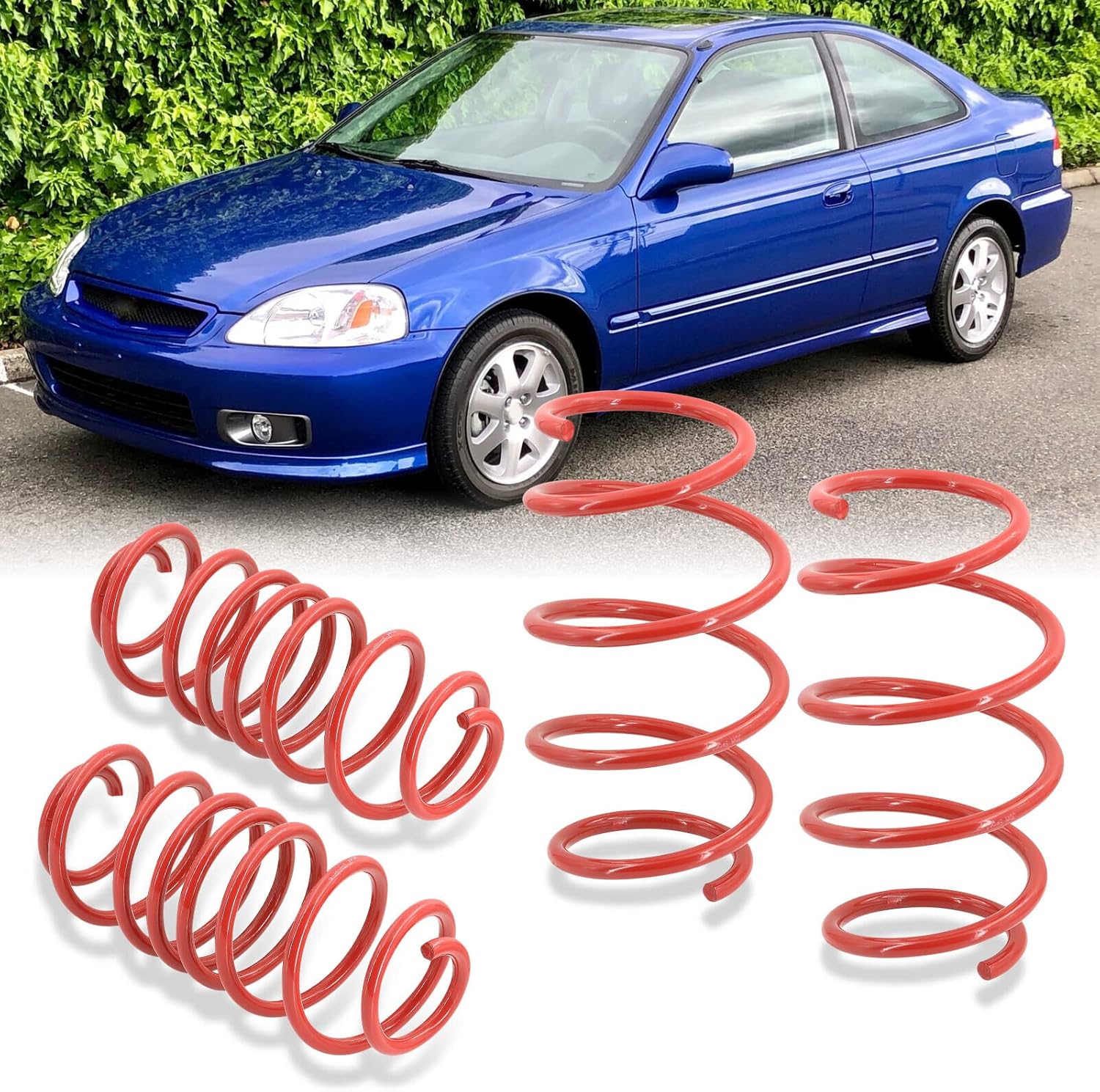
| Lowering Drop Rate | 2.0" (Front) / 2.0" (Rear) |
|---|---|
| Manufacturer | AJP Distributors |
| Manufacturer Part Number | LS-001RD-AMA-L1 |
These lowering springs are built to drop the ride height about 2.0 inches both front and rear, which tightens body roll and lowers the center of gravity for sharper cornering. They are sold as a coil spring kit intended for installation on compatible Honda Civic EG-era platforms and are aimed at drivers who want a firmer, more planted feel without swapping struts. In real-world use expect a noticeably firmer ride and improved turn-in response; the springs will work best with a proper alignment and, ideally, upgraded shocks tuned for lowered springs. Notable practical benefits are the clear ride-height change and straightforward spring-only replacement that keeps most factory components in place. Limitations include a firmer ride over rough roads and the need for professional installation to ensure correct fitment and avoid premature wear of other suspension parts. The package does not include installation hardware or dampers so plan for alignment and possible shock upgrades for best results.
Best for: Drivers focused on improving cornering and chassis response on a Honda Civic EG who prioritize handling and a lower stance over ride comfort.
Less Ideal for: People who need a comfortable daily commuter or who want a bolt-and-forget solution with shocks included should consider full suspension kits instead.
- Drops vehicle ride height approximately 2.0 inches front and rear for a lower center of gravity
- Improves turn-in response and reduces body roll for more confident cornering
- Spring-only kit preserves factory mounting points and allows reuse of many stock components
- Clear, single-purpose performance change suitable for handling-focused builds
- Does not include shocks or installation hardware so supporting upgrades are often required
- Produces a firmer ride that may be uncomfortable on rough roads
Verdict: Choose these springs if you want a straightforward 2-inch drop to sharpen handling and achieve a lower stance on a Honda Civic EG.
2. AdlerSpeed Lowering Springs Kit for 1992–1995 Honda Civic (4-piece)

| Application | Compatible with 92-95 Honda Civic CX DX Si EX LX VX 2-4 Door |
|---|---|
| Package | 4pcs (2 front + 2 rear) |
| Manufacturer | AdlerSpeed |
This AdlerSpeed four-piece lowering spring kit replaces the front and rear coil springs on 1992–1995 Honda Civic models to reduce ride height and tighten body control. Installed as a direct-fit replacement, the springs are used to achieve a lower center of gravity, reduced body roll, and a firmer ride for improved cornering and a more aggressive stance. The kit includes two front and two rear springs sized for Civic CX, DX, Si, EX, LX, and VX sedans and coupes so fitment is simple for owners of those model years. Expect crisper turn-in and less squat under acceleration, though the firmer spring rates will make highway bumps feel more pronounced compared with stock springs. These are a focused suspension upgrade for drivers who want handling and cosmetic improvement without changing shocks or other suspension geometry, but alignment after installation is required to avoid uneven tire wear. Build and finish look typical for aftermarket lowering springs and they come packaged as a complete set for both axles.
Best for: Buyers who want a straightforward, cost-effective way to lower a 1992–1995 Civic for better handling and appearance and who prioritize improved cornering over a plush ride.
Less Ideal for: Drivers seeking a comfort-focused daily ride or those planning major suspension modifications that would require matched shocks or coilovers instead of springs alone.
- Direct-fit four-piece kit for front and rear so installation matches the Civic EG chassis without sourcing additional springs
- Lowers ride height to improve handling, reduce body roll, and create a more aggressive stance
- Complete set includes both front and rear springs so the suspension is changed evenly across the car
- Firmer spring rates increase road harshness compared with factory springs
Verdict: A simple, full-vehicle lowering spring kit that gives 1992–1995 Honda Civic owners a firmer, lower stance and sharper handling without swapping other suspension components.
3. AJP Distributors Lowering Coil Spring Kit — 2.0" Drop

| Lowering Drop | 2.0" Front / 2.0" Rear |
|---|---|
| Manufacturer | AJP Distributors |
| Manufacturer Part Number | LS-001PR-AMA-L2 |
This coil lowering spring kit reduces ride height by about 2.0 inches front and rear to deliver a lower stance and firmer handling compared with stock springs. It is intended as a direct replacement lowering kit for compatible compact Hondas and similar models and will typically be used with existing struts and shocks or as part of a basic suspension refresh. The kit is lightweight to ship and comes with manufacturer-provided specifications but no installation guide, so professional installation or at least mechanical experience is recommended. Practical benefits include improved cornering feel and the visual lowered look without needing full coilovers, and the relatively simple swap keeps costs down. Important limitations are that spring rates are not listed, so ride comfort and alignment needs can vary, and the kit may require alignment and possibly upgraded dampers to avoid a harsh ride or premature wear. Fitment should be confirmed for your specific chassis before purchase.
Best for: Buyers looking for an affordable way to lower an older Civic EG and improve handling and appearance without replacing struts or buying coilovers.
Less Ideal for: Drivers wanting a tuned ride with known spring rates, adjustable height, or integrated damping should consider coilovers or matched spring-and-shock kits instead.
- Estimated 2.0 inch front and rear drop for a pronounced lowered stance
- Simple replacement design that works with existing struts to keep installation straightforward
- Lowering improves cornering response and reduces body roll compared with stock springs
- No detailed spring rates or ride damping specs provided which makes predicting comfort difficult
Verdict: AJP Distributors' springs are a budget-friendly way to achieve a noticeable 2.0 inch lower stance and firmer handling on an older Civic without the cost of coilovers.
4. Skunk2 Racing Lowering Springs for 1992–1995 Honda Civic/Del Sol

| Front Spring Rate (Tender / Main) | 173 lb-in / 520 lb-in |
|---|---|
| Rear Spring Rate (Tender / Main) | 106 lb-in / 291 lb-in |
| Drop (Front / Rear) | 2.25" / 2.00" |
| Material | SAE 9254V spring steel |
These Skunk2 Racing lowering springs are a focused suspension upgrade for 1992–1995 Honda Civic and Del Sol chassis aimed at improving cornering and reducing body roll. They replace the factory springs with CNC-wound SAE 9254V steel coils that are shot-peen treated and powder coated for corrosion resistance. In use the springs drop the car roughly 2.25 inches front and 2.00 inches rear, increasing grip and reducing squat and nose dive during acceleration and braking. The dual-rate front and rear construction helps retain a reasonably comfortable ride for street use while delivering a firmer, more controlled feel through turns. They are designed to work with factory or aftermarket shocks but several users recommend pairing them with lowering-capable struts to avoid harshness or rapid wear of suspension mounts. These springs are well suited for drivers who want a durable, track-capable spring with a race-oriented build, but expect a firmer ride than stock and confirm compatible dampers before installation.
Best for: Drivers who prioritize consistent, durable handling improvements and want a proven performance spring that sharpens cornering and stance while still being usable on the street.
Less Ideal for: Those seeking a plush daily ride or drivers unwilling to upgrade shocks and mounts should consider alternatives tuned for comfort instead.
- CNC-wound SAE 9254V spring steel for consistent spring rate and durability
- Shot-peen stress relief and powder coat plus phosphate treatment for corrosion protection
- Dual-rate front and rear design improves cornering grip and reduces body roll
- Moderate front and rear drop (approximately 2.25" front, 2.00" rear) for a sportier stance
- Firmer ride than factory springs which may be noticeable on rough roads
- Best performance and longevity require pairing with lowering-capable struts rather than stock dampers
Verdict: Choose these Skunk2 springs if you want durable, track-capable lowering that noticeably tightens handling while maintaining street manners when paired with appropriate struts.
5. Truhart Lowering Springs for 1992–2000 Honda Civic (Front set)

| Brand | Truhart |
|---|---|
| Position | Front |
| Manufacturer Part Number | TH-H402 |
These Truhart lowering springs are a budget-friendly front spring set made to drop a 1992–2000 Honda Civic’s ride height and firm up body control. Installed as a direct replacement for the factory front springs, they are typically used by drivers who want a lower center of gravity, reduced body roll, and a more aggressive stance without changing other suspension components. The springs are sold as a front position kit and appear engineered for street use rather than track-focused competition. In practice you can expect a firmer ride and sharper turn-in; potholes and rough pavement will transmit more vibration into the cabin. They do not include rear springs or dampers, so pairing with matched rear springs or adjustable shocks will give the best balance and ride quality. Fitment covers Civic models from the specified years and installs with standard spring compressors and basic mechanical skill. For buyers seeking a straightforward, low-cost way to lower an EG Civic, these springs deliver the core benefit but require complementary suspension tuning for optimal handling and comfort.
Best for: Buyers who want an affordable, straightforward way to lower an EG Civic’s front end for improved handling and appearance and who value peer feedback when choosing proven parts.
Less Ideal for: Drivers seeking a full suspension overhaul, a plush daily ride, or a professionally tuned track setup should look at complete spring and shock packages instead.
- Designed for 1992–2000 Civic front suspension for direct-fit installation
- Lowers ride height to improve cornering feel and reduce body roll
- Simple hardware approach that can be installed with standard tools
- Budget-friendly option for stance and handling upgrades
- Only covers front springs so rear matching parts are needed for balanced handling
Verdict: A cost-conscious front lowering spring kit that gives EG Civics a firmer, lower stance while fitting directly to factory front suspension.
Choosing the Right Honda Civic EG Lowering Springs: Key Factors to Consider
Drop Height and Stance
Drop height directly influences visual stance, wheel fitment, and suspension geometry. On the Civic EG, even moderate drops change front and rear roll centers and can affect steering feel. You should match the advertised drop to your wheel and tire setup to avoid rubbing, and plan for alignment adjustments after installation.
A consistent, predictable drop prevents uneven ride height between corners and reduces the chance of excessive negative camber. Consider whether you want a conservative drop for daily usability or a more aggressive lower look, and remember that very low springs can increase road noise and risk scraping on speed bumps.
Spring Rate and Ride Comfort
Spring rate determines how stiff the suspension feels during cornering and over bumps. A higher spring rate improves body control and reduces roll, but it can make the ride harsher over imperfect pavement. For Civic EG owners who use the car daily, choose rates that balance sharper handling with tolerable comfort.
Progressive-rate springs offer a softer initial response for small bumps and firmer resistance under heavy compression, which can smooth everyday driving while still improving handling in spirited use. Understand how a spring's rate aligns with your shock absorbers because mismatched valving can produce an unsettled ride.
Compatibility With Stock Shocks
Many lowering springs are intended to work with the Civic EG's original dampers, but significant drops or much stiffer springs may necessitate upgraded shocks. Using springs that are too aggressive with stock dampers can cause premature wear or poor damping performance.
Confirm manufacturer guidance about pairing springs with shock upgrades. If you prefer not to replace shocks, select a spring set specified as compatible with stock valving or designed for street use to maintain predictable handling and component longevity.
Material Quality and Longevity
Higher-quality spring steel and consistent heat-treatment processes reduce the chance of sag and corrosion over time. For the Civic EG, which is often driven regularly, choose springs with protective coatings and good fatigue resistance to preserve ride height and performance.
Longevity also affects resale value and maintenance. Springs that resist permanent set maintain the handling characteristics you expect and reduce the need for replacement or additional suspension adjustment in the future.
Installation and Alignment Needs
Lowering springs typically require basic suspension disassembly and a full alignment after installation. On the Civic EG, changes to camber and toe are common after lowering, so plan for alignment costs and check for any required top mount or spring perch adjustments.
Ease of installation matters if you plan to install the springs yourself. Some kits are drop-in replacements that fit stock components, while others need spring compressors, strut disassembly, or minor trimming. Confirm what hardware is included and whether additional parts are recommended.
Intended Use and Driving Conditions
Decide whether the primary goal is daily comfort, occasional track days, or show-oriented stance. Civic EG owners who commute on rough roads should favor milder drops and progressive rates to preserve ride quality. Enthusiasts who prioritize cornering may accept a firmer setup and slightly lower clearance.
Also consider regional conditions such as steep driveways or pothole-prone streets. The right springs should match your driving environment so you do not compromise practicality for appearance alone.
Understanding Progressive Versus Linear Springs
Progressive springs change their effective rate as they compress, providing a softer initial response for small bumps and increased stiffness under heavier loads. Linear springs maintain the same rate throughout compression, which gives predictable behavior during spirited cornering but can feel firmer over everyday bumps.
For the Civic EG, progressive designs often deliver a more comfortable daily experience while still improving body control in turns. Linear springs may benefit drivers seeking consistent handling feedback during aggressive driving or autocross events.
- Progressive springs: softer initial feel, firmer under load
- Linear springs: consistent rate, predictable cornering
- Choose based on whether daily comfort or track-like feedback is the priority
How Much Lowering Affects Alignment and Tire Wear
Lowering the Civic EG shifts static camber and roll center, which changes tire contact patches during dynamic cornering. Increased negative camber often results from a lower ride height and may accelerate inner tire wear if not corrected with alignment adjustments.
After installing lowering springs, a full alignment is essential to set appropriate camber and toe. Expect to monitor tire wear closely for the first few thousand miles and adjust if aggressive camber settings were chosen for appearance or handling.
- Lowering increases negative camber — check alignment
- Improper toe settings after lowering can cause rapid tire wear
- Regular tire inspections help catch uneven wear early
Installation Considerations for DIYers
Installing lowering springs on a Civic EG is a moderate DIY task that requires basic tools, safe jacking points, and a spring compressor. Familiarity with strut disassembly is helpful, and having a repair manual or step-by-step guidance reduces the risk of mistakes.
Plan for a full alignment after installation and set aside time to inspect related components such as strut mounts, sway bar links, and control arm bushings. If any of these parts are worn, replace them before or during installation to ensure the new springs work as intended.
- Required tools: spring compressor, torque wrench, jack stands
- Inspect and replace worn bushings or mounts during installation
- Schedule a professional alignment after completing the job
When to Consider Upgrading Dampers
If your chosen springs significantly increase spring rate or drop height beyond moderate levels, upgrading dampers will help preserve ride quality and damping control. Stock Civic EG valving may not handle much stiffer springs well, leading to harsh rebounds and poor body control.
Upgraded shocks matched to the spring rate restore intended suspension balance and reduce the risk of premature wear on tires and suspension components. For street-driven EGs with modest drops, many springs are designed to work with stock dampers, but check compatibility before committing.
- Match damper valving to spring rate for best results
- Consider replacement if springs are much stiffer or lower than stock
- Upgraded shocks can improve both comfort and handling
Maintaining Ride Height and Preventing Sag
To preserve the drop and handling improvements, choose springs with proven corrosion protection and good fatigue resistance. Regular inspections of ride height and spring condition help catch early sag before it affects handling.
If you notice different corner heights or worsening body control over time, springs may have settled unevenly or begun to fatigue. Address these symptoms by checking for installed component wear and confirming that springs are the correct specification for the EG's weight and intended use.
- Look for coatings that resist rust and corrosion
- Check corner-to-corner height periodically
- Replace springs that show permanent set or uneven sag
Still looking for the perfect fit?
Select your Honda Civic configuration to see the most relevant Lowering Springs recommendations
How We Chose the Best Honda Civic EG Lowering Springs
We prioritized selections that specifically suit the Honda Civic EG chassis and its typical suspension geometry. Key evaluation criteria included target drop height and ride quality to ensure each spring set delivers a predictable change in handling without causing excessive bottoming or rubbing. Long-term sag resistance and material quality were assessed to identify springs that retain ride height over time under normal street use.We also considered spring rate progression and whether the design complements common EG shock absorber valving; pairs that require major shock upgrades were deprioritized for street-focused buyers. Fitment consistency and ease of installation were important: we favored options that align with stock mounting points and do not demand extensive modification. Noise and NVH impacts were reviewed to prefer springs that maintain acceptable comfort for daily driving.Exclusions: we excluded multi-vehicle universal kits and options that are explicitly designed only for race cars or that require extensive chassis modification. We did not include full coilover systems in this selection because the goal is to highlight lowering springs as a simpler alternative.
Our full evaluation process is outlined in our review methodology.
FAQ
How much do lowering springs lower a Civic EG typically?
Most lowering springs for the Civic EG advertise drops in the 1.0 to 2.5 inch range. The exact amount depends on spring length and rate, and actual results can vary with wheel, tire, and load. Expect a professional alignment after lowering to correct camber and toe changes.
Will lowering springs make my Civic EG ride too harsh for daily driving?
It depends on the chosen spring rate and whether the springs are progressive or linear. Moderately rated or progressive springs usually retain acceptable daily comfort, while very stiff linear springs can make the ride noticeably firmer. Matching springs to typical driving conditions helps avoid an overly harsh ride.
Can I install lowering springs on a Civic EG without replacing shocks?
Many springs are designed to work with stock shocks for moderate drops, but aggressive drops or stiffer rates may require damper upgrades. Check the manufacturer's compatibility guidance and inspect your shocks for wear before installing new springs.
Do I need a full alignment after installing lowering springs?
Yes. Lowering alters camber and toe, so a full alignment is necessary to restore proper tire contact and prevent premature tire wear. Plan to have alignment performed immediately after installation.
Are progressive lowering springs better than linear for an EG used daily?
Progressive springs often provide a more comfortable initial response while still offering increased stiffness under load, which can suit daily-driven EGs. Linear springs give consistent handling feedback and may be preferred if you prioritize predictable cornering over everyday comfort.
How long do lowering springs typically last on a Civic EG?
With good material quality and proper corrosion protection, lowering springs can last many years. Longevity depends on driving conditions, exposure to salt and moisture, and load. Inspect springs periodically for sag and corrosion to determine when replacement is needed.
Final Verdict
When choosing lowering springs for a Honda Civic EG, prioritize the balance between drop height and spring rate that matches your daily driving and handling goals. Consider whether progressive or linear characteristics better suit your comfort expectations, and confirm compatibility with stock dampers to avoid undesirable ride behavior.Plan for professional alignment and periodic inspections to maintain handling and tire life. By focusing on predictable drop, appropriate spring rates, and good material quality, you can improve the Civic EG's stance and cornering without compromising everyday usability.
Explore More:
- Check out all Honda Civic parts & accessories
- Explore Lowering Springs Maintenance & Repair Guides
- Explore Suspension & Steering
- Browse all Auto Parts
