

Note: This article contains affiliate links. If you click on these links and make a purchase, I may earn a small commission at no extra cost to you. This helps support my research and content. Read my full affiliate disclosure here.
If you want crisper cornering and a lower center of gravity for your Honda Civic FK8, the right lowering springs make a big difference. Lowering springs change ride height, suspension geometry, and how the car responds under braking and during turns, so picking the correct set matters for daily driving, spirited runs, and occasional track use.This guide covers the top shortlisted lowering springs for the FK8 chassis, summarizing how each option addresses drop height, ride quality, and long-term durability. Below you will find concise evaluation criteria and practical advice to help you match a spring to your driving goals before diving into the product details.
Looking for other parts? See all Honda Civic parts & accessories.
Top Picks at a Glance
| Best Overall The best all-around choice for most situations | AUTO-STYLE Progressive Lowering Springs for Honda Civic Type R (FK8) – 20mm |  |
| Best Quality Built to a higher standard if you want something more solid | Eibach PRO-KIT Lowering Coil Spring Kit for Honda Civic 2016–2021 |  |
| Best Value The sweet spot between price and what you get | Touring Tech Performance Lowering Springs for 2016–2024 Honda Civic & 2017–2024 Civic Si |  |
| Best Budget The cheapest option that still gets the job done reliably | maXpeedingrods Lowering Springs for Honda Civic 2016–2024 / Acura Integra 2023–2025 |  |
| Highest Rated A top-rated pick with lots of positive feedback | Eibach SPORTLINE Lowering Springs Kit |  |
| Most Popular A crowd favorite that many people choose with confidence | D2 Pro Lowering Springs for Civic/Si/Integra |  |
1. AUTO-STYLE Progressive Lowering Springs for Honda Civic Type R (FK8) – 20mm

| Fitment | Honda Civic X 2.0 Type R (FK8) 6/2017 |
|---|---|
| Drop | 20mm |
| Spring type | Progressive rate |
| Finish | Phosphated with epoxy coating |
These AUTO-STYLE lowering springs are a vehicle-specific suspension upgrade for the Honda Civic Type R (FK8), dropping the ride height by 20mm with a progressive spring rate. Installed in place of the factory springs, they lower the center of gravity to reduce body roll and sharpen turn-in while giving the car a more aggressive stance. The progressive design means the springs are softer in normal conditions for acceptable comfort but firm up under heavier loads or spirited cornering to improve responsiveness. The springs are phosphated and epoxy coated for corrosion resistance and come from a European manufacturer focused on balancing performance and ride quality. Installation requires spring compressors and alignment afterwards, so professional fitting is recommended. Expect a noticeable handling improvement without the extreme harshness of race springs, but do budget for installation and alignment and be aware that ride height is fixed to the 20mm drop so ground clearance and approach angles will change.
Best for: Drivers seeking a balanced, street-able handling upgrade for a Civic Type R who want improved cornering and a sportier look without sacrificing everyday comfort.
Less Ideal for: Not ideal for owners who need adjustable ride height or who frequently drive on very rough roads where reduced clearance would be problematic.
- Vehicle-specific fit for the FK8 Type R ensuring correct ride height and fitment
- Progressive spring rate balances daily comfort with increased cornering stiffness
- Phosphated and epoxy coating improves corrosion resistance
- Designed to reduce body roll and lower center of gravity for better handling
- Fixed 20mm drop may not suit drivers wanting a more aggressive or milder height change
Verdict: Choose these springs if you want a 20mm, factory-fit lowering option that sharpens handling while retaining everyday ride comfort.
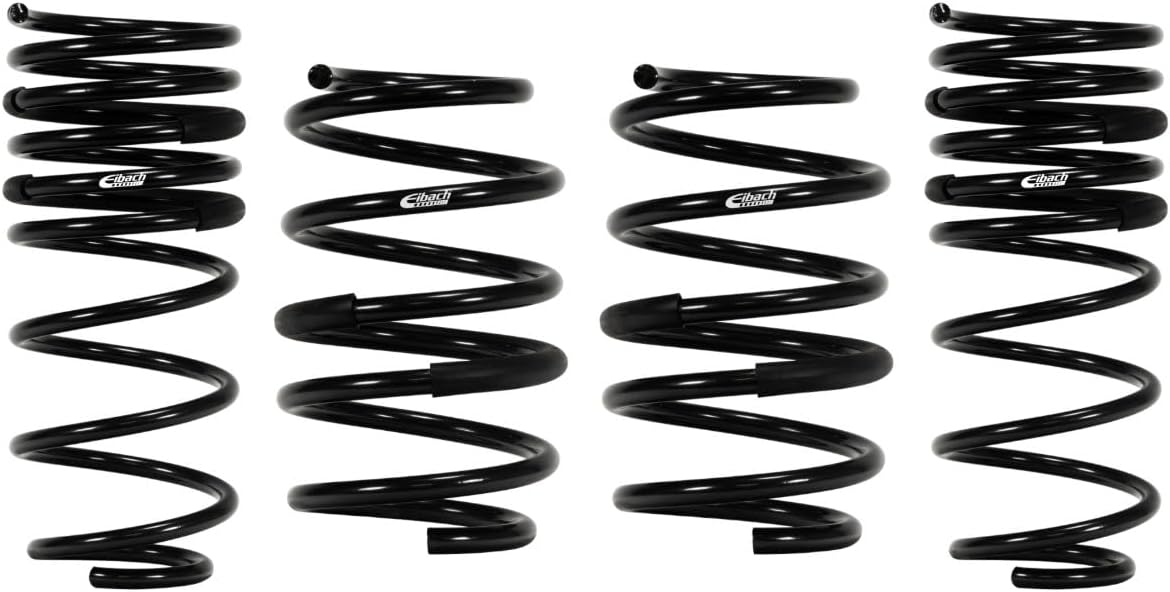
2. Eibach PRO-KIT Lowering Coil Spring Kit for Honda Civic 2016–2021
| Brand | Eibach |
|---|---|
| Model | PRO-KIT |
| Compatible models | Honda Civic 2016-2021 |
| Exterior | Powder Coat |
The Eibach PRO-KIT is a four-spring lowering kit built to tighten body control and reduce ride height while keeping a near-factory ride quality. Installed on a Civic, these springs lower the center of gravity, cut body roll and make cornering crisper without turning the car into a harsh track setup. The progressive spring design helps maintain comfort over bumps and reduces pitch compared with simple linear springs. Fitment is vehicle-specific and the kit includes front and rear springs finished in durable black powder coat. In practice you get a sportier look and improved response for spirited street driving and occasional canyon runs, though the drop is modest so rear stance on sedans may remain higher than some buyers expect. Compared with coilovers this kit is simpler, lighter and less expensive but offers less adjustability for ride height and damping. Expect professional installation and a post-install alignment to maximize handling gains and tire life.
Best for: Drivers who want a factory-quality lowering spring that sharpens handling and improves stance for performance-oriented street and occasional spirited driving while retaining comfortable daily manners.
Less Ideal for: If you want precise ride-height adjustment or track-focused suspension tuning, choose adjustable coilovers or a system with tunable dampers instead.
- Progressive spring design balances ride comfort with improved handling.
- Reduces body roll and lowers center of gravity for sharper cornering.
- Durable black powder coat finish resists corrosion and looks clean under the car.
- Fixed lowering amount with no ride-height adjustability compared with coilovers.
- Some sedan rear rides may not drop as much as enthusiasts prefer.
Verdict: Choose the Eibach PRO-KIT for a reliable, factory-quality lowering spring that tightens handling and improves stance without sacrificing everyday comfort.
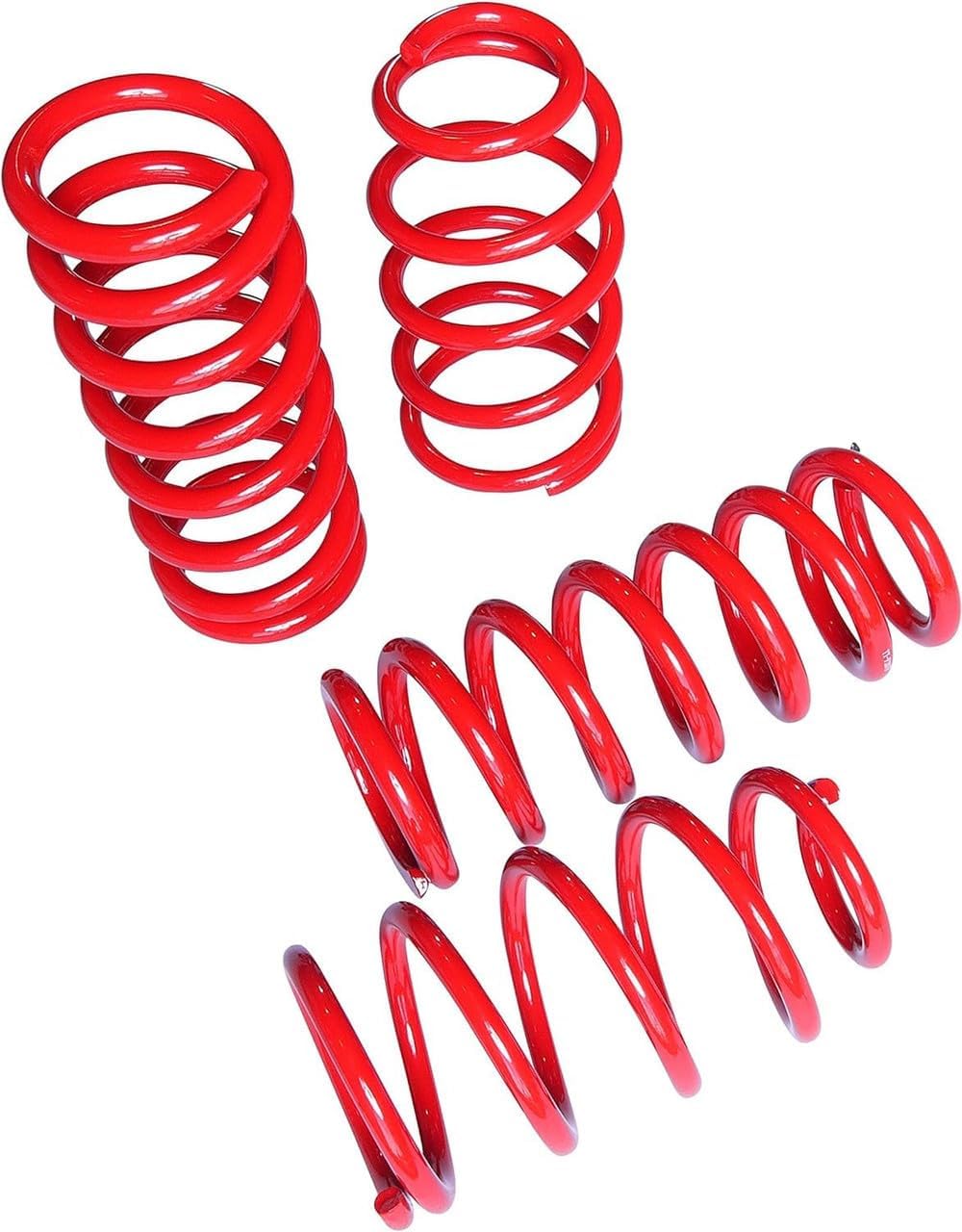
3. Touring Tech Performance Lowering Springs for 2016–2024 Honda Civic & 2017–2024 Civic Si
| Auto Part Position | Front |
|---|---|
| Maximum Lifting Height | 1.5 Inches |
| Included Components | Lift Springs |
| Automotive Fit Type | Vehicle Specific Fit |
| Manufacturer | Touring Tech |
These Touring Tech Performance lowering springs replace the front factory springs to lower compatible Civics roughly 1.5 inches, tightening body roll and giving a firmer, more planted ride. Made from 55 chrome silicon steel, they are intended as a direct-fit, vehicle-specific upgrade and are typically used with the stock rear springs or matched with complementary rear lowering springs for a balanced stance. In real-world use they reduce squat during acceleration and sharpen turn-in without creating a harsh, bouncy feel according to user feedback. Notable features include vehicle-specific fitment for 2016–2024 Civic and 2017–2024 Civic Si front application and a polished exterior finish. The springs include a lifetime unlimited mileage warranty, which adds long-term confidence. Important limitations are that they only address front lowering in this listing so full-vehicle ride height depends on whether rear springs or shocks are also changed, and installation may require an alignment and professional tools for safe spring compression and correct ride geometry.
Best for: Buyers looking to improve handling and stance on their Civic without a full suspension overhaul and who prioritize durable, vehicle-specific parts that simplify installation and long-term ownership.
Less Ideal for: Drivers seeking a complete drop kit that includes rear springs, shocks, or adjustable damping should consider a matched kit instead or consult a suspension specialist for a full setup.
- Vehicle-specific front fitment for 2016–2024 Civic and 2017–2024 Civic Si for straightforward installation
- Constructed from 55 chrome silicon steel for improved durability over many factory springs
- Approximately 1.5 inch lowering height that tightens handling and reduces body roll
- Polished finish for a neater appearance and a manufacturer lifetime unlimited mileage warranty
- Listing covers front lowering springs only so full stance and balance require matching rear components or shocks
Verdict: An affordable, vehicle-specific front lowering spring that tightens handling and offers long-term confidence with a lifetime warranty.
4. maXpeedingrods Lowering Springs for Honda Civic 2016–2024 / Acura Integra 2023–2025

| Fitment | Honda Civic 2016-2024; Acura Integra 2023-2025 |
|---|---|
| Material | SAE 9254 cold-wound steel |
| Drop (front) | 1.7–2.0 inches |
| Drop (rear) | 1.9–2.0 inches |
| Testing | 200,000-cycle fatigue; 720-hour salt spray |
These maXpeedingrods lowering springs are a budget-focused way to lower a Civic/Integra and sharpen handling without swapping shocks. Made from SAE 9254 cold-wound steel with an anti-corrosion coating, the springs are intended as a direct bolt-on replacement and are compatible with factory and many aftermarket dampers. In use they lower the center of gravity to reduce body roll and tighten steering response, producing a firmer, more controlled feel on corners and at higher speeds. The manufacturer reports extensive fatigue and salt spray testing, which suggests decent durability for regular road use. Expect a noticeably stiffer ride compared with stock springs, so comfort on rough roads will be reduced. Installation is straightforward for a competent DIYer but alignment after fitting is required. These springs offer a clear visual drop and improved handling for enthusiasts on a tight budget, though long-term performance depends on matching them to suitable shocks and driving style.
Best for: Buyers prioritizing cost-effective handling upgrades who want a visible static drop and sharper cornering without replacing shocks immediately.
Less Ideal for: Drivers who prioritize a smooth, comfort-oriented daily ride or those unwilling to follow up with alignment and possible damper upgrades should consider softer or fully matched suspension kits instead.
- Direct-fit design for covered Honda Civic and Acura Integra model years for quick bolt-on installation
- Cold-wound SAE 9254 steel construction with anti-corrosion coating for improved durability
- Lowered center of gravity improves cornering stability and reduces body roll
- Tested for fatigue and salt spray suggesting better-than-basic longevity
- Produces a firmer, noticeably stiffer ride compared with factory springs
Verdict: If you want an affordable, bolt-on lowering kit that tightens handling and gives a solid static drop, these springs deliver the performance upgrade on a budget.
5. Eibach SPORTLINE Lowering Springs Kit

| Manufacturer | Eibach |
|---|---|
| Model | Sportline Lowering Springs Kit |
| Exterior | Powder Coat |
| Manufacturer Part Number | E20-40-036-03-22 |
Eibach SPORTLINE lowering springs are a performance-focused spring set intended to drop the car and improve handling for aggressive street driving or track-oriented use. The kit replaces the factory springs on all four corners to lower the center of gravity, reduce body roll, limit squat under acceleration, and reduce nose dive under braking. These springs use a progressive rate design and heavier duty construction compared with mild lowering kits, so you get a firmer, more responsive feel and crisper turn-in when pushing the car. Installation reuses factory mounting hardware but note the product description calls out possible alignment and rear camber hardware requirements after fitting. The sport-oriented drop produces a much firmer ride than factory springs and will emphasize road imperfections. These are best for drivers who prioritize sharper handling and a lowered stance while accepting a firmer daily ride and the need for post-install alignment adjustments.
Best for: Drivers who want a noticeable handling and stance upgrade on an FK8-style Civic and prioritize consistent, predictable performance over a plush ride.
Less Ideal for: Drivers who prefer a soft, comfort-focused suspension or who expect a bump-friendly daily commuter setup.
- Progressive spring rates designed to reduce body roll and improve cornering
- Full four-corner kit for a balanced lowering and handling improvement
- Powder-coated finish for corrosion resistance
- Reuses factory mounting hardware for simpler installation
- Significantly firmer ride compared with factory springs, increasing road harshness
- May require additional rear camber kit and alignment after installation
Verdict: Choose these springs if you want a pronounced drop and sharper, track-capable handling from your Civic while accepting a firmer ride.
6. D2 Pro Lowering Springs for Civic/Si/Integra

| Material | High Tensile Chrome Silicon Steel |
|---|---|
| Spring Design | Progressive-rate coils |
| Manufacturing | Cold-wound and heat-treated |
| Certification | ISO 9001 facility with TÜV approval |
D2 Pro Lowering Springs are a direct-fit replacement designed to lower a Civic-class car about 1.5 to 2 inches and tighten handling for street and light-track use. Made from chrome silicon high-tensile steel with a cold-wound, heat-treated process and a durable finish, these springs use a progressive coil to raise spring rate as they compress, which firms up through corners while keeping daily driving reasonably comfortable. Installation is typical for drop springs and can be done at home with the right tools or by a shop; some buyers report the front install takes longer and may need slight bump stop trimming or minor alignment work afterward. In use the springs reduce body roll, improve road response, and give a more aggressive stance, though the ride becomes noticeably firmer over sharp bumps and some wheel/tire combinations may rub without adjusting fitment. For a buyer focused on proven results and community feedback, these springs strike a balance between performance and everyday usability but expect suspension firmer feel and occasional fitment tweaks.
Best for: Buyers who want a community-vetted lowering spring that sharpens handling and improves the car’s stance while accepting a firmer everyday ride and occasional minor fitment adjustments.
Less Ideal for: Drivers who prioritize maximum ride comfort, frequent long-distance cruising on rough roads, or who need fully adjustable ride height and damping for track use should consider other solutions.
- Direct-fit replacement for supported Civic/Si/Integra models for simpler installation
- Progressive-rate design firms up in corners while aiming to retain acceptable daily comfort
- High-tensile chrome silicon construction with heat treatment for consistent spring rates and durability
- Durable surface finish for corrosion resistance and long-term appearance
- Noticeably firmer ride over sharp bumps compared with factory springs
Verdict: A reliable, community-approved lowering spring that tightens handling and gives an aggressive stance for Civic-family cars while keeping installation straightforward.
Choosing the Right Honda Civic FK8 Lowering Springs: Key Factors to Consider
Drop Height and Ride Balance
Drop height directly affects handling, aesthetics, and suspension geometry. A modest drop preserves suspension travel and reduces the likelihood of bottoming on everyday roads, while an aggressive drop lowers the center of gravity further but increases the risk of interference with bump stops and rubbing. Matching drop to your wheel and tire setup reduces fender clearance issues and helps maintain predictable steering feel. Consider how the stated drop spec translates to real-world ride height when paired with the FK8's stock dampers; some springs settle more than advertised, so plan for a realistic final height.
Ride balance is the tradeoff between a lower center of gravity and acceptable comfort. Springs with higher rates resist squat and roll better but transfer more harshness over sharp bumps. For the FK8, choose a drop that complements your driving style and the condition of local roads to preserve daily usability.
Spring Rate and Progressive Design
Spring rate governs how much the suspension compresses under load and how the car reacts during cornering and weight transfer. Higher linear rates give a firmer, more consistent platform for performance driving, while progressive springs offer a softer initial rate for comfort with a stiffer progression under greater compression. Progressive designs can provide a middle ground for FK8 owners who want comfort around town and control at the limit.
Understanding front-to-rear rate balance is important because mismatched rates can lead to unexpected understeer or oversteer. Evaluate stated rates in the context of the FK8's suspension tuning and intended use to maintain handling neutrality.
Compatibility With OEM Dampers and Suspension Geometry
Many lowering springs are designed to work with stock dampers, but not all combinations behave well. Springs that are too stiff or too short can overwhelm the FK8's dampers, reducing their ability to control rebound and compression and causing a choppy ride or poor damper travel. Verify that springs are engineered for the FK8's strut and shock specifications to avoid premature wear and degraded performance.
Lowering changes suspension geometry, affecting camber, toe, and roll center. Anticipate alignment adjustments after installation and understand whether additional hardware like adjustable camber plates or extended ball joints will be needed to restore optimal tire contact patches.
Durability and Corrosion Resistance
Springs are exposed to road salt, moisture, and repeated high-cycle loading. Materials and protective finishes determine how long a spring will hold its rate and remain free of rust. Look for cold-wound alloys or heat-treated steel and robust coatings that resist chipping and corrosion on the FK8, which is often used year-round.
Durability also ties to fatigue life. Springs that maintain their rate over time avoid progressive sag and inconsistent handling. Verify manufacturer specifications for cycle life or backed testing to reduce the chance of mid-term performance decline.
Installation and Maintenance Requirements
Installation complexity varies from a basic spring swap using a strut compressor to more involved procedures that require disassembly of suspension components. Consider whether you will do the install yourself or use a professional; some springs need careful spring compressors and alignment afterward. For the FK8, correct torque settings and following manufacturer-recommended installation sequences matter to preserve safety and performance.
Maintenance considerations include periodic inspections for corrosion, seat settling, and listening for unusual noises indicating mis-seated coils. Budget time for a professional alignment after installation to correct camber and toe changes caused by the altered ride height.
Intended Use and Driving Conditions
How you use the FK8 drives the best spring choice. Daily-driven cars benefit from moderate drops and compliant rates to smooth out potholes and speed bumps. Cars that see occasional track days may warrant firmer rates and lower drops to reduce body roll and improve turn-in, accepting a firmer ride in exchange for track performance. Consider road conditions you commonly encounter; steep driveways and rough urban streets favor conservative drops to avoid scraping.
Also weigh winter use. If you plan to drive in salted or snowy climates, prioritize corrosion-resistant finishes and slightly higher ride heights to maintain functionality in winter months.
How Lowering Springs Affect FK8 Handling Geometry
Lowering springs alter the FK8's center of gravity and change the static camber and roll characteristics. A lower ride height reduces body roll and improves turn-in feel, but it can also increase negative camber at full droop and alter roll center height, which affects midcorner balance. When you drop the car, expect to need an alignment to return the tire contact patch to optimal angles.
- Lowering reduces roll moment and can quicken turn-in.
- Camber changes may increase inside shoulder wear without alignment correction.
- Roll center shifts can change lateral balance between front and rear, affecting understeer/oversteer tendencies.
Pairing Springs With Dampers and Sway Bars
Springs should be considered alongside the FK8's dampers and anti-roll bars. Stock dampers can handle certain rate increases, but large changes might require damper upgrades to control oscillations and maintain composure. Similarly, stronger sway bars can complement stiffer springs by further reducing body roll and improving transient response. Coordinate spring rate choices with any planned damper or bar changes to avoid mismatched suspension behavior.
- Moderate spring rate increases often work fine with OEM dampers for daily use.
- Major rate jumps usually require adjustable dampers to tune rebound and compression.
- Sway bar selection can refine roll stiffness distribution without altering ride height.
Practical Effects on Ride Comfort and NVH
Lowering springs change how road inputs transmit to the cabin. Firmer springs reduce pitch and roll but increase the magnitude of impacts felt from sharp bumps. Progressive springs can soften small-wavelength vibrations while still controlling large displacements, offering a good compromise for many FK8 owners. Noise, vibration, and harshness can also increase if springs contact other components or if hardware is not properly seated during installation.
- Expect a firmer ride with higher-rate springs and a small increase in transmitted noise.
- Proper installation and isolation components minimize unwanted clunks and rattles.
- Progressive springs help smooth urban driving while retaining cornering control.
Alignment Expectations After Lowering
After installing lowering springs on the FK8, a full alignment is essential. Typical adjustments include more negative camber to compensate for roll and toe corrections to maintain straight-line stability. Some drop levels will require camber plates or shims to achieve safe alignment numbers while preserving tire life. Communicate your intended use to the alignment technician so they can bias settings for daily comfort or track performance.
- Plan for increased negative camber compared with stock numbers.
- Toe adjustments prevent premature inner tire wear and maintain steering feel.
- Ask the technician about corner-weighting if you intend to track the car.
Common Questions About Progressive Versus Linear Springs
Progressive and linear springs each have advantages for the FK8. Linear springs offer predictable, consistent rates throughout travel, which is beneficial for drivers focused on repeatable handling behavior. Progressive springs start softer and progressively get firmer, giving more comfort over small bumps and better control under heavy compression, making them appealing for dual-use FK8 owners.Decide based on how often you push the car hard versus daily comfort. If you do both, progressive springs can reduce compromise without requiring damper replacement, but they may not deliver the same precise response as a matched linear spring and damper setup optimized for track use.
- Linear springs suit drivers prioritizing consistent response at the limit.
- Progressive springs suit mixed-use drivers seeking comfort and control.
- Pairing with suitable dampers reduces the downside of either choice.
Still looking for the perfect fit?
Select your Honda Civic configuration to see the most relevant Lowering Springs recommendations
How We Chose the Best Honda Civic FK8 Lowering Springs
We narrowed candidates by prioritizing attributes that meaningfully affect how lowering springs perform on the Honda Civic FK8. Primary evaluation criteria included target drop height and ride quality to ensure each spring delivers the intended stance without compromising daily comfort. We examined spring rates and progressive design to assess mid-corner compliance versus high-load control, and inspected construction materials and coating to gauge corrosion resistance and longevity on varied road conditions. Fitment accuracy for the FK8 configuration and compatibility with OEM dampers were required to avoid unexpected handling side effects. We also considered expected effects on alignment settings and whether the springs maintain consistent geometry across load cycles. Exclusions: we removed any springs lacking clear FK8 fitment information, those that required mandatory additional suspension upgrades, and options with insufficient construction detail. The resulting list balances ride comfort, measurable drop, and durable construction to suit common FK8 use cases from daily driven to occasional track exposure.
Our full evaluation process is outlined in our review methodology.
FAQ
How much lower will the FK8 sit with typical lowering springs?
Typical lowering springs for the FK8 drop the car between roughly 0.75 and 1.5 inches, depending on the kit. Exact final height depends on wheel and tire setup, spring settling, and whether the springs are paired with stock or upgraded dampers.
Can I install lowering springs myself on an FK8?
A competent DIYer with the right tools and a strut compressor can install lowering springs, but it involves safety risks and precise reassembly. Many owners choose professional installation to ensure correct spring seating and a proper alignment afterward.
Will lowering springs affect my FK8's alignment and tire wear?
Yes. Lowering changes camber and toe, which can increase inner shoulder wear if not corrected. A full alignment after installation is necessary to restore appropriate camber and toe settings for balanced tire wear.
Are progressive lowering springs worth it on a Civic FK8?
Progressive springs can be worthwhile if you want improved daily comfort combined with better high-load control. They provide a softer initial rate for bumps and a stiffer response during hard cornering, which fits well for owners who split time between street and occasional performance driving.
Do lowering springs require new dampers on the FK8?
Not always. Many springs are designed to work with OEM dampers, but if the spring rates or drop are extreme, damper upgrades or revalving may be needed to control rebound and compression effectively and prevent harshness or premature wear.
Will lowering springs change my FK8's ground clearance for ramps and speed bumps?
Yes. Any drop reduces clearance and increases the chance of scraping on steep driveways, ramps, or raised parking lots. Choose a conservative drop if you frequently navigate such obstacles or plan for different routes to avoid scraping.
Final Verdict
Choosing lowering springs for the Honda Civic FK8 means balancing desired aesthetics and sharper handling against ride comfort and everyday practicality. Prioritize realistic drop heights and spring rates that match how you drive and whether you will keep OEM dampers or upgrade them. Ensure proper installation and a full alignment to preserve tire life and handling balance. With careful selection and setup you can achieve a controlled, confident FK8 without sacrificing daily usability.
Explore More:
- Check out all Honda Civic parts & accessories
- Explore Lowering Springs Maintenance & Repair Guides
- Explore Suspension & Steering
- Browse all Auto Parts
