

Note: This article contains affiliate links. If you click on these links and make a purchase, I may earn a small commission at no extra cost to you. This helps support my research and content. Read my full affiliate disclosure here.
If you own a Honda Civic with the 1.6L engine, a faulty catalytic converter can cause poor emissions performance, reduced engine response, and an illuminated check engine light. Choosing the right Honda Civic 1.6L catalytic converter matters because proper fitment and correct internal cell design affect emissions, exhaust flow, and long-term durability. This guide covers seven shortlisted catalytic converters chosen for this engine configuration and explains the evaluation criteria used to assess fitment, emissions impact, and installation practicality. Read on to understand which features to prioritize for reliable operation and compliant exhaust performance.
Looking for other parts? See all Honda Civic parts & accessories.
Top Picks at a Glance


1. PHILTOP Front High-Flow Stainless Steel Catalytic Converter for Honda Civic 1.6L (1996–2000)
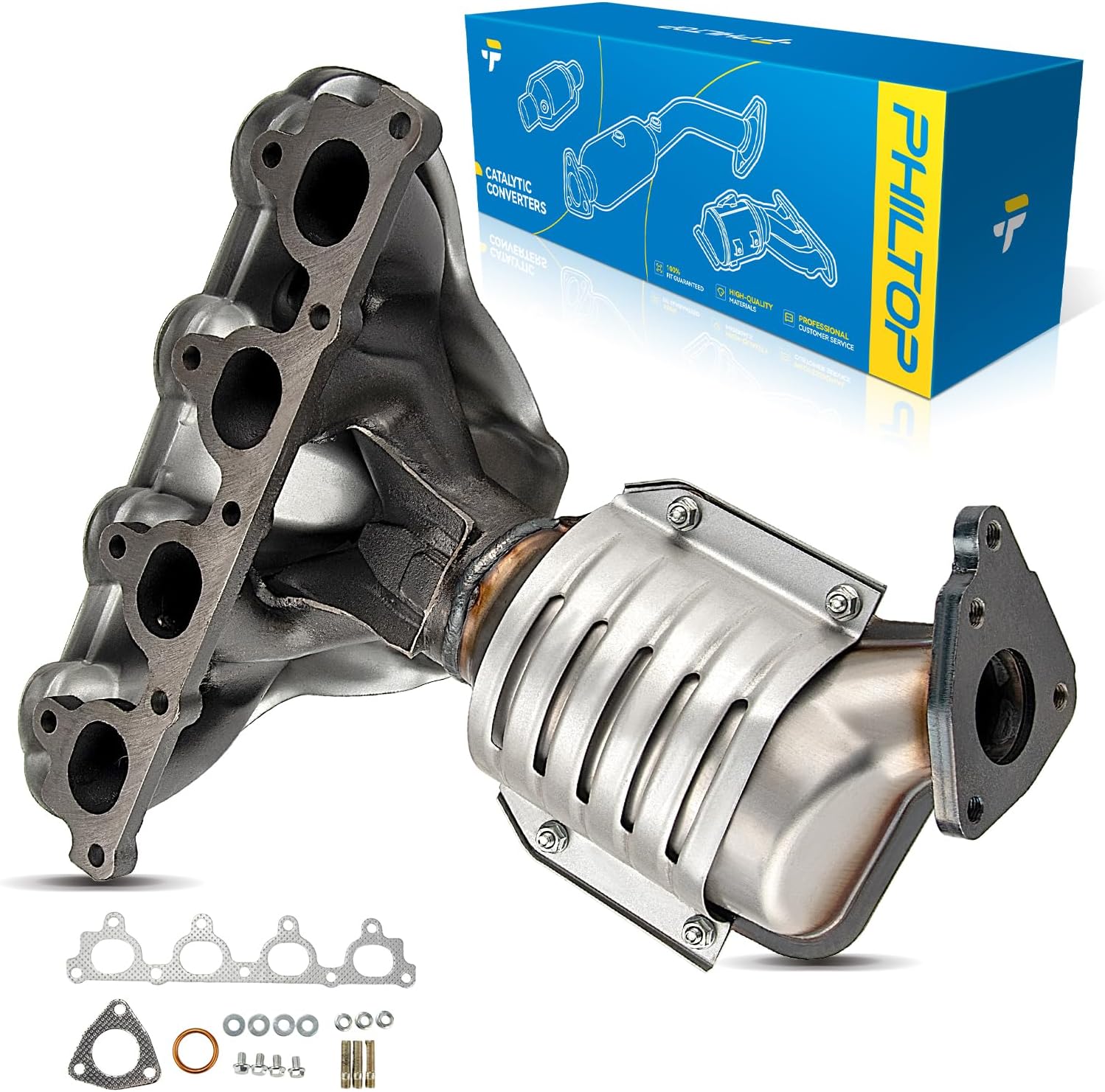
| Vehicle fitment | 1996–2000 Honda Civic 1.6L; 1996–1997 Civic del Sol 1.6L |
|---|---|
| Position | Front |
| Manufacturer | PHILTOP |
| EPA compliance | Federal emissions model (not for CA/NY/ME) |
This PHILTOP catalytic converter is a direct-fit front replacement built with a stainless steel body and a high-flow ceramic substrate to restore emissions control and reduce backpressure. It is typically used as a factory-style replacement when the original converter is clogged, damaged, or failing emissions checks. Notable features include a flange-to-flange bolt-on design with included gaskets and hardware, an aluminized stainless housing for corrosion resistance, and an EPA-compliant internal honeycomb that aims to improve exhaust flow and fuel economy versus a severely restricted unit. In practice the part installs in roughly 3 to 4 hours without modification on the listed Civic applications and can reduce rattles or loud exhaust caused by a broken converter. The main limitations are legal: this federal-emissions unit is not for use in California, Maine, or New York, and it may not match specialized performance or CARB-compliant requirements for those states or modified engines that need a sport-oriented catalyst.
Best for: Buyers who want a reliable, factory-style replacement that restores emissions performance and drivability on a stock Honda Civic 1.6L without modifying the exhaust system.
Less Ideal for: Drivers in states that require CARB-compliant parts or those looking for a high-performance or race-oriented catalytic solution should consider alternatives.
- Direct-fit flange-to-flange design with included gaskets and hardware for bolt-on installation
- High-flow ceramic substrate designed to lower backpressure and help restore fuel economy compared with a clogged converter
- Stainless steel/aluminized construction resists rust and suits long-term road use
- EPA-compliant for federal emissions standards and intended to meet smog requirements in non-CARB states
- Not CARB-compliant and therefore not legal for use in California, Maine, or New York
Verdict: A straightforward, high-flow direct-fit front catalytic converter that restores emissions control and improves exhaust flow for Honda Civic 1.6L owners in federal-emissions states.
2. The Exhaust Doctor Direct-Fit Catalytic Converter for 1999–2000 Honda Civic/Acura EL 1.6L

| Fits | 1999–2000 Honda Civic EX/Si and 1999–2000 Acura EL 1.6L |
|---|---|
| Brand | The Exhaust Doctor |
| Manufacturer Part Number | TED99082 |
| Item Weight | 5.99 pounds |
This direct-fit catalytic converter from The Exhaust Doctor is designed to replace the main catalytic unit on 1999–2000 Civic and Acura EL 1.6L cars. It installs as a bolt-on unit using the existing flanges and includes hardware and a gasket, so independent mechanics or DIYers can usually swap it in without fabrication. The unit restores emissions function, clears related check-engine codes and lets vehicles pass state inspections when the OEM cat has failed or been removed. Reviews indicate the fitment is accurate for many EX and Si chassis and that oxygen sensor bung placement is generally correct, though a few users reported slight orientation differences that may need attention. Several buyers praised the value compared with dealer-priced replacements, but longevity varies by use and prior vehicle condition. For a performance-minded buyer this is a practical back-to-factory solution that returns legal emissions function while retaining stock exhaust flow, though it is not a high-flow performance cat intended to increase horsepower.
Best for: Buyers who want a simple, budget-friendly way to restore emissions compliance on a 1999–2000 1.6L Civic or Acura EL while keeping factory exhaust characteristics. Ideal for DIY installers and independent shops focused on reliable, stock-like operation rather than peak power gains.
Less Ideal for: Not a good choice for tuners seeking a high-flow performance converter or for builds that require a cat designed to increase exhaust flow or reduce backpressure beyond factory levels.
- Direct-fit design bolts to factory flanges for straightforward installation
- Includes gasket and mounting hardware so no separate parts are required
- Restores emissions function and can clear catalytic-related check-engine codes
- Affordable alternative to dealer replacement with many positive fit reports
- Not marketed as a high-flow or performance catalytic converter so it will not increase power
- Some users reported shorter lifespan in certain vehicles, so durability can vary
Verdict: A cost-effective direct-fit replacement that gets 1999–2000 1.6L Civics and Acura ELs back to emissions-compliant, factory-like exhaust performance.
3. PULCHERFLOW Catalytic Converter for 1996–2000 Honda Civic 1.6L
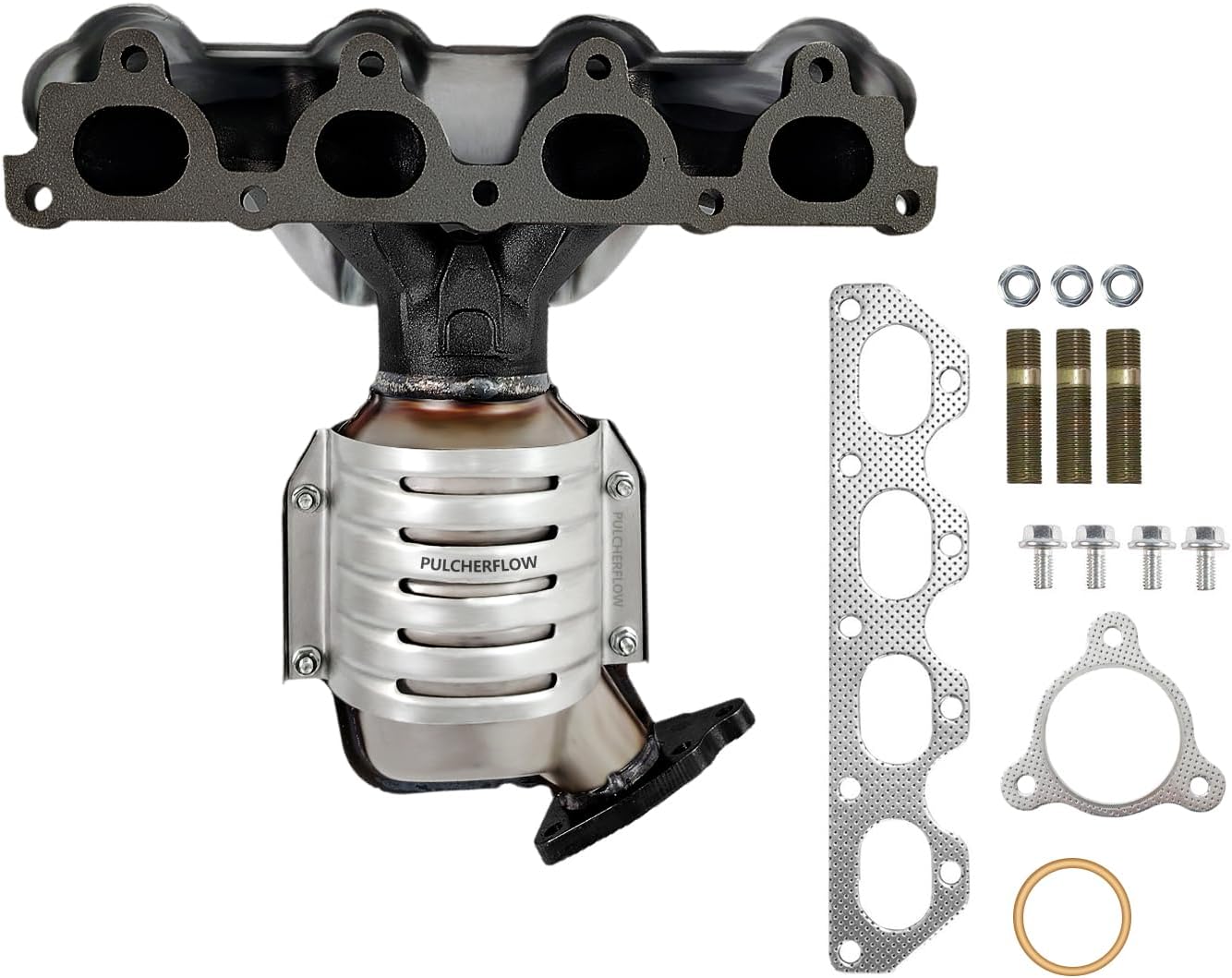
| Vehicle fitment | 1996–2000 Honda Civic 1.6L l4 |
|---|---|
| Compliance | EPA certified (46-state legal; not for CA/NY/ME) |
| Material | Stainless steel shell |
| Interchange number | 642597 |
This PULCHERFLOW catalytic converter is a direct-fit front unit made for 1996–2000 Honda Civic 1.6L engines and is intended as a straightforward replacement of the factory unit. It uses an enlarged honeycomb substrate with increased precious metal loading to improve conversion efficiency and reduce tailpipe emissions, and the stainless steel shell and mandrel-bent piping aim to resist corrosion and heat. The part ships with mounting hardware and gaskets to simplify installation for someone comfortable working under the car, and many buyers report a near plug-and-play fit when bolts cooperate. Drawbacks to expect are variable fitment finish and occasional misaligned holes or rough threads that may require chasing or minor adjustments during install. This converter is EPA compliant for federal emissions but is not CARB legal and cannot be used in certain states. For a practical owner seeking an affordable, function-first replacement that restores emissions performance, this unit offers solid value when matched to the specified Civic models.
Best for: Buyers who want a practical, lower-cost replacement that restores emissions performance and accepts modest installation work to get the job done quickly and affordably.
Less Ideal for: Do not choose this if you need a California-compliant catalytic converter or expect perfect factory-level fit and finish without any adjustments.
- Direct-fit design with included gaskets and hardware reduces installation time for experienced DIYers or shops
- Enlarged ceramic substrate and higher precious metal loading improve catalytic conversion efficiency
- Stainless steel shell and mandrel-bent piping resist corrosion and high heat
- EPA compliant for federal emissions models
- Not CARB compliant so cannot be used in California, New York, or Maine emissions models
- Some units show inconsistent hole alignment and rough threads that can require minor modification during installation
Verdict: A budget-friendly, EPA-compliant direct-fit replacement that restores emissions control for 1996–2000 Honda Civic 1.6L owners willing to tolerate occasional minor fitment tweaks.
4. PHILTOP High-Flow Stainless Steel Catalytic Converter for 1999–2000 Honda Civic 1.6L

| Vehicle fitment | 1999–2000 Honda Civic 1.6L |
|---|---|
| Position | Rear |
| OEM part numbers | 16070, 22630, 18160P2PA00, 642582, 40398 |
| Manufacturer | PHILTOP |
| EPA compliance | Federal emissions model |
This PHILTOP catalytic converter is a direct-fit replacement for 1999–2000 Honda Civic 1.6L vehicles built with a high-flow ceramic honeycomb to reduce backpressure and restore exhaust emissions control. It installs using factory-style gaskets and hardware with no cutting or welding, so a competent DIYer or independent shop can fit it within a few hours. The stainless steel housing and aluminized internal pipes are intended to resist rust and provide durable service life, while the porous ceramic substrate aims to improve catalytic efficiency and can help recover a small amount of power and fuel economy compared with a clogged or failing converter. It is EPA-approved for federal emissions but is not legal in California, New York, or Maine. Buyers should note this is a replacement unit rather than an emissions upgrade and real-world gains depend on engine condition and tuning. For budget-focused repairs on the specified Civic, it offers a practical, straightforward swap to return the car to compliant running condition.
Best for: Buyers wanting an affordable, direct-replacement catalytic converter to restore emissions compliance and drivability on a 1999–2000 Civic 1.6L without dealer involvement.
Less Ideal for: Drivers in states with stricter emissions rules or anyone seeking a performance-oriented aftermarket emissions upgrade instead of a factory-style replacement.
- Direct-fit design with OE-style gaskets and hardware for bolt-on installation
- High-flow ceramic honeycomb substrate to reduce backpressure and improve catalytic efficiency
- Stainless steel/aluminized construction for improved corrosion resistance
- EPA-compliant for federal emissions testing
- Not legal for use in California, New York, or Maine due to state-specific emissions rules
Verdict: A cost-conscious, direct-fit replacement that restores emissions compliance and improves exhaust flow for 1999–2000 Honda Civic 1.6L owners.
5. SAROTIN Catalytic Converter for Honda Civic 1.6L (1996–2000) — Front Inner, EPA Compliant

| Fitment | Honda Civic 1.6L 1996-2000 |
|---|---|
| Body Material | 409 stainless steel |
| Substrate Material | Cordierite ceramic carrier |
| O2 Sensor Ports | 2 |
| Outlet Type | 3 Bolt Welded Flange |
This SAROTIN catalytic converter is a direct-replacement front inner unit designed specifically for the Honda Civic 1.6L (1996–2000). It installs without cutting or welding, using the supplied flange pattern and two O2 sensor ports to match the factory exhaust layout. Constructed with a 409 stainless steel body and a cordierite ceramic carrier coated with precious metals, the unit is built to reduce emissions and address P0420 codes while restoring quieter exhaust operation. Typical use is straightforward: swap the failed or removed converter for a factory-style part during emissions repair or restoration. The converter is EPA compliant for federal applications but not CARB compliant, so it is intended for use outside California and Colorado and must meet local state rules. Practical benefits include easier installation for DIYers or shops, factory-style fitment, and materials aimed at standard longevity. Buyers should note this is an EPA-only aftermarket option and not legal where CARB-compliant parts are required, and precious metal loading is not specified so long-term lifespan may vary with driving conditions.
Best for: Buyers who prioritize a reliable, bolt-in emissions repair for a 1996–2000 Honda Civic 1.6L and want a unit that matches factory placement and sensor locations for easy replacement.
Less Ideal for: Vehicle owners in states that require CARB-compliant parts or anyone needing a certified California-legal emissions solution should choose a CARB-approved converter instead.
- Direct-fit design with two O2 sensor ports for straightforward replacement of the front inner converter
- 409 stainless steel construction resists corrosion compared with lower-grade metals
- Cordierite ceramic substrate with precious metal coating to support emissions conversion and reduce P0420 faults
- Not CARB compliant so it cannot be used in states that require CARB-approved converters
Verdict: Choose this SAROTIN unit when you need a straightforward, factory-style EPA-compliant replacement to get a 1996–2000 Honda Civic 1.6L back to reliable emissions operation.
6. PHILTOP Front Catalytic Converter Kit for 1996–2000 Honda Civic 1.6L (with O2 Port)
| Vehicle fitment | 1996–2000 Honda Civic 1.6L; 1996–1997 Civic del Sol 1.6L |
|---|---|
| Material | 409L stainless steel |
| O2 sensor | Built-in O2 port |
| EPA status | EPA federal emissions compliant |
This PHILTOP front catalytic converter replaces the factory unit on 1996–2000 Honda Civic 1.6L engines and fits the corresponding Civic del Sol models. It uses a high-flow ceramic honeycomb substrate and 409L stainless steel construction intended to reduce backpressure and restore catalytic efficiency, which can help with emissions compliance and reduce exhaust noise from a failing converter. The kit ships with OE-style gaskets and hardware so installation matches factory mounting points and can typically be completed in a few hours without modifications. Notable features are the integrated O2 sensor port and EPA federal emissions certification, which matter for smog checks outside restricted states. Expect practical benefits like improved exhaust flow compared with a clogged old converter and straightforward bolt-on fitment when the correct reference numbers match. Limitations include ineligibility for sale or installation in certain states with stricter rules and the need to verify the exact reference/OEM numbers for a proper match to avoid fitment issues.
Best for: Buyers who prioritize replacing a failing catalytic converter with a direct-fit, factory-style unit that restores emissions function and is backed by existing customer feedback and product documentation.
Less Ideal for: Drivers in states with stricter emissions regulations or anyone who cannot confirm matching reference numbers should look for a state-compliant or dealer-sourced alternative.
- Designed for direct fit to 1996–2000 Honda Civic 1.6L mounting points using included OE-style gaskets and hardware
- High-flow ceramic substrate to reduce backpressure and help restore engine breathing
- 409L stainless steel construction for corrosion resistance and longer service life
- Integrated O2 sensor port so the factory sensor can be reinstalled without modification
- Not legal for sale or installation in several states with stricter emissions rules
- Requires confirming reference/OEM numbers to ensure exact fit for your vehicle
Verdict: A direct-fit, EPA-certified front catalytic converter that restores emissions function and exhaust flow for 1996–2000 Civic 1.6L models.
7. PHILTOP High-Flow Stainless Steel Catalytic Converter for Honda Civic 1992–1995

| Fitment | 1992-1995 Honda Civic 1.5L/1.6L, 1993-1995 Civic del Sol |
|---|---|
| Certifications | EPA-compliant (not for CA/NY/ME) |
| Position | Front, Rear |
| Manufacturer Part Number | 4465EXP02XQUS |
| OEM Part Number | 22636, 15800 |
This PHILTOP catalytic converter is a direct-fit replacement for select 1992–1995 Honda Civic and del Sol 1.5L/1.6L applications and is designed to be installed without cutting or welding. It uses a high-flow honeycomb ceramic substrate to reduce backpressure and improve exhaust flow, which the manufacturer says can help restore engine responsiveness and potentially improve fuel economy compared with a clogged or damaged unit. The stainless steel/aluminized shell and OE-style gaskets and hardware aim to simplify installation and resist corrosion for longer service life. It is EPA-compliant for federal emissions but is not legal for sale in California, New York, or Maine, so confirm local requirements before buying. Expect a typical home-or-shop install time of a few hours; professional labor may still be needed if rusted flanges or custom exhaust work are present. The unit targets routine replacement and performance-minded drivers who want better flow than a worn stock converter while keeping factory-style fitment.
Best for: Buyers who want a reliable, factory-compatible replacement that restores exhaust flow and performance without complicated modifications and who prioritize a straightforward, low-risk install.
Less Ideal for: Drivers in states with stricter emissions rules or anyone who needs a California-compliant emissions part should look for a state-approved alternative.
- Direct-fit design with OE-style gaskets and hardware for straightforward installation
- High-flow honeycomb ceramic substrate reduces backpressure to help restore engine responsiveness
- Stainless steel/aluminized construction resists corrosion for longer service life
- EPA-compliant for federal emissions standards, suitable outside restricted states
- Not legal for sale or use in California, New York, or Maine due to state emissions regulations
Verdict: A straightforward, direct-fit high-flow converter that restores exhaust flow and performance for early-1990s Civic 1.5L/1.6L owners who need a federal-emissions replacement.
Choosing the Right Honda Civic 1.6L Catalytic Converter: Key Factors to Consider
Fitment and Mounting
Correct fitment is critical because an exact match to the Civic 1.6L exhaust flange, inlet/outlet diameter, and overall length reduces the risk of exhaust leaks and the need for custom fabrication. Even small misalignments can create stress on flanges and exhaust hangers, leading to premature gasket failure or vibration noise.
Consider whether the converter uses OEM-style flanges or a slip-fit sleeve and whether it requires additional gaskets or clamps. Ease of bolting into place affects labor time and the likelihood you can install it without cutting or welding. For owners who want to avoid shop labor, a near-direct-fit unit will typically be the fastest and most reliable solution.
Substrate Type and Cell Density
The internal substrate material and cell density determine how effectively the converter oxidizes hydrocarbons, reduces carbon monoxide, and converts nitrogen oxides. Ceramic honeycomb substrates are common and provide high surface area, while metallic substrates heat up faster and tolerate thermal shocks better.
Cell density influences flow restriction and conversion efficiency. A higher cell density often improves conversion but can increase backpressure. For the Civic 1.6L, balance is important: sufficient catalyst surface area to meet emissions targets without overly restricting exhaust flow and degrading engine responsiveness.
Emissions Performance and Certification
Emission control is the converter's primary role, so documented performance or certifications are a key consideration. Converters designed to meet applicable emissions standards for the vehicle configuration reduce the risk of failed emissions tests and persistent diagnostic trouble codes tied to catalyst efficiency.
Review any available certification statements or test data that confirm the unit meets emissions requirements for the Civic 1.6L. Units without clear emissions credentials can introduce compliance risk, particularly in regions with strict testing.
Backpressure and Engine Response
Catalytic converters add resistance to exhaust flow; excessive backpressure can reduce engine efficiency and throttle response. The ideal unit for the Civic 1.6L minimizes pressure drop while still providing adequate catalyst volume for conversion.
Consider measured or specified backpressure where available, and choose designs that prioritize a free-flow path and optimized internal channels. For daily-driven Civics, a converter that preserves low-rpm torque and throttle responsiveness is typically preferable to one focused solely on maximum conversion at high flow rates.
Durability and Corrosion Resistance
Exhaust components face heat, road salts, and moisture, so construction materials and coating matter. Stainless steel shells and corrosion-resistant welds extend service life in climates with winter salt or frequent moisture exposure.
Also consider heat-resistant mounting features and the quality of welds where the converter joins the rest of the exhaust. Components that resist rust and cracking reduce the need for early replacement and help maintain a tight, leak-free exhaust system on the Civic 1.6L.
Installation and Maintenance Practicality
Some converters are designed for straightforward bolt-in replacement, while others require cutting, welding, or adapter pieces. Installation complexity affects labor time, whether you can perform the replacement yourself, and the likelihood of installation-related issues like leaks.
Also look at serviceability: whether the design allows for inspection of gaskets or facile replacement of adjoining hardware. Units that integrate smoothly with existing hangers and use common gasket sizes simplify routine maintenance and reduce overall ownership friction.
Signs Your Civic 1.6L Needs a New Catalytic Converter
A failing catalytic converter often manifests through reduced engine performance, a persistent check engine light with catalyst-related codes, or a noticeable drop in fuel efficiency. You may also notice a rotten egg smell from the exhaust, which indicates incomplete conversion of sulfur compounds.
Unusual exhaust noise, rattling from inside the converter housing, or visible damage and rust around the flange area are other indicators. If emissions testing shows elevated hydrocarbons or NOx, the catalyst may no longer be effectively converting exhaust gases.
- Persistent check engine light with catalyst efficiency codes
- Loss of low-end torque or reduced acceleration
- Rotten egg or sulfur smell from the exhaust
- Rattling noises from the converter housing
- Failed emissions test with high HC or NOx readings
Preparing for a Catalytic Converter Replacement
Before replacing the catalytic converter, gather the vehicle-specific fitment details such as flange type, inlet/outlet diameters, and approximate overall length. Inspect exhaust hangers and surrounding pipes for corrosion so you can address related issues during the same service.
Have the diagnostic trouble codes read and clear them after repairs to confirm the converter resolved the issue. If you plan a DIY replacement, ensure you have the necessary tools for unbolting rusted fasteners or cutting and welding if a non-direct-fit piece is unavoidable.
- Verify flange type and pipe diameters
- Inspect hangers and adjacent sections for corrosion
- Scan and record diagnostic trouble codes before starting
- Prepare tools for rusted bolts or slip-fit adapters
How Emissions Impact Civic 1.6L Driveability
A functioning catalytic converter reduces harmful exhaust components and supports stable engine management. When conversion efficiency drops, oxygen sensor readings and the engine control unit may adjust fuel trim, which can lead to rough idling, hesitation, or increased fuel consumption.
Maintaining proper emissions control also helps avoid intermittent limp-home modes triggered by persistent emission-related faults. For everyday driving, keeping emissions systems in good order preserves both legal compliance and predictable vehicle performance.
- Poor conversion can lead to altered fuel trim and drivability issues
- Emission faults left unresolved may trigger limp-home behavior
- Maintaining emissions systems supports reliable throttle response
Installation Tips for the Civic 1.6L
Use penetrating lubricant on rusted fasteners and allow time for soak to ease removal. Replace gaskets and hardware when installing a new converter to ensure a tight seal and avoid exhaust leaks. If weld installation is required, verify proper alignment before final welding to prevent hanger strain.
After installation, perform a test drive and re-scan for codes. Listen for exhaust leaks and check for abnormal noises at idle and under load. Proper torque on flange bolts and secure hanger placement will minimize vibration and extend service life.
- Apply penetrating oil to rusted bolts and let it soak
- Always replace gaskets and flange hardware during installation
- Confirm alignment before welding and secure hangers
- Test-drive and re-scan to verify the repair
Maintaining Your Exhaust and Catalyst Long-Term
Avoiding contaminants such as oil or coolant entering the exhaust helps preserve catalyst life. Address engine mechanical issues, oil consumption, or coolant leaks promptly to prevent premature catalyst poisoning. Regularly inspect the undercarriage for corrosion and repair any leaks that could accelerate degradation.
Use quality gaskets and clamps during repairs and consider periodic visual inspections after heavy winter months or long-term exposure to moisture. Proactive maintenance reduces the chance of unexpected converter failure and helps ensure consistent emissions performance.
- Fix oil or coolant leaks promptly to prevent catalyst contamination
- Inspect undercarriage and exhaust for corrosion seasonally
- Use quality gaskets and hardware to maintain seals
- Address drivability issues early to avoid converter stress
Still looking for the perfect fit?
Select your Honda Civic configuration to see the most relevant Catalytic Converters recommendations
How We Chose the Best Honda Civic 1.6L Catalytic Converter
We selected the seven catalytic converters on this list by focusing on factors that directly affect emissions compliance and everyday drivability for the Honda Civic 1.6L. Primary evaluation criteria included fitment accuracy, which minimizes installation modifications and exhaust leaks; substrate type and cell density, which influence conversion efficiency and flow restriction; build quality and corrosion resistance, for longevity in varied road conditions; and thermal and backpressure characteristics, which affect engine performance and fuel economy. We also considered legal and emissions conformity attributes where applicable to the vehicle configuration, and installation ease for common DIY or shop procedures. Exclusions included universal or heavily modified units that require major exhaust rework, and any converters lacking clear specification data for the 1.6L fit. Our process prioritized measurable specs and install practicality over marketing claims, ensuring the shortlist reflects options likely to perform reliably on the Civic 1.6L.
Our full evaluation process is outlined in our review methodology.
FAQ
What common symptoms point to catalytic converter failure on the Civic 1.6L?
Common signs include a persistent check engine light with catalyst efficiency codes, reduced acceleration, a rotten egg exhaust odor, rattling noises from the converter, and a failed emissions test. These symptoms often appear gradually and can overlap with other exhaust or engine issues.
Can I drive my Civic 1.6L with a failing catalytic converter?
You can usually drive short distances, but a failing converter can reduce engine performance and fuel economy and may cause emissions test failure. Persistent issues can lead to further engine management complications, so addressing the problem promptly is recommended.
Is catalytic converter replacement for the Civic 1.6L a DIY job?
Replacement can be a DIY project if the unit is a direct-fit and you have basic mechanical skills and tools. Rusted bolts or non-direct-fit configurations may require cutting or welding, which increases complexity. Many owners opt for professional installation if modifications are needed.
Will replacing the catalytic converter turn off the check engine light?
Replacing the converter often resolves catalytic efficiency codes, but you should clear stored trouble codes after the repair and perform a drive cycle to confirm. If the check engine light persists, other sensors or engine issues may be contributing and should be diagnosed.
How does a clogged catalytic converter affect fuel economy?
A clogged converter increases backpressure, which can reduce engine efficiency and lower fuel economy. Owners may notice decreased mileage and sluggish acceleration, particularly under load or at higher speeds.
What should I inspect before buying a replacement catalytic converter?
Confirm flange type, inlet and outlet diameters, overall length, and hanger positions to ensure fitment. Inspect surrounding exhaust components for corrosion or damage so you can address companion parts during installation and avoid repeat service.
Final Verdict
For the Honda Civic 1.6L, prioritize a catalytic converter that matches the vehicle's flange and pipe dimensions, offers a substrate and cell density balanced for emissions control and low backpressure, and is built from corrosion-resistant materials. Consider installation complexity and whether you prefer a bolt-in direct-fit to minimize labor. Weigh the tradeoff between maximum conversion efficiency and potential backpressure impacts on driveability, and choose the option that best aligns with your emissions requirements and daily driving goals.
Explore More:
- Check out all Honda Civic parts & accessories
- Explore Catalytic Converters Maintenance & Repair Guides
- Explore Exhaust & Emissions
- Browse all Auto Parts
