

Note: This article contains affiliate links. If you click on these links and make a purchase, I may earn a small commission at no extra cost to you. This helps support my research and content. Read my full affiliate disclosure here.
If your 2001-2005 Honda Civic is showing exhaust noise, poor throttle response, or a check engine light tied to the exhaust system, replacing the exhaust manifold can restore performance and quiet the engine bay. This guide focuses specifically on exhaust manifolds for the 2001-2005 Civic, covering the common ES, EM, and EP chassis design used in those years and the practical implications of fitment and materials for daily driving.We shortlisted six top options that suit the Civic's engine layout and mounting points, and evaluated each against leak resistance, long-term durability, and ease of installation. Below you will find what matters when choosing a replacement, plus practical installation and troubleshooting guidance to help you pick the best manifold for your needs.
Looking for other parts? See all Honda Civic parts & accessories.
Top Picks at a Glance
| Best Overall The best all-around choice for most situations | MOSTPLUS Exhaust Manifold with Catalytic Converter for 2001–2005 Honda Civic 1.7L |  |
| Best Quality Built to a higher standard if you want something more solid | Dorman 673-608 Manifold Converter (center) |  |
| Best Value The sweet spot between price and what you get | PULCHERFLOW Catalytic Converter for 2001–2005 Honda Civic 1.7L |  |
| Best Budget The cheapest option that still gets the job done reliably | Weonefit Exhaust Manifold with Catalytic Converter for Honda Civic 1.7L (2001–2005) |  |
| Highest Rated A top-rated pick with lots of positive feedback | SPEEDFusion Front Catalytic Converter for 2001–2005 Honda Civic 1.7L |  |
| Most Popular A crowd favorite that many people choose with confidence | DNA MOTORING Factory-Style Catalytic Converter for 2001–2005 Honda Civic 1.7L |  |
1. MOSTPLUS Exhaust Manifold with Catalytic Converter for 2001–2005 Honda Civic 1.7L

| Fitment | 2001–2005 Honda Civic 1.7L 4-cylinder (not for 2005 EX model) |
|---|---|
| OEM Part Numbers | 18160-PLM-A50, 18160-PLM-A00, 674-608 |
| Exterior | Painted |
| Special Features | Includes heat shield |
This MOSTPLUS exhaust manifold with integrated catalytic converter is a bolt-on replacement intended for 2001–2005 Honda Civic 1.7L four-cylinder engines (not for 2005 EX). It combines the manifold and cat into a single unit with factory-spec flanges so installation requires little to no modification for most vehicles. The unit is constructed from painted stainless steel and ships with a heat shield, gasket hardware, and mounting bolts, which simplifies a DIY swap or a quick shop install. Buyers report the part clears check engine lights and restores exhaust routing when the original unit is cracked or leaking. Practical strengths are straightforward fitment and included hardware, but some owners noted tight clearances around the heat shield or minor alignment adjustments during install. Longevity reports are mixed; a few users experienced premature breakdown of the internal catalyst over long-term use, so this is best when you need an affordable, immediate replacement rather than a long-life premium unit. Also it is not CARB compliant and therefore not legal for California emissions- controlled vehicles.
Best for: Buyers who want an affordable, straightforward replacement to get a high-mileage Civic back to running condition quickly, whether installing it themselves or having a shop fit it.
Less Ideal for: Drivers who must meet California emission rules or who prioritize a long‑service, premium catalytic core should consider higher-end or CARB-compliant options instead.
- Direct-fit design with OE-spec flanges for bolt-on installation
- Comes with heat shield, gaskets, and mounting hardware for a complete swap
- Made from stainless steel construction and painted exterior to resist corrosion
- Designed to restore exhaust sealing and clear check engine codes caused by a cracked manifold
- Not CARB compliant and not legal for California emissions-controlled vehicles
- Some pieces show fitment tightness requiring minor trimming or filing during installation
- Mixed long-term durability reports with a few failures reported after extended use
Verdict: A cost-effective, direct-fit manifold+cat replacement that gets 2001–2005 Civic 1.7L cars back on the road quickly when you need an immediate repair.
2. Dorman 673-608 Manifold Converter (center)

| Brand | Dorman |
|---|---|
| Model | 673-608 |
| Position | Center |
| Bolt Pattern (Number of Holes) | 8 |
This Dorman manifold converter replaces the cracked factory manifold and catalytic converter with a single integrated unit designed for specific 2001–2005 Honda Civic and 2001–2005 Acura EL applications. It ships as a kit with gaskets and downpipe hardware to simplify installation and is reverse-engineered to match factory fitment so it installs like a factory replacement. The integrated design reduces the number of leak points compared with separate parts and the unit is CARB compliant for states that require it. Real-world benefits include faster backyard or shop repairs, avoiding the high cost of an OEM assembly, and passing smog when properly fitted. Some buyers report occasional quality-control problems such as missing hardware or weld/fitment defects, so inspect the unit on arrival and keep extra fasteners handy. The supplied bolts and springs are usable but not as robust as factory hardware in some reports, so reusing higher-grade bolts from the original unit can help with long-term reliability.
Best for: Buyers who want a performance-minded, cost-effective repair that restores exhaust flow and emissions compliance while minimizing installation time and parts sourcing.
Less Ideal for: Those seeking a direct OEM part for long-term originality or users unwilling to inspect and possibly swap supplied fasteners should consider alternatives.
- Integrated manifold and catalytic converter reduces leak points and simplifies installation
- Includes gaskets and downpipe hardware for a one-order repair solution
- CARB-compliant design suitable for emissions checks in regulated states
- Reverse-engineered to match factory fitment for straightforward replacement
- Some units have arrived with missing or lower-quality hardware or weld/fitment defects
Verdict: A practical, CARB-compliant integrated manifold converter that delivers factory-style fit and faster, lower-cost repairs for 2001–2005 Civic/Acura EL applications.
3. PULCHERFLOW Catalytic Converter for 2001–2005 Honda Civic 1.7L

| Vehicle fitment | 2001–2005 Honda Civic 1.7L |
|---|---|
| EPA compliance | Meets federal EPA requirements |
| Manufacturer | PULCHERFLOW |
| Manufacturer part number | 2001-2005 Honda Civic Catalyst 1.7L |
This PULCHERFLOW catalytic converter is a direct-fit replacement designed to restore emissions control on 2001–2005 Honda Civic 1.7L models. It uses an enlarged honeycomb substrate and increased precious metal loading to improve conversion efficiency, and the stainless steel shell and mandrel-bent tubing aim to resist corrosion and heat during normal use. The unit is sold as a bolt-on style with predrilled attachment points and included gaskets and hardware to simplify installation for a DIY-savvy owner or a professional mechanic. It is EPA compliant for federal emissions vehicles, but not legal for sale or use in certain states with stricter rules. Expect typical benefits: reduced tailpipe emissions back toward factory levels and a robust replacement that should withstand road exposure. Limitations are that it is not CARB compliant and therefore not suitable where state regulations require CARB-approved parts, and installation may still require some lifting and alignment work despite the direct-fit design.
Best for: Buyers looking for a practical, factory-style replacement to restore emissions performance on a 2001–2005 Civic who prioritize a straightforward install and durable, emission-focused hardware.
Less Ideal for: Drivers in states that require CARB-compliant parts or anyone needing a California-legal emissions solution should look for a CARB-certified unit instead.
- Direct-fit design with predrilled attachment points and included gaskets for easier installation
- EPA compliant for federal emissions models and built with an enlarged substrate for improved conversion efficiency
- Stainless steel shell and mandrel-bent construction for better corrosion and heat resistance
- Not CARB compliant and cannot be used in states that require CARB-approved parts
Verdict: A practical, direct-fit EPA-compliant replacement that restores emissions control and durability for 2001–2005 Honda Civic 1.7L models.
4. Weonefit Exhaust Manifold with Catalytic Converter for Honda Civic 1.7L (2001–2005)

| Fitment | Honda Civic 4-cylinder 1.7L 2001-2005 |
|---|---|
| OEM Part Number | 18160-PLM-A50 / 18160-PLM-A00 / 673-608 |
| Material | Stainless steel |
| Manufacturer | Weonefit |
This Weonefit exhaust manifold with an integrated catalytic converter is a budget-focused replacement for 2001–2005 Honda Civic 1.7L four-cylinder engines. It replaces the OEM manifold/converter assembly and is typically used when the original unit is cracked, clogged, or failing emissions checks. Constructed from stainless steel, the part emphasizes corrosion and heat resistance and ships with basic mounting hardware and gaskets. In practice it fits and installs like a factory replacement for many buyers, restoring exhaust flow and eliminating rattles or leaks when the original unit is damaged. Several owners reported straightforward installation and immediate symptom relief. Expect variability in longevity and emissions performance compared with factory converters; some buyers saw persistent check-engine codes or premature failures, so this is most useful as an affordable repair rather than a long-term emissions solution. The listing notes legal restrictions for California and a few other states, so verify regional compliance before fitting. For cost-conscious repairs this unit offers a practical way to get a Civic back on the road quickly.
Best for: Buyers needing a low-cost, drop-in replacement to fix a damaged or clogged manifold/converter and prioritize getting their Civic running reliably again without paying for a dealer unit.
Less Ideal for: Drivers who need a guaranteed long-term emissions solution or who must meet strict state emissions certification should consider higher-spec or certified converter options instead.
- Direct-fit replacement for 2001–2005 Honda Civic 1.7L engines
- Stainless steel construction for improved heat and corrosion resistance
- Includes mounting hardware and gaskets for installation
- Affordable option for restoring exhaust function and eliminating leaks/noise
- Not CARB-compliant and restricted from sale in certain states which limits legal use for emissions-controlled vehicles
- Some buyers reported recurring check-engine codes or early converter degradation
Verdict: If you want an inexpensive, direct-fit replacement to get a 2001–2005 Civic 1.7L back on the road quickly, this stainless steel manifold with catalytic converter is a practical choice.
5. SPEEDFusion Front Catalytic Converter for 2001–2005 Honda Civic 1.7L
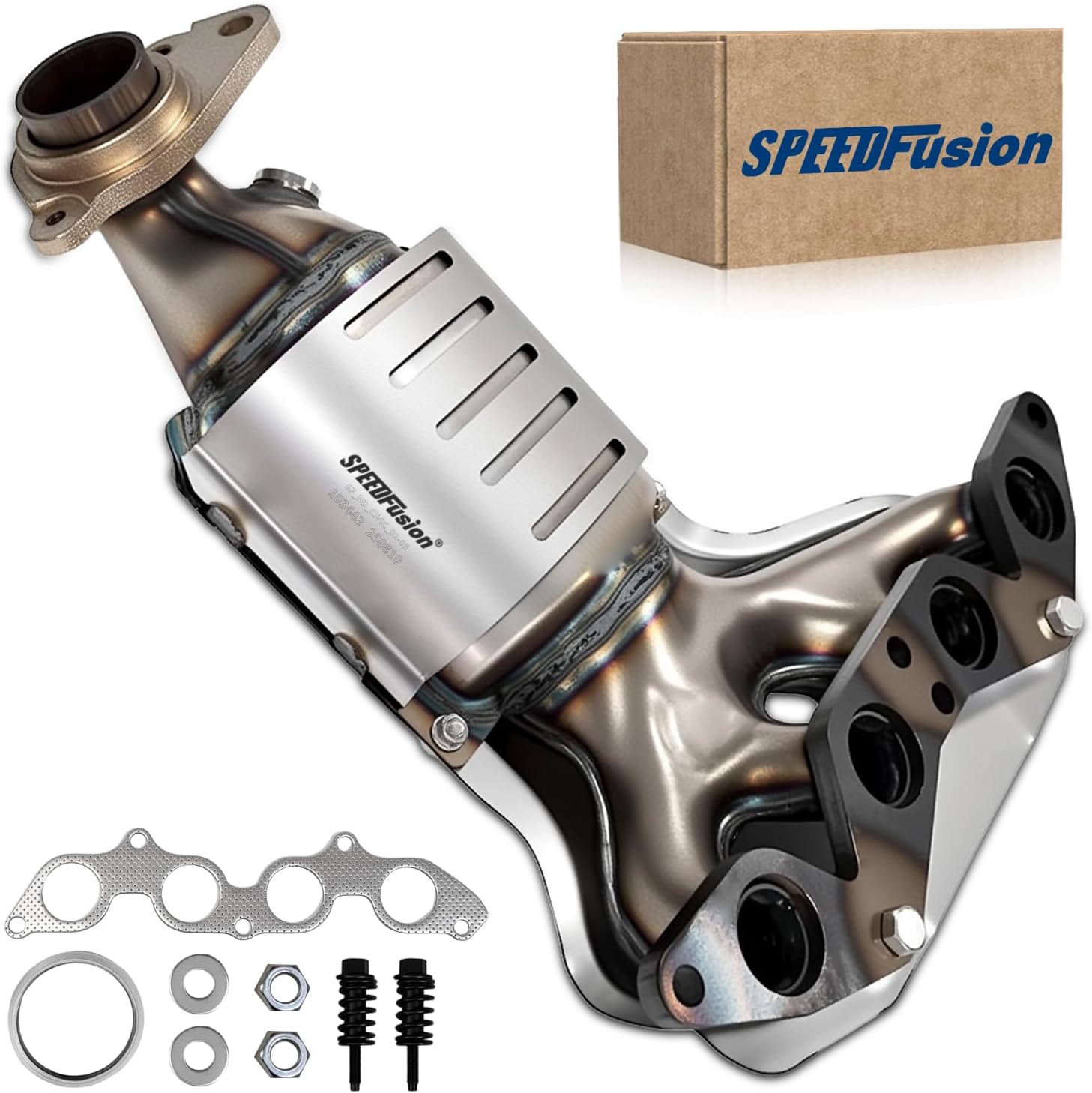
| Position | Front |
|---|---|
| Manufacturer | SPEEDFusion |
| Manufacturer Part Number | SF_HD_CIVIC_01-05 |
| EPA Certification | Yes |
This SPEEDFusion front catalytic converter is a direct-fit replacement for 2001–2005 Honda Civic 1.7L models intended to restore emissions control and keep the check-engine light off. It uses a stainless steel shell and an OEM-style ceramic substrate plated with platinum, rhodium, and palladium to increase conversion efficiency, and the manufacturer says the anti-core-detachment welding improves durability under heat and vibration. Installation is straightforward for a professional shop or a competent DIYer using basic exhaust tools since it is sold as a front-position unit matched to factory mounting points. The EPA compliance means it is suitable for vehicles that must meet federal emissions rules, but it is not CARB-legal for states that require California standards. The product carries a structural and limited emissions warranty and aims to balance cost and function, making it a practical option when you need a reliable factory-quality replacement without upgrading performance.
Best for: Buyers who prioritize a durable, factory-style emissions repair to restore proper catalytic function and avoid check-engine lights on 2001–2005 Civic 1.7L cars.
Less Ideal for: Drivers in states that require California emissions certification or those seeking a performance-oriented high-flow aftermarket exhaust upgrade.
- Direct-fit design for 2001–2005 Honda Civic 1.7L for straightforward installation
- Constructed with stainless steel shell and anti-core-detachment welding for improved durability
- OEM-grade ceramic substrate plated with precious metals to boost conversion efficiency
- EPA compliant for use on vehicles required to meet federal emissions standards
- Not CARB-compliant so it cannot be used in states with California emission requirements
Verdict: A reliable, factory-style front catalytic converter replacement that restores emissions control for 2001–2005 Civic 1.7L vehicles required to meet federal standards.
6. DNA MOTORING Factory-Style Catalytic Converter for 2001–2005 Honda Civic 1.7L

| Fitment | 2001–2005 Honda Civic 1.7L (DX LX CX VX HX) |
|---|---|
| Material | Stainless steel pipe with catalyst core |
| Emissions approval | EPA OBD-II approved (federal models) |
| Related part numbers | 18160-PLM-A00, 18160-PLM-A50 |
This DNA MOTORING catalytic converter is a direct-replacement unit made to match factory fit and function for 2001–2005 Honda Civic 1.7L engines. Constructed with a stainless steel pipe and a catalyst core, it uses mandrel-bent tubing intended to preserve exhaust flow while restoring emissions control and engine efficiency. Typical use is as a straightforward replacement when the original converter is clogged, damaged, or failing inspection; professional installation is recommended because no instructions are included. Notable features include EPA OBD-II approval for federal models and design compatibility with common Honda part numbers for easier fitment. In practical terms expect restored backpressure characteristics, resolution of check-engine codes tied to catalytic efficiency, and a durable stainless-steel exhaust connection. Limitations: it is not legal for sale or use in California, New York, or Maine emissions models, and buyers should verify exact fitment against their vehicle VIN and local emissions rules before purchase.
Best for: Buyers who want a straightforward, factory-compatible replacement to restore emissions function and clear catalytic-related fault codes while prioritizing proven fit and documented approvals.
Less Ideal for: Drivers subject to California New York or Maine emissions regulations or owners who need a converter certified for those states should seek a region-legal alternative.
- Direct-fit factory-style design for 2001–2005 Honda Civic 1.7L to simplify replacement
- Stainless steel construction with mandrel bends to preserve exhaust flow and resist corrosion
- EPA OBD-II approved for federal emissions systems to address emissions-related trouble codes
- Not legal for sale or use in California New York or Maine emissions-regulated vehicles
Verdict: Choose this unit when you need a factory-style, EPA-approved replacement to restore emissions performance on a 2001–2005 Civic 1.7L.
Choosing the Right 2001-2005 Honda Civic Exhaust Manifold: Key Factors to Consider
Fitment and Chassis Compatibility
Exact fitment is the top priority for a 2001-2005 Honda Civic exhaust manifold. The ES, EM, and EP chassis codes used in those years share common flange geometry and mounting positions, so a manifold that matches those specifics avoids the need for custom adapters or welding. Improper flange alignment leads to exhaust leaks, stressed mounting studs, and potential interference with steering or suspension components.
When evaluating fitment, confirm bolt pattern, oxygen sensor bung location, and whether the manifold clears heat-sensitive components like wiring harnesses and coolant lines. A correct-fit manifold reduces installation time and minimizes the risk of future leaks caused by misalignment or uneven clamping.
Material and Construction Quality
Materials determine how the manifold handles heat cycling and mechanical stress. Cast iron offers good resistance to warping and is commonly used on many Civics, while stainless steel or mild-steel tubular manifolds may provide lighter weight and improved flow but can be more prone to cracking if not well designed. Look for robust welds, thick flanges, and reinforcement around the oxygen sensor bung and mounting bosses.
Construction quality also affects long-term durability in everyday driving. Poor castings, thin flange sections, or inconsistent welds can accelerate cracking and lead to exhaust manifold symptoms such as ticking noises and loss of low-end torque. Choose manifolds with consistent wall thickness and attention to flange flatness to improve seal life with the gasket.
Gasket and Seal Reliability
A good exhaust manifold is only as leak-free as its gasket and mounting hardware. The gasket must match the flange profile and compress reliably without collapsing over time. Multi-layer steel gaskets or high-temperature composites are common choices to resist combustion gases and thermal cycling.
Equally important are stud and nut quality. Corroded or stretched fasteners fail to maintain clamp load, allowing leaks to develop. When selecting a replacement manifold, consider whether it includes a matched gasket set and new mounting hardware or whether you will need to source those separately. Reliable sealing reduces exhaust manifold leak risk and related engine management issues.
Crack Resistance and Thermal Stress Management
Repeated heat cycles in the engine bay cause expansion and contraction that can crack lower-quality manifolds. Manifolds designed with expansion joints, stress-relief features, or thicker wall sections at high-stress points will resist cracking longer. On the 2001-2005 Civic, areas around tight bends, the collector, and the flange are common failure locations.
Consider designs that distribute thermal stress and avoid sharp transitions in material cross-section. Proper surface finishing at welds and smooth internal surfaces help reduce hotspots that accelerate fatigue cracking. Addressing crack resistance at purchase reduces the likelihood of repeat repairs.
Installation Complexity and Serviceability
Installation difficulty affects labor time and the chance of installation-related issues. Manifolds that align with stock mounting points and keep sensor bungs accessible simplify the job for DIYers and shop technicians. Some designs require lowering subcomponents or removing additional parts, which increases install time and risk of stripped fasteners.
Serviceability also includes the ability to access and replace the gasket or hardware later without major disassembly. If you plan to service the manifold area periodically, favor options that minimize interference with other engine components and that provide easy access to studs and sensor ports.
Emissions Equipment and Sensor Compatibility
Maintaining proper oxygen sensor placement and compatibility with emissions equipment is necessary for reliable engine control and to avoid running issues. Manifolds that relocate or eliminate sensor bungs can cause incorrect oxygen readings and lead to check engine lights or fuel trim problems unless other modifications are made.
Check whether the manifold preserves the original oxygen sensor locations and allows for proper sensor heater and bung fitment. Compatibility with the Civic's emissions hardware ensures smoother integration with the engine's control systems and reduces diagnostic headaches.
Common Symptoms of a Failing Exhaust Manifold
Identifying symptoms early helps prevent engine damage. Typical signs include a ticking or tapping noise on cold start that grows with engine speed, decreased low-end torque, and odor of exhaust fumes in the engine bay. A persistent check engine light tied to oxygen sensor readings or short-term fuel trim changes can also indicate an exhaust manifold leak.
Visible soot or carbon deposits at the flange-to-head junction and a loss of engine smoothness under load are practical indicators. For the 2001-2005 Civic, these symptoms often trace back to gasket deterioration, cracked cast sections, or loose mounting hardware due to heat cycling.
- Tapping or ticking noise that varies with RPM
- Reduced throttle response and low-end torque
- Soot or black deposits near the flange
- Check engine light with oxygen sensor-related codes
- Exhaust odor in the engine bay
Diagnosing an Exhaust Manifold Leak on a Civic (ES, EM, and EP)
A systematic diagnosis narrows down the cause without unnecessary disassembly. Start by listening with the engine cold and warm to localize ticking sounds. Use a length of hose as a stethoscope to find the source near the head and flange area. Visual inspection for soot, cracks, or loose studs provides quick clues.
For a more definitive check, detect pressure or gas escape at idle and under load by feeling for airflow near the flange or by carefully using soapy water on suspected joints while the engine is running. Be cautious with hot components and avoid direct contact with exhaust surfaces. Verifying oxygen sensor readings and short-term fuel trim changes with a scan tool helps confirm whether a manifold leak is affecting engine management.
- Listen for changes in noise from cold to warm engine
- Inspect for soot and gasket separation at the flange
- Use a stethoscope hose to pinpoint leaks
- Verify sensor readings with a diagnostic tool
Repair Options: Replace, Repair, or Swap
Small defects can sometimes be repaired, but on the 2001-2005 Civic the decision depends on the location and extent of damage. Minor cracks in accessible tubular sections may be welded by a skilled fabricator, provided the material is compatible and the welds can withstand thermal cycles. Flange warpage or multiple cracks usually justify a full replacement to avoid recurring issues.
Swapping to a different manifold type is possible, but ensure it matches the Civic's flange and sensor locations. A swap that changes routing or collector position can require additional adapters and may affect heat distribution. For most owners seeking reliability, replacing with a properly matched manifold and new gasket set offers the most predictable outcome.
- Welding for small, accessible cracks if material allows
- Full replacement for warped flanges or multiple cracks
- Swaps require careful fitment and may need adapters
- Always replace gaskets and worn mounting hardware
Gasket Choices and When to Replace Them
Gasket selection influences sealing performance and longevity. Multi-layer steel gaskets handle high temperatures and maintain a strong seal across irregular flange faces. Composite gaskets are often less tolerant of repeated heat cycles and can compress or fail sooner. For the Civic, selecting a gasket that matches the flange profile and thickness is key to preventing future leaks.
Replace the gasket whenever the manifold is removed. Even if the old gasket appears intact, heat cycling can alter its sealing properties. Using new, high-quality studs or bolts and torquing them to the specified sequence and values improves long-term seal reliability and reduces the chance of checking the exhaust manifold leak again.
- Prefer multi-layer steel for high-heat durability
- Always install a new gasket when removing the manifold
- Use fresh mounting hardware and proper torque sequence
- Match gasket thickness to the flange to maintain geometry
Installation Tips to Avoid Common Pitfalls
Plan the job and gather necessary tools before starting. Frozen or rounded nuts are common obstacles on older Civics; penetrating oil and the right sockets reduce damage. Support the manifold during removal to avoid stressing studs. Clean the head flange surface thoroughly, removing carbon and old gasket material without gouging the metal.
When installing, hand-start fasteners to avoid cross-threading and use the correct torque sequence. Replace any corroded studs or bolts and use anti-seize sparingly where specified. After installation, run the engine to operating temperature and re-torque hardware if recommended to ensure a lasting seal.
- Use penetrating oil on stubborn fasteners
- Clean flange surfaces carefully without gouging
- Hand-start bolts and follow torque sequence
- Replace corroded studs and consider re-torque after heat cycles
When to Consult a Professional
Some issues are best handled by a technician. If the flange is significantly warped, if the crack is in a hard-to-reach location, or if sensor wiring must be modified, professional repair or replacement reduces risk of improper installation. A shop can also verify oxygen sensor readings and perform a pressure test to conclusively locate leaks.
If you lack welding expertise or tools, avoid attempting repairs that require high-quality, heat-resistant welds. A professional will have the correct fixtures and experience to restore flange flatness, replace studs correctly, and ensure the manifold integrates with the Civic's emissions and sensor systems.
- Warped flange or inaccessible cracks
- Complex sensor or emissions equipment work
- Lack of welding tools or experience
- Need for diagnostic verification of sensor-related faults
Still looking for the perfect fit?
Select your Honda Civic configuration to see the most relevant Exhaust Manifolds recommendations
How We Chose the Best 2001-2005 Honda Civic Exhaust Manifold
We evaluated candidate exhaust manifolds with an emphasis on factors that directly affect real-world performance and longevity on the 2001-2005 Civic chassis. Primary criteria included exact fitment to the ES, EM, and EP flange and bolt pattern, material and construction quality that influence resistance to cracking and warping, and gasket sealing compatibility to reduce common manifold leak symptoms. We also considered thermal performance and routing to ensure proper clearance with nearby components under the Civic engine bay, plus the availability of replacement gaskets and mounting hardware.Practical installation considerations played a role, such as whether the manifold required minimal modification, compatibility with the stock oxygen sensor locations, and whether fitment preserved emissions equipment where applicable. We excluded options that required custom fabrication, significant re-routing of exhaust piping, or that were known to need frequent maintenance. Our process filtered out parts with unclear fitment claims or poor material specifications in favor of manifolds that balance durability, ease of installation, and long-term sealing performance.
Our full evaluation process is outlined in our review methodology.
FAQ
How do I tell if my Civic's exhaust manifold is leaking?
Listen for a ticking noise that changes with engine speed and inspect for soot at the flange. Check engine lights tied to oxygen sensor readings or short-term fuel trim shifts often accompany manifold leaks.
Can a cracked exhaust manifold be welded on a 2001-2005 Civic?
Minor cracks in compatible materials can be welded by a skilled fabricator, but extensive cracking or flange warpage usually warrants replacement to avoid repeat failures.
Do I need to replace the gasket when installing a new manifold?
Yes. Always install a new gasket and fresh hardware when replacing the manifold because heat cycling degrades gasket sealing properties even if the old gasket appears intact.
Will replacing the manifold affect my Civic's oxygen sensors?
A correct-fit manifold preserves the original sensor bung locations so sensors function normally. Manifolds that relocate or remove sensor bungs can alter readings and require further work to restore proper operation.
How long does installation usually take for a Civic manifold replacement?
Installation time varies based on condition of fasteners and access, but a straightforward replacement typically takes a few hours. Corroded studs, obstructing components, or additional repairs can extend that time.
Is it worth swapping to a different manifold design on this Civic?
Swapping to another design can be done but only if the flange and sensor locations match the Civic. Swaps that change routing may need adapters and can introduce clearance or heat-management issues.
Final Verdict
Prioritize fitment and sealing when choosing an exhaust manifold for a 2001-2005 Honda Civic. Ensure the flange pattern, oxygen sensor locations, and mounting hardware match the ES, EM, and EP chassis details to minimize installation headaches and reduce the risk of leaks. Balance material and construction choices against your goals for durability and thermal performance.For most owners, a properly matched replacement manifold installed with a new gasket and quality fasteners will deliver the best balance of reliability and serviceability. Focus on long-term leak resistance and correct sensor compatibility to make a confident selection.
Explore More:
- Check out all Honda Civic parts & accessories
- Explore Exhaust Manifolds Maintenance & Repair Guides
- Explore Exhaust & Emissions
- Browse all Auto Parts
