

Note: This article contains affiliate links. If you click on these links and make a purchase, I may earn a small commission at no extra cost to you. This helps support my research and content. Read my full affiliate disclosure here.
Picking the right Honda Civic catalytic converter matters for emissions compliance, engine performance, and avoiding recurring engine trouble. A correct unit restores the exhaust system's ability to convert pollutants while reducing the chance of drivability issues.This guide covers seven shortlisted catalytic converters selected for fitment reliability and emissions control. We evaluated durability and installation compatibility to help you choose a unit that suits your Civic and driving conditions.
Looking for other parts? See all Honda Civic parts & accessories.
Top Picks at a Glance
| Best Overall The best all-around choice for most situations | ZonCar Catalytic Converter Replacement for Honda Civic 2006–2011 1.8L |  |
| Best quality Built to a higher standard if you want something more solid | Walker CalCat 82614 Universal Catalytic Converter for Honda Civic |  |
| Best Value The sweet spot between price and what you get | KAC Front Catalytic Converter with Exhaust Manifold for Honda Civic 2012–2013 |  |
| Best budget The cheapest option that still gets the job done reliably | QYNQYN Catalytic Converter Kit — Direct-Fit for Honda Civic & Acura EL 2001–2005 (1.7L) |  |
| Highest Rated A top-rated pick with lots of positive feedback | Walker Ultra 15863 Direct-Fit Catalytic Converter for Honda Civic |  |
| Most popular A crowd favorite that many people choose with confidence | VAVICARS Stainless Steel Catalytic Converter, Direct-Fit for 2012–2013 Honda Civic 1.8L (EPA Approved) |  |
| Best Seller A high-volume bestseller chosen again and again | A-Premium Front Catalytic Converter Kit for Honda Civic 2012–2013 / Acura ILX 2013–2014 |  |
1. ZonCar Catalytic Converter Replacement for Honda Civic 2006–2011 1.8L
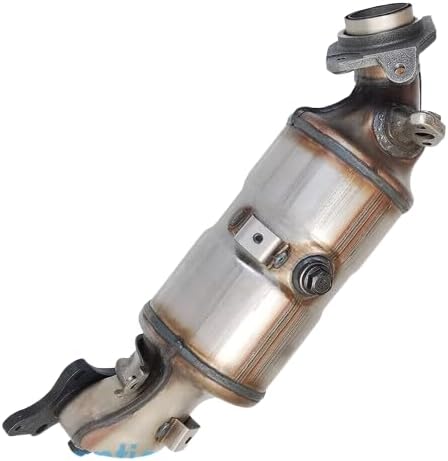
| Fitment | Honda Civic 2006-2011 1.8L |
|---|---|
| Position | Front |
| Shell material | Stainless steel |
| Emissions standard | EPA/OBD2 compliant (not CARB) |
This ZonCar catalytic converter is a direct-replacement style unit intended to restore emissions control and quiet the exhaust on 2006–2011 Honda Civic 1.8L models. It uses a honeycomb ceramic substrate treated with catalyst materials and a CeO2 rare earth stabilizer to improve conversion efficiency, and the stainless-steel shell and machined exterior resist corrosion and heat. In practice it is used as a front-section replacement to clear P0420-type codes and bring exhaust emissions closer to regulatory limits outside CARB jurisdictions. Buyers will appreciate the factory-replacement form, stainless construction and claimed OBD2 compliance, which make it suitable for a DIY swap or shop install with welding or flange adaptation as needed. Limitations noted by some owners include fitment tweaks during installation, occasional need for adapters or welding, and that it does not meet California or New York CARB requirements, so check local emissions rules before choosing it.
Best for: Balanced all-round buyers who want a cost-conscious, factory-style replacement to restore emissions function and quiet the exhaust on a 2006–2011 Honda Civic 1.8L without pursuing a premium OEM unit.
Less Ideal for: Drivers in CARB states or owners who require guaranteed bolt-on, no-modification OEM replacements should look for a certified, state-compliant factory part instead.
- Designed for 2006–2011 Honda Civic 1.8L front position for straightforward replacement.
- Stainless-steel shell and machined exterior increase corrosion and heat resistance.
- Honeycomb ceramic substrate with rare-earth stabilizer for improved catalytic conversion.
- Meets EPA and OBD2 requirements for most states outside CARB jurisdictions.
- Not CARB-compliant so not legal for use in California or New York on CARB-covered vehicles.
- Some buyers report fitment adjustments, welding, or adapter hardware required during installation.
Verdict: A durable stainless-steel replacement that restores emissions control and quiets the exhaust on 2006–2011 Honda Civic 1.8L without the premium cost of a factory unit.
2. Walker CalCat 82614 Universal Catalytic Converter for Honda Civic

| Material | Aluminum, Stainless Steel |
|---|---|
| CARB EO# | D-182-57 |
| Fitment | Designed for select Honda Civic model years (1999–2005 listed) |
The Walker CalCat 82614 is a direct-fit, CARB-compliant catalytic converter built with a stainless-steel body and aluminized pipe to replace a failing unit on compatible Honda Civic years. It is used as a factory-quality emissions control component to clear fault codes and meet California-style smog requirements on OBDII vehicles. Notable features include an OE-style catalyst coating process and a high-technology washcoat intended to provide consistent conversion performance. In practice this means technicians can swap it in with minimal modification in many cases and expect reliable emissions readings and improved exhaust integrity. The unit includes expandable bushings to aid fitment but may still require minor fabrication or welding during installation on some exhaust systems. Buyers should expect professional installation for best results and understand that fitment verification is essential before purchase. The converter’s durable stainless construction aims to resist corrosion, though longevity will depend on vehicle use and local road conditions.
Best for: Performance-oriented buyers who prioritize emissions compliance and reliable conversion efficiency when restoring or upgrading a Civic’s exhaust system.
Less Ideal for: Buyers seeking a plug-and-play OEM-specific part with guaranteed bolt-on fitment without any exhaust shop work should consider a factory-specific replacement instead.
- CARB-compliant for states requiring California-standard replacement converters
- Stainless-steel body and aluminized pipe for improved corrosion resistance
- OE-style catalyst coating and high-technology washcoat for consistent emissions performance
- Direct-fit design with expandable bushings to simplify installation for many Honda Civic exhausts
- May require welding or pipe modification on some exhaust systems despite expandable fittings
- Not a vehicle-specific OEM part so buyers must verify exact fitment before purchase
Verdict: A durable, CARB-compliant replacement that delivers factory-quality emissions performance for performance-focused Civic owners who are prepared to have a shop handle final fitment.
3. KAC Front Catalytic Converter with Exhaust Manifold for Honda Civic 2012–2013

| Compatibility | Civic 2012-2013 1.8L; ILX 2013-2014 2.0L |
|---|---|
| EPA Status | EPA OBD-II Approved |
| Material | Stainless Steel shell; Ceramic substrate |
| Oxygen Ports | 3 |
| Mounting | Bolt down installation |
This KAC front catalytic converter replaces the factory front converter and manifold assembly for select 2012–2013 Honda Civic 1.8L and 2013–2014 ILX 2.0L models. It arrives as a bolt-on assembly with gaskets and hardware intended to simplify installation and restore emission control after a failed unit. The unit uses a ceramic substrate with rare-earth and precious metal catalysts housed in an industrial-grade stainless shell treated to resist rust, and it is rated EPA OBD-II approved for federal applications. In practice the integrated manifold reduces the number of exhaust flanges to align and can speed up a swap compared with separate components, while the included mounting kit helps address common fitment friction during DIY replacement. Buyers should note it is not legal for sale or use in certain states and that a few customers report inconsistent shield hardware or minor alignment adjustments during install, so some grinding or hardware swaps may be required. The product is backed by a multi-year warranty and aims to balance performance, compliance, and cost for owners seeking a practical, budget-minded replacement.
Best for: Buyers optimizing for practical value who want a near-direct factory-replacement that lowers repair time and cost while keeping emissions compliance for federal vehicles.
Less Ideal for: Drivers in states with stricter emissions rules or anyone unwilling to perform minor fitment tweaks should look for state-compliant or dealer-sourced replacements.
- Direct bolt-on assembly includes manifold, gaskets, and hardware to simplify replacement
- EPA OBD-II approved for federal emissions and uses precious metal catalysts for effective conversion
- Industrial-grade stainless steel shell with anodized surface treatment to resist rust
- Ceramic substrate and high-flow catalyst design aimed at improving conversion efficiency
- Not legal for sale or use in California, New York, and Maine
- Some buyers reported mismatched shield bolts or minor fitment adjustments required during installation
Verdict: A budget-friendly, integrated front converter built to be a near-direct replacement for specified Civics that balances EPA compliance and easier installation for practical DIY repairs.
4. QYNQYN Catalytic Converter Kit — Direct-Fit for Honda Civic & Acura EL 2001–2005 (1.7L)
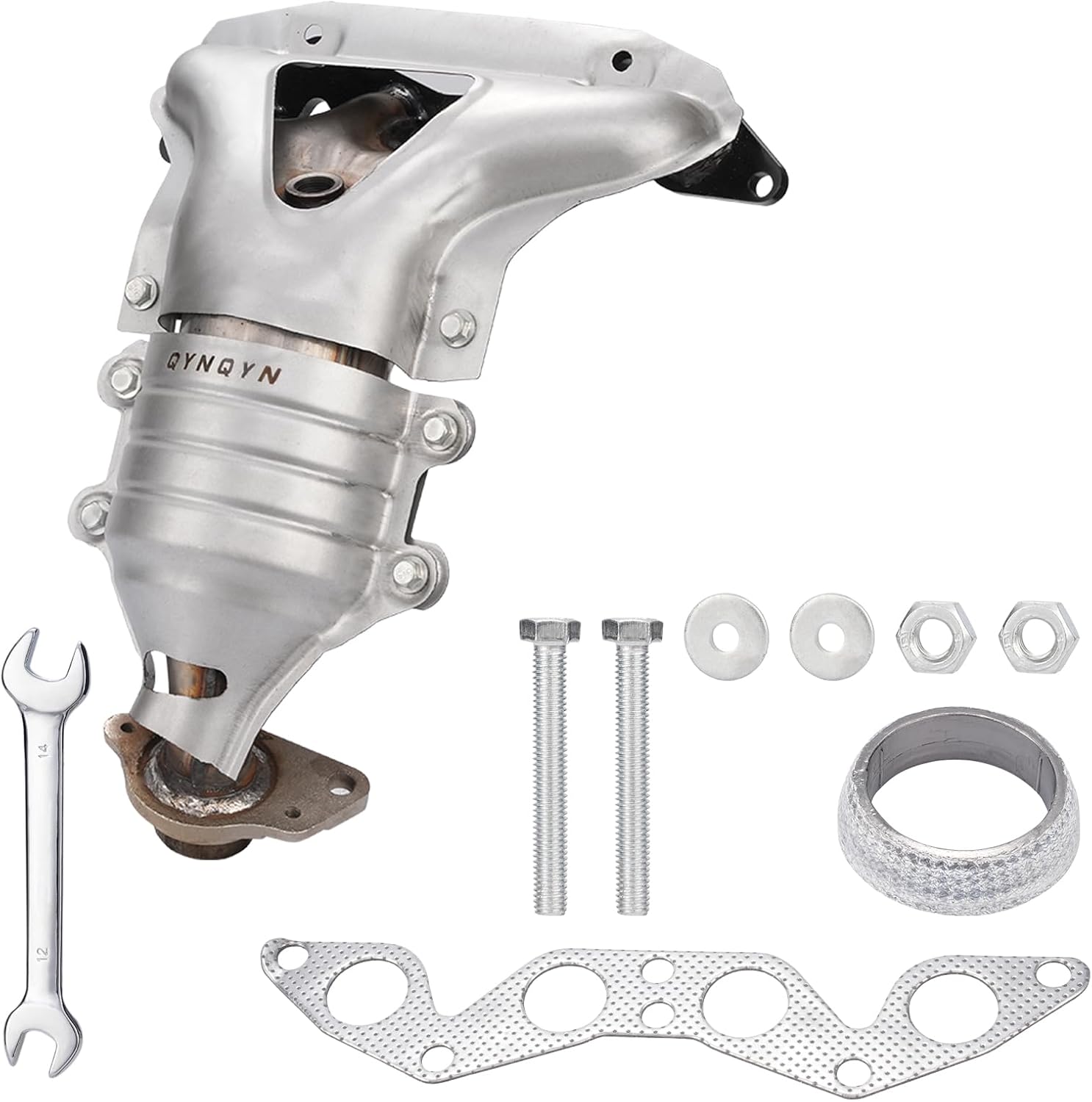
| Compatible vehicles | Honda Civic & Acura EL 2001-2005 L4 1.7L |
|---|---|
| EPA status | U.S. EPA compliant (not CARB) |
This QYNQYN catalytic converter kit is a direct-fit replacement for 2001–2005 Honda Civic and Acura EL 1.7L engines, intended to restore emissions control and exhaust flow to factory-style performance. It is typically installed in place of the original front manifold converter and includes the matching part numbers for a plug-and-play fit. The unit is marketed as EPA compliant for sale and use in areas that accept U.S. EPA converters and uses an internal honeycomb substrate to convert CO, HC, and NOx into less harmful gases while supporting engine oxygen delivery. Practical benefits include a precision-engineered fit to reduce installation time and the potential to clear emissions-related fault codes. Limitations are legal: it is not CARB approved and therefore not permitted in California and some other states, and buyers must confirm local emissions rules before installing. The manufacturer warranty offers added peace of mind but buyers should confirm fitment to their vehicle VIN and consider professional installation for best results.
Best for: Budget-conscious owners looking for a cost-effective, factory-replacement style catalytic converter to restore emissions function on a 2001–2005 Honda Civic or Acura EL while minimizing installation hassle.
Less Ideal for: Buyers in states that require CARB-compliant converters or those who need a staged or high-performance aftermarket catalytic solution should look elsewhere.
- Direct-fit design for 2001–2005 Honda Civic and Acura EL 1.7L to simplify installation
- EPA-compliant for use in regions that accept U.S. EPA converters
- Includes common OEM part numbers for easier cross-referencing and fit verification
- Built with a honeycomb substrate to convert harmful exhaust gases and support exhaust flow
- Not CARB approved so it is illegal for use in California and similar jurisdictions
- Requires verification of compatibility with vehicle VIN and may need professional installation
Verdict: A wallet-friendly, direct-fit replacement for 2001–2005 Civic/Acura EL owners who need an EPA-compliant converter outside CARB states.
5. Walker Ultra 15863 Direct-Fit Catalytic Converter for Honda Civic

| Compatibility | 1996–1998 Honda Civic; 1997–1998 Acura EL |
|---|---|
| Fit Type | Direct fit, vehicle specific |
| Emissions Standard | EPA compliant for OBDII vehicles |
| Manufacturer | Tenneco (Walker) |
The Walker Ultra 15863 is a direct-fit catalytic converter built as a factory-style replacement for 1996–1998 Honda Civic and 1997–1998 Acura EL applications. It installs like an OEM part thanks to OE-style hangers, flanges, brackets and heat shields, so shops can bolt it in without fabrication or welding. The unit is designed to meet EPA standards for OBDII vehicles and uses a high-technology washcoat and precious metal loading to control emissions to match the vehicle application. Walker emphasizes durable construction with thick flanges and aluminized heat shields where originally equipped to protect underbody components. In practice this means a straightforward swap that restores emissions compliance and keeps exhaust flow close to factory behavior. Buyers should note longevity comments from some users about weld and corrosion points on older installations, so underbody corrosion protection and proper installation torque are important for long service life.
Best for: Reliability-focused buyers who prioritize a factory-quality emissions replacement and want a straightforward bolt-on solution that restores compliance without custom work.
Less Ideal for: Buyers seeking a universal or performance-upgrade converter or those with heavily rusted exhaust systems that need custom fabrication should consider alternatives.
- Direct-fit design with factory-style hangers and flanges for bolt-on installation
- Designed to meet EPA OBDII emissions standards for 1996-and-newer vehicles
- Factory-style washcoat and precious metal load to restore emissions control
- Thick flanges, hangers and aluminized heat shields for improved durability and heat protection
- Some users have reported corrosion and weld-area failures over long-term use
- Not a universal part; fitment is limited to specific Civic and Acura EL years
Verdict: A practical, factory-style catalytic converter for late 1990s Honda Civic owners who need an EPA-compliant, bolt-on replacement but should protect welds and corrosion-prone areas for best longevity.
6. VAVICARS Stainless Steel Catalytic Converter, Direct-Fit for 2012–2013 Honda Civic 1.8L (EPA Approved)

| Fitment | 2012–2013 Honda Civic 1.8L (federal emissions) |
|---|---|
| Material | 409L stainless steel shell |
| Certification | EPA approved |
| Manufacturer | VAVICARS |
This VAVICARS catalytic converter is a direct-replacement unit made to match the factory mating points for 2012–2013 Honda Civic 1.8L federal-emissions cars. It uses a heavy-duty 409L stainless steel shell and ceramic internal substrate loaded with metal catalysts, which aims to restore emissions control and stop exhaust leaks without extensive modification. Typical installation replaces the old damaged converter and reuses existing hardware and O2 sensors where possible; professional installation is recommended. The EPA certification indicates it meets federal emissions requirements for nonrestricted states, and several buyers report straightforward bolt-up fit and improved exhaust sound. That said, user feedback is mixed on long-term durability: some reviewers report premature catalyst degradation and spotty weld quality, so longevity may vary by driving conditions and temperature exposure. This is a practical convenience-focused option when you need a quick, affordable factory-quality replacement, but expect it to perform like a budget aftermarket part rather than a long-term factory-equivalent unit.
Best for: Convenience-driven buyers who prioritize a quick, bolt-on repair that restores emissions function and lets them get back on the road with minimal fuss.
Less Ideal for: Buyers needing a long-term OEM-grade lifetime solution or those in states with strict emissions laws should consider higher-end or dealer-sourced options instead.
- Direct-fit design matches factory mounting points for 2012–2013 Civic 1.8L, simplifying installation.
- EPA-approved for federal-emissions models so it can clear emissions-related checks outside restricted states.
- 409L stainless steel shell offers corrosion and heat resistance compared with mild steel units.
- Internal ceramic substrate loaded with metal catalysts to restore emissions performance and reduce exhaust noise.
- Reported variability in internal catalyst longevity with some users seeing early P0420 codes.
- Some customers noted low-quality welds and early surface corrosion in a few units.
- Not legal for sale or use in California, New York, Maine, and Colorado which limits applicability.
Verdict: A convenient, EPA-approved direct-fit replacement for 2012–2013 Civic 1.8L that gets you back on the road quickly but may not match OEM longevity in all cases.
7. A-Premium Front Catalytic Converter Kit for Honda Civic 2012–2013 / Acura ILX 2013–2014
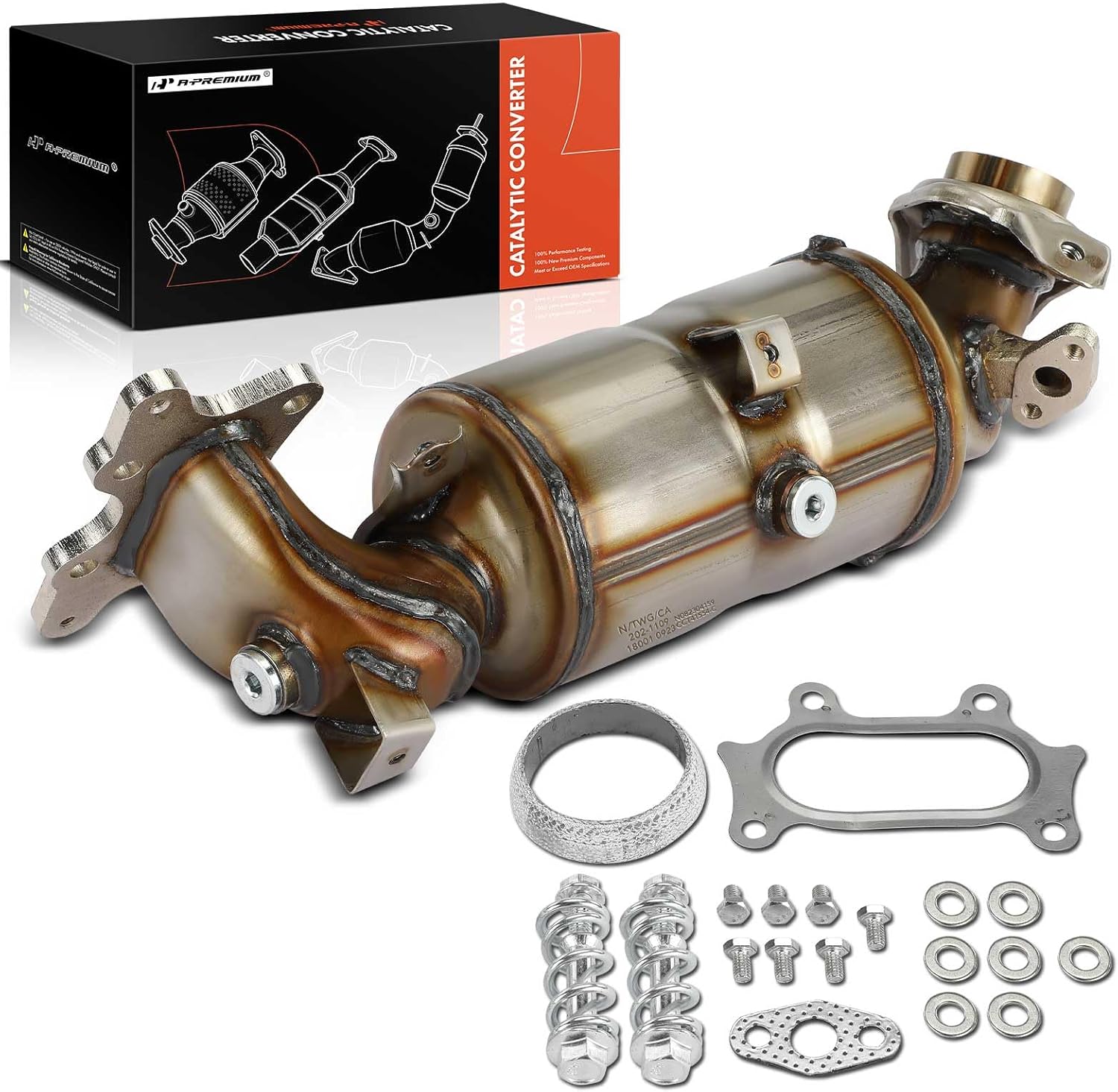
| Vehicle Fitment | Honda Civic 2012-2013 L4 1.8L; Acura ILX 2013-2014 L4 2.0L |
|---|---|
| EPA Compliance | Yes (federal) |
| Position | Front Side |
| Body Material | Stainless Steel |
| Inlet Type | 4 Bolt Welded Manifold |
This A-Premium front catalytic converter kit is a direct-fit replacement intended for the 2012–2013 Honda Civic 1.8L and the 2013–2014 Acura ILX 2.0L with federal emissions. It installs at the front side of the exhaust and includes the welded inlet and outlet flanges, gaskets and bolts to simplify a like-for-like swap. The unit is stainless steel and EPA compliant for federal use, which helps restore emissions control and passenger vehicle drivability after a failed converter. Buyers should expect a mostly bolt-on installation but some owners report minor modifications to heat shields or mounting tabs on certain cars, so professional installation is recommended if you want guaranteed fitment. The kit carries a one-year unlimited-mileage guarantee from the seller, but it cannot be sold or installed in states with stricter emissions rules such as California, Colorado, New York and Maine. If you need a factory-quality direct replacement for a federal-spec Civic, this covers the essentials; if you live in a restricted state or want a guaranteed exact factory fit without any adjustments, look elsewhere.
Best for: Risk-averse, mainstream buyers who prioritize restoring factory-like emissions performance on a federal-spec Honda Civic and prefer a mostly direct-fit replacement backed by a seller guarantee.
Less Ideal for: Drivers in states with stricter emissions regulations or shoppers who need an exact factory-certified part with guaranteed fitment and no possibility of minor adjustments.
- Direct-fit design with inlet and outlet flanges and included gaskets and bolts for a straightforward replacement
- Stainless steel construction resists corrosion compared with basic plated parts
- EPA-compliant for federal emissions, restoring emissions control on non-restricted vehicles
- Includes a one-year unlimited-mileage guarantee from the seller
- Not legal for sale or installation in California, Colorado, New York and Maine due to state emissions laws
- Some vehicles may require minor modification to heat shields or mounting tabs for proper fitment
Verdict: A practical stainless-steel, EPA-compliant front catalytic converter kit for federal-spec 2012–2013 Civics that mostly bolts in but may need minor adjustments on some cars.
Looking for the perfect fit?
Select your Honda Civic configuration to see the most relevant Catalytic Converters recommendations
Choosing the Right Honda Civic Catalytic Converter: Key Factors to Consider
Fitment and Compatibility
Correct fitment matters because the converter must align precisely with the Honda Civic's exhaust flanges and oxygen sensor ports for proper sealing and accurate emissions monitoring. A unit that fits poorly can cause leaks, trigger the check engine light, or require additional welding or adapters.
Verify flange type, bolt pattern, and sensor bung placement before purchasing. Choosing a converter designed for your vehicle's model year and engine configuration reduces installation time and the likelihood of post-install troubleshooting.
Emissions Conversion Efficiency
A catalytic converter's primary role is to reduce harmful exhaust gases. Higher conversion efficiency means fewer hydrocarbons, carbon monoxide, and nitrogen oxides exiting the tailpipe, which impacts emissions testing and environmental performance.
Look for information on substrate design and washcoat loading because these influence how effectively the converter processes exhaust gases over its service life. Efficiency can also affect fuel trim and engine management when the on-board diagnostics are monitoring system performance.
Material and Construction Quality
Materials used in the housing and internal substrate affect longevity and resistance to thermal stress and corrosion. Stainless steel housings and robust welds hold up better to road salt and repeated heat cycles, reducing the risk of cracks or leaks.
Higher-quality construction also minimizes rattling and structural failures that can lead to premature replacement. Consider converters with reinforced flanges and corrosion-resistant finishes for long-term reliability.
Sensor Support and OBD Compatibility
Modern Honda Civics rely on oxygen sensors and downstream monitoring to confirm converter performance. The converter must provide correct sensor bung locations and maintain the expected sensor response characteristics to avoid false fault codes.
Units that preserve sensor placement and maintain proper exhaust flow help the vehicle's diagnostic system operate normally. If a converter alters flow dynamics or lacks appropriate sensor ports, the check engine light or other diagnostic indicators may be triggered.
Ease of Installation
Installation complexity affects cost, time, and the level of mechanical skill required. A direct bolt-in converter that matches factory mounting points typically reduces labor and the need for modifications.
Consider whether the unit requires cutting, welding, or special hardware. Ease of installation also ties to replacement times and the potential for installation-related leaks or misalignment if the job is rushed or done without the right tools.
Durability and Expected Service Life
A converter's lifespan depends on its internal substrate resilience and how well the housing resists corrosion and heat damage. Durability matters because premature failure means repeated replacement and potential emissions and drivability problems.
Assess expected service life in the context of your driving conditions. Vehicles used in areas with frequent short trips, high humidity, or salted roads may experience accelerated wear, making construction quality and protective coatings more important.
How We Chose the Best Honda Civic Catalytic Converter
To assemble this list we focused on criteria that directly affect ownership and emissions performance for Honda Civic owners. Primary filters included fitment accuracy to the Civic's year and exhaust layout, verified mounting and flange locations, and compatibility with onboard oxygen sensors. We also prioritized catalytic efficiency and substrate construction because these determine how well the converter reduces hydrocarbons, carbon monoxide, and nitrogen oxides.Durability and build quality were measured through materials used for the housing and heat resistance of the substrate. Ease of installation and whether the unit supports direct bolt-in replacement or requires minimal exhaust modification were evaluated. Emission certification or claims about meeting regulatory standards were considered when available. We excluded universal or one-size-fits-all units that lack clear Civic-specific fitment data, and we did not include converters marketed only for racing or off-road use that do not address street emissions control.
Our full evaluation process is outlined in our review methodology.
FAQ
What are common catalytic converter symptoms on a Honda Civic?
Common symptoms often include reduced engine performance, a noticeable drop in fuel economy, and a persistent check engine light. You may also notice a rotten egg smell or louder exhaust noise if the converter is clogged or damaged. These signs usually prompt diagnostic testing to confirm converter condition rather than immediate replacement.
Will a failing catalytic converter trigger the check engine light?
Yes, a catalytic converter that is underperforming or clogged often causes the vehicle's diagnostics to set fault codes that illuminate the check engine light. The system monitors oxygen sensor readings and catalyst efficiency and will flag deviations that suggest conversion problems. A scan tool can reveal specific codes that point toward converter-related issues.
Can I install a replacement catalytic converter myself?
Many owners can perform a replacement if they have basic mechanical skills and the right tools, especially when the unit is a direct bolt-in fit. However, installations that require cutting, welding, or custom flanges are more complex and may be better handled by a professional to ensure proper sealing and sensor placement.
How long does a catalytic converter usually last?
Service life varies widely depending on driving habits, environmental exposure, and build quality. Converters can last many years under normal highway use but may degrade faster with frequent short trips, engine misfires, or exposure to corrosive road conditions. Regular maintenance and addressing engine issues promptly help extend its life.
Do emissions issues always mean the catalytic converter needs replacement?
Not always. Emissions problems can result from upstream issues such as faulty oxygen sensors, fuel system faults, or ignition problems that affect combustion. Diagnostics should identify whether the converter is truly the failing component before replacement is pursued. Repairing related engine issues can sometimes restore converter function.
Conclusion
When choosing a Honda Civic catalytic converter, prioritize fitment accuracy, emissions conversion efficiency, and durable construction. Those factors determine how well the unit integrates with your Civic's sensors and how long it will reliably reduce exhaust pollutants.Balance ease of installation against long-term durability based on your driving patterns and local conditions. Address underlying engine faults first to protect a new converter and maintain consistent emissions performance.
Explore More:
- Check out all Honda Civic parts & accessories
- Explore Catalytic Converters Maintenance & Repair Guides
- Explore Exhaust & Emissions
- Browse all Auto Parts
