

Note: This article contains affiliate links. If you click on these links and make a purchase, I may earn a small commission at no extra cost to you. This helps support my research and content. Read my full affiliate disclosure here.
If you own a 1996-2000 Honda Civic you need a catalytic converter that fits the EJ, EK, and EM chassis variations and restores emissions control without surprises. A mismatched or failing converter can trigger the check engine light, raise emissions, and cause drivability issues. This guide covers six shortlisted converters chosen for their fit precision, construction quality, and emissions performance specifically for the 1996-2000 (EJ, EK, and EM) Civic platforms.Each option here is a direct-fit or vehicle-specific unit for the Civic years in scope; we evaluate them on fitment accuracy, internal substrate type, durability against road conditions, and how they affect OBD-II diagnostics and exhaust emissions. Use the summary below to find the converter that matches your repair goals and installation capabilities.
Looking for other parts? See all Honda Civic parts & accessories.
Top Picks at a Glance
| Best Overall The best all-around choice for most situations | PULCHERFLOW Catalytic Converter for 1996–2000 Honda Civic 1.6L |  |
| Best Quality Built to a higher standard if you want something more solid | Walker CalCat 82614 Universal Catalytic Converter (2.25" Inlet/Outlet) |  |
| Best Budget The cheapest option that still gets the job done reliably | HIGHBRICK Front Catalytic Converter for 1996–2000 Honda Civic 1.6L (EPA Compliant) |  |
| Highest Rated A top-rated pick with lots of positive feedback | SAROTIN Catalytic Converter Fit for Honda Civic 1.6L 1996–2000 (Front Inner, EPA Compliant) |  |
| Most Popular A crowd favorite that many people choose with confidence | DNA MOTORING Front Catalytic Converter Compatible with 1996–2000 Honda Civic D16Y7 |  |
| Best Seller A high-volume bestseller chosen again and again | PHILTOP Front Catalytic Converter Compatible with 1996–2000 Honda Civic 1.6L |  |
1. PULCHERFLOW Catalytic Converter for 1996–2000 Honda Civic 1.6L
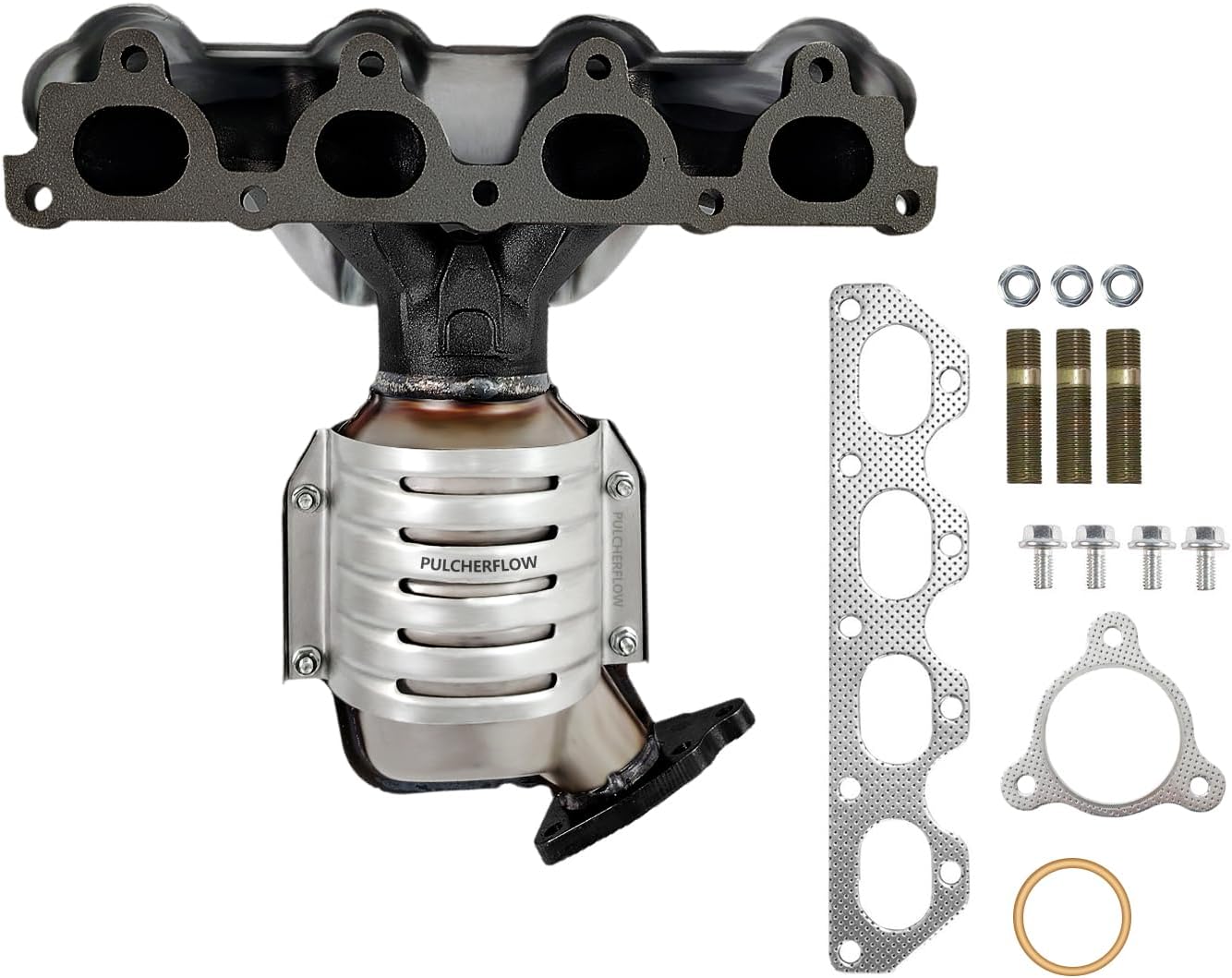
| Vehicle fitment | 1996–2000 Honda Civic 1.6L l4 |
|---|---|
| Emissions certification | EPA compliant (46-state legal) |
| Interchange number | 642597 |
| Shell material | Stainless steel |
This PULCHERFLOW catalytic converter is a direct-fit replacement for 1996–2000 Honda Civics with the 1.6L engine and is intended to restore emissions control and exhaust flow after a failed factory unit. It uses an enlarged honeycomb ceramic substrate with increased precious metal loading to improve purification efficiency and comes in a stainless steel shell for corrosion and heat resistance. The unit ships with necessary hardware and gaskets for bolt-on installation, so a competent DIYer or mechanic can typically swap it in without modifying the exhaust system. Practical benefits include EPA compliance for federal models and a high-flow design that can reduce backpressure compared with a clogged original. Limitations to note are that it is not legal for sale or use in California, New York, or Maine emissions models and some buyers report fitment and threaded-hole alignment issues that may require re-tapping or minor adjustment during installation. Build quality appears mixed across reviews, so expect to check mounting holes and O2 sensor threads before final installation.
Best for: Buyers who want an affordable, direct-replacement catalytic converter that restores emissions compliance and exhaust flow on a 1996–2000 Civic while balancing cost and performance.
Less Ideal for: People who need a CARB-compliant catalytic converter for restricted states or buyers who prioritize flawless factory-level fit and finish without any installation adjustments.
- Direct-fit design intended to match factory mounting and include gaskets and hardware for straightforward installation
- Enlarged ceramic substrate and higher precious metal loading for improved emissions purification
- Stainless steel shell and mandrel-bent piping for better corrosion and heat resistance compared with cheaper alternatives
- Not legal for use in California, New York, or Maine emissions models
- Some units have inconsistent fitment or rough threads that may require re-threading or adjustment during installation
Verdict: A budget-friendly, EPA-compliant direct-fit replacement that restores emissions control and exhaust flow for 1996–2000 Honda Civic 1.6L vehicles.
2. Walker CalCat 82614 Universal Catalytic Converter (2.25" Inlet/Outlet)

| Material | Aluminum, Stainless Steel |
|---|---|
| CARB EO# | D-182-57 |
| Inlet/Outlet ID | 2.25" / 2.25" |
| Fitment type | Universal with expandable bushing |
| Vehicle coverage | 1996 and newer OBDII; fits listed Civic/Miata years |
The Walker CalCat 82614 is a universal catalytic converter designed to restore emissions control and meet CARB requirements for compatible Civic years. It uses a factory-style washcoat on the substrate to deliver consistent catalyst performance and is built with a stainless-steel body and aluminized pipe for corrosion resistance. Installers will appreciate the expandable bushing and direct-fit design that reduce fabrication, though some vehicles still required minor cutting or welding to adapt brackets or fit the rear pipe. In practice this unit clears defective cat trouble codes, helps vehicles pass California smog when properly installed, and is intended for professional or experienced DIY installation due to occasional fitment adjustments. The converter focuses on emissions compliance and durability rather than boosting power, so expect no performance gains; its benefit is reliable, regulation-focused replacement using proven catalytic coating methods.
Best for: Buyers who need a compliant, durable replacement catalytic converter for 1996–2000 Civic-era vehicles and prioritize emissions compliance and long-term reliability over performance gains.
Less Ideal for: Someone seeking a performance-oriented power increase or a bolt-in performance header; this unit is designed strictly for emissions control and may not suit custom exhaust projects.
- CARB compliant for state emissions requirements
- Stainless-steel body and aluminized pipe for durability
- Factory-style catalyst coating for consistent emissions performance
- Expandable bushing and direct-fit design to simplify installation
- Universal design may require cutting, welding, or bracket modification on some cars
Verdict: Choose the Walker CalCat 82614 when you need a CARB-compliant, durable catalytic converter that reliably restores emissions compliance for late 1990s Civic-era cars.
3. HIGHBRICK Front Catalytic Converter for 1996–2000 Honda Civic 1.6L (EPA Compliant)

| Vehicle compatibility | 1996–2000 Honda Civic 1.6L LX/CX/DX/HX/GX and 1996–1997 Civic Del Sol S 1.6L |
|---|---|
| Compliance | Federal EPA compliant (not legal in certain states) |
| Manufacturer | HIGHBRICK |
| OEM reference numbers | 642597, 18160-P2E-A12, 18160-P2E-A24 |
This HIGHBRICK front catalytic converter replaces the factory unit on 1996–2000 Honda Civic 1.6L engines and is built as a bolt-on, direct replacement to restore emission control without cutting or welding. It uses stainless steel construction and a ceramic catalyst designed for three-way conversion to reduce hydrocarbons, CO, and NOx, which helps the vehicle pass emissions checks in nonrestricted states. Installation is straightforward for a competent DIYer or shop since mounting points and hardware are engineered to match the original. The product is EPA compliant rather than California-compliant, so it is not legal in states with stricter regulations. Practical benefits include corrosion resistance and a design aimed at resisting thermal shock, which supports durability under normal driving. Buyers should note this is a federal-compliant aftermarket part rather than a state-specific certified unit, and long-term performance will depend on proper fitment and installation quality.
Best for: Buyers looking for a budget-friendly, straightforward replacement to restore emissions function on a 1996–2000 Civic 1.6L and who prioritize a simple bolt-on installation over state-specific certification.
Less Ideal for: Drivers in states with stricter emission laws or anyone who needs a California or state-certified converter should look for a compliant alternative.
- Direct bolt-on replacement with no welding or cutting required
- Constructed from stainless steel and ceramic for corrosion and thermal-shock resistance
- Designed to meet federal EPA emission standards for nonrestricted states
- Includes mounting points, gaskets, and hardware engineered to match the original fit
- Not legal for sale or use in California, New York, Colorado, or Maine due to state emission regulations
Verdict: A cost-conscious, direct-fit replacement that restores emissions control for 1996–2000 Civic 1.6L models where federal EPA compliance is acceptable.
4. SAROTIN Catalytic Converter Fit for Honda Civic 1.6L 1996–2000 (Front Inner, EPA Compliant)

| Fitment | Honda Civic 1.6L 1996-2000 |
|---|---|
| Material | 409 stainless steel |
| Substrate | Cordierite ceramic carrier |
| O2 Sensor Ports | 2 |
| Outlet Type | 3 Bolt Welded Flange |
This SAROTIN catalytic converter is a direct-replacement unit designed specifically for the Honda Civic 1.6L from 1996 to 2000. It installs without cutting or welding, using the supplied flanges and two O2 sensor ports so it integrates with the stock exhaust and sensors. The converter uses a cordierite ceramic carrier and claims increased precious metal loading to improve conversion efficiency and longevity compared with low-end cores. In practice this means it can return a failing converter to regulatory levels, reduce exhaust noise from a damaged unit, and resolve check-engine codes related to catalyst efficiency. It is built from 409 stainless steel for corrosion resistance and comes EPA compliant, so it is legal in most states but not CARB approved for California or Colorado. Expect straightforward fitment and emissions performance for daily driving, though lifetime will depend on driving conditions and the underlying engine health. This is a practical replacement when you need a reliable, direct-fit fix rather than an upgraded performance or CARB-certified part.
Best for: Buyers who prioritize a dependable, factory-style emissions repair for a 1996–2000 Civic and want a straightforward direct-fit replacement to clear emissions faults and restore normal exhaust operation.
Less Ideal for: Drivers in states requiring CARB-compliant parts or owners looking for a high-flow performance converter should consider other certified or performance-focused options.
- Direct replacement fit with two O2 sensor ports for simple bolt-on installation
- 409 stainless steel construction offers corrosion resistance for longer service life
- Cordierite ceramic substrate and enriched precious metal coating to improve emission conversion
- EPA compliant for federal emissions standards in most states
- Not CARB compliant so it cannot be used in California or Colorado
- Service life depends on driving habits and engine condition; precious metal content not numerically specified
Verdict: A reliable, direct-fit EPA-compliant replacement that restores emissions control and resolves P0420 codes on 1996–2000 Honda Civic 1.6L models.
5. DNA MOTORING Front Catalytic Converter Compatible with 1996–2000 Honda Civic D16Y7

| Position | Front |
|---|---|
| Compatible Models | 1996–2000 Civic Non-EX, Si; 1996–97 Del Sol S |
| Engine | D16Y7 |
| OEM Part Numbers | 18160P2EA10, 18160P2EA12 |
| Construction | Cast iron and aluminized steel |
This DNA MOTORING catalytic converter is a direct-fit front replacement for 1996–2000 Honda Civic Non-EX and Si models with the D16Y7 engine. It is built with cast iron and aluminized steel and ships with welded O2 sensor bungs so it installs like a factory-style unit in most cases. Typical use is to replace a failed or clogged converter to restore emissions control, clear a check engine light related to catalyst efficiency, and return engine performance and fuel economy to expected levels. Practical benefits include federal EPA OBD-II certification for non-CARB states and a construction aimed at durability. Real-world user reports show it often fits and functions out of the box, but some owners needed minor modifications such as enlarging bolt holes, trimming heat shields, or swapping bolts since the included fasteners and flange tolerances can differ from factory parts. There are multiple reviews noting good short-term performance while a few describe internal core or fitment issues after heavier use. If you expect an exact factory replica with perfect fit and OEM hardware, be prepared to do light fitting or source proper fasteners during installation.
Best for: Buyers who want an affordable, federally certified replacement to get a 1996–2000 Civic back on the road quickly and are willing to accept minor fitting work or source correct hardware if needed.
Less Ideal for: Drivers in CARB states or anyone who expects a guaranteed, drop-in OEM-equivalent with perfect flange and bolt alignment without any adjustments.
- Direct-fit design for 1996–2000 Civic D16Y7 models to simplify replacement.
- EPA OBD-II approved for federal emissions compliance outside CARB states.
- Sturdy construction using cast iron and aluminized steel intended for durability.
- Welded O2 sensor bungs included so sensors can be reused or replaced without adapter.
- Not legal for sale or use in CARB-regulated states such as California, New York, or Maine.
- Fitment and hardware can differ from factory parts, sometimes requiring drilling, trimming, or replacement fasteners.
- Some long-term reports note internal catalyst element movement or premature failure under heavy mileage.
Verdict: A cost-effective, EPA-approved front catalytic converter for 1996–2000 Civic D16Y7 cars that restores emissions function quickly provided you accept occasional minor fitment or hardware adjustments.
6. PHILTOP Front Catalytic Converter Compatible with 1996–2000 Honda Civic 1.6L
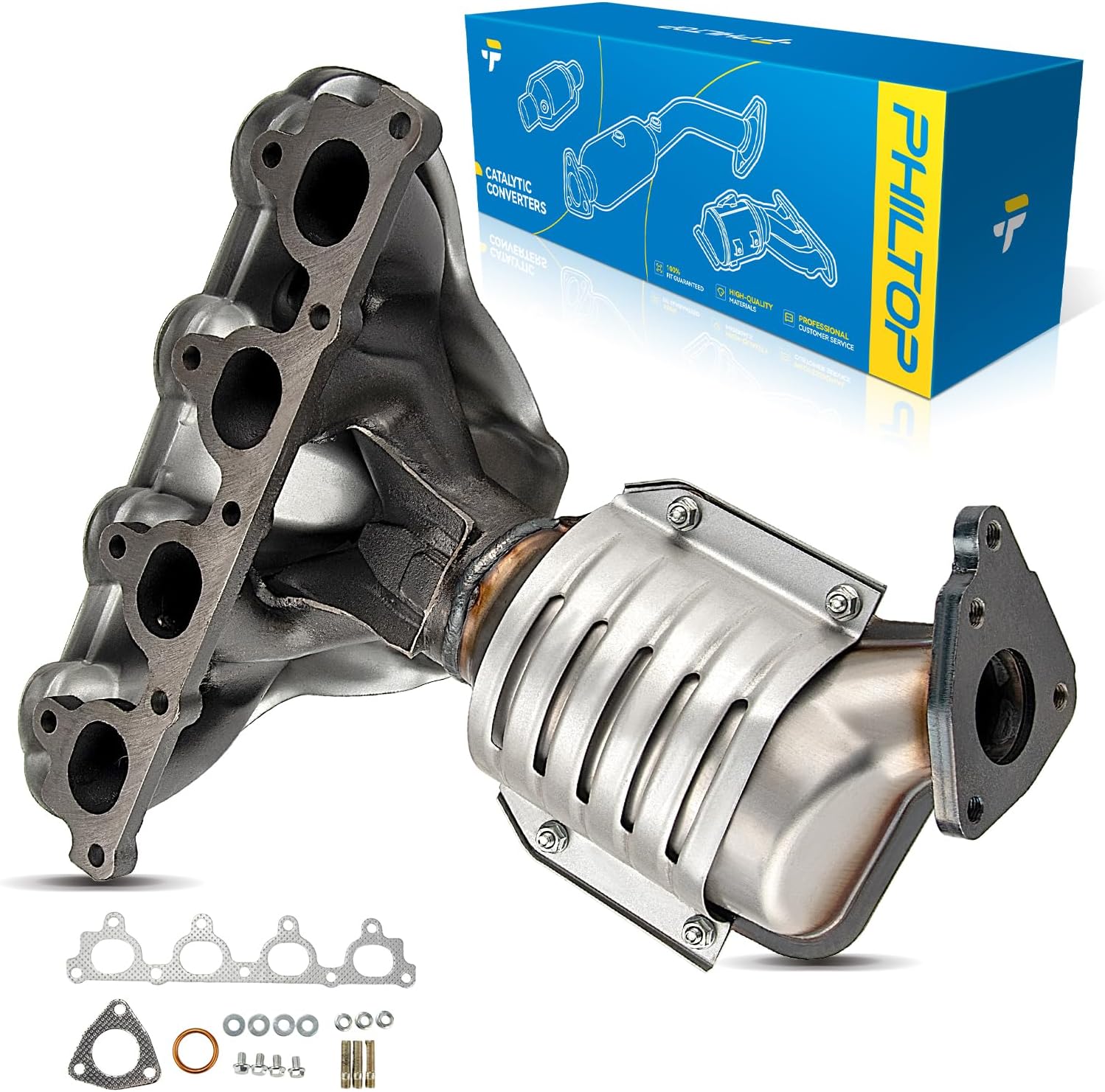
| Vehicle fitment | 1996-2000 Honda Civic 1.6L; 1996-1997 Civic del Sol 1.6L |
|---|---|
| Material | 409L stainless steel |
| Sensor port | Includes O2 port |
| Emissions approval | EPA-compliant (not for certain states) |
This PHILTOP front catalytic converter is a direct-fit replacement for 1996–2000 Honda Civic 1.6L and 1996–1997 Civic del Sol 1.6L models. It uses a high-flow honeycomb ceramic substrate and 409L stainless steel construction to restore emission-control function while reducing backpressure and helping combustion efficiency. The kit arrives with OE-style gaskets and mounting hardware so installation typically takes 3 to 4 hours with basic tools and no welding or modifications on a correctly matched vehicle. It is advertised as EPA-approved for use outside of states with stricter local rules and includes a factory-style oxygen sensor port for plug-and-play diagnostics. Practical benefits include quieter operation if a failed converter was rattling, restored emissions compliance in federal jurisdictions, and a long-life stainless housing. Limitations are that it is not approved for sale or installation in several states with unique emissions rules and buyers should confirm exact fitment before ordering to avoid returns or fitment work.
Best for: Buyers who prioritize a reliable, factory-style replacement that restores emissions control and avoids modifications; ideal for conservatively managed Civics where maintaining compliance and factory fit matter most.
Less Ideal for: Owners in states with stricter local emissions requirements or those needing a custom or high-performance aftermarket converter should look elsewhere.
- Direct-fit design with OE-style gaskets and hardware for straightforward installation
- 409L stainless steel housing for corrosion resistance and durability
- High-flow ceramic honeycomb substrate to reduce backpressure and help engine breathing
- Includes an O2 sensor port to accept the factory oxygen sensor without modification
- Not legal for sale or installation in certain states with stricter emissions laws
Verdict: Choose this PHILTOP converter if you want a factory-style, bolt-on replacement that restores emissions function and fit for 1996–2000 Civic 1.6L models.
Choosing the Right 1996-2000 Honda Civic Catalytic Converter: Key Factors to Consider
Fitment and Flange Alignment
Precise fitment is the single most practical concern when replacing a converter on a 1996-2000 Civic. The EJ, EK, and EM chassis variants can have subtle differences in flange spacing, oxygen sensor boss placement, and pipe diameter. A direct-fit unit that matches factory flange patterns reduces the need for cutting, adaptor sleeves, or custom welding. Poor flange alignment increases the risk of exhaust leaks, rattling, and premature gasket failure.
When a converter sits correctly, it seals at the joints and ensures proper backpressure and sensor readings. For owners doing a garage installation, a converter that lines up with existing hangers and mounting points speeds the job and lowers the chance of post-installation issues. For those using a shop, a correct-fit part reduces labor time and avoids fabrication costs that may be required to make universal pieces work.
Substrate Type and Catalyst Loading
The internal substrate and catalyst loading determine how effectively the converter reduces hydrocarbons, carbon monoxide, and NOx. Higher catalyst loading and an appropriate substrate cell count improve conversion efficiency, which matters for passing emissions checks and for reducing the likelihood of persistent OBD-II codes. Ceramic substrates are common in OE-style converters and offer strong conversion efficiency, while some metallic substrates provide superior thermal shock resistance.
Civic owners should balance desired emissions performance against thermal durability. A converter with inadequate catalyst loading may not restore the vehicle to proper emissions levels, while an overmatched substrate in an underpowered engine can increase backpressure. Selecting the right balance helps preserve performance and fuel economy while meeting regulatory standards.
Oxygen Sensor Configuration and OBD-II Readiness
The 1996-2000 Civic uses OBD-II diagnostics that rely on upstream and downstream oxygen sensor feedback to monitor converter efficiency. Replacement converters must accommodate the correct number and placement of sensor ports. A missing or moved sensor boss can trigger the check engine light or cause inaccurate trims and fuel delivery behavior.
Ensure the replacement has properly positioned sensor bosses and solid sealing surfaces around the sensors. Converters designed to maintain OBD-II readiness are less likely to create false failure codes and will help the vehicle pass emissions inspections where live data or readiness monitors are evaluated.
Durability and Corrosion Resistance
Exhaust components are exposed to road salt, moisture, and heat cycles that cause corrosion and metal fatigue. For a Civic that sees winter roads or coastal environments, corrosion-resistant shells, stainless-steel piping, and robust welds extend life and reduce the chance of leaks. Thermal cycling can cause internal substrate cracking; converters built to resist thermal shock will last longer under stop-and-go city driving.
Durability also reduces long-term ownership cost. A more robust converter may have a higher initial outlay but avoids repeat replacements and the labor associated with them. Consider the local climate and how much life you expect from the vehicle when weighing durability versus short-term cost.
Backpressure and Engine Performance
A converter's internal design affects exhaust flow and backpressure, which interact with engine breathing and torque characteristics. Excessive backpressure can reduce midrange response and fuel economy, while too little restriction on tuned engines may affect low-speed torque. For the 1996-2000 Civic, which often relies on a naturally aspirated four-cylinder engine, maintaining an OE-like flow balance preserves drivability.
Choose a converter designed to deliver emissions reduction without imposing significant additional backpressure. If the vehicle has other modifications to the exhaust or intake, match the converter choice to the overall setup to avoid drivability compromises.
Installation Complexity and Serviceability
Consider whether you plan to install the converter yourself or have it fitted professionally. Direct-fit converters that reuse factory hangers and match pipe diameter simplify a home installation and reduce the need for welding equipment. Some units include gasket surfaces and pre-threaded sensor bosses to streamline fitting.
Serviceability matters if future repairs are likely. Converters that allow easy access to sensor ports or use standard flange designs make later diagnostic work and replacement simpler. If you expect to keep the Civic long term, prioritize parts that minimize future labor and diagnostic complications.
Why Emissions Compliance Matters for the 1996-2000 Civic
Even older Civics must meet local emissions rules in many areas. A functioning catalytic converter reduces regulated pollutants and helps the vehicle pass state or local inspections. Beyond legal compliance, a properly converting unit prevents foul odors and reduces visible exhaust smoke that indicate more serious engine issues.
For the EJ, EK, and EM era Civic, maintaining emissions control aids in preserving resale value and ensures the engine management system operates without persistent fault codes that can mask other problems.
- Restores reduction of hydrocarbons, CO, and NOx
- Prevents persistent OBD-II readiness failures
- Limits visible smoke and engine odor
Common Symptoms of Catalytic Converter Problems
Owners often begin diagnosing a failing converter after noticing a check engine light, reduced power, or unusual exhaust smell. Symptoms can also include rattling noises from the converter body when internal supports break down and an increase in fuel consumption if the engine runs rich to compensate.
Not all symptoms mean the catalyst is the root cause. Upstream problems like misfires, rich running, or oil contamination can damage the converter over time, so symptom evaluation should consider the whole engine and ignition system.
- Check engine light related to catalyst efficiency or oxygen sensors
- Reduced acceleration or poor throttle response
- Rattling from a damaged substrate
- Strong sulfur or rotten-egg smell from exhaust
How Fitment Checks Save Time During Installation
Before you begin installation, verify flange dimensions, pipe diameters, and oxygen sensor locations against the replacement part. Measuring the flange bolt pattern and the distance between hanger points avoids surprises at the shop. Confirm whether the unit is listed as a direct-fit for 1996-2000 Civic EJ, EK, and EM to reduce the chance of on-the-car modifications.
If the converter requires welding, plan for a competent welder and inspect the vehicle's hangers and manifold flanges for damage that could complicate fitting. A pre-install fit-check can identify minor adjustments that are easier to make on the bench than under the vehicle.
- Measure flange bolt pattern and pipe OD
- Check oxygen sensor boss placement
- Inspect existing hangers and flanges for damage
Maintaining Your Catalytic Converter After Installation
Preventive maintenance can extend converter life. Address engine misfires, oil leaks, and fuel system issues promptly since these problems accelerate catalyst degradation. Using the correct ignition components and ensuring the fuel system operates within specification reduces contaminant buildup on the catalyst.
Avoid frequent short trips that prevent the converter from reaching full operating temperature, and inspect the exhaust system for impacts or corrosion annually. If you clean or service adjacent components, take care not to introduce debris into the intake or exhaust that could harm the substrate.
- Repair misfires and oil consumption promptly
- Regularly inspect exhaust hangers and joints
- Limit short, cold runs that keep converter below operating temperature
When to Involve a Professional
If the replacement requires welding, fabrication, or cutting the old pipe, a professional shop will ensure leak-free joints and correct alignment. Professionals can also diagnose whether the converter failure is secondary to other engine faults like misfires or coolant leaks that affect catalyst performance.
A shop can perform post-installation OBD-II checks and readiness monitor verification to confirm the new converter and sensors are operating correctly. If you lack access to welding gear or a lift to inspect under the vehicle safely, professional installation reduces risk.
- Necessary for welding or custom-fit solutions
- Useful for diagnostic confirmation and readiness checks
- Recommended if the vehicle has severe rust or damaged flanges
Still looking for the perfect fit?
Select your Honda Civic configuration to see the most relevant Catalytic Converters recommendations
How We Chose the Best 1996-2000 Honda Civic Catalytic Converter
Our selection focused on factors that matter to Civic owners replacing a catalytic converter on 1996-2000 EJ, EK, and EM chassis vehicles. We prioritized direct-fit units engineered to match factory flanges and oxygen sensor locations to minimize fabrication and preserve OBD-II readiness. Construction and substrate type were key considerations because cell density, washcoat quality, and catalyst loading directly affect emissions performance and longevity. Durability criteria included corrosion-resistant materials, weld quality, and resistance to thermal shock from repeated heating and cooling cycles typical of commuter use. We also assessed how likely a unit is to clear common diagnostic trouble codes tied to oxygen sensors or catalyst efficiency, and whether installation requires basic hand tools or professional welding.We excluded universal or cut-and-fit universal-bodied converters that require extensive modification because those increase installation complexity and potential for leaks. We did not weigh price alone; instead we balanced cost against expected service life and compliance impact. Final recommendations reflect fitment accuracy, emission control effectiveness, corrosion resistance, and ease of installation for the 1996-2000 Honda Civic chassis scope.
Our full evaluation process is outlined in our review methodology.
FAQ
How can I tell if my 1996-2000 Civic catalytic converter is failing?
Common signs include a persistent check engine light related to catalyst efficiency, reduced acceleration, rattling noises from the converter, and strong exhaust odors. These signs often appear gradually and sometimes follow engine misfires or oil contamination.
Will replacing the catalytic converter clear the check engine light?
Sometimes. If the light is due solely to a degraded converter and the oxygen sensors are functioning, replacing the converter can allow readiness monitors to pass. If underlying issues like misfires remain, the light may return until those faults are fixed.
Do I need a direct-fit converter for the EJ, EK, and EM Civics?
A direct-fit unit is strongly recommended because it matches flange patterns and sensor locations, reducing the need for cutting or welding. Direct-fit converters simplify installation and lower the risk of leaks that can cause diagnostic errors.
Can a clogged catalytic converter cause poor fuel economy?
Yes. A partially clogged converter increases backpressure, which can reduce engine efficiency and lead to higher fuel consumption. Resolving the restriction typically restores normal flow and can improve fuel economy.
Is it worth repairing a converter or should I replace it?
If the internal substrate is damaged or the catalyst is contaminated by oil or coolant, repair is usually not effective and replacement is the practical option. Minor flange or gasket issues can be repaired, but internal failures require a new unit.
How long does a good catalytic converter typically last on a Civic?
Lifespan varies with driving conditions, engine health, and climate, but a well-constructed converter can last many years. Regularly addressing engine issues and avoiding road-salt corrosion will extend service life.
Final Verdict
When replacing a catalytic converter on a 1996-2000 Honda Civic, prioritize direct-fit units that match the EJ, EK, and EM chassis flange patterns and oxygen sensor locations to avoid installation headaches and diagnostic issues. Balance substrate type and catalyst loading against expected durability and backpressure to preserve drivability and emissions performance. Address any engine or fuel-system problems that damaged the old converter to prevent repeat failures. Focusing on fitment, emissions effectiveness, and long-term durability will help you select a converter that keeps your Civic running cleanly and reliably.
Explore More:
- Check out all Honda Civic parts & accessories
- Explore Catalytic Converters Maintenance & Repair Guides
- Explore Exhaust & Emissions
- Browse all Auto Parts
