

Note: This article contains affiliate links. If you click on these links and make a purchase, I may earn a small commission at no extra cost to you. This helps support my research and content. Read my full affiliate disclosure here.
If your Honda Civic 1.7L is showing performance drops or emissions issues, selecting the right catalytic converter matters for drivability and legal compliance. The wrong unit can cause fitment headaches, trigger engine warnings, or fail emissions testing.This guide covers seven shortlisted catalytic converters selected for the Honda Civic 1.7L and explains the criteria we used to evaluate them, including fit accuracy, emissions control effectiveness, and durability. Read on to understand the tradeoffs and which features to prioritize for long-term reliability and trouble-free installation.
Looking for other parts? See all Honda Civic parts & accessories.
Top Picks at a Glance
| Best Overall The best all-around choice for most situations | Walker Ultra Direct-Fit Catalytic Converter 54399 |  |
| Best Quality Built to a higher standard if you want something more solid | AISIN Front Catalytic Converter CCTH-00644 (EPA Compliant) |  |
| Best Value The sweet spot between price and what you get | PULCHERFLOW Catalytic Converter for 2001–2005 Honda Civic 1.7L |  |
| Best Budget The cheapest option that still gets the job done reliably | PHILTOP Front High-Flow Catalytic Converter for Honda Civic 1.7L (2001–2005) |  |
| Highest Rated A top-rated pick with lots of positive feedback | CIRconvert Front Catalytic Converter for Honda Civic 1.7L (2001–2005) |  |
| Most Popular A crowd favorite that many people choose with confidence | MOSTPLUS Exhaust Manifold with Catalytic Converter for 2001–2005 Honda Civic 1.7L |  |
| Best Seller A high-volume bestseller chosen again and again | SPEEDFusion Front Catalytic Converter for Honda Civic 2001–2005 1.7L |  |
1. Walker Ultra Direct-Fit Catalytic Converter 54399

| Included Components | Catalytic Converter |
|---|---|
| Warranty Description | 25K Miles |
| Material Type | aluminum coated |
The Walker Ultra 54399 is a direct-fit catalytic converter made to replace the factory unit on compatible Honda Civic 1.7L models. It installs using OE-style hangers, flanges, brackets and heat shields so a mechanic or competent DIYer can bolt it in without welding. The converter uses a high-technology washcoat and an appropriate precious metal load intended to restore emission control and comply with EPA requirements for 1996-and-newer OBDII vehicles. Construction features thick flanges and aluminized heat shields for strength and underbody protection. In practice buyers report good fitment on early 2000s Civics and straightforward installation, though the part does not include gaskets or most hardware so plan to purchase the required gaskets and spring or flange bolts separately. A few customers noted flange/gasket differences from Honda originals that can require sourcing a Walker-specific gasket. For a buyer who wants a factory-style replacement that meets emissions rules and avoids welding, this is a practical, widely used option.
Best for: Buyers who want a factory-style, emissions-compliant replacement that bolts in without welding and prefer a balance of fitment, durability, and cost over OEM originals.
Less Ideal for: If you need a complete installation kit with gaskets and hardware included or require exact factory gasket interfaces, consider sourcing those items separately or choosing a different supplier that bundles hardware.
- Direct-fit design with OE-style hangers and brackets for bolt-on installation
- Engineered washcoat and precious metal load to meet EPA emission requirements
- Aluminized heat shields and thick flanges for durability and underbody protection
- Made for OBDII (1996 and newer) applications, matching common Civic emissions systems
- Does not include gaskets or bolts so additional hardware purchase is required
- Some buyers report flange/gasket differences from Honda originals that may need adapter gaskets
Verdict: A practical, EPA-compliant direct-fit replacement for Honda Civic 1.7L drivers who want a factory-style catalytic converter without welding.
2. AISIN Front Catalytic Converter CCTH-00644 (EPA Compliant)

| Manufacturer | AISIN |
|---|---|
| Manufacturer Part Number | CCTH-00644 |
| OEM Part Number | 18160PLMA50, 18160PLMA00 |
| Special Features | Located at the Front Side |
This Aisin front catalytic converter is a direct-fit aftermarket replacement for 1.7L Honda Civic and Acura EL models from 2001 to 2005 and is intended to restore emissions control and drivability after the original unit fails. It installs in the front exhaust location and is shaped to match factory mounting points for a straightforward swap, which helps keep shop time and alignment adjustments to a minimum. The unit is EPA compliant for OBDII federal vehicles, so it will pass emissions checks in most states that accept federal converters. Aisin emphasizes factory-quality engineering and durability, which should translate to consistent exhaust flow and long service life under normal driving conditions. Limitations include its federal-only compliance, making it unusable in states that require California-spec converters, and the need to verify fitment against the referenced part numbers before purchase. Expect routine installation by a competent technician rather than a simple DIY bolt-on for every user.
Best for: Buyers who want a durable, factory-quality replacement to restore emissions performance and drivability on 2001–2005 1.7L Honda Civic or Acura EL vehicles and who prioritize compatibility with federal emissions standards.
Less Ideal for: Drivers in states that mandate California-spec emissions equipment or those needing a converter certified to those stricter standards should look for a CARB-compliant unit.
- Direct-fit front location designed to match factory mounting points for easier installation
- Engineered by a major OEM supplier with emphasis on durability and factory-quality performance
- EPA compliant for federal OBDII vehicles, suitable for passing emissions in most non-California states
- Reference OEM part numbers provided to confirm correct fitment
- Not legal for sale or use in California and several other states that require California emissions-compliant parts
Verdict: Choose this Aisin front catalytic converter if you need a factory-quality, EPA-compliant federal replacement to reliably restore emissions control on a 2001–2005 1.7L Honda Civic or Acura EL.
3. PULCHERFLOW Catalytic Converter for 2001–2005 Honda Civic 1.7L

| Vehicle fitment | 2001–2005 Honda Civic 1.7L |
|---|---|
| Compliance | EPA compliant (46-state legal; not for CA/NY/ME/CO) |
| Shell material | Stainless steel |
| Substrate | Large ceramic substrate with increased precious metal loading |
This PULCHERFLOW catalytic converter is a direct-fit replacement for 2001–2005 Honda Civic 1.7L models and is built to restore emissions control and exhaust flow without major modifications. It uses a large ceramic substrate with increased precious metal loading to improve conversion efficiency and reduce tailpipe pollutants, and the stainless steel shell and mandrel-bent piping aim to resist corrosion and heat over time. The unit comes with installation holes and gaskets aligned for bolt-in fitting, so most DIY installers or independent shops can swap it in using standard exhaust tools. Notably it is EPA compliant for federal emissions but explicitly not legal for sale in certain states with stricter rules. Expect a functional, economy-minded replacement that focuses on reliable purification and fit rather than performance gains or state-restricted certification. Buyers should verify state emissions rules before purchase and be prepared to reuse or replace upstream sensors or hardware if needed during installation.
Best for: Buyers who want a practical, reliable replacement to restore emissions control on a 2001–2005 Civic 1.7L without spending on premium branded parts or custom work.
Less Ideal for: Drivers in states with CARB or similar strict regulations or anyone needing a California-compliant catalytic solution should look for a certified alternate.
- Direct-fit design with pre-aligned mounting holes and included gaskets for straightforward installation
- EPA compliant for federal emissions and larger substrate for improved catalytic conversion
- Stainless steel shell and mandrel-bent piping for better corrosion and heat resistance
- Not legal for sale or use in some states with stricter emissions regulations
Verdict: A no-frills, EPA-compliant direct-fit replacement that restores emissions control on 2001–2005 Civic 1.7L models at a practical value.
4. PHILTOP Front High-Flow Catalytic Converter for Honda Civic 1.7L (2001–2005)
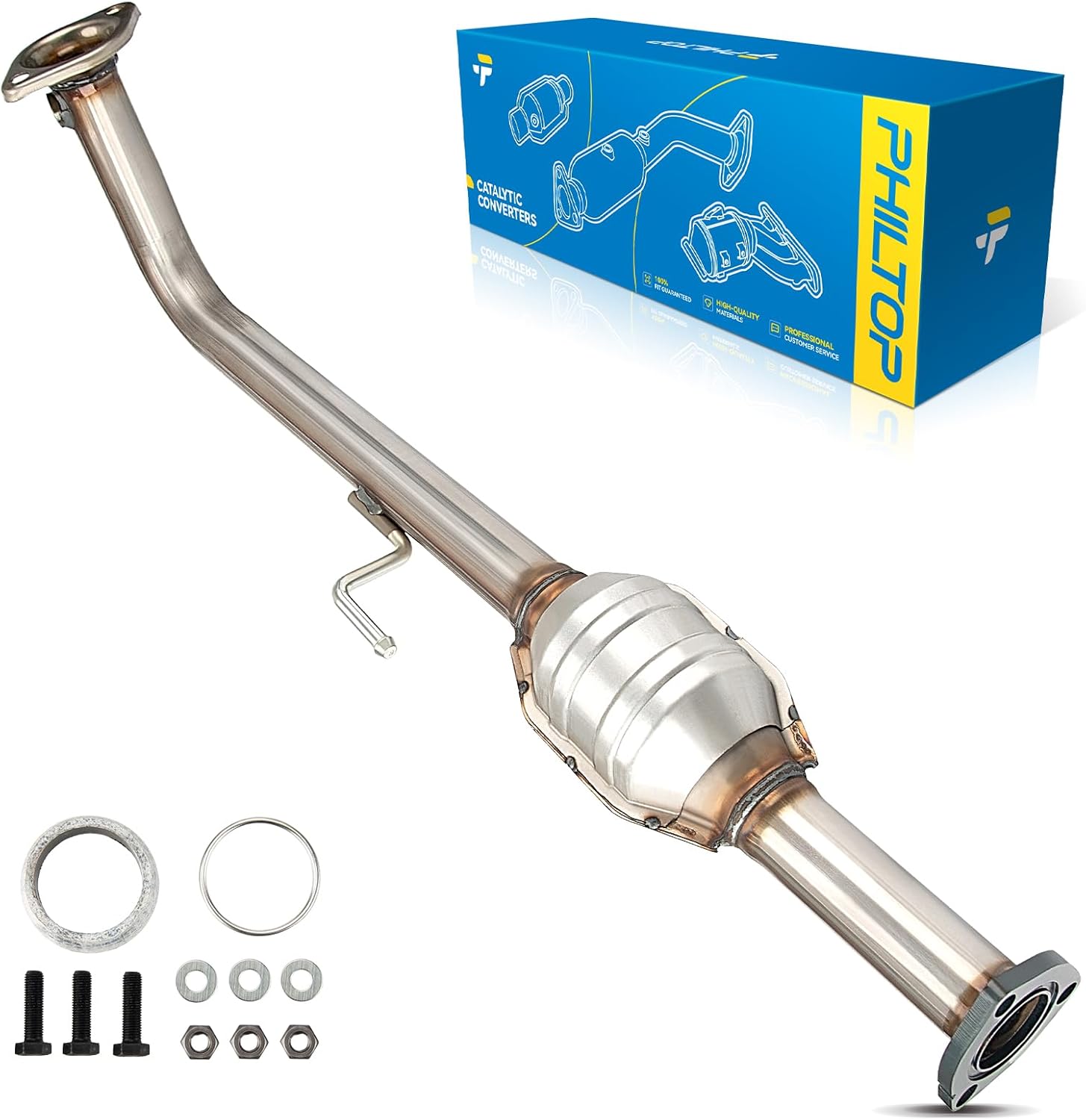
| Vehicle fitment | Honda Civic 1.7L 2001-2005 |
|---|---|
| Position | Front |
| Compliance | EPA-compliant (not CARB) |
This PHILTOP catalytic converter is a direct-fit replacement for the front position on 2001–2005 Honda Civic 1.7L cars and is built to restore emissions control while reducing backpressure. It uses a double-layer ceramic honeycomb substrate marketed as high-flow to improve exhaust flow and help recover some lost power and fuel efficiency compared with a clogged or damaged unit. The stainless steel aluminized body and machined exterior resist corrosion and the flange-to-flange bolt-on design includes OE-style gaskets and mounting hardware to simplify installation — a competent DIY job in roughly 3 to 4 hours. The unit is EPA-compliant for federal emissions but is not legal for California, New York, or Maine, so confirm local requirements before buying. Expect a utilitarian fit and finish aimed at affordability rather than premium materials; buyers wanting brand-new factory-quality backing or state-specific certified parts may prefer other options.
Best for: A buyer focused on restoring emissions function and drivability on a tight budget who prefers a bolt-on, straightforward replacement they can install or have installed without extensive modification.
Less Ideal for: Drivers in states that require California emissions certification or owners seeking a factory-brand, lifetime-backed catalytic converter should look at CARB-certified or OEM options.
- Direct-fit flange-to-flange design with included gaskets and hardware for straightforward installation
- High-flow double-layer ceramic substrate designed to lower backpressure and improve catalytic efficiency
- Stainless steel aluminized body marketed to resist rust and provide longer service life
- Not CARB-compliant so it cannot be used in states that require California emissions certification
Verdict: A budget-friendly, direct-fit front catalytic converter that restores emissions control and improves exhaust flow for 2001–2005 Honda Civic 1.7L models.
5. CIRconvert Front Catalytic Converter for Honda Civic 1.7L (2001–2005)

| Vehicle fitment | Honda Civic 2001–2005 1.7L l4 |
|---|---|
| Material | T409 stainless steel |
| Certification | EPA Certified |
| Manufacturer | CIRconvert |
| Manufacturer part number | HC0105-002 |
This CIRconvert front catalytic converter is a direct-fit replacement for 2001–2005 Honda Civic 1.7L models and is designed to restore emissions control and maintain engine performance. It installs in place of the factory unit and is intended for use where EPA-compliant converters are required; the listing notes it cannot be shipped for use in certain states with stricter rules. Construction uses T409 stainless steel with laser-cut and welded joints and a ceramic substrate core to handle heat and resist corrosion. In everyday use it returns catalytic function to the exhaust system, reduces harmful emissions, and helps the engine run within emissions specs. The product is aimed at buyers who want a rugged, long-lived replacement rather than a temporary fix; the manufacturer states a 50,000-mile limited warranty and highlights corrosion resistance. Limitations to consider are fitment restrictions for a few states and that installation may require standard exhaust hardware alignment and gaskets not included in every kit.
Best for: Buyers prioritizing a durable, factory-quality emissions replacement who need a long-lasting, EPA-compliant catalytic converter for a 1.7L Civic and prefer a direct-fit unit to minimize installation complexity.
Less Ideal for: Drivers in states with tighter emissions certification requirements or anyone needing a converter specifically approved for those states should look for a state-compliant alternative.
- Direct-fit design for 2001–2005 Honda Civic 1.7L to simplify replacement
- EPA certified to meet federal emissions requirements
- Stainless steel construction and laser welding for improved corrosion and heat resistance
- Manufacturer states a 50,000-mile limited warranty
- Not available for sale or use in several states with stricter emissions rules
Verdict: Choose this CIRconvert unit if you want a rugged, EPA-compliant direct-fit catalytic converter to reliably restore emissions control on a 2001–2005 Honda Civic 1.7L.
6. MOSTPLUS Exhaust Manifold with Catalytic Converter for 2001–2005 Honda Civic 1.7L

| Fitment | 2001–2005 Honda Civic 1.7L 4-cylinder (not for 2005 EX) |
|---|---|
| OEM Part Numbers | 18160-PLM-A50, 18160-PLM-A00, 674-608 |
| Special Features | Including heat shield |
| Exterior | Painted |
This MOSTPLUS unit combines the exhaust manifold and catalytic converter into a single direct-fit assembly for 2001–2005 Honda Civic 1.7L engines, intended to replace the factory manifold and cat in one step. It installs using the factory-style flanges and includes the upper gasket and lower seal so shops or experienced DIYers can bolt it on without welding. The part is built from stainless steel and comes with a heat shield to manage under-hood temperatures. In practice the unit clears check-engine codes for many buyers and restores a sealed exhaust path, but several installers reported minor fitment fiddling such as trimming or grinding the heat shield or aligning welded nuts and spring bolts to get the fasteners started. Some users praised the value and fit; others reported early failure of the internal substrate on long-term use, so durability appears mixed. Note that the converter is not CARB compliant, which restricts use in jurisdictions with California emissions rules. For routine replacement on a daily-driven Civic this offers an affordable, mostly bolt-on solution if you accept some occasional installation tweaking and variable long-term longevity.
Best for: Buyers seeking a low-cost, bolt-on replacement to restore a sealed exhaust and clear emissions faults on a 2001–2005 Civic 1.7L who value upfront savings and community-tested fitment tips.
Less Ideal for: Drivers who must meet California emissions standards or who prioritize a long-term, premium catalytic core should consider a verified CARB-compliant or higher-end factory-quality unit instead.
- Direct-fit design with factory-spec flanges and included gaskets for bolt-on installation
- Integrated heat shield to reduce heat transfer to nearby components
- Stainless steel construction intended to resist corrosion
- Includes necessary seals and bolts for a complete manifold/catalyst swap
- Not CARB compliant so cannot be used where California emissions rules apply
- Some units require minor trimming or adjustment during installation to clear heat shield or align fasteners
- Mixed long-term durability reports with occasional internal substrate failures
Verdict: A budget-friendly, bolt-on manifold plus catalytic converter aimed at Civic owners who want a straightforward replacement and are comfortable with occasional minor installation adjustments.
7. SPEEDFusion Front Catalytic Converter for Honda Civic 2001–2005 1.7L
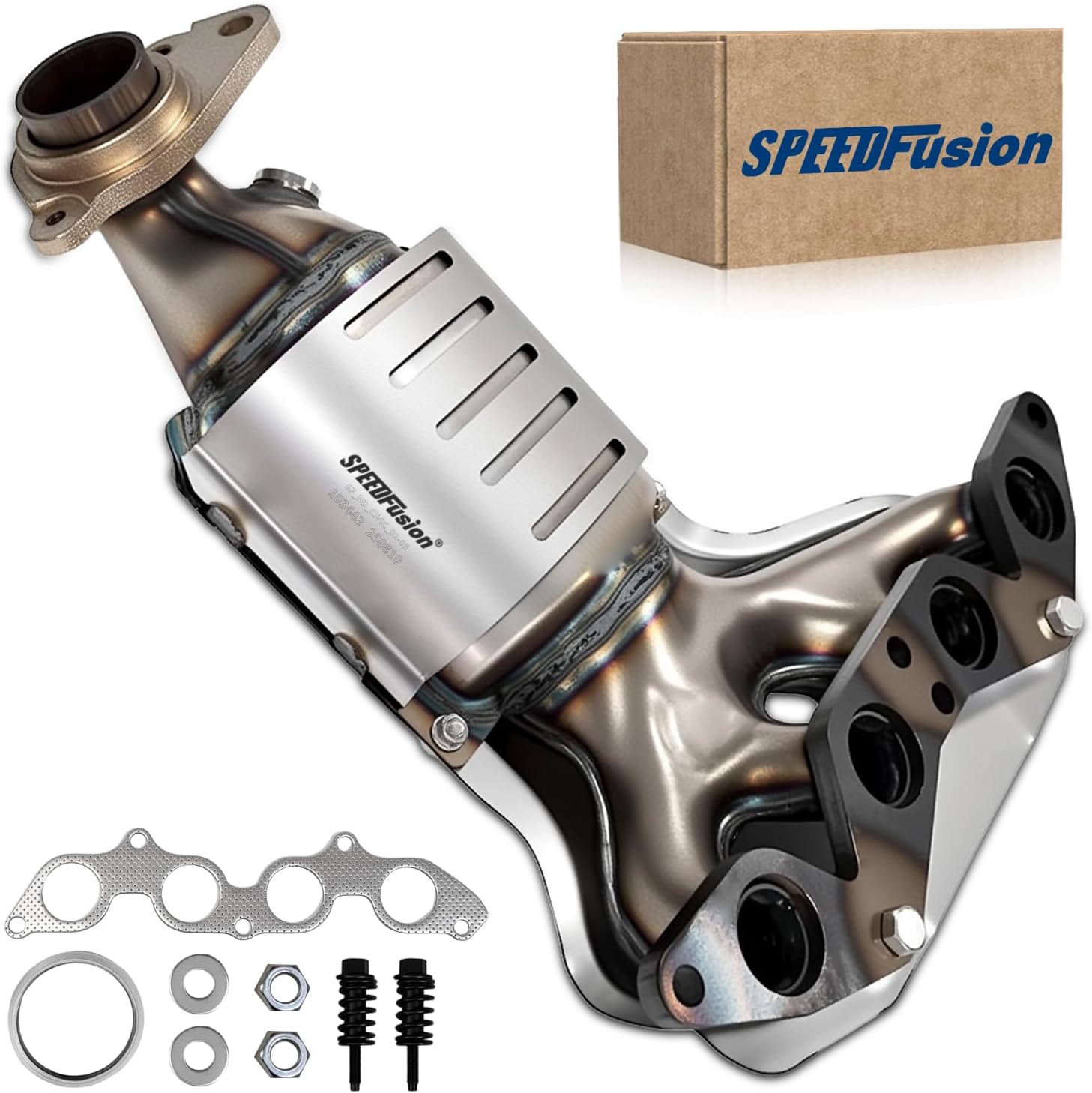
| Position | Front |
|---|---|
| Manufacturer | SPEEDFusion |
| Manufacturer Part Number | SF_HD_CIVIC_01-05 |
| Vehicle Fitment | Honda Civic 2001-2005 1.7L L4 |
| Certification | EPA compliant |
This SPEEDFusion front catalytic converter replaces the factory unit on 2001–2005 Honda Civic 1.7L models and is intended as a direct-fit, professional-install replacement. It uses a stainless steel shell and an OEM-grade ceramic substrate plated with platinum, rhodium, and palladium to restore exhaust purification and help prevent check-engine codes related to catalytic efficiency. The part is advertised as EPA compliant for vehicles that meet federal emissions standards and specifically notes it is not CARB approved. Installation is straightforward when performed by a shop because the unit is built to match factory mounting locations. Practical benefits include corrosion-resistant construction, a high-flow design that aims to reduce exhaust restriction compared with a clogged old converter, and an emissions warranty that covers structural and limited performance periods. Important limitations are the lack of CARB approval, which restricts legal use in states with California-style rules, and the need for professional installation to avoid fitment or sensor issues.
Best for: Buyers who prioritize a reliable, factory-style replacement to restore emissions performance and avoid persistent check-engine faults and who prefer parts backed by an emissions warranty.
Less Ideal for: Drivers living in states that require CARB-compliant parts or owners looking for a universal or aftermarket performance converter not focused on factory-equivalent emissions compliance.
- Direct-fit design built to match factory mounting for straightforward professional installation
- Made from 409L stainless steel for improved corrosion resistance
- OEM-grade 400-hole ceramic substrate with platinum, rhodium, and palladium to restore catalytic efficiency
- EPA compliant for federal emissions standards and includes structural and limited emissions warranties
- Not CARB approved and therefore illegal for use in states with California-style emissions regulations
- Requires professional installation to ensure correct fit and avoid sensor or code issues
Verdict: A factory-style, EPA-compliant front catalytic converter that restores emissions performance for 2001–2005 Honda Civic 1.7L owners seeking a reliable, direct-fit replacement.
Choosing the Right Honda Civic 1.7L Catalytic Converter: Key Factors to Consider
Fitment and Exhaust Layout Compatibility
Correct fitment is the single most important factor for the Civic 1.7L because the factory exhaust routing and hanger locations are specific to that engine and chassis. A converter that matches flange type, pipe diameter, and overall length reduces the need for cutting, welding, or adapter pieces.
If a converter requires fabrication, labor time and potential for exhaust leaks increase. Proper fit also preserves clearance to heat-sensitive components and prevents undue stress on hangers and joints, which affects long-term seal integrity and prevents rattles or premature failure.
Emissions Conversion Efficiency
Emissions conversion efficiency determines how effectively the catalytic converter reduces hydrocarbons, carbon monoxide, and nitrogen oxides produced by the 1.7L engine. Substrate type, precious metal loading, and cell density influence conversion rates and how quickly the unit reaches operating temperature.
Higher conversion efficiency is particularly relevant if the vehicle must meet periodic emissions testing. Efficient converters tend to reduce the risk of post-start check engine light triggers linked to oxygen sensor readings and emissions-related fault codes.
Thermal Durability and Heat Management
The catalytic substrate operates at high temperatures; thermal durability affects how well the converter withstands repeated heat cycles. Materials and internal bonding methods influence resistance to substrate cracking or collapse under thermal shock, which are common failure modes for converters on older or heavily used Civics.
Good heat management also limits radiant heat transfer to surrounding components. Units designed to manage heat can reduce the risk of nearby rubber or plastic parts degrading and help maintain catalyst efficiency over time.
Mounting Hardware and Installation Ease
Complete mounting hardware and a converter that aligns with factory hangers reduce installation time and the chance of leaks. For many Civic 1.7L owners, the ability to bolt the unit in place without custom welding or pipe modification is a major convenience and cost saver.
Ease of installation also affects how likely a repair will be done correctly by a DIYer versus requiring a shop. Clear fitment information, included gaskets, and compatible flange styles all contribute to a smoother installation and better seal integrity.
Durability and Corrosion Resistance
Rust and corrosion are common stressors in the exhaust system. The converter shell material, coatings, and weld quality determine how well the unit resists corrosion from road salt and moisture. For Civic 1.7L owners in wet or salted-road climates, corrosion resistance extends service life and reduces the chance of exhaust leaks originating at welded seams.
Durability also relates to mechanical reinforcement around flanges and hangers to resist vibration and impacts. A sturdier unit is less likely to suffer flange warping or gasket failure over time.
Warranty and Emissions Certification
Warranty coverage and stated emissions certifications provide buyers with recourse if the unit fails prematurely or does not meet regulatory standards. Manufacturers that disclose warranty terms and emissions compliance make it easier to verify that the converter is appropriate for emissions testing in the Civic 1.7L.
A clear warranty signals confidence in materials and construction, and emissions certification indicates the unit meets thresholds that matter for inspections. Buyers should verify that warranty terms cover substrate failure and corrosion for a reasonable period.
Common Catalytic Converter Symptoms on the Civic 1.7L
Recognizing early symptoms helps you decide whether the catalytic converter is the likely culprit. Typical signs include a persistent rotten egg or sulfur smell, diminished acceleration, and decreased fuel economy. These symptoms often develop gradually as the substrate degrades or becomes clogged.
A clogged converter can also cause higher exhaust backpressure, which reduces engine responsiveness and may make the vehicle run hotter. Pay attention to any new exhaust odors and changes in how the engine breathes, as these point toward converter issues rather than unrelated engine faults.
- Noticeable drop in throttle response or power
- Sulfur or rotten-egg odor from the exhaust
- Reduced fuel economy over several weeks
- Unusual exhaust noise such as rattling indicating loose substrate
Interpreting Check Engine Light Codes Related to the Converter
The check engine light often appears when oxygen sensor readings indicate inefficient catalytic conversion or when exhaust backpressure affects sensor response. Codes related to catalyst efficiency or oxygen sensor deviation should be interpreted in context, since misfires, fuel trim problems, or sensor faults can produce similar codes.
Before replacing the converter, verify upstream issues such as ignition misfires, vacuum leaks, or fueling problems. Clearing root causes first avoids repeating converter failures from continued engine problems and ensures any diagnostic trouble codes related to catalyst performance are meaningful.
- P0420-style codes often indicate catalyst efficiency below thresholds
- Also inspect for misfire codes that can contaminate the catalyst
- Use live data to compare upstream and downstream oxygen sensor behavior
Fitment Tips for a Smooth Installation
Measure flange faces and pipe diameters before buying to confirm alignment with the Civic 1.7L exhaust. If the converter includes bolt-on flanges that match factory dimensions and comes with gaskets, installation usually only requires basic hand tools.When welding or cutting is necessary, plan for hanger alignment checks and a finish that avoids sharp bends or contact with heat-sensitive parts. Consider anti-seize on fasteners and verify torque specifications on flange bolts to prevent future leaks.
- Confirm inlet and outlet diameters match factory pipe
- Check that hanger locations and lengths align with stock mounts
- Inspect included gaskets and hardware for completeness
Maintaining Your Converter to Extend Service Life
Routine maintenance that preserves the converter centers on preventing conditions that accelerate failure. Address engine misfires and fuel system issues promptly to avoid catalyst contamination from unburned fuel. Keep up with tune-up items like spark plugs and ignition components to minimize raw fuel entering the exhaust.Avoid frequent short trips that prevent the converter from reaching optimum operating temperature. When driving in corrosive environments, inspect the underside periodically for signs of rust and address minor corrosion before it progresses into structural damage.
- Fix misfires and fuel trim issues promptly
- Drive longer trips occasionally to maintain operating temperature
- Inspect shell and welds for corrosion in salted-road areas
Legal and Emissions Testing Considerations
If your vehicle must pass periodic emissions inspections, choose a converter that aligns with local regulations for the Civic 1.7L. Documentation of emissions compliance or stated certification can make testing straightforward and reduce the risk of a failed inspection based solely on converter performance.Keep records of installation and any certification documents. Some regions allow the use of direct-fit replacement converters that meet emissions thresholds; verify local rules before purchasing to ensure the unit is acceptable for inspection.
- Confirm local inspection requirements and acceptable documentation
- Retain installation records and any emissions compliance statements
- Avoid universal or modified units that may not be accepted during testing
Still looking for the perfect fit?
Select your Honda Civic configuration to see the most relevant Catalytic Converters recommendations
How We Chose the Best Honda Civic 1.7L Catalytic Converter
We prioritized items that address the practical needs of Honda Civic 1.7L owners facing emissions, fitment, and longevity concerns. Evaluation emphasized fit accuracy to the Civic 1.7L exhaust layout, verified substrate type and cell density as they relate to emissions conversion, and construction details such as flange and pipe dimensions to minimize modification during installation. We also assessed thermal durability and expected lifespan based on materials and thermal management features, plus gasket and mounting hardware completeness to reduce installation time.Other criteria included the manufacturer disclosures on emissions certifications and warranty coverage for repair or replacement. We excluded universal or heavily modified designs that require extensive welding or custom fabrication, and units lacking clear compatibility information for the 1.7L configuration. Overall, our filters focused on fitment precision, emissions performance, mechanical robustness, installation completeness, and warranty terms to reflect what matters most to Civic 1.7L owners.
Our full evaluation process is outlined in our review methodology.
FAQ
What are the first signs my Civic 1.7L catalytic converter is failing?
Common early signs include a sulfur or rotten-egg smell, reduced acceleration, and lower fuel economy. Rattling noises under acceleration can indicate a damaged substrate. These symptoms often appear gradually rather than suddenly.
Will a check engine light always mean the converter is bad?
Not always. The check engine light can be triggered by oxygen sensor faults, misfires, or fueling issues that affect sensor readings. Diagnose upstream engine problems first to avoid replacing a converter that is still functional.
Can I install a direct-fit converter myself on the Civic 1.7L?
Many direct-fit units are designed for bolt-on installation using factory-style flanges and included gaskets, making DIY installation feasible for someone with basic tools and mechanical experience. Welding or fabrication requires more advanced skills or professional help.
How long does a catalytic converter typically last on a Civic 1.7L?
Lifespan depends on driving habits and exposure to contaminants. With proper engine maintenance and corrosion protection, converters often last many years, but repeated misfires or severe corrosion can shorten service life significantly.
Will replacing the converter affect fuel economy immediately?
If the old unit was clogged or contaminated, replacing it can restore lost fuel economy and improve throttle response. If the issue was unrelated to the converter, fuel economy may not change appreciably.
Do I need special tools to check converter fitment before purchase?
Basic measuring tools such as calipers or a tape measure are usually sufficient to confirm pipe diameters and flange spacing. For a detailed check, compare measurements to factory service data or inspect the old converter's flanges and hangers.
Final Verdict
When choosing a catalytic converter for the Honda Civic 1.7L, prioritize precise fitment, emissions conversion efficiency, and durability. Confirm flange and pipe dimensions to avoid fabrication, and address any engine issues that could contaminate the catalyst before installation. Tradeoffs typically involve cost versus longevity and corrosion protection; investing in better materials and a clear warranty can reduce the chance of repeat service.Focus on units that match the Civic 1.7L exhaust layout and offer documented emissions performance for confident, trouble-free operation.
Explore More:
- Check out all Honda Civic parts & accessories
- Explore Catalytic Converters Maintenance & Repair Guides
- Explore Exhaust & Emissions
- Browse all Auto Parts
