

Note: This article contains affiliate links. If you click on these links and make a purchase, I may earn a small commission at no extra cost to you. This helps support my research and content. Read my full affiliate disclosure here.
If your 2016-2021 Honda Civic is showing emissions trouble or a persistent check engine light, choosing the right catalytic converter matters for compliance and daily drivability. This guide focuses on direct-fit catalytic converter options tailored to the 2016-2021 Civic chassis (FC and FK) and covers the most practical choices for restoring exhaust performance and emissions control.Below are the top shortlisted converters that meet common fitment and emissions needs for this Civic generation. The picks were screened for correct fitment, emissions-related performance, and ease of installation, and the guide explains the decision factors to help you pick the best option for your use case.
Looking for other parts? See all Honda Civic parts & accessories.
Top Picks at a Glance
| Best Overall The best all-around choice for most situations | ECHO AUTOMILES Catalytic Converter for Honda Civic 2016–2021 1.5L |  |
| Best Quality Built to a higher standard if you want something more solid | MagnaFlow 280120 Direct-Fit Catalytic Converter (Federal/EPA Compliant) |  |
| Best Value The sweet spot between price and what you get | CatFlowFixer Catalytic Converter Compatible with 2016–2021 Honda Civic / 2017–2021 CR‑V Turbo 1.5L |  |
| Best Budget The cheapest option that still gets the job done reliably | JT Exhaust Catalytic Converter for Honda Civic/CR-V 1.5L Turbo (2016–2021) |  |
| Highest Rated A top-rated pick with lots of positive feedback | CAT CLEAN Catalytic Converter for Honda Civic 2016-2021 1.5L Turbo |  |
| Most Popular A crowd favorite that many people choose with confidence | SPEEDFusion Catalytic Converter for 2016–2021 Honda Civic Turbo 1.5L and 2017–2021 CR‑V 1.5L |  |
| Best Seller A high-volume bestseller chosen again and again | NutsCata Direct-Fit Catalytic Converter for 2016–2021 Honda Civic / 2017–2022 CR-V 1.5L |  |
1. ECHO AUTOMILES Catalytic Converter for Honda Civic 2016–2021 1.5L

| Vehicle fitment | Honda Civic 2016-2021 1.5L; CR‑V 2017-2021 1.5L |
|---|---|
| Cell count | 400-cell honeycomb |
| Compliance | EPA compliant (federal) |
This catalytic converter is a direct-replacement part intended to restore emissions control and pass inspections on compatible Honda 1.5L turbo engines. It installs as a bolt‑in unit using the supplied gaskets and hardware, so a typical use is replacing a failed or clogged factory converter during routine exhaust repair. Key features include a 400‑cell honeycomb substrate and a stated high precious‑metal loading to meet federal EPA performance, which should translate to effective pollutant conversion while keeping backpressure low. The polished exterior and included hardware simplify fitment and reduce the need for additional parts. Note the seller states local sale restrictions in several states and the part is not eligible for California or Colorado, so compliance checks are necessary before purchase. Also expect that long‑term durability and precious‑metal content can vary between aftermarket converters, and professional installation is recommended to ensure proper sealing and emissions results.
Best for: Buyers who want a straightforward, balanced replacement that restores emissions performance and keeps exhaust backpressure low without major modifications.
Less Ideal for: Drivers in states with stricter emissions rules or buyers seeking OEM original parts with manufacturer certification should consider other options.
- Direct-fit for 2016–2021 Honda Civic 1.5L and 2017–2021 CR‑V 1.5L for straightforward installation
- 400‑cell honeycomb substrate designed to balance flow and filtration to limit exhaust backpressure
- Includes necessary gaskets and hardware to simplify swap-out
- Advertised EPA-compliant catalyst loading intended to help pass emissions tests
- Not legal for sale or installation in California or Colorado and has additional state restrictions
Verdict: A practical, direct-fit aftermarket converter that focuses on emission reduction and low backpressure for 2016–2021 Honda Civic 1.5L owners.
2. MagnaFlow 280120 Direct-Fit Catalytic Converter (Federal/EPA Compliant)

| Brand | Magnaflow |
|---|---|
| Model | 280120 |
| Compliance | Federal/EPA |
| Fitment note | Direct-Fit, designed for 2016-2020 Honda Civic (L4) and some Accords |
The MagnaFlow 280120 is a direct-fit catalytic converter engineered to replace the factory unit on compatible Honda models without cutting or welding. It uses stainless steel construction and mandrel-bent tubing to resist corrosion and reduce exhaust flow restrictions, which helps maintain engine performance and throttle response compared with more restrictive aftermarket cores. The unit is designed from 3D scans to match factory fitment and to keep the vehicle compliant with Federal/EPA emissions where legal. Installation is intended to be straightforward for a competent DIYer with proper tools or a muffler shop, and it interchanges with common factory part numbers for easier sourcing. Limitations include legal restrictions on sale or use in certain states and the fact that this is a factory-style replacement rather than a high-flow racing piece, so peak performance gains will be modest for heavily modified engines seeking maximum exhaust flow.
Best for: Buyers who want a reliable, performance-minded factory replacement that preserves drivability and keeps emissions compliance for street-driven Hondas while minimizing installation complexity.
Less Ideal for: Drivers building high-horsepower or race-focused engines who need maximum unrestricted flow should consider purpose-built high-flow catalytic options instead.
- Direct-fit design meant for bolt-on replacement with no cutting or welding
- Stainless steel construction improves corrosion resistance and longevity
- Mandrel-bent tubing reduces internal flow restrictions for smoother exhaust flow
- Designed using 3D scanning to closely match factory fit and mounting points
- Not legal for use or sale in certain states, limiting applicability
- Provides modest performance improvement compared with dedicated high-flow race converters
Verdict: Choose this unit if you want a bolt-on, stainless-steel catalytic converter that preserves street drivability and meets Federal emissions for compatible Honda Civics.
3. CatFlowFixer Catalytic Converter Compatible with 2016–2021 Honda Civic / 2017–2021 CR‑V Turbo 1.5L

| Vehicle fitment | 2016–2021 Honda Civic Turbo L4 1.5L; 2017–2021 Honda CR‑V Turbo L4 1.5L |
|---|---|
| Substrate | 400-cell ceramic |
| Compliance | EPA-compliant (federal) |
| Reference part | 17547 |
This CatFlowFixer catalytic converter is built as a direct replacement for the 1.5L turbo Honda Civic and CR-V models from the specified years and is intended to restore emissions control and exhaust flow. It uses a 400-cell ceramic substrate with platinum, palladium, and rhodium coating to help oxidize and reduce pollutants while minimizing backpressure compared with clogged units. The unit is described as EPA-compliant and passed a 25,000-mile emissions durability test for federal use, making it appropriate for repairs that must meet emissions standards outside states with local restrictions. Installation is typically done at a repair shop using existing flanges and hangers; buyers should plan for professional installation to ensure proper fit and sensor function. The converter includes a structural and emissions performance warranty, which adds protection if problems arise. Limitations include legal restrictions in certain states and the usual caveat that fitment depends on matching the exact factory part reference number, so confirm compatibility before purchase.
Best for: Buyers who want a practical, emissions-compliant replacement to restore engine performance and pass federal emissions checks while prioritizing reliable, factory-style function over aftermarket performance tuning.
Less Ideal for: Drivers in states with stricter local emissions laws or anyone seeking an upgraded performance-focused exhaust component should look at alternatives instead.
- Designed to replace factory catalytic converter for 2016–2021 Honda Civic and 2017–2021 CR-V turbo 1.5L applications
- 400-cell ceramic substrate with precious metal coating to support emissions conversion while reducing backpressure
- EPA-compliant with reported 25,000-mile durability test for federal emission standards
- Includes a structural and emissions performance warranty for added buyer protection
- Not legal for sale or use in California, Colorado, New York, and Maine
- Fitment depends on matching the referenced part number so incorrect selection will require return or exchange
Verdict: A practical, EPA-compliant factory-style replacement for 1.5L turbo Honda Civic and CR-V owners who need to restore emissions control and normal exhaust flow.
4. JT Exhaust Catalytic Converter for Honda Civic/CR-V 1.5L Turbo (2016–2021)

| Fitment | Honda Civic 2016–2021 1.5L Turbo; CR-V 2017–2021 1.5L Turbo |
|---|---|
| Shell material | Stainless Steel 409 |
| Substrate | OEM-grade honeycomb ceramic |
| Emissions | EPA OBDII compliant |
| Warranty | 5 year container, 25,000 mile substrate coverage |
This JT Exhaust catalytic converter is a direct-fit aftermarket replacement for Honda Civic 1.5L turbo models (2016–2021) and CR-V turbo 1.5L (2017–2021). It is intended to restore emissions control, resolve P0420 codes, and keep the check engine light off while meeting EPA OBDII requirements. The unit uses a stainless steel 409 outer shell and an OEM-grade honeycomb ceramic substrate with an increased coating of precious metals to boost conversion efficiency. Fitment is aided by 3D scanning and laser welding so installation should be straightforward for a professional or competent DIYer with basic exhaust tools. Practical benefits include claimed EPA compliance, a design close to factory performance, and a 5 year container warranty plus a mileage-based warranty on the substrate. Limitations are typical for replacement cats: longevity depends on vehicle conditions and upstream engine health, and it is not sold for some states with stricter regulations. This is a sensible budget-focused solution when you need to replace a failing converter and want a product positioned to meet emissions standards without paying dealer prices.
Best for: Buyers looking for an affordable, emissions-compliant replacement that fits without modification and restores catalytic function on 2016–2021 Civic and 2017–2021 CR-V 1.5L turbo models.
Less Ideal for: Drivers seeking certified parts for states with tighter local rules or those wanting an extended long-term performance guarantee should consider dealer or state-specific certified options.
- Direct-fit design using 3D scan data for easier installation
- Stainless steel 409 shell and OEM-grade ceramic substrate for corrosion resistance and factory-like performance
- Extra precious metal coating to improve catalyst conversion efficiency and emissions compliance
- Designed to address P0420 error codes and meet EPA OBDII requirements
- Not available for sale in certain states with stricter emissions rules
- Long-term durability depends on engine condition and driving factors, which the seller cannot guarantee
Verdict: A cost-conscious direct-fit catalytic converter that aims to restore emissions compliance and fit like the original for 1.5L turbo Civic and CR-V models.
5. CAT CLEAN Catalytic Converter for Honda Civic 2016-2021 1.5L Turbo
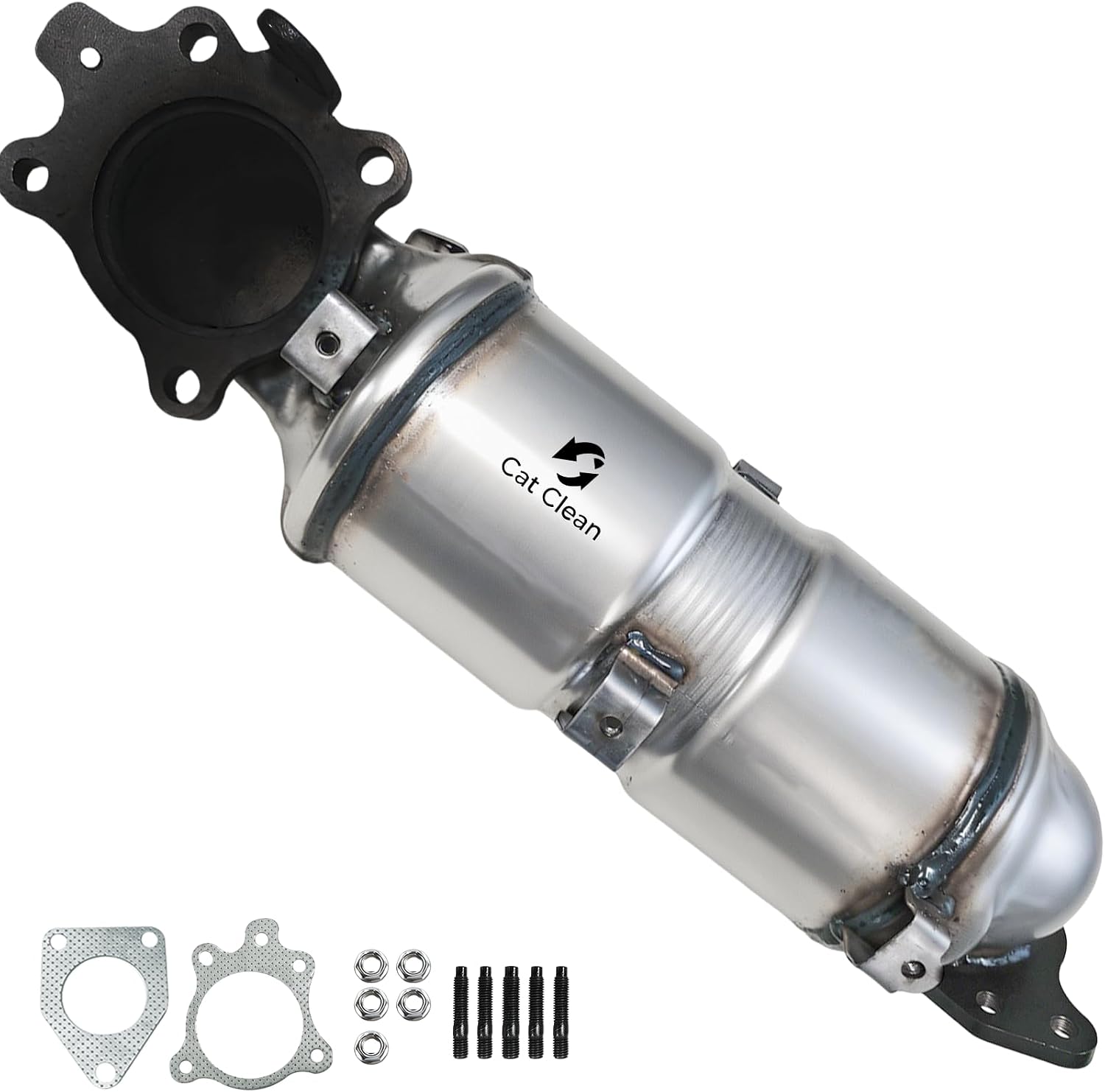
| Vehicle fitment | Honda Civic 2016-2021 1.5L L4 |
|---|---|
| EPA status | EPA Compliant (federal) |
| Substrate | High-density honeycomb ceramic with Pt, Rh, Pd |
| Housing material | 409L stainless steel |
This CAT CLEAN catalytic converter is a direct-bolt replacement built for the 1.5L turbo Honda Civic (2016–2021) and similarly specified CR-V models, intended to restore catalytic efficiency and clear emissions fault codes. It uses a high-density honeycomb ceramic substrate loaded with platinum, rhodium, and palladium to accelerate exhaust purification and is housed in 409L stainless steel for corrosion and heat resistance. The unit is designed for bolt-in installation without welding or modification, which simplifies swapping a failed converter and reduces shop time. In use it should reduce or eliminate P0420/P0430 codes, lower emissions to federal-compliant levels, and help maintain normal fuel economy and quiet operation. Limitations include its restriction from sale or use in several states with stricter rules and that it is sized and tuned for the listed 1.5L applications only, so fitment must be confirmed before purchase. The product comes with a manufacturer performance warranty and targets buyers who want a durable, factory-style replacement rather than a high-performance or race-oriented part.
Best for: Buyers who prioritize a reliable, factory-style emissions repair that restores catalytic performance and clears emission-related fault codes with a straightforward installation.
Less Ideal for: People seeking high-performance or modified exhaust upgrades or anyone who needs a California-state compliant catalytic solution.
- Direct bolt-on design allows installation without cutting or welding
- High-density ceramic honeycomb with Pt, Rh, and Pd for efficient catalytic conversion
- 409L stainless steel body improves corrosion and heat resistance
- Meets EPA federal emission standards for compliant operation
- Not legal for sale or use in California, Colorado, New York, or Maine
Verdict: A durable, direct-fit federal-compliant catalytic converter that restores emissions performance for 2016–2021 Honda Civic 1.5L turbo models with minimal installation fuss.
6. SPEEDFusion Catalytic Converter for 2016–2021 Honda Civic Turbo 1.5L and 2017–2021 CR‑V 1.5L

| Vehicle fitment | 2016–2021 Honda Civic Turbo 1.5L; 2017–2021 Honda CR‑V Turbo 1.5L |
|---|---|
| EPA status | EPA compliant (federal only) |
| Substrate | 400-hole ceramic with Pt/Rh/Pd coating |
| Shell material | 409L stainless steel |
| Manufacturer | SPEEDFusion |
This SPEEDFusion catalytic converter replaces the factory unit on compatible 1.5L turbo Honda Civics and CR‑Vs and is intended as a direct-fit emissions part. It uses a stainless steel shell and a 400-hole ceramic substrate plated with platinum, rhodium and palladium to increase conversion efficiency and help keep the check engine light from returning after installation. The unit is EPA compliant for federal emissions regions and is offered with structural and limited emissions warranties; the listing recommends professional installation. In real use it performs like an aftermarket factory-replacement part: many buyers report straightforward bolt-on fitment and cleared P0420/P0430 codes when matched correctly, while a minority note sensor or heat-shield adjustments may be needed during installation. This is not CARB-approved so it cannot legally be used in some states. For a buyer focused on proven fit and mitigation of emissions faults, the converter offers a cost-effective alternative to dealer parts, provided you verify exact vehicle fit and accept that occasional minor fitment tweaks can be required.
Best for: Buyers who want a verified, warranty-backed replacement that focuses on restoring emissions performance and clearing related fault codes while avoiding dealer lead times and high costs.
Less Ideal for: Drivers in states that require CARB-approved parts or those unwilling to have a shop perform minor heat‑shield or sensor adjustments during installation should look elsewhere.
- Direct-fit design for 2016–2021 Honda Civic Turbo 1.5L and 2017–2021 CR‑V 1.5L reduces installation time
- EPA compliant for federal emissions regions
- OEM-grade 400-hole ceramic substrate with precious-metal coating for improved catalytic conversion
- Stainless steel shell and anti-core-detachment welding for durability
- Supported by a structural and limited emissions warranty
- Not CARB-compliant so illegal to sell or install in certain states
Verdict: A warranty-backed, EPA-compliant direct-fit replacement that restores emissions function for compatible 1.5L turbo Civics and CR‑Vs without the dealer price.
7. NutsCata Direct-Fit Catalytic Converter for 2016–2021 Honda Civic / 2017–2022 CR-V 1.5L

| Fitment | 2016–2021 Honda Civic 1.5L L4; 2017–2022 CR-V 1.5L L4 |
|---|---|
| EPA compliance | Federal emission standards only |
| Substrate | Honeycomb ceramic loaded with platinum, rhodium, palladium |
| Warranty term | 6 years or 60,000 miles |
This NutsCata catalytic converter is a direct bolt-on replacement for 1.5L Honda Civic (2016–2021) and CR-V (2017–2022) applications that meet federal emissions rules. It uses a honeycomb ceramic substrate loaded with platinum, rhodium, and palladium intended to restore catalyst function and clear P0420-style codes. Installation is typical for an exhaust manifold converter: unbolt the old unit, fit the flange and heat shields, and torque the supplied hardware. Buyers report the unit can pass emissions once installed and that it resolves check-engine light issues. Practical strengths are the direct-fit design and the claimed 6 years or 60,000 miles of expected service. Common limitations are variable manufacturing tolerances and occasional fitment or hardware quality issues that can require adjustment, minor fabrication, or reworking of heat shields to stop leaks. Given that it is only EPA compliant for federal states, it is not for sale where stricter state rules apply.
Best for: A buyer who prioritizes a factory-style replacement that restores emissions performance and wants a cost-effective direct-fit option while expecting to verify fitment and finish after delivery.
Less Ideal for: People who lack tools or experience to correct fitment or hardware issues, and drivers in states with more stringent emissions rules should seek compliant alternatives.
- Direct bolt-on design intended to match factory mounting points for 1.5L Honda applications
- Catalyst uses high-content precious metals to improve emissions conversion and help clear codes
- Seller states a 6 year or 60,000 mile performance expectation
- Multiple buyer reports of successful emissions tests and resolving check-engine lights
- Quality control varies so some units may need minor shaping or hardware replacement to seal properly
- Not compliant for sale or use in states with stricter emissions regulations
Verdict: If you need a direct-fit, metal-loaded catalytic converter to restore emissions performance on a 1.5L Honda Civic or CR-V and are comfortable inspecting fitment, this unit offers strong value and proven emissions recovery.
Choosing the Right 2016-2021 Honda Civic Catalytic Converter: Key Factors to Consider
Fitment and Mounting Geometry
Correct physical fitment is the most immediate concern for the 2016-2021 Civic (FC and FK). Differences in pipe diameter, flange type, and hanger locations mean a direct-fit converter that matches the stock mounting points reduces or eliminates welding and exhaust modification.
Buying a converter that mirrors the OEM mounting geometry reduces installation time and helps maintain correct exhaust routing. Mismatched units often require flange swaps, adapter pipes, or rerouting of hangers, which add labor and can introduce exhaust leaks if not executed precisely. When assessing fitment documentation, verify pipe diameters, flange styles, and whether j-pipes or intermediate sections are included for your Civic configuration.
Emissions Substrate and Conversion Efficiency
The substrate composition and cell density determine how effectively the converter reduces NOx, CO, and unburned hydrocarbons. For a 2016-2021 Civic used on the road, look for converters with substrates designed to meet regulatory conversion targets for gasoline engines while resisting clogging.
Higher cell density can increase conversion efficiency but may raise backpressure, while lower density eases flow at the cost of some conversion. The right balance preserves engine performance and keeps exhaust emissions within expected limits. Check for manufacturer data on conversion rates or stated regulatory compliance to understand likely on-vehicle performance.
Oxygen Sensor Ports and Compatibility
Modern Civics rely on upstream and downstream oxygen sensors for engine management and emissions diagnostics. A replacement converter must provide properly positioned sensor ports that align with the factory sensor locations to avoid CEL triggers and incorrect fueling adjustments.
If the converter lacks correctly located ports, the vehicle may report sensor circuit faults or incorrect catalytic efficiency readings. Confirm whether sensor bungs are welded in the correct locations or if adapters are required. Proper sensor port placement preserves the original feedback loop and simplifies installation.
Durability and Heat Management
Catalytic converters operate at high temperatures; materials and construction quality affect longevity. For the 2016-2021 Civic, thermal stresses from short trips and stop-and-go driving can accelerate wear, so look for units with robust shell material, quality welding, and internal supports that reduce substrate breakage.
Heat shielding and appropriate thermal coatings can also prevent premature corrosion and heat soak to nearby components. A durable converter resists clogging and substrate degradation, reducing the risk of performance loss and repeat replacements.
Backpressure and Engine Performance
Backpressure affects exhaust scavenging and engine load. A converter that is too restrictive can cause reduced throttle response, lower fuel economy, and increased exhaust temperatures, while an overly free-flowing unit might not convert emissions effectively.
Choose a converter engineered to balance conversion efficiency with acceptable backpressure for the Civic's engine characteristics. Consider how you use the vehicle; heavy towing or sustained high-load driving demands a different flow profile than mostly highway commuting. Manufacturer flow specifications or stated application profiles help predict on-road behavior.
Installation Complexity and Serviceability
Installation ease impacts total repair time and cost. Direct-fit converters that include factory-style flanges and sensor provisions typically install with basic shop tools and standard lift access, while universal units often require cutting, welding, or adapter pipes.
Serviceability considerations include availability of replacement gaskets, ease of accessing oxygen sensors, and whether heat shields or nearby components need removal. A converter designed with maintenance in mind reduces labor and the chance of installation-related exhaust leaks or sensor damage.
Understanding Emissions Codes and the Check Engine Light
A catalytic converter issue often shows up as OBD-II trouble codes that reference catalyst efficiency or oxygen sensor performance. For the 2016-2021 Civic, common fault indicators include lower-than-expected downstream oxygen sensor response or elevated catalyst efficiency loop values, which trigger the check engine light.
Diagnosing the root cause requires scanning codes and checking sensor voltages, exhaust temperatures, and backpressure. A converter that is physically intact can still fail efficiency checks if the substrate is contaminated or degraded, so a thorough diagnostic routine helps avoid unnecessary replacements.
- Scan for codes related to catalyst efficiency and oxygen sensor circuit performance.
- Check exhaust temperature differential across the catalyst during a warm run.
- Inspect for external damage, clogging, or contamination that can impair conversion.
How Fitment Varies Across 2016-2021 Civic Configurations
Although this guide covers 2016-2021 Civics as a group, small differences in engine options and exhaust routing within the FC and FK chassis can affect which converter is a direct fit. Verify the converter application matches the Civic engine and exhaust layout for your specific model year and trim.
When shopping, cross-reference pipe diameters and flange type with the vehicle's service information. Some converters are sold with multiple inlet or outlet options to accommodate slight variations in the factory system.
- Confirm engine code and exhaust routing before selecting a converter.
- Look for vendor fitment notes that explicitly list 2016-2021 Civic FC and FK applications.
Maintaining Your Converter to Avoid Premature Failure
Routine engine maintenance helps prevent catalytic converter damage. Issues like oil consumption, coolant leaks, or repeated misfires can contaminate the substrate, leading to poor conversion or clogging. Keep ignition and fuel systems in good working order to protect the converter.
Driving habits also matter; frequent short trips prevent the converter from reaching optimal operating temperature and can accelerate buildup. Periodic longer runs at operating temperature help burn off deposits and maintain catalyst function.
- Address engine misfires and oil/coolant leaks promptly.
- Use scheduled maintenance intervals for spark plugs, fuel filters, and ignition components.
- Occasionally drive at sustained speeds to allow the converter to reach operating temperature.
Installation Options: DIY Vs Professional Replacement
Some owners with basic mechanical skills and the right tools can replace a direct-fit converter at home, especially when vehicle lift access and service manuals are available. Direct-fit units with factory-style flanges and sensor provisions simplify a DIY swap.
However, rusty fasteners, tight clearances, and the need for correct torque on flanges can make professional installation preferable. Consider your comfort with exhaust system work and whether you can access replacement gaskets and proper tools before attempting a DIY install.
- Ensure oxygen sensors are removed safely and reinstalled into the new converter.
- Use proper gaskets and torque values on flanges to prevent leaks.
- Have spare hardware and penetrating oil on hand for stubborn bolts.
Regulatory Compliance and Aftermarket Converters
Confirm any replacement converter meets local emissions regulations. Some converters are designed to meet stricter standards and include documentation to that effect. Selecting a compliant unit can avoid emissions test failures and legal issues.
Documentation of emissions compliance and matching sensor provisions helps ensure the replacement functions like the original system and passes inspection where required.
- Check for stated regulatory compliance or conversion efficiency data.
- Keep documentation that shows the converter is appropriate for on-road use in regulated areas.
Still looking for the perfect fit?
Select your Honda Civic configuration to see the most relevant Catalytic Converters recommendations
How We Chose the Best 2016-2021 Honda Civic Catalytic Converter
We evaluated candidates using criteria that reflect what Civic owners need to get a reliable emissions repair and retain drivability. Key evaluation points included correct fitment and mounting geometry to the 2016-2021 Civic (FC and FK) exhaust layout, catalytic substrate type and cell density for emissions conversion efficiency, and EPA or CARB compliance where applicable. We also considered thermal durability and heat management to ensure the unit withstands normal operating temperatures, and oxygen sensor port placement so factory sensors can be reinstalled without modification.Additional filters prioritized units with thorough fitment documentation, clear vehicle application listings, and straightforward replacement procedures to reduce installation time. We excluded universal or highly modified custom converters that require exhaust fabrication, and we did not consider units lacking clear emissions performance data or appropriate sensor provisions. Durability, ease of installation, emissions performance, and correct CAT converter fitment were the primary decision dimensions.
Our full evaluation process is outlined in our review methodology.
FAQ
What are the common catalytic converter symptoms on a 2016-2021 Civic?
Symptoms often include a persistent check engine light with catalyst or O2 sensor codes, reduced engine performance, or a noticeable rotten-egg exhaust odor. You may also experience decreased fuel economy or hesitation under load when the converter is restricted.
Can I replace the catalytic converter myself on a Civic FC and FK?
If the replacement is a direct-fit converter and you have mechanical experience plus proper tools and lift access, a DIY swap is possible. However, seized hardware or the need to match flanges and sensor placements can make professional installation advisable for many owners.
How do I know if the converter is failing versus an oxygen sensor issue?
Diagnosis involves scanning for codes, monitoring upstream and downstream sensor voltages, and checking exhaust temperature differentials. A failing converter typically shows reduced downstream sensor activity and lower conversion efficiency even when sensors themselves respond normally.
Will replacing the converter clear the check engine light immediately?
Replacing the converter may not clear stored readiness codes until the vehicle completes self-tests. Clearing codes and completing a required drive cycle or smog check usually restores the monitor status if the new converter and sensors function correctly.
Does catalytic converter fitment differ between Civic engine options from 2016 to 2021?
Yes, small variations in exhaust routing and pipe diameter across engine options can affect direct-fit compatibility. Always verify the replacement lists the correct 2016-2021 FC and FK application and matches the engine and exhaust layout of your Civic.
What maintenance helps extend catalytic converter life?
Keeping the engine tuned, addressing oil or coolant leaks, and preventing persistent misfires will reduce the risk of substrate contamination. Periodic longer drives at operating temperature can also help burn off buildup and maintain converter efficiency.
Final Verdict
When replacing a catalytic converter on a 2016-2021 Honda Civic (FC and FK), prioritize correct fitment, proper oxygen sensor provisions, and verified emissions performance. Balancing conversion efficiency with acceptable backpressure preserves drivability while meeting emissions needs.Assess installation complexity and long-term durability when choosing a unit. Focus on converters that match your Civic's exhaust geometry and include clear documentation of compliance to make a confident, practical replacement decision.
Explore More:
- Check out all Honda Civic parts & accessories
- Explore Catalytic Converters Maintenance & Repair Guides
- Explore Exhaust & Emissions
- Browse all Auto Parts
