

Note: This article contains affiliate links. If you click on these links and make a purchase, I may earn a small commission at no extra cost to you. This helps support my research and content. Read my full affiliate disclosure here.
Picking the right P225/55R18 tires for your Subaru Forester affects safety, fuel economy, and ride comfort more than most drivers realize. The correct tire size and compound determine how the Forester handles rain, light snow, and highway cruising while also influencing road noise and longevity.This guide examines a short list of top P225/55R18 tires selected for Forester owners who want reliable all-around performance. We focus on real-world criteria like wet traction, tread life, ride comfort, noise, and how tires behave in cooler conditions. Read on for practical guidance to match tires to your driving needs and the tradeoffs to consider before you buy.
Looking for other parts? See all Subaru Forester parts & accessories.
Top Picks at a Glance
| Best Overall The best all-around choice for most situations | Continental CrossContact LX25 All-Season Touring Tire, 225/55R18 98H |  |
| Best Quality Built to a higher standard if you want something more solid | MICHELIN Primacy All Season Tire 225/55R18 98H |  |
| Best Value The sweet spot between price and what you get | GT Radial Champiro Touring A/S 225/55R18 98V Touring All-Season Tire |  |
| Best Budget The cheapest option that still gets the job done reliably | Evoluxx Capricorn HP 225/55R18 All-Season Performance Tire |  |
| Highest Rated A top-rated pick with lots of positive feedback | Milestar MS932 Sport P225/55R18 All-Season Tire |  |
| Most Popular A crowd favorite that many people choose with confidence | Firestone All Season Touring Tire 225/55R18 (98H) |  |
| Best Seller A high-volume bestseller chosen again and again | Lexani LXUHP-207 225/55R18 102W High-Performance All-Season Tire |  |
1. Continental CrossContact LX25 All-Season Touring Tire, 225/55R18 98H

| Size | 225/55R18 |
|---|---|
| Load Index | 98 |
| Speed Rating | H |
| Construction Type | Radial |
| Seasons | Year Round |
The Continental CrossContact LX25 is an all-season touring tire designed for crossover and SUV use in everyday driving. It pairs Continental's EcoPlus technology with a non-directional tread to deliver lower rolling resistance for improved fuel economy, longer tread life, and shorter braking distances on wet roads. In real-world use this translates to a quiet, comfortable highway ride and predictable handling in rain and light seasonal conditions. The tire carries a 98 load index and H speed rating and is offered in the 225/55R18 size favored on many compact SUVs. Notable features include Continental's limited treadlife coverage up to 70,000 miles and a construction aimed at balanced wear and responsiveness. Limitations are that this is a touring all-season, not a winter-specific or high-performance summer tire, so grip in deep snow or spirited track driving will be limited compared with dedicated winter or performance models. Fitment and performance will be best for drivers prioritizing comfort, economy, and all-season usability rather than extreme weather or aggressive handling.
Best for: Buyers who want a quiet, fuel-efficient all-season tire that balances comfort, longevity, and predictable wet-weather braking for everyday crossover and SUV driving.
Less Ideal for: Drivers who need strong winter-snow performance or who plan aggressive performance driving should choose a dedicated winter or summer performance tire instead.
- EcoPlus technology reduces rolling resistance for improved fuel economy
- Designed for shorter wet braking distances and year-round traction
- Low road noise and comfortable ride for daily commuting and highway miles
- Limited manufacturer treadlife coverage up to 70,000 miles indicates durable tread longevity
- Not intended for heavy snow or severe winter conditions compared with dedicated winter tires
Verdict: Choose the CrossContact LX25 if you want a quiet, fuel-efficient all-season tire that prioritizes comfortable highway manners and reliable wet-weather braking for a Forester-sized crossover.
2. MICHELIN Primacy All Season Tire 225/55R18 98H

| Rim Size | 18 inches |
|---|---|
| Load Index | 98 |
| Speed Rating | H |
| Tread Type | Symmetrical |
| Seasons | Year Round |
The MICHELIN Primacy All Season in 225/55R18 98H is a touring all-season tire engineered for comfortable, quiet highway driving while still delivering predictable wet and dry performance. It uses a symmetrical tread and a construction intended to reduce rolling resistance, which helps fuel economy and provides a smooth ride on long commutes and road trips. The 98 load index supports typical passenger car loads and the H speed rating is suitable for normal spirited driving. Practical benefits include a deep tread depth for longer tread life and a 44 psi maximum inflation that allows proper pressure tuning for handling and comfort. Limitations include that it is a touring all-season rather than an ultra high performance summer tire, so cornering grip and track-focused feedback will be less aggressive than dedicated performance tires. This makes it better for drivers who prioritize quiet, efficient daily driving with occasional spirited runs rather than for those looking for maximum lateral grip in warm conditions.
Best for: Drivers who want a quiet, comfortable daily tire for a Forester that still offers reliable year-round traction and reasonable efficiency while occasionally driving with enthusiasm.
Less Ideal for: Enthusiasts seeking the highest dry grip and track-capable handling or drivers who need specialized winter traction should choose a dedicated performance or winter tire instead.
- Low rolling resistance helps improve fuel economy on highway drives
- Symmetrical tread and deeper tread depth contribute to a quiet, comfortable ride
- All-season design provides reliable wet and light snow traction for year-round use
- 98 load index supports standard passenger loads common to compact SUVs
- Not optimized for maximum dry grip or aggressive cornering compared with dedicated summer performance tires
- H speed rating limits top-speed performance for highly spirited driving
Verdict: Great choice for Forester owners who prioritize a quiet, comfortable all-season tire that improves fuel efficiency while providing dependable everyday performance.
3. GT Radial Champiro Touring A/S 225/55R18 98V Touring All-Season Tire

| Size | 225/55R18 |
|---|---|
| Load Index | 98 |
| Speed Rating | V |
| Seasons | Year Round |
| Construction Type | Radial |
The GT Radial Champiro Touring A/S is a highway-focused all-season tire built for drivers who prioritize comfort, mileage, and steady wet traction. It uses a non-directional tread with full-depth sipes and wide circumferential grooves to evacuate water and maintain grip in rain, while the touring compound aims to reduce road noise for a quieter cabin. The tire carries a 60,000-mile limited treadwear warranty for standard fitments, which makes it a sensible option for someone seeking long-term value rather than high-performance cornering. Load index 98 and V speed rating cover typical highway and commuting use on cars and crossovers. Trade-offs are predictable: this tire favors comfort and longevity over aggressive handling or winter traction in heavy snow. For drivers around town and on highways who want a comfortable, durable replacement tire, the Champiro Touring A/S delivers practical performance at a competitive level.
Best for: Buyers seeking a cost-conscious, low-noise tire that delivers predictable wet performance and long tread life for daily driving and highway miles on vehicles that fit 225/55R18 tires.
Less Ideal for: Drivers who need serious winter performance in deep snow or who prioritize spirited handling and cornering grip should consider winter or performance-oriented tires instead.
- 60,000-mile limited treadwear warranty for standard fitments provides long service expectation
- Wide circumferential grooves and full-depth sipes improve wet traction and water evacuation
- Touring construction designed for a quiet, comfortable ride on highways and city roads
- Non-directional tread simplifies rotation patterns for even wear and maintenance
- All-season touring compound will not match dedicated winter tires in heavy snow or ice
- Designed for comfort and mileage rather than sporty handling or track use
Verdict: Choose this tire if you want a quiet, durable all-season touring tire that prioritizes comfort and long tread life for everyday driving.
4. Evoluxx Capricorn HP 225/55R18 All-Season Performance Tire

| Size | 225/55R18 |
|---|---|
| Rim Size | 18 inches |
| Load Index | 98 |
| Speed Rating | H |
| Seasons | Year Round |
The Evoluxx Capricorn HP is an all-season performance tire built for everyday passenger use and occasional spirited driving. Its ribbed symmetrical tread and heat-resistant compound aim to keep the contact patch stable at higher speeds, improving steering response and reducing the risk of irregular wear. The tire is rated 98H with a standard load capacity and a 45,000 mile limited treadlife warranty, so it suits drivers who want solid highway manners and predictable handling without paying for premium name-brand models. In practical use the Capricorn HP should provide confident dry and wet grip thanks to optimized siping and tread block placement, while the construction helps manage heat on long runs. Limitations include a 4-ply, standard-load design that may not match the longevity or high-speed endurance of top-tier performance tires, and it is not specialized for heavy snow or dedicated winter conditions despite being all-season. For buyers prioritizing value and balanced performance on a daily-driven Subaru Forester, it offers a sensible compromise of handling and mileage expectations.
Best for: Drivers seeking an affordable, performance-leaning all-season tire that balances everyday highway comfort and sharper steering for a daily-driven compact SUV.
Less Ideal for: Drivers who need maximum high-speed durability, heavy-load capability, or serious winter traction should consider higher-load, premium performance or dedicated winter tires instead.
- Performance-oriented tread design improves steering response and road contact
- Heat-resistant compound and construction help reduce irregular wear on long drives
- 45,000 mile limited treadlife warranty provides reassurance for budget buyers
- All-season siping and tread block placement balance wet and dry traction
- Standard-load 4-ply construction may not deliver the longevity or heavy-duty endurance of premium performance tires
- Not a dedicated winter tire so performance in deep snow or severe ice will be limited
Verdict: A cost-conscious all-season performance tire that delivers improved steering feel and reasonable treadlife for daily-driven compact SUVs.
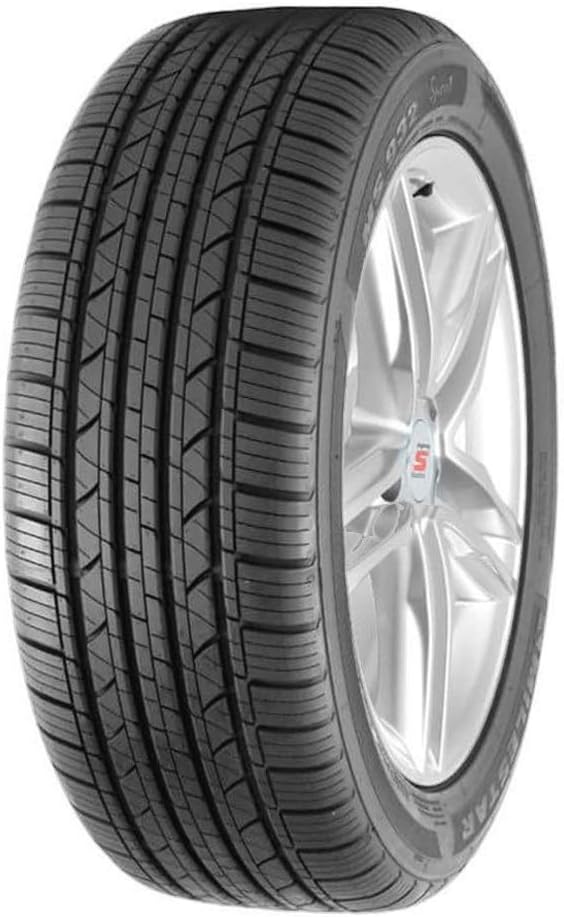
5. Milestar MS932 Sport P225/55R18 All-Season Tire
| Rim Size | 19 inches |
|---|---|
| Load Index | 98 |
| Speed Rating | V |
| Seasons | Year Round |
| Load Capacity | 1700 pounds |
The Milestar MS932 Sport P225/55R18 is an all-season touring tire built for dependable, everyday driving. Its tread pattern and water-dispersing channels aim to maintain traction in wet conditions while the construction focuses on consistent handling and responsive steering. Typical use is daily commuting and highway driving where predictable grip, comfort, and longevity matter more than outright sport performance. Notable features include a V speed rating for higher-speed stability, a 6-ply construction for durability, and a manufacturer 50,000-mile warranty that indicates expected tread life. Practical benefits include a quiet, controlled ride and improved water evacuation compared with older touring tires, which reduces hydroplaning risk in rain. Limitations are that it is a highway/all-season design rather than a dedicated performance or winter tire, so drivers who frequently encounter deep snow or demand high-performance cornering will see compromises compared with winter-specific or ultra-high-performance tires.
Best for: Buyers who prioritize steady, dependable performance and longevity for everyday driving on paved roads and want a tire that stays predictable through rain and mixed-season use.
Less Ideal for: Drivers who need winter-specialized traction for heavy snow or who prioritize maximum sporty handling and cornering at high speeds should consider tires tailored to those needs instead.
- All-season tread with channels for improved wet traction
- 50,000-mile manufacturer warranty suggesting long tread life
- V speed rating for stable highway performance
- 6-ply construction for durability and load support
- Not optimized for severe winter conditions or deep snow
- Performance driving and aggressive cornering will outpace its capability
Verdict: Choose the Milestar MS932 Sport P225/55R18 when you want a reliable, long-lasting all-season touring tire that prioritizes steady wet-weather traction and everyday durability.
6. Firestone All Season Touring Tire 225/55R18 (98H)

| Rim Size | 18 inches |
|---|---|
| Load Index | 98 |
| Speed Rating | H |
| Seasons | Year Round |
| Tread Type | Symmetrical |
The Firestone All Season Touring in 225/55R18 is a touring all-season tire built for everyday street use on passenger vehicles like the Subaru Forester. It uses a symmetrical tread with deep sipes to maintain traction in wet and light snow while delivering a quiet, comfortable ride typical of touring tires. Firestone backs the design with a long limited treadwear warranty, and the H speed rating and 98 load index mean it covers standard Forester load and speed needs without upgrading to heavier-duty tires. Expect predictable handling and steady braking in mixed seasonal conditions, and decent tread life for drivers who prioritize mileage over aggressive sport grip. The tire is not intended for high-performance driving or heavy off-road use, and its winter capability is limited compared with dedicated winter tires, so drivers who regularly face deep snow or icy roads should plan on a seasonal dedicated tire instead.
Best for: Drivers who want a reliable, mileage-focused all-season tire for daily driving on a Forester and value proven performance and warranty-backed longevity.
Less Ideal for: Drivers who need maximum winter traction for frequent heavy snow or who want high-performance summer handling should choose a specialized tire instead.
- Year-round tread compound and deep sipes for improved wet and light snow traction
- Symmetrical touring tread delivers a quiet, comfortable ride suited to daily commuting
- 65,000 mile limited treadwear warranty indicates long life for mileage-focused buyers
- 98 load index and H speed rating cover typical Forester load and speed requirements
- Not a substitute for a dedicated winter tire in severe snow or ice
- Not optimized for spirited or high-performance driving dynamics
Verdict: A durable, warranty-backed all-season touring tire that delivers quiet, reliable wet and light-snow performance for Forester owners focused on mileage and everyday comfort.
7. Lexani LXUHP-207 225/55R18 102W High-Performance All-Season Tire

| Size | 225/55ZR18 |
|---|---|
| Load Index | 102 |
| Speed Rating | W |
| Load Capacity | 1874 pounds |
| Seasons | NON_WINTER |
The Lexani LXUHP-207 is designed as an ultra-high-performance all-season tire for drivers who want sharper handling and confident wet-road performance in warmer months. Its V-shaped, directional tread and four longitudinal grooves help evacuate water to reduce hydroplaning, while a solid center rib improves straight-line stability and steering response. The tire carries an XL load range and a 102 load index, so it supports heavier loads than standard passenger tires, and the W speed rating signals stable handling at higher speeds. Expect a quieter ride than some performance tires thanks to a computer-optimized tread pattern, and Lexani advertises a 50,000-mile limited tread-life backing. Limitations to note are the non-winter designation, which makes this a poor choice for snow and ice, and the lack of a manufacturer warranty. This tire suits drivers wanting a factory-quality, performance-focused replacement for dry and wet conditions but who will store or swap tires for winter use.
Best for: Practical drivers seeking improved wet and dry handling and a quieter high-performance tire for daily driving who prioritize predictable, road-focused behavior over year-round winter capability.
Less Ideal for: Drivers who need safe traction in snow and ice or who want a tire with an included manufacturer warranty should look at winter-rated or warrantied alternatives.
- Directional V-shaped tread and four longitudinal grooves that improve wet traction and reduce hydroplaning risk
- XL load rating and 102 load index provide higher load capacity for heavier vehicles or cargo
- Computer-optimized tread aims to reduce road noise for a more comfortable ride
- Solid center rib enhances stability and steering response at higher speeds
- Not rated for winter use so performance on snow and ice will be poor
- Manufacturer lists no warranty
Verdict: Choose the LXUHP-207 if you want a higher-load, performance-oriented 225/55R18 tire that delivers confident wet and dry handling for warm-weather driving.
Choosing the Right Subaru Forester P225/55R18 Tires: Key Factors to Consider
Wet Traction and Hydroplaning Resistance
Wet traction is critical for the Forester because unpredictable rain and standing water are common hazards. Look for tread designs with circumferential grooves that channel water away from the contact patch, plus lateral siping that helps evacuate water during cornering.
Hydroplaning resistance is tied to groove volume and tread stiffness. Softer compounds can grip better at lower temperatures but must still maintain channeling to reduce the risk of losing contact in heavy rain. For everyday driving you want a tire that shortens braking distance on wet pavement and keeps steering predictable during sudden maneuvers.
Treadwear and Longevity
Treadwear affects how often you replace tires and the vehicle's long-term ownership costs. Consider manufacturer treadwear ratings and user-reported mileage for the specific P225/55R18 size, keeping in mind that real-world life varies with driving style and maintenance.
Proper rotation, alignment, and inflation extend life, but build quality and compound hardness remain primary determinants. A harder compound typically lasts longer but may sacrifice some wet or cold-weather grip. Balance expected mileage against the kind of grip you need for your typical drives.
Ride Comfort and Road Noise
Forester owners who commute long distances benefit from tires engineered for a quiet, comfortable ride. Sidewall construction, tread block sizing, and pattern sequencing influence how much road noise you hear and how the tire absorbs small imperfections.
A tire aimed at comfort will have tuned siping and variable pitch tread blocks to break up sound frequencies. Conversely, performance-oriented designs may transmit more noise and harshness. Consider your daily mileage and cabin sensitivity when prioritizing comfort.
Cold-Weather and Light Snow Performance
If you drive the Forester in climates with cold temperatures or occasional snowfall, tire compound flexibility and tread siping become important. All-season tires vary widely in how they handle low temperatures; some maintain pliability and grip, others harden and lose traction.
Look for tread patterns with dense siping and biting edges to improve traction on slush and packed snow. While winter-specific tires outperform all-season options in heavy snow, many Forester owners need a compromise that performs well in light snow without swapping tires seasonally.
Handling and Steering Response
Tire contact patch stiffness, sidewall profile, and tread design all influence how the Forester responds to steering inputs. For drivers who value composed cornering and precise feedback, a tire with a stiffer shoulder and consistent contact patch will help maintain control during quick lane changes.
However, very stiff tires can reduce comfort and amplify road imperfections. For most Forester owners, a balanced tire that offers confident response without sacrificing compliance is the best choice.
Compatibility With Vehicle Systems
Modern Foresters may rely on stability control, ABS, and tire pressure monitoring systems to optimize safety. Choosing the correct P225/55R18 tire size and overall diameter preserves speedometer accuracy and system calibration.
Additionally, tire load rating and speed rating should meet or exceed the vehicle manufacturer's recommendations to ensure safe performance under normal and loaded driving conditions. Proper fitment avoids rubbing, incorrect gearing effects, and potential sensor mismatches.
Understanding P225/55R18 Sizing and What It Means
P225/55R18 breaks down into three usable data points: section width, aspect ratio, and wheel diameter. The 225 mm width and 55 percent aspect ratio create a balance between contact patch and sidewall height that suits the Forester's mix of comfort and stability. The 18-inch wheel diameter influences ride feel and braking response compared with smaller wheels.
Choosing the right tire for that size means matching the intended use. Wider tires can improve dry grip but may increase road noise and reduce fuel economy. Taller sidewalls smooth bumps but can slightly reduce steering precision. Matching the tire to typical driving conditions produces the best overall results.
- 225 = section width in millimeters
- 55 = aspect ratio (sidewall height as percentage of width)
- R18 = radial construction for 18-inch wheels
All-Season Versus Dedicated Winter Options
All-season tires offer a compromise designed to provide acceptable performance across a variety of conditions, including light snow. Dedicated winter tires use softer compounds and aggressive tread patterns to retain grip in cold temperatures and deep snow. If you regularly encounter heavy winter conditions, a seasonal swap is often the safer choice.
For Forester owners in milder climates who prefer not to change tires seasonally, choosing an all-season design with enhanced siping and lower temperature flexibility can cover most needs. Pay attention to manufacturer cold-weather ratings and user feedback on grip in subfreezing conditions.
- All-season: year-round convenience, moderate snow capability
- Winter: superior snow and ice performance, requires seasonal change
How Tire Tread Patterns Affect Noise and Wear
Tread block size, pitch sequencing, and groove pattern influence both noise and wear patterns. Larger, continuous blocks typically provide better high-speed stability but can create tonal noise. Variable pitch and staggered blocks reduce repetitive noise by breaking up sound frequencies.
Tread patterns also determine where and how rubber wears. Aggressive asymmetric patterns can concentrate wear on shoulders under misalignment or aggressive cornering. Look for patterns engineered to distribute forces evenly for longer, more predictable wear.
- Symmetric patterns: even wear, easier rotation
- Asymmetric patterns: combine wet and dry performance in different zones
- Directional patterns: optimized for water evacuation at speed
Maintenance Tips to Maximize Tire Life on a Forester
Regular maintenance significantly changes how long P225/55R18 tires last. Check pressures monthly and adjust for load or towing to keep contact patches consistent. Rotate tires every 5,000 to 7,500 miles or per the vehicle manual to even out wear across axles.
Keep alignment and suspension components in good condition. Misaligned wheels cause uneven shoulder wear and can shorten overall tread life. Inspect tires for damage and monitor tread depth with a simple gauge or the built-in tread wear indicators.
- Check inflation monthly and before long trips
- Rotate tires at recommended intervals
- Monitor tread depth and inspect for irregular wear
When to Upgrade to Performance-Focused Tires
Some Forester owners choose performance-oriented tires to improve steering precision and high-speed stability. These tires often have firmer compounds and reinforced sidewalls that sharpen response, but they may trade comfort and tread life.
If you frequently drive on twisty roads or value sharper handling, consider a tire that emphasizes cornering grip while still fitting the P225/55R18 specification. Balance the desire for sportier feel against increased road noise and potentially higher replacement frequency.
- Performance tires: better cornering, firmer ride
- Tradeoffs: increased noise, shorter expected mileage
Still looking for the perfect fit?
Select your Subaru Forester configuration to see the most relevant Tires recommendations
How We Chose the Best Subaru Forester P225/55R18 Tires
We prioritized criteria that matter for Subaru Forester owners and the P225/55R18 fitment. Key evaluation points included wet and dry traction tested through independent lap and braking metrics where available, treadwear projections based on manufacturer ratings and real-world user patterns, and ride comfort assessed via sidewall design and compound stiffness. Noise levels were weighted for owners who spend extensive time on highway commutes. Snow and cold-weather performance was included to reflect the Forester's use in varied climates, focusing on tread siping and compound flexibility at lower temperatures.Durability factors such as construction quality and warranty coverage were considered to estimate long-term value. Fuel efficiency and rolling resistance were evaluated for drivers concerned with economy. We excluded tires sized beyond P225/55R18 or those intended exclusively for track racing or heavy off-road duty because they are inappropriate for typical Forester use. The resulting shortlist emphasizes balanced performance, predictable wet braking, and reasonable tread life for everyday driving on the Subaru Forester.
Our full evaluation process is outlined in our review methodology.
FAQ
How do I read the P225/55R18 marking on a tire?
P225 indicates the tire's section width in millimeters, 55 is the aspect ratio representing sidewall height as a percentage of width, and R18 signifies radial construction for 18-inch wheels. This combination determines overall diameter and fitment for your Forester.
How often should I replace my Forester's tires?
Replacement depends on mileage, driving style, and wear patterns. Many drivers replace tires between 30,000 and 70,000 miles, but you should monitor tread depth and replace tires when the tread wear indicators are flush or when performance in wet or cold conditions degrades noticeably.
Are all-season tires adequate for light snow in a Forester?
Often yes. Quality all-season tires with ample siping and lower temperature compound flexibility handle light snow and slush adequately. For regular heavy snow or icy roads, dedicated winter tires remain the safer option.
Will different brands of P225/55R18 tires affect my Forester's fuel economy?
Yes. Rolling resistance varies by compound and construction, so some P225/55R18 tires will offer slightly better fuel efficiency. The difference is usually modest but can add up over time, especially for drivers with high annual mileage.
How important is tire balancing and alignment after a replacement?
Very important. Proper balancing prevents vibration and uneven wear, while alignment ensures even contact and steering accuracy. Have both checked when new tires are fitted and as part of regular maintenance.
Can I fit a different aspect ratio or width on my Forester instead of P225/55R18?
It depends. Small variations can be acceptable, but changing width or aspect ratio affects clearance, speedometer accuracy, and handling. Always consult vehicle specifications and prioritize sizes that maintain load rating and overall diameter close to the original.
Final Verdict
Prioritize the handful of characteristics that matter most to how you drive the Subaru Forester. If you encounter frequent rain or slush, emphasize wet traction and siping. If you commute long distances, give more weight to tread life and noise characteristics. For occasional winter conditions, an all-season tire with good low-temperature performance may be the best compromise.Weighing these tradeoffs will help you select P225/55R18 tires that match your priorities: safety in adverse conditions, long-term value, or sharper handling. Use the outlined maintenance and fitment guidance to get consistent performance and maximize the life of your new tires.
Explore More:
- Check out all Subaru Forester parts & accessories
- Explore Tires Maintenance & Repair Guides
- Explore Wheels & Tires
- Browse all Auto Parts
