

Note: This article contains affiliate links. If you click on these links and make a purchase, I may earn a small commission at no extra cost to you. This helps support my research and content. Read my full affiliate disclosure here.
If you drive a Honda Accord EX, the oxygen sensor plays a key role in fuel economy, emissions, and smooth running. A failing sensor can trigger a check engine light, cause rough idle, or increase fuel use, so picking a compatible replacement matters for everyday reliability.This guide lists seven shortlisted oxygen sensors compatible with the Accord EX and explains the practical differences you should consider. We evaluate products on fitment, signal accuracy, durability, and ease of installation so you can choose a sensor that restores proper engine management. Read on for what to expect and how to prioritize features for your Accord EX.
Looking for other parts? See all Honda Accord parts & accessories.
Top Picks at a Glance
| Best Overall The best all-around choice for most situations | Marsflex Air Fuel Ratio O2 Oxygen Sensor 234-9040 (Upstream) |  |
| Best Quality Built to a higher standard if you want something more solid | TAUTOY Upstream and Downstream Oxygen O2 Sensor Pair for Honda Accord 2.4L (2003–2007) |  |
| Best Value The sweet spot between price and what you get | BELKEBIR 2-Pack Oxygen Sensors (Upstream & Downstream) for 2003–2007 Honda Accord 2.4L |  |
| Best Budget The cheapest option that still gets the job done reliably | AULINK 234-9040 Air Fuel Ratio Upstream Oxygen Sensor (2.4L L4) |  |
| Highest Rated A top-rated pick with lots of positive feedback | Denso Rear Oxygen Sensor 234-4797 |  |
| Most Popular A crowd favorite that many people choose with confidence | HTMXJA Oxygen O2 Sensor Pair for 2003–2007 Accord 2.4L | 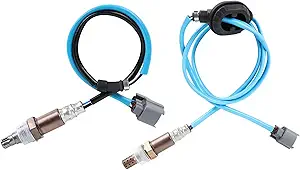 |
| Best Seller A high-volume bestseller chosen again and again | HTMXJA 2-Pack Upstream and Downstream Oxygen Sensors for Accord/TSX 2.4L |  |
1. Marsflex Air Fuel Ratio O2 Oxygen Sensor 234-9040 (Upstream)

| Model | 234-9040 |
|---|---|
| Mounting Type | Flange Mount |
| Output Type | Analog |
| Response Time | 18 seconds |
| Upper Temperature Rating | 930 Degrees Celsius |
This Marsflex 234-9040 upstream oxygen sensor replaces the factory-style O2 unit on 2003–2007 Honda Accord 2.4L engines and monitors exhaust oxygen to help the engine control module maintain the correct air/fuel ratio. It is a heated sensor with flange mount and an analog output designed to match factory fit and function, and the listing notes a typical lifespan guideline and recommends replacing sensors in pairs. Practical benefits include improved fuel trim feedback after installation, potential fuel economy and emissions payoff, and a direct plug-in style aimed at straightforward DIY replacement if you match the plug and thread. The sensor’s specs such as a high upper temperature rating and a stated response time support durability and timely switching activity, but buyers should confirm plug and thread match for their exact Accord submodel before ordering. Installation may require an O2 socket and anti-seize is not mentioned, so careful removal and correct torque are important to avoid damage.
Best for: Buyers who want a budget-friendly, factory-style upstream oxygen sensor that restores proper air/fuel feedback on a 2003–2007 Honda Accord 2.4L and are comfortable verifying fitment and performing or supervising a direct replacement.
Less Ideal for: If you need a universal sensor for multiple vehicle types or want a performance-tuned wideband sensor for custom tuning, this OEM-style upstream unit is not the right choice.
- Sold as a direct upstream replacement tailored for 2003–2007 Honda Accord 2.4L applications
- Heated, flange-mount design and factory-style analog output for compatible engine management systems
- High reported upper temperature rating for durability in exhaust environments
- Relatively quick stated response time to changes in oxygen concentration
- Compatibility requires verifying plug and thread; incorrect fit will not work
- Listing does not specify included anti-seize or detailed installation hardware
Verdict: A practical, factory-style upstream O2 sensor choice for 2003–2007 Honda Accord 2.4L owners who want an affordable direct replacement to restore proper air/fuel control.
2. TAUTOY Upstream and Downstream Oxygen O2 Sensor Pair for Honda Accord 2.4L (2003–2007)

| Included components | Upstream (234-9040) and downstream (234-4797) sensors, 2 pieces |
|---|---|
| Fitment | Honda Accord 2.4L 2003–2007 (listed trims) |
| Material Type | Stainless Steel |
| Mounting Type | Flange Mount |
| Output Type | Electrical signal |
This TAUTOY kit supplies both the upstream (234-9040) and downstream (234-4797) oxygen sensors so you can replace the whole bank of sensors on a 2.4L Honda Accord in one job. The sensors use a stainless steel, flange-mounted design with electrical signal output and are laser-welded for corrosion resistance and stable measurement. In practice they restore proper oxygen feedback to the engine control unit, which helps return fuel trim and throttle response to expected levels after old or failing sensors cause rough idle, reduced fuel economy, or a check engine light. Installation is the same as factory replacements and most DIYers or technicians can swap them using common tools; the kit ships with two sensors so you avoid sourcing parts separately. A few buyers report fitment quirks, so confirming the exact engine and model subtype before buying is important. The sensors come with a one year warranty but they are an aftermarket option rather than a factory-branded part, so long-term durability may vary compared with higher-end performance appliances.
Best for: Drivers focused on restoring or improving engine performance on a 2.4L 2003–2007 Honda Accord who want a complete upstream and downstream sensor replacement they can install or have fitted in a single service.
Less Ideal for: Buyers looking for OEM-branded lifetime durability or warranty coverage beyond one year should consider higher-end factory-quality options or dealer parts.
- Includes both upstream and downstream sensors so the full oxygen-sensing circuit can be serviced in one purchase
- Stainless steel, double laser-welded construction designed for corrosion resistance and stable readings
- Direct-fit flange mounting and electrical connector for straightforward installation on specified Accord 2.4L models
- Designed to provide high measurement accuracy for improved air-fuel ratio control and engine performance
- Aftermarket part that may not match long-term durability of premium OE-level sensors
- Some customers reported fitment problems despite listed compatibility, so verification is needed before installation
Verdict: A cost-effective two-sensor replacement that returns accurate oxygen sensing and fuel control for 2.4L Honda Accords without buying parts separately.
3. BELKEBIR 2-Pack Oxygen Sensors (Upstream & Downstream) for 2003–2007 Honda Accord 2.4L

| Included Components | 2* Oxygen Sensors |
|---|---|
| Material Type | Ceramic |
| Maximum Supply Voltage | 12 Volts |
| Specific Uses For Product | automotive oxygen monitoring |
These two BELKEBIR oxygen sensors replace upstream and downstream units on 2003–2007 Honda Accord 2.4L engines to restore accurate air/fuel monitoring and emissions control. Typically installed as a direct replacement when a check engine light, poor fuel economy, or failed emissions test points to a bad O2 sensor, the kit includes both sensors so you can address both banks at once. The sensors use ceramic sensing elements and platinum components aimed at heat resistance and reliable signal output, and the listing cites 12 volt electrical compatibility and OE-style fitment for common Honda part numbers. In use they should bring the engine back to smoother throttle response and improved MPG once the engine control module receives correct oxygen readings. Trade-offs are typical for aftermarket sensors: fit and long-term durability may vary compared with factory parts and installation can require oxygen sensor sockets or access under the vehicle. If you need a straightforward replacement that covers both upstream and downstream positions for the specified Accord models, this kit is a practical option.
Best for: Buyers who want a practical, cost-conscious replacement to restore fuel economy and emissions on a 2003–2007 Honda Accord 2.4L and prefer replacing both sensors together to avoid repeat labor.
Less Ideal for: Do not choose this if you require guaranteed factory-quality longevity or if you need sensors for vehicles outside the listed 2003–2007 Accord 2.4L fitment range.
- Includes both upstream and downstream sensors so both positions can be serviced at once
- Lists compatibility with Honda Accord 2003–2007 2.4L models and multiple OEM part numbers for easier fit verification
- Ceramic sensing element and platinum components for high-temperature durability
- Sold as a matched pair which helps restore proper engine fueling and emissions quickly
- Aftermarket fit and long-term longevity can vary compared with factory-quality sensors
Verdict: A practical two-sensor replacement kit that lets Accord 2003–2007 2.4L owners quickly restore proper oxygen sensing and improve fuel economy.
4. AULINK 234-9040 Air Fuel Ratio Upstream Oxygen Sensor (2.4L L4)

| Measuring Range | 10.0 – 20.0 AFR |
|---|---|
| Mounting Type | Plug-In Mount |
| Output Type | electrical signal |
| Upper Temperature Rating | 850 Degrees Celsius |
| Material Type | Stainless Steel |
This AULINK 234-9040 oxygen sensor is a direct-fit upstream air fuel ratio sensor for 2.4L L4 Honda Accord engines and is intended to replace a failing factory sensor to restore fuel trim and emissions performance. Installation is typical plug-and-play using the existing harness and mounting point; most DIYers can swap it with basic hand tools and a sensor socket. The sensor uses a stainless steel housing with double laser welds and an anti-contamination filter to resist corrosion and reduce clogging, which helps it survive hot exhaust conditions up to the listed temperature rating. In use it should correct slow or erratic O2 readings that trigger check engine lights and cause rough idle or reduced fuel economy. Expectations should be realistic though; this is an aftermarket replacement aimed at value buyers, so long-term durability may vary versus higher-end name-brand parts and occasional units report slow response. For budget repairs it offers a straightforward way to get an Accord running normally again without significant expense.
Best for: Buyers who need an affordable, direct-replacement oxygen sensor to clear a check engine light or restore fuel economy on a 2.4L Accord and prefer a low-cost DIY repair over a premium part.
Less Ideal for: Those seeking a long-term high-end sensor for performance tuning or maximum longevity should consider higher-tier branded sensors or professional-grade options.
- Direct-fit upstream sensor for 2.4L L4 Honda Accord models for straightforward replacement
- Stainless steel body with double laser welds for improved corrosion resistance
- Plug-in mounting and electrical output designed for easy DIY installation
- Anti-contamination filter design to help prevent clogging and extend service life
- Aftermarket build quality can vary and some users report slow sensor response
- One-year warranty or 50,000 km may be shorter than alternatives from premium brands
Verdict: AULINK provides a budget-friendly, direct-fit upstream O2 sensor that gets a 2.4L Accord back to factory-like operation without a big expense.
5. Denso Rear Oxygen Sensor 234-4797

| Position | Rear |
|---|---|
| Material | Stainless Steel, Zirconium |
| Measurement Accuracy | High |
| Measuring Range | 0-20% O2 |
| Mounting Type | Flange Mount |
This Denso rear oxygen sensor is a direct-fit replacement made to match factory performance for the specified Accord and TSX model years. It measures exhaust oxygen and sends that signal to the engine control unit so fuel trims and emissions can be corrected; typical use is swapping the old failed sensor for this part to clear a check engine code and restore normal fuel economy. Notable features include a machined stainless steel body, a zirconium sensing element and Denso's aluminum oxide trap layer intended to resist contamination and extend service life. Install is straightforward for a DIYer with the right oxygen-sensor socket and a bit of penetrating oil on a seized unit; the part ships with anti-seize compound and installation directions. Limitations are that the wiring cover and protective grommet differ slightly from some factory parts so minor routing adjustments may be needed during installation, and access under the seat or near the catalytic converter can still make removal a two-person or shop job for some vehicles.
Best for: Buyers who want a reliable, factory-quality replacement O2 sensor to clear engine codes and restore fuel economy on the specified Accord/TSX models and who prefer a part built to the same standards as the original.
Less Ideal for: If you need a universal sensor for multiple vehicle makes or a redesigned high-performance sensing unit, this vehicle-specific replacement is not the right choice.
- Factory-quality design and testing to meet factory replacement standards
- Aluminum oxide trap layer for improved resistance to silicone and lead contamination
- Includes anti-seize compound and installation directions for easier fitment
- Stainless steel construction for corrosion resistance and durability
- Wiring cover and grommet differ from some original parts, may require minor routing adjustments
Verdict: Choose this Denso rear O2 sensor when you want a dependable, factory-quality replacement that restores proper fuel control and emissions performance for the listed Honda Accord and Acura TSX models.
6. HTMXJA Oxygen O2 Sensor Pair for 2003–2007 Accord 2.4L
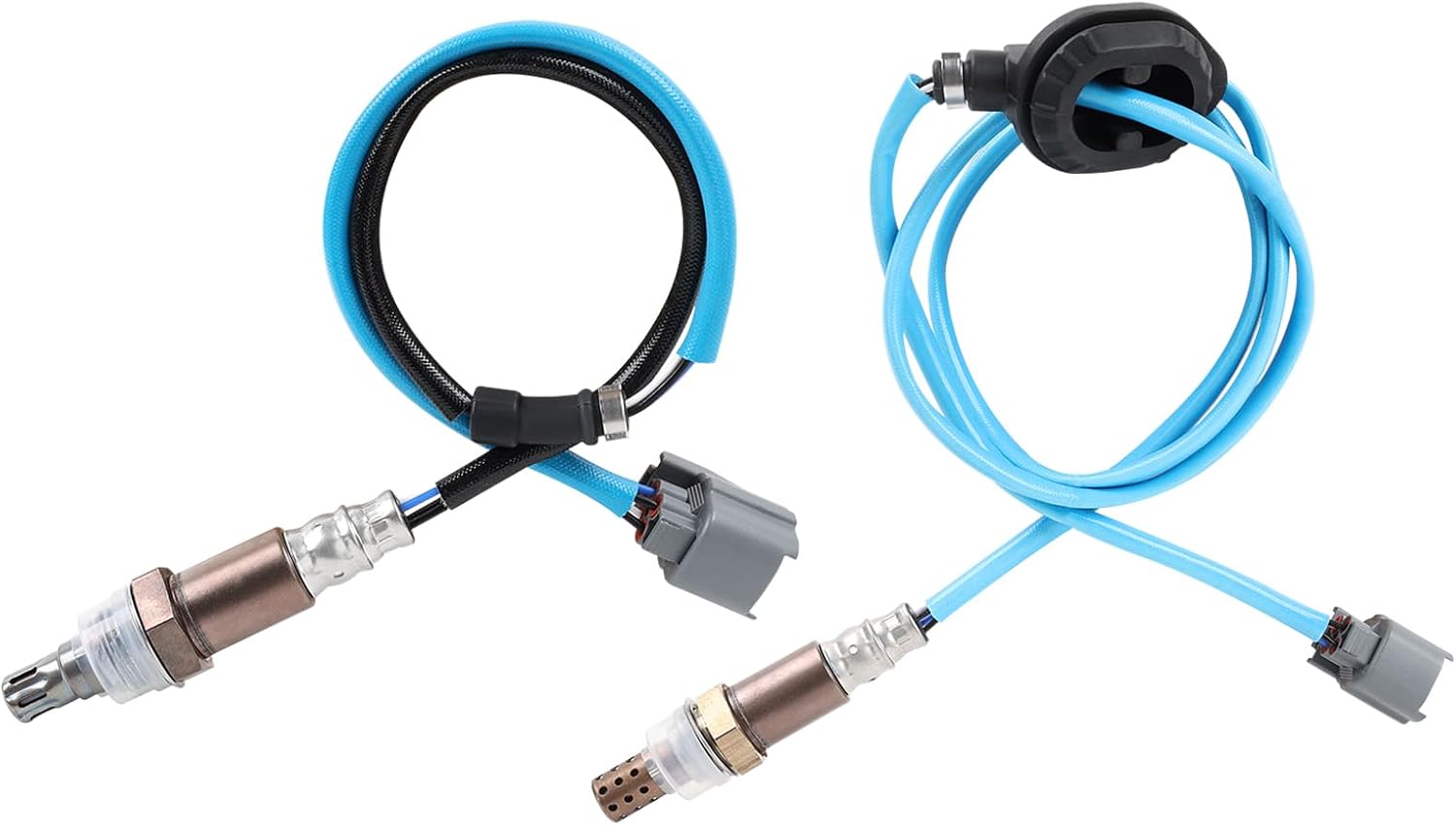
| Fitment | 2003–2007 Accord L4-2.4L |
|---|---|
| Connector Gender | Female |
| Wire Quantity | 4 |
| Length | 24in + 45in |
| Mounting Type | Flange Mount |
This HTMXJA two-piece oxygen sensor kit supplies both upstream and downstream sensors for 2003–2007 Accord 2.4L engines and is intended as a direct factory-quality replacement. The sensors monitor exhaust oxygen in real time to help restore correct air-fuel mixture, clear check-engine codes, and improve fuel economy after a failing sensor is removed. The set includes a female connector with four wires and matching flange mounts so installation is straightforward for a competent DIYer or a shop; anti-seize on the threads and lengths of approximately 24 and 45 inches help reach factory locations without modification. Most buyers report the sensors fit and function like the originals and that fuel trim and emissions-related codes were resolved. A small portion of buyers encountered a defective unit or lingering engine-light issues with aftermarket parts, so confirm vehicle compatibility and test the upstream sensor after installation. The kit is a practical, lower-cost option when you need both sensors replaced at once but may not match every factory sensor's long-term durability in heavy-duty use.
Best for: Buyers who want a cost-conscious, complete replacement to restore fuel economy and clear emissions-related faults on a 2003–2007 Accord 2.4L and who prioritize evidence from other owners that the parts work as advertised.
Less Ideal for: Drivers seeking long-term, heavy-duty durability without any risk of aftermarket variability should consider higher-end or OEM options and professional diagnostic support.
- Sold as a matched upstream and downstream pair for complete replacement
- Direct-fit design with flange mount and female 4-pin connector for straightforward installation
- Includes thread anti-seize and wire lengths to reach factory mounting points
- High-precision sensing aimed at restoring fuel trim and clearing emissions codes
- Aftermarket unit quality is variable so occasional defective sensors have been reported
Verdict: If you need both oxygen sensors replaced on a 2003–2007 Accord 2.4L, this matched pair is an affordable direct-fit option that most buyers report restores emissions performance and clears engine codes.
7. HTMXJA 2-Pack Upstream and Downstream Oxygen Sensors for Accord/TSX 2.4L
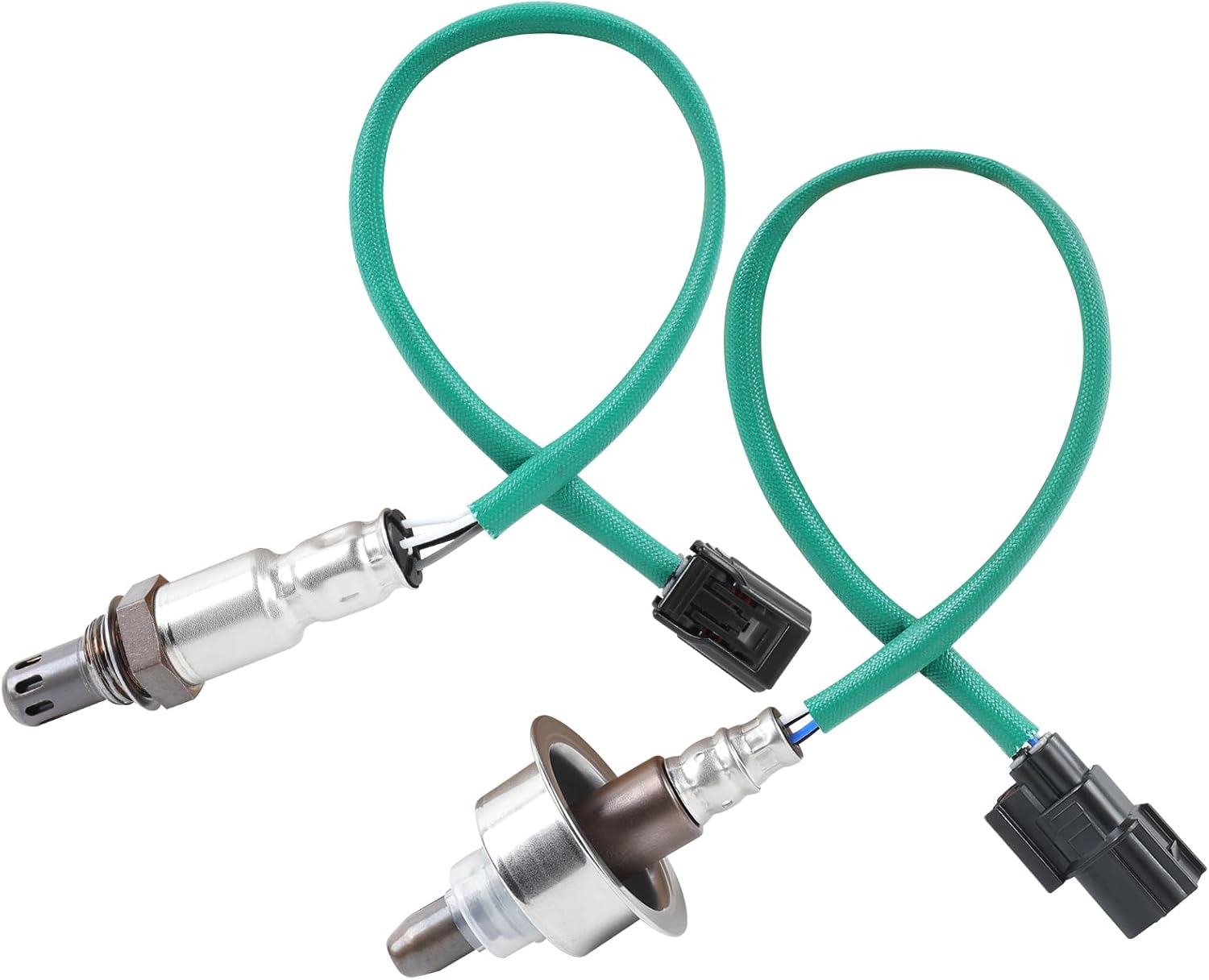
| Compatible vehicles | 2008–2012 Accord L4‑2.4L; 2009–2014 TSX L4‑2.4L |
|---|---|
| Connector gender | Male and Female |
| Wire quantity | 4 |
| Material | Stainless Steel |
This HTMXJA two-piece oxygen sensor kit supplies both the upstream (pre-catalyst) and downstream (post-catalyst) sensors needed when replacing worn sensors on 2.4L Accord and TSX engines. Each sensor is a plug‑in style with a four‑wire connector set supplied as male and female, intended to match factory wiring and simplify installation without modifications. The sensors report real‑time oxygen levels to the engine computer to help restore correct air/fuel trim, reduce emissions, and can clear check‑engine codes related to sensor failure. Construction uses stainless steel and claims high‑temperature resistance for durability. Practical benefits include getting both positions at once for consistent sensor behavior and lower cost than buying two OEM units. Limitations to consider are that this is an aftermarket part set so some vehicles may still log a code or need programming, and a small number of buyers reported a nonworking upstream unit out of the box, so inspect and test before installation.
Best for: Buyers who prioritize restoring reliable emissions and drivability on a 2.4L Honda while avoiding dealer prices will appreciate a complete, install‑ready sensor pair that aims to match factory fit and function.
Less Ideal for: Those who require guaranteed factory‑brand parts for emissions testing or want full OEM warranty coverage should consider factory replacement sensors instead.
- Includes both upstream and downstream sensors for a complete replacement
- Plug‑mount four‑wire connectors match factory wiring for straightforward installation
- Stainless steel construction with claimed high‑temperature resistance for longer life
- Sends real‑time oxygen data to the engine computer to help correct fuel trim and emissions
- Aftermarket unit so some vehicles may still show a check‑engine code or require additional steps
- A few customers reported one sensor being defective out of the box
Verdict: A budget‑minded, install‑ready upstream and downstream sensor pair that restores oxygen monitoring and drivability on 2.4L Accord and TSX models without needing wiring changes.
Choosing the Right Honda Accord EX Oxygen Sensor: Key Factors to Consider
Fitment and Connector Compatibility
Correct physical fit is essential for a straightforward replacement. The sensor must match the Accord EX thread pitch, hex size, and wiring connector so it seats properly in the exhaust bung and connects to the vehicle harness without splicing.
If the sensor does not match the original connector, you may need an adapter or to modify wiring, which increases installation complexity and can introduce failure points. Confirm compatibility with the EX configuration and the engine bank location to avoid fitment issues.
Heater Element and Warm-Up Time
Many oxygen sensors include an internal heater to reach operating temperature quickly. Shorter warm-up time reduces the period the engine runs in open-loop mode, improving emissions and fuel control soon after startup.
For the Accord EX, a reliable heater is especially important in cooler climates or short-trip driving. Sensors with durable heater circuits also tend to resist thermal cycling better, extending service life and maintaining consistent readings over time.
Signal Accuracy and Response Speed
Oxygen sensors translate exhaust oxygen levels into a voltage or frequency signal used by the engine control unit to adjust fuel delivery. Faster, more accurate sensors let the ECU fine-tune fuel trims more precisely, which improves idle quality, throttle response, and fuel economy.
Sluggish or noisy signals can cause incorrect fuel trims and trigger diagnostic trouble codes on the Accord EX. Choose sensors with documented response characteristics and stable output to avoid unpredictable engine behavior.
Durability and Contaminant Resistance
Exhaust sensors are exposed to high temperatures, moisture, and combustion byproducts. Materials and protective design determine how well a sensor resists poisoning from oil, coolant, or silicon contaminants and how it tolerates thermal cycling.
Look for sensors with protective sheaths, robust ceramics, and corrosion-resistant housings. For the Accord EX, durability reduces the chance of premature failure and repeated replacements, which is particularly valuable if the vehicle sees heavy city driving or occasional coolant leaks.
Placement: Upstream Vs Downstream Considerations
The upstream sensor (pre-catalytic converter) is primarily used for fuel control and needs quicker response and tighter accuracy. The downstream sensor verifies catalytic converter efficiency and can tolerate slightly slower response but still needs stable readings.
When replacing sensors on an Accord EX, prioritize fast-response units for the upstream position. Downstream replacements should focus on durability and stable output to correctly report converter performance without false alarms.
Installation Ease and Serviceability
Ease of installation affects the total time and tools required. Sensors with robust hex flats, protective anti-seize where appropriate, and correct connector lengths simplify replacement and reduce the risk of damage during removal or installation.
Consider whether the sensor is accessible on the Accord EX without extensive disassembly. Sensors that allow plug-and-play connection and match OEM torque requirements reduce the chance of exhaust leaks or stripped threads.
How Oxygen Sensors Affect Accord EX Engine Performance
Oxygen sensors provide the engine control unit with real-time feedback about the air-fuel mixture. On the Accord EX, that feedback determines short-term and long-term fuel trims, which influence idle quality, throttle response, and emissions output.
A sensor that reports inaccurate data can lead the ECU to richen or lean out the mixture incorrectly, producing rough idle, hesitation, or increased fuel consumption. Maintaining proper sensor operation is therefore a straightforward way to keep the engine running smoothly.
- Upstream sensors influence immediate fuel control.
- Downstream sensors monitor catalytic converter efficiency.
- Poor sensor data can trigger the check engine light and diagnostic codes.
Common Symptoms of a Failing Sensor on the Accord EX
Signs of a failing oxygen sensor include a persistent check engine light, reduced fuel economy, rough idle, and intermittent stumbling under load. Some issues are intermittent and only appear after the engine reaches operating temperature.
Specific diagnostic codes tied to oxygen sensor problems can point to heater failure, slow response, or circuit malfunctions. Observing symptoms alongside live sensor data often reveals whether the sensor itself or an associated circuit is at fault.
- Unstable idle and increased fuel consumption
- Delayed or erratic sensor voltage swings
- Check engine light with oxygen sensor-related trouble codes
Diagnosing Oxygen Sensor Issues Before You Replace
Verify wiring, grounds, and connector condition before assuming the sensor is bad. Corroded pins, frayed wires, or poor grounds can mimic sensor failure on the Accord EX and lead to unnecessary replacement.
Use a scan tool to watch sensor voltage or frequency while the engine is running. Upstream sensors should switch regularly as the ECU trims fuel. If the heater circuit is suspected, check for proper resistance and power to the heater element.
- Inspect connectors and wiring for corrosion or damage
- Monitor live sensor data with a scan tool
- Check heater circuit continuity and power
Practical Tips for Installing an Oxygen Sensor
Before installation, compare thread size and connector type to the original sensor. Apply anti-seize only where specified, and avoid contaminating the sensor tip. Tighten to the manufacturer torque to ensure a proper seal without damaging threads.
Work with a warm but not hot exhaust to ease removal; penetrating lubricant on the threads can help free a stuck sensor. After installation, clear any stored trouble codes and monitor the sensor's operation during several drive cycles to confirm normal behavior.
- Match thread and connector before fitting
- Use recommended anti-seize and torque settings
- Clear codes and monitor live data after installation
When to Replace Upstream Versus Downstream Sensors
Replace the upstream sensor when you observe fuel control issues, unstable idle, or when live data shows slow switching. Upstream sensors have a direct effect on engine tuning and typically justify faster replacement when symptoms appear.
Replace the downstream sensor when catalytic efficiency monitoring fails, when the sensor shows steady or out-of-range values, or when a downstream-related diagnostic code persists. In many cases, replacing only the sensor with the failing readings is sufficient.
- Upstream replacement prioritizes driveability and fuel trims
- Downstream replacement focuses on emissions monitoring
- Use live data and codes to determine which sensor to change
Still looking for the perfect fit?
Select your Honda Accord configuration to see the most relevant Oxygen Sensors recommendations
How We Chose the Best Honda Accord EX Oxygen Sensor
We focused on items that deliver reliable engine control for the Honda Accord EX and that meet factory fitment and electrical specifications. Our selection criteria emphasized sensors that match the Accord EX wiring connector and thread size, provide stable voltage or frequency output under real-world conditions, and offer durable materials and protective sleeves to resist heat and contaminants.Electrical performance was judged by response speed and signal consistency, since accurate oxygen readings directly affect fuel trim and emissions control. Mechanical fit and sealing were assessed to minimize exhaust leaks after installation. Longevity factors included sensor heater durability and protective coatings against corrosion or contamination.We excluded generic, poorly specified units lacking clear compatibility data or sensor output specs, as well as sensors without documented heater elements where required. Final picks balance fit, electrical behavior, and build quality—dimensions that matter most when replacing an oxygen sensor on an Accord EX.
Our full evaluation process is outlined in our review methodology.
FAQ
How can I tell if my Accord EX oxygen sensor is failing?
Symptoms often include a check engine light, reduced fuel economy, rough idle, or hesitation. Use a scan tool to check for oxygen sensor codes and watch live sensor data to see if the signal is switching as expected.
Is the heater circuit important for the oxygen sensor on my Accord EX?
Yes. The heater helps the sensor reach operating temperature quickly, improving emissions control and reducing open-loop operation. Heater failures are a common cause of oxygen sensor codes.
Can wiring problems cause oxygen sensor codes on the Accord EX?
Often. Corroded connectors, broken wires, or poor grounds can mimic a bad sensor. Inspect the harness and test continuity before replacing the sensor.
Should I replace both upstream and downstream sensors at the same time?
It depends. Replace the sensor that shows failing data or triggers codes. If the vehicle has high mileage or both sensors show wear, replacing both can reduce future visits, but it is not always required.
How soon after replacement should I clear codes and test the new sensor?
Clear stored codes and run the engine through several warm-up and driving cycles while monitoring live data. This confirms heater operation and stable switching for the upstream sensor and verifies downstream readings for converter monitoring.
Final Verdict
When choosing an oxygen sensor for a Honda Accord EX, prioritize correct fitment, reliable heater performance, and fast, stable signal output. These attributes directly affect driveability, emissions, and fuel economy. Balance durability and ease of installation against responsiveness depending on whether you are replacing an upstream or downstream sensor.Focus on sensors that match the EX wiring and mounting, and verify sensor operation with live data after installation. That approach will help you restore proper engine control and avoid repeat replacements.
Explore More:
- Check out all Honda Accord parts & accessories
- Explore Oxygen Sensors Maintenance & Repair Guides
- Explore Engine
- Browse all Auto Parts
