

Note: This article contains affiliate links. If you click on these links and make a purchase, I may earn a small commission at no extra cost to you. This helps support my research and content. Read my full affiliate disclosure here.
If your Honda Accord V6 is showing rough idle, reduced fuel economy, or a persistent check engine light, a failing oxygen sensor is a common cause. Replacing a worn O2 sensor restores proper air-fuel control, helps the catalytic converter operate efficiently, and typically resolves drivability issues related to faulty feedback.This guide covers seven shortlisted oxygen sensors chosen for fitment and signal reliability for the Accord V6. Below you will find why each option made the list, the evaluation criteria used, and practical information on diagnosing and installing a replacement. Read on to identify the right sensor for your maintenance goals and driving style.
Looking for other parts? See all Honda Accord parts & accessories.
Top Picks at a Glance
| Best Overall The best all-around choice for most situations | zubaydee Replacement Oxygen Sensor Set (234-5098 / 234-4461) — 4-Pack | 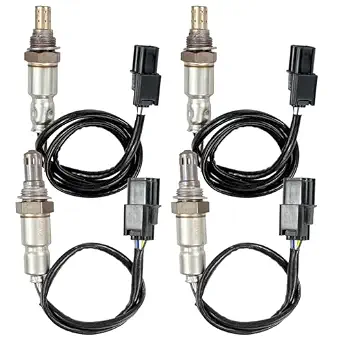 |
| Best Quality Built to a higher standard if you want something more solid | TRQ O2 Oxygen Sensor Set, 2 Upstream Sensors (Model OSA61811) |  |
| Best Value The sweet spot between price and what you get | BasaltAuto Oxygen Sensor (Upstream/Downstream) for 3.5L and 3.7L V6 Honda/Acura Fitments |  |
| Best Budget The cheapest option that still gets the job done reliably | A-Premium Downstream Heated O2 Oxygen Sensor, 4-Pin |  |
| Highest Rated A top-rated pick with lots of positive feedback | KEROMGDER Replacement Oxygen Sensor for Honda/Acura V6 (Upstream/Downstream) |  |
| Most Popular A crowd favorite that many people choose with confidence | Denso 234-4621 Replacement Oxygen (O2) Sensor |  |
| Best Seller A high-volume bestseller chosen again and again | Wobiwina Replacement Oxygen Sensor Set (4-Pack) for Honda/Acura 3.5L V6 |  |
1. zubaydee Replacement Oxygen Sensor Set (234-5098 / 234-4461) — 4-Pack

| Part numbers | 234-5098, 234-4461 |
|---|---|
| Unit count | 4.0 Count |
| Material type | Zirconia Ceramic, Platinum, Stainless Steel |
| Output type | electrical signal |
This zubaydee 4-pack supplies replacement zirconia oxygen sensors meant to restore proper air-fuel feedback on 3.5L V6 Honda and Acura models that use part numbers 234-5098 and 234-4461. The sensors use a platinum-coated zirconia element and stainless steel housings, so they perform the same basic function as factory sensors by producing an electrical signal proportional to exhaust oxygen content. Typical use is direct replacement during check-engine diagnostics for O2-related codes or when a sensor shows slow response and poor fuel trim. The set covers both upstream and downstream positions and includes four units for multiple-bank engines or staggered replacement. Benefits include straightforward swap-in fit where the part numbers match and having spare sensors ready to keep the fuel system and emission controls operating. Limitations are that compatibility is strictly by listed part numbers and model years, so buyers must confirm exact fitment, and aftermarket build quality can vary versus factory-brand sensors which may affect long-term durability and sensor drift over many miles.
Best for: Buyers who want a budget-conscious, ready-to-install set to restore proper oxygen sensing on covered Honda and Acura 3.5L V6s and prefer replacing all sensors at once for consistent performance.
Less Ideal for: Drivers who need guaranteed factory-brand longevity for high-mileage vehicles or those unwilling to verify exact part number fitment should consider OEM replacements or professional diagnosis first.
- Four sensors included so you can replace both banks or keep spares for future service.
- Zirconia ceramic element with platinum coating matches the common sensing chemistry used in factory units.
- Stainless steel construction and standard plug/threads make for a straightforward direct-replacement install when part numbers match.
- Covers common Honda/Acura 3.5L V6 applications listed by the 234-5098 and 234-4461 part numbers.
- Aftermarket units may not match OEM long-term stability and longevity exactly, so sensor drift over high mileage is possible.
- Fitment depends on exact part number and model year; not guaranteed for vehicles outside the listed applications.
Verdict: A practical four-pack replacement for Honda/Acura 3.5L V6s that lets you replace all oxygen sensors at once to quickly restore proper air-fuel control.
2. TRQ O2 Oxygen Sensor Set, 2 Upstream Sensors (Model OSA61811)

| Maximum Supply Voltage | 12 Volts (DC) |
|---|---|
| Mounting Type | Flange Mount |
| Upper Temperature Rating | 800 Degrees Fahrenheit |
| Material Type | Stainless Steel |
This TRQ two-piece upstream oxygen sensor kit replaces the factory sensors with pre-calibrated direct-fit units intended to restore fuel trim accuracy and emissions control. Typical use is a like-for-like replacement when check-engine codes or poor fuel economy point to failing upstream O2 sensors. Notable features include double-layered 310S stainless steel for added protection from moisture and debris and a stated 800 F temperature rating for durability near the exhaust. The sensors ship pre-assembled to simplify installation and are marketed as application specific so no modifications should be required. In practice these sensors can help recover throttle response and fuel economy compared with worn originals, and they integrate with the engine management system to clear O2-related fault codes when the issue is resolved. Limitations are that this is an aftermarket replacement rather than a factory brand part and long-term lifespan can vary with driving conditions and exhaust contaminants. Buyers should confirm exact fitment for their model and year before purchase.
Best for: Drivers focused on restoring engine performance, reducing emissions, and improving fuel economy with a straightforward, do-it-yourself replacement for failing upstream oxygen sensors.
Less Ideal for: Those who prioritize factory-brand parts for long-term warranty continuity or professional technicians who prefer OEM components and dealer installation.
- Two upstream sensors provided for full bank coverage on V6 upstream locations
- Pre-calibrated direct-fit design intended to avoid modifications during installation
- Double-layered 310S stainless steel construction for improved corrosion and debris resistance
- Pre-assembled wiring and connectors to simplify DIY replacement
- Aftermarket part so long-term durability may differ from factory-brand sensors
Verdict: Choose this TRQ two-sensor upstream kit if you want a ready-to-install, corrosion-resistant replacement that restores engine performance and emissions control on a V6 Accord.
3. BasaltAuto Oxygen Sensor (Upstream/Downstream) for 3.5L and 3.7L V6 Honda/Acura Fitments

| Output Type | electrical signal |
|---|---|
| Specific Uses For Product | automotive, vehicle exhaust gas measurement |
| Material Type | Stainless Steel, High Temperature Resistant Materials |
| Unit Count | 2.0 Count |
These BasaltAuto oxygen sensors are direct-fit replacements intended for upstream and downstream positions on select 3.5L and 3.7L Honda and Acura V6 engines. They supply the vehicle with electrical oxygen-level signals used by the engine control unit to adjust fuel trim and emissions. Construction uses stainless steel and high-temperature materials with laser-welded bodies and upgraded heating elements to speed warm-up and improve measurement stability. In practice that means quicker sensor readiness after cold starts, consistent lambda readings that can help restore proper fuel economy, and the ability to clear OBD-II oxygen sensor codes when the original unit has failed. The sensors come with protective covers and rolled threads to reduce damage during handling and installation. Limitations are that fitment is specific to the listed Honda and Acura models and years and the listing does not include an explicit long-term durability guarantee or OE part branding, so users who need factory-branded parts may prefer a dealer unit.
Best for: Buyers who want a cost-effective, factory-style replacement that restores proper oxygen sensing and fuel trim on specified V6 Honda or Acura vehicles and prioritize straightforward installation and predictable performance.
Less Ideal for: Drivers seeking factory-branded dealer parts, warranty-backed long-term replacements, or parts for vehicles outside the listed model years should consider other options.
- Direct-fit upstream and downstream replacements for specified 3.5L and 3.7L Honda and Acura V6 engines
- Stainless steel, high-temperature construction with laser-welded body for corrosion and heat resistance
- Upgraded heating element and core chip for faster warm-up and more stable sensor signals
- Protective covers and rolled threads to reduce shipping and installation damage
- No explicit manufacturer warranty or lifetime durability information provided
Verdict: A practical, direct-fit replacement that quickly restores oxygen sensing and fuel control on specified Honda and Acura V6 models.
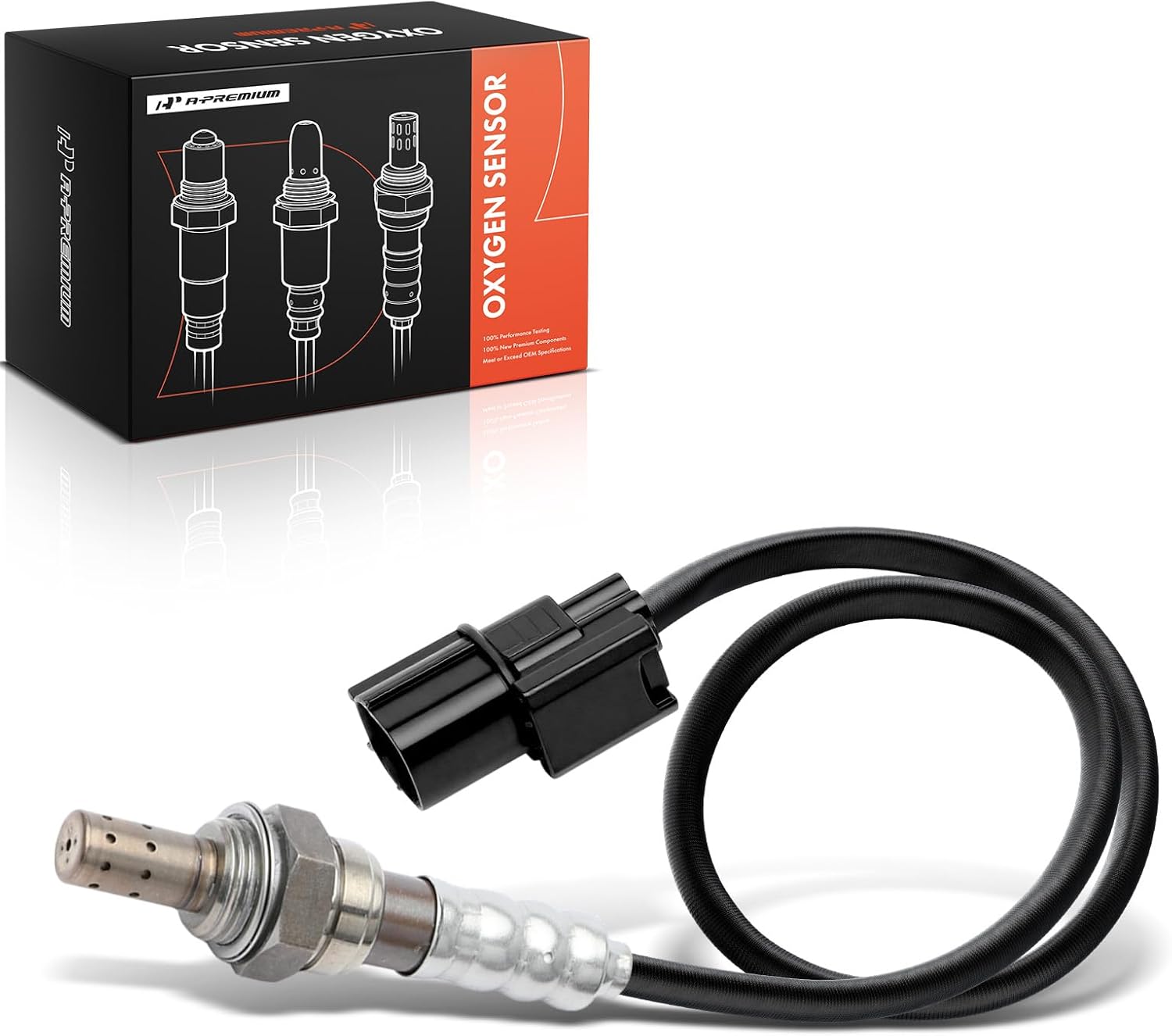
4. A-Premium Downstream Heated O2 Oxygen Sensor, 4-Pin
| Measuring Range | 0-100 kOhm at 300°C |
|---|---|
| Mounting Type | Threaded |
| Output Type | Digital |
| Material Type | Stainless Steel |
| Wire Quantity | 4 |
This A-Premium downstream O2 sensor is a direct-replacement style part intended to restore oxygen sensing on compatible V6 Honda Accord and Acura MDX models. It installs in the threaded downstream position and uses a 4-pin heated design so the sensor reaches operating temperature quickly and communicates digitally with the engine control system. In practice the sensor is used to replace a failing downstream unit to clear emissions or fuel-trim related codes and to help the catalytic converter monitoring system return to normal. The stainless steel construction and packaged connector make it straightforward for a DIY install or for a shop to swap in. Practical benefits include the heated element for faster response and the inclusion of the correct connector style to avoid splicing. Limitations are typical for aftermarket parts: longevity can vary compared with factory-brand sensors and fitment must be confirmed against engine code and position because several close part numbers are listed.
Best for: Buyers looking to fix emissions or fuel-trim codes on a budget who want a ready-to-install downstream sensor with a heated element and factory-style connector.
Less Ideal for: Those who prioritize longest-possible service life or require verified OEM brand parts for warranty or resale reasons should consider factory replacement options.
- Heated 4-pin design brings the sensor up to operating temperature faster
- Threaded stainless steel construction mirrors factory mounting style
- Includes matching connector gender to avoid wiring modifications
- Packaged for single-unit replacement matching downstream positions
- Aftermarket durability may not match factory-brand lifespan
Verdict: A cost-conscious downstream heated O2 sensor that provides a ready-to-install, factory-style replacement for V6 Accord/MDX downstream applications.
5. KEROMGDER Replacement Oxygen Sensor for Honda/Acura V6 (Upstream/Downstream)

| Mounting Type | Flange Mount |
|---|---|
| Output Type | Analog |
| Measurement Accuracy | ±1.5% |
| Material Type | Ceramic |
This KEROMGDER oxygen sensor replaces faulty upstream or downstream units on select Honda Accord, Odyssey, Pilot, Ridgeline and Acura V6 models to restore accurate air-fuel ratio feedback to the engine control unit. It is a flange-mount, analog zirconia ceramic sensor built to match factory-style output and measurement accuracy of about ±1.5 percent. Typical use is direct replacement during routine diagnostics or when codes like P0420 or P0135 appear and when rough idle, hesitation, or poor fuel economy point to a failing O2 sensor. The seller notes robust sealing and advanced coatings intended to extend life and keep signal transmission stable, which helps emissions compliance and smoother drivability after installation. Installation requires basic underbody access and wiring connection matching the factory harness; no additional components are included. The sensor does not claim smart features and is sold as a single unit, so buyers should confirm exact fitment and part number before ordering. For reliability-focused repairs this unit offers a practical factory-style replacement option with attention to long-term signal stability.
Best for: Buyers who want a dependable factory-style oxygen sensor replacement to restore emissions monitoring and drivability on specified Honda and Acura V6 models and prioritize long-term signal stability.
Less Ideal for: People looking for multi-pack value, plug-and-play bundles with extra hardware, or sensors for vehicles outside the listed Honda and Acura V6 fitments should consider other options.
- Designed as a direct upstream/downstream flange-mount replacement for specified Honda and Acura V6 models
- Zirconia ceramic sensing element with advanced coatings for stable signal transmission
- Measured accuracy around ±1.5% supports reliable air-fuel ratio reporting to the ECU
- Built to help clear emissions-related check engine codes and improve fuel economy when replacing a failed sensor
- Sold as a single sensor with no additional installation hardware or connectors included
Verdict: A factory-style, ceramic oxygen sensor built for reliable, long-term emissions monitoring and drivability restoration on specified Honda and Acura V6 models.
6. Denso 234-4621 Replacement Oxygen (O2) Sensor

| Material | Stainless Steel, Zirconium |
|---|---|
| Mounting Type | Thread-In |
| Output Type | Digital |
| Upper Temperature Rating | 1562 Degrees Fahrenheit |
| Wiring | 4 wire, ~20.28 inch harness |
The Denso 234-4621 is a threaded downstream narrow-band oxygen sensor built to match factory fit and function for a number of Acura and Honda vehicles. It installs in place of the original sensor and plugs into the factory harness using the supplied four-wire connector and roughly 20 inch lead, so most installs are straightforward for a DIYer with basic tools and an OBD2 reader. Notable features include a corrosion-resistant stainless steel body, a refined zirconia sensing element for faster response, and a PTFE filter to help block contaminants that shorten sensor life. Those design choices translate to reliable lambda readings, better fuel trim correction after replacement, and typically a cleared downstream O2 code when the sensor itself is the fault. The part is made to factory-style specifications for first-time fit, but fitment is limited to the exact year and model list; double-check the vehicle application before buying. Also this is a narrow-band downstream sensor, so it is not a universal unit and does not replace upstream air/fuel ratio sensors used for closed-loop fuel control on some engines.
Best for: Buyers who prioritize a proven, factory-quality replacement sensor and want the assurance of widespread positive user feedback and correct fitment for the listed Honda/Acura applications.
Less Ideal for: Drivers looking for a universal sensor or a front upstream air/fuel ratio sensor should choose a different part; those unsure of exact fitment should consult a dealer or parts guide before purchasing.
- Direct factory-style replacement for specified Acura and Honda models for proper fit and connector compatibility
- Corrosion-resistant stainless steel construction suited for undercarriage exposure
- Zirconia sensing element and PTFE filter improve response and resist contamination
- Supplied four-wire harness length simplifies installation without splicing
- Compatibility limited to the listed years and models so it will not fit all Accords or V6 variants
Verdict: Choose the Denso 234-4621 when you want a factory-quality downstream oxygen sensor with reliable fit and performance for the specified Honda and Acura models.
7. Wobiwina Replacement Oxygen Sensor Set (4-Pack) for Honda/Acura 3.5L V6

| Material Type | Zirconia, Platinum, Stainless Steel |
|---|---|
| Included Components | 4.0 Count |
| Output Type | electrical signal |
This Wobiwina set supplies four downstream/upstream oxygen sensors intended to replace part numbers 234-5098 and 234-4461 on 3.5L V6 Honda and Acura models. Installers use these sensors to restore accurate exhaust oxygen readings so the engine control module can correct fuel trim and emissions. The sensors are built with zirconia sensing elements and platinum wiring in stainless housings, which are the standard materials for long-term sensing reliability. Selling as a complete four-pack makes it convenient for owners who need to replace multiple sensors at once or keep spares on hand. Important limitations are that fitment is limited to the specific years and 3.5L V6 models listed and the listing warns it is not for California emissions versions in some years, so confirm part numbers and local emissions requirements before buying. Buyers should also expect basic installation work or a professional mechanic if they are not comfortable with exhaust plumbing and sensor connectors.
Best for: Buyers who prioritize a reliable, factory-style replacement for oxygen sensors on the specified 3.5L V6 Hondas and Acuras and prefer the convenience of a full set in one purchase.
Less Ideal for: Drivers with vehicles subject to California-specific emissions requirements or those who have a different engine than the listed 3.5L V6 should seek a model explicitly matched to their configuration.
- Complete four-pack covers both upstream and downstream replacements in one purchase
- Uses standard zirconia sensing element with platinum for reliable oxygen detection
- Stainless steel housings offer corrosion resistance for exhaust environments
- Compatibility is limited to specific 3.5L V6 model years and some listings exclude California emissions vehicles
Verdict: A practical four-pack replacement that gives risk-averse buyers a factory-style sensor set to restore correct air-fuel readings on the listed 3.5L V6 Honda and Acura models.
Choosing the Right Honda Accord V6 Oxygen Sensor: Key Factors to Consider
Fitment and Connector Compatibility
Correct fitment is the first practical requirement for an oxygen sensor replacement on the Accord V6. Thread pitch, thread length, and mounting boss dimensions must match the factory port to create a proper seal and avoid exhaust leaks. Connector pin layout and clip type should mate with the factory harness so you do not need to splice wires or modify the harness.
A mismatched sensor can introduce installation challenges and cause false readings if the probe sits at the wrong depth. Check the sensor's wiring length as well, because insufficient length can stress the connector or require rerouting. When evaluating options, prioritize sensors that explicitly list the Accord V6 as compatible to reduce installation time and risk.
Heater Circuit and Warm-Up Performance
Most O2 sensors for modern engines include an internal heater to bring the element to operating temperature quickly. A working heater reduces the time the engine runs in open-loop and minimizes cold-start emissions and drivability problems. For the Accord V6, heater reliability affects how fast the engine management system can switch to closed-loop fuel control.
Consider sensors with heater resistance and current draw specifications that match the vehicle's expectations. A heater that draws too much current can stress the circuit, while one that warms too slowly prolongs lean/rich hunting. Durable heater construction also helps sensors survive repeated thermal cycling and road exposure.
Signal Accuracy and Response Time
Signal accuracy determines how well the engine control unit can trim fuel delivery. Upstream sensors require fast, consistent cycling between rich and lean signals to enable precise short-term fuel trim adjustments. Downstream sensors are read more for catalytic converter efficiency and need stable output for comparative diagnostics.
When choosing a replacement, prioritize sensors with documented response times and stable voltage characteristics. Sluggish or noisy sensors can lead to poor fuel economy, increased emissions, and unnecessary diagnostic trouble codes. Reliable output also reduces the chance of intermittent drivability issues.
Durability and Environmental Resistance
Oxygen sensors operate in a harsh exhaust environment with extreme temperatures, vibration, and exposure to contaminants like oil and coolant. For an Accord V6, look for sensors with robust housing materials, good thermal insulation around the wiring, and protective sheathing that resists abrasion and chemical exposure.
Long-lasting sensors reduce the frequency of replacements and help maintain consistent engine performance. Consider warranty length and stated lifespan if available, but also evaluate construction details like ceramic element protection and reinforced cable joints for real-world durability.
Position and Role: Upstream Versus Downstream
Understanding whether the sensor is upstream (pre-catalyst) or downstream (post-catalyst) is essential. Upstream sensors directly influence fuel trim and need quick, accurate readings. Downstream sensors are primarily for monitoring catalytic converter efficiency and may have different response expectations.
Choosing the correct type for the targeted bank and position avoids misdiagnosis and improper engine control responses. For the Accord V6, ensure the replacement matches the sensor's intended bank and position so engine management interprets the data correctly.
Diagnostic Compatibility and Heater Diagnostics
Many modern vehicles monitor both the sensor signal and heater circuit for faults. A replacement should allow the vehicle's diagnostics to read expected voltage ranges and heater resistance. If the sensor's electrical characteristics deviate significantly from factory levels, it can trigger diagnostic trouble codes like those indicating heater circuit failure or slow response.
Verify that the replacement supports typical diagnostic parameters for the Accord V6 so that troubleshooting remains straightforward. This reduces the risk of recurring check engine light events after installation and simplifies future maintenance.
Common O2 Sensor Symptoms on the Accord V6
Several drivability signs commonly point to a failing oxygen sensor on the Accord V6. A persistent check engine light is the most obvious indicator, often accompanied by codes that reference specific banks and sensor positions.
Other symptoms include rough idle, hesitations during acceleration, and a noticeable drop in fuel economy. These occur because the engine control unit is receiving incorrect oxygen measurements and adjusts fuel delivery inappropriately.
- Erratic idle or stalling shortly after a cold start
- Reduced miles per gallon under mixed driving conditions
- Delayed throttle response or hesitation under load
- Codes that reference bank and sensor numbers, such as bank 1 sensor 1
Diagnosing Which Sensor Is Failing
Diagnosis starts with reading the engine codes to identify the bank and sensor position. On the Accord V6, bank 1 sensor 1 typically refers to the upstream sensor on the primary cylinder bank and is a frequent failure point due to exposure to combustion byproducts.
Visual inspection can reveal wiring damage, oil contamination, or a cracked sensor housing. If the wiring and connector look intact, electrical testing with a multimeter or scope can confirm heater circuit continuity and check the sensor output waveform for expected behavior.
- Check wiring and connector for corrosion or damage
- Measure heater resistance and compare to specifications
- Observe sensor voltage swings during warm idle to confirm responsiveness
How To Test an Oxygen Sensor Safely
Basic testing includes a heater resistance check and monitoring the sensor voltage while the engine warms. For the upstream sensor, voltage should oscillate between lean and rich as the engine operates in closed-loop. For the downstream sensor, you should see a more stable output used for catalyst monitoring.
Use proper safety precautions when working near the exhaust system, and avoid placing hands or probes near hot components. If you are not comfortable performing electrical checks, a professional diagnostic service can provide a waveform trace and heater circuit test.
- Disconnect the sensor connector before measuring heater resistance
- With the engine at operating temperature, backprobe the signal and observe voltage swings
- Compare readings to factory expected ranges to identify slow or stuck sensors
Installation Considerations for the Accord V6
Installing a replacement oxygen sensor on the Accord V6 often requires penetrating the exhaust heat and using correct torque on the sensor thread. Anti-seize on the sensor threads may be recommended by some manufacturers, but follow the vehicle's service guidance to avoid contaminating the sensor tip or altering torque readings.
Ensure the replacement sensor's connector and harness routing match the factory layout to prevent chafing and to keep the wiring away from moving parts. Allow the exhaust to cool sufficiently before attempting removal to reduce the risk of burns and to prevent damaged threads from being forced.
- Use the correct sensor socket to avoid damage to the hex or wiring
- Avoid getting anti-seize on the sensor element; apply only where manufacturer recommends
- Re-check connectors and routing after a short test drive for leaks or loose fittings
Interpreting Sensor-Related Trouble Codes
Codes that mention the oxygen sensor or bank and sensor numbers help pinpoint which sensor is likely at fault. For example, codes indicating heater circuit problems or slow response should direct attention to both the sensor and its wiring or fuse.
Not all codes mean the sensor itself is defective. Exhaust leaks, vacuum leaks, or fueling issues can produce similar codes. Use code data in conjunction with visual and electrical checks to avoid replacing a sensor unnecessarily.
- Heater circuit codes often require checking fuses, relays, and wiring before replacing the sensor
- Slow response codes suggest a worn sensor element or contamination
- Compare upstream and downstream readings to determine if the catalytic converter is influencing downstream behavior
When to Replace Upstream Versus Downstream Sensors
Upstream sensors directly affect fuel control and should be replaced when signal response degrades or when codes identify bank and sensor 1 faults. Downstream sensors can be left in place if they remain within expected ranges, except when diagnostic results or emissions testing indicate otherwise.
Consider replacing an upstream sensor first if you experience drivability or economy problems. Replace downstream sensors if catalyst monitoring codes appear or if both sensors on a bank show abnormal comparative behavior.
- Replace upstream sensor if persistent fuel trim or drivability issues occur
- Replace downstream sensor if catalyst efficiency codes or comparative faults appear
- When in doubt, perform signal tests to confirm which sensor is out of spec
Still looking for the perfect fit?
Select your Honda Accord configuration to see the most relevant Oxygen Sensors recommendations
How We Chose the Best Honda Accord V6 Oxygen Sensor
We prioritized items that match the Honda Accord V6 fitment and provide reliable sensor signals under typical driving loads. Our evaluation focused on sensor connector compatibility, wiring length, and thread size to ensure a straightforward install without modification. We also considered signal response time and voltage characteristics because accurate, timely oxygen readings matter for fuel trim corrections and emissions control.Durability was weighed through material and heater circuit design since heated sensors reach operating temperature faster and reduce cold-start emissions. We looked at sensor placement roles, distinguishing upstream (pre-catalyst) versus downstream (post-catalyst) requirements, because each position has different performance expectations. Electrical reliability criteria included heater resistance specifications and wiring insulation resistant to engine bay heat and contaminants.We excluded any items that required major harness changes, extensive trimming, or non-factory mounting hardware. Also removed options lacking clear fitment information for the Accord V6. The final list reflects sensors that meet OEM-style fitment, robust electrical performance, and practical durability for routine replacement.
Our full evaluation process is outlined in our review methodology.
FAQ
How long do oxygen sensors typically last on an Accord V6?
Lifespan varies with driving conditions and exposure to contaminants. Many sensors last several years, but repeated short trips, oil consumption, or coolant leaks can shorten service life, so expect variation based on use.
Will a bad oxygen sensor cause a check engine light on the Accord V6?
Often yes. The engine control unit monitors sensor response and heater circuits. Slow, stuck, or electrically faulty sensors commonly trigger trouble codes that illuminate the check engine light.
Can I replace an oxygen sensor myself on the Accord V6?
Many owners can perform the replacement with basic tools and a proper sensor socket, but take safety precautions for hot exhaust components and ensure you have the correct connector and thread fitment. If wiring or exhaust damage is present, professional help is recommended.
How do I know if the heater circuit is the problem versus the sensor element?
A simple resistance check across the heater terminals can indicate an open or shorted heater. If the heater reads normally but the signal does not respond, the sensing element may be degraded. Both visual inspection and electrical testing help isolate the issue.
Does replacing the oxygen sensor reset fuel trim on the Accord V6?
Replacing a sensor gives the engine control unit fresh data and over time fuel trim may normalize. Immediate changes are possible once the new sensor reaches operating temperature, but the ECU may need several drive cycles to adapt fully.
What does a code referencing bank 1 sensor 1 mean for my Accord V6?
Bank 1 sensor 1 typically points to the upstream oxygen sensor on the primary cylinder bank. The code usually indicates either the sensor is responding slowly, the heater circuit has an issue, or there is an exhaust or fueling condition affecting readings.
Final Verdict
When selecting an oxygen sensor for the Honda Accord V6, prioritize correct fitment, heater reliability, and fast, accurate signal response. These factors directly influence fuel economy, emissions, and drivability. Understand whether you need an upstream or downstream replacement and confirm electrical compatibility before installation.Balancing durability against installation convenience will guide most owners: choose a sensor that matches factory connector and thread specifications, offers robust heater performance, and reports stable voltage behavior. That approach helps ensure predictable engine control responses and reduces the chance of repeat diagnostics after replacement.
Explore More:
- Check out all Honda Accord parts & accessories
- Explore Oxygen Sensors Maintenance & Repair Guides
- Explore Engine
- Browse all Auto Parts
