

Note: This article contains affiliate links. If you click on these links and make a purchase, I may earn a small commission at no extra cost to you. This helps support my research and content. Read my full affiliate disclosure here.
If your Honda Accord is running rough, showing a persistent check engine light, or burning more fuel than usual, the Bank 1 Sensor 1 oxygen sensor may be the underlying cause. Choosing the right Bank 1 Sensor 1 oxygen sensor matters because this upstream sensor directly affects fuel trim, catalytic converter protection, and drivability for the Accord. The shortlist below focuses on properly fitted replacements that prioritize electrical compatibility, response speed, and long service life.The guide covers the top recommended options for the Accord, with attention to fitment, sensor type, and ease of install. We evaluated factors that matter to owners and explain how to match a sensor to your vehicle and needs. Read on to see the selected top picks and the criteria used to evaluate them.
Looking for other parts? See all Honda Accord parts & accessories.
Top Picks at a Glance
| Best Overall The best all-around choice for most situations | TAUTOY Oxygen O2 Sensor Kit (Upstream + Downstream) for 2003–2007 Honda Accord 2.4L |  |
| Best Quality Built to a higher standard if you want something more solid | NTK 24255 Oxygen Sensor |  |
| Best Value The sweet spot between price and what you get | AULINK 234-9040 Air Fuel Ratio Upstream Oxygen Sensor (2.4L L4) |  |
| Best Budget The cheapest option that still gets the job done reliably | QIJIAUTO 234-5010 Upstream Oxygen Sensor (Bank 1 Sensor 1) |  |
| Highest Rated A top-rated pick with lots of positive feedback | TRQ O2 Oxygen Sensor (Wide-Band Heated) — Direct-Fit Replacement |  |
| Most Popular A crowd favorite that many people choose with confidence | Denso Oxygen (O2) Sensor 234-4621 Replacement |  |
| Best Seller A high-volume bestseller chosen again and again | HTMXJA 2-Pack Upstream and Downstream Oxygen Sensors for 2003–2007 Accord 2.4L | 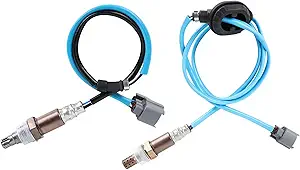 |
1. TAUTOY Oxygen O2 Sensor Kit (Upstream + Downstream) for 2003–2007 Honda Accord 2.4L

| Fitment | Honda Accord 2.4L 2003–2007 |
|---|---|
| Included components | Upstream 234-9040 and Downstream 234-4797 (2 pcs) |
| Mounting type | Flange Mount |
| Material type | Stainless Steel |
| Output type | Electrical signal |
This TAUTOY kit supplies one upstream (234-9040) and one downstream (234-4797) oxygen sensor meant to replace worn originals on Honda Accord 2.4L engines from 2003 through 2007. Installers will use the flange-mount sensors to restore the engine control module's oxygen readings so the air-fuel ratio and fuel trim behavior return to expected levels. The sensors are stainless steel with double laser welding and produce an electrical output signal compatible with typical engine management inputs. In practice the kit is handy for owners noticing check engine lights, rough idle, or reduced fuel economy; swapping both upstream and downstream sensors at once avoids mismatched performance. Fitment is targeted specifically to the listed Accord configurations, which simplifies selection, but one review notes possible fit issues so confirm connector and thread match before installation. This is a straightforward factory-replacement style option that balances durability and value for routine emissions-related repairs.
Best for: Buyers who want a balanced, value-focused replacement that restores emissions and fuel-trim performance on a 2003–2007 Honda Accord 2.4L and prefer replacing both sensors together to avoid mismatched operation.
Less Ideal for: Do not choose this kit if you need sensors for a different vehicle or nonstandard engine modifications; specialty high-performance sensors are a better fit for tuned engines.
- Includes both upstream and downstream sensors for matched replacement
- Stainless steel construction with double laser welding for durability
- Direct electrical output designed for factory engine management systems
- Packaged specifically for Honda Accord 2.4L 2003–2007 fitment to simplify selection
- One customer reported a fitment mismatch so connectors and threads should be checked before purchase
Verdict: A practical two-piece sensor kit that lets balanced buyers quickly restore correct oxygen sensing and fuel control on 2003–2007 Honda Accord 2.4L models.
2. NTK 24255 Oxygen Sensor

| Mounting Type | Threaded |
|---|---|
| Output Type | Push-Pull |
| Upper Temperature Rating | 1562 Degrees Fahrenheit |
| Material Type | Stainless Steel, Ceramic, Polymer |
The NTK 24255 is a threaded oxygen sensor built to match factory fit and function for direct replacement applications. It uses stainless steel and ceramic construction with a factory-style connector and is supplied with installation instructions for straightforward swap-in installation. In use it monitors exhaust oxygen content and feeds that signal to the engine computer so fuel trim and emissions control remain accurate, which helps restore fuel economy and keeps the catalytic converter operating properly. Notable features include a high upper temperature rating and vehicle-specific design details such as wire length and protective sleeve that simplify installation and reduce fitment issues. Because this is a direct replacement sensor, it does not alter performance beyond restoring correct sensor feedback; users seeking performance tuning or modified engine strategies will need programmable wideband options instead. Expect reliable, OEM-matching operation for bank 1 sensor 1 roles when the NTK part number matches your confirmed fitment.
Best for: Buyers who need a reliable replacement to restore correct oxygen sensing and emissions control on a performance-oriented Accord, prioritizing factory-fit reliability over tuning capability.
Less Ideal for: Drivers who plan to run custom engine tuning, wideband monitoring, or heavily modified exhaust setups should choose a dedicated performance wideband sensor instead.
- Factory-style connector and vehicle-specific design for easier installation
- Stainless steel and ceramic construction with high temperature rating for durability
- Supplied installation instructions and OE-matching wire length reduce fitment hassles
- Not a programmable wideband sensor so it does not support tuning beyond restoring stock behavior
Verdict: Choose the NTK 24255 when you want a factory-matching bank 1 sensor 1 replacement that reliably restores correct fuel-trim and emissions operation.
3. AULINK 234-9040 Air Fuel Ratio Upstream Oxygen Sensor (2.4L L4)

| Measuring Range | 10.0 – 20.0 AFR |
|---|---|
| Mounting Type | Plug-In Mount |
| Output Type | electrical signal |
| Upper Temperature Rating | 850 Degrees Celsius |
This upstream air fuel ratio oxygen sensor measures exhaust oxygen and sends an electrical signal to the engine control system so fuel trim and emissions are kept within expected ranges. It is a direct plug-in style sensor intended for the 2.4L L4 Accord engines and is used to clear check engine lights, smooth idle, and restore fuel economy when a failing sensor causes erratic readings. Notable features include a stainless steel, laser-welded body rated for high temperatures and a design that keeps contaminants and water out of the sensing element. In practice the sensor installs like a factory replacement and most buyers report immediate improvement in idle quality and diagnostic trouble code resolution. Limitations are that fitment is specific to the listed Accord configurations so verify engine and year before purchasing and a minority of users have reported slow response on some units, which can affect how quickly the ECU adjusts trims.
Best for: Buyers who want a practical, factory-style replacement to restore smooth idle and clear oxygen-sensor-related trouble codes on a 2.4L L4 Honda Accord. Ideal for owners focused on reliable, cost-effective maintenance rather than performance tuning.
Less Ideal for: Drivers seeking a high-performance or universal aftermarket oxygen sensor for multiple vehicles should look at specialized or programmable sensors instead.
- Direct plug-in design for straightforward replacement on specified 2.4L L4 Accords
- Stainless steel, double laser-welded housing for corrosion resistance and longer service life
- Upper temperature rating to 850°C suitable for exhaust conditions
- Filtered sensing element design helps prevent clogging from water and debris
- Compatibility is limited to specific Accord years and 2.4L L4 engine so it is not a universal sensor
- Some reports of slow sensor response which can delay ECU fuel trim corrections
Verdict: AULINK's 234-9040 is a straightforward, factory-style upstream oxygen sensor replacement that restores proper air-fuel readings on 2.4L L4 Honda Accords.
4. QIJIAUTO 234-5010 Upstream Oxygen Sensor (Bank 1 Sensor 1)

| Measurement Accuracy | ±1.5% |
|---|---|
| Mounting Type | Threaded |
| Output Type | electrical signal |
| Material Type | Stainless Steel |
This QIJIAUTO upstream oxygen sensor replaces a failing Bank 1 Sensor 1 to help restore stable idle, smoother acceleration, and correct fuel trim behavior on compatible Honda and Acura models. It is a threaded, 5-wire sensor built from stainless steel with a factory-style connector and is offered as a budget-friendly direct replacement for the listed part numbers. Installation is straightforward for a DIYer since it uses the standard threaded mount and male connector; most swaps require only basic hand tools and a sensor socket. The listing emphasizes precision matching and a protective layer intended to improve longevity compared with very cheap alternatives, and the reported measurement accuracy of ±1.5% suggests it will give reliable voltage feedback to the engine management system. Limitations include the usual risks with aftermarket sensors: longevity can vary with driving conditions and fuel quality, and buyers must confirm exact part numbers and fitment before ordering since fitment is specific to certain model years. Replacement restores drivability but does not address unrelated engine faults.
Best for: Buyers looking for a low-cost, direct replacement to clear a Check Engine light and restore normal fuel control on covered Honda and Acura models who prefer a DIY install.
Less Ideal for: Drivers who prioritize longest-possible service life or who want guaranteed OEM-brand longevity should consider higher-end branded sensors or dealer parts.
- Direct-fit design matching listed OEM part numbers for straightforward replacement
- Threaded 5-wire connector and factory-style plug simplify DIY installation
- Stainless steel construction with a protective layer for improved durability
- Measurement accuracy listed at ±1.5% for consistent sensor feedback
- Aftermarket longevity can vary compared with higher-cost name-brand sensors
Verdict: A budget-friendly, direct-fit upstream oxygen sensor that restores proper air-fuel feedback and is easy to install for DIY Honda and Acura repairs.
5. TRQ O2 Oxygen Sensor (Wide-Band Heated) — Direct-Fit Replacement

| Mounting Type | Flange Mount |
|---|---|
| Output Type | electrical signal |
| Upper Temperature Rating | 1600 Degrees Fahrenheit |
| Material Type | Ceramic |
This TRQ wide-band heated oxygen sensor is a direct-fit, pre-assembled replacement intended to replace a failed Bank 1 Sensor 1 on compatible Honda Accord applications. It uses a five-wire, flange-mount design with a heated element to reach operating temperature quickly, so the engine control module receives accurate air-fuel readings shortly after startup. The sensor is ceramic with a stainless-steel protective sleeve rated to high temperatures, and TRQ provides DIY installation videos to simplify swapping the unit without modifications. In practice this sensor should help restore fuel economy and throttle response while reducing emissions when the original sensor has degraded. The unit is sold singly and carries a two-year warranty, but buyers should confirm vehicle-specific fitment before ordering since compatibility is critical. Expect factory-replacement fit and performance when installed correctly, though professional-level diagnostic verification may still be required for complex drivability issues.
Best for: Buyers who prioritize a reliable, factory-quality replacement to restore engine performance and emissions control and who prefer a straightforward install with manufacturer support.
Less Ideal for: If you need a multi-pack for multiple sensor replacements or a custom-tuned aftermarket sensor, this single direct-fit unit is not the best choice.
- Direct-fit, pre-assembled design simplifies installation and avoids modifications
- Heated wide-band element provides faster warm-up and accurate air-fuel readings
- Stainless steel protection and ceramic sensing element for high temperature durability
- Includes manufacturer support materials and DIY installation videos
- Sold as a single sensor so replacing multiple sensors requires separate purchases
Verdict: Choose this sensor when you want a dependable, direct-fit heated wide-band replacement to reliably restore Bank 1 Sensor 1 function on affected Honda Accords.
6. Denso Oxygen (O2) Sensor 234-4621 Replacement

| Material | Stainless Steel, Zirconium |
|---|---|
| Mounting Type | Thread-In |
| Output Type | Digital |
| Upper Temperature Rating | 1562 Degrees Fahrenheit |
| Wiring | 4 wire, 20.28 inch harness |
This Denso 234-4621 is a factory-style replacement narrow-band oxygen sensor intended as a direct-fit swap for certain Acura and Honda models. It installs with a threaded, 4-wire harness and the connector plugs into the factory wiring, so it is typically used to replace a failing downstream O2 sensor that triggers a check engine light or degrades fuel trim. Notable features include corrosion-resistant stainless steel construction, a zirconia sensing element for faster response, and a PTFE filter to reduce contamination risk. In practice the sensor restores proper air-fuel feedback to the engine control module, which can improve fuel economy and emissions and clear fault codes when the cause was the sensor itself. The unit is built to factory replacement standards and is commonly noted for accurate fitment and reliable operation on supported vehicles. Limitations: it is a narrow-band downstream sensor only and must match the vehicle part number and connector; incorrect application or underlying exhaust or wiring faults will not be fixed by replacing the sensor alone.
Best for: Buyers who want a reliable, factory-style replacement to clear an oxygen-sensor-related check engine light and restore correct fuel trim on supported Acura and Honda vehicles.
Less Ideal for: Drivers who need an upstream air-fuel ratio sensor, a wideband performance sensor, or a universal aftermarket option that fits multiple makes should look elsewhere.
- Factory-quality fit and connector for direct replacement on supported Acura and Honda models
- Zirconia element and PTFE filter improve response and resist contamination
- Corrosion-resistant stainless steel housing for durability in exhaust environment
- 4-wire design includes heater circuit for quicker warm-up and consistent readings
- Designed only as a narrow-band downstream sensor so it will not substitute for upstream or wideband sensors
Verdict: Choose this Denso 234-4621 when you need a factory-quality downstream oxygen sensor that fits and functions like the original on supported Honda and Acura models.
7. HTMXJA 2-Pack Upstream and Downstream Oxygen Sensors for 2003–2007 Accord 2.4L
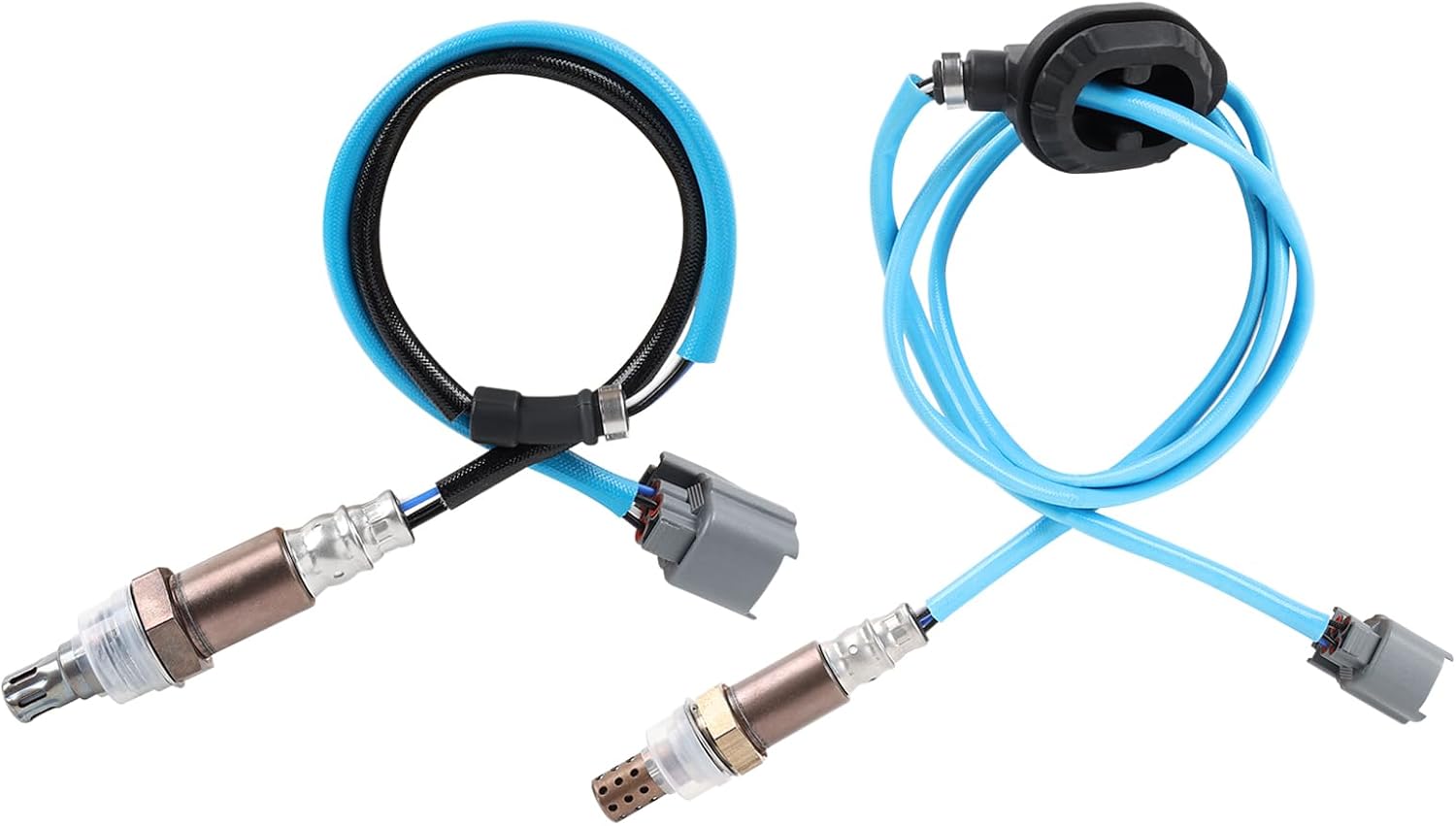
| Fitment | 2003-2007 Accord L4-2.4L |
|---|---|
| Connector Gender | Female |
| Wire Quantity | 4 |
| Length | 24in + 45in |
| Mounting Type | Flange Mount |
This HTMXJA pair provides an upstream and downstream oxygen sensor designed to match factory fit for 2003–2007 Accord 2.4L engines. The sensors monitor exhaust oxygen in real time to help the engine control module adjust fuel mixture and catalytic converter performance. Buyers will appreciate the pigtail connectors, supplied lengths for routing, and flange-mount design that make installation straightforward without modifications on compatible cars. The listing calls out high-temperature resistance and anti-seize on the threads, which helps durability and makes future removal easier. Most customer reports show quick check-engine light resolution and stable operation over hundreds of miles, though there are a few isolated failures so testing after installation is sensible. This is a practical budget alternative to factory parts when you need both Bank 1 sensors at once, but expect the occasional quality variance common with aftermarket sensor kits and be prepared to bench-test or swap if one unit proves defective.
Best for: Practical owners who want a cost-effective, matched replacement set to restore proper fuel trim and emissions on a 2003–2007 Accord 2.4L and prefer an easy direct-fit install.
Less Ideal for: Buyers seeking guaranteed factory-spec performance or a long OEM-backed warranty should consider higher-end branded sensors or dealer replacements.
- Sold as a matched upstream and downstream pair for complete Bank 1 coverage
- Flange-mount design and pigtail connectors for straightforward installation
- Listed anti-seize on threads and high-temperature materials for durability
- Connector gender and wire count match vehicle wiring (female, 4 wires) and includes ample lead length
- Some customers reported an individual sensor failure, indicating occasional quality variation
- Aftermarket sensors can sometimes leave a persistent engine-light code on certain vehicles despite functioning
Verdict: A practical matched upstream/downstream oxygen sensor kit that gives risk-averse buyers an affordable, direct-fit way to clear Bank 1 fuel and emissions issues on a 2003–2007 Accord 2.4L.
Choosing the Right Honda Accord Bank 1 Sensor 1 Oxygen Sensor: Key Factors to Consider
Fitment and Connector Compatibility
Correct fitment is essential because the Bank 1 Sensor 1 oxygen sensor mounts in a specific upstream location and must match the vehicle's harness connector. Using a sensor with the wrong thread size or connector can cause electrical faults, poor sealing, or require splicing that increases failure risk.
Confirming OEM-equivalent thread and plug type saves installation time and prevents wiring errors that could trigger new fault codes. For the Accord, prioritizing plug compatibility also reduces the chance of loose connections that degrade heater circuit operation or sensor signal integrity over time.
Sensor Type and Response Speed
Upstream sensors for Bank 1 Sensor 1 need to provide rapid, accurate voltage swings so the engine control unit can adjust fuel trim in real time. Faster response sensors reduce the duration of rich or lean conditions after load changes, which improves drivability and emissions performance.
Consider sensor element technology and whether the unit is specified for upstream use. Sensors designed for the pre-catalytic converter position often include a heater and narrower tolerance for fast response. Slow or drifting sensors can mask engine issues or produce intermittent drivability problems.
Heater Circuit Reliability
The integrated heater helps the oxygen sensor reach operating temperature quickly, which is crucial for accurate readings during cold starts and short trips. A faulty heater means the sensor will operate in a colder state longer, causing delayed feedback to the engine control unit and possible long-term fuel trim errors.
Check the sensor's rated heater current, connector pins, and any built-in heat protection. Durable heater wiring and proper insulation help resist heat-cycle failures and exposure to exhaust heat for extended service life.
Durability and Corrosion Resistance
Oxygen sensors are exposed to high temperatures, exhaust contaminants, and road debris. Sensors built with corrosion-resistant housings, protected wiring, and robust strain reliefs are less likely to suffer early failure from salt, moisture, or vibration.
Consider coatings, connector seals, and flexible protective sleeves when selecting a sensor. Longer-lasting sensors reduce the frequency of replacement and the risk of sudden sensor faults that trigger the check engine light.
Signal Accuracy and Noise Immunity
Accurate voltage output and resistance to electrical noise are important so the engine control unit receives a clean, interpretable signal. Electrical interference from nearby components or degraded wiring can produce erratic readings and incorrect fuel trim adjustments.
Look for sensors with well-shielded leads and stable signal characteristics across operating temperatures. Consistent sensor output helps ensure predictable engine behavior and simplifies diagnosis if other faults arise.
Ease of Installation and Serviceability
A sensor that installs without bracket modifications or harness splicing saves time and lowers installation risk. Features like clearly labeled wiring, a matching connector, and a heat-resistant boot can make do-it-yourself replacement straightforward for many Accord owners.
Also consider access to replacement parts and whether the sensor's protective sleeve or strain relief can be serviced. Easier installation reduces the likelihood of installation errors that could otherwise cause premature failure or new fault codes.
Why Bank 1 Sensor 1 Matters on the Accord
Bank 1 Sensor 1 is the upstream oxygen sensor located before the catalytic converter on the side of the engine containing cylinder one. Its primary role is to provide rapid feedback on exhaust oxygen content so the engine control unit can finely tune air-fuel ratio during all operating conditions.
When the upstream sensor is functioning properly, fuel trims stay within expected ranges, cold-start behavior improves, and the catalytic converter is protected from prolonged rich conditions. If this sensor falters, you may notice rough idle, increased fuel consumption, or recurring check engine codes tied to oxygen sensor performance.
- Directly affects short-term and long-term fuel trim
- Protects catalytic converter by preventing extended rich operation
- Critical for emissions testing and on-road emissions performance
Common Symptoms and Diagnostic Steps
Typical O2 sensor symptoms include a persistent check engine light, rough idle, decreased fuel economy, and difficulty passing emissions checks. Not every symptom means the sensor itself is bad; wiring faults, vacuum leaks, and fuel system issues can produce similar behavior.
Start diagnosis by scanning for oxygen-sensor-related trouble codes, then inspect wiring and connector integrity. Verify heater circuit continuity and measure sensor response with a live-data tool if available. A combination of code presence, poor heater readings, and sluggish voltage response usually points to the sensor as the root cause.
- Look for codes referencing upstream oxygen sensors or heater circuit faults
- Inspect connector pins and harness for corrosion or damage
- Use live fuel trim and sensor voltage data to confirm slow or stuck readings
Matching Sensor Specifications to Accord Engine Needs
Not all oxygen sensors are created equal; upstream units need a functioning heater and appropriate sensing element for the Accord engine's operating range. Check the OEM thread size, length of pigtail, and number of pins to ensure an exact match.
Also consider thermal tolerances and whether the sensor has additional protection against exhaust-side contaminants. Choosing a sensor specified for upstream application avoids compatibility problems that could affect signaling and engine management.
- Confirm heater pin count and electrical compatibility
- Verify physical dimensions and thread type before purchase
- Prefer sensors with protective sleeves for harsh environments
Installation Tips for a Reliable Replacement
When replacing the Bank 1 Sensor 1 oxygen sensor on the Accord, allow the exhaust to cool and use a proper oxygen sensor socket to avoid damaging the sensor body. Apply anti-seize only where recommended and avoid contaminating the sensing tip with grease or thread compound.
Tighten to the manufacturer-specified torque to ensure a proper seal and avoid exhaust leaks. If the new sensor includes a longer pigtail or protective boot, route wiring away from heat sources and moving parts to prevent premature wear.
- Always check heater circuit continuity before and after install
- Avoid contaminating the sensing tip with lubricants
- Secure wiring with clips or ties to prevent chafing
When to Test Versus Replace
Testing the oxygen sensor can save money when the fault lies in wiring or a temporary condition. If heater resistance and signal response are within expected ranges, further diagnosis of fuel delivery or vacuum leaks is warranted.
However, if the sensor shows no voltage swing, has a failing heater, or repeatedly triggers upstream oxygen sensor codes after other causes are ruled out, replacement is typically the most practical solution to restore correct fuel trim and emissions control.
- Test heater continuity and sensor voltage response before replacing
- Replace if the sensor fails heater checks or shows no dynamic voltage change
- Consider replacement after multiple intermittent faults with confirmed sensor-related codes
Still looking for the perfect fit?
Select your Honda Accord configuration to see the most relevant Oxygen Sensors recommendations
How We Chose the Best Honda Accord Bank 1 Sensor 1 Oxygen Sensor
Our selection process concentrated on the attributes that most affect performance and longevity of Bank 1 Sensor 1 oxygen sensors for the Honda Accord. We prioritized fitment and connector compatibility first, because an exact electrical and mounting match prevents splicing and ensures correct sensor readings. Response time and sensing accuracy were next, since quicker voltage changes lead to more precise fuel trim adjustments and better emissions control. Corrosion resistance and durable wiring were included to reduce failure risks from road salt, heat cycling, and vibration. We also considered heater circuit reliability because an operational heater accelerates warm-up and accurate readings in cold starts. Materials and sensor element quality factored into expected service life.Products were excluded if documentation failed to confirm fitment to the Accord or if the sensor lacked a proper heater circuit for upstream applications. We filtered out options that required vehicle-side modifications. The final list reflects sensors that balance correct fit, electrical compatibility, sensing speed, durable construction, and clear installation guidance.
Our full evaluation process is outlined in our review methodology.
FAQ
How can I tell if my Accord's Bank 1 Sensor 1 is failing?
Symptoms often include a steady check engine light, rough idle, or reduced fuel economy. Diagnostics should include scanning for sensor-related codes, inspecting the harness, and checking heater circuit continuity. Live-data showing a slow or stuck voltage trace usually indicates sensor degradation.
Can a bad oxygen sensor cause a rough idle on my Accord?
Yes, an upstream oxygen sensor that provides incorrect or delayed feedback can cause the engine control unit to run improper fuel trims, which can manifest as a rough idle. However, other causes such as vacuum leaks or ignition problems can produce similar symptoms.
Is it necessary to replace the heater-equipped upstream sensor instead of just the downstream unit?
Upstream sensors are responsible for rapid feedback to the engine control unit and usually include a heater to reach operating temperature quickly. Replacing the upstream unit is necessary when heater failure or slow response affects fuel trim. Downstream sensors serve a different role monitoring converter efficiency.
What tests are useful before replacing the sensor?
Useful tests include scanning for trouble codes, measuring heater circuit resistance, inspecting connector integrity, and observing live voltage response under varying engine loads. These checks help distinguish sensor failure from wiring or engine-related issues.
Will clearing codes without fixing the sensor make the problem go away?
Clearing codes may temporarily extinguish the check engine light, but if the underlying sensor or wiring issue remains, the code typically returns. Persistent faults affecting fuel trim or emissions should be diagnosed and repaired to avoid ongoing drivability issues.
Do I need special tools to install the Bank 1 Sensor 1 oxygen sensor?
A proper oxygen sensor socket and a torque wrench are recommended to remove and install the sensor without damage. Accessory tools like penetrating oil for a seized sensor and dielectric-safe anti-seize for threads can make the job easier, but avoid contaminating the sensing element.
Final Verdict
When selecting a Bank 1 Sensor 1 oxygen sensor for the Honda Accord, prioritize exact fitment, a functioning heater circuit, and fast, accurate signal response. Durable construction and proper wiring protection reduce the chance of premature failure and recurring faults.Balance ease of installation with the sensor's electrical and thermal specifications to restore correct fuel trim and emissions control. Focusing on those core criteria will help you choose a reliable upstream oxygen sensor that keeps the Accord running smoothly.
Explore More:
- Check out all Honda Accord parts & accessories
- Explore Oxygen Sensors Maintenance & Repair Guides
- Explore Engine
- Browse all Auto Parts
