

Note: This article contains affiliate links. If you click on these links and make a purchase, I may earn a small commission at no extra cost to you. This helps support my research and content. Read my full affiliate disclosure here.
If your 2013-2017 Honda Accord is showing rough idle, reduced fuel economy, or an illuminated check engine light, the oxygen sensor is a common culprit. Replacing a failing oxygen sensor can return the engine to proper air-fuel control and reduce emissions while restoring drivability. This guide focuses on top oxygen sensor options specifically for the 2013-2017 Accord, shortlisted for fit quality and reliable performance.Below you will find concise guidance on the selection criteria used, the most relevant technical considerations for this vehicle, and practical tips to help you choose and install the right sensor for your Accord.
Looking for other parts? See all Honda Accord parts & accessories.
Top Picks at a Glance
| Best Overall The best all-around choice for most situations | DOSKJOK Heated Oxygen Sensor, Upstream/Downstream Compatible with 2013–2017 Accord 2.4L |  |
| Best Quality Built to a higher standard if you want something more solid | Denso 234-4574 Oxygen Sensor |  |
| Best Value The sweet spot between price and what you get | Wobiwina Oxygen Sensor Set (234-9131 / 234-4980) |  |
| Best Budget The cheapest option that still gets the job done reliably | JUSNBASR Upstream & Downstream Oxygen Sensors for Honda 2.4L |  |
| Highest Rated A top-rated pick with lots of positive feedback | Denso Air/Fuel Ratio Sensor 234-9131 |  |
| Most Popular A crowd favorite that many people choose with confidence | A-Premium Downstream Heated Oxygen Sensor for Honda and Acura (APOS0512D) |  |
| Best Seller A high-volume bestseller chosen again and again | GDUKOP Upstream and Downstream Oxygen Sensors (2-Pack) Compatible with 2013–2017 Honda Accord 2.4L |  |
1. DOSKJOK Heated Oxygen Sensor, Upstream/Downstream Compatible with 2013–2017 Accord 2.4L

| Position | Upstream Downsteam |
|---|---|
| Sensor Type | Heated |
| Universal Or Specific Fit | Specific |
| Applicable Models | Accord 2013-2017 2.4L; CR-V 2012-2019 2.4L; ILX 2016-2020 2.4L; TLX 2015-2020 2.4L |
This DOSKJOK oxygen sensor is a heated, vehicle-specific unit intended to replace a failing upstream or downstream sensor on 2.4L Hondas. It installs in the factory location and uses the original-style plug so it is typically a straightforward swap for DIYers or technicians. The heated element helps the sensor reach operating temperature faster, which improves closed-loop fuel control and idle stability after cold starts. The listing emphasizes durability and high-temperature resistance and notes pre-coated threads to ease installation. In practical use it can clear a check-engine code, stabilize fuel economy, and help pass emissions tests when matched correctly to the vehicle. Limitations to watch for are fitment accuracy and long-term sensing precision versus higher-end OEM units; some users report mixed longevity and occasional compatibility confusion for non-matching engine variants. If the vehicle has a specific ULEV or special emissions configuration, confirm the exact part number before replacing the sensor.
Best for: Buyers who want a cost-effective, direct-replacement oxygen sensor to clear codes, restore fuel trim, and pass emissions on 2013–2017 Accord 2.4L cars while keeping installation simple.
Less Ideal for: Shoppers who prioritize maximum long-term durability and factory-exact sensing characteristics for vehicles with special emissions configurations should consider higher-end or factory-brand sensors instead.
- Specific fitment for 2.4L Honda models listed, simplifying replacement
- Heated sensor element reaches operating temperature faster for better cold-start control
- Pre-coated threads and OEM-style plug make installation easier
- Designed for high-temperature, oxidation-resistant operation to improve durability
- Aftermarket construction may not match the long-term precision or lifespan of factory-quality sensors
Verdict: A practical direct-fit heated replacement that restores fuel control and emissions function on 2.4L Accord models without complicated installation.
2. Denso 234-4574 Oxygen Sensor
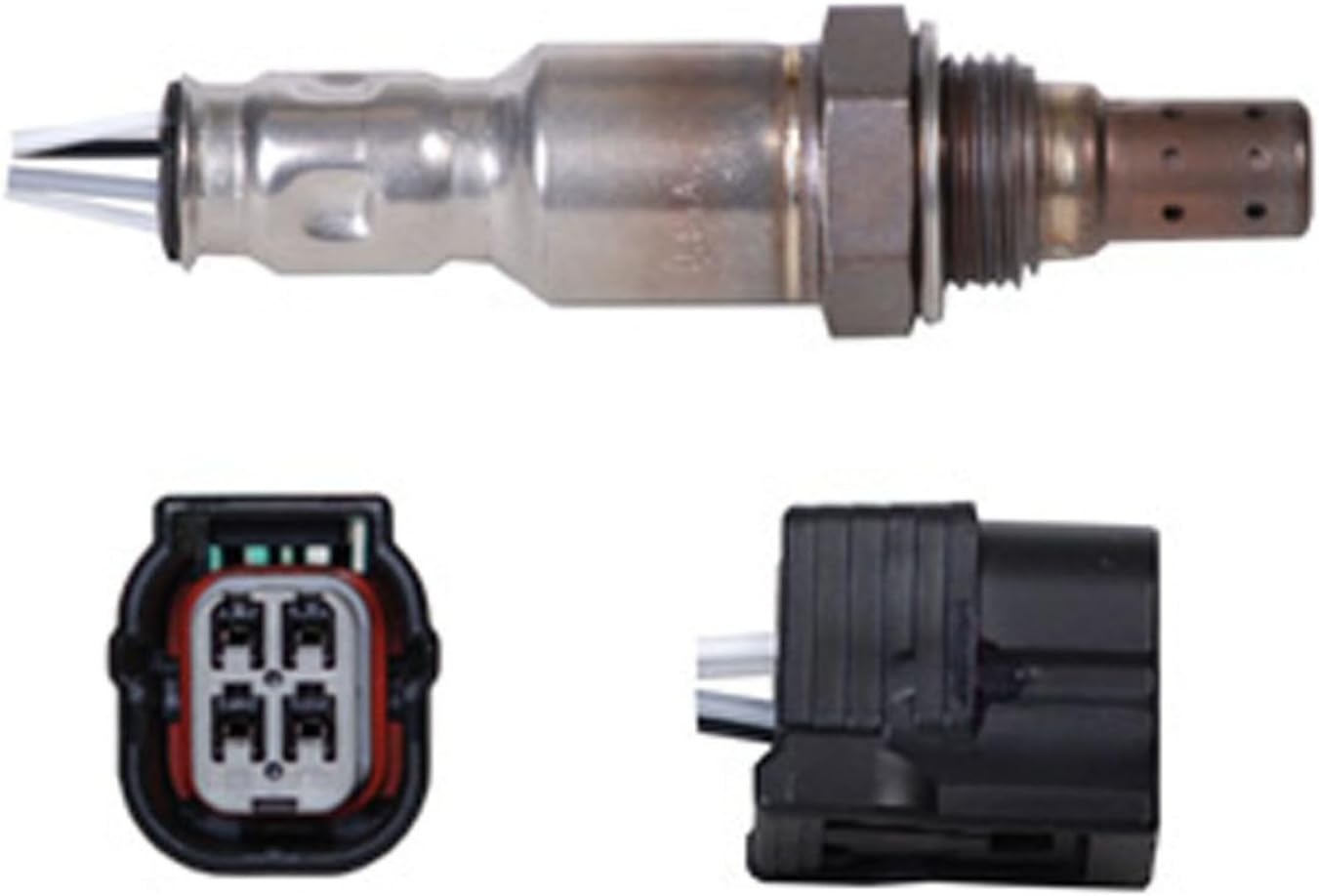
| Material | Stainless Steel, Zirconium |
|---|---|
| Mounting Type | Thread-In |
| Output Type | Electrical signal |
| Upper Temperature Rating | 1472 Degrees Fahrenheit |
The Denso 234-4574 is a factory-quality downstream O2 sensor intended as a direct replacement to restore proper air/fuel feedback after the catalytic converter. It installs as a threaded, plug-in sensor and outputs the electrical signal the engine control unit expects for catalytic efficiency and fuel trim correction. Typical use is swapping a failing downstream sensor to clear P0420-style codes, recover drive-cycle readiness, and return fuel economy and emissions monitoring to normal. Notable features include stainless steel construction with a zirconium sensing element and a high upper temperature rating that suits underbody exhaust exposure. Users report straightforward fit and fast resolution of cat-efficiency codes on Accord models when the sensor was the underlying fault. Trade-offs are that connector tip and harness length can differ slightly from factory parts so minor mounting adjustments may be needed, and this is a single-sensor replacement rather than a multi-sensor kit.
Best for: Drivers focused on restoring engine performance and emissions function on 2013–2017 Accords who prioritize using a factory-quality replacement to clear drivability or catalytic-efficiency codes.
Less Ideal for: People seeking a universal or multi-sensor kit for multiple vehicles or those who need a sensor with custom-length wiring and mounting brackets included.
- Factory-quality manufacturing and materials from a reputable OEM supplier
- Stainless steel body and zirconium sensing element for durable high-temperature operation
- Thread-in design provides direct replacement fit for compatible downstream ports
- Consistently resolves P0420 and similar catalytic-efficiency issues when the sensor is the root cause
- Connector tip and harness length can vary slightly from factory parts requiring a small mounting tweak
- Sold as a single sensor so additional sensors must be purchased separately if multiple replacements are needed
Verdict: Choose this Denso downstream oxygen sensor when you want a factory-quality replacement that reliably clears P0420-style issues and restores proper emissions and fuel control on 2013–2017 Accords.
3. Wobiwina Oxygen Sensor Set (234-9131 / 234-4980)

| Measuring Range | 20.9% – 21% |
|---|---|
| Mounting Type | Flange Mount |
| Output Type | electrical signal |
| Specific Uses For Product | automotive |
This Wobiwina set supplies two oxygen sensors listed as replacements for 2.4L Honda Accord (2013–2017) and CR-V (2012–2019). They monitor exhaust oxygen and send electrical signals to the engine control system so fuel trim and ignition timing can be corrected; typical use is swapping a failed sensor to clear a check engine light or restore fuel economy. The sensors are flange-mount style and match the listed part numbers 234-9131 and 234-4980, so installation is the same as a factory sensor and they plug into the stock wiring. Buyers report generally solid fit and quick resolution of emissions faults, though some users mention early failures on a minority of units, so expect variable longevity compared with higher-end branded sensors. These are a budget-friendly, direct-replacement option for routine maintenance or repair, but if you prioritize long-term durability you may prefer a premium name-brand sensor or professional remanufactured unit.
Best for: Buyers who want an affordable, straightforward replacement to clear emissions faults and restore fuel trim on a 2.4L Accord without modifying wiring or mounting.
Less Ideal for: Those who need long-term, high-durability sensors for heavy-duty use or who prefer OEM-brand parts and extended proven lifespan should consider higher-end alternatives.
- Direct-replacement for the listed 234-9131 and 234-4980 part numbers, simplifying installation
- Flange-mount design and standard electrical output make it compatible with factory wiring and connectors
- Packaged as a set of two so you can replace both sensors at once when needed
- Some reviewers reported premature failures, so durability may vary unit to unit
Verdict: A cost-conscious, direct-fit replacement set that restores engine oxygen sensing and emissions function for 2.4L Honda Accord owners looking for a quick, do-it-yourself repair.
4. JUSNBASR Upstream & Downstream Oxygen Sensors for Honda 2.4L

| Mounting Type | Flange Mount |
|---|---|
| Output Type | electrical signal |
| Included Components | Upstream & Downstream Oxygen O2 Sensor |
| Material Type | Stainless Steel, High-quality materials |
These JUSNBASR oxygen sensors come as an upstream and downstream set for compatible Honda 2.4L models and are intended as direct replacement sensors for stock units. They monitor exhaust oxygen content and send electrical signals to the engine computer so fuel trim and emissions control stay within expected ranges. The sensors use stainless steel housings and heat-resistant wiring with sealed connectors to resist corrosion and thermal stress. For a budget-focused repair or maintenance job the set covers both sensor positions so you can replace worn parts at once and avoid multiple trips. Expect basic compatibility with 2013–2017 Accord 2.4L applications when part numbers match, but note that aftermarket fit and long-term durability can vary compared with factory parts. Installation is standard for O2 sensors but may require an oxygen sensor socket and care with connector clips. This is a practical option when cost is the priority and you need a full pair to restore proper engine operation and emissions feedback quickly.
Best for: Buyers looking for an affordable way to replace failing oxygen sensors on a Honda 2.4L who prioritize immediate fix and lower parts cost over OEM longevity.
Less Ideal for: Drivers seeking a long-term factory-quality replacement or professional shops specifying OEM parts for warranty-sensitive repairs should consider higher-end branded sensors.
- Sold as an upstream and downstream pair so both sensors can be replaced at once
- Stainless steel housing and heat-resistant wiring aim to resist corrosion and heat
- Includes sealed connectors for straightforward electrical hookup
- Aftermarket longevity and exact fit can be less consistent than factory replacements
Verdict: A cost-conscious complete upstream and downstream sensor set that restores oxygen sensing quickly for 2013–2017 Honda Accord 2.4L applications.
5. Denso Air/Fuel Ratio Sensor 234-9131

| Measurement Accuracy | ±1% |
|---|---|
| Measuring Range | 12 – 18 |
| Mounting Type | Threaded Mount |
| Output Type | Analog |
| Upper Temperature Rating | 1000 Degrees Celsius |
This Denso air/fuel ratio sensor is a direct-replacement wide-band sensor built to match factory performance for the 2013–2017 Honda Accord. It measures air/fuel ratios across a broad range and uses a quick-response planar zirconia element and tarnish-proof platinum electrodes for stable readings and extended life. Typical use is as a repair or scheduled replacement to restore accurate fuel trim and emissions control; the threaded mount and four-wire harness make installation straightforward for technicians or experienced DIYers. The sensor’s ±1% measurement accuracy and 1000 C upper temperature rating mean it holds up under normal engine heat and gives the engine computer reliable data to optimize fuel economy and catalytic converter protection. Limits to consider are that it is an analog sensor intended as a factory-style replacement, so it does not add aftermarket tuning features and requires correct harness and connector fitment for proper operation.
Best for: Buyers who prioritize dependable, factory-equivalent reliability and want a direct replacement sensor to restore accurate fuel trim and emissions control on a 2013–2017 Accord.
Less Ideal for: Drivers seeking performance tuning, aftermarket data logging, or sensors with expanded features beyond factory-style function should consider specialty wide-band controllers instead.
- Factory-quality replacement designed for first-time fit in specified Accord years
- Wide-band measurement with fast planar zirconia element for quick, accurate air/fuel readings
- Tarnish-proof platinum electrodes improve durability and maintain accuracy over time
- High temperature rating supports reliable operation in hot exhaust conditions
- Requires correct connector and wiring fitment; not a universal plug-and-play for unrelated models
Verdict: Choose this Denso sensor when you want a reliable, factory-quality replacement that restores accurate air/fuel control on a 2013–2017 Honda Accord.
6. A-Premium Downstream Heated Oxygen Sensor for Honda and Acura (APOS0512D)

| Measurement Accuracy | Meets OE Specifications |
|---|---|
| Mounting Type | Threaded |
| Output Type | Electrical signal |
| Upper Temperature Rating | 1000 Degrees Celsius |
| Wire Quantity | 4 |
This A-Premium downstream heated oxygen sensor is a direct-fit replacement intended to restore proper exhaust oxygen sensing and emissions performance on compatible Honda and Acura vehicles. It installs via a threaded mount and plugs into the factory connector, so it is used in place of a failed downstream sensor to clear codes, normalize fuel trims, and help pass emissions tests. The sensor is a heated four-wire design built from metal and ceramic with an electrical output signal and a 1000 C upper temperature rating, giving it the durability needed in the exhaust environment. Practical benefits include meeting factory measurement accuracy claims and offering simple bolt-in replacement without modifying wiring. Limitations to note are that aftermarket sensors can show variation in long-term durability versus factory parts and performance depends on correct fitment for the specific engine and downstream location. This part targets downstream positions only and buyers should confirm the exact sensor location and connector before ordering.
Best for: Buyers who want a straightforward, evidence-backed replacement to resolve downstream O2 sensor faults and restore emissions and fuel-trim behavior on covered Honda and Acura models.
Less Ideal for: Drivers seeking an exact factory-brand part or those who prefer to replace upstream sensors or different vehicle models should consider other options.
- Direct-fit threaded replacement that uses the factory-style female connector for straightforward installation
- Heated four-wire design provides faster warm-up for accurate readings after cold starts
- Meets stated factory measurement accuracy for restoring emissions monitoring and fuel trim control
- High upper temperature rating and metal/ceramic construction suited for exhaust environments
- Long-term durability may vary compared with factory-brand sensors since this is an aftermarket unit
Verdict: A practical, vehicle-specific heated downstream oxygen sensor that gets emissions monitoring and fuel trims back to factory-like performance with minimal fuss.
7. GDUKOP Upstream and Downstream Oxygen Sensors (2-Pack) Compatible with 2013–2017 Honda Accord 2.4L

| Mounting Type | Plug Mount |
|---|---|
| Output Type | electrical signal |
| Specific Uses For Product | automotive – honda |
| Included Components | Upstream & Downstream Oxygen Sensor |
This GDUKOP 2-pack includes an upstream and downstream oxygen sensor intended for 2013–2017 Honda Accord 2.4L engines. It plugs into the factory harness for a straightforward swap and is meant to clear check engine lights, correct rough idle or hesitation, and help restore fuel economy by returning accurate air-fuel readings to the engine computer. The sensors are constructed from metal and ceramic materials and are described as heat resistant for long-term operation in the exhaust stream. Buyers report a mix of outcomes: several say installation is simple and solved their check engine light, while a few report fitment problems or a dead unit from the box. There is no evidence of special calibration needs, so installation is a direct replacement when the part numbers match. For someone seeking a budget replacement to bring emissions and drivability back to factory behavior, these sensors offer an accessible option, but the inconsistent quality reports mean you should verify connector fit and test each sensor after installation.
Best for: Buyers who want an inexpensive, direct-replacement sensor pair to clear emission faults and restore normal drivability on a 2013–2017 Accord 2.4L and prioritize a straightforward swap over premium-brand certainty.
Less Ideal for: Drivers who need guaranteed factory-grade reliability for long-term high-mileage use or those unwilling to troubleshoot potential fitment or quality inconsistencies should consider OEM or higher-end alternatives.
- Sold as an upstream and downstream pair so both banks can be replaced at once
- Plug-mount design intended for direct, plug-and-play installation with factory wiring
- Materials listed for high heat and pressure resistance aimed at long service life
- Specifically lists compatible Accord 2.4L years and manufacturer part numbers for easier fit checks
- Customer reports show occasional dead units out of the box or inconsistent performance
- Some buyers experienced fitment problems despite listed compatibility
Verdict: A cost-effective plug-and-play upstream/downstream sensor pair for 2013–2017 Accord 2.4L owners who want to quickly restore emissions and drivability without a complex installation.
Choosing the Right 2013-2017 Honda Accord Oxygen Sensor: Key Factors to Consider
Fitment and Connector Compatibility
Correct thread size, mounting depth, and electrical connector are essential for a trouble-free replacement. A sensor that matches the factory mounting and wiring avoids the need for adapters or splicing, which can introduce bad grounds or signal interference.
For the 2013-2017 Accord you should verify both the physical thread pitch and the harness plug style. Improper fitment can cause exhaust leaks at the bung or intermittent signals that trigger a check engine light, so prioritize exact-fit parts or those explicitly listed for these model years.
Sensor Response Time and Warm-Up
How quickly a sensor reaches operating temperature and responds to changes in exhaust oxygen affects closed-loop fuel control. Faster warm-up and response reduce the time the engine spends in open-loop mode after startup, improving idle quality and fuel economy.
Select sensors with an internal heater circuit rated for rapid warm-up that is compatible with the Accord's heater control strategy. Slower sensors can prolong rich or lean conditions and make drivability issues more noticeable during short trips.
Upstream Versus Downstream Placement
The Accord uses upstream and downstream oxygen sensors for different control tasks. Upstream sensors (pre-catalyst) provide primary oxygen readings to the engine control unit for air-fuel management. Downstream sensors (post-catalyst) monitor converter efficiency.
When replacing sensors, confirm which bank and sensor position you are addressing. A mislocated replacement will not correct the underlying control issue. Pay special attention to bank and sensor numbering as indicated by your vehicle diagnostics to ensure the right sensor is replaced.
Heater Circuit Integrity
Most replacement oxygen sensors include a heater element to bring the sensor to operating temperature quickly. A failed heater can cause slow response and trigger heater-related diagnostic trouble codes such as heater circuit faults.
Check the expected heater resistance and confirm the replacement supports the factory heater control. If the heater wiring in the harness is brittle or corroded, replacing the sensor alone may not solve a fault code caused by wiring issues.
Durability and Contaminant Resistance
Sensors are exposed to soot, oil, and fuel blow-by, which can coat the sensing element and degrade performance. Choose sensors with protective shielding and ceramic formulations designed to resist contamination.
For Accords with high-mileage engines or known oil consumption, prioritize more robust sensor designs that tolerate particulate exposure and transient fuel enrichment events. Longevity reduces the frequency of replacement and keeps the emissions system operating correctly.
Diagnostic Compatibility and Signal Characteristics
Replacement sensors should replicate the voltage or current characteristics the Accord ECU expects. Differences in output amplitude or response curve can cause false trouble codes or poor closed-loop behavior.
Verify whether the replacement is designed to produce narrowband voltages typical of factory sensors or if it uses different characteristics. When diagnosing codes such as bank or sensor-specific faults, matching the sensor signal profile helps avoid diagnostic confusion and unnecessary part swaps.
Common O2 Sensor Symptoms On The 2013-2017 Accord
Oxygen sensor issues on these Accords often present as a persistent check engine light, rough idle, hesitation during acceleration, or a noticeable drop in fuel economy. The vehicle may run rich or lean depending on whether the upstream sensor is lagging or reporting incorrect signals to the ECU.
- Persistent or intermittent check engine light related to O2 sensor codes
- Rough or fluctuating idle speed during warm-up
- Reduced miles per gallon over mixed driving
- Hesitation or stumble on acceleration when the ECU is receiving incorrect oxygen readings
Interpreting Sensor-Related Trouble Codes
Diagnostic trouble codes can point to a specific bank or sensor position, for example codes indicating heater circuit failure or slow sensor response. Use the code information to determine whether the upstream or downstream sensor is implicated and whether the fault is in the sensor element or its heater circuit.
- Bank and sensor numbering identifies the location to replace
- Heater circuit codes suggest wiring or internal heater failure
- Rich/lean or slow response codes usually indicate aged or contaminated sensors
Basic Steps To Test An Oxygen Sensor
You can perform preliminary tests with a multimeter and a scan tool. Check the heater circuit resistance with the sensor disconnected and measure voltage output while the engine is at operating temperature. The upstream sensor should show rapid switching behavior in a narrowband sensor and the heater should show a low resistance value when cold.
- Measure heater resistance against expected spec
- Observe live sensor voltage for rapid switching pre-cat
- Use an OBD-II scanner to watch sensor voltage and lambda behavior under load
Installation Tips For The 2013-2017 Accord
When installing a replacement oxygen sensor, allow the exhaust to cool and use proper oxygen-sensor socket tools to avoid damaging wiring. Apply anti-seize to the threads only where recommended by the manufacturer of the sensor and avoid contaminating the sensing tip with grease or lubricants.Route the harness to avoid contact with hot exhaust components and secure the connector to prevent strain. After installation, clear codes and perform a short drive cycle to allow the ECU to re-establish closed-loop operation and confirm the fault does not return.
- Use correct socket and torque to avoid stripping threads
- Avoid anti-seize on the sensor tip or connector
- Secure harness away from heat and moving parts
When Wiring Or Connectors Cause False Faults
Sometimes the sensor and its heater are fine but the wiring or connector is corroded, causing intermittent signals or heater circuit errors. Inspect the harness for melted insulation, corrosion, or crushed pins, especially near common heat exposure points.Repairing or replacing damaged connector sections and ensuring clean, tight pin contacts can resolve codes without replacing the sensor element itself. Always diagnose wiring integrity before repeated sensor replacements.
- Inspect for melted insulation and corroded pins
- Test continuity of heater and signal wires
- Repair harness damage with proper automotive-grade terminals and heat shrink
Still looking for the perfect fit?
Select your Honda Accord configuration to see the most relevant Oxygen Sensors recommendations
How We Chose the Best 2013-2017 Honda Accord Oxygen Sensor
We prioritized items that match the 2013-2017 Honda Accord factory fit and wiring, ensuring straightforward installation and correct electrical connectors. Key evaluation criteria included connector and thread fit, expected sensor response time, and compatibility with the vehicle's engine management signals. We also considered build quality factors such as sensor element type, protective shielding, and serviceable harness length to reduce installation hassles and improve long-term durability.To assess real-world suitability we reviewed documented fitment data, installation notes, and common failure modes specific to this model years. We favored sensors with consistent voltage response curves and low warm-up times, since delayed response can cause prolonged closed-loop disturbances on the Accord's control system. We excluded items that required wiring modifications, aftermarket ECU programming, or nonstandard heater circuits. Units without clear fitment references to the 2013-2017 Accord were also filtered out.Overall, our process emphasized sensors that minimize diagnostic ambiguity, reduce installation time, and restore the factory air-fuel feedback behavior for these Accord model years.
Our full evaluation process is outlined in our review methodology.
FAQ
How do I know whether the upstream or downstream sensor is bad?
Trouble codes and live data guide the diagnosis. Upstream sensors affect air-fuel control and show rapid voltage switching at idle. Downstream sensors typically show steadier voltages and are used to monitor catalytic converter performance. Match the code bank and sensor number to the physical sensor location before replacing anything.
Can I drive with a faulty oxygen sensor on my Accord?
You can usually drive short distances, but fuel economy and emissions will suffer and drivability may be affected. Prolonged driving with a failing sensor can cause catalyst stress and worsen engine performance, so plan for timely replacement.
What are common causes of oxygen sensor failure on these Accords?
Contamination with oil or fuel, physical damage from road debris, and electrical failures in the heater circuit or connector corrosion are common causes. High-mileage vehicles are more likely to experience degraded sensor response due to accumulated contaminants.
Will replacing an oxygen sensor clear the check engine light?
Replacing a failed sensor will often clear the light once you reset codes, but the ECU may need a drive cycle to re-enter closed-loop operation. If wiring or related components are faulty, the light may return until the root cause is addressed.
Is a multimeter useful for O2 sensor diagnosis?
Yes. A multimeter can check heater circuit resistance and signal voltage ranges. For dynamic response testing you will also need a scan tool to observe rapid switching or lambda behavior while the engine is running.
Do I need to replace both sensors at the same time?
Not necessarily. Replace the specific sensor identified by diagnostics. However, if the vehicle is high mileage and one sensor has failed due to age, the other may also be near end of life, so consider condition and service history when deciding.
Final Verdict
For the 2013-2017 Honda Accord, prioritize an oxygen sensor that matches the factory fit and electrical connector, delivers a fast warm-up and response, and includes a robust heater circuit. Confirm the correct bank and sensor position from diagnostic codes before replacing components, and inspect wiring and connectors to avoid repeat failures.Balancing durability against response characteristics will help you restore proper air-fuel control and avoid recurring check engine lights. Choose the sensor that meets those core needs to regain steady idle, normal fuel economy, and predictable engine behavior.
Explore More:
- Check out all Honda Accord parts & accessories
- Explore Oxygen Sensors Maintenance & Repair Guides
- Explore Engine
- Browse all Auto Parts
