

Note: This article contains affiliate links. If you click on these links and make a purchase, I may earn a small commission at no extra cost to you. This helps support my research and content. Read my full affiliate disclosure here.
If you own a 1998-2002 Honda Accord and are troubleshooting fuel economy or a rough idle, choosing the correct oxygen sensor matters. The right sensor restores accurate air-fuel readings, helps the engine run smoothly, and prevents persistent check engine light codes related to O2 performance.This guide covers the top oxygen sensor options shortlisted for Accord owners, explains the evaluation criteria used, and outlines what to watch for when replacing a sensor. Use the overview and the following sections to match the correct sensor type and install approach for your Accord's engine and emission layout.
Looking for other parts? See all Honda Accord parts & accessories.
Top Picks at a Glance
| Best Overall The best all-around choice for most situations | A-Premium O2 Oxygen Sensor 2‑Piece Set (Upstream & Downstream) for Honda Accord 1998–2002 L4 2.3L |  |
| Best Quality Built to a higher standard if you want something more solid | AISIN Set of 2 Upstream and Downstream Oxygen Sensors (Narrowband) |  |
| Best Value The sweet spot between price and what you get | Maxfavor Oxygen Sensor Replacement Kit (pair) for 2000–2002 Honda Accord 3.0L / 2001–2003 Acura CL/TL 3.2L |  |
| Best Budget The cheapest option that still gets the job done reliably | HICKS 234-4092 Downstream Oxygen Sensor | 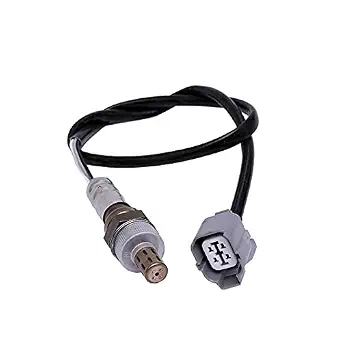 |
| Highest Rated A top-rated pick with lots of positive feedback | Denso Oxygen (O2) Sensor 234-4621 — Replacement Thread-In Sensor |  |
| Most Popular A crowd favorite that many people choose with confidence | DOSKJOK 234-4621 Heated Downstream Oxygen Sensor |  |
| Best Seller A high-volume bestseller chosen again and again | TRQ O2 Oxygen Sensor OSA61199 (Downstream/Post-Cat) |  |
1. A-Premium O2 Oxygen Sensor 2‑Piece Set (Upstream & Downstream) for Honda Accord 1998–2002 L4 2.3L

| Vehicle fitment | Honda Accord 1998–2002 L4 2.3L |
|---|---|
| Package quantity | 2x Oxygen Sensor |
| Wire quantity | 4/4 |
| Mounting type | Threaded |
| Upper temperature rating | 350 Degrees Celsius |
This two-piece A-Premium O2 sensor kit replaces both the upstream and downstream sensors on 1998–2002 Honda Accord 2.3L four‑cylinder models and is intended as a factory-style replacement. The sensors are threaded, heated types with a 4‑wire connector and digital output for real‑time oxygen monitoring so the engine control unit can complete closed‑loop fuel control. In practical use the pair arrives ready to install in a box with stainless steel construction and premeasured lead lengths; common reports show straightforward fit and improvement in check‑engine conditions for many users. Benefits include wider compatibility across the listed years, a one‑year parts guarantee, and an expected temperature rating suitable for exhaust environments. Limitations to note are mixed user reports on monitor readiness after installation and that some installations required a known OEM match to clear specific drive‑cycle monitors; if passing emissions or exact OEM match is critical, verify connector and part numbers before fitting.
Best for: Buyers who want an affordable, full sensor replacement set that restores oxygen sensing and helps resolve common check‑engine codes on an older Accord and prefer a ready‑to‑install pair over sourcing individual sensors.
Less Ideal for: Drivers who need a guaranteed exact OEM match for emissions tests or who prefer sensors from a specific factory supplier should consider branded OEM equivalents or professional diagnostic confirmation first.
- Sold as a matched upstream and downstream pair for complete replacement.
- Heated 4‑wire design and digital output support closed‑loop ECU control.
- Stainless steel build and threaded mount for conventional exhaust installation.
- Includes a one‑year unlimited‑mileage parts guarantee from the brand.
- Some reviewers reported the vehicle readiness monitors did not set without swapping to a different brand OEM match.
- Fitment and wiring can vary by submodel so verification before installation is advised.
Verdict: A practical, cost‑effective matched upstream and downstream sensor kit for 1998–2002 Accord 2.3L owners who need a ready replacement to restore oxygen sensing and clear common engine codes.
2. AISIN Set of 2 Upstream and Downstream Oxygen Sensors (Narrowband)

| Compatibility | Honda Accord 1998-2002 L4 2.3L |
|---|---|
| Sensor Quantity | 2 (upstream & downstream) |
| Sensor Type | Narrowband |
| Thread Size | M18 + M18 |
| Terminal Quantity | 4 + 4 |
These Aisin oxygen sensors come as a two-piece set intended to replace both upstream and downstream sensors on the 2.3L four-cylinder Accord from 1998 to 2002. They are narrowband sensors with M18 threads and four-terminal rectangular connectors, supplied to match factory-style wiring and plug-in installation. Typical use is direct replacement during routine maintenance or while diagnosing emissions and fuel-trim issues; swapping both sensors at once restores consistent feedback to the engine control system. The included installation manual and factory-style connectors simplify fitment for DIYers and shops, while Aisin’s manufacturing pedigree suggests durable materials and stable long-term operation. Limitations are that these are narrowband sensors, so they only provide stoichiometric-range feedback suitable for factory fuel control rather than wideband tuning or performance data logging. Also the set is vehicle-specific, so confirm exact engine and year before purchasing.
Best for: Buyers who want a reliable, factory-style replacement set to restore correct oxygen sensor feedback and fuel control on a 1998–2002 Accord 2.3L and prioritize straightforward installation and durability.
Less Ideal for: Anyone seeking wideband sensors for aftermarket tuning, data logging, or advanced air/fuel tuning should look for a dedicated wideband solution instead.
- Sold as an upstream and downstream pair to ensure matched sensor readings
- Factory-style M18 threads and 4-pin rectangular connectors for plug-and-play replacement
- Includes installation manual to support DIY installation
- Made by a reputable supplier with components engineered to factory-quality expectations
- Narrowband design only supports stoichiometric feedback, not wideband performance tuning
Verdict: Choose this Aisin two-piece narrowband sensor set when you need a dependable, factory-style replacement to restore correct fuel control on a 1998–2002 Accord 2.3L.
3. Maxfavor Oxygen Sensor Replacement Kit (pair) for 2000–2002 Honda Accord 3.0L / 2001–2003 Acura CL/TL 3.2L

| Specific Uses For Product | Oxygen Sensor |
|---|---|
| Mounting Type | Flange Mount |
| Maximum Supply Voltage | 5 Volts |
| Material Type | Stainless Steel, Ceramic, Polymer |
This Maxfavor kit supplies two oxygen sensors engineered to replace the upstream and downstream units on 2000–2002 Honda Accord 3.0L and 2001–2003 Acura CL/TL 3.2L engines. The sensors use a stainless steel housing with ceramic sensing elements, a porous PTFE filter and an aluminum oxide trap layer meant to resist contamination and extend life. Installation follows the usual threaded sensor swap and the listing includes part interchange information to match factory fitment. In use the sensors restore closed-loop fueling feedback, which can improve idle stability, emissions and fuel economy compared with a failing sensor. Buyers should expect a standard electrical connector and flange mount fit; no special calibration is needed beyond clearing any stored trouble codes after install. The product is marketed as meeting factory-style specifications but is a replacement aftermarket part rather than a factory unit, so longevity and exact match to original sensor response can vary between vehicles and driving conditions.
Best for: Buyers who want a practical, cost-effective replacement to restore proper fuel trim and emissions control on early 2000s Honda and Acura V6 models and prefer replacing both sensors at once.
Less Ideal for: Those seeking a factory-brand or performance-tuned oxygen sensor with documented OEM lifetime testing or track-focused response characteristics should consider other options.
- Sold as an upstream and downstream pair so both sensors can be replaced at once
- Materials and layered protection (stainless steel, PTFE filter, aluminum oxide trap) to resist contamination
- Threaded flange mount with factory-style electrical output for straightforward swap-in installation
- Aftermarket unit so response curve and long-term durability may not exactly match factory sensors
Verdict: A convenient two-sensor replacement kit that restores closed-loop fueling on 2000–2002 Accord and 2001–2003 Acura V6 models with straightforward, factory-style fitment.
4. HICKS 234-4092 Downstream Oxygen Sensor

| Mounting Type | Flange Mount |
|---|---|
| Output Type | Analog |
| Specific Uses For Product | Oxygen Sensor |
| Material Type | Ceramic, Metal |
This HICKS 234-4092 is a downstream oxygen sensor intended as a direct replacement for compatible late 1990s and early 2000s Honda and Acura vehicles. It mounts with a flange and provides an analog output to the engine control system so the vehicle can adjust fuel mixture and emissions after the catalytic converter. Typical use is straightforward: remove the old downstream sensor and install this unit in the same location to restore proper feedback to the engine management system. The sensor is made from ceramic and metal, and its flange-mount design simplifies fitment for covered models. For budget-focused repairs this part offers a low-cost way to replace a failed downstream sensor and clear emissions-related drivability issues. Limitations include a lack of detailed vehicle-specific installation hardware in the package and the listing does not show extensive fitment testing or OEM branding, so installers who prefer factory-branded parts or wide aftermarket validation may want a different option.
Best for: Buyers needing an inexpensive downstream replacement to restore proper emissions feedback and fuel trim on older Hondas and Acuras who prioritize cost-effective repairs over factory-branded parts.
Less Ideal for: Those who want fully verified OEM-equivalent parts with broad third-party validation or who require included installation hardware and connectors should consider other options.
- Flange-mount design matches factory downstream sensor location for covered models
- Analog output compatible with standard engine control oxygen sensing inputs
- Low-cost option suitable for budget repair projects
- Constructed from ceramic and metal materials typical for oxygen sensors
- Listing lacks extensive fitment validation and OEM branding for some buyers
- Package details do not specify included installation hardware or connector adapters
Verdict: A wallet-friendly downstream oxygen sensor replacement that restores exhaust oxygen feedback for covered late 1990s and early 2000s Honda and Acura vehicles.
5. Denso Oxygen (O2) Sensor 234-4621 — Replacement Thread-In Sensor

| Part Number | 234-4621 |
|---|---|
| Output Type | Digital |
| Mounting Type | Thread-In |
| Material | Stainless Steel, Zirconium |
| Upper Temperature Rating | 1562 Degrees Fahrenheit |
The Denso 234-4621 is a direct-fit narrow-band oxygen sensor intended as a replacement for specific late 1990s and early 2000s Acura and Honda models. It installs as a threaded sensor and connects with a four-wire harness, so it plugs into the factory wiring without splicing on compatible cars. Denso builds the sensor with a zirconia sensing element, PTFE filter and stainless steel housing to resist contaminants and corrosion, which helps maintain response and longevity in real-world exhaust conditions. Typical use is simple: swap the failed downstream sensor, clear codes and retest; many users report the part restores proper readings and clears check-engine lights. Because it is a narrow-band, it is sized for factory emissions control and fuel-trim feedback rather than high-performance tuning. Buyers should expect a direct replacement intended for the listed model years and engines and not a universal or wideband upgrade, and longevity can still be affected by upstream issues like coolant or fuel system faults.
Best for: Buyers who prioritize a reliable, factory-quality replacement to restore proper emissions sensing and clear check-engine codes on the specified late 1990s to early 2000s Honda and Acura models.
Less Ideal for: Drivers who need a wideband sensor for custom tuning, data logging, or non-factory engine management should choose a dedicated wideband unit instead.
- Direct-fit design that plugs into the stock connector for straightforward replacement
- Stainless steel construction and PTFE filter provide corrosion and contaminant resistance
- Zirconia element offers responsive oxygen sensing for stable fuel-trim control
- Includes a four-wire harness with integrated heater for faster warm-up and reliable operation
- Narrow-band output only, so it is not suitable for wideband tuning or aftermarket engine management
Verdict: Choose the Denso 234-4621 when you want a dependable, factory-quality replacement oxygen sensor that restores correct emissions sensing on the covered Honda and Acura models.
6. DOSKJOK 234-4621 Heated Downstream Oxygen Sensor

| Position | Downstream |
|---|---|
| Response Time | 100 Milliseconds |
| Output Type | Analog |
| Measuring Range | 0% to 25% oxygen by volume |
| Upper Temperature Rating | 900 Degrees Celsius |
This DOSKJOK 234-4621 is a downstream heated oxygen sensor meant to replace the factory unit on compatible Honda models from the late 1990s and early 2000s. It installs in the same flange position as the original and uses a four-wire heated design and a factory-style female connector for a direct swap without modification. Key measured specs such as response time (100 ms), analog output, and a wide operating temperature range indicate it is built to handle exhaust conditions and recover proper closed-loop fueling after installation. In use it restores correct feedback to the engine computer, which helps stabilize idle, improve fuel economy, and reduce emissions when the original sensor has failed. The sensor is stainless steel and comes with pre-coated threads to ease installation. Limitations are that fitment is specific to certain engines and years so buyers must confirm vehicle compatibility, and as an aftermarket part it may not exactly match every factory electrical or calibration nuance of the original sensor.
Best for: Buyers who want a budget-friendly, direct-replacement downstream oxygen sensor to restore proper emissions and idle behavior on specified late 1990s to early 2000s Honda models and who value straightforward install and social proof from other users.
Less Ideal for: Shoppers looking for a universal sensor or a dealer-sourced factory part tailored to exact factory calibration should consider alternatives.
- Direct-fit heated downstream design with a four-wire connector for plug-and-play replacement
- 100 ms response time and analog output suitable for restoring closed-loop fuel control
- Stainless steel construction and high temperature tolerance for durable exhaust service
- Pre-coated threads included to simplify installation and reduce risk of thread damage
- Compatibility is limited to specific Honda engines and year ranges so cross-checking is required
Verdict: A straightforward heated downstream replacement that restores emissions feedback and idle stability on the specified 1998–2002 Honda Accord applications.
7. TRQ O2 Oxygen Sensor OSA61199 (Downstream/Post-Cat)

| Mounting Type | Flange Mount |
|---|---|
| Output Type | electrical signal |
| Material Type | Stainless Steel |
| Wire Quantity | 4 |
| Thread Size | M18x1.5-6e |
This TRQ downstream O2 sensor is a direct-fit replacement intended to restore proper post-catalyst oxygen readings on compatible Hondas and Acuras. It ships pre-assembled with a 4-wire female connector and flange mount so installation is typically straightforward for a DIYer with basic hand tools and an O2 sensor socket. The stainless steel construction and M18x1.5 thread match factory hardware and the included wiring and connector mean you usually do not need splicing when the correct connector gender is selected. In practice buyers report quick installs and resolved check-engine lights when the part matches the vehicle harness. Limitations to note are connector gender variations across model years and occasional reports of early heater failures; confirm the sensor plug type and exact fitment before installing because electrical parts are non-returnable after installation. TRQ provides a compatibility list and installation videos which help lower risk for buyers who want a predictable, OEM-style replacement without dealer service.
Best for: Buyers who prioritize a low-risk, DIY-friendly replacement that closely matches factory fit and function for late 1990s to early 2000s Honda/Acura models and want straightforward installation guidance.
Less Ideal for: People who cannot verify connector type or who need a sensor compatible with multiple vehicle makes or broad aftermarket harnesses should consider alternatives or professional installation.
- Direct-fit flange mount designed to match factory thread and wrench size for easy replacement
- Pre-assembled 4-wire connector reduces need for splicing when the connector matches the vehicle
- Stainless steel construction for corrosion resistance in exhaust environments
- Extensive fitment list and installation videos to guide DIY repairs
- Connector gender varies by application so wrong plug type requires splicing or replacement connector
- Some customers reported heater circuit failures before the warranty period ended
Verdict: Choose this TRQ downstream oxygen sensor when you want a factory-style, direct-fit replacement that makes DIY install and restoring normal emissions readings as risk-free as possible.
Choosing the Right 1998-2002 Honda Accord Oxygen Sensor: Key Factors to Consider
Sensor Location and Bank Assignment
Knowing whether the sensor is upstream or downstream and which bank it belongs to determines the correct replacement. For the 1998-2002 Accord, the upstream sensor (bank 1 sensor 1) sits before the catalytic converter and provides the primary feedback for fuel control. The downstream sensor monitors catalyst efficiency and has a different response profile.
Installing a downstream sensor in the upstream position or vice versa will produce incorrect voltage readings and trigger persistent codes. Confirming bank and sensor number ensures you order a compatible unit and that the vehicle's onboard diagnostics will behave as expected after replacement.
Sensor Type and Output Characteristics
Oxygen sensors come in different types and signal characteristics. Narrowband sensors switch voltage around stoichiometric air-fuel ratios while wider-response sensors or heated variants reach operating temperature faster. For 1998-2002 Accords, matching the original sensor type and whether the sensor includes an internal heater is critical for proper engine management.
Heated sensors reduce cold-start lean events by reaching operating temperature sooner. If the replacement differs in output curve or heater presence from the original, you may see altered fuel trims and possible diagnostic trouble codes.
Connector Fitment and Wiring
Direct connector compatibility saves time and avoids splicing the factory harness. Wiring differences, pin counts, and connector shapes vary between sensor types and markets, so confirm the replacement uses the same connector and pinout. A mismatched connector can require electrical work that introduces failure points or diagnostic confusion.
Also consider the length and routing of the pigtail. A too-short harness can stress the connector or require extension; a too-long harness may be exposed to road debris or heat if not routed properly.
Response Time and Signal Stability
Faster response time improves the engine control unit's ability to adjust fuel trim quickly during load changes and transient throttle events. A sluggish sensor can cause the ECU to run open loop longer or react slowly, resulting in drivability issues and poorer fuel economy. Signal stability under varying exhaust temperatures and during warm-up affects long-term fuel trim behavior.
Look for sensor designs and internal heater elements that reduce response lag and maintain consistent voltage swings over time.
Durability and Contamination Resistance
Oxygen sensors are exposed to high heat, soot, oil, and coolant contaminants over their service life. Materials and protective features that resist fouling and thermal degradation extend service intervals. For an older Accord, consider sensors with protective coatings or improved sealing to cope with potential exhaust system wear and occasional oil consumption.
Durable sensors reduce the chance of intermittent faults and repeated replacements. Consider how the replacement's warranty and stated operating life align with expected usage patterns for a 1998-2002 vehicle.
Serviceability and Installation Access
Some sensor positions are hard to reach on the Accord, so a design that offers easier wrench access, longer flex harnesses, or included anti-seize provisions simplifies replacement. If you plan to install the sensor yourself, check for the correct thread size, recommended torque, and whether special sockets or extensions are needed.
Good installation features reduce the risk of damaging threads or connectors and can shorten labor time when a sensor is replaced at home or in a small shop.
Common O2 Sensor Symptoms on a 1998-2002 Accord
Symptoms of a failing oxygen sensor often show up as rough idling, reduced fuel economy, or a persistent check engine light. The vehicle may run rich or lean depending on whether the sensor reports incorrect voltages, and you may notice sluggish throttle response during acceleration.
Intermittent faults can be trickier to diagnose because the sensor may pass a single snapshot test but fail under certain loads or temperatures. Pay attention to irregular idle behavior and sudden fuel consumption changes as early warning signs.
- Rough idle or stalling at low speeds
- Decreased miles per gallon during normal driving
- Check engine light with O2-related diagnostic codes
- Black exhaust smoke or strong fuel smell indicating rich running
How Diagnostic Codes Relate to Sensor Issues
On the 1998-2002 Accord, codes that mention bank 1 sensor 1 or P0135-style heater faults point to upstream oxygen sensor or heater circuit problems. Some codes indicate the sensor's output is stuck or slow to respond rather than an outright hardware failure.
Use live data from an OBD-II reader to monitor sensor voltages and heater circuit status. Watching how the sensor voltage oscillates during warm-up and at steady state can distinguish a slow sensor from fuel system problems.
- Bank and sensor numbers identify physical location
- Heater circuit codes often mean the sensor is not reaching operating temperature
- Voltage stuck near 0.1V or 0.9V suggests wiring or sensor element failure
DIY Testing and How To Test An Oxygen Sensor
Simple checks you can perform include measuring the heater resistance and watching live voltage swings with a scan tool during warm-up. A functioning narrowband upstream sensor will toggle between low and high voltage as the ECU adjusts fuel trims. Heater resistance outside the expected range or zero resistance likely indicates an open circuit.
When testing, isolate variables such as vacuum leaks or fuel pressure issues that can mimic sensor faults. Proper testing distinguishes whether the sensor itself is failing or if another engine condition is causing abnormal readings.
- Measure heater element resistance with a multimeter
- Monitor real-time voltage with an OBD-II scanner during warm-up
- Check for wiring damage, corrosion, or connector issues before replacing the sensor
Installation Tips and Best Practices
When you install a replacement oxygen sensor, ensure the threads are clean and use the recommended torque. Avoid over-tightening which can crack the sensor's housing or damage exhaust threads. Apply anti-seize only where specified by the sensor manufacturer to prevent thread damage on future removal.
Route the harness away from hot components and sharp edges. If the sensor includes a heat shield or protective sleeve, keep it intact to help resist road debris and heat cycling. Finally, clear related diagnostic codes after installation and monitor live data to confirm normal operation.
- Use a sensor socket or appropriate wrench to avoid damaging the hex
- Do not contaminate the sensing tip with oil or silicone-based lubricants
- Check and replace grommets if the harness is chafed or brittle
When to Replace Upstream Versus Downstream Sensors
Replace the upstream sensor if you have persistent fuel trim issues, frequent stalling, or codes indicating bank 1 sensor 1 problems. The upstream unit has the most direct impact on air-fuel control and drivability. The downstream sensor is less about immediate fuel control and more about monitoring catalytic converter efficiency.
If you see catalyst efficiency codes or the downstream sensor shows little variation in voltage, that indicates the downstream unit may be worn. However, always confirm upstream sensor operation first because a failing upstream sensor can mask downstream behavior.
- Upstream affects immediate fuel trims and idle quality
- Downstream indicates catalyst health and long-term emissions performance
- Diagnose upstream before replacing downstream to avoid unnecessary parts
Wideband Vs Narrowband: What Matters for This Accord
The factory setup on the 1998-2002 Accord uses narrowband sensors for closed-loop fueling. Aftermarket wideband sensors provide richer diagnostic data and are used mostly for tuning or advanced diagnostics rather than direct replacement. For routine replacement, match the narrowband behavior so the ECU receives expected voltage signals.
If you are doing advanced engine tuning, a wideband can be added as an auxiliary sensor to log air-fuel ratio while retaining the factory narrowband sensors for ECU operation. Be mindful that swapping a wideband in place of a factory sensor without ECU mapping can produce incorrect fueling.
- Narrowband is correct for direct replacements
- Wideband is useful as an added diagnostic tool but not a drop-in replacement
- Retain factory sensor type to keep ECU calibration intact
Still looking for the perfect fit?
Select your Honda Accord configuration to see the most relevant Oxygen Sensors recommendations
How We Chose the Best 1998-2002 Honda Accord Oxygen Sensor
Our selection focused on fitment, response accuracy, durability, and ease of installation specifically for the 1998-2002 Honda Accord. We prioritized sensors that match the factory connector and thread size to avoid wiring or exhaust modifications. Response accuracy and sensor type were emphasized because a slow or incompatible sensor can cause long-term fuel trim issues and recurring fault codes.Durability against exhaust heat and contamination was another filter, including construction features that reduce fouling and extend service life. Ease of installation and access to replacement harnesses or grommets was considered to keep the job straightforward for typical DIYers and technicians. We also looked at electrical stability under different engine loads to minimize intermittent check engine light triggers.Excluded from the list were universal sensors that require splicing or non-OEM mounting adapters, and sensors intended only for wideband aftermarket tuners. The resulting picks are focused on direct-fit oxygen sensors that preserve the Accord's original emission control layout and diagnostic behavior.
Our full evaluation process is outlined in our review methodology.
FAQ
How long do oxygen sensors typically last on a 1998-2002 Accord?
They often last many years but can wear out sooner due to contamination or exhaust leaks. Expect sensors to show degraded response after prolonged use, and replace them when you see drivability issues or persistent O2-related codes.
Will a bad oxygen sensor cause a check engine light on my Accord?
Yes. A failing sensor commonly triggers check engine light codes that reference bank and sensor position or heater circuit faults. Intermittent sensor behavior may cause sporadic lights until the underlying issue is fixed.
Can I test the sensor myself without special tools?
You can perform basic checks with a multimeter to measure heater resistance and visually inspect wiring. For accurate dynamic testing, an OBD-II scanner that shows live sensor voltages is recommended to observe response during warm-up and under load.
Is it necessary to replace both upstream and downstream sensors at the same time?
Not always. Replace the sensor that shows fault codes or clearly degraded performance first. However, if the vehicle has high mileage and the downstream unit is also old, replacing both can prevent near-term repeat failures.
What does a P0135-style code mean on this Accord?
A P0135-style heater code indicates an issue with the oxygen sensor heater circuit, which may prevent the sensor from reaching operating temperature quickly. It often points to a faulty heater element, wiring problem, or connector issue rather than the sensing element alone.
Should I be concerned about O2 sensor price when choosing a replacement?
Price can reflect build quality, but focus first on fitment, heater presence, and expected durability. Choosing a unit that matches the Accord's specifications reduces the risk of repeated shop visits and diagnostic time.
Final Verdict
Focus on matching sensor type, location, and connector to the 1998-2002 Honda Accord to avoid diagnostic confusion and restore correct fuel control. Prioritize upstream sensor response and heater functionality for drivability, and consider durability features if the exhaust shows signs of wear. Replacing the correct sensor and following proper installation practices will resolve most O2-related symptoms and keep the engine running efficiently.
Explore More:
- Check out all Honda Accord parts & accessories
- Explore Oxygen Sensors Maintenance & Repair Guides
- Explore Engine
- Browse all Auto Parts
