

Note: This article contains affiliate links. If you click on these links and make a purchase, I may earn a small commission at no extra cost to you. This helps support my research and content. Read my full affiliate disclosure here.
If your Honda Accord is showing rough idle, reduced fuel economy, or a persistent check engine light, the oxygen sensor can often be the source of the problem. Choosing the right Honda Accord oxygen sensor matters because correct fitment and accurate response affect engine tuning, emissions, and drivability in everyday use. This guide covers the top shortlisted oxygen sensors for the Honda Accord, explaining why each type made the list and the practical differences you should consider. Below you will find the top picks and the evaluation criteria we used to narrow them down, so you can pick the option that best suits your maintenance or repair needs.
Looking for other parts? See all Honda Accord parts & accessories.
Top Picks at a Glance
| Best Reviewed A top-rated pick with lots of positive feedback | Denso Rear Oxygen (O2) Sensor 234-4797 for 2003–2007 Honda Accord / 2004–2008 Acura TSX |  |
| Most Popular A crowd favorite that many people choose with confidence | Denso 234-4621 Replacement Oxygen (O2) Sensor |  |
| Best Quality Built to a higher standard if you want something more solid | HTMXJA Oxygen O2 Sensor Kit (4-piece) for Select Honda V6 Models |  |
| Best Budget The cheapest option that still gets the job done reliably | Amrxuts 5-Wire Upstream Oxygen (O2) Sensor, Direct Fit |  |
| Most Sold A high-volume bestseller chosen again and again | SDYYDS 2-Pack Oxygen O2 Sensors (Upstream & Downstream) for 2013–2017 Honda Accord 2.4L |  |
| Best Value for Money The sweet spot between price and what you get | HTMXJA Oxygen Sensor Pair for 2003–2007 Honda Accord 2.4L (Upstream & Downstream) | 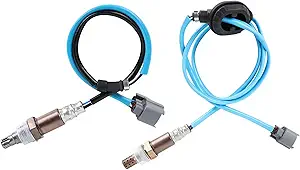 |
| Best Overall The best all-around choice for most situations | Denso 234-4574 Oxygen Sensor |  |
1. Denso Rear Oxygen (O2) Sensor 234-4797 for 2003–2007 Honda Accord / 2004–2008 Acura TSX

| Brand | Denso |
|---|---|
| Material | Stainless Steel, Zirconium |
| Measuring Range | 0-20% O2 |
| Mounting Type | Flange Mount |
| Position | Rear |
This Denso rear oxygen sensor (234-4797) replaces the factory sensor on compatible Honda Accord and Acura TSX models and restores accurate exhaust oxygen readings to help correct fuel trim and eliminate related engine codes. It installs in the rear catalytic converter location and is supplied with anti-seize and installation directions for a straightforward, vehicle-specific swap. Denso emphasizes precision manufacturing and an aluminum oxide trap layer to protect the sensing element from contamination, which should improve longevity and stable readings compared with low-cost alternatives. In practice it clears check-engine codes, helps return fuel economy to normal, and fits without major modifications. Downsides are minor cosmetic and connector differences from some original sensors and the sensor may require penetrating oil and the correct sensor socket for removal of an old, corroded unit. For reliability-focused Accord owners this sensor gives a near-factory replacement that addresses drivability and emissions issues without complicated programming or tuning.
Best for: Reliability-focused buyers who prioritize a near-factory replacement to fix emissions or fuel-trim issues on a Honda Accord and prefer a proven, engineered part over cheaper alternatives.
Less Ideal for: Buyers looking for a universal sensor or who need a different sensor position than the rear unit should choose a part designed for that application or consult fitment guides.
- Made to factory-quality standards for a direct, vehicle-specific replacement.
- Includes anti-seize and installation directions for safer thread installation.
- Aluminum oxide trap layer to reduce ceramic element contamination and extend service life.
- Widely reported to clear check-engine codes and restore normal fuel economy.
- Connector housing and wire protection may differ slightly from original factory parts.
- Removal of a rusted original sensor can still require penetrating oil and specialty sockets.
Verdict A reliability-oriented, near-factory rear O2 sensor for Honda Accord owners who want a durable, correct-fit replacement to fix emissions and fuel-trim issues.
2. Denso 234-4621 Replacement Oxygen (O2) Sensor

| Material | Stainless Steel, Zirconium |
|---|---|
| Mounting Type | Thread-In |
| Output Type | Digital |
| Upper Temperature Rating | 1562 Degrees Fahrenheit |
| Manufacturer Part Number | 234-4621 |
The Denso 234-4621 is a direct-replacement narrow-band oxygen sensor intended to replace the downstream sensor on compatible Acura and Honda vehicles. It installs like a factory part with a threaded, corrosion-resistant stainless steel body and a four-wire harness for heater control and signal. In use it measures exhaust oxygen to help the engine computer adjust fuel trim and to clear emissions-related trouble codes. Notable features include a refined zirconia sensing element for faster response and a PTFE filter to resist contamination, which together improve durability and maintain accurate readings. The sensor is built to factory-style specifications so it typically plugs into the stock harness and fits without modification, making it a convenient swap for DIYers or technicians. Limitations are that it is a narrow-band sensor, so it provides simpler rich/lean feedback compared with wideband units, and correct operation still depends on clean connectors and proper installation location for the vehicle's exhaust layout.
Best for: Buyers who prioritize convenience and a plug-and-play replacement that restores factory sensing without modification, especially those who want a straightforward DIY swap to clear emissions codes.
Less Ideal for: Drivers who need precise air-fuel ratio data for tuning or performance diagnostics should choose a wideband sensor or a dedicated tuning unit instead.
- Factory-style fit and connector for direct replacement on specified Acura and Honda models
- Stainless steel construction resists corrosion in exhaust environments
- Zirconia sensing element improves response speed over generic replacements
- PTFE filter and aluminum oxide trap layer reduce contamination for longer life
- Narrow-band output provides less precise air-fuel information than wideband sensors
Verdict A convenient, factory-quality downstream replacement sensor for Honda/Acura owners who want a reliable plug-and-play fix for emissions and fuel-trim issues.
3. HTMXJA Oxygen O2 Sensor Kit (4-piece) for Select Honda V6 Models

| Compatible models | Accord V6 2003-2007; MDX, RL, TL, Odyssey, Pilot, Ridgeline, Vue (specified years) |
|---|---|
| Reference part numbers | 25024346, 25024391, 25025001 |
| Connector gender | Male |
| Wire quantity | 4 & 5 |
This HTMXJA kit supplies four upstream and downstream oxygen sensors intended for mid-2000s Honda V6 vehicles and plugs directly into the factory harness for a straightforward replacement. Installers will typically use these sensors to replace failed or aging units to recover fuel trim accuracy, smooth out idle and improve emissions and fuel economy. The listing calls out high-precision sensing elements and high-temperature resistant construction so the sensors can handle exhaust conditions without obvious degradation. The kit includes the common reference part numbers used on Accord V6 models, and the multiple connector pin counts let it match upstream and downstream locations. Expect a mainly bolt-in fit when the OE numbers match, but confirm part numbers and connector counts before purchase. These are aftermarket sensors rather than factory-brand parts so long-term durability versus a factory replacement can vary depending on driving conditions and installation care.
Best for: Performance-oriented buyers who want to restore precise air-fuel control and emissions performance on mid-2000s Honda V6 models and prefer a complete sensor kit for a service interval replacement.
Less Ideal for: Buyers seeking guaranteed factory-brand parts or those who prefer a single-sensor purchase for diagnostics should consider alternatives.
- Four-sensor kit covers both upstream and downstream positions for a complete replacement
- Listed reference part numbers match common Honda V6 applications for easier verification
- Plug-mount connectors are designed to fit factory wiring for straightforward installation
- Construction marketed for high-temperature resistance to withstand exhaust conditions
- Aftermarket unit so long-term durability may differ from factory-quality sensors
- Some vehicle-specific measurements like harness length vary by position so fit must be confirmed before ordering
Verdict A full four-sensor aftermarket kit that restores oxygen sensing for mid-2000s Honda V6 vehicles when OE numbers and connector types are confirmed.
4. Amrxuts 5-Wire Upstream Oxygen (O2) Sensor, Direct Fit

| Wires | 5 |
|---|---|
| Mounting Type | Thread Mount |
| Output Type | Electrical signal |
| Upper Temperature Rating | 250 Degrees Fahrenheit |
This Amrxuts 5-wire upstream O2 sensor is a budget-focused direct replacement for affected Honda and Acura V6 models. It installs where the factory upstream sensor sits and feeds the engine computer an electrical signal that helps the ECU manage fuel trim, reduce emissions, and extinguish a check-engine light tied to a failing sensor. The listing highlights a short light-off time and a claimed fast response for improved fuel economy and engine drivability. Practical benefits include simple direct-fit installation for compatible vehicles and a wiring harness that avoids splicing. Limitations to expect are typical of low-cost aftermarket sensors: fitment tolerances and probe insertion length can vary slightly from factory parts, and longevity or contamination resistance may not match higher-end OEM replacements. Buyers should verify part numbers against their Accord before ordering and be prepared to source a small retaining clip in some years during installation.
Best for: Budget-conscious Honda Accord owners looking for an inexpensive upstream replacement to clear a check-engine light and restore normal fuel trim without paying OEM prices.
Less Ideal for: Drivers seeking the longest-lasting, factory-identical sensor for long-term reliability or those unwilling to accept any risk of minor fit differences should consider OEM or premium aftermarket options.
- Direct-fit design for listed Honda/Acura V6 applications to simplify installation
- 5-wire connector provides the needed signal and heater lines for upstream operation
- Claims faster response and short light-off time to help ECU correct fuel trim sooner
- Includes wiring harness long enough to reach factory connectors without cutting
- Aftermarket construction may show small dimensional differences versus factory parts which can affect fit on some vehicles
- Durability and contamination resistance are likely lower than higher-priced OEM or premium sensors
Verdict A low-cost direct-fit upstream O2 sensor that can fix check-engine issues and restore fuel management for Accord V6 owners, but it may not match OEM longevity or exact fit.
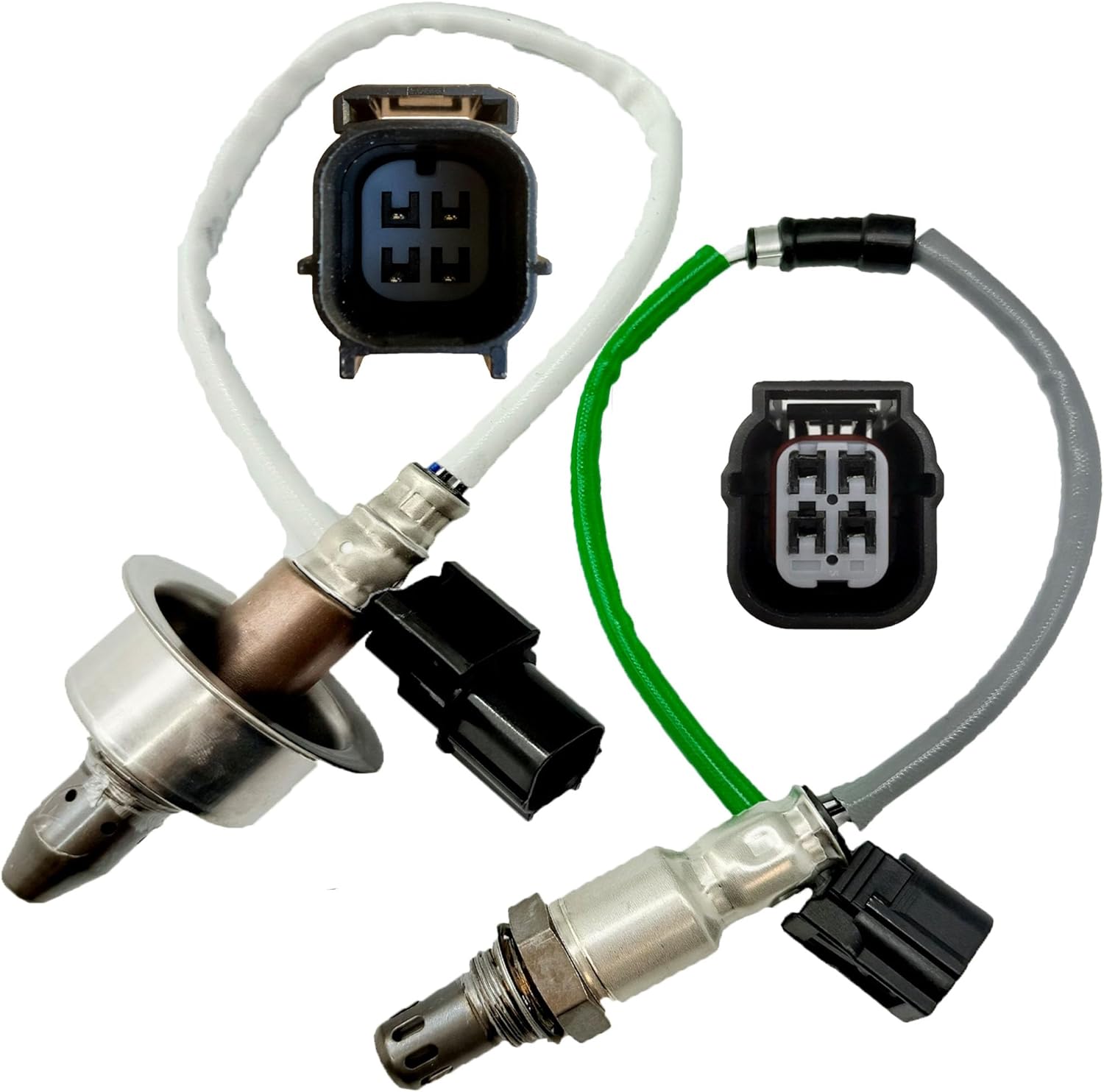
5. SDYYDS 2-Pack Oxygen O2 Sensors (Upstream & Downstream) for 2013–2017 Honda Accord 2.4L
| Compatible vehicles | Honda Accord 2013-2017 2.4L |
|---|---|
| Material | Stainless Steel |
| Mounting Type | Plug Mount |
| Output Type | Push-Pull |
These SDYYDS oxygen sensors come as an upstream and downstream pair intended for the 2.4L Honda Accord (2013–2017). They replace failed factory sensors to restore the engine control module's oxygen readings, which helps clear check-engine codes and can improve fuel economy and emissions. The set uses plug-mount wiring and stainless steel construction and is offered with a one-year limited warranty. In practice the downstream sensor tends to match factory behavior according to several users while reports on the upstream unit are mixed; some installers found fitment straightforward and saw the CEL go away, while others noted short wiring or differences in sensing behavior versus factory parts. Installation is a standard exhaust sensor swap and can be done with basic hand tools or by a technician. Expect a lower cost alternative to dealership parts and generally acceptable performance for routine repairs, but be prepared to verify fit and wiring length for your model year before installing the pair.
Best for: Risk-averse mainstream Accord owners who prioritize restoring normal operation and clearing engine codes without paying dealer prices, and who prefer a ready-to-install sensor pair for routine maintenance.
Less Ideal for: Drivers seeking guaranteed factory-spec sensor performance for emissions testing or high-precision tuning should consider OEM or higher-end branded replacements instead.
- Supplies both upstream and downstream sensors in one kit for a complete repair
- Stainless steel construction for corrosion resistance in exhaust environments
- Plug-mount connector design that matches factory-style wiring for a direct swap
- Many users report the sensors clear check-engine codes and restore fuel economy
- Some buyers report the upstream sensor's output or bore size differs from factory spec
- Several reviews mention short downstream wiring that may not reach on all model years
- One-year warranty only and mixed quality control reports
Verdict A cost-effective two-sensor replacement for 2013–2017 Accord 2.4L that can fix CELs and improve economy, but check wiring length and upstream compatibility before installing.
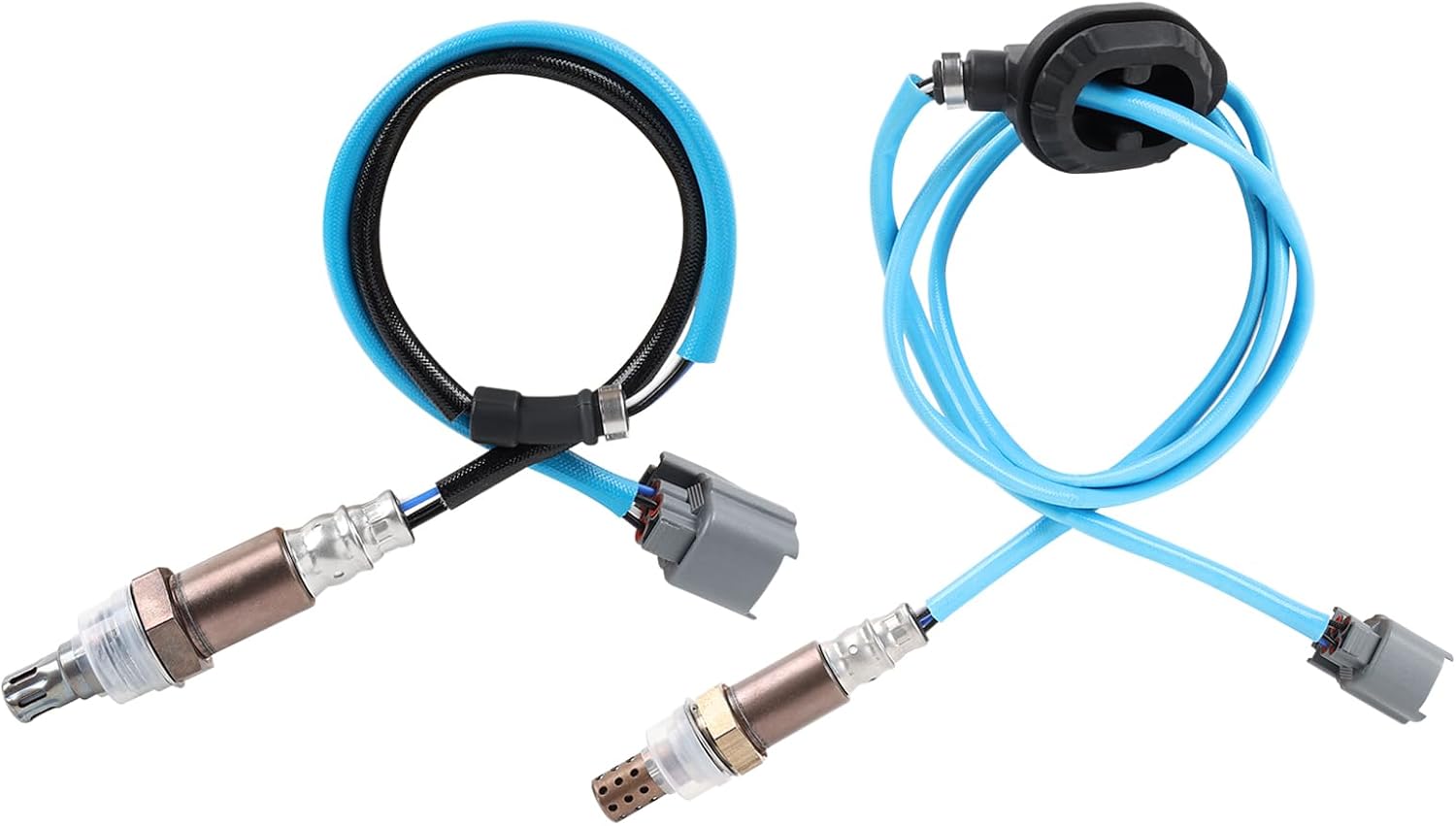
6. HTMXJA Oxygen Sensor Pair for 2003–2007 Honda Accord 2.4L (Upstream & Downstream)
| Fitment | 2003-2007 Accord L4-2.4L |
|---|---|
| Connector Gender | Female |
| Wire Quantity | 4 |
| Output Type | Analog |
This HTMXJA kit includes upstream and downstream oxygen sensors intended for 2003–2007 Honda Accord 2.4L models. They monitor exhaust oxygen to help the engine computer adjust fuel trim, reduce emissions, and restore proper running when a failing sensor has triggered a check engine light. The kit ships with the two sensors and factory-style connectors for a direct plug-in replacement, and several buyers report straightforward installation and improved fuel efficiency after fitting. The sensors advertise high-temperature resistance and built-in wiring lengths to reach factory harnesses without modification. Expect the practical benefits of lower emissions, better idle stability, and potential fuel-savings compared with a worn OEM sensor. Downsides are the usual risks with aftermarket parts: occasional units arrive defective and some vehicles may still require ECU relearn or additional diagnostics to clear codes. If you need guaranteed vehicle acceptance for emissions testing, a branded factory-replacement sensor may be a safer but more expensive choice.
Best for: Buyers who want a practical, cost-conscious replacement that restores driveability and fuel economy on older Accords without paying for expensive factory parts.
Less Ideal for: Drivers seeking guaranteed OEM-equivalent emissions calibration for warranty or strict testing requirements should consider a branded factory-replacement sensor instead.
- Sold as an upstream and downstream pair for a complete replacement job
- Designed to match factory-style connectors for plug-and-play installation
- Wiring lengths provided to reach factory harness without splicing
- High-temperature resistant construction intended for long-term operation
- Some reported units have arrived defective and require return or replacement
- Aftermarket sensors can sometimes leave persistent engine codes without additional ECU resets or tuning
Verdict A budget-friendly upstream and downstream sensor pair that restores combustion monitoring and driveability on 2003–2007 Accord 2.4L models, with occasional quality variability common to aftermarket parts.
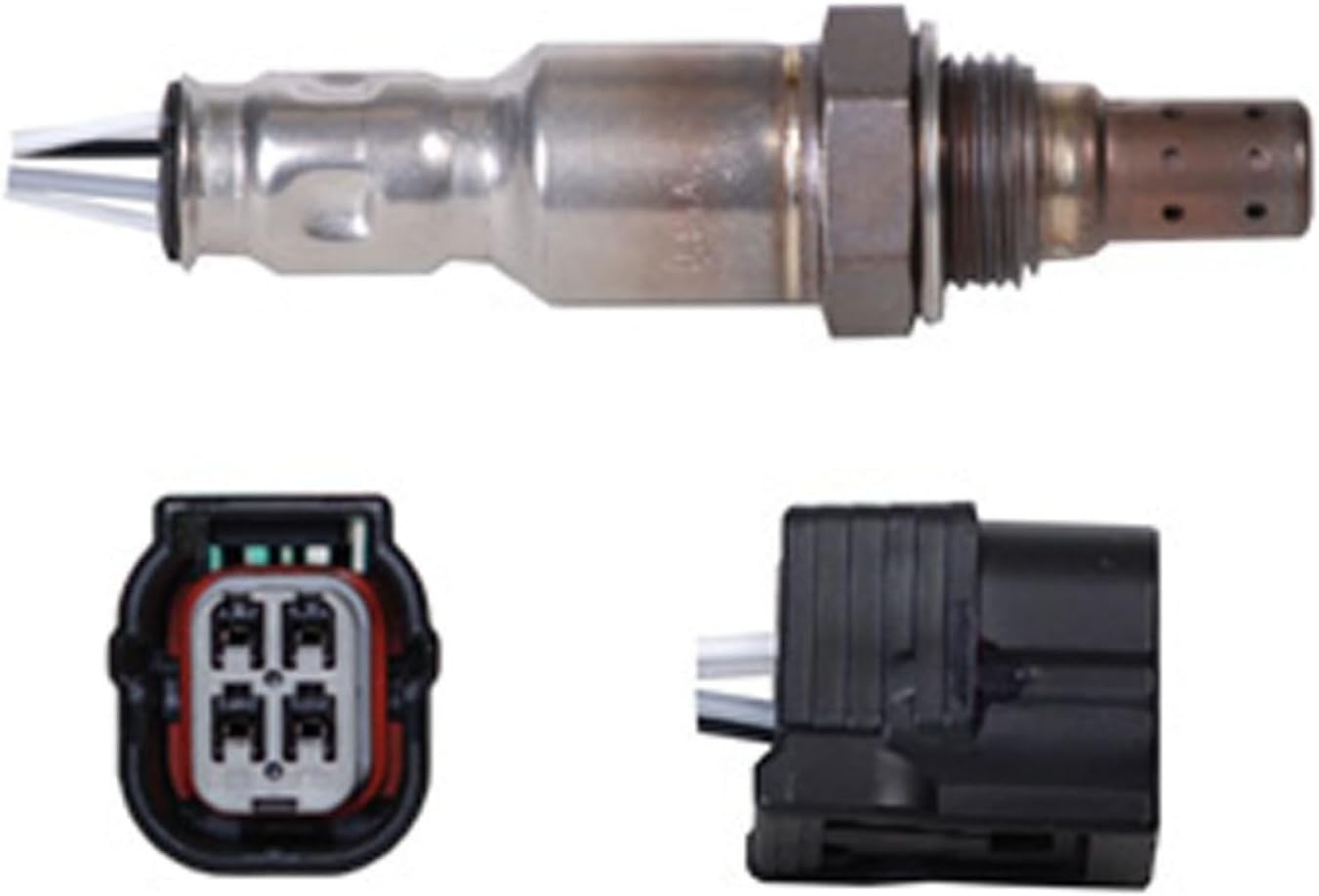
7. Denso 234-4574 Oxygen Sensor
| Material | Stainless Steel, Zirconium |
|---|---|
| Mounting Type | Thread-In |
| Output Type | Electrical signal |
| Upper Temperature Rating | 1472 Degrees Fahrenheit |
| Measurement Accuracy | ±1% |
The Denso 234-4574 is a direct-replacement oxygen (O2) sensor built to monitor exhaust oxygen and send an electrical signal to the engine control module for fuel trim and emissions control. It is typically used as a downstream sensor to address issues like P0420 that indicate catalytic efficiency problems. In practice the sensor installs by threading into the exhaust pipe and connecting to the factory harness; buyers report straightforward installation and rapid clearing of related check-engine codes once the sensor is replaced. Notable features include stainless steel and zirconium construction for durability, a high upper temperature rating for harsh exhaust conditions, and measurement accuracy listed at ±1%. Practical benefits are improved emission readings, more stable fuel trim behavior, and a higher chance of passing emissions checks when the fault is caused by the sensor rather than the catalytic converter. Limitations are that fit and connector details can vary between model years and some buyers note slight tip and mounting differences from factory parts, so verify wiring and connector fit for your Accord year before installation.
Best for: Balanced buyers who want a reliable, factory-quality replacement sensor for diagnosing and fixing emissions or driveability issues on a Honda Accord without overpaying for specialty parts.
Less Ideal for: Drivers primarily needing a solution for a failing catalytic converter or those who require a custom aftermarket sensor with nonstandard connectors or extended wiring options should consider alternatives.
- Factory-quality manufacturing and durable stainless steel/zirconium construction
- High temperature rating suitable for exhaust conditions
- Measurement accuracy listed at ±1% for reliable oxygen readings
- Thread-in mounting and standard electrical output for straightforward replacement
- Connector shape and tip may differ slightly from some factory sensors requiring minor adjustments during installation
- Not a guaranteed fix if the catalytic converter itself is failing
Verdict A reliable, factory-quality downstream O2 sensor that often resolves P0420 and related emissions issues on Honda Accords when the sensor is the root cause.
Choosing the Right Honda Accord Oxygen Sensor: Key Factors to Consider
Fitment and Connector Compatibility
Correct physical fitment is critical because the sensor must thread securely into the exhaust bung and mate with the vehicle wiring harness. A sensor with the wrong thread size or connector type can lead to exhaust leaks, poor signal, or the need for adapter parts.
Verify the sensor's connector, wire length, and thread specification relative to your Honda Accord model year to avoid installation issues. Proper fitment reduces the risk of damage during installation and ensures the sensor sits at the intended location for accurate readings.
Sensor Type and Signal Output
Oxygen sensors come as narrowband or wideband types, and the signal each outputs affects how the engine control unit interprets air-fuel ratio. Narrowband sensors are common for basic closed-loop fuel management, while wideband sensors provide a broader, more linear output useful for precise tuning and monitoring.
Choosing the correct type for your vehicle and intended use matters. Selecting the wrong sensor type can result in inaccurate readings or require additional tuning changes to restore correct operation.
Response Time and Accuracy
Fast response time helps the engine control unit make quicker fuel trim adjustments, improving idle quality and transient throttle response. Accuracy across a range of temperatures ensures consistent readings during cold starts and high-load driving.
Sensors with sluggish or noisy outputs can lead to unstable fuel trims, rough running, or false fault codes. Look for units with documented response characteristics and stable signal behavior under varying exhaust conditions.
Durability and Build Materials
Exhaust sensors face high temperatures, vibration, and exposure to contaminants. Materials and protective features influence how long a sensor will operate before signal degradation occurs. For example, robust sensing elements and protective sheaths improve resistance to soot, oil, and road debris.
Durability also affects maintenance intervals and long-term reliability. A more rugged sensor may cost more up front but reduce the likelihood of premature failure and repeat diagnostics.
Placement and Function (Upstream Vs Downstream)
Upstream sensors monitor exhaust gases before the catalytic converter and directly influence fuel control, while downstream sensors monitor converter efficiency. Knowing whether you need an upstream (pre-cat) or downstream (post-cat) sensor for your Honda Accord is essential when selecting a replacement.
Installing a sensor in the wrong position or using a sensor intended for the other bank can lead to incorrect readings and diagnostic confusion, so confirm the required location before purchasing.
Ease of Installation and Wiring
Installation complexity varies with sensor design, wire routing, and connector access. Sensors with pre-attached pigtails that match the factory connector and adequate wire length simplify the job and reduce the chance of connector stress.
Consider whether you will install the sensor yourself or have a technician do it. Easier installation reduces labor time and the risk of damaging the sensor or exhaust components during replacement.
FAQ
What are common O2 sensor symptoms in a Honda Accord?
Common signs include rough idle, decreased fuel economy, and a persistent check engine light. You may also notice inconsistent acceleration or higher exhaust emissions. These symptoms often appear gradually as the sensor ages or becomes contaminated.
How do I know if my Honda Accord needs an oxygen sensor replacement?
Diagnosis often starts with a diagnostic trouble code related to the oxygen sensor or catalytic converter. Persistent fuel trim issues, poor drivability, and failing emissions tests suggest the sensor may be at fault. Testing the sensor signal under load and at idle can help confirm whether replacement is necessary.
Can I install an oxygen sensor myself on a Honda Accord?
Many owners can perform a sensor replacement with basic hand tools and an appropriate oxygen sensor socket, provided the connector and wire length match. Ensure the vehicle is cool and the exhaust components are safely supported. If access is difficult or wiring needs modification, professional installation is recommended.
What is the difference between upstream and downstream oxygen sensors?
Upstream sensors sit before the catalytic converter and provide feedback for fuel control, directly affecting air-fuel mixture adjustments. Downstream sensors are located after the converter and monitor its efficiency. Each position serves a different diagnostic and control purpose.
How can I test an oxygen sensor without specialized equipment?
You can observe engine behavior for common symptoms and scan for fault codes with an OBD-II reader. Some simple checks include watching live sensor voltage data at idle and during acceleration to see if the signal switches or changes as expected. For definitive results, more advanced tools or professional diagnosis may be required.
Will replacing the oxygen sensor turn off the check engine light?
Replacing a faulty oxygen sensor often resolves sensor-related fault codes, but the light may not clear until code memory is reset or the vehicle completes several drive cycles. If the light persists, further diagnosis is needed to rule out related issues in the fuel or exhaust system.
How We Chose the Best Honda Accord Oxygen Sensor
We focused on sensors that provide reliable engine feedback and correct fitment for the Honda Accord. Key evaluation criteria included connector and thread compatibility, sensor response time under load, and manufacturing materials that affect durability in exhaust conditions. We also considered expected signal accuracy across operating temperatures and the sensor type, whether narrowband or wideband, since that determines how the engine control unit interprets the signal. Installation ease and whether the sensor is intended for upstream (pre-cat) or downstream (post-cat) placement influenced our selections. Finally, we looked at documented longevity in real-world use and resistance to fouling from oil or coolant contamination. Products were excluded if they lacked clear fitment information for the Honda Accord, had ambiguous wiring or connector details, or did not meet basic durability expectations for exhaust-mounted sensors.
Our full evaluation process is outlined in our review methodology.
Conclusion
Prioritize correct fitment and the right sensor type when selecting a Honda Accord oxygen sensor. Response time, signal accuracy, and durable construction determine how well the sensor restores proper fuel control and drivability. Balance ease of installation with long-term durability when deciding, and confirm upstream or downstream placement to match the vehicle's needs. Addressing these factors will help you choose a sensor that reduces drivability issues and helps maintain efficient engine operation over time.
Explore More:
- Check out all Honda Accord parts & accessories
- Explore Oxygen Sensors Maintenance & Repair Guides
- Explore Engine
- Browse all Auto Parts
