

Note: This article contains affiliate links. If you click on these links and make a purchase, I may earn a small commission at no extra cost to you. This helps support my research and content. Read my full affiliate disclosure here.
If your Honda Civic is running rough, showing a persistent check engine light, or you want to regain throttle response without compromising emissions compliance, choosing the right high-flow catalytic converter matters. The wrong unit can cause fitment headaches, poor backpressure characteristics, or early failure, while the right one balances flow and filtration for reliable daily driving.This guide covers six shortlisted high-flow catalytic converters chosen specifically for the Civic. We evaluate each option against real-world criteria like fitment accuracy, emissions effectiveness, durability, and installation practicality to help you pick the best replacement for your driving needs.
Looking for other parts? See all Honda Civic parts & accessories.
Top Picks at a Glance
| Best Overall The best all-around choice for most situations | pulcherflow Catalytic Converter for Honda Civic 2016–2021 2.0L (46-State EPA Compliant) |  |
| Best Value The sweet spot between price and what you get | PHILTOP High-Flow Catalytic Converter Kit for Honda Civic 1.8L (2006–2011) |  |
| Best Budget The cheapest option that still gets the job done reliably | PHILTOP Front High-Flow Catalytic Converter for Honda Civic 1.7L (2001–2005) |  |
| Highest Rated A top-rated pick with lots of positive feedback | maXpeedingrods Catalytic Converter for Honda Civic L4 1.7L (2001–2005) |  |
| Most Popular A crowd favorite that many people choose with confidence | SPEEDFusion Front High-Flow Catalytic Converter for Honda Civic 2006–2011 1.8L |  |
1. pulcherflow Catalytic Converter for Honda Civic 2016–2021 2.0L (46-State EPA Compliant)

| Vehicle Fitment | 2016–2021 Honda Civic 2.0L (excludes turbocharged) |
|---|---|
| Certification | EPA certified (46-state legal) |
| Material | Stainless steel |
| Includes | Gaskets and installation hardware |
This pulcherflow catalytic converter is a direct-fit replacement for 2016–2021 Honda Civic 2.0L models (excludes turbocharged engines) designed to restore emissions control and exhaust flow. It ships with gaskets, hardware, and mounting alignment intended to make installation straightforward for a home mechanic or shop. The unit is constructed from stainless steel with mandrel bends to resist heat and corrosion and includes a catalytic core with precious metals to meet EPA standards outside California, New York, and Maine. In real use the higher flow design can help reduce backpressure compared with a clogged old converter and most buyers report straightforward fitment and that supplied studs and bolts simplify installation. Quality control appears mixed across units: some installers needed to chase threads or rework mounting hole alignment, and it is not CARB-legal for restricted states. If you need a factory-style replacement that balances cost, durability, and emissions compliance for 46-state vehicles, this is a practical option, but expect occasional fitment tinkering on imperfect units.
Best for: Buyers who want a cost-conscious, factory-style replacement that restores emissions control and improves exhaust flow for a 2016–2021 Civic 2.0L, and who are comfortable doing or supervising a straightforward installation.
Less Ideal for: Drivers in states with strict emissions rules that require CARB-approved parts or buyers who need guaranteed perfect fitment without any installation adjustments.
- Direct-fit design for 2016–2021 Honda Civic 2.0L with included gaskets and hardware
- Stainless steel construction with mandrel bends for corrosion and heat resistance
- EPA certified for use in 46 states and built with catalytic materials to reduce emissions
- High-flow profile intended to lower backpressure compared with a degraded factory converter
- Not legal for sale or use in California, New York, or Maine emissions models
- Some units show variable fitment quality requiring chasing threads or minor alignment adjustments during installation
Verdict: A practical, high-flow direct-fit replacement for 2016–2021 Honda Civic 2.0L owners who want EPA-compliant emissions control and improved exhaust flow at a budget-friendly price.
2. PHILTOP High-Flow Catalytic Converter Kit for Honda Civic 1.8L (2006–2011)

| Vehicle fitment | Honda Civic 1.8L 2006-2011 |
|---|---|
| Position | Front |
| Manufacturer | PHILTOP |
| EPA status | EPA compliant |
This PHILTOP catalytic converter is a budget-minded direct replacement for the front converter on 2006–2011 Honda Civic 1.8L models. It uses a high-flow ceramic honeycomb carrier inside a stainless-aluminized steel body to reduce backpressure and restore performance when a clogged or damaged converter was limiting power or triggering an emissions code. The listing says it comes with OE-style gaskets and mounting hardware so installation is plug-and-play for someone comfortable with exhaust work and can be completed in a few hours. Practical benefits include improved throttle response and possible gains in fuel economy compared with a severely restricted unit, plus reduced exhaust noise from a failing converter. It is EPA certified for federal emissions but not legal for states that require CARB-compliant parts, so check local rules before buying. A few customers reported persistent check-engine codes after installation, so diagnostic confirmation that the converter is the root cause is recommended before replacing the part.
Best for: Buyers looking to restore throttle response and drivability on a 2006–2011 Civic 1.8L without paying dealer prices and who prioritize a straightforward, direct-fit replacement.
Less Ideal for: If you need a CARB-approved converter for California or other CARB states or if you prefer a guaranteed cure for emissions codes without prior diagnosis, look elsewhere.
- Direct-fit kit that includes gaskets and hardware for straightforward installation
- High-flow ceramic substrate intended to lower backpressure and improve engine breathing
- Stainless/aluminized steel body resists rust and is built for everyday road use
- EPA-compliant for federal emissions standards (not for CARB states)
- Not CARB-compliant so cannot be used where state rules require CARB parts
- Some buyers reported the check-engine light remained, indicating fitment or downstream diagnostics may still be needed
Verdict: A cost-effective, direct-fit high-flow replacement for 2006–2011 Civic 1.8L owners who want to restore performance and quiet a failing converter without dealer markup.
3. PHILTOP Front High-Flow Catalytic Converter for Honda Civic 1.7L (2001–2005)
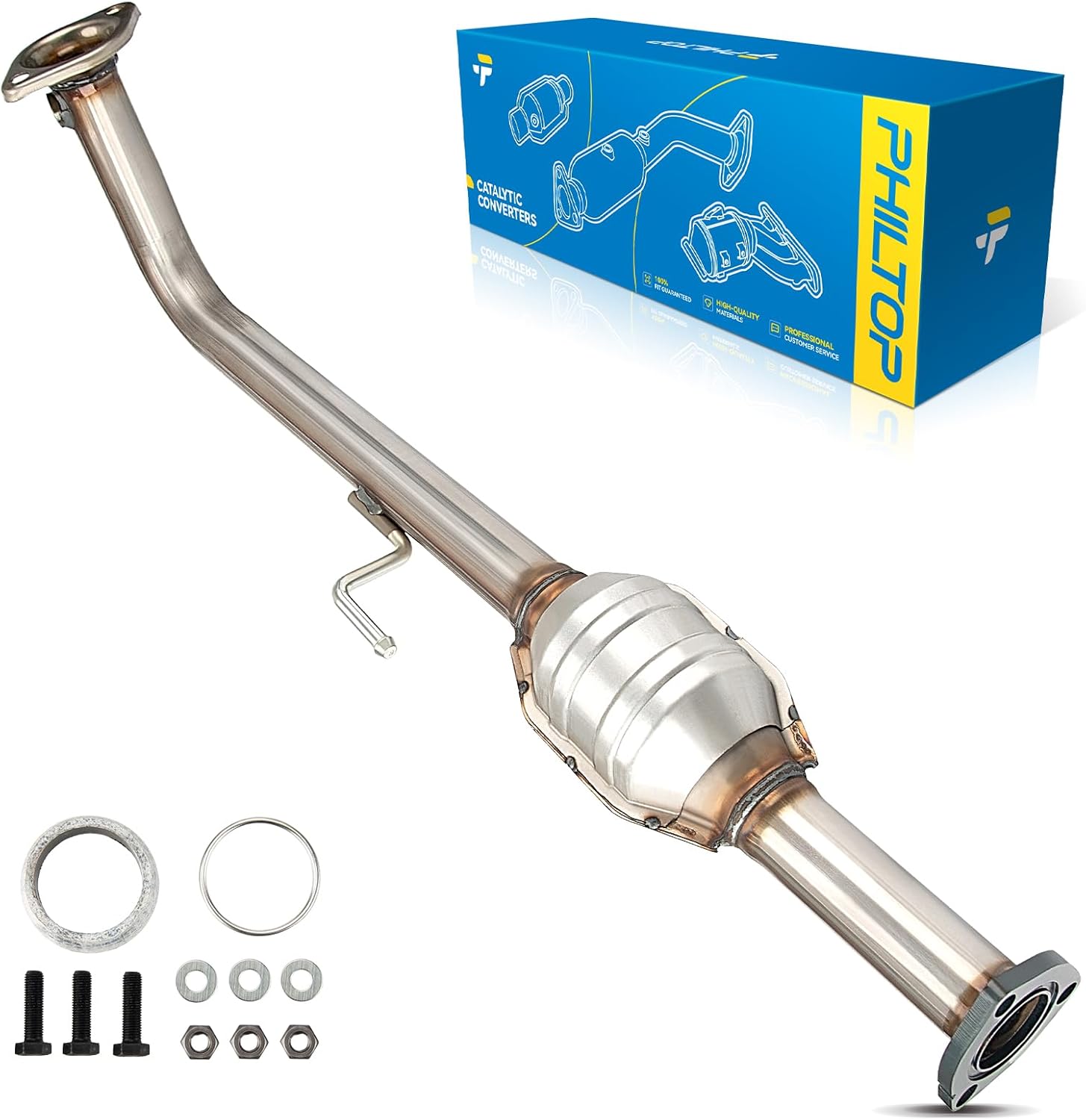
| Vehicle fitment | Honda Civic 1.7L 2001-2005 |
|---|---|
| Position | Front |
| Manufacturer | PHILTOP |
| EPA status | EPA-compliant (not CARB) |
This PHILTOP catalytic converter is a budget-minded direct-fit replacement for the front position on 2001–2005 Honda Civic 1.7L cars. It uses a high-flow ceramic honeycomb substrate and aluminized stainless body to reduce backpressure and restore catalytic function, which can improve throttle response and potentially help fuel economy compared with a clogged or damaged original. The flange-to-flange bolt-on design and included gaskets and hardware aim to make installation straightforward for a competent DIYer or an independent shop in roughly 3 to 4 hours. Because it is EPA-compliant it is intended for federal emissions vehicles and is not legal for states with stricter rules. Practical benefits are lowered exhaust noise if the old converter is failing and a cost-effective way to clear emissions-related drivability issues without custom work. Expect a straightforward replacement that balances performance improvements and affordability, while accepting that it is not certified for use in California, New York, or Maine.
Best for: Buyers who need an affordable, factory-style replacement to restore emissions performance and improve engine breathing on a 2001–2005 Civic 1.7L without paying for dealer parts or custom fabrication.
Less Ideal for: Drivers who must meet California or other state-specific emissions requirements or who want a premium performance or race-oriented catalytic solution.
- Direct-fit flange-to-flange design with included gaskets and hardware for bolt-on installation
- High-flow ceramic honeycomb substrate aimed at reducing backpressure and improving flow
- Aluminized stainless steel body for improved corrosion resistance compared with plain steel
- EPA-compliant for federal emissions, so it can be used in most states outside stricter jurisdictions
- Not legal for use in states with stricter emissions rules such as California, New York, or Maine
Verdict: A cost-effective, direct-fit high-flow replacement that restores emissions function and improves exhaust flow for 2001–2005 Honda Civic 1.7L owners on a budget.
4. maXpeedingrods Catalytic Converter for Honda Civic L4 1.7L (2001–2005)

| Fitment | Honda Civic L4 1.7L 2001-2005 |
|---|---|
| EPA Compliance | Meets federal EPA standards (not for certain states) |
| Material | Stainless steel |
| Internal catalyst | Ceramic substrate with Pt, Rh, Pd |
This catalytic converter is a direct-fit replacement for 2001–2005 Honda Civic 1.7L engines intended to restore emissions control and clear P0420 codes. It installs into the factory exhaust using the supplied gaskets and hardware so no cutting or welding is needed for a typical swap. The unit is made from stainless steel with a ceramic substrate loaded with platinum, rhodium, and palladium to meet federal EPA purification targets and help keep the check engine light off. For daily-driven Civics it offers a reliable, long-lasting option thanks to high-heat resistance and corrosion protection. It is not approved for use in certain states with stricter regulations, so it is best for vehicles outside those jurisdictions. If you expect performance gains beyond emissions compliance this part is focused on restoring proper function rather than boosting horsepower or flow significantly, but it provides a durable, factory-style solution that simplifies installation and inspection during an emissions test.
Best for: Buyers who prioritize a dependable, factory-pattern replacement to restore emissions compliance and keep daily-driving Civics running without check-engine issues.
Less Ideal for: Do not choose this if you need a CARB-compliant or state-specific legal converter for restricted states or if you want a unit specifically engineered for increased exhaust flow and performance gains.
- Direct-fit design uses existing mounting holes and includes gaskets and hardware for straightforward installation
- Constructed from stainless steel for corrosion and heat resistance
- Ceramic substrate loaded with Pt, Rh, and Pd to meet EPA emissions standards and clear P0420 codes
- Not legal for use in California, Maine, Colorado, or New York registered vehicles
Verdict: A durable, direct-fit catalytic converter that restores emissions compliance and reliability for 2001–2005 Honda Civic 1.7L owners.
5. SPEEDFusion Front High-Flow Catalytic Converter for Honda Civic 2006–2011 1.8L
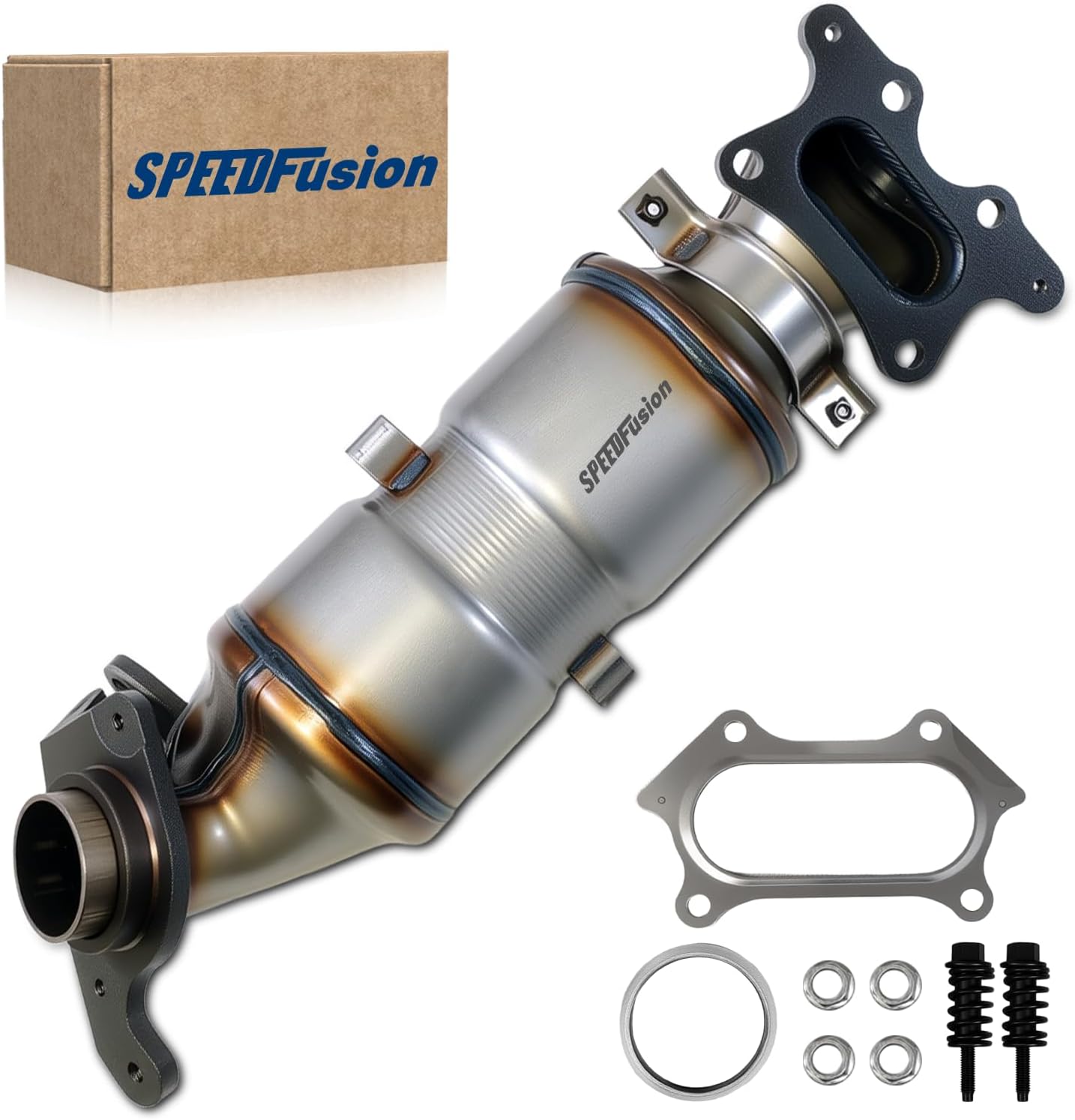
| Position | Front |
|---|---|
| Vehicle Fitment | 2006–2011 Honda Civic 1.8L L4 |
| Material | 409L stainless steel |
| Certifications | EPA compliant |
This SPEEDFusion front catalytic converter replaces the factory unit on 2006–2011 Honda Civic 1.8L models and is built as a direct-fit replacement for straightforward installation at a shop. It uses a stainless steel shell and an OEM-grade ceramic substrate with platinum, rhodium, and palladium coatings to improve conversion efficiency and reduce emissions while aiming to keep the check-engine light from triggering. The unit is EPA compliant for federal emissions vehicles but not CARB approved, so it is only legal in states that accept federal standards. Construction notes include 409L stainless steel and anti-core-detachment welding intended to withstand road conditions. Practical benefits are easier swapping into the existing exhaust system and an expected improvement in catalytic performance compared with a clogged original. Limitations are the lack of CARB certification, which restricts use in some states, and the recommendation to have professional installation to ensure fitment and avoid diagnostic issues with the vehicle computer.
Best for: Buyers who prioritize a factory-style replacement that restores emissions performance and want a part with positive owner feedback and clear compliance for federal-emissions vehicles.
Less Ideal for: People who live in states that require California emissions certification or those who need a CARB-compliant converter for legal registration.
- Direct-fit design for 2006–2011 Honda Civic 1.8L simplifies installation
- Uses OEM-grade ceramic substrate with precious metal coatings to improve conversion efficiency
- 409L stainless steel shell with reinforced welding for durability in typical road conditions
- Not CARB approved so it cannot be legally used in states that require California emissions compliance
Verdict: Choose this SPEEDFusion high-flow front catalytic converter when you want a direct-fit, EPA-compliant replacement that restores emissions performance on 2006–2011 Honda Civic 1.8L models.
Choosing the Right Honda Civic High-flow Catalytic Converter: Key Factors to Consider
Fitment And Mounting
Accurate fitment is essential for a clean installation on a Honda Civic. A converter that matches factory flange patterns, hanger positions, and oxygen sensor ports reduces the need for modifications, which lowers labor time and the risk of leaks.
Direct-fit units that align with the stock exhaust routing preserve ground clearance and prevent interference with heat shields or suspension components. Universal converters can work but typically require cutting, welding, and bracket fabrication; those steps add cost and introduce potential failure points if not done correctly. When evaluating fitment, check flange types, inlet/outlet diameters, and the distance between sensor bosses to ensure the unit will sit correctly without stressing adjacent exhaust hardware.
Flow Characteristics And Backpressure
High-flow catalytic converters aim to improve exhaust throughput, but excessive flow can upset oxygen sensor readings and reduce low-end torque. For the Honda Civic, which relies on precise air-fuel management, a converter that balances increased flow with sufficient catalytic surface area preserves drivability and throttle response.
Consider the internal substrate design and cell density. A lower cell density often increases flow but can reduce conversion efficiency, while higher cell density enhances filtration at the cost of slightly higher backpressure. Match the converter's intended performance characteristics to your Civic's engine tuning and typical driving conditions to avoid compromising everyday drivability.
Emission Effectiveness
Even when selecting a high-flow option, converters must reduce hydrocarbons, carbon monoxide, and NOx to acceptable levels for street-driven Hondas. The catalytic coating type and the available washcoat surface area determine conversion efficiency. Larger or multi-layer substrates generally offer more active surface area for chemical reactions.
For Civic owners, retaining proper emissions function supports engine management and can prevent recurring check engine lights related to catalyst efficiency. Verify that the converter provides adequate substrate volume relative to your engine displacement and that oxygen sensor placement maintains accurate feedback to the ECU.
Durability And Corrosion Resistance
Catalytic converters are exposed to heat, road debris, and moisture, so long-term durability matters. Look for robust housings made from corrosion-resistant steel, consistent weld quality, and secure internal substrate mounting to prevent rattling or breakage over time.
Thermal stability is important too. Repeated heating and cooling cycles can crack substrates that are poorly supported. For Civic owners in regions with road salt or heavy humidity, coatings or stainless housings that resist corrosion extend service life and reduce the chance of exhaust leaks or structural failure.
Oxygen Sensor Compatibility
Honda Civics rely on upstream and downstream oxygen sensors to monitor combustion and catalytic efficiency. A replacement converter must provide correct sensor boss locations and thread types so the sensors function without alteration.
Sensor compatibility preserves accurate closed-loop fueling and prevents trigger of diagnostic trouble codes related to sensor readings. Misplaced or absent sensor ports often require relocation or adapters that can introduce leaks or poor readings, so prefer converters that match the Civic's original sensor arrangement.
Installation Complexity And Serviceability
Ease of installation affects both cost and long-term satisfaction. Direct-fit converters designed for the Civic simplify replacement by minimizing cutting and welding. Consider whether the converter includes necessary gaskets, hardware, or heat shields to avoid sourcing extra parts.
Serviceability also covers future maintenance. Converters that allow straightforward access to sensors and flanges reduce labor for downstream repairs. If a unit requires specialized welding or fabrication, ensure a qualified shop performs the work to avoid voiding warranties or creating exhaust leaks.
Understanding Why Civics Trigger Catalyst-Related Codes
The Honda Civic's engine control system monitors catalyst performance using oxygen sensors placed before and after the converter. When the downstream sensor shows readings inconsistent with expected conversion, the ECU may log a catalyst efficiency code or illuminate the check engine indicator.
Common triggers include substrate degradation that reduces conversion efficiency, physical damage that allows unfiltered exhaust bypass, or sensor malfunctions caused by incorrect sensor placement. Identifying whether the issue is the sensor or the converter will guide whether a sensor replacement, wiring repair, or a new catalytic converter is necessary.
- Substrate contamination or melt-down from unburned fuel
- Physical impact damage leading to internal breakage
- Faulty oxygen sensor readings due to wrong fitment
- Exhaust leaks upstream that affect sensor signals
Legal And Emissions Considerations For Replacements
Local emissions laws govern acceptable catalytic converter replacements for street-driven vehicles. For Civic owners, choosing a converter that meets regional emissions requirements is an essential part of staying compliant during vehicle inspections and avoiding fines.
Even high-flow converters intended for street use should provide documented catalytic activity levels. Keep installation receipts and any certification information handy for inspection purposes. If your area restricts aftermarket converter types, confirm compliance before purchasing or installing a unit.
- Verify local and state emissions regulations before replacement
- Retain documentation showing catalytic efficiency or certification
- Consider factory-style direct-fit options where legal compliance is strict
When To Repair Versus Replace The Converter
Not all converter issues require a full replacement. If the problem stems from a faulty oxygen sensor, wiring problem, or an exhaust leak, addressing that issue first may resolve the check engine light without replacing the converter. Diagnostic scans and visual inspections can help pinpoint the root cause.
Physical damage, severe substrate break-up, or persistent catalyst efficiency codes after sensor and wiring checks typically indicate the converter itself needs replacement. For Civics with moderate mileage and intact housings, a direct-fit replacement can restore performance without major exhaust system modifications.
- Scan for diagnostic codes before assuming catalyst failure
- Inspect for external damage, rust-through, and sensor integrity
- Replace only when internal substrate failure or persistent codes exist
Installation Tips For Honda Civic Owners
Prepare by raising the vehicle safely and supporting it with jack stands. Allow the exhaust to cool completely before working around the converter. Penetrating oil on rusted bolts and nuts can ease removal, and applying anti-seize to oxygen sensor threads helps future servicing.
If using a direct-fit unit, hand-fit flanges and hangers first to confirm alignment before tightening. For universal units requiring welding, go to a qualified shop to ensure correct flange alignment, sealing, and hanger placement. After installation, clear codes and perform a short drive cycle to confirm the ECU recognizes the new converter.
- Use proper safety supports when working under the vehicle
- Treat oxygen sensor threads with anti-seize to prevent future seizure
- Have a qualified welder handle custom-fit installations
How Engine Tuning And Modifications Affect Converter Choice
Changes to fueling, exhaust headers, or forced induction can alter the exhaust gas temperature and composition, which affects catalytic converter longevity and performance. For lightly modified Civics, choose a converter rated for slightly higher temperatures and flow to avoid premature breakdown.
For significant tuning that increases fueling or exhaust temperatures, select a converter designed to tolerate those conditions and maintain adequate catalytic surface area. Always ensure sensor placement remains compatible after modifications to prevent fueling anomalies.
- Match converter thermal ratings to any tuning or increased exhaust temperatures
- Retain correct oxygen sensor locations after exhaust upgrades
- Consider heavy-duty substrates if your Civic runs richer or hotter than stock
Still looking for the perfect fit?
Select your Honda Civic configuration to see the most relevant Catalytic Converters recommendations
How We Chose the Best Honda Civic High-flow Catalytic Converter
Our selection process focused on attributes that matter for Honda Civic owners replacing a catalytic converter. We prioritized accurate vehicle-specific fitment so installations align with factory hangers, flanges, and sensor locations. Flow and backpressure characteristics were evaluated conceptually to ensure replacements do not create drivability issues while offering improved exhaust throughput. Durability factors included substrate construction, corrosion-resistant housings, and weld quality to withstand typical road and climate exposure.We also considered emissions effectiveness by checking whether the converter design supports required oxygen sensor operation and catalytic coating area consistent with catalytic activity expectations. Installation and serviceability were weighted, including availability of direct-fit bolt-on options versus universal pieces that need cutting and welding. Noise and heat management, such as heat shield provision and thermal stability, were part of the filter set.We excluded units that lacked clear Civic-specific fitment information, had inadequate substrate detail, or used questionable manufacturing techniques. The final list reflects parts that meet practical criteria for fit, function, longevity, and emissions support for the Honda Civic.
Our full evaluation process is outlined in our review methodology.
FAQ
What are common catalytic converter symptoms on a Honda Civic?
Common symptoms include a persistent check engine light with catalyst efficiency codes, reduced acceleration or throttle response, a rotten egg or sulfur smell from the exhaust, and rattling noises if the internal substrate has broken. These signs often warrant a diagnostic scan and visual inspection before replacing the converter.
Can a failing catalytic converter trigger the check engine light?
Yes, the ECU monitors catalyst performance through downstream oxygen sensor readings. If those readings indicate poor conversion efficiency, the system will often log a trouble code and illuminate the check engine light. Verifying sensor function is an important step before replacing the converter.
Is it okay to install a universal converter on a Civic?
Universal converters can be used but usually require cutting, welding, and custom hangers to match the Civic's exhaust routing. That increases installation complexity and the potential for leaks or misaligned sensors. For most owners, a direct-fit Civic-specific unit simplifies installation and reduces potential problems.
How long does a catalytic converter typically last on a Civic?
Lifespan varies widely depending on driving habits, fuel quality, and environmental exposure. Many converters last well beyond 100,000 miles under normal conditions, but substrate contamination, physical damage, or corrosion can shorten service life. Regular inspections help spot issues early.
Will replacing the oxygen sensors fix catalyst-related codes?
Sometimes. If sensor readings are incorrect due to a failing sensor or wiring issue, replacing the sensor can clear catalyst-related codes. However, if the converter itself has degraded catalytic material or internal damage, replacing sensors alone will not resolve efficiency codes.
Do high-flow converters affect engine performance on a Civic?
They can. Properly chosen high-flow converters may slightly improve throttle response by reducing restrictive backpressure, but overly permissive units can upset oxygen sensor readings and reduce low-end torque. Choose an option balanced for your Civic's engine characteristics to avoid negative effects.
Final Verdict
When replacing a catalytic converter on a Honda Civic, prioritize accurate fitment, oxygen sensor placement, and a balance between flow and catalytic surface area. Those elements preserve drivability, maintain emissions performance, and reduce the chance of repeat diagnostic trouble codes.Decide based on the Civic's condition and any engine modifications: choose direct-fit, corrosion-resistant units for straightforward replacements, and consider more robust substrates if your vehicle runs hotter or has higher exhaust flow. Prioritizing these tradeoffs will help you select a reliable high-flow converter that meets both performance and emissions needs.
Explore More:
- Check out all Honda Civic parts & accessories
- Explore Catalytic Converters Maintenance & Repair Guides
- Explore Exhaust & Emissions
- Browse all Auto Parts
