
Note: This article contains affiliate links. If you click on these links and make a purchase, I may earn a small commission at no extra cost to you. This helps support my research and content. Read my full affiliate disclosure here.
If your Honda Civic DX is showing warning signs or failing emissions, choosing the right catalytic converter matters for reliability and legal compliance. A proper replacement restores exhaust flow, reduces harmful emissions, and helps prevent recurring check-engine light issues. This guide focuses on six carefully selected catalytic converters that suit the DX configuration and covers the practical considerations you need when replacing this component.Below we summarize each shortlisted converter and explain the evaluation factors used so you can pick the option that best matches your repair budget, emissions requirements, and long-term durability goals.
Looking for other parts? See all Honda Civic parts & accessories.
Top Picks at a Glance
| Best Overall The best all-around choice for most situations | SPEEDFusion Front Catalytic Converter for 2001–2005 Honda Civic 1.7L |  |
| Best Quality Built to a higher standard if you want something more solid | Walker Ultra Direct-Fit Catalytic Converter (Model 54399) |  |
| Best Value The sweet spot between price and what you get | PHILTOP Front Catalytic Converter Kit for 2001–2005 Honda Civic 1.7L (Front) |  |
| Best Budget The cheapest option that still gets the job done reliably | LELEHOKA Front Catalytic Converter Kit Compatible with Honda Civic 1.8L (2006–2011) |  |
| Highest Rated A top-rated pick with lots of positive feedback | CIRconvert Catalytic Converter for Honda Civic 2006–2011 1.8L (EPA Compliant) |  |
| Most Popular A crowd favorite that many people choose with confidence | DNA MOTORING Factory-Style Bolt-On Catalytic Converter for 2006–2011 Honda Civic DX/LX/EX |  |
1. SPEEDFusion Front Catalytic Converter for 2001–2005 Honda Civic 1.7L
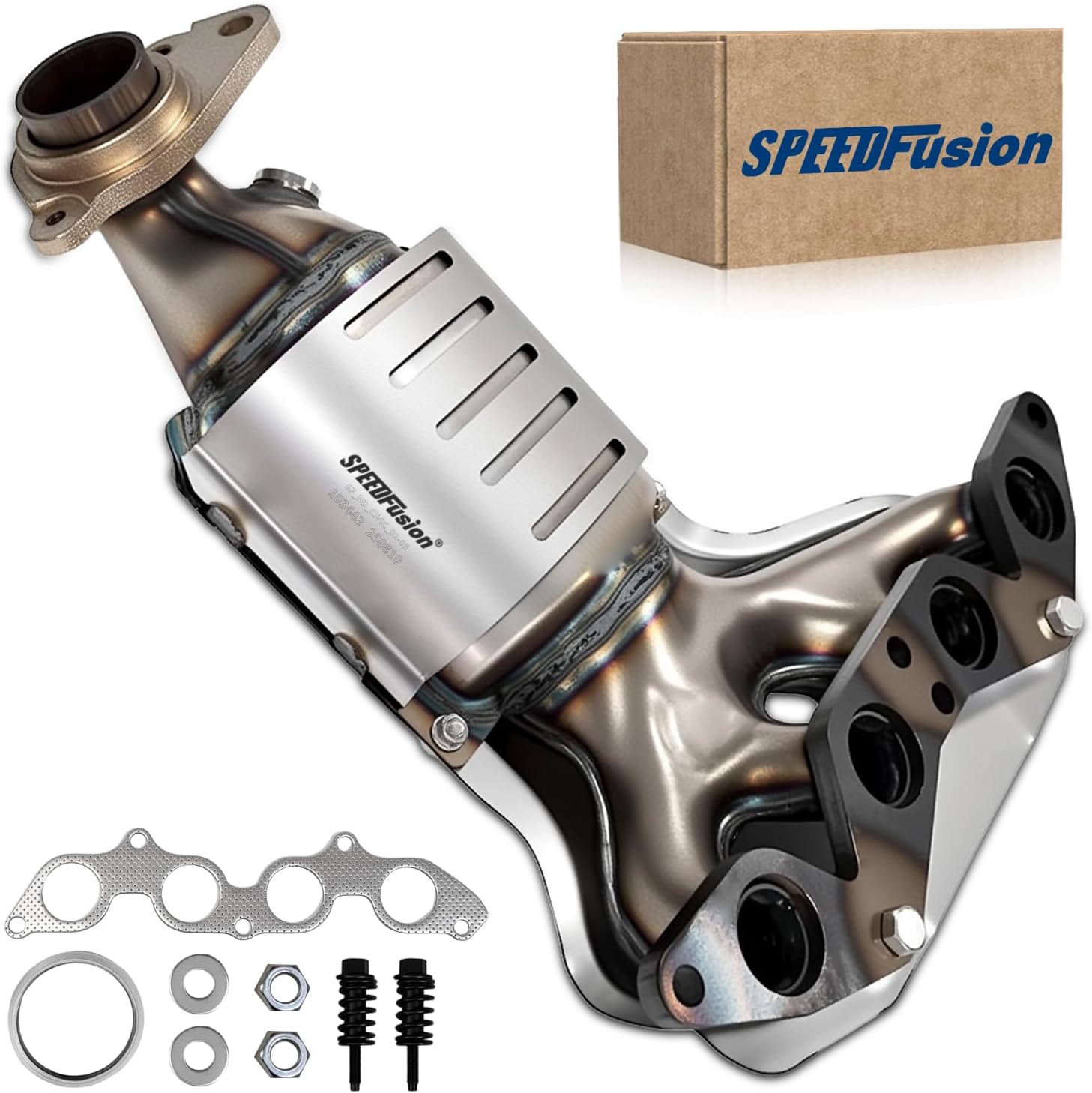
| Position | Front |
|---|---|
| Material | 409L stainless steel |
| Substrate | 400-hole ceramic with Pt/Rh/Pd |
| EPA | Federal emission compliant |
| Fitment | Direct fit for 2001–2005 Honda Civic 1.7L |
This SPEEDFusion front catalytic converter replaces the factory unit on 2001–2005 Honda Civic 1.7L and EL models and is intended as a straightforward, direct-fit emissions repair. It uses a 409L stainless steel shell and an OEM-style 400-hole ceramic substrate plated with platinum, rhodium, and palladium to restore catalytic conversion efficiency and help keep the check-engine light from returning for OBDII emissions fault codes. Installation is typical for a front converter and is best handled by a professional shop; the unit is advertised as a bolt-in fit and EPA compliant for federal emission states. Practical benefits include corrosion-resistant construction and a high-flow substrate that aims to reduce backpressure compared with older, clogged converters. Important limitations are that it is not CARB compliant and therefore cannot legally be used in states that require California standards, and proper fitment must be confirmed against the listed OEM reference numbers before purchase.
Best for: Buyers who want a cost-effective, factory-style replacement to restore emissions performance and clear OBDII emissions faults on a 2001–2005 Civic 1.7L while keeping installation straightforward.
Less Ideal for: Drivers in states that require California emissions certification or anyone needing a converter certified to CARB standards should look for a different, compliant unit.
- Direct-fit design for 2001–2005 Honda Civic 1.7L for easier installation
- Built from 409L stainless steel for corrosion resistance under exhaust conditions
- OEM-style 400-hole ceramic substrate with Pt/Rh/Pd coating to restore emissions performance
- EPA compliant for vehicles meeting federal emission standards
- Not CARB compliant and therefore illegal for use in states that require California emissions standards
Verdict: A practical, EPA-compliant direct-fit replacement that restores emissions performance for 2001–2005 Honda Civic 1.7L owners seeking a durable, factory-style catalytic converter.
2. Walker Ultra Direct-Fit Catalytic Converter (Model 54399)

| Compatibility note | Fits 2001–2005 Honda Civic (OBDII 1996+) |
|---|---|
| Material Type | aluminum coated |
| Included Components | Catalytic Converter |
| Manufacturer | Tenneco (Walker) |
The Walker Ultra Direct-Fit catalytic converter is a bolt-on replacement meant to restore emissions performance without fabrication. It installs using OE-style hangers, flanges, brackets and heat shields so a mechanic can swap it into the exhaust path the same way as the factory unit. Walker specifies EPA compliance for OBDII cars and uses a high-technology washcoat and precious-metal loading to reduce tailpipe emissions to match the application. Buyers will appreciate the thick flanges and aluminized heat shielding that protect the undercarriage and resist corrosion better than thin universal converters. Installation notes from owners show it fits many 2001–2005 Civic configurations but does not include gaskets or hardware, and some users needed a different gasket profile at one flange which can add time and parts to the job. For performance-focused Civic drivers this is a practical, emissions-compliant replacement that keeps the exhaust layout stock while saving cost versus dealer parts, though you should plan to source the correct gaskets and bolts before installation.
Best for: Enthusiastic DIYers or independent-shop customers who want a performance-minded, emissions-compliant direct replacement that preserves the Civic's stock exhaust routing while reducing cost versus dealer parts.
Less Ideal for: Drivers who want a complete plug-and-play kit with all gaskets and bolts included or those unwilling to source replacement hardware; also not suited for heavily modified exhaust systems that change flange types.
- Direct-fit design with factory-style hangers and flanges for bolt-on installation
- EPA-compliant construction and a factory-style washcoat to restore emissions control
- Aluminized heat shields and thick flanges for added durability and undercarriage protection
- Does not include gaskets or mounting hardware so additional purchases may be required
- Some flange profiles differ from factory and can require an alternate gasket or minor adjustments
Verdict: If you need a factory-style, EPA-compliant catalytic converter for a 2001–2005 Civic, this Walker direct-fit unit gives the same exhaust layout and emissions performance at a lower cost than dealer replacements.
3. PHILTOP Front Catalytic Converter Kit for 2001–2005 Honda Civic 1.7L (Front)
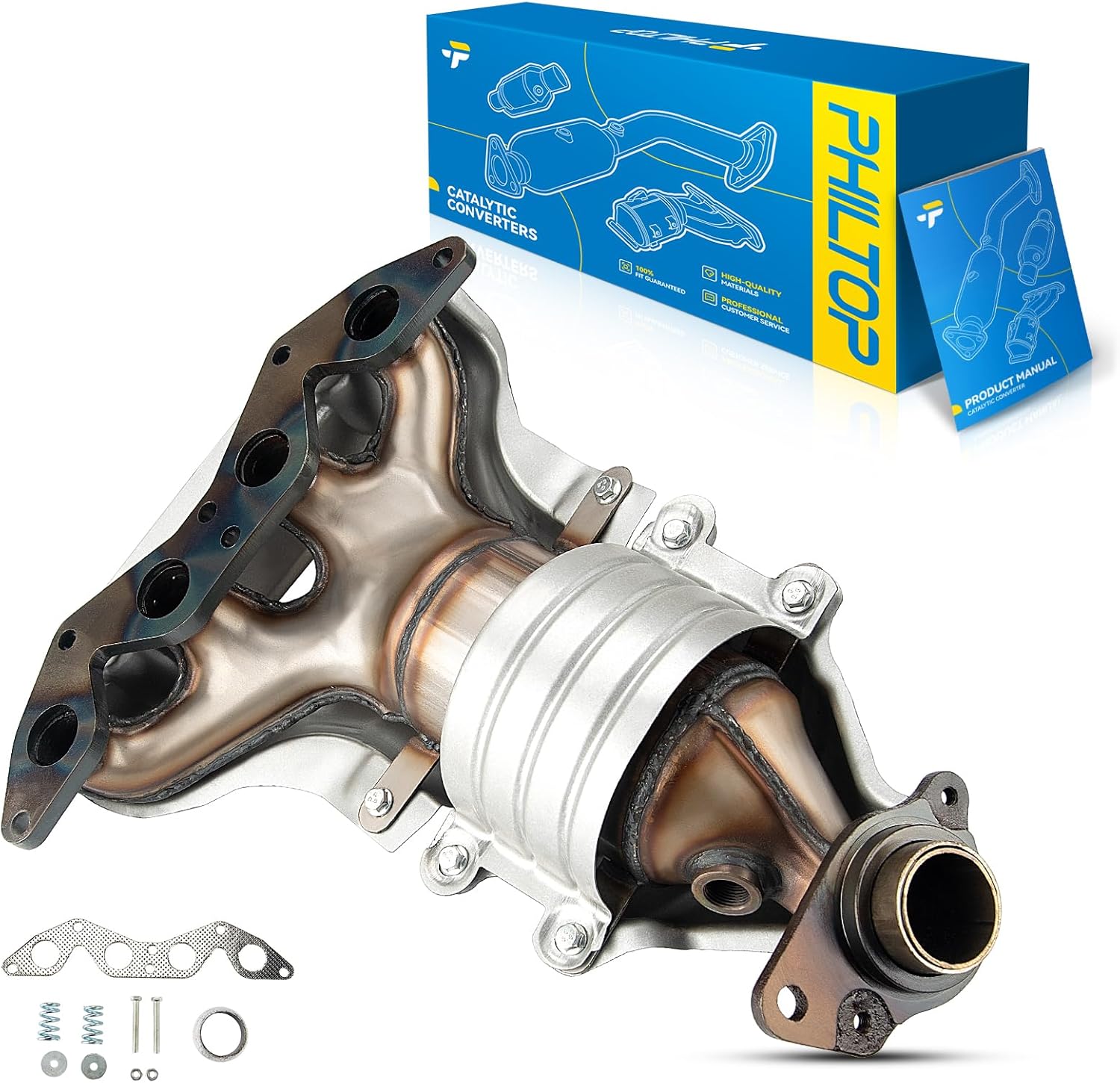
| Compatible vehicles | 2001–2005 Honda Civic 1.7L (non-EX) |
|---|---|
| Position | Front |
| Manufacturer | PHILTOP |
| EPA compliance | Federal emissions (not CARB) |
This PHILTOP front catalytic converter kit is a bolt-on replacement intended for 2001–2005 Honda Civic 1.7L (non-EX) models and ships with OE-style gaskets and mounting hardware to simplify installation. The unit uses a stainless steel outer shell and a ceramic honeycomb substrate that the manufacturer describes as high-flow to reduce backpressure and help restore conversion efficiency after the original unit fails. In practice the kit is useful for drivers who want a relatively straightforward DIY swap: most buyers report it lines up with factory mounting points and can be installed in a few hours without modification, though occasional bracket or flange adjustments may be needed. Benefits include EPA federal compliance for most states, complete installation hardware, and a design meant to mimic factory fit and function. Downsides seen in some reports include variable build quality between units, occasional alignment or gasket issues that can cause leaks, and a handful of early failures reported by users seeking longer-term durability. Expect a budget-friendly, serviceable replacement but check fit and flange sealing during installation.
Best for: A practical DIY owner who wants an affordable, mostly plug-and-play replacement to get a 2001–2005 Civic 1.7L back to legal emissions and running smoothly without paying dealer labor.
Less Ideal for: Drivers who need a guaranteed long-term performance upgrade or who live in states with stricter emissions rules should look at higher-end or compliant alternatives and locally legal options.
- Includes OE-style gaskets and hardware for a mostly bolt-on installation
- Stainless steel outer shell resists high temperatures and adds durability
- Designed to meet EPA federal emissions standards for use outside of states with stricter rules
- High-flow ceramic honeycomb aimed at reducing backpressure and restoring conversion efficiency
- Fitment and bracket alignment can be inconsistent, occasionally requiring bending or adjustment
- Some buyers reported early failures or internal breakdown of the substrate in a small number of units
- May need additional gasket work or shop help to stop exhaust leaks on certain vehicles
Verdict: A budget-friendly, hardware-complete front converter that gets a 2001–2005 Civic 1.7L back to emissions compliance with a mostly bolt-on installation.
4. LELEHOKA Front Catalytic Converter Kit Compatible with Honda Civic 1.8L (2006–2011)

| Position | Inner front |
|---|---|
| Fitment | 2006–2011 Honda Civic 1.8L L4 (federal emissions) |
| Manufacturer | LELEHOKA |
| EPA status | EPA approved (not legal in CA, CO, NY, ME) |
This LELEHOKA front catalytic converter is a direct-fit replacement for 2006–2011 Honda Civic 1.8L models and is sold as an EPA-compliant unit for federal emissions vehicles. It installs in the front/inner position and is built with a stainless steel housing that the listing says resists corrosion and bending, which should hold up to everyday driving and road salt exposure. Typical use is straightforward: remove the failed front converter and bolt this unit into the factory exhaust routing without major modifications. The practical benefits are simple: restores emissions control, allows a car that failed an emissions check to run clean again, and reduces time in the shop thanks to direct-fit design. Limitations to be aware of are variable user reports about emission code 0420 triggering on some Civics, which suggests the catalyst loading may not match factory levels for every vehicle, and the unit is not legal for sale in certain states with stricter rules. Expect a lower-cost replacement that can work well for budget repairs but may not meet the most demanding factory-spec performance on every car.
Best for: Buyers looking to repair a Civic emissions failure on a tight budget who prioritize a straightforward, factory-style replacement and quick installation.
Less Ideal for: Owners in states with stricter emissions laws or buyers who need a factory-equivalent high-load catalyst for long-term compliance or performance should look at higher-end or dealer options.
- Direct-fit design for 2006–2011 Civic 1.8L models simplifies installation
- Stainless steel housing offers corrosion and abrasion resistance for longer life
- EPA-approved for federal emissions models, so it meets basic emissions requirements
- Sold as a complete front/inner converter kit so no major fabrication is needed
- Some users report check-engine P0420 codes after installation, indicating possible lower catalyst loading than factory units
Verdict: A budget-friendly, direct-fit front converter that restores emissions capability for federal-spec 2006–2011 Honda Civics without major modifications.
5. CIRconvert Catalytic Converter for Honda Civic 2006–2011 1.8L (EPA Compliant)

| Manufacturer | CIRconvert |
|---|---|
| Manufacturer Part Number | HC0611-001 |
| EPA Certification | Complies with US EPA |
| Vehicle Fitment | Honda Civic 2006-2011 1.8L |
This CIRconvert catalytic converter is a direct-fit replacement made for 2006–2011 Honda Civic 1.8L applications and is built from stainless steel with a ceramic substrate and high-perforation design. It installs in place of the factory unit to restore emissions control and help the vehicle pass inspections in states that accept EPA-compliant aftermarket converters. The unit is described as heat-resistant and corrosion-resistant thanks to the stainless construction and laser-welded seams, which should give it reasonable longevity on typical daily-driven Civics. Being EPA certified means it contains the required catalytic materials to reduce NOx, CO, and HC output. Practical benefits include a straightforward bolt-in fit for compatible Civic trims and an advertised 50,000-mile limited warranty. Limitations include state shipping restrictions that exclude California, Colorado, New York, and Maine and the usual caveat that fitment must match the listed interchange number and model years exactly; professional installation is recommended to ensure sensor alignment and avoid check-engine codes.
Best for: A buyer who prioritizes reliable, factory-quality emissions performance and wants a straightforward replacement to restore a Civic’s catalytic function with minimal modifications.
Less Ideal for: Drivers seeking California-compliant converters or those who need universal or multi-vehicle fitment should look elsewhere.
- Direct-fit design tailored for 2006–2011 Honda Civic 1.8L applications
- EPA compliant with catalytic materials to reduce harmful emissions
- Constructed from high-strength stainless steel with laser welding for corrosion and heat resistance
- Includes ceramic substrate with high perforation for catalytic efficiency
- Cannot be used or shipped to California, Colorado, New York, or Maine
Verdict: Choose this CIRconvert unit when you need a dependable, direct-fit EPA-compliant replacement to restore emissions control on a 2006–2011 Honda Civic 1.8L.
6. DNA MOTORING Factory-Style Bolt-On Catalytic Converter for 2006–2011 Honda Civic DX/LX/EX

| Fitment | 2006-2011 Honda Civic DX, LX, EX |
|---|---|
| Certifications | Federal/EPA compliant |
| Installation | Bolt-on direct fit |
| Materials | Stainless steel body with aluminized piping |
This DNA MOTORING catalytic converter is a bolt-on replacement designed specifically for 2006–2011 Honda Civic DX, LX, and EX models and installs without cutting or welding. It uses a stainless steel body with aluminized piping and a premium substrate and washcoat intended to deliver EPA-compliant emissions control and good oxygen storage capacity. Typical use is as a one-for-one replacement when a factory unit has failed or been damaged; the unit is positioned and tightened using existing mounting points and hardware. Notable features include the direct-fit design that reduces installation time and the manufacturer testing claimed to validate fit and durability. Practical benefits are straightforward installation for a professional or experienced DIY mechanic and emissions performance that meets federal standards outside of certain states. Limitations are that it is not legal for sale or use in California, Maine, or New York and it does not fit GX, Hybrid, or Si Civic variants, so confirm your exact model before buying.
Best for: Buyers who want a tested, factory-style replacement for a failed catalytic converter on a 2006–2011 Civic DX, LX, or EX and who prioritize straightforward installation and federal emissions compliance outside restricted states.
Less Ideal for: Drivers in states that require stricter emissions certification or owners of GX, Hybrid, or Si versions of the Civic should look for parts specifically listed for those models or certified for their state.
- Direct-fit bolt-on design that installs without welding or fabrication
- Stainless steel body with aluminized piping for improved durability
- Premium substrate and high-technology washcoat to support oxygen storage and emissions control
- Manufacture claims of application-specific testing to match factory specifications
- Not legal for sale or use in California, Maine, or New York
Verdict: A practical, factory-style bolt-on replacement for 2006–2011 Civic DX/LX/EX owners who need a federally compliant catalytic converter and want an easier installation.
Choosing the Right Honda Civic DX Catalytic Converter: Key Factors to Consider
Fitment and Flange Compatibility
Correct fitment is the single most important consideration for a Civic DX catalytic converter. The converter must match the DX exhaust geometry, including inlet and outlet diameter, pipe length, and flange bolt pattern. Mismatched dimensions lead to exhaust leaks, poor sealing, and potential sensor misalignment.
Verify the location and thread type of oxygen sensor ports so the existing sensors can be mounted without modification. Some replacements require adaptors or welding; consider whether you have access to a shop or the tools needed for custom installation. Proper fit reduces installation time and prevents long-term issues like exhaust leaks that can trigger the check-engine light.
Emissions Certification and Compliance
Emissions compliance affects legality and the ability to pass inspections. Choose a converter that explicitly states compliance with applicable federal or state standards for on-road use. Units designed to meet OEM-equivalent conversion efficiencies are more likely to keep exhaust emissions within regulatory limits.
Certification also impacts warranty coverage in some regions and can influence resale value. If your area requires demonstration of emissions conformity at inspection, prioritize converters with documented testing or certification statements to avoid rework and potential fines.
Substrate Type and Conversion Efficiency
The internal substrate—the honeycomb or ceramic core coated with catalyst materials—determines how effectively the converter transforms hydrocarbons, carbon monoxide, and nitrogen oxides. Higher cell density and quality washcoat application generally yield better initial conversion efficiency.
Consider units with substrates engineered for sustained performance, as real-world driving exposes the core to thermal cycling and contamination from oil or coolant leaks. A more robust substrate resists breakdown and maintains conversion rates over longer service intervals, reducing the chance of catalytic converter failure signs reappearing.
Durability and Construction Quality
Durability affects both longevity and resistance to road hazards. Look for solid outer casings, corrosion-resistant materials, and quality welding at seams. Thicker walls and robust mounting flanges better resist rust and mechanical damage from road debris or potholes.
Heat shielding, internal mat retention, and secure substrate anchoring reduce the risk of rattles or core collapse. Durable construction also helps maintain consistent backpressure and prevents the converter from becoming a source of exhaust noise or drivability problems over time.
Backpressure and Engine Performance
Catalytic converters influence exhaust backpressure, which affects engine breathing and fuel trim. Select a converter designed to approximate the OEM flow characteristics for the Civic DX to preserve throttle response and overall engine efficiency.
Excessive restriction can reduce power and increase fuel consumption, while too little backpressure in some engine designs can upset sensor readings. Balance is key: a converter that maintains appropriate flow helps avoid drivability issues and repeated emissions-related diagnostic trouble codes.
Installation and Serviceability
Consider how the converter will be installed and serviced during future maintenance. Some units bolt directly to existing flanges and accept factory oxygen sensors, simplifying replacement and minimizing shop time. Others may require welding, cutting, or additional adapters, increasing labor and complexity.
Also factor in whether heat shields or nearby exhaust components need removal for access. Reusable mounting hardware and clear installation instructions reduce the chance of improper fitment. Choosing a product that aligns with your installation capabilities will reduce downtime and potential post-installation issues.
Common Symptoms of a Failing Converter on the Civic DX
Recognizing early signs of converter distress helps you decide whether repair or replacement is necessary. Owners often notice a persistent check-engine light, reduced engine power, or a sulfuric rotten-egg odor from the exhaust when the catalytic function degrades.
Another typical symptom is a noticeable decrease in fuel economy and hesitation during acceleration. In severe cases the converter can become clogged and cause overheated exhaust temperatures or repeated misfire codes that stress downstream components.
- Persistent check-engine light often tied to oxygen sensor or catalyst efficiency codes
- Reduced throttle response and lower mid-range power
- Strong sulfur or rotten-egg exhaust odor
- Decreased fuel economy and potential overheating of exhaust components
Diagnosing Converter Problems Before Buying
Start with a diagnostic scan to identify trouble codes related to catalyst efficiency or oxygen sensor readings. Live data can reveal whether upstream and downstream O2 sensors show expected voltage swings or if the downstream sensor remains too similar to the upstream sensor.
A smoke or pressure test can detect exhaust leaks that mimic converter fault symptoms. You can also monitor exhaust temperatures: an unusually cold downstream pipe compared with normal operating ranges may indicate a failing catalyst, while excessive downstream heat can signal a restricted core.
- Use OBD-II live data to compare upstream and downstream O2 sensor behavior
- Inspect visually for damaged flanges, rust-through, or impact damage
- Measure exhaust backpressure or temperature differentials when possible
Understanding Fitment Notes for the DX Configuration
The Civic DX has a specific exhaust routing and sensor placement that replacement units must accommodate. When evaluating listings, confirm whether the unit is intended for the DX trim and the exact year range you are working on to avoid surprises at installation.
Pay attention to inlet/outlet pipe orientations and whether the converter includes integrated flanges or is a direct-fit slip-on style. Some converters are sold as universal sections requiring cutting and clamping, which adds labor and potential leak points compared with direct-fit designs.
- Confirm sensor port count and thread size to reuse factory sensors
- Check for included gaskets or mounting hardware versus requiring new parts
- Note whether heat shields or hangers are included to match existing exhaust supports
Maintenance Tips to Extend Converter Life
Preventative vehicle maintenance reduces the likelihood of premature converter failure. Address oil consumption and coolant leaks promptly, as contamination of the catalyst by oil or antifreeze rapidly degrades conversion efficiency.
Keep the ignition and fuel systems in good tune to avoid unburned fuel and misfires that can overheat and melt the substrate. Regular inspections for exhaust leaks, damaged heat shields, and loose hangers will help maintain proper alignment and protection from road debris.
- Fix misfires and rich-running conditions quickly to avoid catalyst overheating
- Repair oil or coolant leaks before they contaminate the converter
- Inspect hangers and shields during routine service to prevent mechanical damage
Installation Considerations and Shop Prep
Decide whether the replacement will be a bolt-on direct-fit or a weld-in job. Direct-fit units that accept the factory oxygen sensors and use OEM-style flanges typically reduce labor time. If welding is required, explain the scope to your technician and confirm rust removal or flange replacement needs.
Gather necessary supplies in advance, such as new gaskets, anti-seize for sensor threads, replacement hardware, and any exhaust clamps or hangers. Expect to address corrosion at flange studs or bolts; having service replacements on hand avoids multiple visits.
- Bring OBD-II codes and any diagnostic notes to the shop
- Ask the shop whether sensor relocation or replacement is needed
- Plan for potential exhaust system repairs beyond the converter itself
Still looking for the perfect fit?
Select your Honda Civic configuration to see the most relevant Catalytic Converters recommendations
How We Chose the Best Honda Civic DX Catalytic Converter
We shortlisted catalytic converters for the Honda Civic DX using a practical set of filters and performance-focused criteria relevant to owners and technicians. Selection prioritized correct fitment to the DX exhaust layout, verified flange and pipe dimensions, and compatibility with the vehicle s original oxygen sensor locations. Durability was assessed through material and construction characteristics such as core substrate type and casing thickness, since these drive longevity under everyday driving and occasional high-heat conditions.Emissions performance was another primary criterion: we favored units engineered to meet or exceed federal and state emissions thresholds and to maintain consistent conversion efficiency over time. Flow characteristics and backpressure influence drivability and fuel trim, so converters with balanced flow ratings that preserve engine response were preferred. Ease of installation and serviceability were considered, including whether the unit allows reuse of existing hardware or requires welding.Exclusions: we excluded units lacking clear fitment information for the Civic DX, converters intended only for racing or off-road use, and items without documented emissions compliance where required. The final list balances correct fit, emissions reliability, construction quality, and practical installation considerations.
Our full evaluation process is outlined in our review methodology.
FAQ
How do I know if the catalytic converter in my Civic DX needs replacement?
Symptoms often include a persistent check-engine light with catalyst efficiency codes, reduced power, poor fuel economy, or a strong sulfur smell. Diagnostic scans and temperature or backpressure checks can confirm whether the converter is the issue.
Can I reuse my existing oxygen sensors when replacing the catalytic converter?
Often you can reuse factory sensors if the replacement unit provides the same sensor port locations and thread sizes. Confirm fitment details beforehand, and replace sensors if they show age-related drift or damage.
Will a new catalytic converter affect my Civic DX s engine performance?
A properly matched converter preserves the original backpressure and should restore normal engine behavior. Choosing a unit with flow characteristics close to OEM helps avoid power loss or drivability changes.
Are heat shields and hangers important when installing a new converter?
Yes. Heat shields protect nearby components from exhaust heat, and secure hangers maintain alignment. Missing or damaged shields and hangers can lead to rattles, premature wear, or contact with underbody parts.
What maintenance prevents catalytic converter failure signs from developing?
Address oil consumption, coolant leaks, misfires, and rich-running conditions promptly. Regular inspections of the exhaust system for leaks, rust, and loose components also help prevent premature conversion efficiency loss.
Is a direct-fit converter always the best choice for a Civic DX?
Direct-fit units typically reduce labor and leak risks because they match factory flanges and sensor locations. However, if a direct-fit option is not available, a well-installed welded or clamped replacement can still be acceptable when done by a competent technician.
Final Verdict
When replacing the catalytic converter on a Honda Civic DX, prioritize correct fitment, documented emissions compliance, and construction quality. Balancing conversion efficiency with appropriate exhaust flow helps preserve engine performance while keeping emissions within required limits. Consider installation logistics and your tolerance for potential additional exhaust repairs when choosing a unit.Focus on converters that match the DX sensor layout and flange dimensions, offer durable construction, and state clear emissions credentials. That approach will minimize installation headaches and reduce the chance of repeat diagnostic issues, letting you restore reliable operation with confidence.
Explore More:
- Check out all Honda Civic parts & accessories
- Explore Catalytic Converters Maintenance & Repair Guides
- Explore Exhaust & Emissions
- Browse all Auto Parts
