

Note: This article contains affiliate links. If you click on these links and make a purchase, I may earn a small commission at no extra cost to you. This helps support my research and content. Read my full affiliate disclosure here.
If your Honda Accord V6 is showing drivability issues or an emissions test failure, choosing the right catalytic converter matters. The correct unit restores exhaust emissions control, reduces the likelihood of a check engine light related to the catalytic system, and ensures proper fitment with the V6 exhaust layout.This guide covers the six top shortlisted catalytic converters that fit the Honda Accord V6. It explains key performance and durability considerations, common failure signs, and installation and compatibility points so you can pick the option best suited to your needs. Read on for the evaluation criteria and practical buying guidance.
Looking for other parts? See all Honda Accord parts & accessories.
Top Picks at a Glance
| Best Overall The best all-around choice for most situations | PREMIER MILES High-Flow Catalytic Converter for Honda V6 3.5L (Left & Right) |  |
| Best Quality Built to a higher standard if you want something more solid | AISIN Aftermarket Set of 2 Front Left & Right Catalytic Converters (EPA Compliant) |  |
| Best Value The sweet spot between price and what you get | CatFlowFixer High-Flow Catalytic Converter for Honda V6 (Left/Right) |  |
| Best Budget The cheapest option that still gets the job done reliably | ZCATAPARTS Catalytic Converter Compatible with 2008–2012 Honda Accord 3.5L V6 (Rear) |  |
| Highest Rated A top-rated pick with lots of positive feedback | CAT CLEAN Catalytic Converter (2-pack) Compatible with Honda Pilot/Accord/Odyssey/Ridgeline 3.5L/3.7L V6 |  |
| Most Popular A crowd favorite that many people choose with confidence | SPEEDFusion High-Flow Catalytic Converter for Honda V6 (EPA Compliant) |  |
1. PREMIER MILES High-Flow Catalytic Converter for Honda V6 3.5L (Left & Right)

| Compatible engines | 3.5L V6 |
|---|---|
| Vehicle fit | Honda Accord (2008-2017), Pilot (2008-2017), Odyssey (2008-2019), MDX (2010-2020) |
| Substrate | 400-cell ceramic |
| Compliance | EPA compliant |
This Premier Miles high-flow catalytic converter pair replaces both left and right units on compatible Honda V6 3.5L models to restore emissions performance while preserving exhaust flow. It uses a 400-cell ceramic substrate and precious metal catalysts to balance filtration and reduced backpressure, which helps retain engine responsiveness and avoid the fuel-economy penalty of a clogged converter. The product is EPA-tested for a 25,000-mile long-term durability check and comes with a structural warranty plus a limited emissions-performance warranty, giving installers some assurance after fitment. Installation is typical of direct-fit replacement converters and may require basic exhaust tools or a shop if rusted bolts are present. Important limits are that this unit is not CARB compliant, so it is unsuitable where California standards apply, and buyers should verify exact fitment for their model year and exhaust configuration before ordering.
Best for: Buyers seeking a balanced replacement that restores emissions control without unduly sacrificing engine performance, particularly those wanting a direct-fit pair for routine repair or post-failure replacement.
Less Ideal for: Drivers in California or regions that require CARB-compliant parts or owners who need a converter specifically certified for state-level emissions programs.
- EPA-tested 25,000-mile long-term durability validation
- 400-cell ceramic substrate for improved exhaust flow and lower backpressure
- Includes both left and right converters for complete replacement
- Precious metal catalyst formulation aimed at consistent emissions reduction
- Not CARB compliant and cannot be used in California or CARB-regulated areas
Verdict: A factory-style, EPA-tested high-flow converter pair that restores emissions control and preserves exhaust flow for 3.5L Honda V6 vehicles.
2. AISIN Aftermarket Set of 2 Front Left & Right Catalytic Converters (EPA Compliant)

| Brand | AISIN |
|---|---|
| Manufacturer Part Number | CCTH-00089 |
| EPA Compliance | Federal OBDII (1996+) — not legal in CA/CO/NY/ME |
| Vehicle Fitment | Honda/Acura V6 3.5L and 3.7L (listed model years) |
These AISIN front catalytic converters replace the factory units on select Honda and Acura V6 models and are offered as a matched left/right pair. They are engineered to meet EPA emissions requirements for OBDII vehicles and are intended as a direct-fit replacement for worn or failed converters. Typical use is a bolt-in swap during exhaust repair or restoration where emissions compliance and a factory-style fit are priorities. Notable features include manufacturer-grade construction aimed at durability and a design the listing describes as a precise fit for smooth installation. Practical benefits are straightforward: they restore catalytic function, clear emissions-related drivability issues, and avoid custom fabrication. Important limitations are regulatory scope and fitment: they are for federal-emissions vehicles only and are not legal in several states with stricter rules, and compatibility is limited to the listed Honda and Acura V6 years and engines. Installation may still require basic exhaust tools and professional installation if corrosion or hardware issues exist.
Best for: Buyers who need a performance-minded, factory-quality replacement to restore emissions control and drivetrain behavior on V6 Honda or Acura vehicles and prioritize a direct-fit, durable part.
Less Ideal for: Drivers in states with California-equivalent emissions rules or anyone needing a converter certified for those state programs should look for compliant alternatives.
- Engineered by a reputable supplier for factory-style fit and long-term durability
- Sold as a matched left and right pair to simplify full front-end replacement
- EPA-compliant for federal emissions systems on OBDII vehicles
- Designed for direct replacement to minimize fabrication and modification
- Not legal for sale or use in several states with stricter emissions standards
- Compatibility restricted to specific Honda and Acura V6 model years and engine sizes
Verdict: Choose these AISIN front catalytic converters when you want a factory-quality, direct-fit replacement to restore emissions and drivability on compatible Honda or Acura V6 vehicles.
3. CatFlowFixer High-Flow Catalytic Converter for Honda V6 (Left/Right)
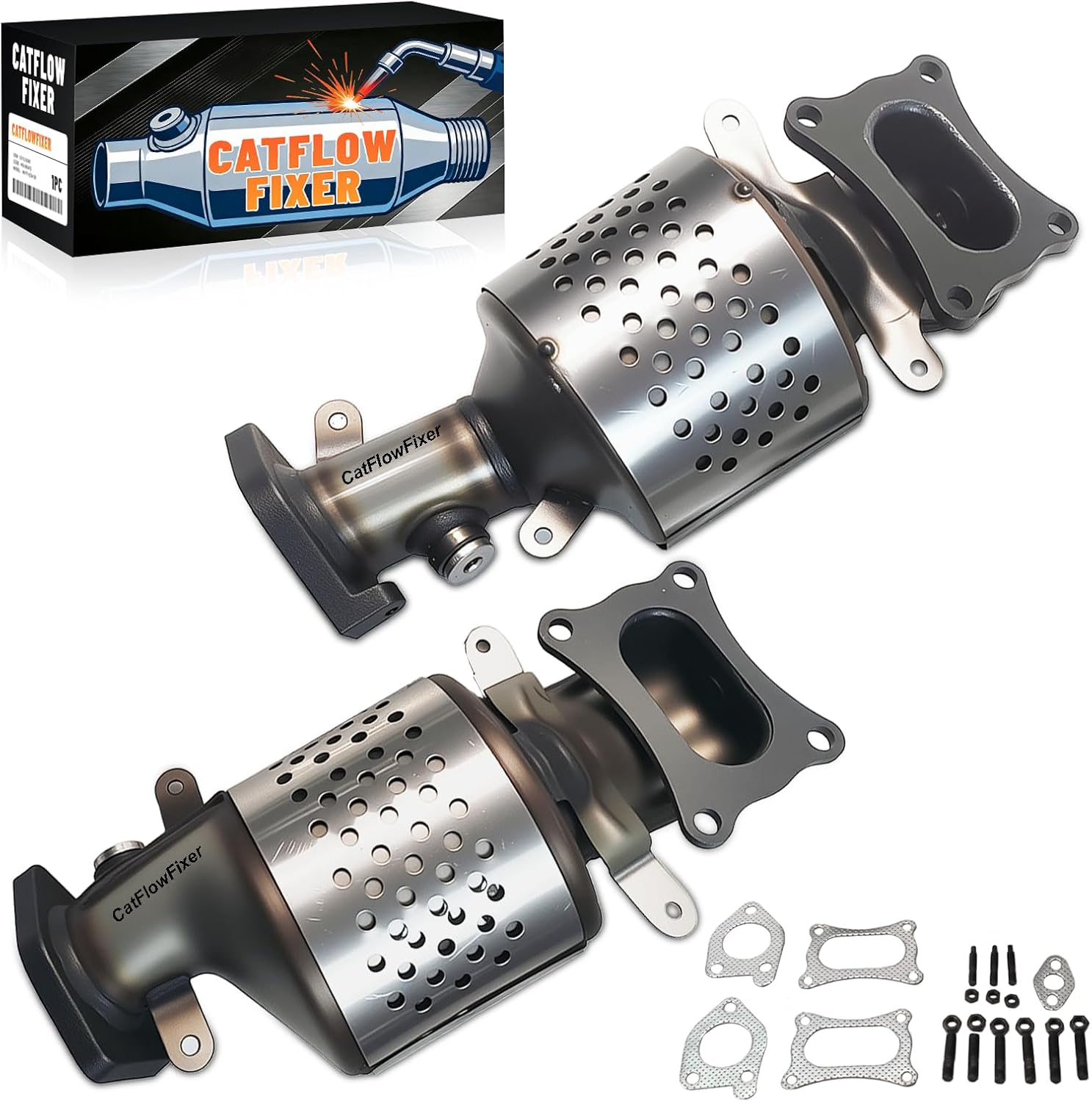
| Position | Left, Right |
|---|---|
| Manufacturer | CatFlowFixer |
| Exterior | Polished |
| Manufacturer Part Number | YL40919G |
| EPA Compliance | Federal emission standards (not for certain states) |
This CatFlowFixer catalytic converter is a direct-replacement style unit designed for Honda V6 applications to restore exhaust flow, reduce backpressure, and bring a failed converter back into emissions compliance for federal states. It uses a 400-cell ceramic substrate coated with platinum, rhodium, and palladium to provide catalytic activity while claiming EPA compliance and a long-term road test. Typical use is as a like-for-like replacement when the original unit has failed, or when a worn converter is causing performance loss or a check-engine code. The polished exterior and OE-style flanges make it suitable for professional installation; the listing advises installation at a shop to ensure correct fit and operation. Practical benefits include improved exhaust flow and a warranty package that covers structural issues and limited emissions performance. Limitations to watch for are fitment variability reported by some buyers and the legal restriction against use in certain states with their own emissions rules, so confirm local legality before purchase.
Best for: Buyers who want a cost-effective, factory-style replacement to fix emission failures and regain engine efficiency while prioritizing a straightforward install by a professional.
Less Ideal for: Drivers in states that require state-specific certified converters or DIY owners unwilling to modify or pay for professional fitting should look elsewhere.
- Engineered 400-cell ceramic substrate with precious metal coating for effective catalytic conversion
- Designed to reduce backpressure and help restore lost engine performance
- Polished, OEM-like design intended for professional installation and replacement
- EPA-compliant for federal emission standards and passed a 25,000-mile road test claim
- Fitment and alignment can be inconsistent across vehicles requiring modification or professional adjustment
- Not legal for sale or use in some states with stricter emissions rules
Verdict: Choose this CatFlowFixer unit if you need a federal-compliant, high-flow factory-style replacement to restore performance on a Honda V6 quickly and affordably.
4. ZCATAPARTS Catalytic Converter Compatible with 2008–2012 Honda Accord 3.5L V6 (Rear)

| Brand | ZCATAPARTS |
|---|---|
| Vehicle fitment | 2008-2012 Honda Accord 3.5L V6 Rear (also listed for select Acura/Honda 3.5L V6 models) |
| Material | Stainless steel shell |
| Manufacturer Part Number | HDAC021 |
This ZCATAPARTS catalytic converter is a direct-fit rear unit designed for 3.5L V6 Honda and Acura models from the late 2000s to mid 2010s. Constructed with a stainless steel shell and automated welding, it aims to resist corrosion and high heat while providing a sealed connection to prevent exhaust leaks. It ships with gaskets and hardware sized to the factory flange for bolt-on installation, so most DIYers or independent shops can replace a failed converter without custom fabrication. The listing says it is engineered to stabilize emissions readings and clear P0420/P0430 codes when the rest of the exhaust and sensors are in good condition. Limitations include regional legal restrictions for sale and use in certain states, and the product description does not specify internal substrate material or precious metal loading levels, which affects long-term emissions performance and theft risk. For buyers prioritizing an affordable, factory-style replacement to get a V6 Accord back to road-legal emissions, this is a straightforward option; those needing a certified statewide unit should check local regulations first.
Best for: Buyers needing a budget-friendly, factory-style replacement to restore emissions function on a 3.5L V6 Accord or compatible Acura vehicle and who prioritize straightforward fitment and lower parts cost.
Less Ideal for: Drivers who require state-certified converters for restricted states or who want documented high precious-metal loading for long-term emissions durability should consider other options.
- Direct-fit flange and included gaskets/hardware simplify installation
- Stainless steel shell and automated welds improve corrosion and heat resistance
- Designed to stabilize emissions and clear common P0420/P0430 codes
- Fits a range of 3.5L V6 Honda and Acura rear applications listed in the product description
- Not legal for sale or use in California, New York, Colorado, and Maine
- Product details do not list catalyst substrate type or precious metal content
Verdict: A cost-conscious direct-fit stainless-steel replacement that restores rear emissions function on 3.5L V6 Accords without complex installation.
5. CAT CLEAN Catalytic Converter (2-pack) Compatible with Honda Pilot/Accord/Odyssey/Ridgeline 3.5L/3.7L V6
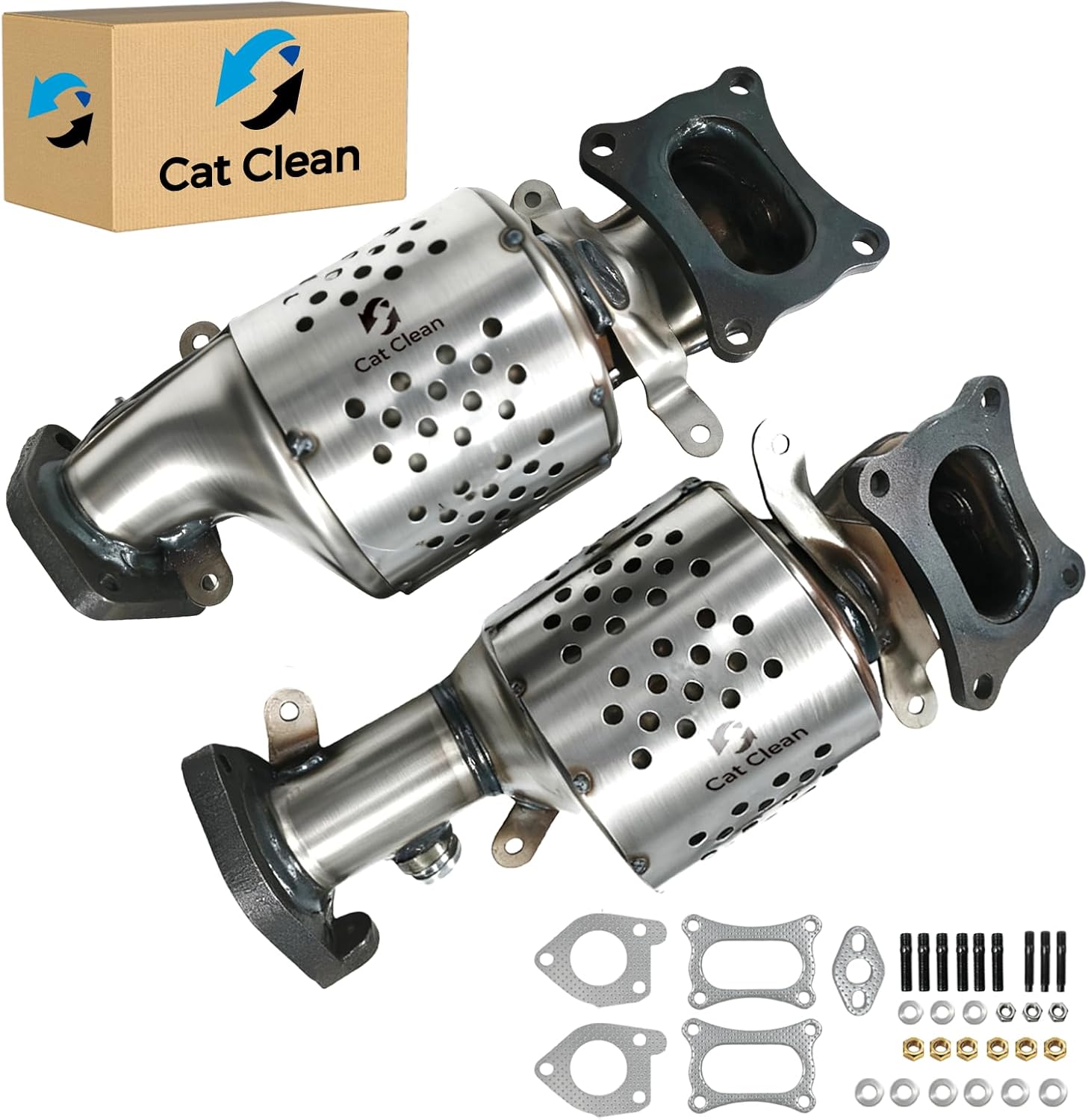
| Compatible engines | 3.5L and 3.7L V6 (listed Honda/Acura models) |
|---|---|
| Compliance | EPA compliant |
| Substrate | High-density honeycomb ceramic with Pt Rh Pd |
| Body material | 409L stainless steel |
This CAT CLEAN catalytic converter kit is built as a direct bolt-on replacement for a range of Honda and Acura V6 applications, including Accord V6 years covered in the fitment list. It uses a high-density, large-area honeycomb ceramic substrate loaded with platinum, rhodium, and palladium to improve catalytic reaction efficiency and address low-efficiency fault codes like P0420/P0430. The converter body is stainless steel 409L with high-temperature padding around the ceramic carrier, which should resist corrosion and protect the substrate over time. Installation is straightforward thanks to the direct-bolt design, so professional or experienced DIY installers can swap units without welding. Intended use is restoration of emission control performance and quieter, more compliant exhaust operation. Limitations include regulatory restrictions for sale or use in certain states and the fact that supplied hardware may be minimal, so expect to verify fit and prepare extra fasteners or gaskets during install.
Best for: Buyers who prioritize a reliable, factory-style emissions repair for a V6 Honda and want a durable direct-fit replacement to restore catalytic efficiency and clear related engine codes.
Less Ideal for: People who need emissions parts certified for restricted-state programs or who prefer custom-welded performance exhaust components should look elsewhere.
- EPA-compliant design with high-loaded precious metal catalyst for improved emissions purification
- Direct bolt-on connection simplifies installation without welding
- 409L stainless steel body and high-temperature padding for corrosion and heat resistance
- Specifically listed to fit Honda Accord V6 and related V6 models ensuring proper fitment for covered years
- Not legal for sale or use in California, Colorado, New York, and Maine
- Hardware included may be insufficient so additional fasteners or gaskets could be required
Verdict: Choose this CAT CLEAN direct-fit catalytic converter when you need a reliable, factory-style replacement to restore emissions performance on covered Honda V6 models.
6. SPEEDFusion High-Flow Catalytic Converter for Honda V6 (EPA Compliant)

| Manufacturer | SPEEDFusion |
|---|---|
| Material | 409L stainless steel |
| Certification | EPA compliant (federal only) |
| Substrate | OEM-grade ceramic with Pt/Rh/Pd coating |
| Fitment | Direct fit for specified Honda V6 models |
This SPEEDFusion catalytic converter is a direct-fit replacement for a range of Honda V6 models and is intended to restore emissions controls and keep the check-engine light related to catalyst faults from coming on. It uses a 409L stainless steel shell and an OEM-grade ceramic substrate coated with platinum, rhodium, and palladium to improve conversion efficiency over a worn or damaged factory catalyst. Installation is straightforward for a professional or experienced DIY mechanic because the unit is offered as a direct fit to factory mounting points. The converter is EPA certified for federal-emissions vehicles, so it is suitable outside states that require CARB-approved parts. Practical benefits include a robust stainless housing to resist corrosion and a high-flow internal substrate that can reduce exhaust restriction compared with clogged originals. Limitations are that it is not CARB-compliant, so it cannot be used where state rules require CARB parts, and proper installation at a shop is recommended to ensure emissions performance and avoid fitment issues.
Best for: Buyers who want a reliable, factory-replacement emissions part that restores catalytic function and keeps emissions-related fault codes off for federally regulated vehicles; they prioritize fitment confidence and documented performance over lowest cost.
Less Ideal for: People who need a CARB-compliant converter for use in states with strict local emission rules or buyers who require a universal or custom-modified high-performance exhaust part.
- Direct-fit design for compatible Honda V6 models simplifies installation.
- EPA certified for federal-emission vehicles so it meets federal emissions requirements.
- 409L stainless steel shell for better corrosion resistance in service.
- OEM-grade ceramic substrate with precious metal coating for effective catalytic conversion.
- Higher flow design can reduce exhaust restriction compared with a clogged factory unit.
- Not CARB-compliant and therefore illegal to sell or install in states requiring CARB parts.
Verdict: Choose this unit when you need a direct-fit, EPA-certified replacement that restores catalytic performance on compatible Honda V6s while using a durable stainless housing and OEM-grade substrate.
Choosing the Right Honda Accord V6 Catalytic Converter: Key Factors to Consider
Fitment and Exhaust Configuration
Correct fitment is essential for the Honda Accord V6 because the V6 exhaust uses specific flange positions and oxygen sensor ports. A properly fitting converter aligns with the factory flanges, retains the correct pipe angles, and positions sensor bungs where the stock wiring expects them. Poor fitment can require cutting or welding, which increases labor and can introduce leaks or stress points.
When assessing fitment, verify the converter flange type, pipe diameter, and the presence and placement of upstream and downstream oxygen sensor ports. Also check whether the unit is a direct-fit replacement or a universal style that needs adapters. Direct-fit units reduce installation time and the chance of exhaust leaks.
Emissions Performance and Conversion Efficiency
Emissions performance determines how well the catalytic converter reduces hydrocarbons, carbon monoxide, and nitrogen oxides. Look for published conversion efficiencies or cell densities that indicate how effectively the substrate can process exhaust gases under typical operating temperatures for the Accord V6.
Higher conversion efficiency matters if you need to pass state inspections or want to resolve a check engine light tied to poor catalyst performance. Keep in mind that real-world efficiency depends on proper engine tuning and oxygen sensor operation, so the converter should be paired with a well-maintained engine.
Durability and Thermal Resistance
Catalytic converters operate at high temperatures and are exposed to road salt, moisture, and vibration. Durable converters use substrates with strong thermal bonding, corrosion-resistant casings, and high-quality welds to prevent cracking and premature failure. For a Honda Accord V6 that sees daily driving or occasional spirited use, thermal resilience reduces the chance of substrate breakdown.
Also consider the type of substrate material and washcoat quality, as inferior materials can fail sooner under thermal cycling. Protective features such as heat shields or coated shells help resist road corrosion in regions with winter salt or coastal humidity.
Oxygen Sensor Compatibility and Electronics
The Honda Accord V6 relies on oxygen sensors before and after the catalyst to manage engine control and monitor converter health. A replacement unit must provide proper sensor bungs in the correct thread size and position. If the converter lacks a bung where the vehicle expects one, you may trigger a check engine light catalytic converter code or impair engine management.
Confirm that the replacement allows installation of the factory sensors without modifications to wiring harnesses and that sensor heat exposure is within specified limits. Preserving correct sensor placement helps maintain fuel trim and smooth engine operation.
Backpressure and Engine Performance
Different substrate densities and internal designs affect exhaust flow and backpressure. On the V6 Accord, excessive backpressure can reduce throttle response and engine efficiency, while too little conversion media risks poor emissions control. Choose a converter engineered to balance low flow restriction with adequate surface area for catalytic reactions.
Consider how the converter integrates with the rest of the exhaust system. Units that keep pipe diameter consistent with the factory exhaust and avoid abrupt internal restrictions are less likely to affect drivability or fuel economy negatively.
Installation Complexity and Serviceability
Some replacements are true bolt-on direct-fit assemblies, while others require cutting, welding, or adapter flanges. For most owners, a direct-fit unit decreases shop time and labor costs and reduces the risk of installation-related leaks. Evaluate whether the unit includes necessary gaskets, hardware, or pre-drilled sensor bungs.
Also review how easy it is to access the converter for future service. Units that require removal of multiple exhaust components or heat shields add complexity. If you plan to do the work yourself, check whether the converter uses common fasteners and whether any special tools are needed.
Common Catalytic Converter Symptoms on an Accord V6
Recognizing symptoms early can prevent further engine or emissions system damage. Typical signs on the Honda Accord V6 include a persistent check engine light with codes related to catalyst efficiency, reduced acceleration or hesitation under load, and a noticeable drop in fuel economy. You might also detect a rotten-egg odor from the exhaust if the catalyst is overwhelmed or failing.
Other telltale indications include rattling noises under the vehicle caused by a damaged substrate and difficulty passing an emissions test. When these symptoms appear, correlate them with oxygen sensor readings and exhaust backpressure measurements to confirm whether the catalytic converter is the root cause.
- Persistent check engine light with catalyst efficiency codes
- Reduced power or hesitation under acceleration
- Lower fuel economy
- Rattling sound from under the car indicating substrate damage
- Unusual sulfur or rotten-egg exhaust odor
Preparing for a Catalytic Converter Replacement
Before replacing the converter, perform a diagnostic scan to capture any stored trouble codes and freeze-frame data. Inspect oxygen sensor voltages and short-term fuel trim for signs of upstream issues that could damage a new converter. Address engine misfires, oil consumption, or coolant leaks first; installing a new converter without fixing those problems risks premature failure.
Gather the correct replacement part based on your V6 exhaust configuration and confirm whether any additional gaskets or oxygen sensor fittings are required. If you plan to have a shop perform the work, document the converter's required flange type and sensor locations to avoid installation delays.
- Scan for diagnostic codes before ordering a replacement
- Repair underlying engine issues to protect the new catalyst
- Confirm flange type and oxygen sensor bungs
- Collect required gaskets and hardware in advance
Installation Options and What to Expect
Installation ranges from a straightforward bolt-on swap to more involved cutting and welding. Direct-fit converters that use factory mounting points and sensor ports generally take less time and reduce the chance of exhaust leaks. Universal-style converters require more fabrication and precise measurements to preserve exhaust alignment and sensor placement.
Expect technicians to check for exhaust leaks, torqued fasteners, and correct sensor operation after installation. A post-installation diagnostic scan and test drive will confirm that fuel trims and sensor voltages are within expected ranges and that no new trouble codes are present.
- Direct-fit units reduce shop time and fit issues
- Universal units may require welding and adapters
- Post-install scan verifies sensor operation and clears codes
- Test drive to confirm drivability and absence of leaks
Regulatory and Emissions Considerations
Depending on where you live, emissions compliance can determine which converters are acceptable. Some jurisdictions require converters that meet specific standards. Ensure any replacement explicitly lists compliance where required and matches the emissions category of your Accord V6 to avoid failing inspections.
Keep documentation about the replacement converter and installation in case an emissions test or inspection requires proof of a compliant unit. Using a converter designed for the vehicle's emissions profile helps maintain legal compliance and avoids potential enforcement issues.
- Verify local emissions compliance requirements
- Choose a converter matched to the vehicle's emissions category
- Retain documentation of the replacement and installation
Maintaining Your New Catalytic Converter
After installation, routine maintenance helps prolong converter life. Keep the engine properly tuned, resolve misfires promptly, and avoid using excessive oil or fuel additives that can contaminate the catalyst. Regular inspections of exhaust mounts and heat shields can prevent vibration-related damage.
If you drive in areas with heavy road salt or coastal exposure, inspect the converter shell and welds periodically for corrosion. Addressing minor issues early prevents more extensive repairs and helps the converter meet emissions expectations for years.
- Keep engine tuned and address misfires quickly
- Inspect mounts, heat shields, and welded joints periodically
- Avoid prolonged oil or coolant contamination
- Watch for corrosion in salt-prone areas
Still looking for the perfect fit?
Select your Honda Accord configuration to see the most relevant Catalytic Converters recommendations
How We Chose the Best Honda Accord V6 Catalytic Converter
We evaluated candidates based on technical fit and on-road durability specific to the Honda Accord V6. Primary filters included exact fitment to the V6 header and flange configuration, EPA or CARB compliance where applicable, and construction quality such as substrate material and high-temperature bonding. Durability factors included heat resistance, corrosion protection on welded joints, and backing material designed for the Accord V6 exhaust routing.Performance criteria weighed conversion efficiency and emissions reduction characteristics, using manufacturer-provided conversion efficiency data and substrate cell density when available. Another key dimension was fitment simplicity: units that use factory mounting points, integrated oxygen sensor ports in correct positions, and minimal need for exhaust modification scored higher. Noise, weight, and potential backpressure effects were considered to avoid drivability compromises.We excluded units lacking clear fitment documentation for the Honda Accord V6, converters without conversion efficiency specs, and components with questionable manufacturing traceability. The final list balances emissions performance, long-term durability, and installation practicality for typical Accord V6 owners.
Our full evaluation process is outlined in our review methodology.
FAQ
How long does a catalytic converter typically last on a Honda Accord V6?
It often lasts many years under normal driving, but life depends on engine health and driving conditions. Oil leaks, frequent misfires, or heavy road corrosion can shorten service life and lead to earlier replacement.
Will a failing catalytic converter always trigger a check engine light?
Not always, but it commonly does when onboard diagnostics detect reduced conversion efficiency. Some failures progress gradually and may first show subtle drivability changes before setting a catalyst-related code.
Can I replace just the catalytic converter myself on an Accord V6?
If you have the right tools and experience with exhaust welding or bolt-on replacements, you can do it yourself. Direct-fit units simplify the task, but universal styles may require cutting and welding and are best handled by a qualified technician.
What should I check before buying a replacement catalytic converter?
Confirm exact fitment for the V6 exhaust, oxygen sensor bung locations, and compliance with local emissions requirements. Also verify substrate type and construction quality to match your durability expectations.
Will replacing the catalytic converter fix a persistent emissions test failure?
It can if the converter is the primary cause and the engine and sensors are otherwise functioning correctly. Ensure upstream issues like misfires or faulty oxygen sensors are resolved before replacement for a lasting fix.
Final Verdict
Prioritize exact fitment, emissions performance, and durability when selecting a catalytic converter for the Honda Accord V6. Address any engine faults first so the new converter is not stressed by misfires, oil contamination, or abnormal fuel trims. Balance the need for low backpressure with sufficient conversion surface area to preserve drivability while meeting emissions requirements.Focus on a direct-fit, sensor-compatible unit with clear documentation of emissions performance and corrosion-resistant construction. That approach delivers the most reliable outcome for long-term emissions control and vehicle operation.
Explore More:
- Check out all Honda Accord parts & accessories
- Explore Catalytic Converters Maintenance & Repair Guides
- Explore Exhaust & Emissions
- Browse all Auto Parts
