

Note: This article contains affiliate links. If you click on these links and make a purchase, I may earn a small commission at no extra cost to you. This helps support my research and content. Read my full affiliate disclosure here.
If you own a 2013-2017 Honda Accord and are facing emissions or drivability issues, a direct-fit catalytic converter can restore proper exhaust function and help clear related codes. Choosing the right catalytic converter matters because fitment, emissions effectiveness, and durability determine whether the repair resolves check-engine light triggers and restores smooth idle and fuel efficiency. This guide lists the top shortlisted catalytic converters suited to the 2013-2017 Accord chassis, explains why each made the cut, and outlines the key performance and fitment criteria you should consider. Read on to see the best options for getting your Accord back to compliant, trouble-free operation.
Looking for other parts? See all Honda Accord parts & accessories.
Top Picks at a Glance


1. pulcherflow Catalytic Converter for 2013–2017 Honda Accord / 2015–2019 Acura TLX 2.4L (EPA Compliant)
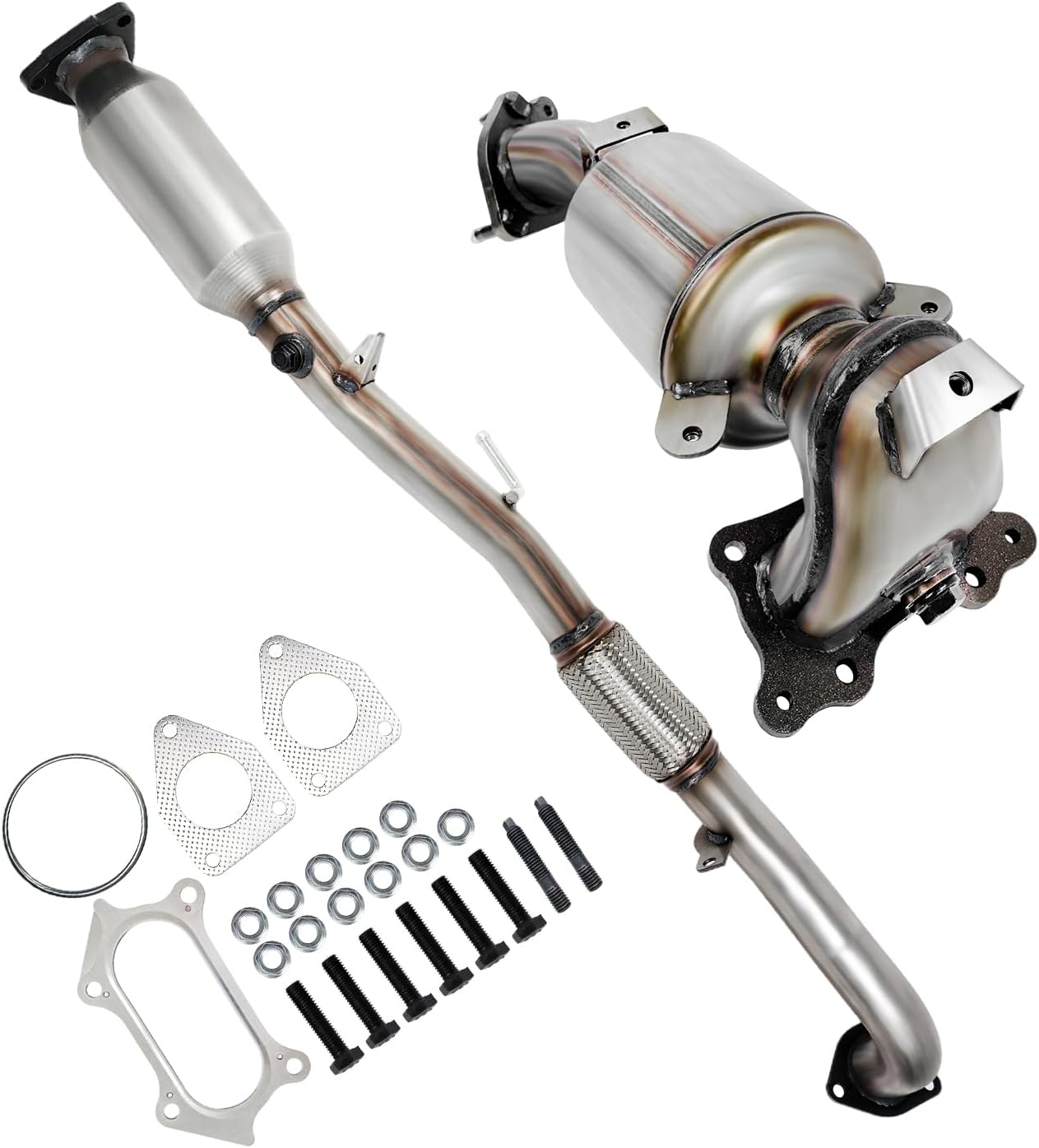
| Automotive Fit Type | Vehicle Specific Fit |
|---|---|
| Material Type | Ceramic, Stainless Steel |
| Included Components | Catalytic Converter, Gasket, Screws |
| EPA Compliance | Meets U.S. EPA criteria |
This pulcherflow catalytic converter replaces the factory unit on 2.4L Accords and TLX models with a direct-fit design that uses OE-style mounting and supplied gaskets and bolts for a straightforward install. It contains enlarged ceramic substrates with increased precious metal loading to improve conversion efficiency and reduce tailpipe emissions, and the stainless steel shell and mandrel-bent piping help resist corrosion and deformation from heat. Typical use is a failed or clogged factory converter replacement where you need an emissions-legal, bolt-in solution for federal models. Real-world benefits include easier installation, included hardware, and a construction meant to last under normal driving conditions. Limitations to note are state restrictions for sale or use in certain emissions states and some reports of flange orientation or bolt compatibility needing minor adjustments on specific model years, so expect occasional small fitment adjustments during installation.
Best for: Buyers who want a practical, federally compliant replacement that balances emission performance and ease of install for routine catalytic converter failure on 2.4L Accord or TLX engines.
Less Ideal for: Drivers who require state-specific certified converters for California, New York, Maine, or Colorado emissions programs or those seeking a lifetime performance warranty.
- Direct-fit design with OE-style mounting holes and included gaskets and screws for simpler installation
- EPA-compliant with enlarged ceramic substrate and higher precious metal loading for improved emissions reduction
- Stainless steel construction and mandrel bends improve corrosion resistance and durability under heat
- Ships with necessary hardware so you can typically install without extra parts
- Not legal for sale or use in certain emissions-controlled states including California, New York, Maine, and Colorado
Verdict: A budget-minded, federally compliant direct-fit replacement that restores emissions performance and installs with minimal extra parts for 2.4L Accords and TLX models.
2. NutsCata Direct-Fit Catalytic Converter for 2013–2017 Honda Accord 2.4L

| Fitment | 2013–2017 Honda Accord 2.4L L4; 2018 TLX 2.4L L4 |
|---|---|
| EPA Compliance | Federal emission standards only |
| Precious Metals | Platinum, rhodium, palladium loaded substrate |
| Warranty | 6 years or 60,000 miles |
This NutsCata catalytic converter is a bolt-on replacement for 2013–2017 Honda Accord 2.4L vehicles and is intended as a factory-style emissions component rather than a performance downpipe. It uses honeycomb ceramic substrates loaded with higher-content precious metals such as platinum, rhodium, and palladium to restore catalytic efficiency and reduce emissions to federal standards. Installation is straightforward because the unit is a direct-fit design that requires no welding or machining for vehicles in the specified fitment. The EPA compliance note means it is legal for use where federal rules apply but not for states with their own standards. The seller offers a six-year or 60,000-mile coverage period, which provides some assurance of durability. For drivers focused on keeping their Accord running cleanly with a near-stock installation, this is a practical replacement; drivers seeking increased exhaust flow or racing-oriented gains will not find substantial performance upgrades here.
Best for: Buyers who want a reliable, emissions-compliant replacement that installs like a factory part and restores catalytic function without modifying the exhaust system.
Less Ideal for: Drivers seeking increased exhaust flow or track-oriented performance should look at performance-specific exhaust components instead.
- Direct-fit bolt-on design for the 2013–2017 Accord 2.4L enabling straightforward installation
- High-content precious metal loading in the ceramic substrate to restore conversion efficiency
- EPA-compliant for federal emission-regulated vehicles
- Six-year or 60,000-mile coverage period for added confidence
- Not legal for sale or use in states with their own emissions requirements such as California
- Designed as a factory-style replacement so it does not provide measurable horsepower or flow gains
Verdict: Choose this direct-fit NutsCata converter when you need a legal, factory-style replacement that restores emissions performance on a 2013–2017 Accord 2.4L.
3. ECHO AUTOMILES Catalytic Converter Compatible with Honda Accord 2013–2017 2.4L

| Vehicle fitment | Honda Accord 2013–2017 2.4L; Honda CR-V 2015–2016 2.4L |
|---|---|
| Cell count | 400-cell honeycomb |
| Compliance | Meets federal EPA standards |
| Includes | Gaskets and installation hardware |
| Interchange part numbers | 16827 641565 |
This ECHO AUTOMILES catalytic converter is a direct-replacement unit designed for 2013–2017 Honda Accord 2.4L engines and also lists fitment for select CR-V models with the same engine. It uses a 400-cell honeycomb substrate with a high precious-metal loading intended to meet federal EPA emission requirements and improve conversion of exhaust pollutants. The high-flow structure is claimed to minimize backpressure so the engine retains near-factory power and fuel efficiency. The kit includes gaskets and hardware to simplify installation and is presented as a direct bolt-in for matched vehicles, which cuts shop time compared with universal converters. Important limitations are regional restrictions that prohibit sale or installation in California and Colorado and additional rules in some states, so verify local regulations before purchasing. Also note this is an aftermarket replacement rather than a factory part, so fit and longevity depend on proper installation and local emissions inspections.
Best for: Buyers who want a cost-effective, vehicle-matched replacement that restores emissions performance and minimizes extra installation work while keeping running characteristics close to factory behavior.
Less Ideal for: Drivers in states with strict emissions certification requirements or those who need a certified California-compliant converter should look for a region-specific unit or dealer-supplied factory-quality part.
- Direct-fit for 2013–2017 Honda Accord 2.4L to simplify installation and reduce modification time
- 400-cell honeycomb substrate with high precious-metal loading for strong catalytic conversion performance
- High-flow design aimed at reducing exhaust backpressure to preserve engine power and efficiency
- Includes gaskets and hardware so you get the parts needed for a complete replacement
- Not legal for sale or installation in California and Colorado and restricted in some other states
Verdict: Choose this direct-fit ECHO AUTOMILES converter if you want a practical, vehicle-matched replacement that restores emissions performance with minimal installation hassle.
4. Uni-Links Catalytic Converter Direct Fit for 2013–2017 Honda Accord 2.4L

| Vehicle fitment | 2013–2017 Honda Accord 2.4L |
|---|---|
| Substrate type | Ceramic |
| Includes | Catalytic converter and gasket kit |
| Manufacturer | Uni-Links |
This Uni-Links catalytic converter is a direct-fit replacement for the 2013–2017 Honda Accord with the 2.4L engine and ships with the gasket kit needed for installation. It installs in place of the factory unit and uses a ceramic substrate designed to reduce emissions while maintaining exhaust flow for daily driving. Typical use is as a budget-friendly repair when the original converter has failed emissions testing or rattles internally. The polished housing and included gasket simplify a straightforward bolt-on swap for competent DIYers or an independent shop. Because it targets basic emissions function rather than performance gains, you should not expect measurable power increases. Fitment is limited to the listed Accord 2.4L years so confirm the part numbers before ordering. In short, it gives a practical, cost-focused replacement that gets an older Accord back to compliant running without extra features like high-flow racing internals or expanded vehicle coverage.
Best for: Buyers looking for the most affordable way to replace a failed catalytic converter and pass emissions for a 2013–2017 Accord 2.4L, prioritizing cost and straightforward fitment over performance upgrades.
Less Ideal for: Drivers who want performance-oriented exhaust gains, multi-vehicle fitment, or an upgraded high-flow converter should consider other options.
- Direct-fit designed for 2013–2017 Accord 2.4L which simplifies installation
- Includes gasket kit so no separate hardware purchase is needed
- Ceramic substrate restores emissions control to pass testing
- Polished housing resists surface rust and looks like a factory replacement
- Not marketed as a high-flow or performance catalytic converter
Verdict: A no-frills, budget-friendly direct-fit replacement that restores emissions function and passable exhaust performance for 2013–2017 Accord 2.4L owners.
5. CAT CLEAN Front Catalytic Converter for 2013–2017 Honda Accord / 2015–2016 CR‑V / 2015–2018 Acura TLX 2.4L

| Position | Front |
|---|---|
| Compatible engines | 2.4L L4 |
| Substrate | High-density honeycomb ceramic with Pt, Rh, Pd |
| Shell material | 409L stainless steel |
| Fitment years | Accord 2013-2017; CR‑V 2015-2016; TLX 2015-2018 |
This CAT CLEAN front catalytic converter replaces the factory unit on compatible 2.4L 2013–2017 Honda Accord, 2015–2016 CR‑V, and 2015–2018 Acura TLX vehicles to restore emissions performance and clear catalytic-efficiency fault codes. It uses a high-density honeycomb ceramic substrate loaded with platinum, rhodium, and palladium to speed up catalytic reactions and reduce harmful exhaust emissions. The converter body is stainless steel 409L with a high-temperature pad protecting the ceramic carrier, which should help resist corrosion and extend service life. The unit is offered as a direct bolt-on design so installation typically requires no welding or major exhaust modification, though some buyers noted included hardware may be minimal. It is made to meet EPA compliance for federal states but cannot be sold for use in certain states with stricter rules. For owners prioritizing a reliable, factory-style replacement that restores emissions function and quiets the exhaust, this is a practical option; buyers in states with separate emissions requirements should look for compliant alternatives.
Best for: A buyer who cares most about restoring reliable emissions performance and long-term durability on a 2013–2017 Accord or the listed compatible CR‑V/TLX models and prefers a near-factory, bolt-on replacement.
Less Ideal for: Drivers in states with local emissions rules where this unit is restricted or anyone seeking a universal or multi-vehicle converter rather than a vehicle-specific direct replacement.
- Direct bolt-on design enables straightforward installation without welding on compatible vehicles
- EPA-compliant design uses high-density ceramic substrate with Pt, Rh, and Pd for efficient pollutant conversion
- 409L stainless steel shell and internal high-temperature pad increase corrosion and heat resistance
- Designed to resolve P0420/P0430 check-engine codes and restore proper emissions performance
- Not legal for sale or use in certain states with stricter emissions rules
- Some customers reported the supplied installation hardware was insufficient
Verdict: Choose this CAT CLEAN front catalytic converter when you need a durable, direct-fit replacement that restores emissions function on 2.4L Honda Accord and compatible models.
6. FOMIUZY High-Flow Front Catalytic Converter Kit for 2013–2017 Honda Accord 2.4L

| Compatible vehicles | 2013-2017 Honda Accord 2.4L; 2015-2020 Acura TLX 2.4L; 2015-2019 Honda CR-V 2.4L |
|---|---|
| Material | Stainless steel body |
| Catalyst metals | Platinum, Rhodium, Palladium |
| Kit contents | 1 catalytic converter kit |
This FOMIUZY high-flow front catalytic converter kit is a direct-fit replacement intended for 2013–2017 Honda Accord 2.4L applications and similar 2.4L models. Built with a stainless steel shell and a ceramic substrate coated with platinum, palladium, and rhodium, it aims to restore emissions control and clear diagnostic codes like P0420. Installation is straightforward for someone with basic exhaust experience since it matches factory mounting points, and the seller recommends bolting then welding for best sealing. In practice buyers report the part fits well, removes check engine lights, and passes emissions testing when used on compatible cars. Potential downsides are that sensor harnesses and included gaskets vary in quality and some buyers found the sensor lead routing fragile or needed to replace gaskets. The unit is not legal for sale in California or New York and some post-sale support reports are mixed despite the advertised lifetime warranty. For owners wanting an affordable, functioning replacement that closely mimics the factory unit, this converter delivers practical performance at a lower cost than dealer parts.
Best for: Buyers who prioritize proven real-world results and want a budget-friendly, direct-fit replacement that restores emissions performance without paying dealer prices.
Less Ideal for: Anyone who needs a CARB-compliant converter for California or New York emissions programs or who expects premium OEM-level fit-and-finish and guaranteed manufacturer support.
- Direct-fit design matches factory mounting points for easier installation
- Stainless steel body with high-load precious metal catalyst on substrate for effective emissions reduction
- Reported to clear P0420 and pass emissions tests in real-world installs
- Lower cost than dealer or OEM replacement units while providing similar basic function
- Not legal for sale in California or New York due to emissions rules
- Some buyers reported fragile sensor lead routing and inconsistent gasket/hardware quality
- After-sales warranty support has mixed customer experiences
Verdict: A cost-effective, direct-fit front catalytic converter that reliably restores emissions function for 2013–2017 Accord 2.4L owners who value proven performance and lower cost than dealer parts.
7. A-Premium Front Catalytic Converter, EPA Compliant, Direct-Fit for Honda Accord/CR-V 2.4L

| Vehicle fitment | Honda Accord 2013-2017 L4 2.4L; CR-V 2015-2016 L4 2.4L |
|---|---|
| Position | Front |
| Body material | Stainless Steel |
| Oxygen sensor ports | 1 |
| EPA compliant | Yes |
This A-Premium front catalytic converter is a direct-fit replacement intended for 2013–2017 Honda Accord 2.4L engines and is used to restore proper emissions control and resolve related engine codes. It is made from stainless steel, includes one oxygen sensor port, and ships with the hardware needed for installation. In everyday use it functions like a factory replacement unit: it mounts in the same location, accepts the stock sensor, and should clear OBD‑II codes tied to a failed front converter when installed correctly. Buyers report it can be installed by a competent DIYer with basic tools or by a shop for a lower parts cost than dealer alternatives. Important limitations are state restrictions and emissions rules since it is not legal for sale or use in California, New York, Colorado, or Maine, and some customers have reported premature check engine light recurrence or warranty contact difficulties. Fitment appears solid for covered Accord model years but long term durability varies between users.
Best for: Buyers who prioritize restoring emissions performance with a direct-fit, factory-replacement style part and who prefer a lower-cost alternative to dealer units while avoiding complicated modifications.
Less Ideal for: Do not choose this if your vehicle is registered in California, New York, Colorado, or Maine or if you require guaranteed manufacturer support and long-term proven service history from an OEM supplier.
- Direct-fit design for 2013–2017 Honda Accord 2.4L makes installation straightforward
- Stainless steel construction resists corrosion compared with cheaper materials
- Includes one oxygen sensor port and necessary mounting hardware for a complete front‑converter swap
- EPA‑compliant for federal emissions so it clears emissions-related codes outside restricted states
- Not legal for sale or use in California, New York, Colorado, and Maine due to state emissions regulations
- Some buyers report check engine light or sensor-related issues after installation and limited manufacturer support
Verdict: A direct-fit stainless steel front converter that restores emissions function on 2013–2017 Accord 2.4L models without the dealer markup, provided your state allows aftermarket EPA converters.
Choosing the Right 2013-2017 Honda Accord Catalytic Converter: Key Factors to Consider
Fitment and Mounting
Accurate fitment is critical for the 2013-2017 Honda Accord because any mismatch in flange type, bolt pattern, or pipe diameter can cause exhaust leaks or require costly modification. A direct-fit catalytic converter designed for this Accord range will align with the factory hangers and oxygen sensor locations, reducing installation time and the risk of gasket or joint failures.
When assessing fitment, confirm whether the converter replaces only the catalytic core or the entire pipe assembly. Full-assembly direct-fit units reduce welding and fabrication needs. Also consider whether the product includes new gaskets or hardware, since reused components can lead to leaks even when the converter itself fits correctly.
Emissions Performance
The primary function of a catalytic converter is to convert harmful gases into less harmful ones. For a 2013-2017 Accord, select a converter whose substrate and washcoat formulation are specified to reduce hydrocarbons, carbon monoxide, and nitrogen oxides effectively. Converters intended to meet OE emissions requirements are more likely to restore compliance and clear related diagnostic trouble codes.
Look for information about conversion efficiency, substrate type, and whether the unit is designed to meet federal or state emissions standards. While exact laboratory numbers are not always published, vendors that provide substrate cell density or precious metal loading details generally offer better transparency about emissions performance.
Oxygen Sensor and Port Compatibility
The 2013-2017 Accord uses upstream and downstream oxygen sensors to monitor catalyst function and engine tuning. A replacement converter must place sensor bungs in the correct positions and thread sizes to avoid false readings or persistent check-engine lights. Mismatched port locations can cause the engine control unit to run compensating fuel trims, resulting in drivability issues and elevated fuel consumption.
Confirm the number and placement of sensor ports with the vehicle's exhaust layout. If a converter does not include factory-positioned bungs, factor in additional labor and potential welding work to fit sensor extenders or new ports.
Substrate Type and Durability
Catalytic converters typically use ceramic or metallic substrates. For the Accord, substrate choice impacts heat tolerance, backpressure characteristics, and resistance to thermal shock. Ceramic honeycomb substrates offer good conversion efficiency but can be brittle under extreme thermal cycling. Metallic substrates are more shock-resistant and can handle rapid temperature changes better, which matters if the vehicle experiences stop-and-go driving or cold starts frequently.
Durability also depends on the washcoat and bonding quality. Poorly bonded washcoats can delaminate, reducing performance over time. Check for references to reinforced substrates or higher cell density for a balance between flow and conversion efficiency.
Corrosion Resistance and Materials
Exhaust components face constant exposure to heat, moisture, and road salt, so corrosion resistance is an important long-term consideration. Look for converters constructed from stainless steel or those that advertise high-temperature anti-corrosion coatings, as these will last longer on a 2013-2017 Accord driven in mixed climates.
Pay attention to flange construction and weld quality as potential failure points. Heavier-gauge metal and full-penetration welds tend to withstand vibration and thermal expansion better, reducing the chance of exhaust leaks or premature cracking.
Warranty and Service Support
A clear warranty signals manufacturer confidence and can be decisive when choosing a replacement for your Accord. Warranties that cover material and workmanship for several years help protect against early failure or substrate issues. Understand what the warranty covers—whether it is limited to structural defects or includes conversion performance.
Also consider the availability of technical support and documented fitment instructions. Accessible installation guides and responsive support can reduce installation time and avoid unnecessary returns or exchanges.
Why a Direct-Fit Converter Matters for the 2013-2017 Accord
A direct-fit catalytic converter minimizes installation complexity for the 2013-2017 Honda Accord by matching the factory pipe routing and sensor locations. This reduces the chance of exhaust leaks and avoids the need for custom fabrication that can introduce alignment or clearance issues.
Direct-fit units typically preserve factory backpressure characteristics, which helps maintain proper engine tuning and avoids triggering the check engine light due to altered sensor readings.
- Preserves oxygen sensor placement
- Reduces welding and adapter needs
- Maintains factory exhaust geometry
Interpreting Check-Engine Light Codes Related to the Converter
When a check-engine light implicates the catalytic converter, codes often reference oxygen sensor readings or catalyst efficiency metrics. Codes that indicate low catalyst efficiency usually stem from degraded substrate performance or upstream conditions that prevent proper conversion.
Before replacing the converter, confirm the underlying cause by checking for upstream issues like misfires, oil or coolant contamination, or sensor faults that can damage the catalyst. Addressing root causes ensures a new converter will not fail prematurely.
- Common code types point to sensor or efficiency problems
- Diagnose upstream engine issues first to protect the new converter
Installation Considerations and Typical Labor Steps
Installation of a catalytic converter on a 2013-2017 Accord often involves raising the vehicle, removing heat shields, unbolting flanges, and swapping the unit while ensuring oxygen sensors are handled carefully. Some direct-fit assemblies include new gaskets or hardware which speeds installation.
If welding is required, factor in shop time and the need for precise alignment to avoid exhaust stress. Also inspect adjacent components like hangers and shields for corrosion or damage that could affect the new converter.
- Handle oxygen sensors to avoid damaging threads or elements
- Check and replace gaskets if necessary to prevent leaks
- Inspect nearby components for corrosion or wear
Emissions Testing and Post-Installation Checks
After replacing the converter on a 2013-2017 Accord, perform a road test and use a diagnostic scan tool to verify that catalyst-related trouble codes are cleared and that oxygen sensor readings are within expected ranges. Some jurisdictions require emissions testing, so confirming conversion performance helps ensure the vehicle passes inspection.
Listen for exhaust leaks and verify there are no new rattles or heat shield contact points after installation. Allow several drive cycles for the engine control unit to relearn fuel trims and for closed-loop operation to stabilize before final emissions verification.
- Use a scan tool to confirm sensor waveform behavior
- Allow multiple drive cycles for fuel trim relearning
- Visually inspect for leaks and contact points
Common Causes of Catalytic Converter Failure in These Accords
Catalytic converters on 2013-2017 Accords can fail due to long-term thermal degradation, ingestion of contaminants from oil or coolant leaks, or internal damage from engine misfires that introduce raw fuel into the exhaust. Repeated exposure to road salt and moisture can also accelerate external corrosion.
Identifying and correcting the root cause before installing a replacement is essential to avoid recurring failures and to ensure the new converter maintains expected emission control performance.
- Engine misfires and fuel washing
- Oil or coolant contamination
- Thermal shock from rapid heating and cooling
- External corrosion from road exposure
Still looking for the perfect fit?
Select your Honda Accord configuration to see the most relevant Catalytic Converters recommendations
How We Chose the Best 2013-2017 Honda Accord Catalytic Converter
We selected catalytic converters for the 2013-2017 Honda Accord using evaluation criteria that reflect the real-world needs of owners fixing emissions or drivability problems. Primary considerations included fitment accuracy for the 2013-2017 Accord exhaust layout, ensuring bolt-patterns and inlet/outlet diameters match factory connections. Emissions performance and catalyst substrate quality were reviewed to prioritize converters that help reduce NOx, CO, and HC to meet regulatory expectations. Build materials and thermal durability were assessed to predict long-term resistance to heat cycling and road corrosion. Secondary criteria included availability of direct-fit options versus universal units, warranty coverage terms, and ease of installation for a typical DIY or shop replacement.We excluded products intended for performance tuning, non-road legal modifications, or those that required significant fabrication. Also removed were converters with unclear substrate descriptions or no fitment data for the 2013-2017 Accord. The remaining units were shortlisted for their documented compatibility, construction details, and specifications most relevant to emissions control and reliable operation in this vehicle.
Our full evaluation process is outlined in our review methodology.
FAQ
How do I know if my 2013-2017 Accord catalytic converter needs replacement?
Symptoms often include a persistent check-engine light with catalyst efficiency codes, reduced engine performance, or a rotten-egg smell from the exhaust. A technician can also test backpressure and oxygen sensor responses to confirm converter degradation.
Can I install a catalytic converter myself on a 2013-2017 Accord?
Many direct-fit converters are designed for straightforward installation, but the job can require lifting the vehicle, handling oxygen sensors, and sometimes welding. If you have basic mechanical skills and proper tools, DIY is possible; otherwise a shop ensures correct alignment and leak-free joints.
Will replacing the catalytic converter clear the check-engine light immediately?
Replacing the converter may not clear the light instantly. After installation, the engine control unit may need several drive cycles to verify proper catalyst function. If underlying issues like misfires or sensor faults remain, the light can return.
Are universal converters a good option for the 2013-2017 Accord?
Universal converters can work but typically require extra modification, welding, and precise alignment to match the Accord's exhaust geometry. For most owners, a direct-fit unit reduces installation time and lowers the risk of exhaust leaks or sensor misplacement.
What role do oxygen sensors play after converter replacement?
Oxygen sensors monitor upstream and downstream exhaust composition to judge catalyst efficiency. Correct sensor placement and function are essential for the control unit to adjust fuel trims and verify the new converter is performing as expected.
How long should a replacement catalytic converter last on this vehicle?
Lifespan depends on driving conditions, maintenance, and whether root causes were addressed. Converters can last many years under normal use, but repeated contamination, misfires, or severe corrosion will shorten service life.
Final Verdict
When replacing the catalytic converter on a 2013-2017 Honda Accord, prioritize direct-fit units that match sensor ports and flange geometry to minimize installation issues. Focus on converters that document effective emissions conversion, durable substrate construction, and corrosion-resistant materials to maximize longevity. Address any upstream engine problems before installation so the new converter does not inherit the same failure risks. With attention to fitment and underlying causes, you can restore emissions performance and reliable operation with confidence.
Explore More:
- Check out all Honda Accord parts & accessories
- Explore Catalytic Converters Maintenance & Repair Guides
- Explore Exhaust & Emissions
- Browse all Auto Parts
