

Note: This article contains affiliate links. If you click on these links and make a purchase, I may earn a small commission at no extra cost to you. This helps support my research and content. Read my full affiliate disclosure here.
If you drive a Honda Accord Coupe and are facing performance loss, failed emissions tests, or a persistent check-engine light, the catalytic converter is a common source of the problem. Selecting the right Honda Accord Coupe catalytic converter matters because fitment, catalyst composition, and build quality all affect emissions performance and drivability.This guide covers seven shortlisted catalytic converters chosen for their fit, construction, and durability for the Coupe. We evaluate each option against real-world needs such as direct fitment, emissions effectiveness, and long-term reliability. Read on to understand the decision factors and what to expect when you replace the part.
Looking for other parts? See all Honda Accord parts & accessories.
Top Picks at a Glance
| Best Overall The best all-around choice for most situations | ECHO AUTOMILES Catalytic Converter for Honda Accord 2.4L (2013–2017) / CR-V 2.4L (2015–2016) |  |
| Best Quality Built to a higher standard if you want something more solid | Walker Ultra Direct-Fit Catalytic Converter | 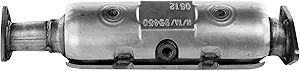 |
| Best Value The sweet spot between price and what you get | SAROTIN Front Catalytic Converter for Honda Accord 2.4L (2008–2012) |  |
| Best Budget The cheapest option that still gets the job done reliably | Kinwrdsn Catalytic Converter for Honda Accord 2.4L (2003–2007) EPA Compliant |  |
| Highest Rated A top-rated pick with lots of positive feedback | CAT CLEAN Front Catalytic Converter for Honda Accord 2013–2017 and Acura TLX 2.4L |  |
| Most Popular A crowd favorite that many people choose with confidence | FOMIUZY High-Flow Front Catalytic Converter Kit for Honda Accord 2.4L |  |
| Best Seller A high-volume bestseller chosen again and again | A-Premium Front Catalytic Converter, EPA Compliant, Direct-Fit for Honda Accord/CR-V 2.4L |  |
1. ECHO AUTOMILES Catalytic Converter for Honda Accord 2.4L (2013–2017) / CR-V 2.4L (2015–2016)

| Vehicle fitment | Honda Accord 2013–2017 2.4L; Honda CR-V 2015–2016 2.4L |
|---|---|
| Substrate | 400-cell honeycomb |
| Compliance | EPA compliant (federal) |
| Includes | Gaskets and hardware |
This catalytic converter is a direct-fit replacement intended for Honda Accord 2.4L models from 2013 through 2017 and CR-V 2.4L 2015–2016, built to match OEM mounting and flow characteristics so installation typically requires no cutting or modification. It uses a 400-cell honeycomb substrate with a high precious-metal loading aimed at meeting federal EPA efficiency standards, which should help the vehicle pass emissions tests while keeping exhaust backpressure low to preserve engine response and fuel economy. The kit includes gaskets and hardware for a complete swap, and the seller lists a multiyear mileage-backed warranty. Practical benefits are straightforward replacement fitment, a factory-style flow design, and the included installation parts. Important limitations are state-specific restrictions on sale and installation in places with stricter emissions laws and the typical caveat that longevity depends on vehicle condition and driving factors rather than the part alone.
Best for: Drivers who want a straightforward, factory-style replacement to restore emissions performance and avoid custom exhaust work while keeping engine breathing close to stock.
Less Ideal for: People in states with restrictive emissions regulations or drivers wanting high-performance or race-oriented catalytic solutions should look for alternatives suited to those needs.
- Direct-fit for specified Honda Accord and CR-V 2.4L models for bolt-in installation
- 400-cell honeycomb substrate designed to balance flow and catalytic surface area
- Claims EPA-compliant catalyst loading to aid emissions testing
- Includes necessary gaskets and hardware for a complete replacement
- Not eligible for sale or installation in several states with stricter emissions rules
- Durability and long-term performance depend on vehicle condition and maintenance rather than the part alone
Verdict: A practical, direct-fit catalytic converter for 2.4L Accord and CR-V owners who need a factory-style replacement to pass emissions testing without modifying the exhaust.
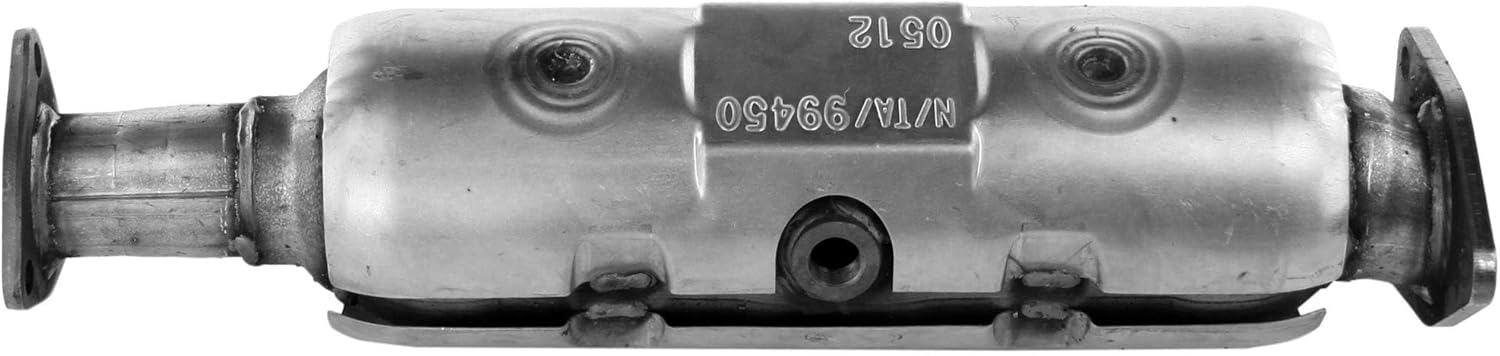
2. Walker Ultra Direct-Fit Catalytic Converter
| Compatible with Vehicle Type | Car |
|---|---|
| Automotive Fit Type | Vehicle Specific Fit |
| Material Type | aluminum coated |
| Manufacturer Warranty Description | 25K Miles |
The Walker Ultra direct-fit catalytic converter is a bolt-on replacement intended to restore emissions performance and clear codes like P0420 on compatible Honda Accord coupe models. It installs with OE-style hangers, flanges, heat shields, and a threaded oxygen sensor port so it behaves like a factory part without fabrication or welding. Walker states an EPA-compliant washcoat and precious metal loading to reduce tailpipe emissions, and many owners report straightforward fitment and passing emissions testing after installation. Practical benefits include simpler DIY installation compared with universal converters and built-in heat shields to protect the undercarriage. Limitations to expect are variability in longevity based on driving conditions and some reports of internal failures after a year or two; you may also need replacement bolts, studs, and gaskets because the flange holes and fasteners differ slightly from factory hardware. For performance-minded buyers, this unit returns proper catalytic function but does not increase exhaust flow or horsepower beyond factory levels.
Best for: Buyers who need a straightforward, factory-style replacement to restore emissions compliance and clear check-engine codes on a Honda Accord coupe, and who prioritize easy installation and factory-like behavior.
Less Ideal for: Drivers looking to improve exhaust flow or increase engine performance, or those who want a heavy-duty long-lifespan race-style converter for extreme conditions.
- Direct-fit design with factory-style hangers and flanges for bolt-on installation
- EPA-compliant washcoat and precious metal load aimed at restoring emissions control
- Built-in aluminized heat shields to protect undercarriage components
- Threaded oxygen sensor port included for easy sensor installation
- Not a performance-enhancing or high-flow converter so it will not increase horsepower
- Some users report limited lifespan with internal failure or rattling after extended use
Verdict: Choose this Walker Ultra if you want an EPA-compliant, direct-fit replacement that restores factory emissions function with minimal installation hassle.
3. SAROTIN Front Catalytic Converter for Honda Accord 2.4L (2008–2012)

| Fitment | Honda Accord 2008-2012, Acura TSX 2009-2013 2.4L |
|---|---|
| Material | 409 Stainless Steel with honeycomb ceramic substrate |
| Position | Front inner |
| Compliance | EPA compliant (not CARB) |
This SAROTIN front catalytic converter is a direct-fit replacement for 2.4L Accord and TSX models that aims to restore emissions control and silence exhaust-related codes and noise. It uses a honeycomb ceramic substrate coated with precious metals to promote efficient conversion of harmful gases and is offered as an EPA-compliant unit with a claimed minimum service life. The part ships with the flex section and installation hardware so a professional shop can install it without cutting or welding, which keeps labor simpler. Buyers report the converter clears P0420 codes and reduces exhaust noise, and the direct-fit design minimizes fitment surprises. Expect an economical alternative to dealer units, though long-term durability varies in user reports and a few buyers noted leaks after installation. This converter is not CARB compliant so it is not legal in states that require California-approved parts. If you want a straightforward, factory-quality replacement to get an older Accord coupe back to working emissions status, this unit is a practical option; plan to have it fitted by a mechanic and keep an eye on exhaust seals after installation.
Best for: Buyers who want a cost-effective, ready-to-install replacement to restore emissions control and stop check-engine codes on a 2008–2012 Accord coupe without paying dealer prices.
Less Ideal for: Drivers in states requiring California-approved catalytic converters or those who need a certified CARB legal part should look elsewhere.
- Direct-fit design with included flex pipe and hardware reduces installation complexity
- EPA-compliant for federal emission vehicles and designed to address P0420 engine codes
- Honeycomb ceramic substrate and precious-metal coating aimed at efficient catalytic conversion
- Supplies commonly needed gaskets and bolts with the unit to avoid sourcing extras
- Not CARB compliant so it is illegal for use in California and certain states
- Some users reported post-installation leaks suggesting variable long-term sealing or fitment quality
Verdict: A practical, full-hardware direct-fit front catalytic converter to clear emissions codes and return an older 2.4L Accord coupe to compliant operation without dealer cost.
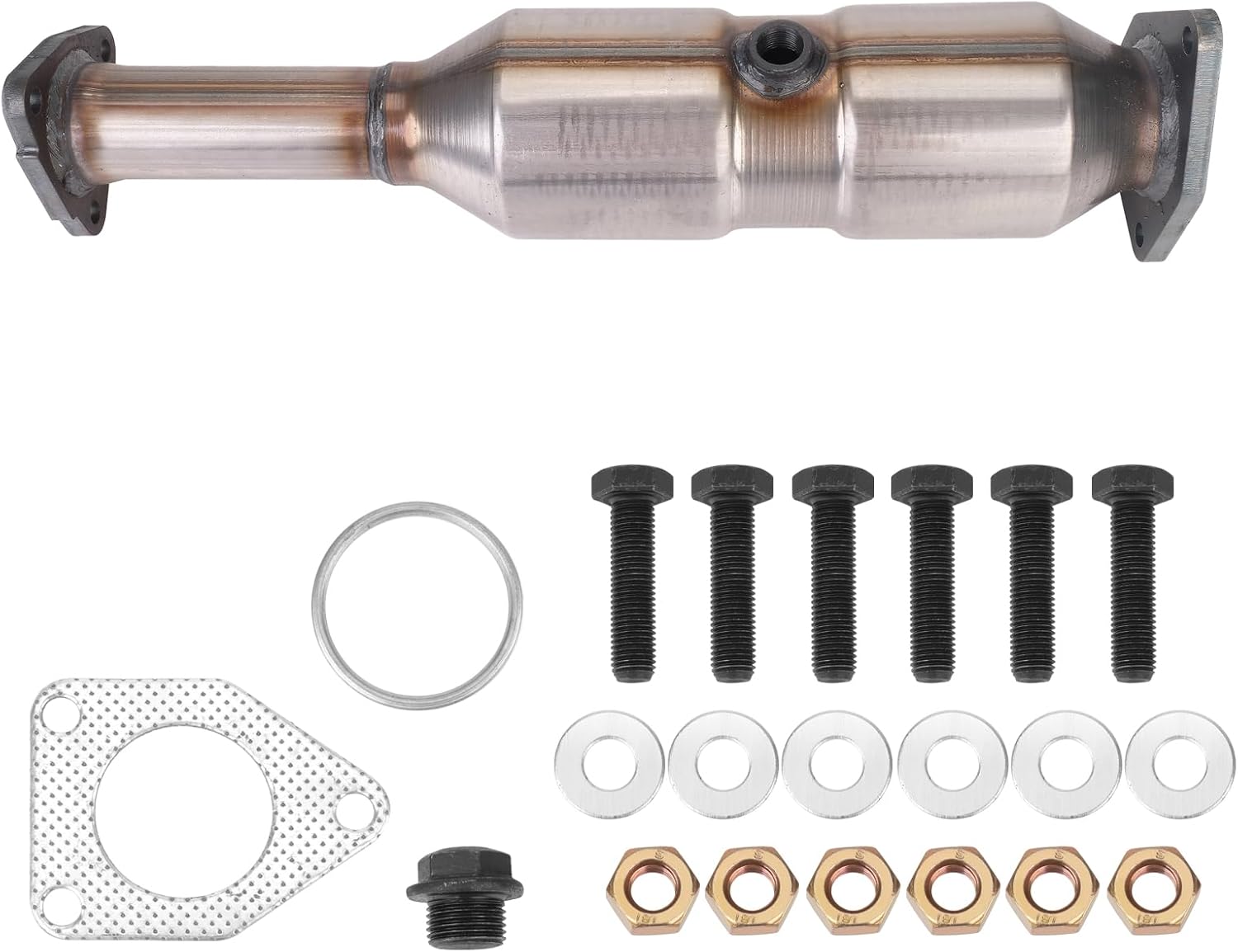
4. Kinwrdsn Catalytic Converter for Honda Accord 2.4L (2003–2007) EPA Compliant
| Brand | Kinwrdsn |
|---|---|
| Model | Accord 2.4L |
| Manufacturer Part Number | Kinsych11 |
| OEM Part Number | 642189, 16299, 40400, 83089, 50389, 0991103, 325334, 0961103, 324298, 18160RAAA00, 18160RAAA11, 18160RADL10, 18160RADL11 |
| EPA Compliance | EPA Compliant |
This Kinwrdsn catalytic converter is a budget-focused, direct-replacement unit for 2003–2007 Honda Accord 2.4L engines. It installs in the factory location and uses a large-area ceramic honeycomb substrate intended to maximize catalyst contact and reduce emissions. The housing is T409 stainless steel, which improves corrosion and heat resistance compared with cheaper mild-steel shells. For day-to-day use it restores catalytic function, helps the vehicle meet emissions checks (outside restricted states) and can improve exhaust flow compared with a clogged original. Expect a straightforward bolt-on fit when matching the listed reference numbers, but note EPA-compliant units cannot be sold or installed in California and Colorado and may be restricted in some other states. As a lower-cost replacement there is less brand heritage and long-term durability data than from OEM suppliers, so buyers who need factory-quality longevity or extended warranty coverage may prefer other options.
Best for: Buyers replacing a failed catalytic converter on a Honda Accord 2.4L who prioritize a low-cost, bolt-on fix that restores emission function and keeps the car road-legal in most states.
Less Ideal for: Drivers in states with stricter emissions regulations or buyers seeking long-term, factory-quality longevity and backed warranty support should consider OEM or higher-end aftermarket options.
- Direct-fit design for 2003–2007 Honda Accord 2.4L for simple bolt-on replacement
- T409 stainless steel shell for improved corrosion and high-temperature resistance
- Enlarged ceramic honeycomb substrate for better catalyst contact and emissions performance
- EPA compliant outside restricted states, suitable for emissions repairs in many areas
- Cannot be sold or installed in certain states with stricter emissions rules such as California and Colorado
Verdict: A cost-conscious, bolt-on replacement that restores catalytic function for 2003–2007 Honda Accord 2.4L drivers who need an affordable emissions repair in non-restricted states.
5. CAT CLEAN Front Catalytic Converter for Honda Accord 2013–2017 and Acura TLX 2.4L

| Compatible vehicles | Honda Accord 2013–2017, Honda CR-V 2015–2016, Acura TLX 2015–2018 2.4L |
|---|---|
| Substrate type | High-density honeycomb ceramic with Pt, Rh, Pd |
| Material | 409L stainless steel |
| Position | Front |
| EPA compliance | Meets federal EPA standards |
This CAT CLEAN front catalytic converter is a direct-replacement unit made for 2.4L Honda Accord (2013–2017), Honda CR-V (2015–2016) and Acura TLX (2015–2018) applications. It uses a high-density honeycomb ceramic substrate loaded with platinum, rhodium and palladium to speed catalytic reactions and reduce emissions, and the converter body is formed from 409L stainless steel for corrosion and heat resistance. The unit is engineered for bolt-on installation with factory-style flanges so most shops can fit it without cutting or welding. In practice you can expect improved catalytic efficiency that often clears P0420/P0430 codes and restores quieter, cleaner running compared with a degraded OEM converter. Limitations to keep in mind are regulatory restrictions: it is compliant with federal EPA rules but not for sale or use in several states with stricter requirements, and some buyers reported the included hardware was minimal so you may need extra bolts or gaskets for installation. For drivers prioritizing a durable, emissions-compliant replacement that fits the listed models, this is a practical factory-style option.
Best for: Buyers who want a reliable, emissions-compliant factory-style replacement to restore catalytic efficiency and clear emission-related check-engine codes for the specified 2.4L Honda/Acura models.
Less Ideal for: Drivers who require parts certified for states with stricter emissions regulations or those seeking a universal or multi-vehicle converter solution.
- EPA-compliant catalytic substrate with high precious-metal loading for effective emissions reduction
- 409L stainless steel body resists corrosion and high exhaust temperatures
- Direct bolt-on design intended to match factory connection points for easier installation
- Designed to address catalytic efficiency codes such as P0420/P0430
- Not legal for sale or use in several states with stricter emissions rules
- Some customers reported the supplied installation hardware was insufficient
Verdict: Choose this CAT CLEAN front converter when you need a durable, factory-style, EPA-compliant replacement to reliably restore emissions performance on the listed 2.4L Honda and Acura models.
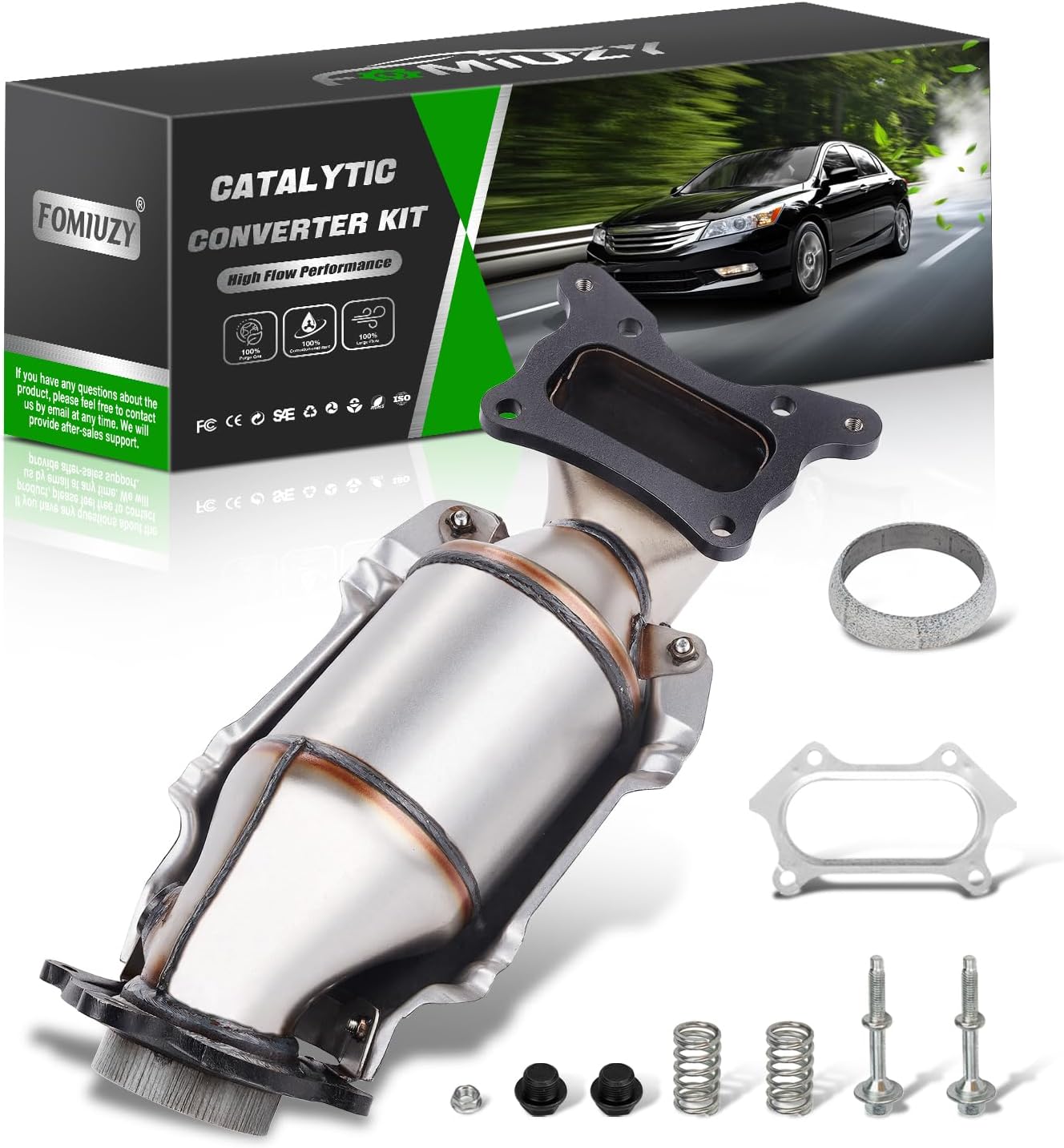
6. FOMIUZY High-Flow Front Catalytic Converter Kit for Honda Accord 2.4L
| Fits | 2008–2012 Honda Accord 2.4L; 2009–2014 Acura TSX 2.4L |
|---|---|
| Material | Stainless/aluminized steel body |
| Carrier | Double-layer high-temperature ceramic |
| Part number | accord wqpf 2008-2012 |
This FOMIUZY catalytic converter kit is a direct replacement for the front converter on 2008–2012 Honda Accord 2.4L and aims to clear P0420 codes and restore emissions compliance. It installs in place of the factory unit and is offered with the flanges and pipe shape to match the original location; the manufacturer recommends bolting it in and then welding for best sealing. The converter uses a stainless/aluminized steel body with a double-layer high-temperature ceramic carrier intended to improve flow and catalytic surface area, which can help regain fuel economy and quiet exhaust operation versus a failing unit. Common practical notes from users: it generally fits well and clears emissions faults but some installers replaced the supplied gasket or reinforced sensor wiring when needed. The product is not sold in some high-emission states and the lifetime warranty has mixed user experiences accessing service. If you want a cost-effective replacement to get an Accord coupe back on the road and pass emissions, this kit is a workable option.
Best for: Buyers who value social proof and want a budget-friendly, tested replacement to clear check-engine codes and pass emissions for a 2008–2012 Accord coupe while keeping installation straightforward.
Less Ideal for: Drivers in California, Colorado, New York, or Maine or anyone who needs a confirmed state-certified emissions part should look for a state-compliant certified converter or dealer-sourced factory replacement.
- Direct-fit design for 2008–2012 Accord 2.4L to simplify replacement and installation
- High-flow ceramic carrier aimed at improving exhaust flow and restoring performance
- Stainless/aluminized steel construction for corrosion resistance compared with mild steel
- Includes necessary hardware and flange shape to match factory location for easier alignment
- Not available for sale in certain high-emission states
- Some customers report issues with oxygen sensor wiring or supplied gaskets requiring replacement
- Accessing the advertised lifetime warranty may be difficult according to some user reports
Verdict: A cost-conscious, direct-fit front catalytic converter that restores emissions function and exhaust flow for 2008–2012 Accord 2.4L owners who prioritize proven user results.
7. A-Premium Front Catalytic Converter, EPA Compliant, Direct-Fit for Honda Accord/CR-V 2.4L

| Fitment | Honda Accord 2013-2017 L4 2.4L; CR-V 2015-2016 L4 2.4L |
|---|---|
| Position | Front |
| Body Material | Stainless Steel |
| Oxygen Sensor Ports | 1 |
| E.P.A. Compliant | Yes |
This A-Premium front catalytic converter is a direct-fit replacement meant to restore emissions control on Honda 2.4L models. It installs in the front position and includes one oxygen sensor port and the flange hardware needed for lower exhaust connections, which makes it suitable for a bolt-in swap by a competent DIYer or a shop. Constructed from stainless steel with an EPA-compliant substrate, it targets federal emissions systems and is sold with a one-year unlimited-mileage guarantee. Practical benefits include factory-style fitment reported by multiple buyers, elimination of some check engine light codes tied to a failed converter, and a noticeably lower cost than dealer replacements. Important limitations are legal restrictions for sale or installation in California, Colorado, New York, and Maine and mixed user reports about post-installation check engine lights and warranty responsiveness; buyers should verify their vehicle emissions label and be prepared to troubleshoot sensor codes if they appear after fitment.
Best for: Buyers who prioritize a factory-style replacement to clear emissions-related faults and want a lower-cost, direct-fit option for a 2.4L Honda without dealing with dealer pricing. It suits owners who prefer to have the part inspected or installed by a shop or who are comfortable diagnosing sensor codes after installation.
Less Ideal for: Do not choose this if your vehicle is registered in states with stricter aftermarket emissions rules or if you require manufacturer-backed local warranty support and immediate technical assistance.
- Direct-fit front-position design for 2.4L Honda Accord and CR‑V simplifies installation
- Stainless steel construction for corrosion resistance
- EPA-compliant substrate suitable for federal emissions systems
- Includes oxygen sensor port and necessary lower flange hardware
- Not legal for sale or installation in CA, NY, CO, and ME due to state emissions rules
- Some buyers report post-installation check engine light issues and limited manufacturer contact for warranty support
Verdict: A direct-fit, EPA-compliant front catalytic converter that gives a lower-cost, factory-style replacement for 2.4L Honda Accords and CR‑Vs when federal emissions compliance is required.
Choosing the Right Honda Accord Coupe Catalytic Converter: Key Factors to Consider
Fitment and Mounting Compatibility
Correct fitment is the most practical concern for a Honda Accord Coupe catalytic converter. A direct-fit unit reduces installation complexity because flanges, hanger positions, and oxygen sensor ports need to match the Coupe's exhaust layout. If the part does not align precisely you may face additional welding, adapter pipes, or hanger relocation, which adds labor and increases the chance of leaks.
Confirming compatibility also helps with emissions testing. A converter that sits in the intended location and secures to original mounting points maintains proper exhaust routing and sensor readings. When assessing options, check the listing for Coupe-specific fit notes and the presence of correct O2 sensor bosses to avoid post-installation diagnostic trouble codes.
Catalyst Substrate and Cell Density
The internal substrate and cell density determine how effectively the catalyst converts harmful gases. Higher cell density increases surface area for chemical reactions, improving conversion of hydrocarbons, carbon monoxide, and nitrogen oxides, which directly impacts failed emissions tests and exhaust emissions catalytic converter performance.
However, extremely high cell density can increase backpressure if not matched to the engine's flow characteristics. For the Accord Coupe, choose converters engineered to balance conversion efficiency with acceptable flow to preserve throttle response and fuel economy.
Materials and Corrosion Resistance
Sheet-metal thickness, stainless-steel shells, and robust welds extend service life in road salt, moisture, and urban driving conditions. Corroded shells or poor welds lead to leaks and premature replacement, which are common catalytic converter failure signs owners report.
Look for converters with corrosion-resistant coatings or stainless components. Durable mounting flanges and quality heat shields also reduce vibration and protect surrounding components, helping the unit last longer under real-world Coupe use.
Oxygen Sensor Integration and Diagnostics
Modern engines rely on upstream and downstream oxygen sensors to monitor catalyst performance. A replacement that provides correct sensor ports and maintains proper sensor spacing helps prevent false fault codes and avoids the common check engine light catalytic converter triggers.
Ensure the converter has the right number and placement of O2 sensor bosses for the Coupe. If the downstream sensor is not positioned correctly relative to the catalyst, the vehicle's diagnostics may not read catalyst efficiency accurately, leading to unnecessary troubleshooting.
Backpressure and Engine Performance
Catalytic converters inevitably create some restriction; how much matters for engine response. Excessive backpressure can reduce power and throttle response, particularly on higher-revving applications or during heavy acceleration. For daily-driven Accord Coupes, moderate flow balance is ideal to keep drivability smooth while still meeting emissions goals.
Assess manufacturer flow specifications and look for notes about road testing. Options designed as direct replacements for the Coupe tend to match the original balance of flow and conversion to avoid noticeable performance changes.
Warranty, Support, and Regulatory Compliance
A reasonable warranty indicates manufacturer confidence and provides recourse if the converter fails early. Warranties typically cover structural defects and sometimes catalytic performance for a limited period. Pay attention to the scope and duration to weigh long-term value.
Also consider whether the converter meets applicable emissions regulations for your area. Documentation of compliance or testing results can simplify inspections and reduce the risk of failing regulatory checks. Make sure warranty terms and compliance claims are clear before purchase.
Signs Your Accord Coupe Needs a New Converter
Several symptoms point to a failing catalytic converter beyond an illuminated check engine lamp. Noticeable drops in acceleration, reduced fuel efficiency, unusual exhaust smell, or sustained rattling from beneath the vehicle often indicate internal breakdown or clogging of the catalyst.
Pay special attention to diagnostic trouble codes that reference catalyst efficiency. Intermittent misfires can also damage the catalyst over time, accelerating converter failure signs. Early recognition helps prevent secondary damage to downstream sensors or the exhaust system.
- Reduced throttle response during acceleration
- Strong sulfur or rotten-egg odor from the exhaust
- Rattling noises under the vehicle at idle
- Recurring emissions test failures
Preparing for Catalytic Converter Replacement
Before ordering a replacement, identify your Coupe's exact exhaust layout and note sensor locations, flange types, and hanger points. This information ensures the part will fit without modification and speeds up installation.
Gather any required tools and consider whether you will perform the swap yourself or use a professional. If doing the job at home, plan for safe vehicle support, corrosion-penetrating lubricant for old fasteners, and the correct torque specs for flanges and brackets. Document the oxygen sensor locations and unplug them carefully to avoid damage.
- Record O2 sensor positions and connector types
- Inspect hangers and flange surfaces for corrosion
- Have replacement gaskets and proper fasteners on hand
How Catalyst Design Affects Emissions and Driveability
Catalyst formulation and the monolith design influence conversion efficiency and longevity. A well-designed substrate converts pollutants efficiently while minimizing pressure drop through the exhaust stream. For the Honda Accord Coupe, products designed to match the engine's flow rate keep torque and responsiveness consistent with factory behavior.
Manufacturers attempt to balance cell density, washcoat loading, and precious metal content to meet regulatory targets without unduly restricting flow. Understanding those tradeoffs helps you choose a converter that prioritizes the outcome you value most, whether it is strict emissions control or maintaining factory-like performance.
- Higher precious-metal loading can improve conversion but may not always be necessary
- Designs intended for direct fitment typically preserve factory backpressure
Common Installation Challenges and Solutions
Rusted bolts, seized nuts, and corroded flanges are frequent obstacles during replacement. Applying penetrating oil and allowing soak time before loosening fasteners reduces the risk of rounded bolts. Heat can help free stubborn connections but requires care to avoid damaging nearby components.
If flange mismatch occurs, short adapter sections or professionally welded modifications may be required, but these steps add complexity and may affect emissions readings. When possible, choose a converter that matches the Coupe's factory flange type and hanger layout to minimize these issues.
- Use proper safety gear and jack stands when working under the vehicle
- Replace exhaust gaskets and hardware with new parts during reassembly
- Have a backup plan if sensor connectors are brittle or corroded
Maintaining Your New Catalytic Converter
After installation, drive the vehicle under a variety of conditions to allow the engine management system to re-learn sensor baselines. Avoid frequent short trips that do not allow the exhaust to reach optimal operating temperatures, as this can accelerate fouling of the catalyst.
Address engine misfires, oil consumption, and coolant leaks promptly, since these issues can contaminate or overheat the catalyst. Periodic visual inspections for mounting integrity and exhaust leaks will help detect problems early and extend the converter's life.
- Monitor fuel trim and O2 sensor readings after installation
- Fix engine issues that produce unburned fuel or oil contamination
- Schedule inspections if you drive in corrosive environments
Still looking for the perfect fit?
Select your Honda Accord configuration to see the most relevant Catalytic Converters recommendations
How We Chose the Best Honda Accord Coupe Catalytic Converter
We focused on criteria that matter specifically for Honda Accord Coupe catalytic converter selection. Primary evaluation dimensions included exact fit and mounting compatibility to limit installation hassle, catalyst substrate type and cell density as they affect emissions conversion efficiency, and construction materials—especially corrosion resistance of the shell and welds—for longevity in varied climates. We also weighed backpressure and flow characteristics to avoid unwanted performance loss, plus warranty coverage and manufacturer support as signals of expected durability.Products were screened for documented compatibility with the Coupe configuration to ensure correct CAT converter fitment and flange alignment. We excluded any converters listed without explicit fitment data or that required significant fabrication or modification. We prioritized options with clear specifications on catalyst material and estimated emissions reduction. Finally, consumer-reported longevity and reported catalytic converter failure signs informed value judgments about likely in-service life.
Our full evaluation process is outlined in our review methodology.
FAQ
What are the most common catalytic converter symptoms on an Accord Coupe?
Owners often see reduced acceleration, decreased fuel economy, a rotten-egg exhaust smell, or rattling noises from the converter. Diagnostic trouble codes related to catalyst efficiency also commonly indicate trouble.
Will a bad catalytic converter trigger the check engine light on my Coupe?
Yes. The vehicle's diagnostic system monitors catalyst performance using oxygen sensors. If the converter is not converting emissions effectively, codes are logged and the check engine light typically illuminates.
Can I replace the catalytic converter myself on an Accord Coupe?
You can if you have mechanical experience and the right tools. Expect to address corroded fasteners and to properly support the vehicle. For less experienced owners, professional installation reduces the risk of leaks or sensor damage.
How does improper fitment affect emissions tests?
Incorrect CAT converter fitment can alter sensor placement or exhaust routing, which may produce inaccurate sensor readings and lead to failed emissions tests. Proper flange alignment and sensor boss positioning are important to pass inspections.
What maintenance helps extend catalytic converter life?
Address engine misfires, oil or coolant leaks, and fuel system issues promptly because contamination damages the catalyst. Regular inspections and ensuring the exhaust reaches normal operating temperature on longer drives also help prevent fouling.
What should I look for in warranty and compliance documents?
Check the duration and what is covered, such as structural defects or catalytic performance. Also look for documentation of emissions compliance relevant to your region to ensure the converter meets inspection requirements.
Final Verdict
When selecting a catalytic converter for a Honda Accord Coupe, prioritize correct fitment and the internal catalyst design to meet emissions needs without compromising drivability. Durable materials and proper oxygen sensor integration reduce the risk of early failure and avoid false diagnostic codes. Balance the need for efficient emissions conversion with acceptable backpressure to preserve engine response.Weigh warranty coverage and clear fitment documentation when choosing. If you address root causes like misfires or oil leaks first, a properly chosen converter will restore emissions performance and help your Coupe pass inspections with confidence.
Explore More:
- Check out all Honda Accord parts & accessories
- Explore Catalytic Converters Maintenance & Repair Guides
- Explore Exhaust & Emissions
- Browse all Auto Parts
